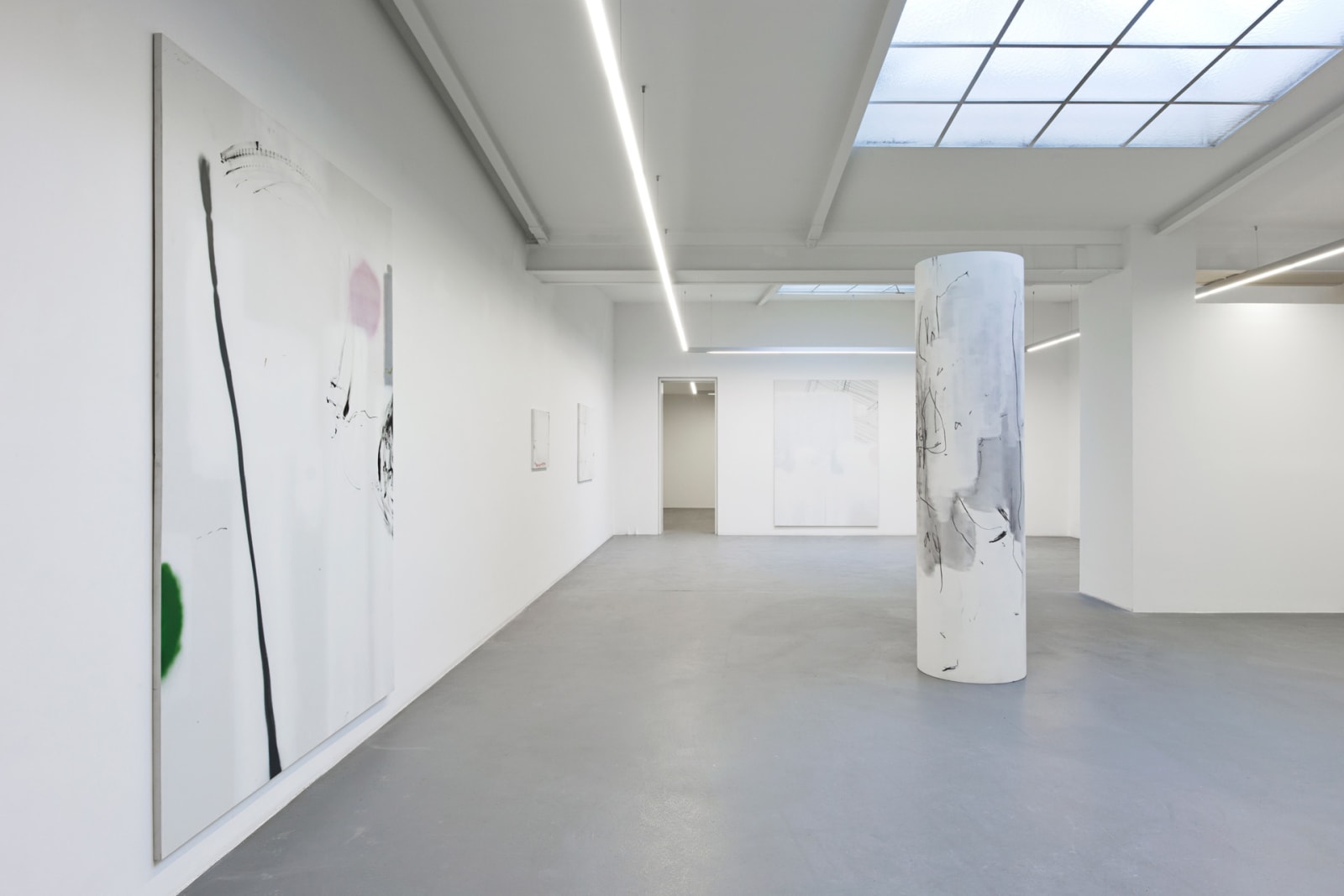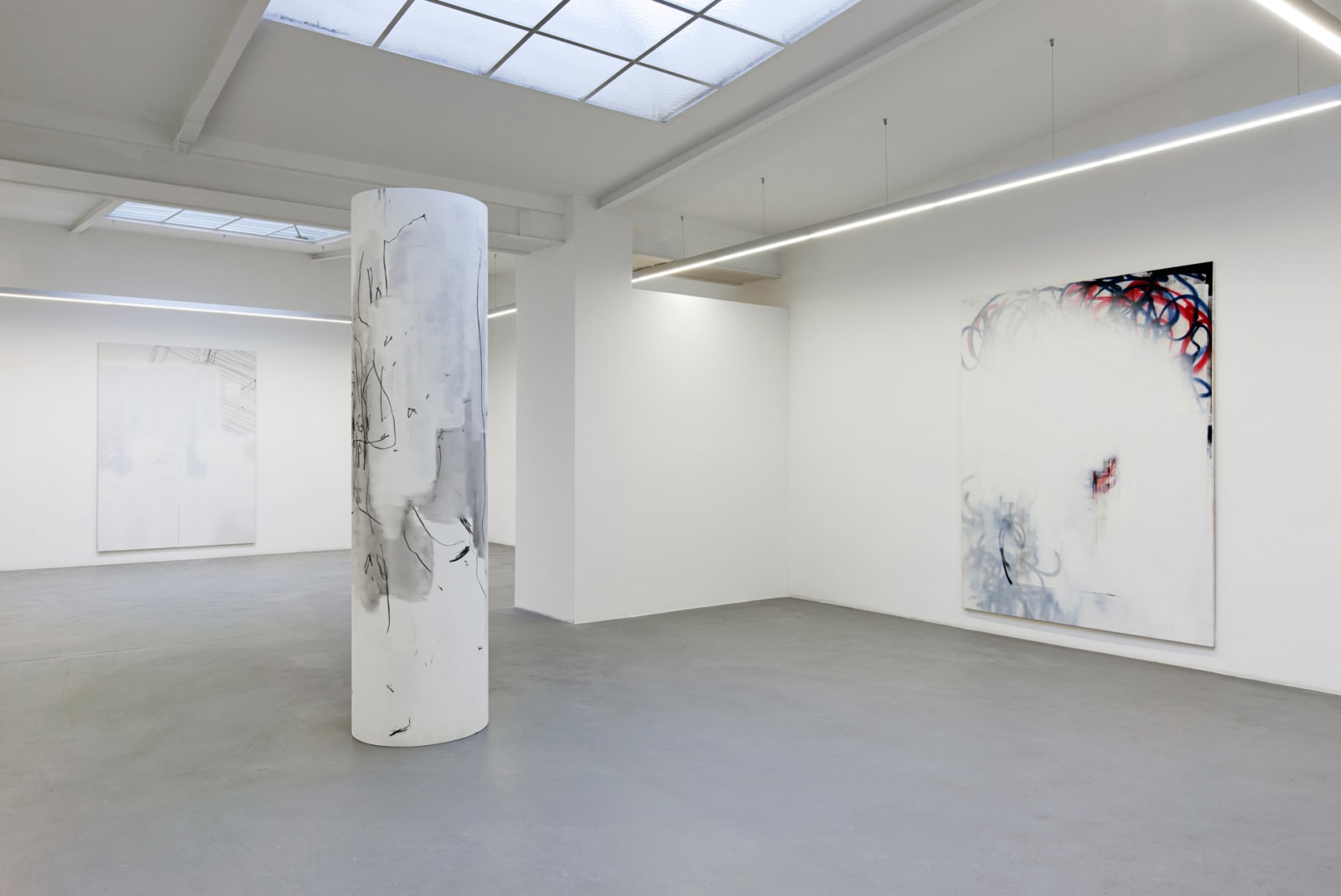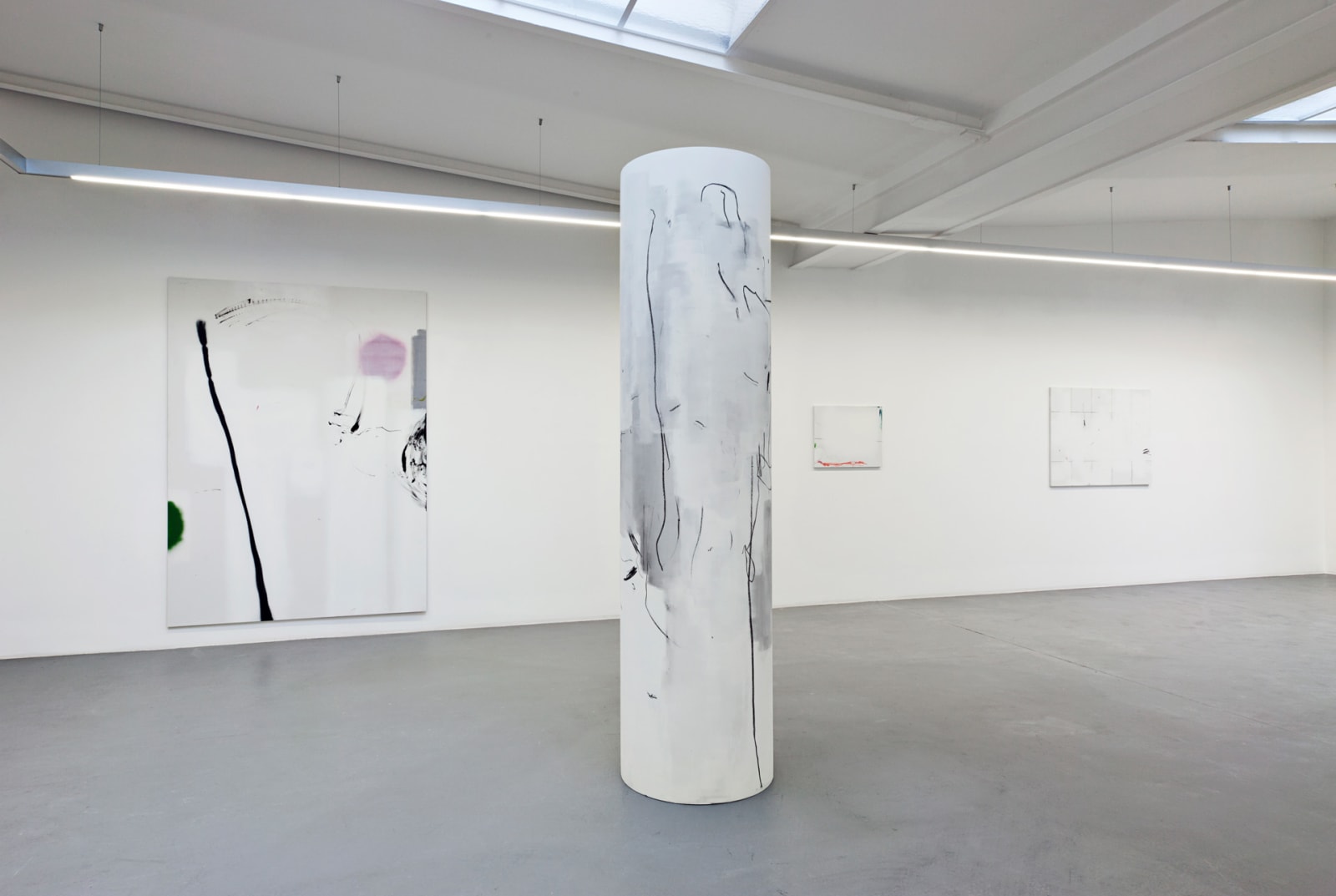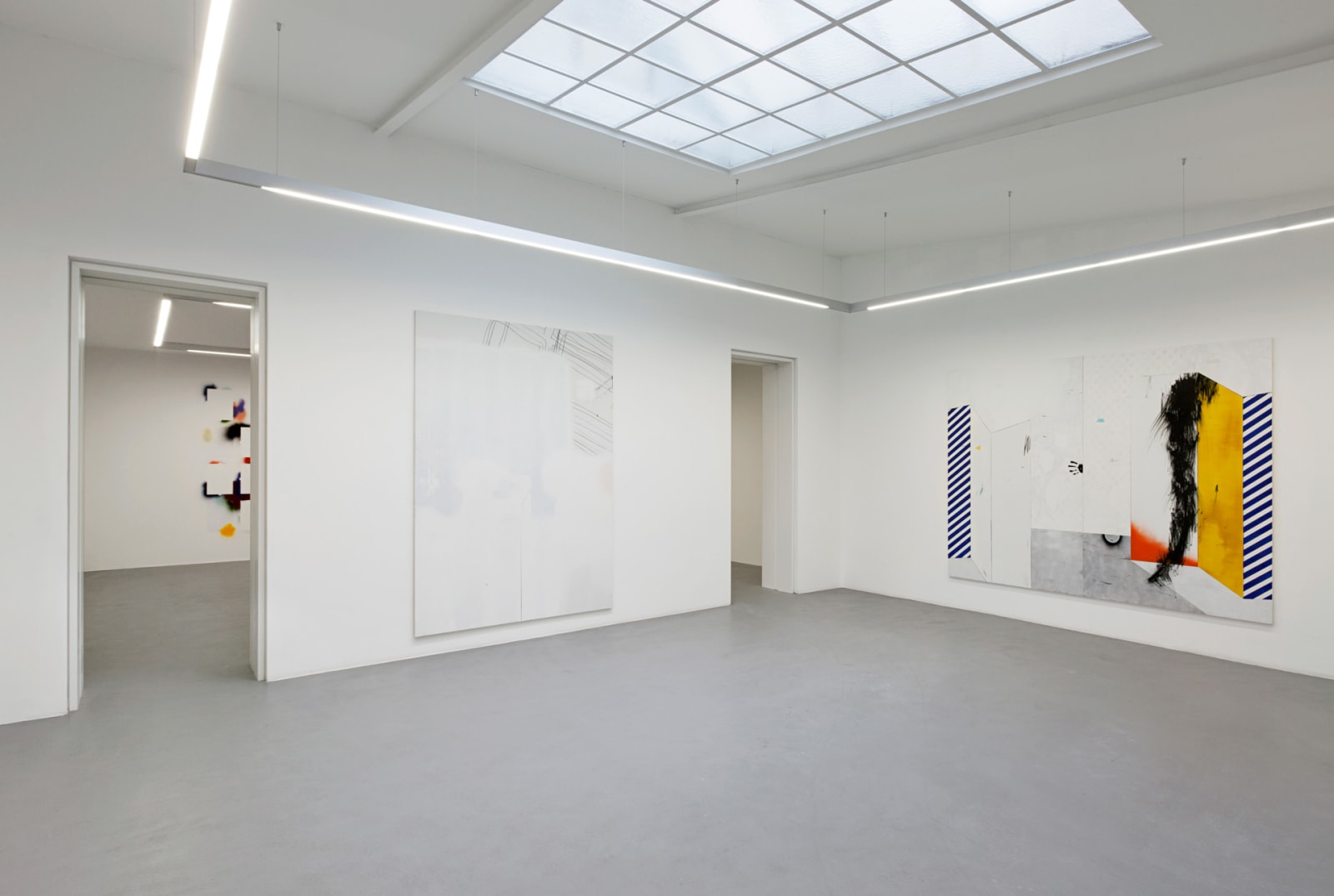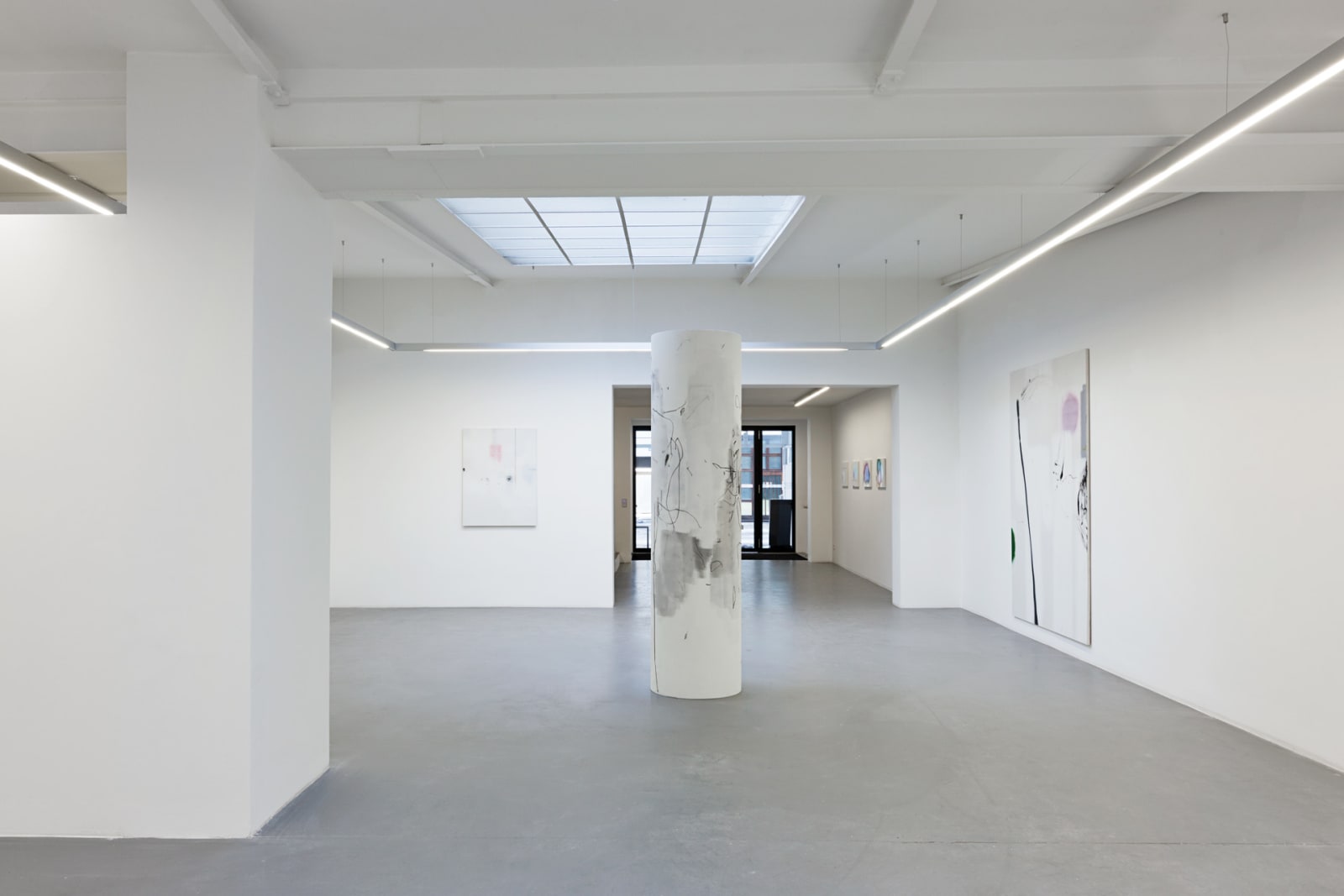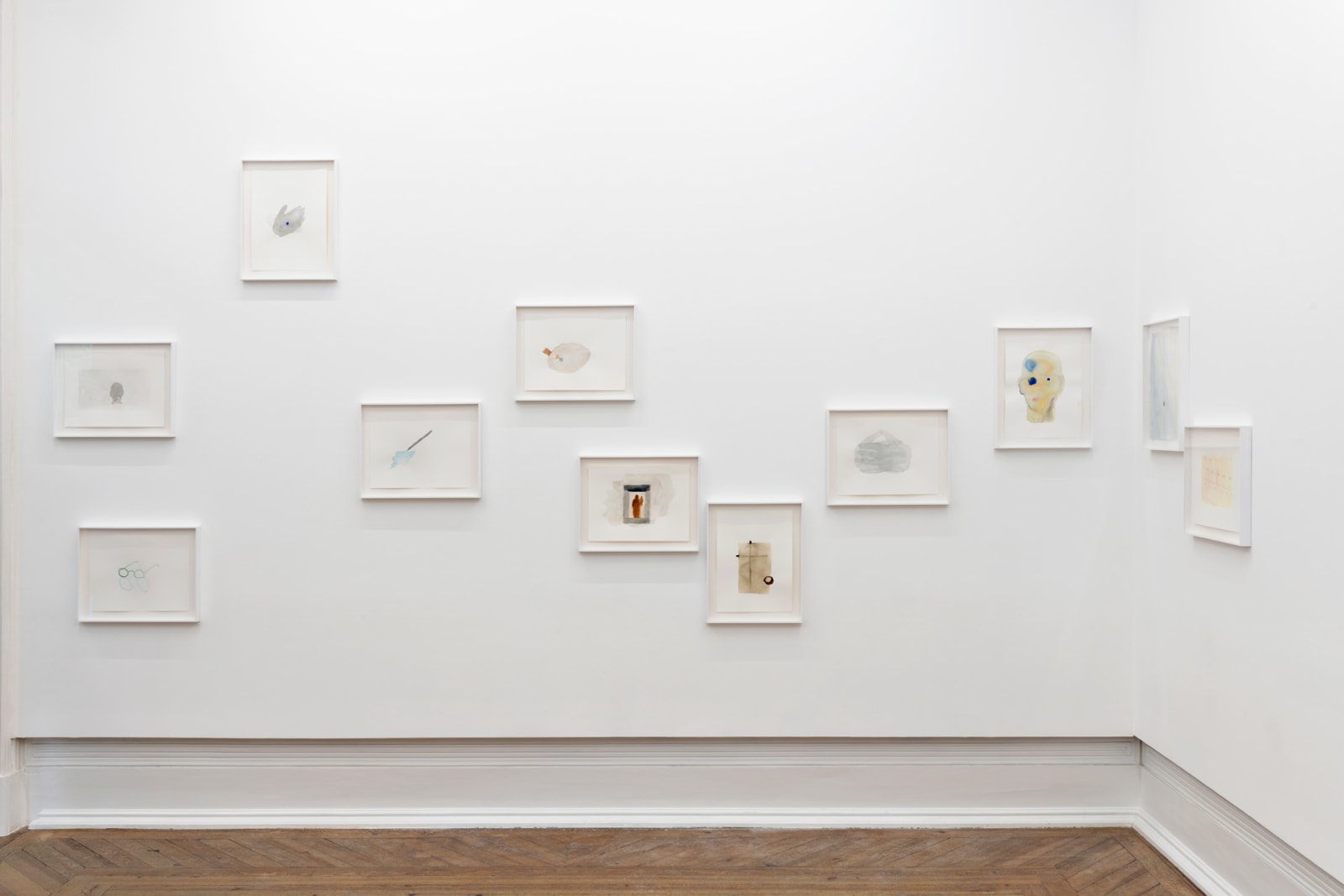
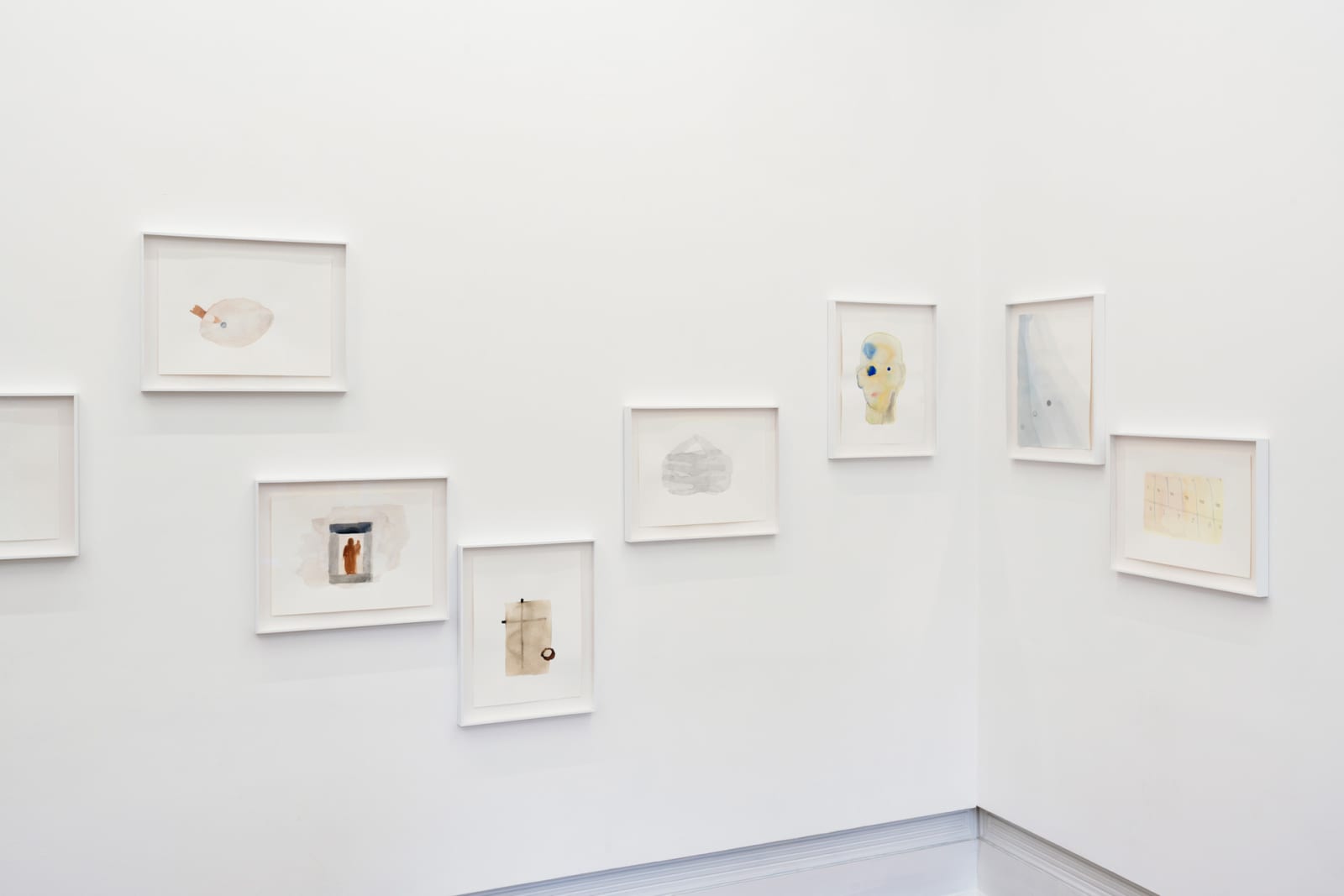
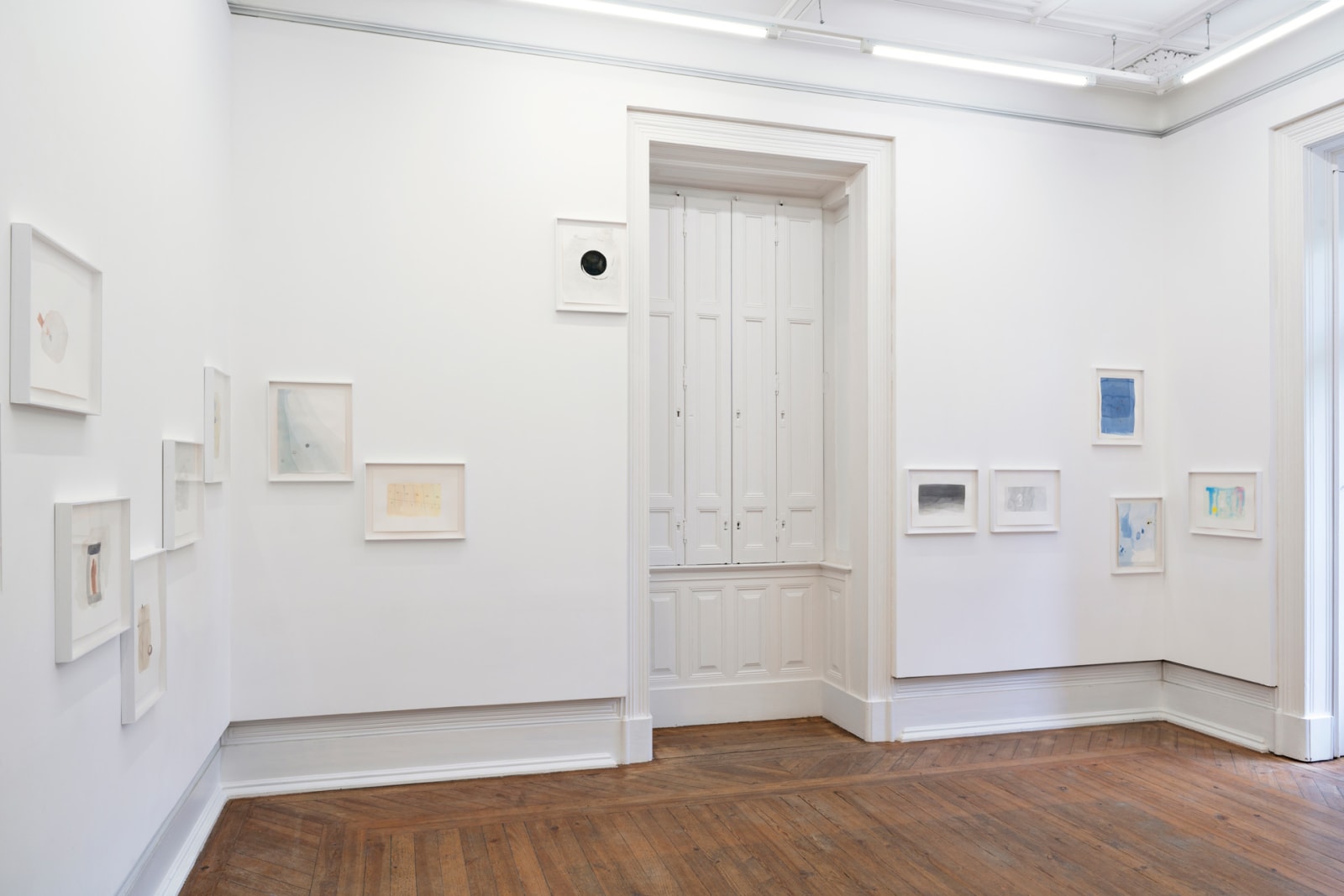
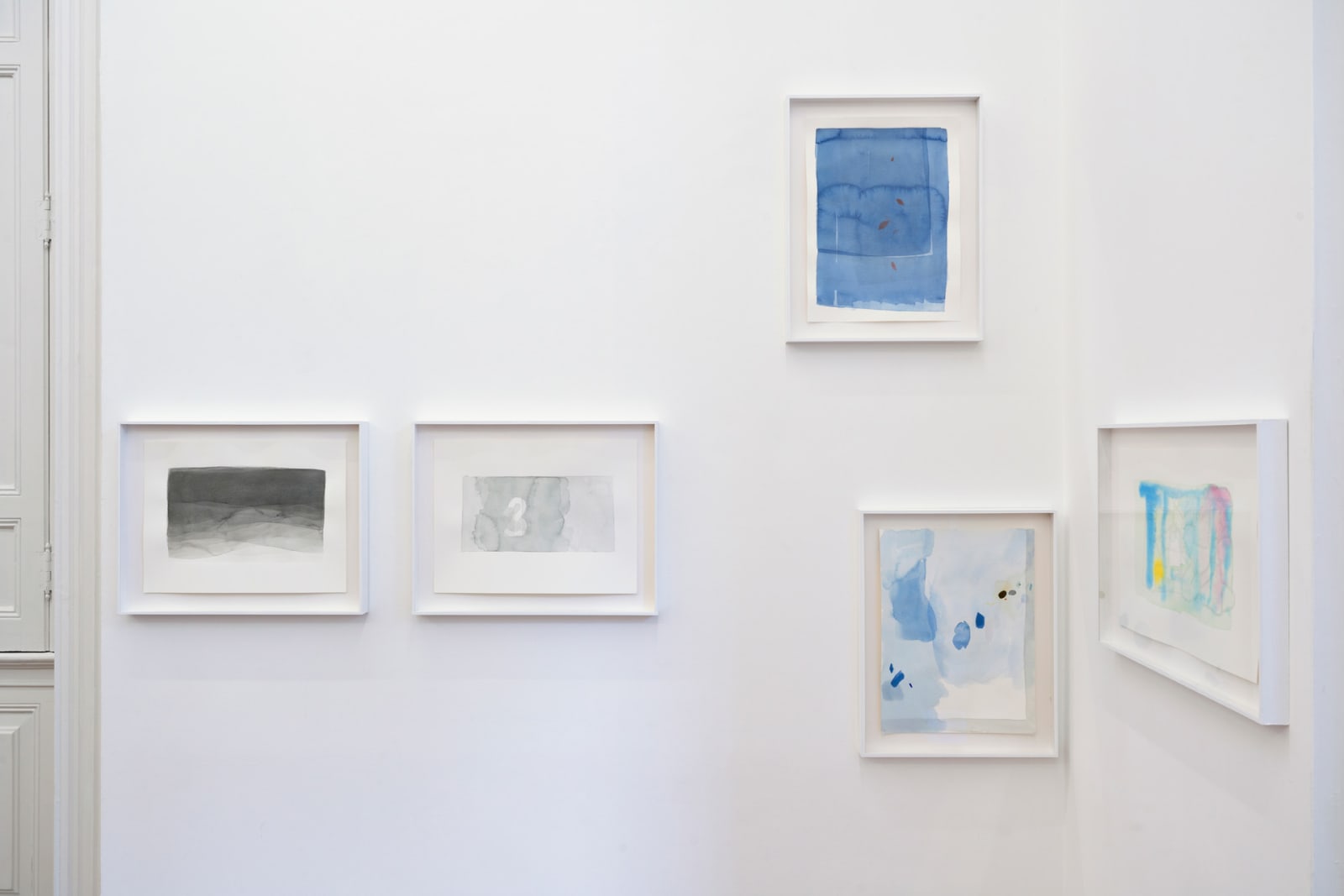

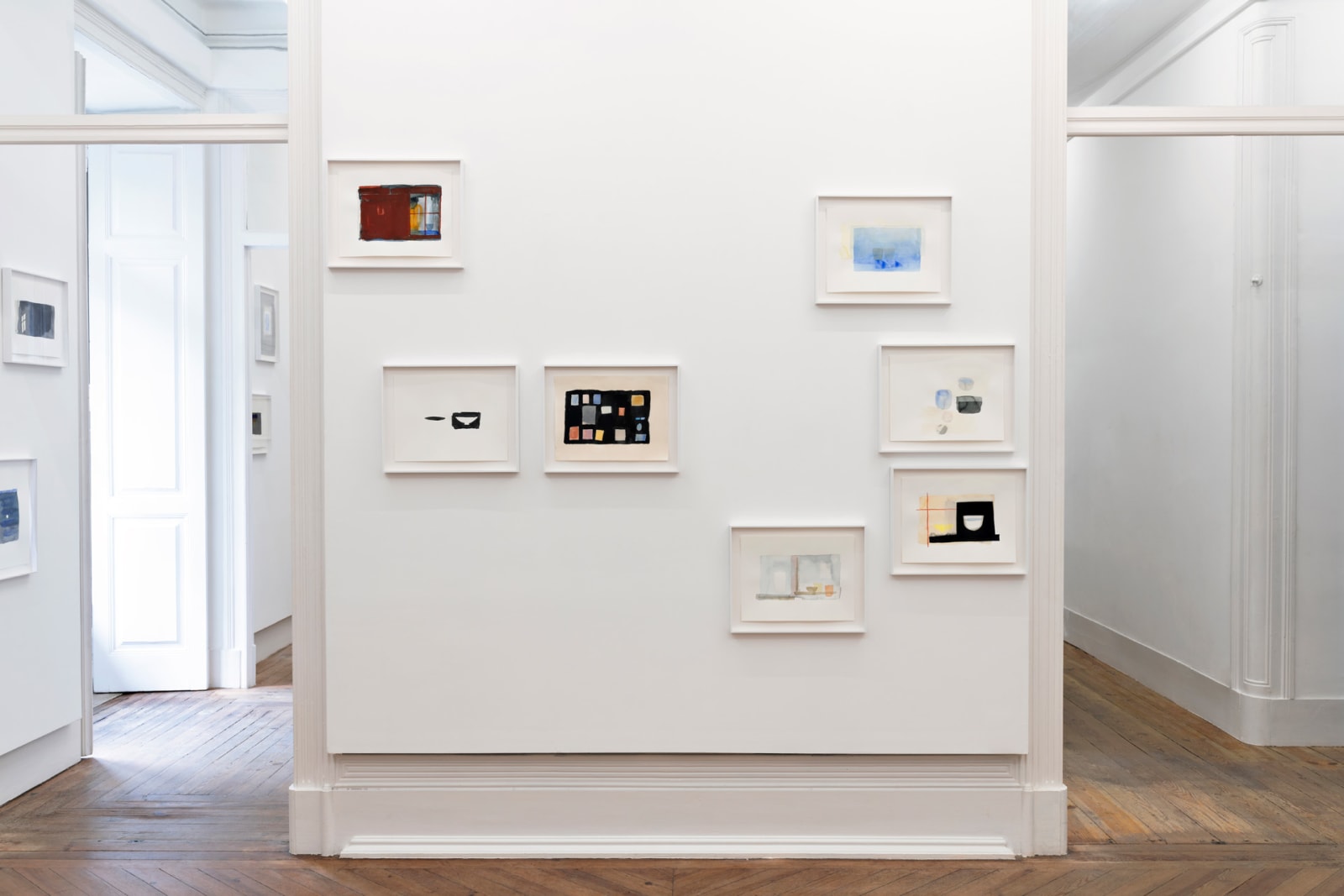
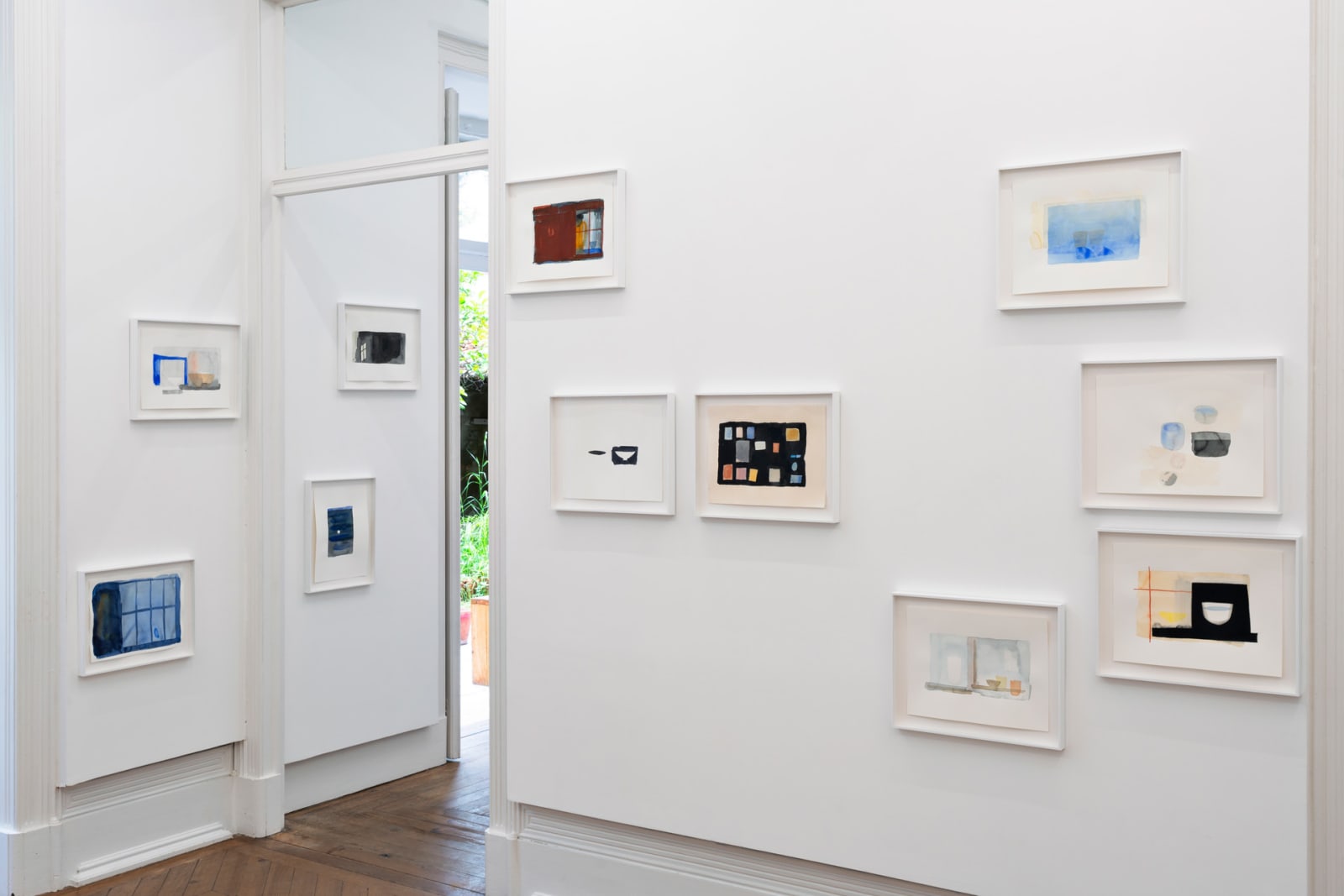
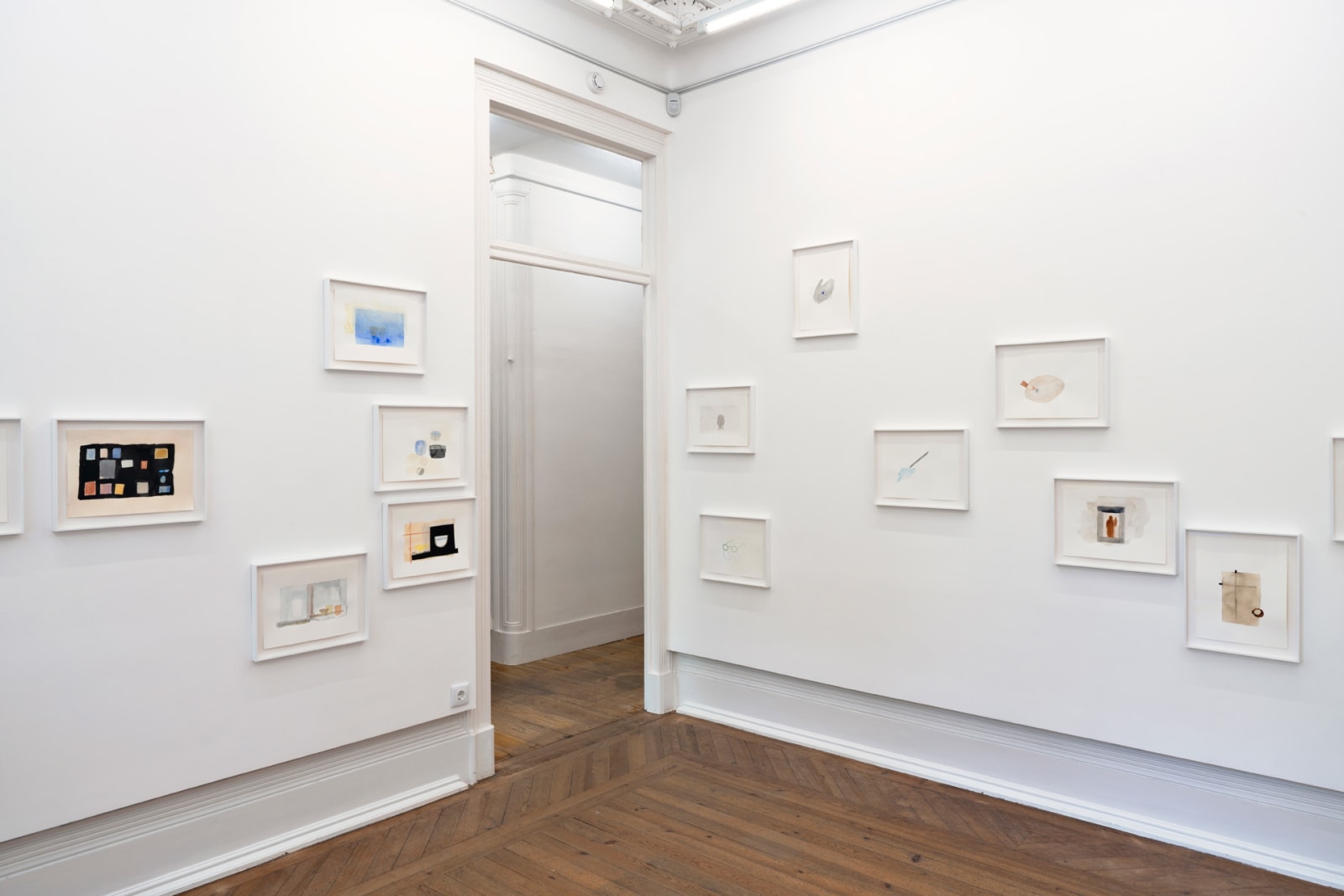
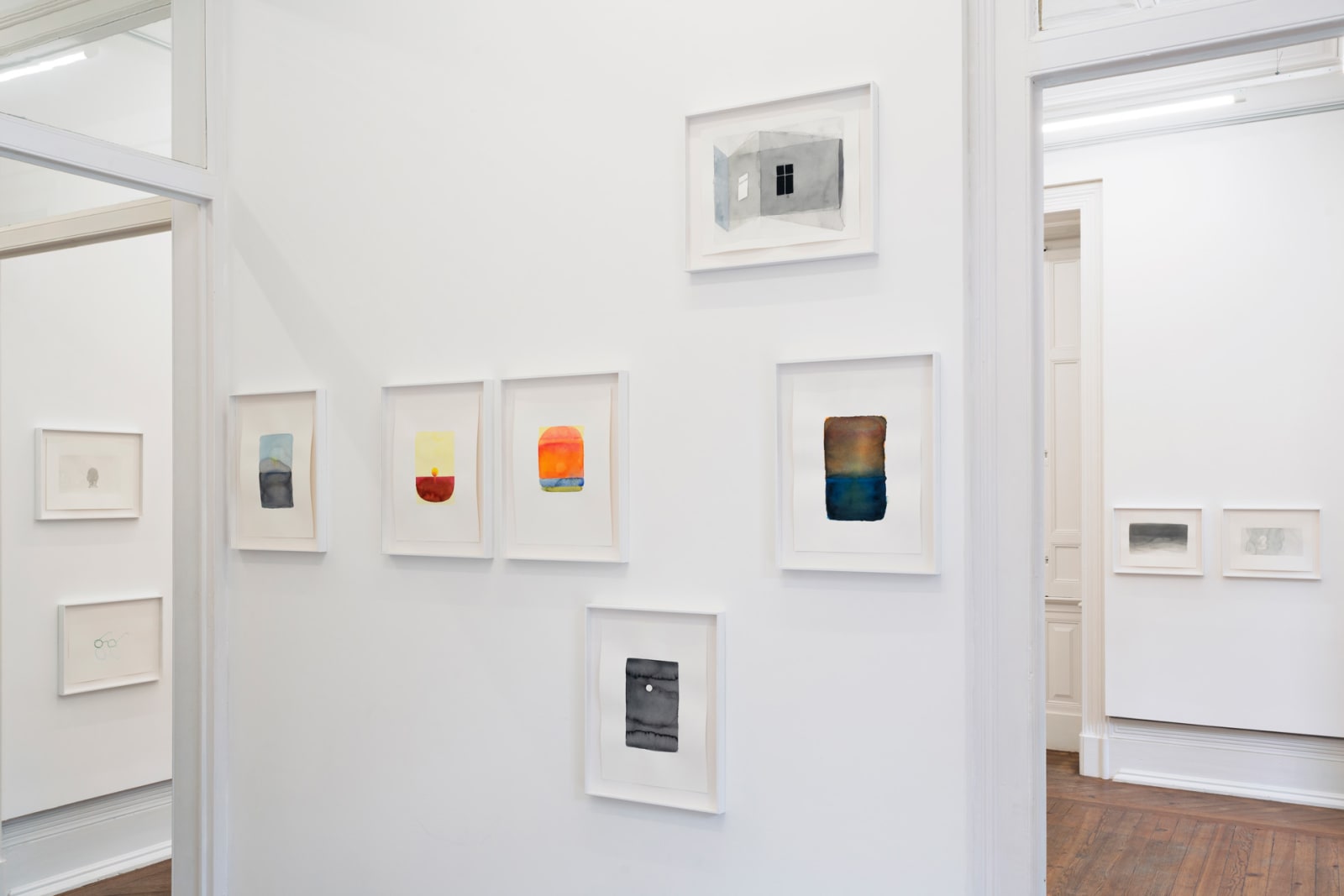

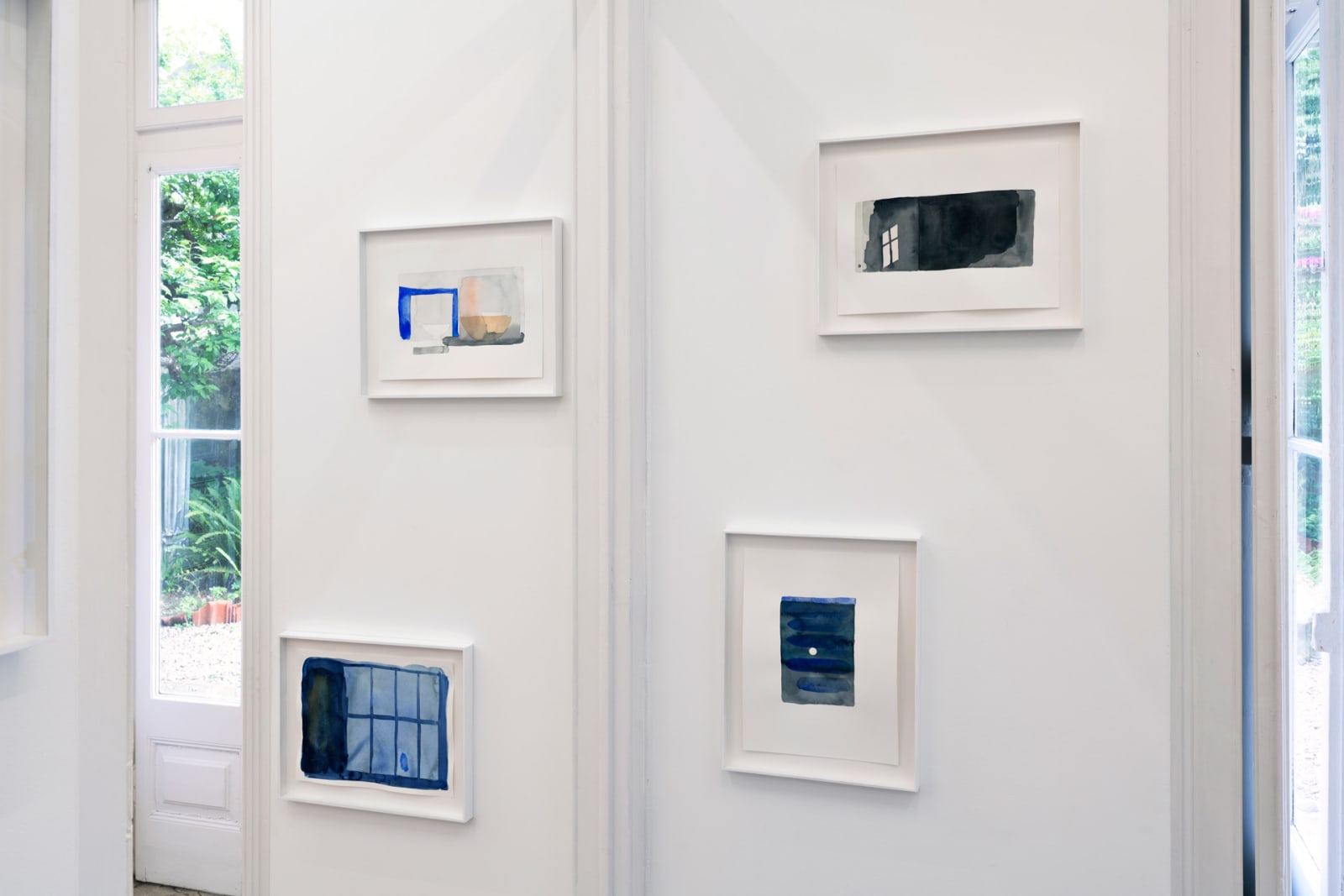
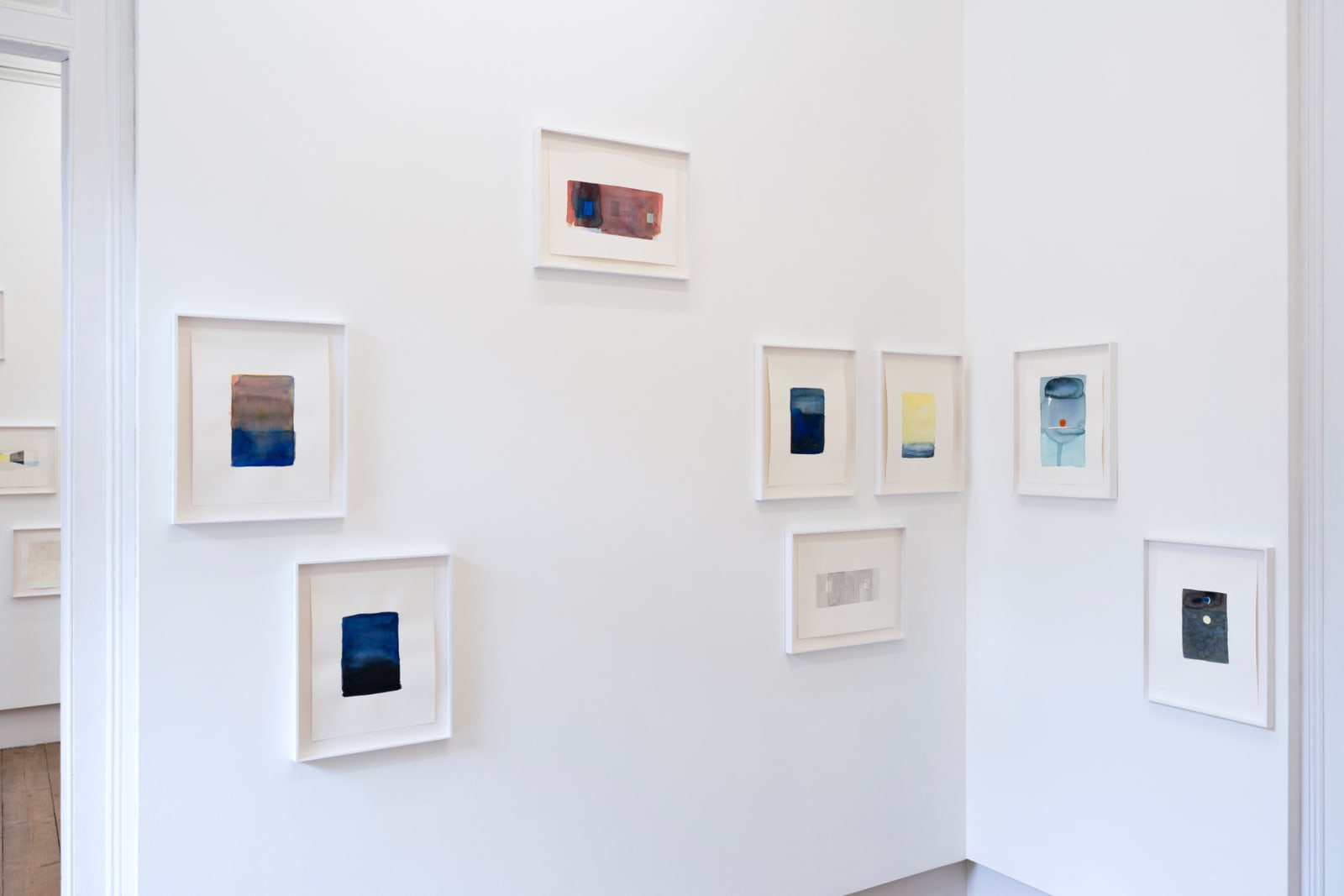
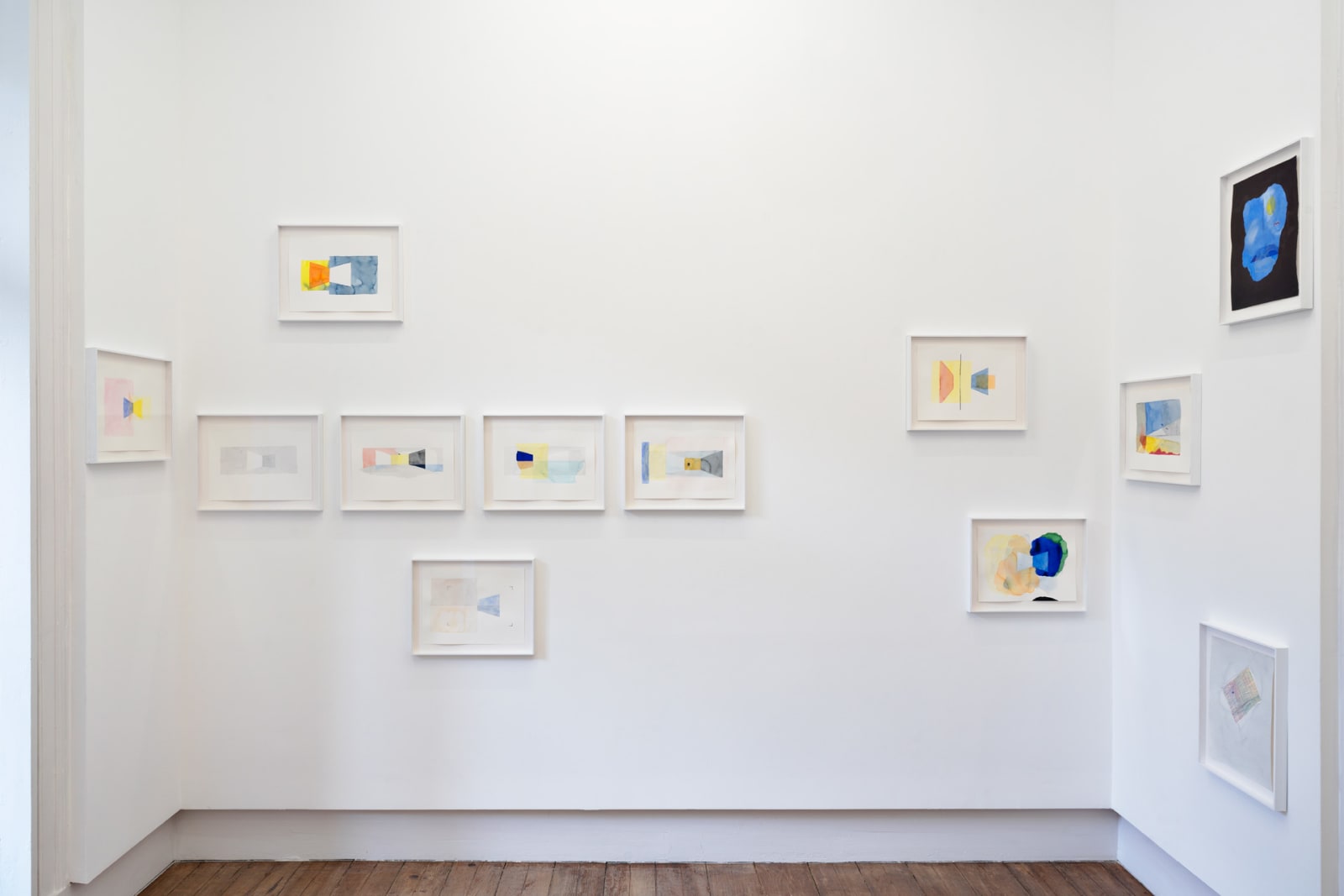
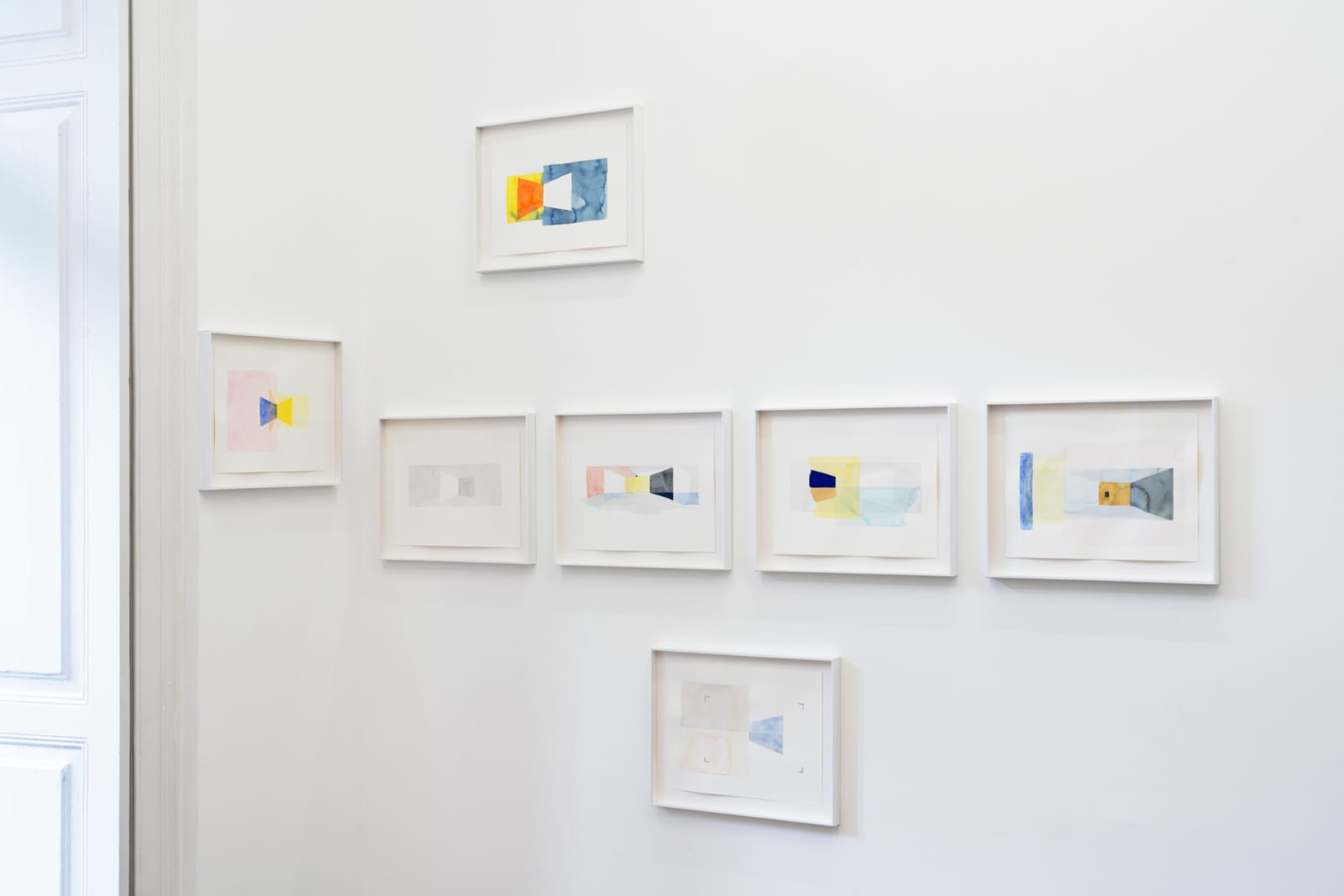
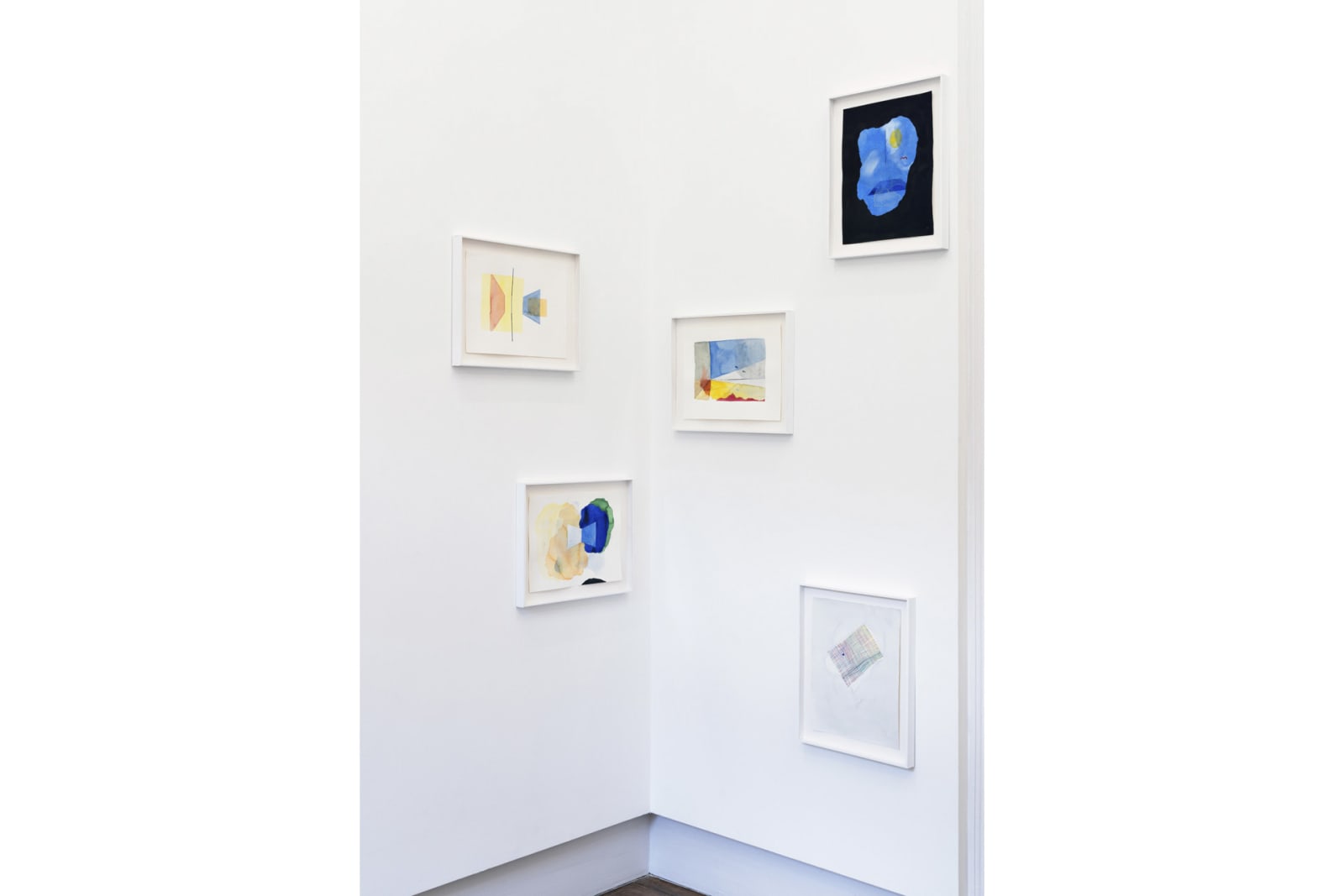
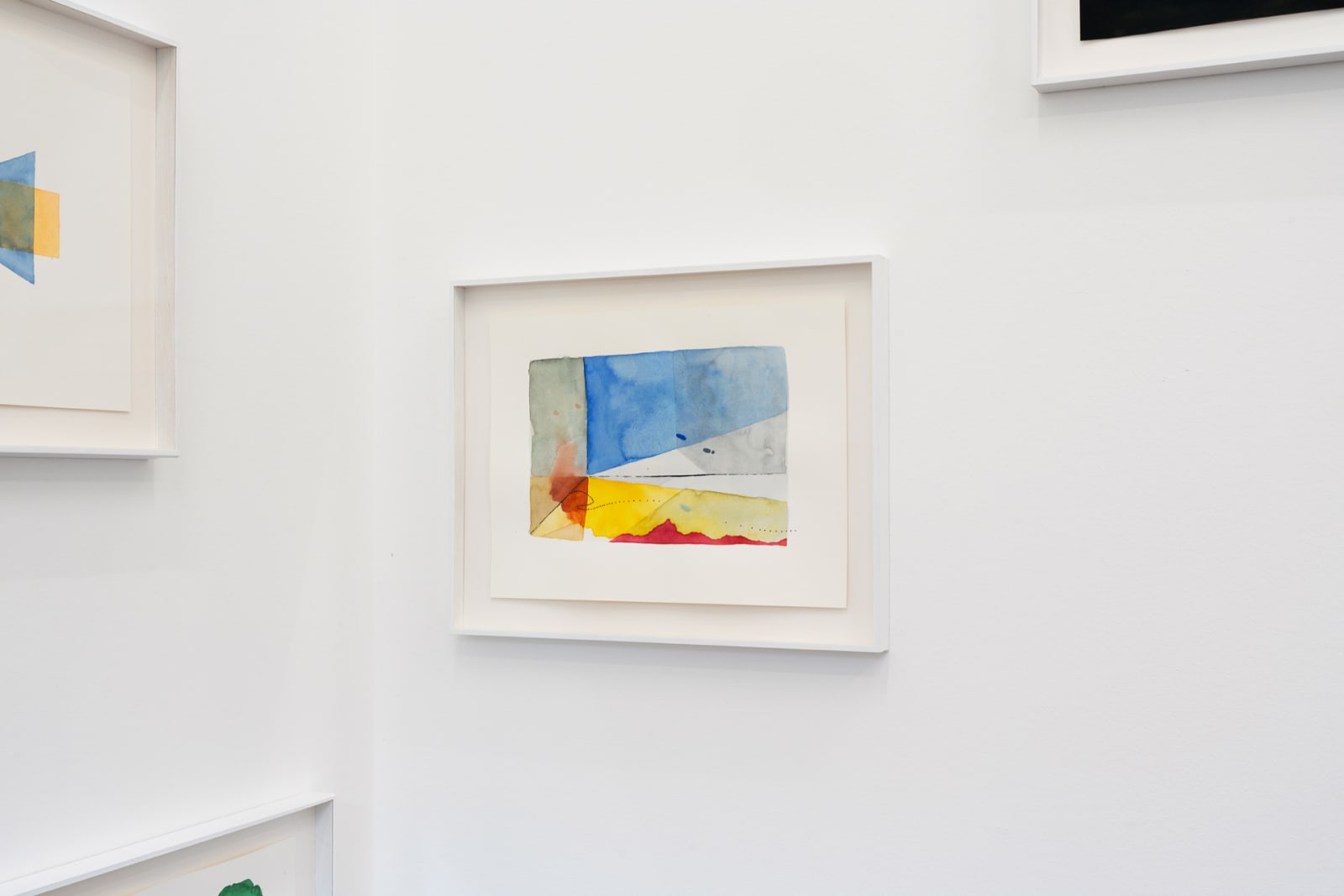
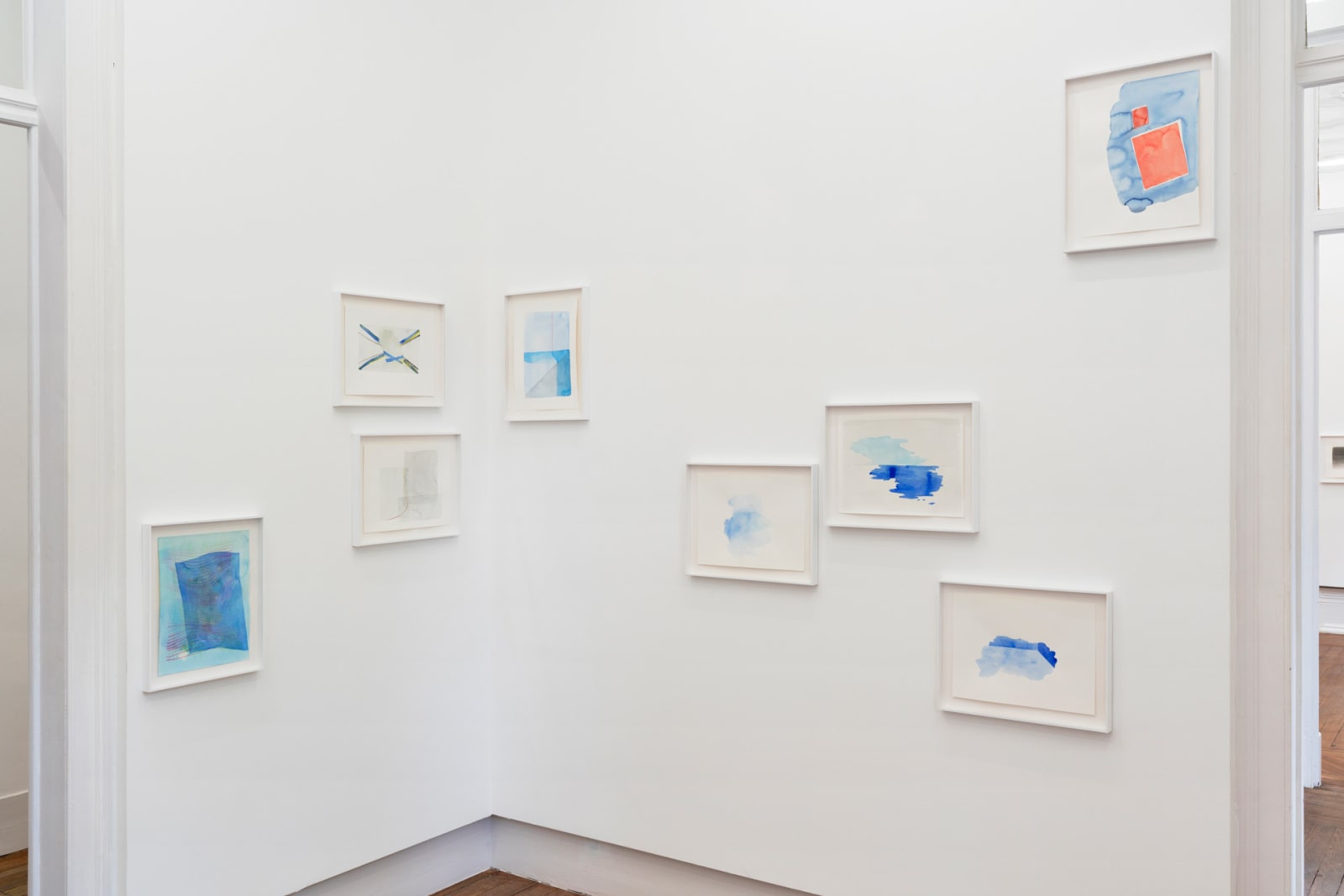

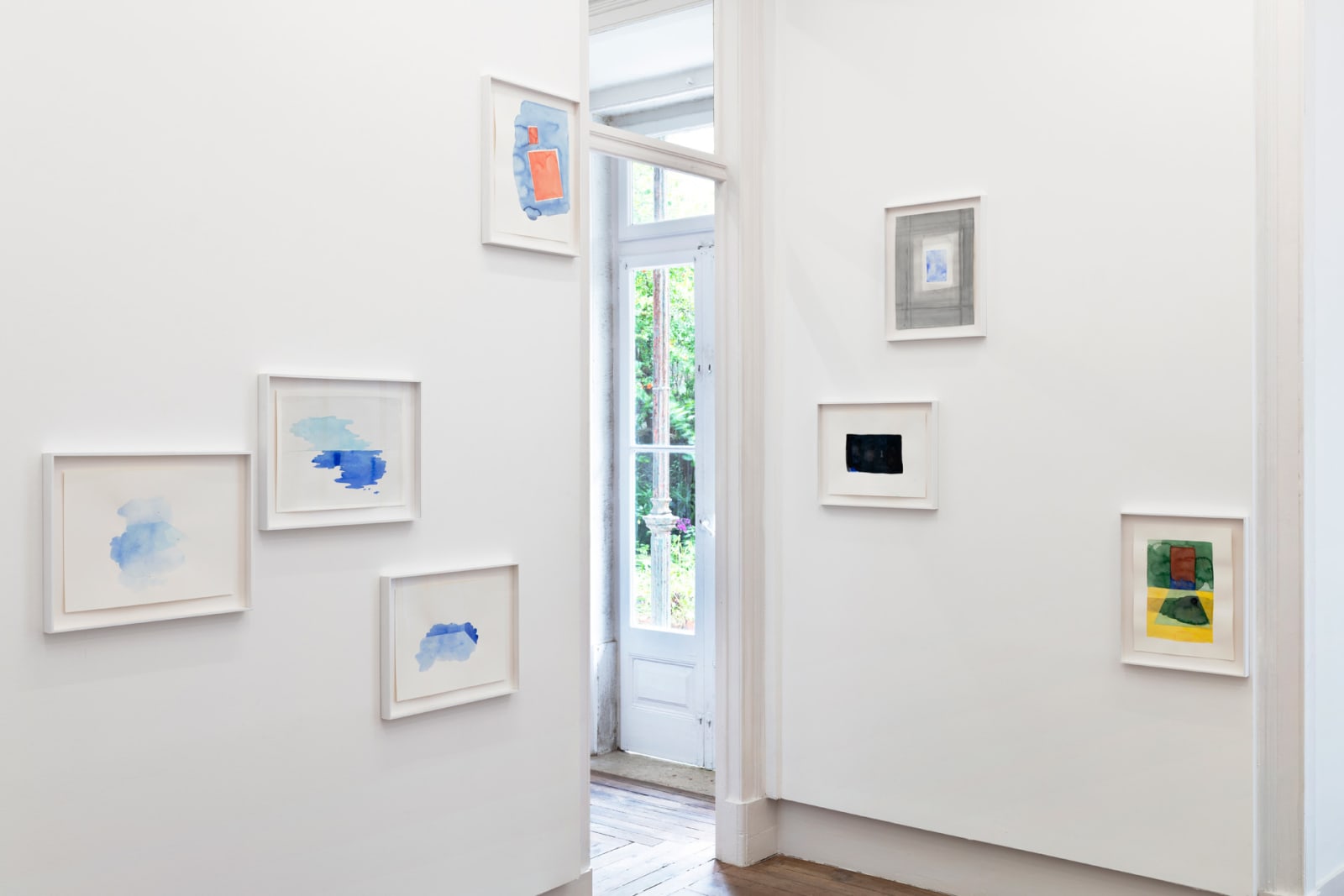
This exhibition features Julius Heinemann’s most recent watercolour production. The title alludes to how each set of works looks into a certain thread of thought, while gravitating around the notion that subjective vision, along with the recognition of identity, are drivers of creation. It also refers to the typically fragmented and essentially humanistic writings of Michel de Montaigne, Novalis, Roland Barthes, Walter Benjamin and Fernando Pessoa.
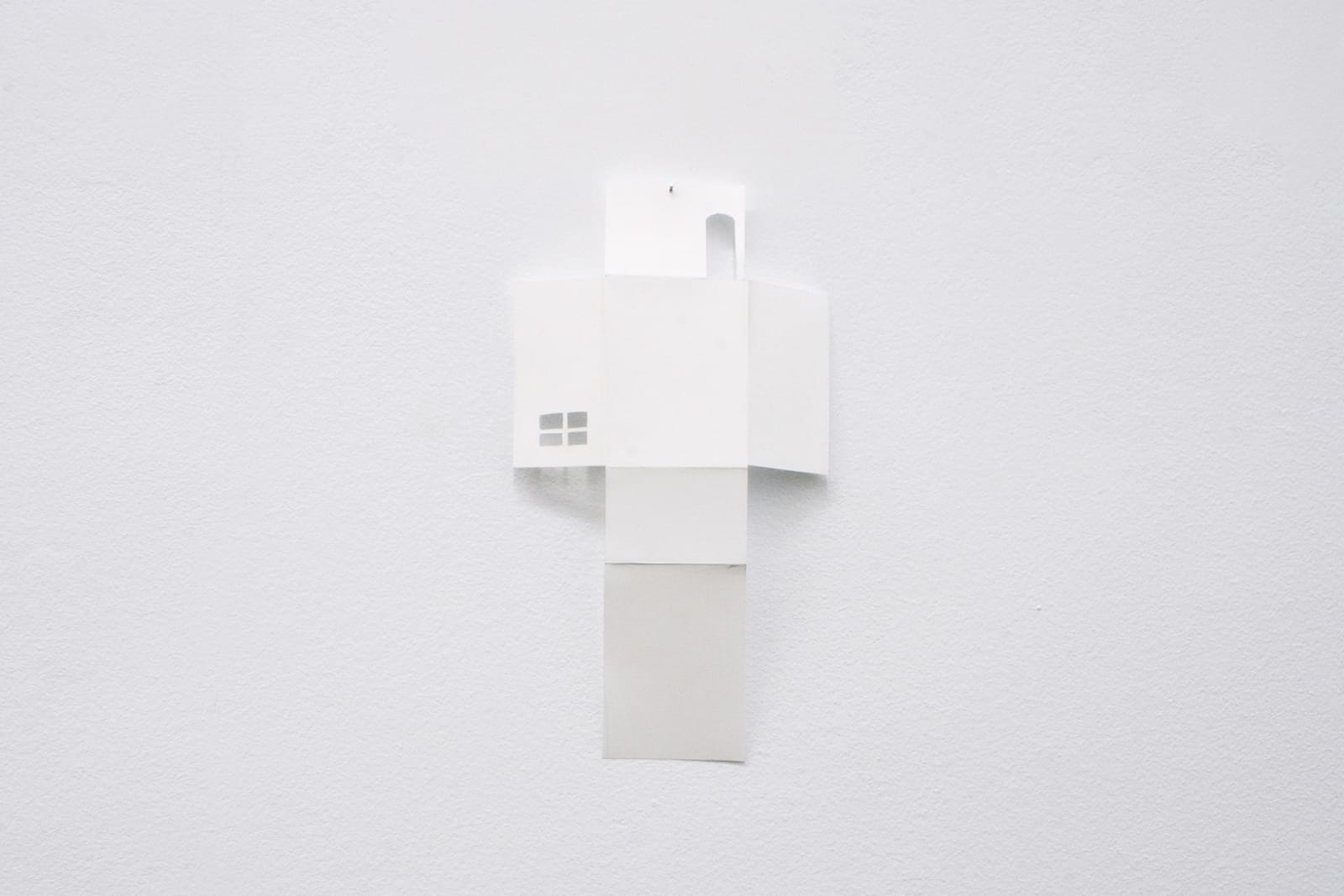
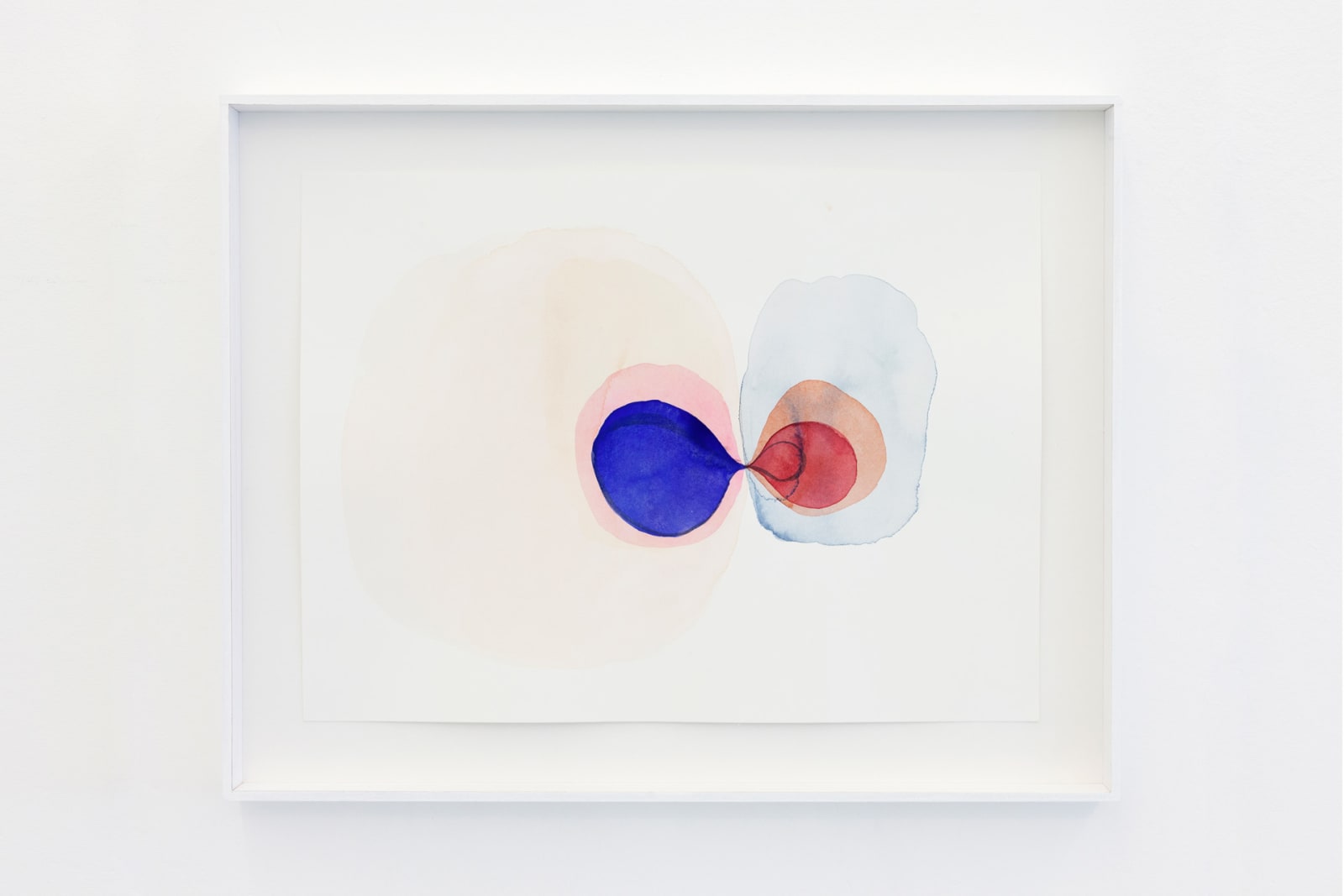
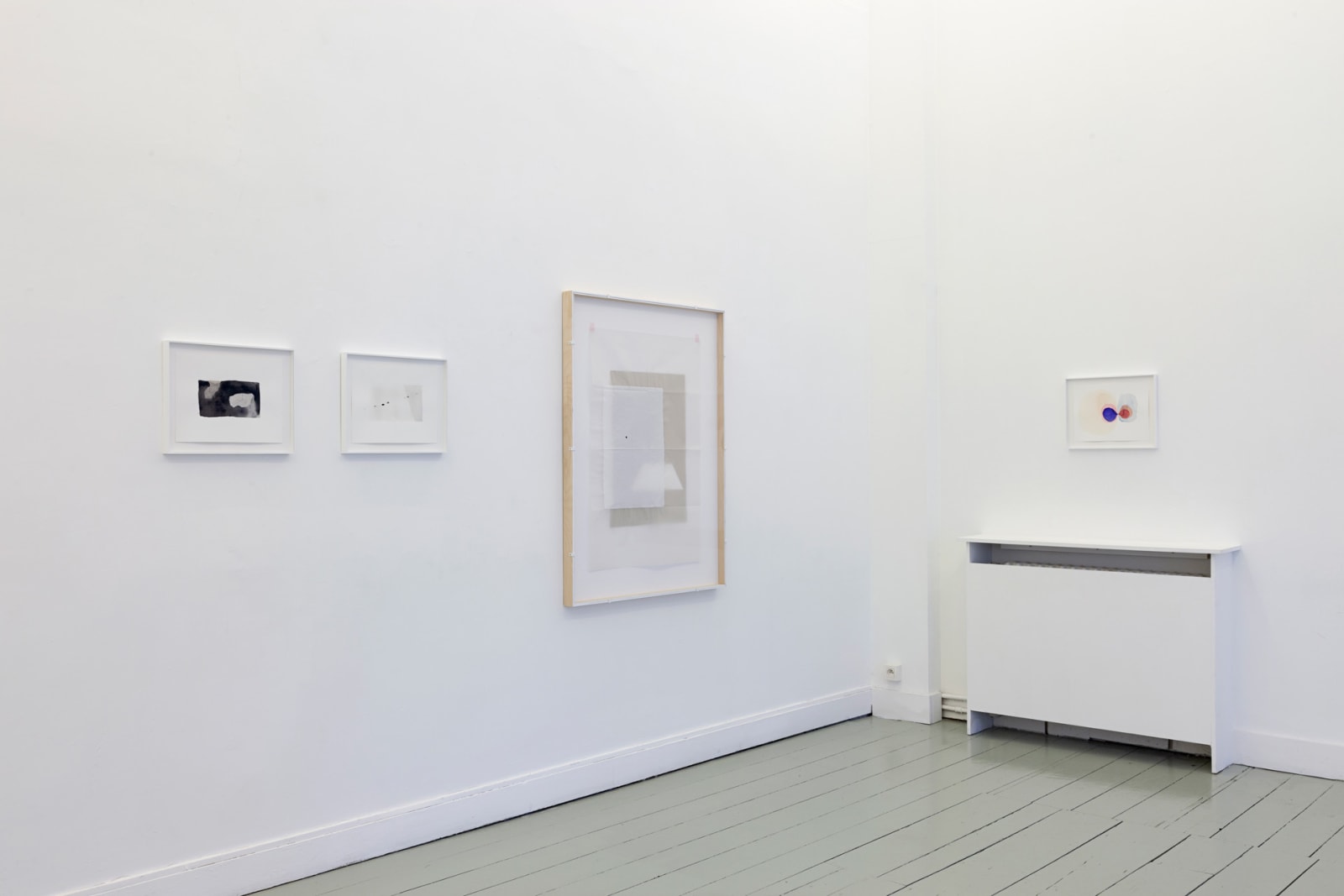
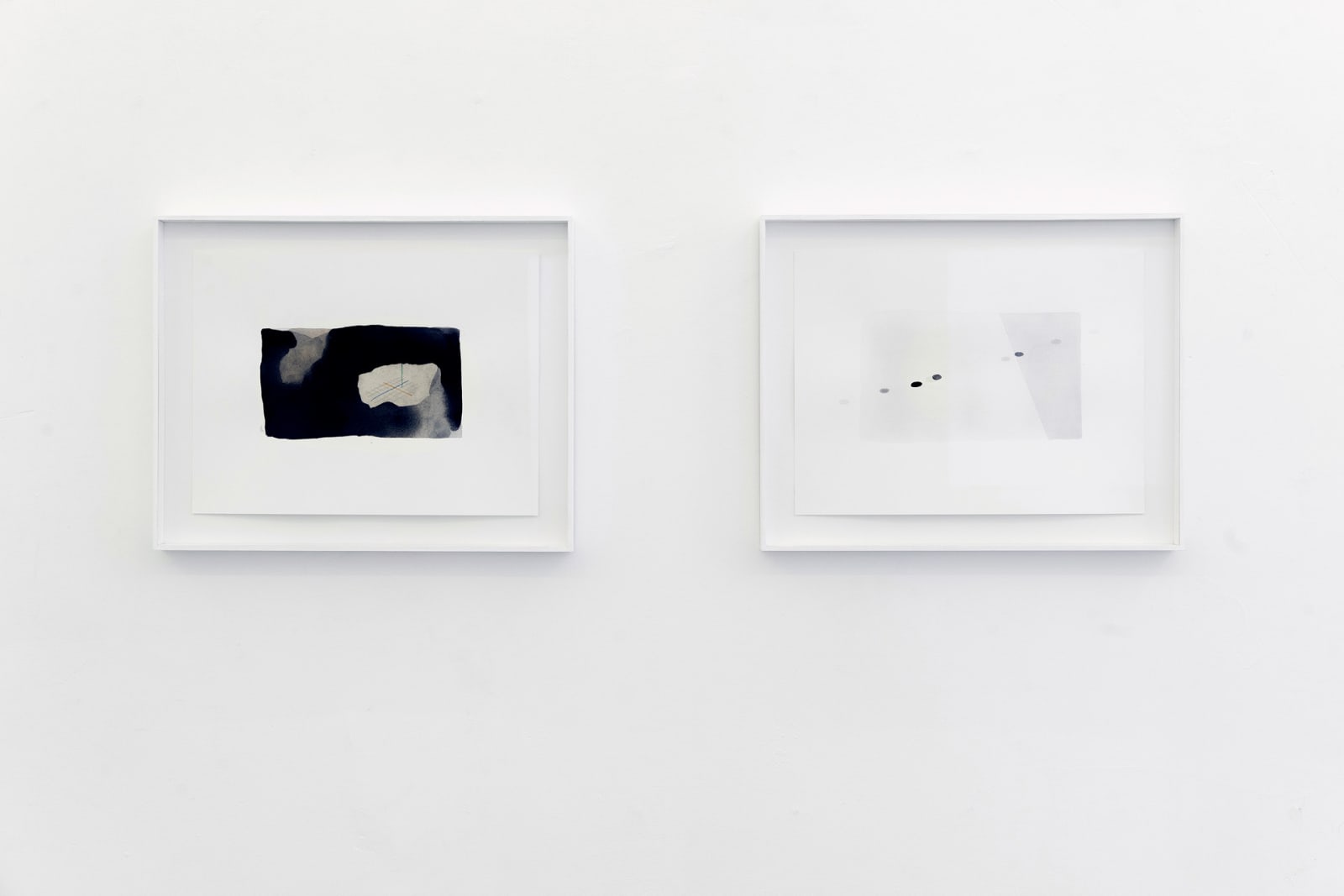
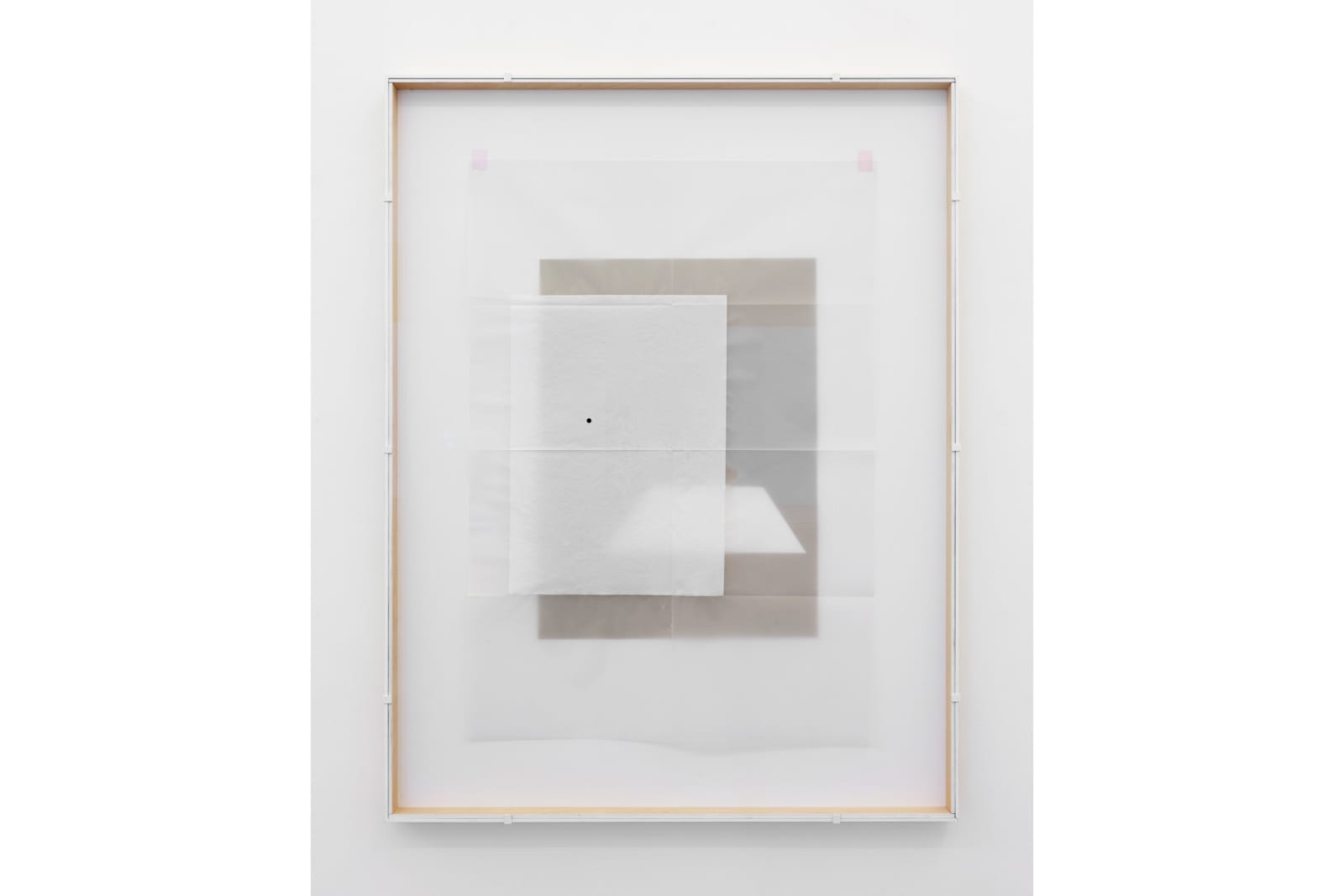
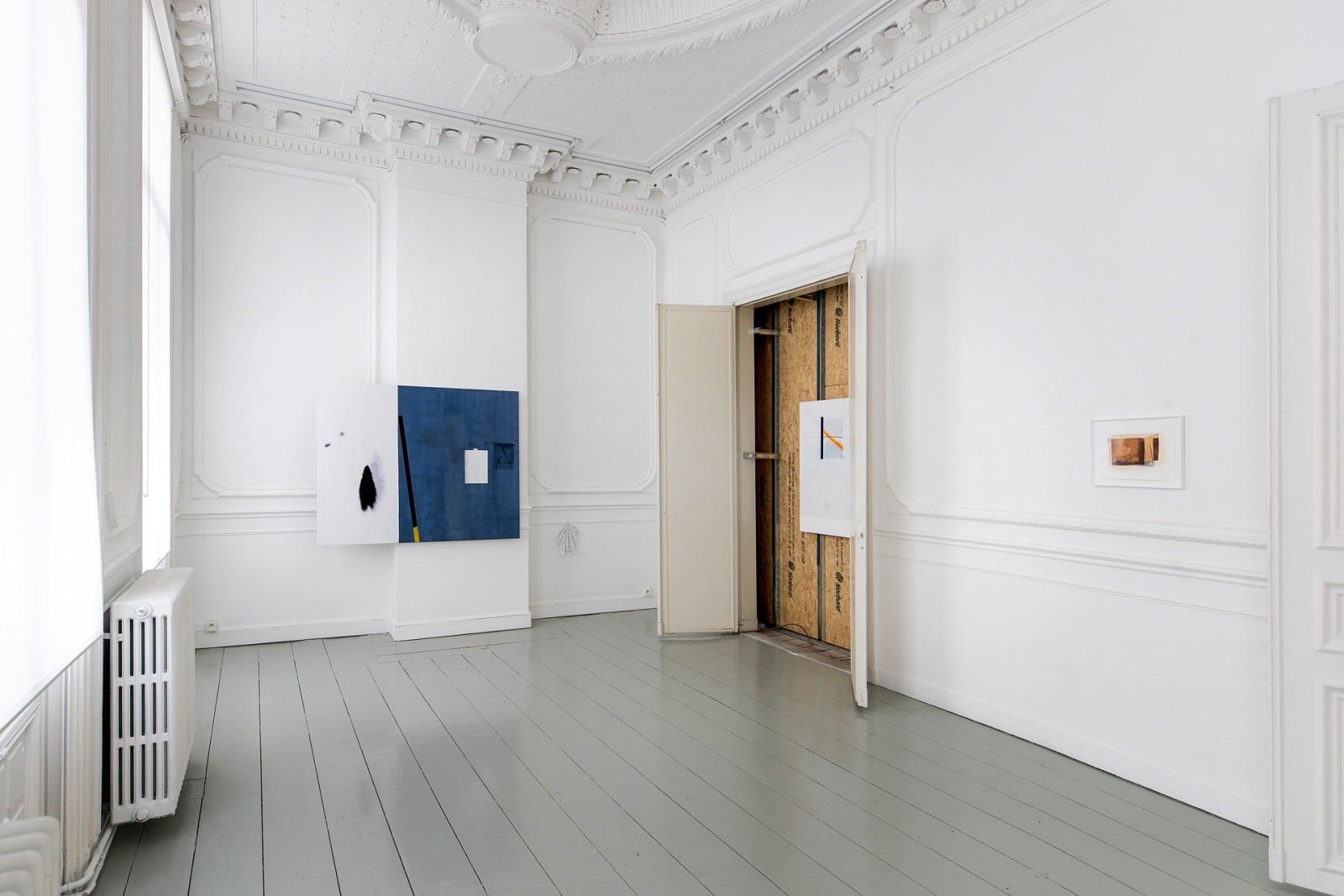
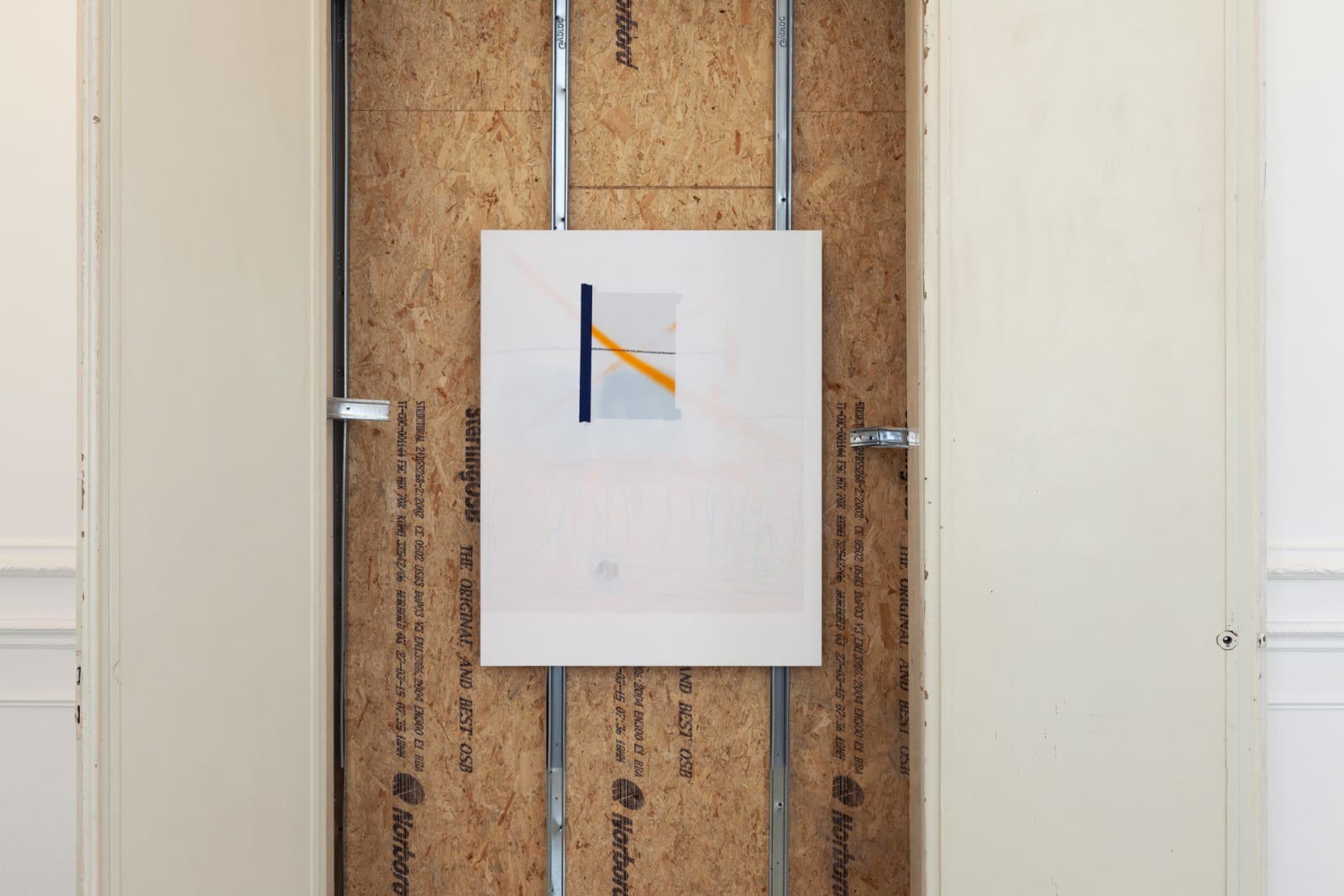
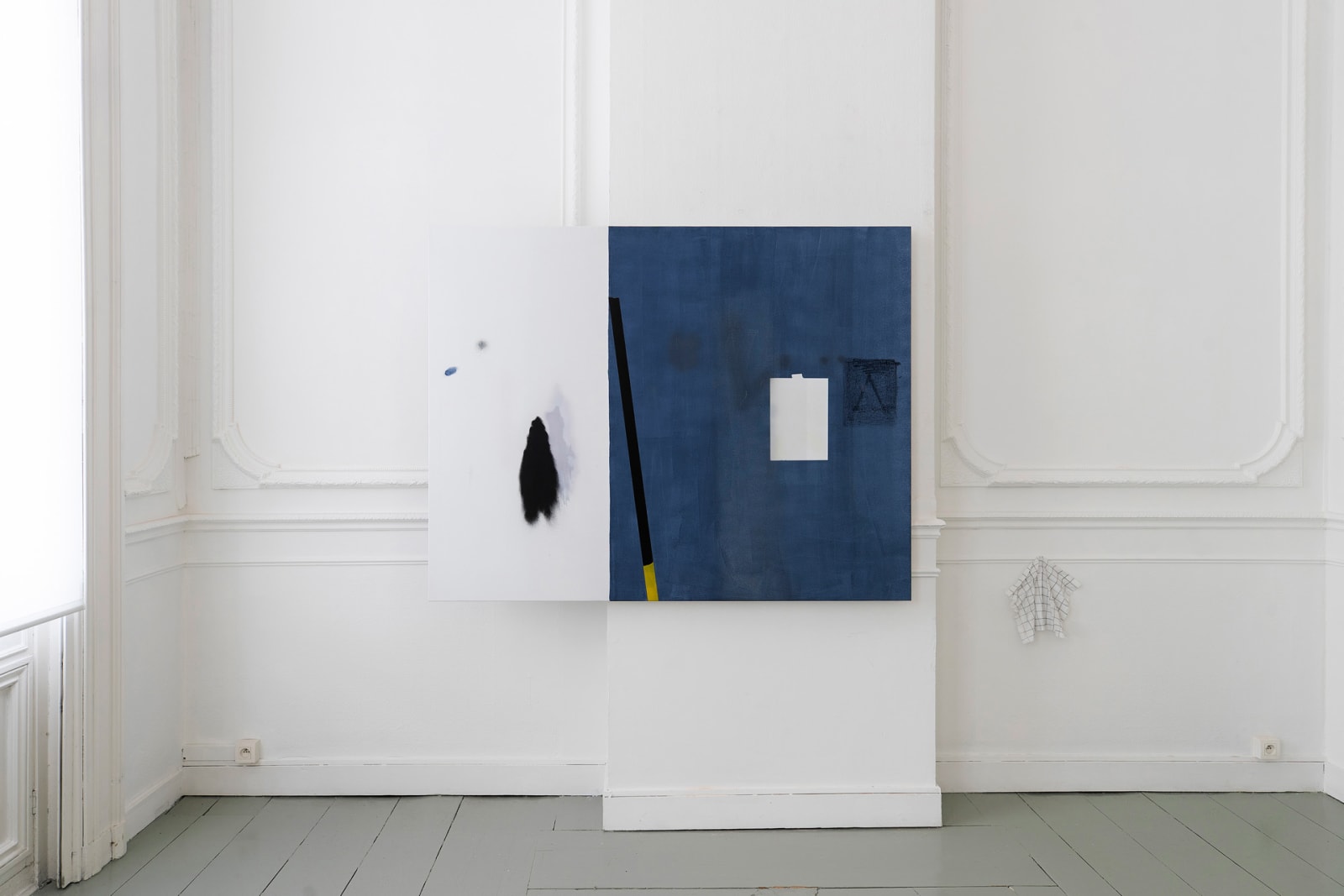
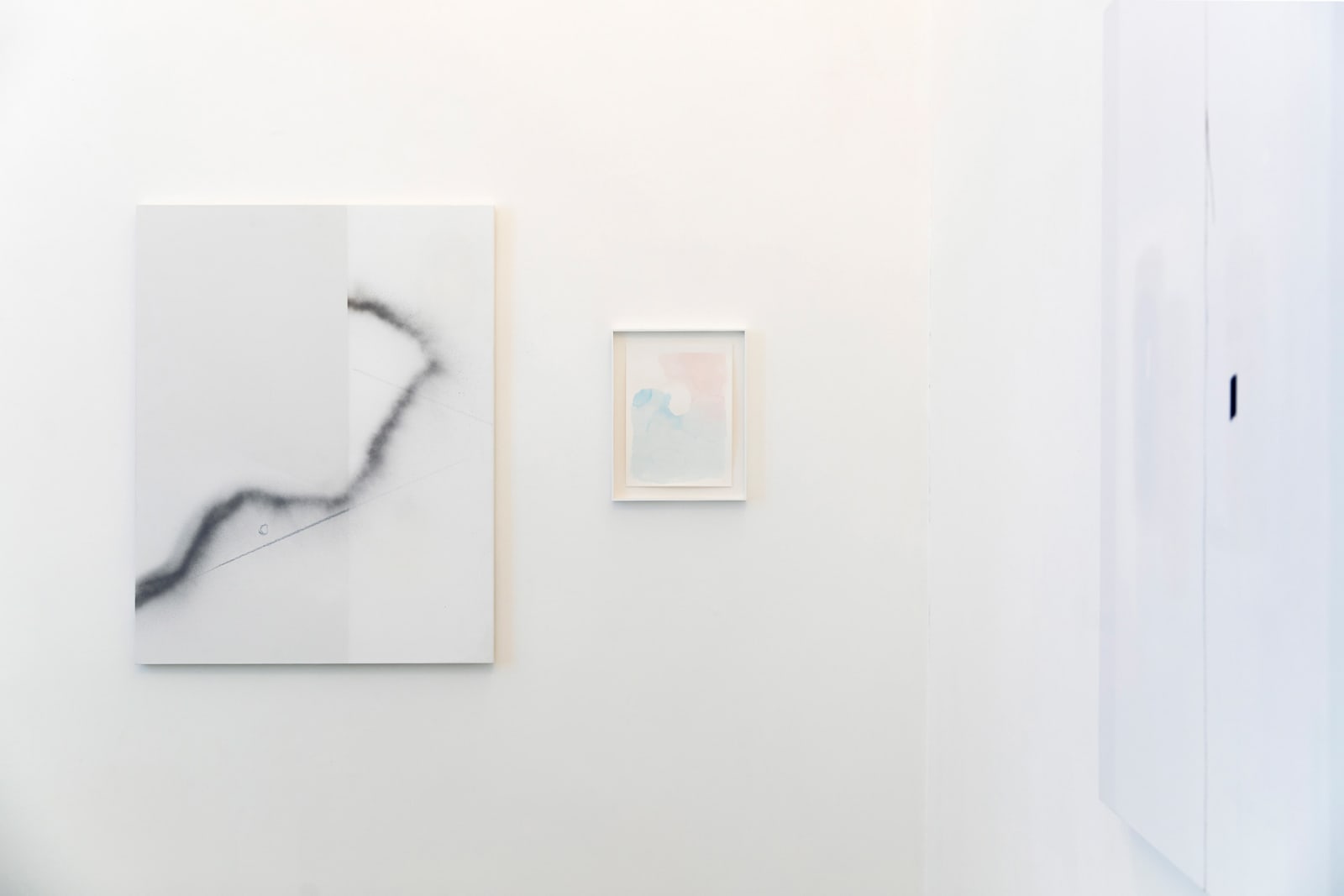
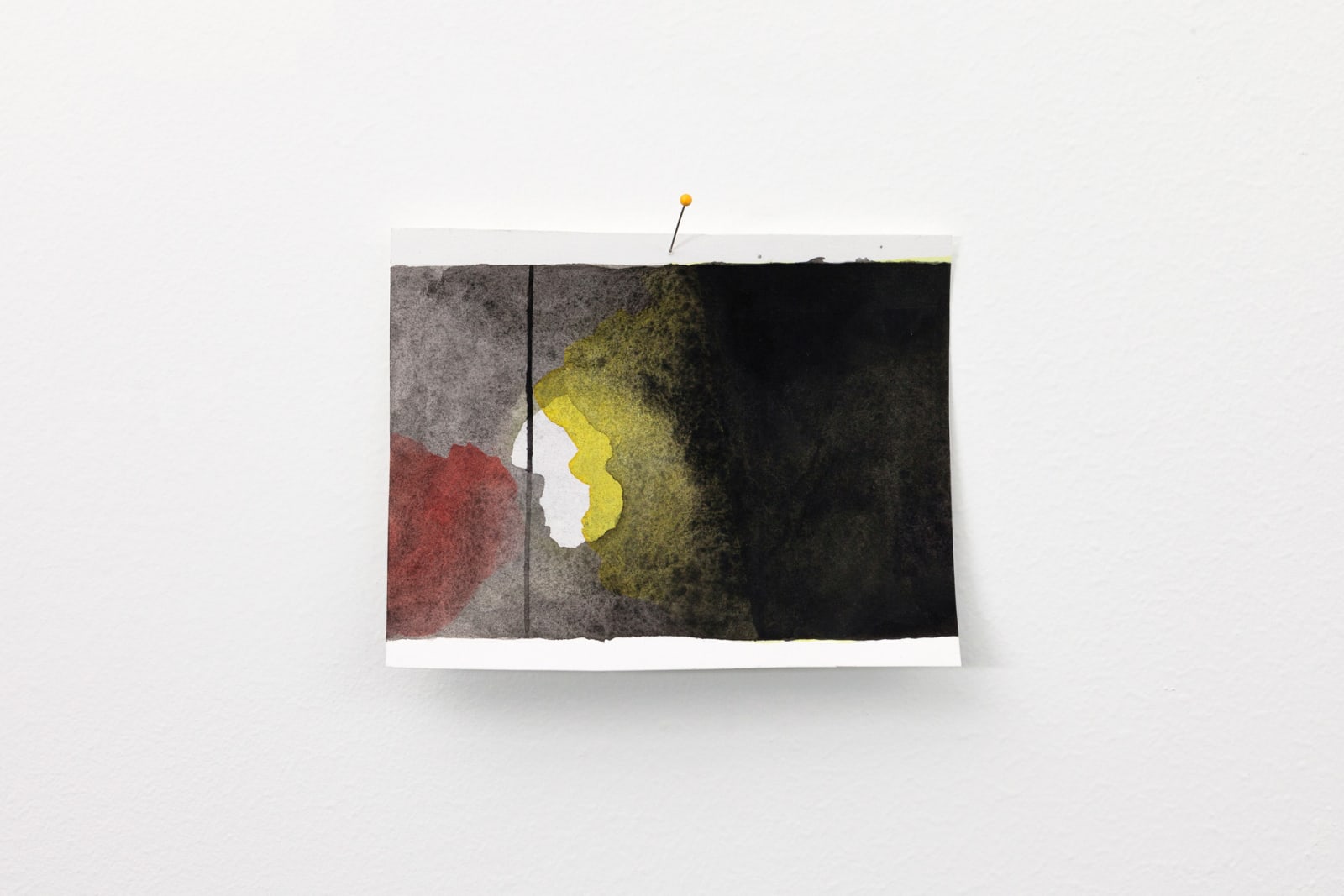
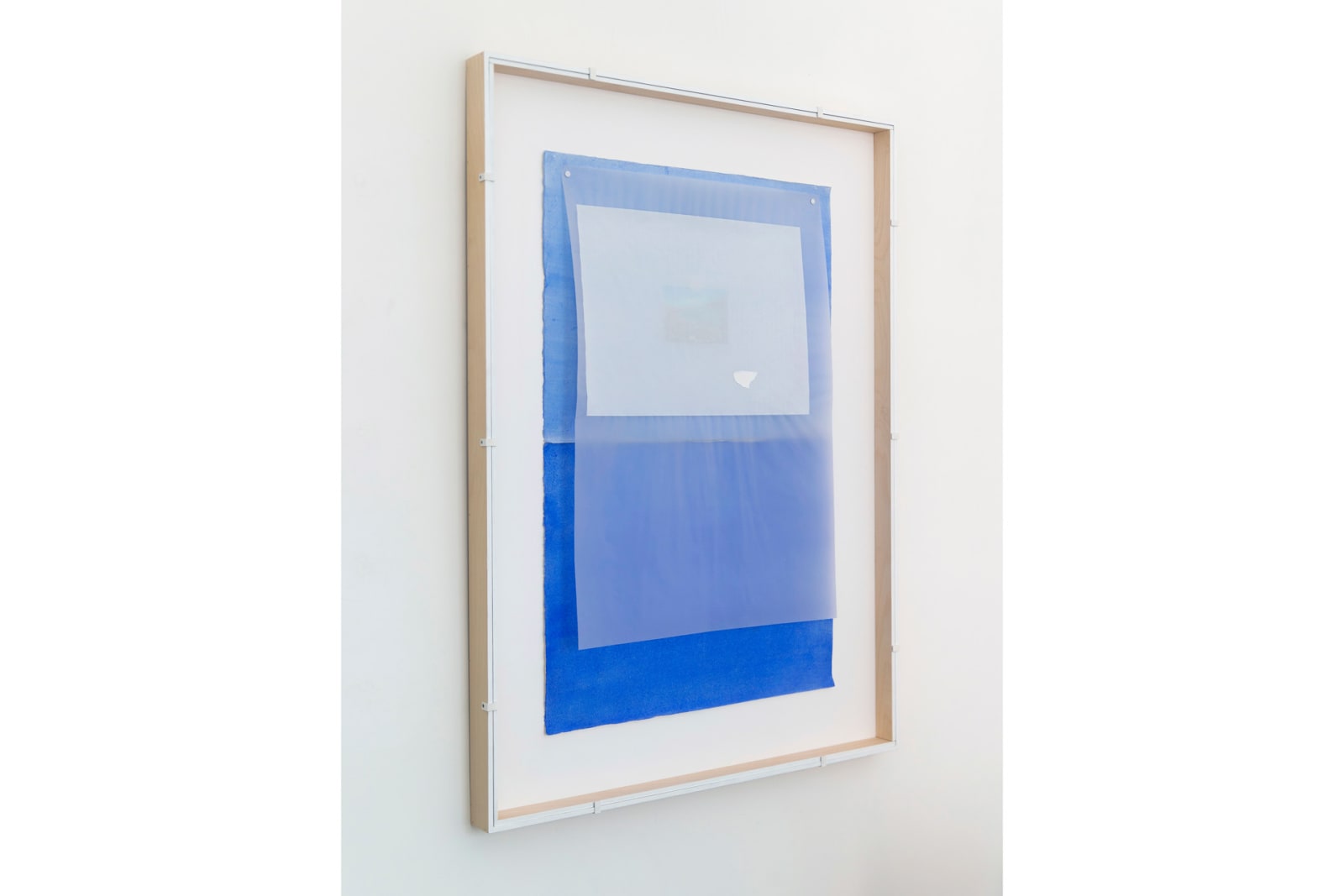
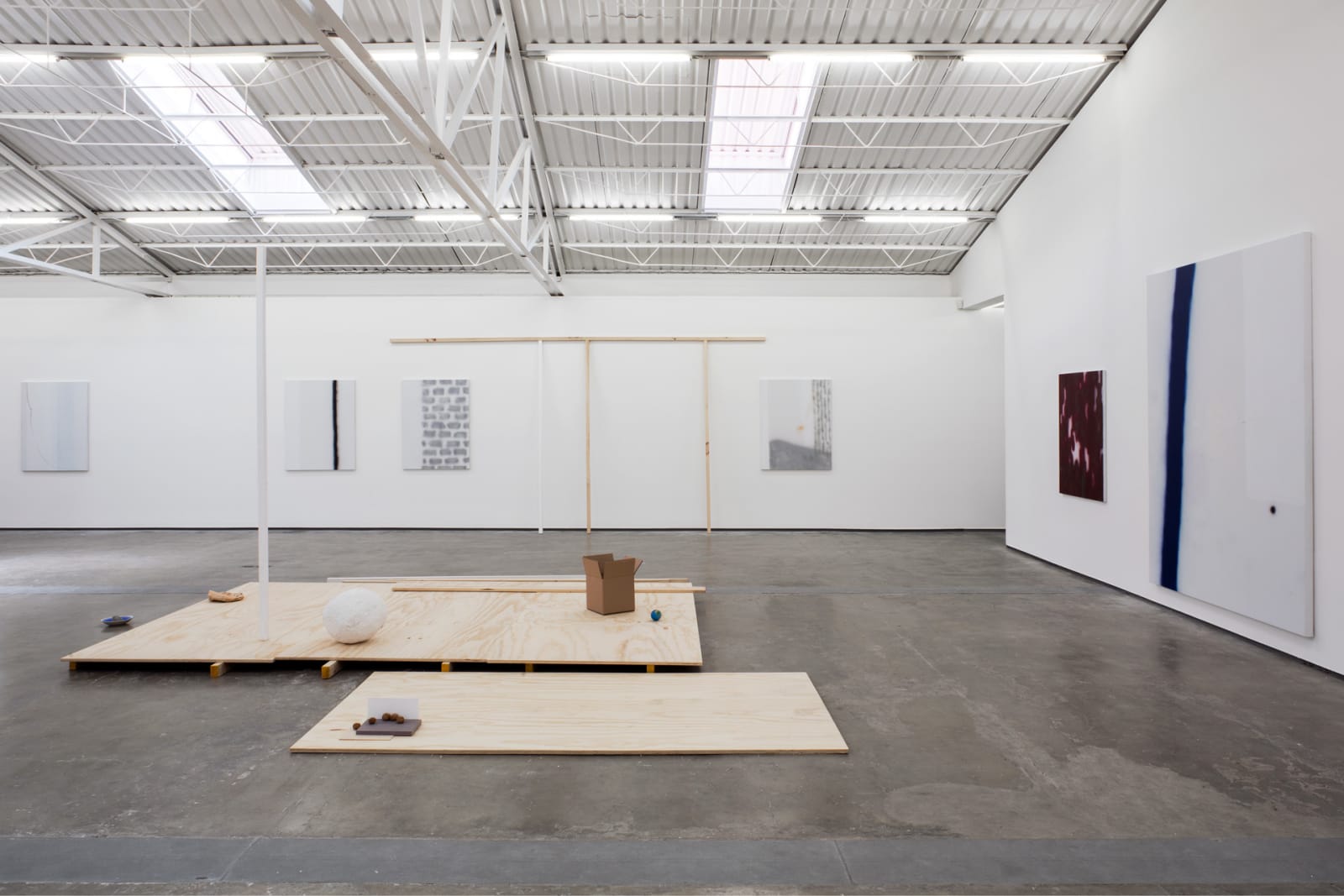
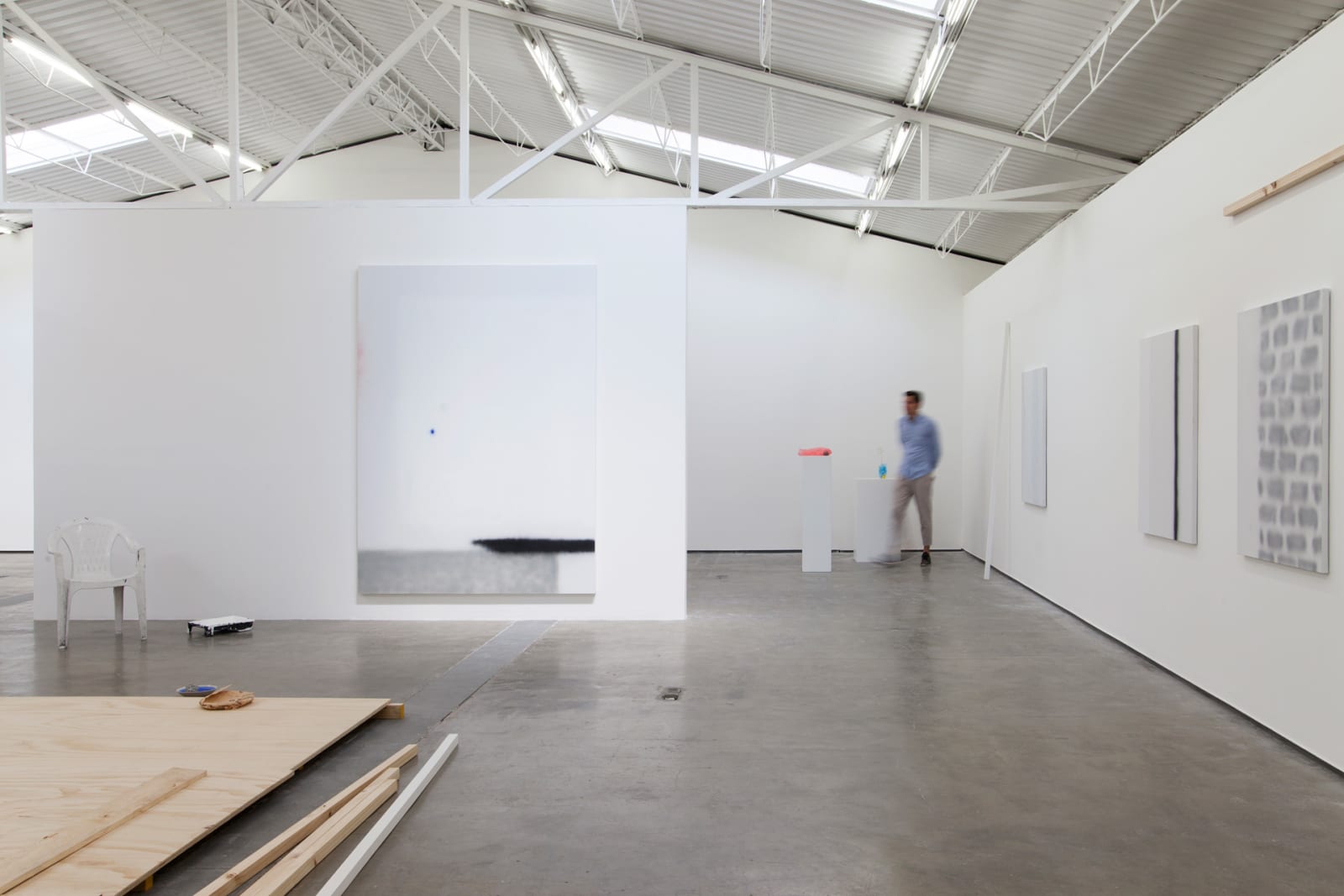
Julius Heinemann’s watercolours are arranged on the gallery walls like virtual windows. Through them, the exhibition space, once a domestic environment, opens up its quiet intimacy to the outside. The watercolours encapsulate glimmers of the outside world, which unfolds parallel to private space, and to every author’s interiority. In them, Heinemann explores themes such as the perception of space, of light and shadow, as well the polysemy of maritime landscapes and the weight of everyday objects. These are tactful refections on existence in the broadest sense. Each watercolour operates like and aphorism and synthesizes a concrete experience to project it onto the subjective temporality of artistic production.
Essay also operates as a counterpart to the large-scale installation O Espelho [The Mirror], conceived specifcally for Casa da Cerca in Almada, and the first institutional exhibition of Heinemann’s work in Portugal. While the gallery space is sufused with vital fow – external sensorial experience brought into the private domain – the Almada installation proposes a movement from inner to outer space and the public domain. These projects interlock like identical and opposite hands whose symmetry conceals the functional dissymmetry that characterizes the human condition.
Yara Sonseca-Mas
Photos 1, 5, 6, 18 & 19: Pedro Tropa; all other photos: Julius Heinemann; Courtesy Jahn und Jahn, Lisboa
Esta exposição é dedicada à produção mais recente de aguarelas de Julius Heinemann. O seu título refere-se à forma como cada grupo de obras aborda um determinado fo de pensamento, enquanto gravita em torno da ideia de visão subjetiva e reconhecimento da própria identidade como força motriz de criação. Toma como referência as produções caracteristicamente fragmentadas e essencialmente humanistas presentes nos escritos de Michel de Montaigne, Novalis, Roland Barthes, Walter Benjamin e Fernando Pessoa.
As aguarelas de Julius Heinemann distribuem-se pelas paredes da galeria como janelas virtuais. O espaço expositivo, previamente destinado ao uso doméstico, abre-se para o exterior através delas, a partir da quietude da sua intimidade. As aguarelas encapsulam os lampejos do mundo exterior que fuem em paralelo ao espaço privado, à interioridade do autor. Heinemann explora aqui temas como a perceção do espaço, da luz e da sombra, a polissemia das paisagens marítimas e o peso dos objetos quotidianos. São refexos sensíveis sobre a existência num sentido amplo. Cada aguarela funciona como um aforismo e sintetiza uma experiência concreta, projetando-a no tempo subjetivo do feito artístico.
Essay funciona também como contraparte da instalação em grande escala O Espelho, projetada especifcamente para a Casa da Cerca em Almada e primeira apresentação institucional de Heinemann em Portugal. Enquanto o espaço da galeria introduz o fuxo vital, a experiência sensorial do exterior no âmbito privado, a instalação em Almada propõe transitar a experiência do espaço interior no exterior e no âmbito público. Dois projetos que se entrelaçam como mãos idênticas e inversas, cuja simetria esconde a dissimetria funcional que resume a condição humana.
Yara Sonseca-Mas
Fotos 1, 5, 6, 18 e 19: Pedro Tropa; todas as outras fotos: Julius Heinemann. Cortesia Jahn und Jahn, Lisboa
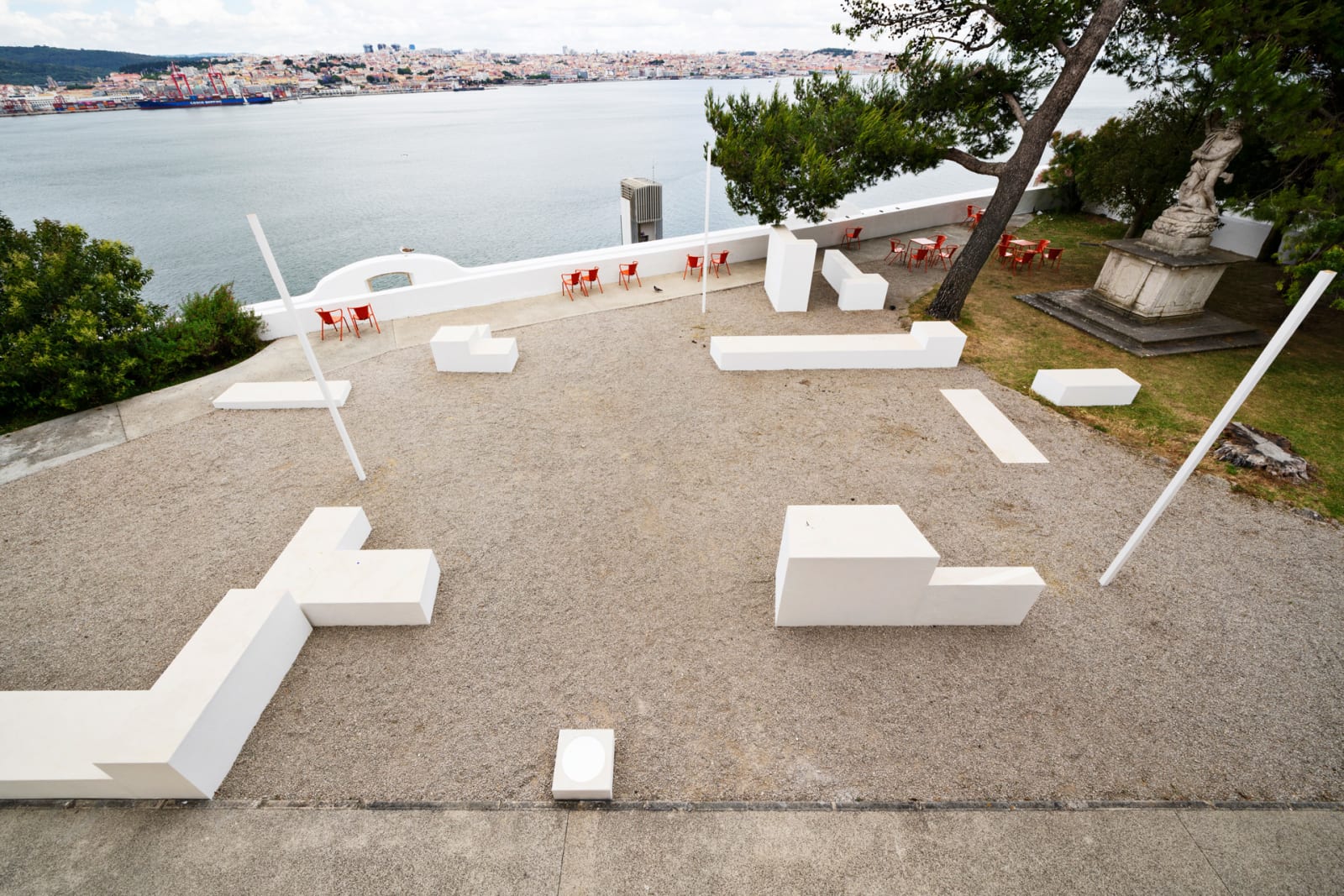
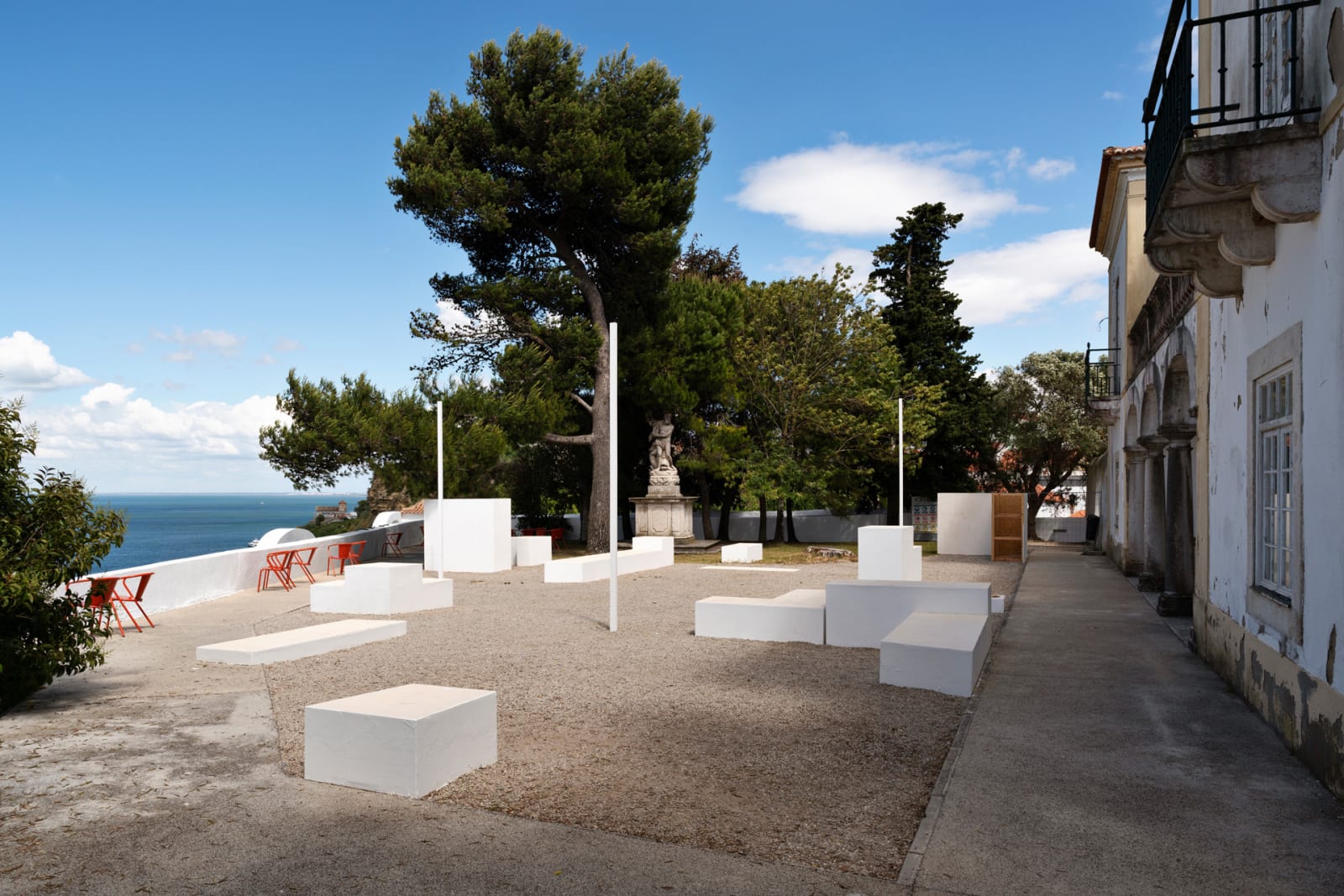

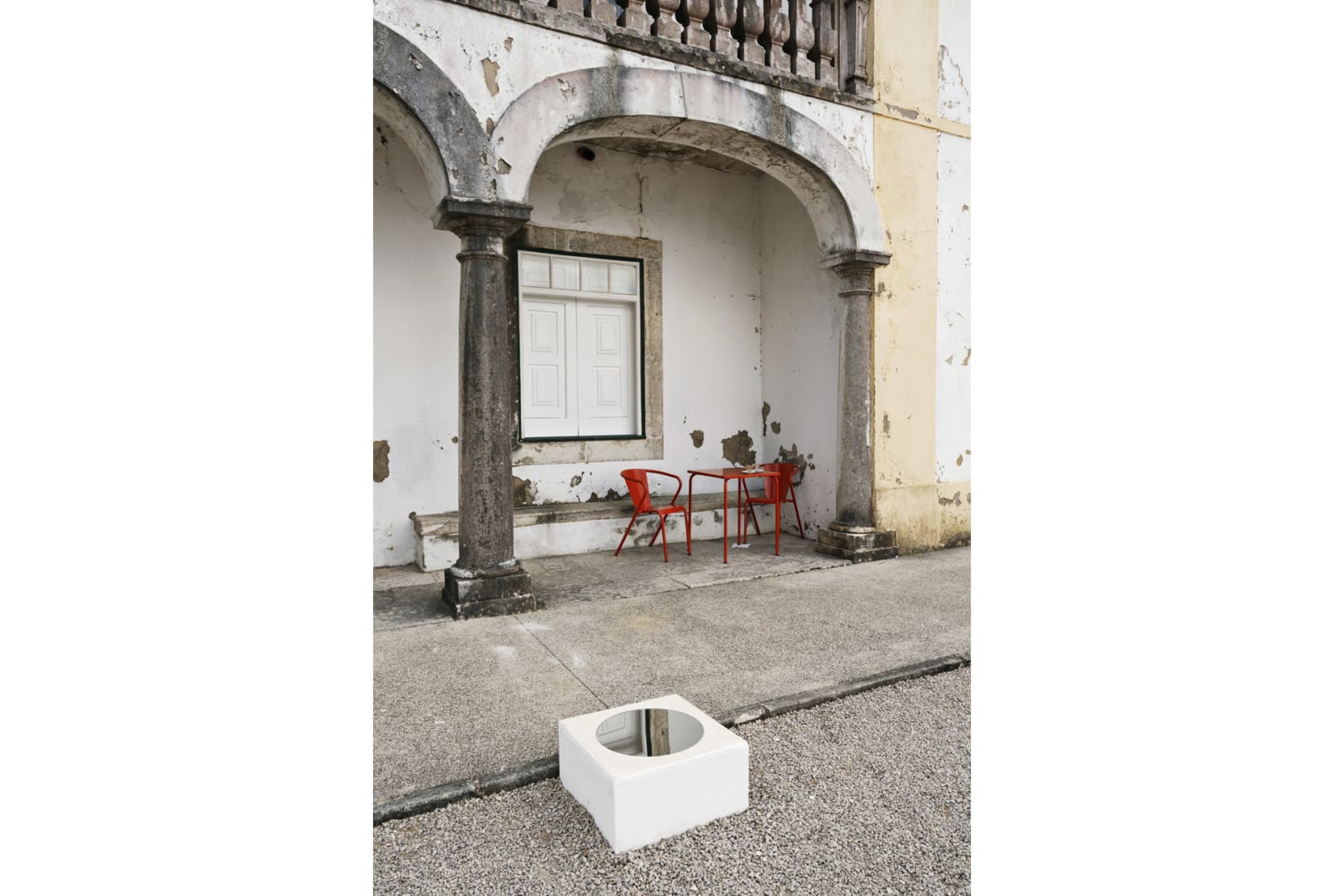
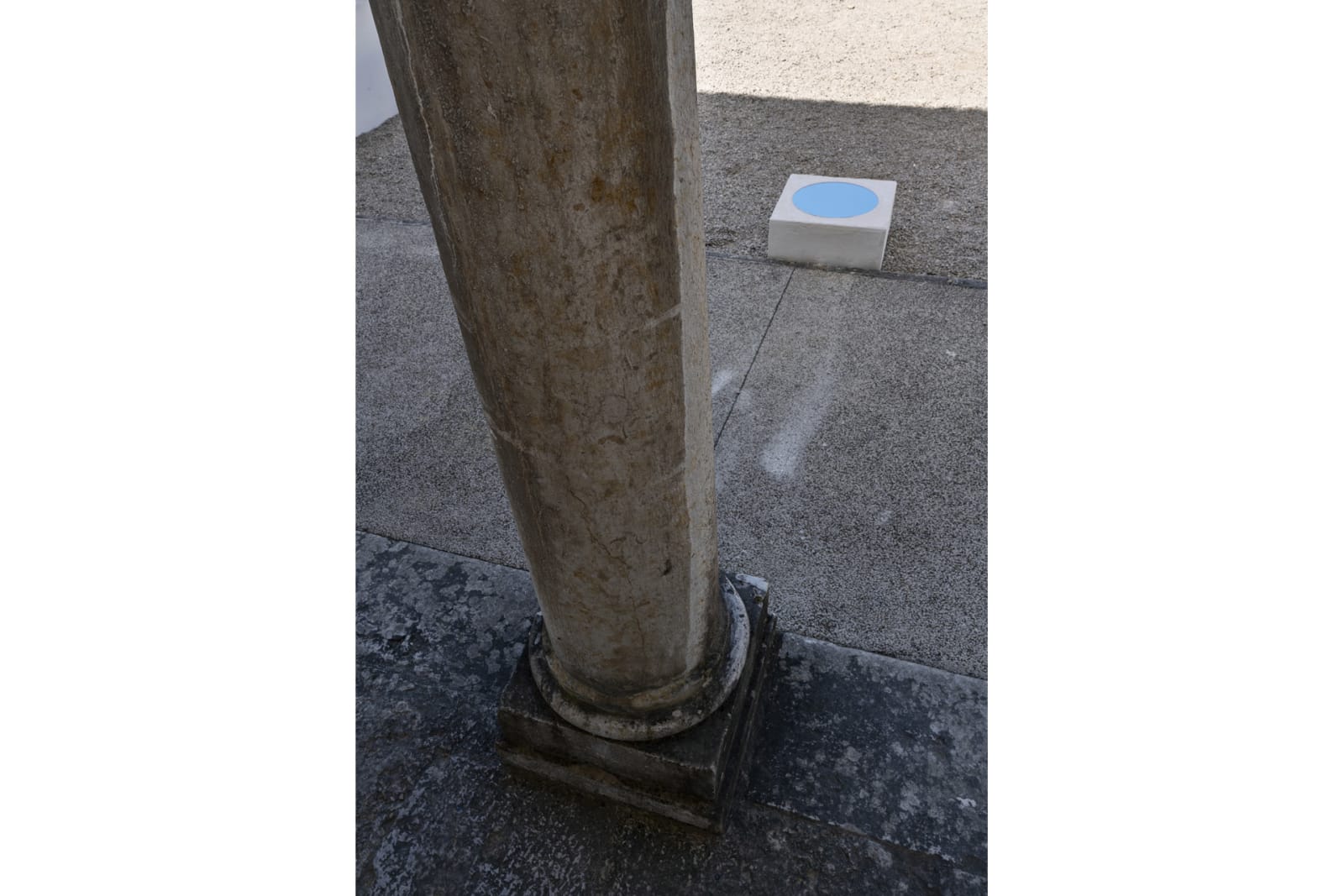
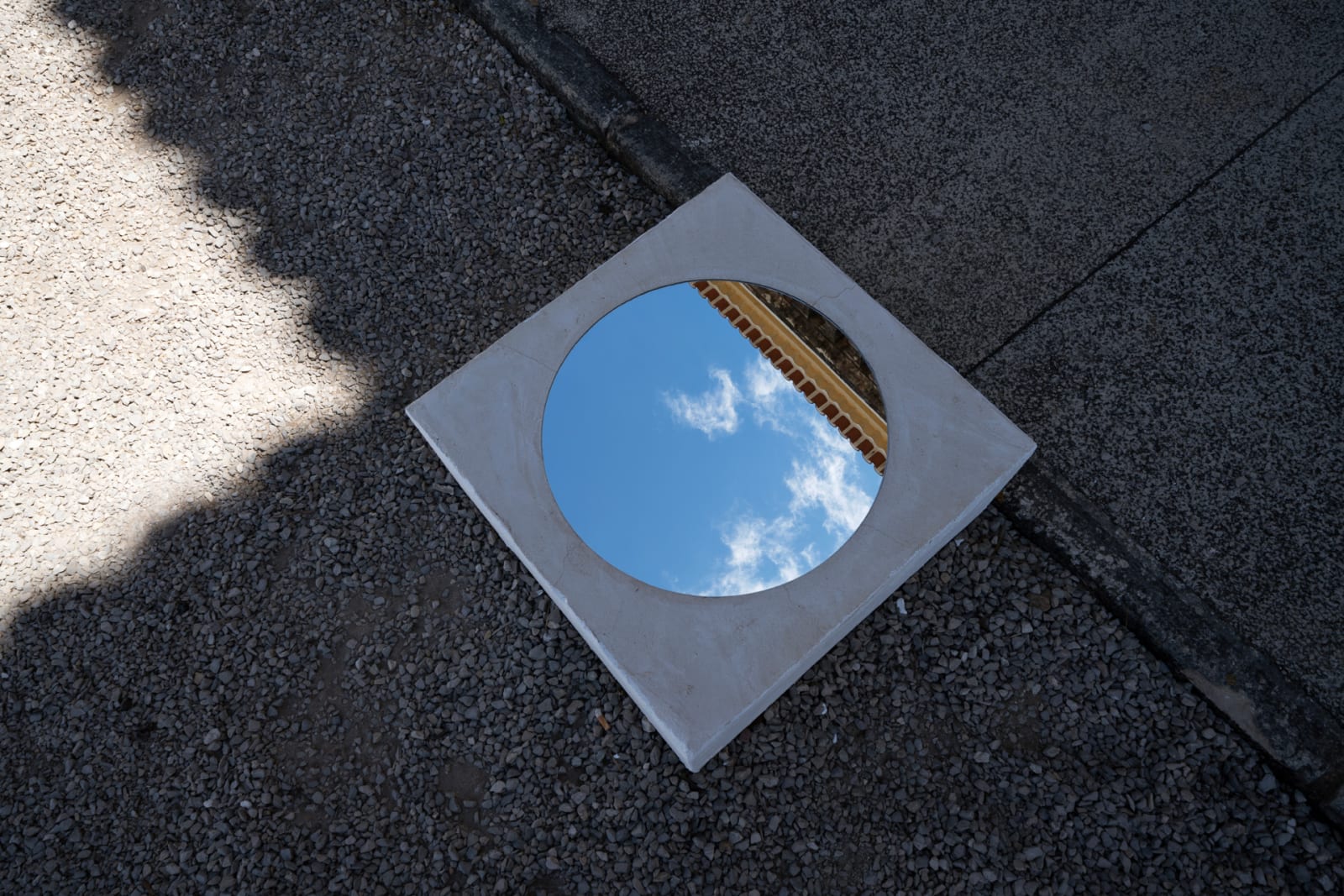
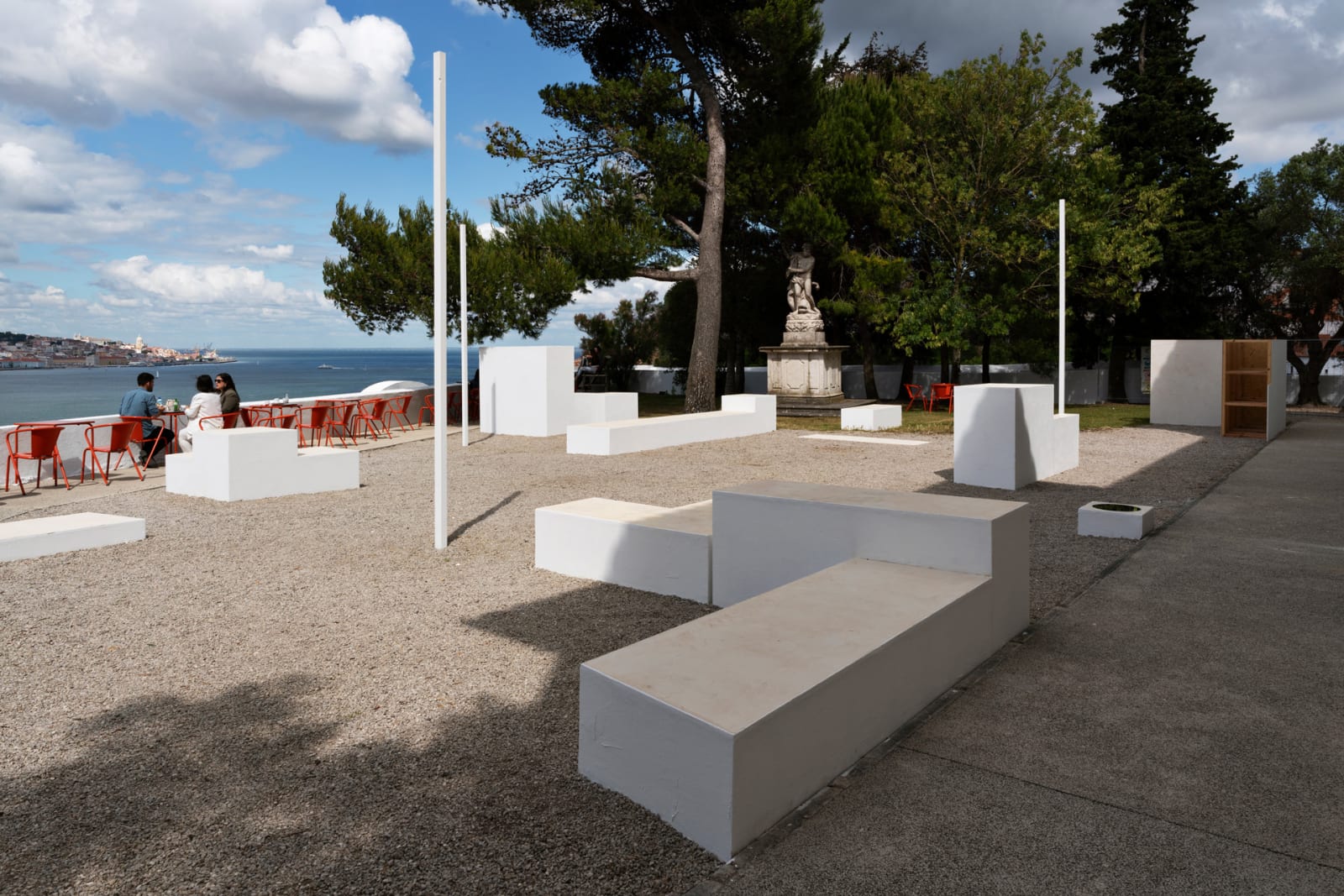
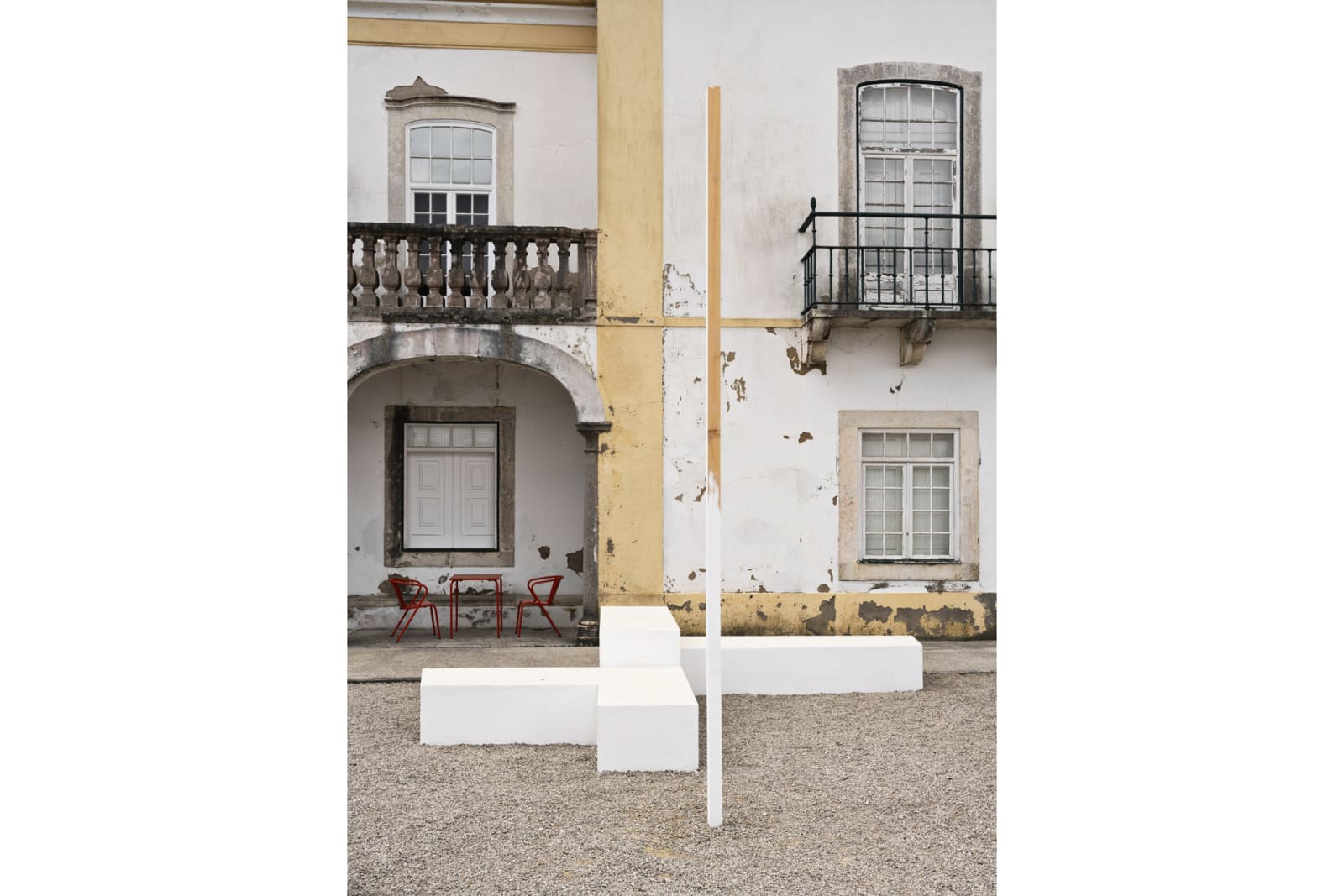
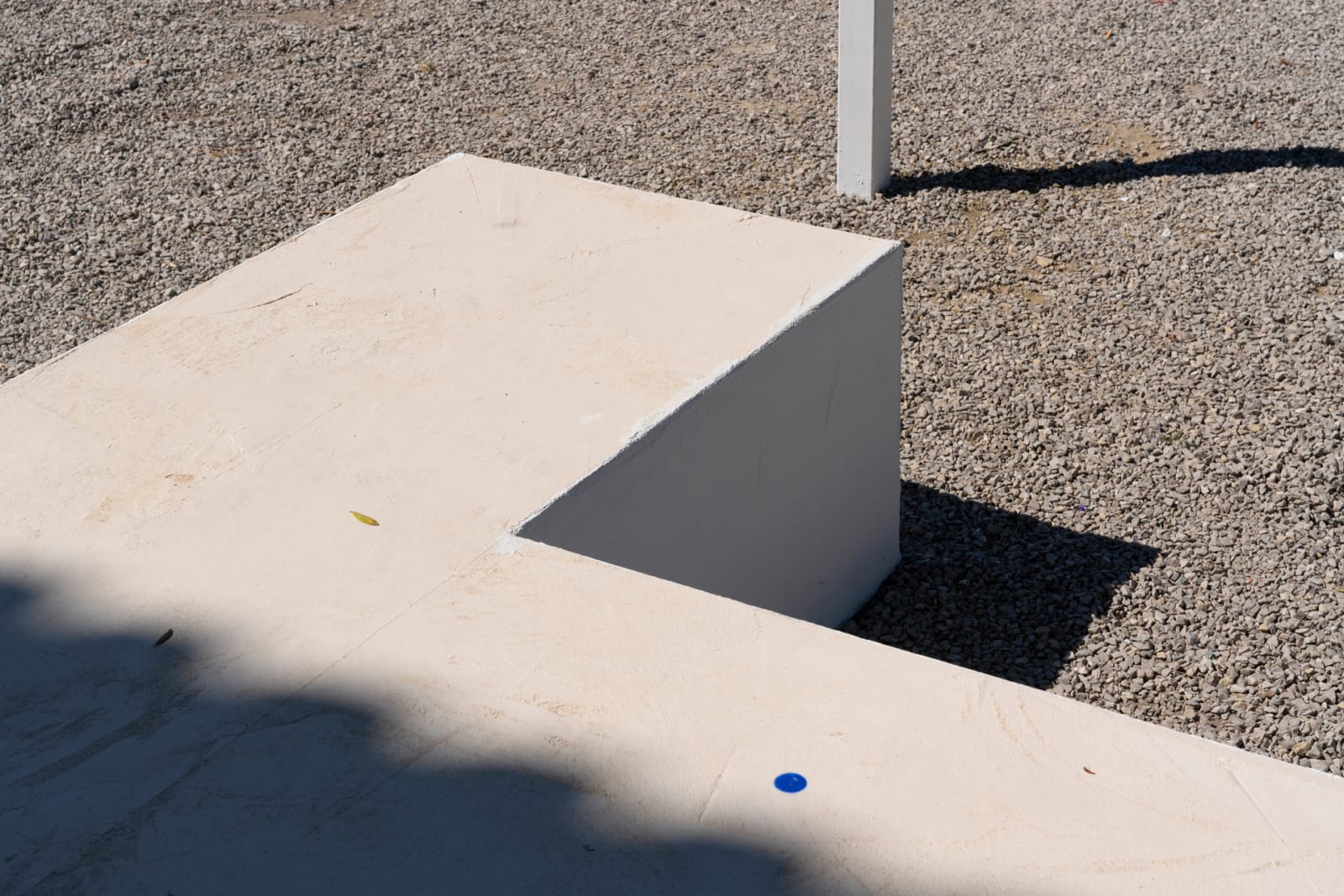
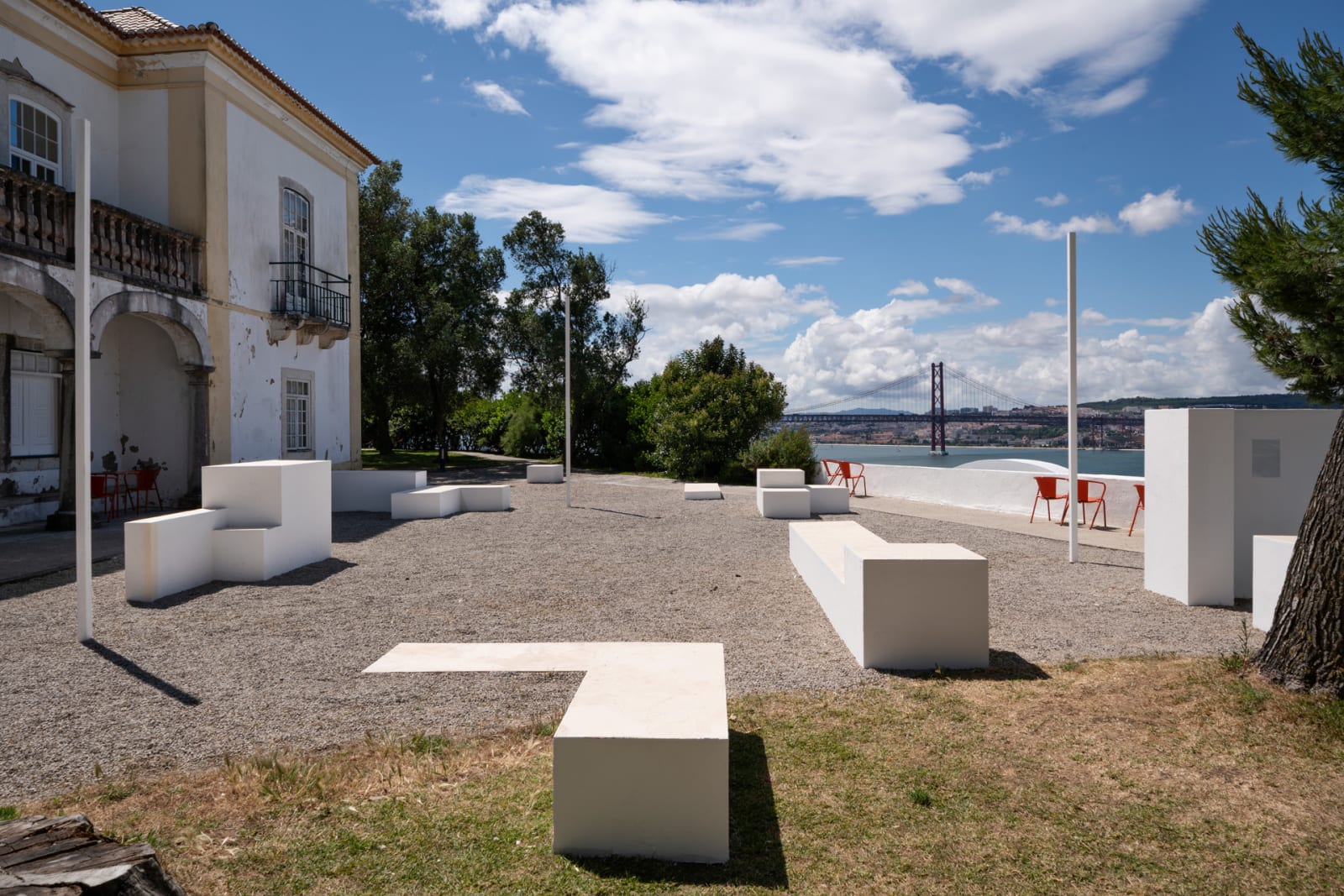
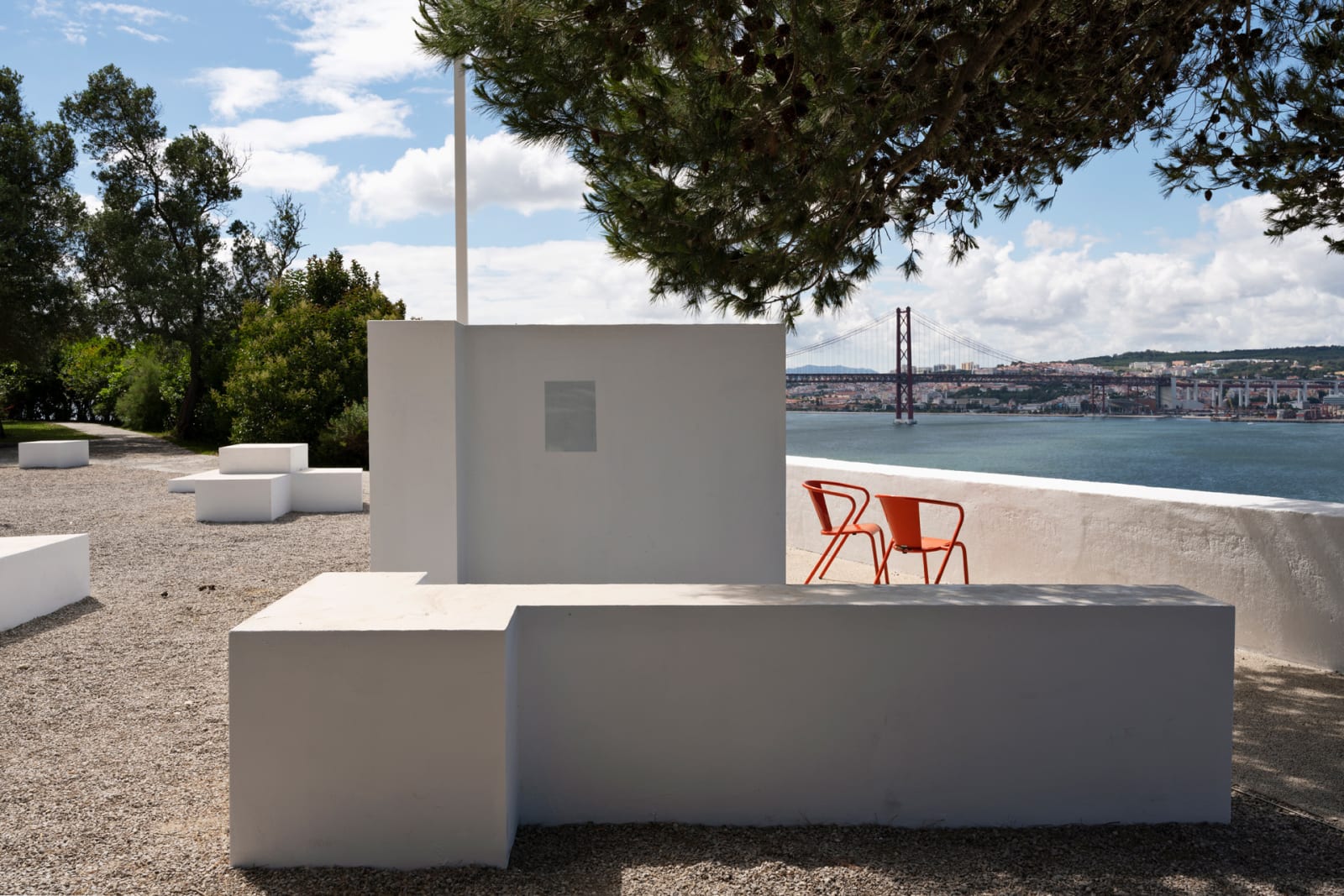
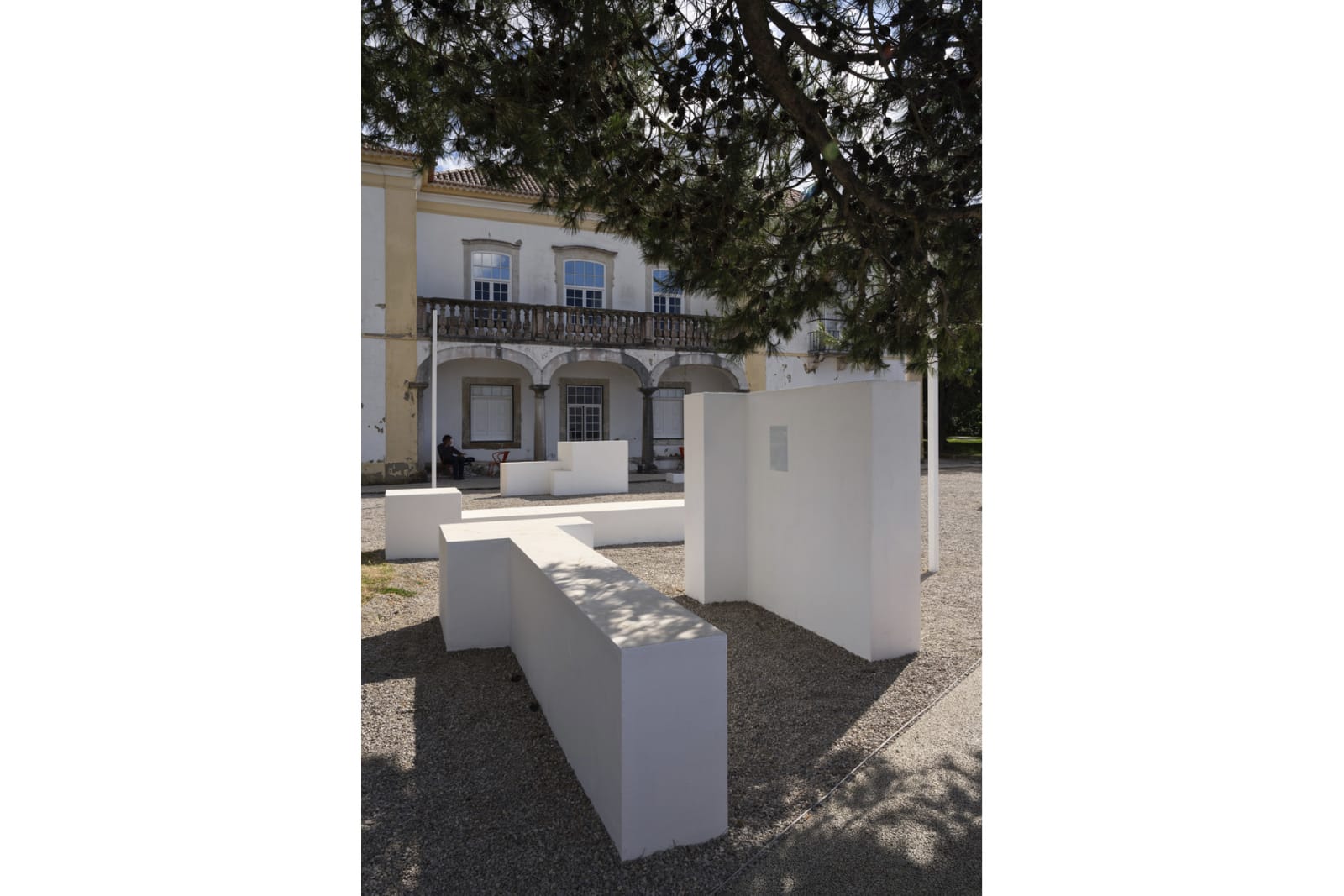
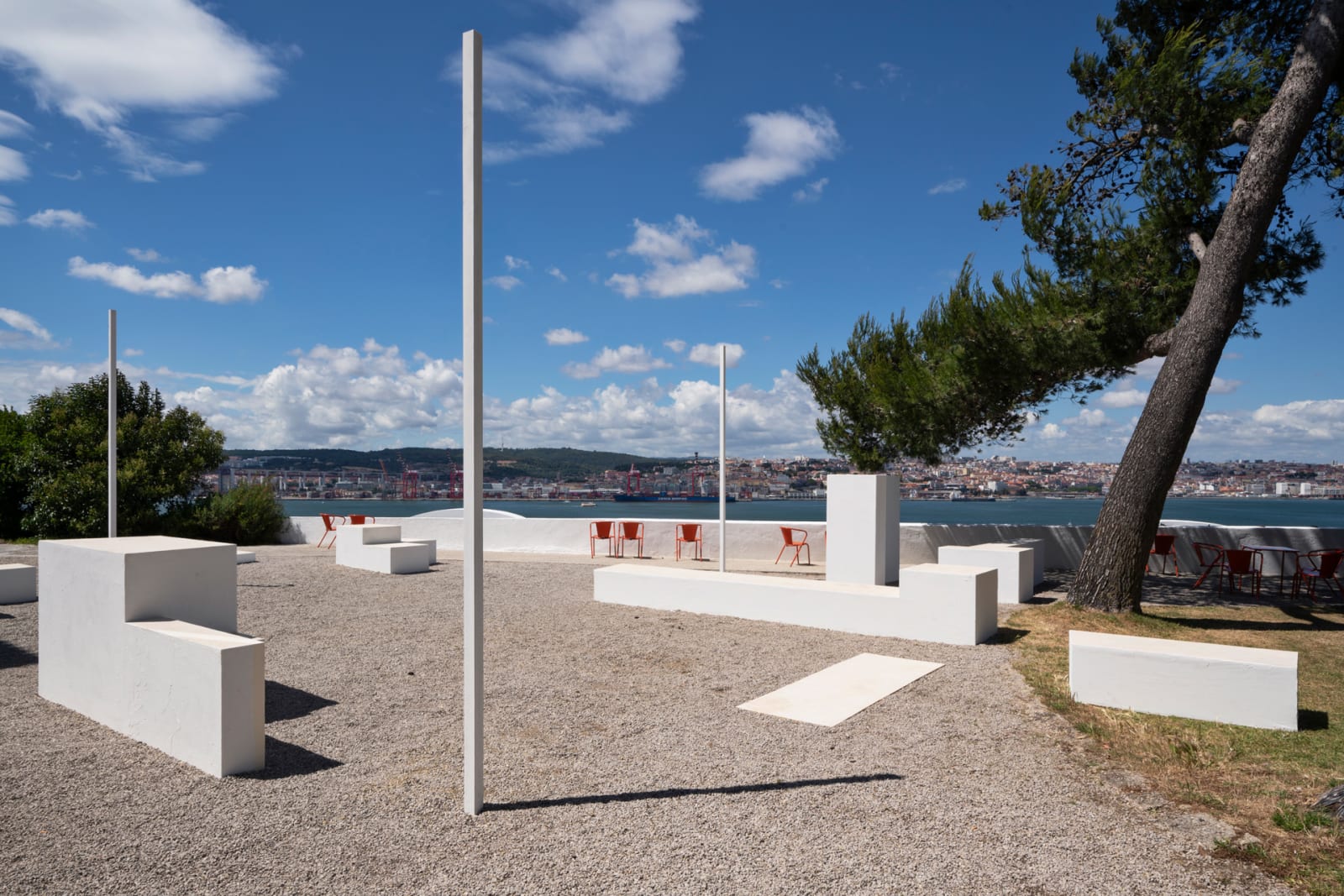
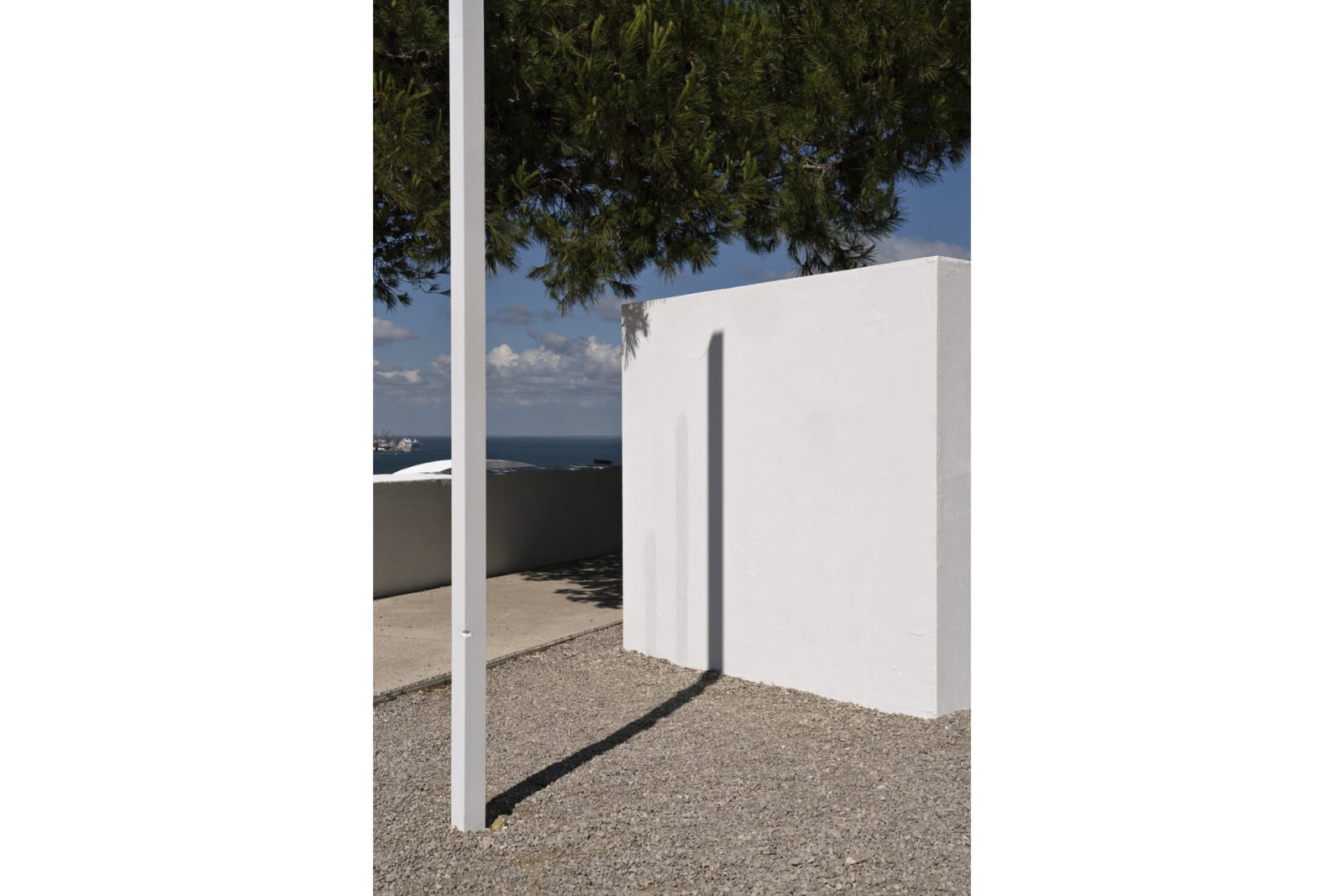
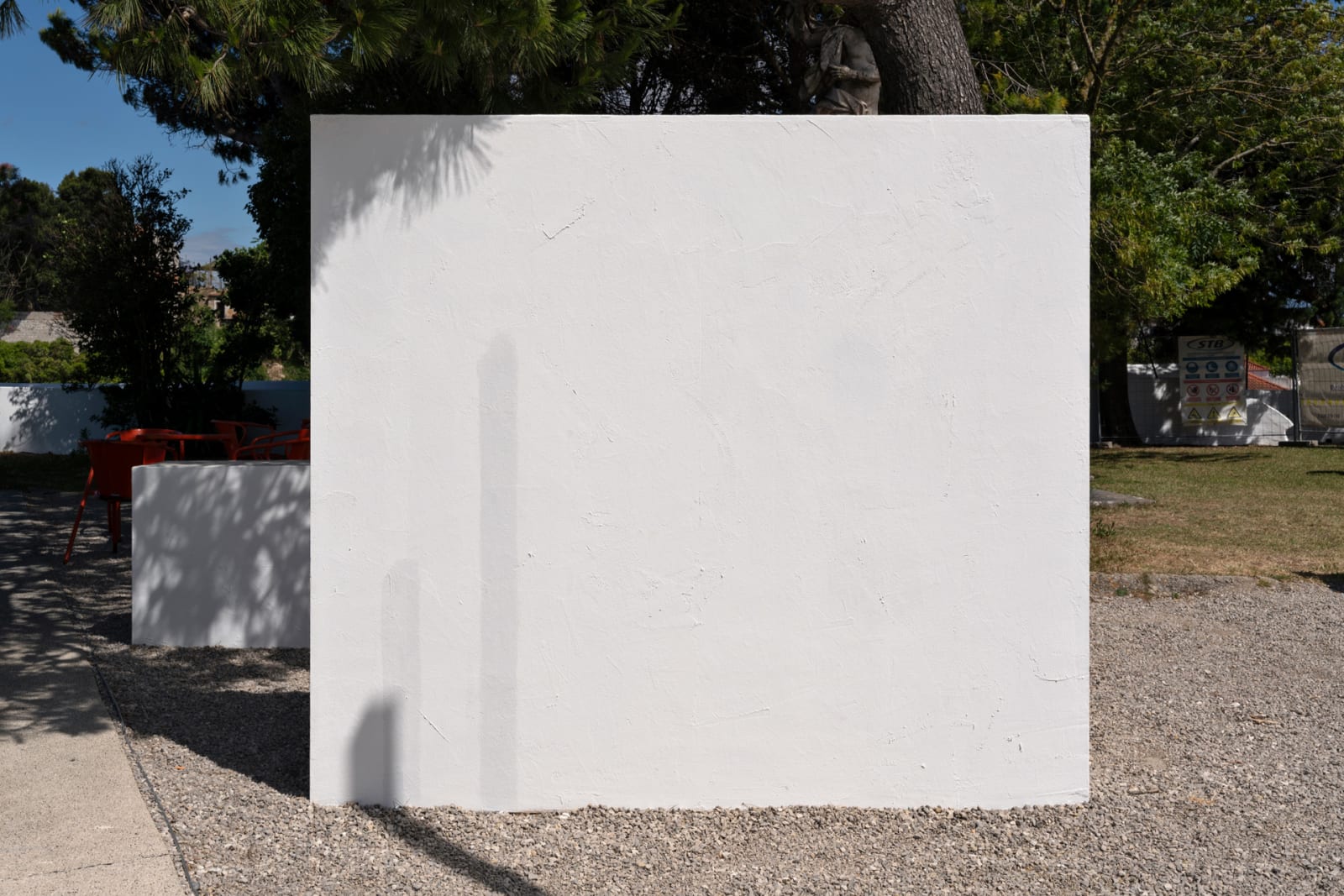

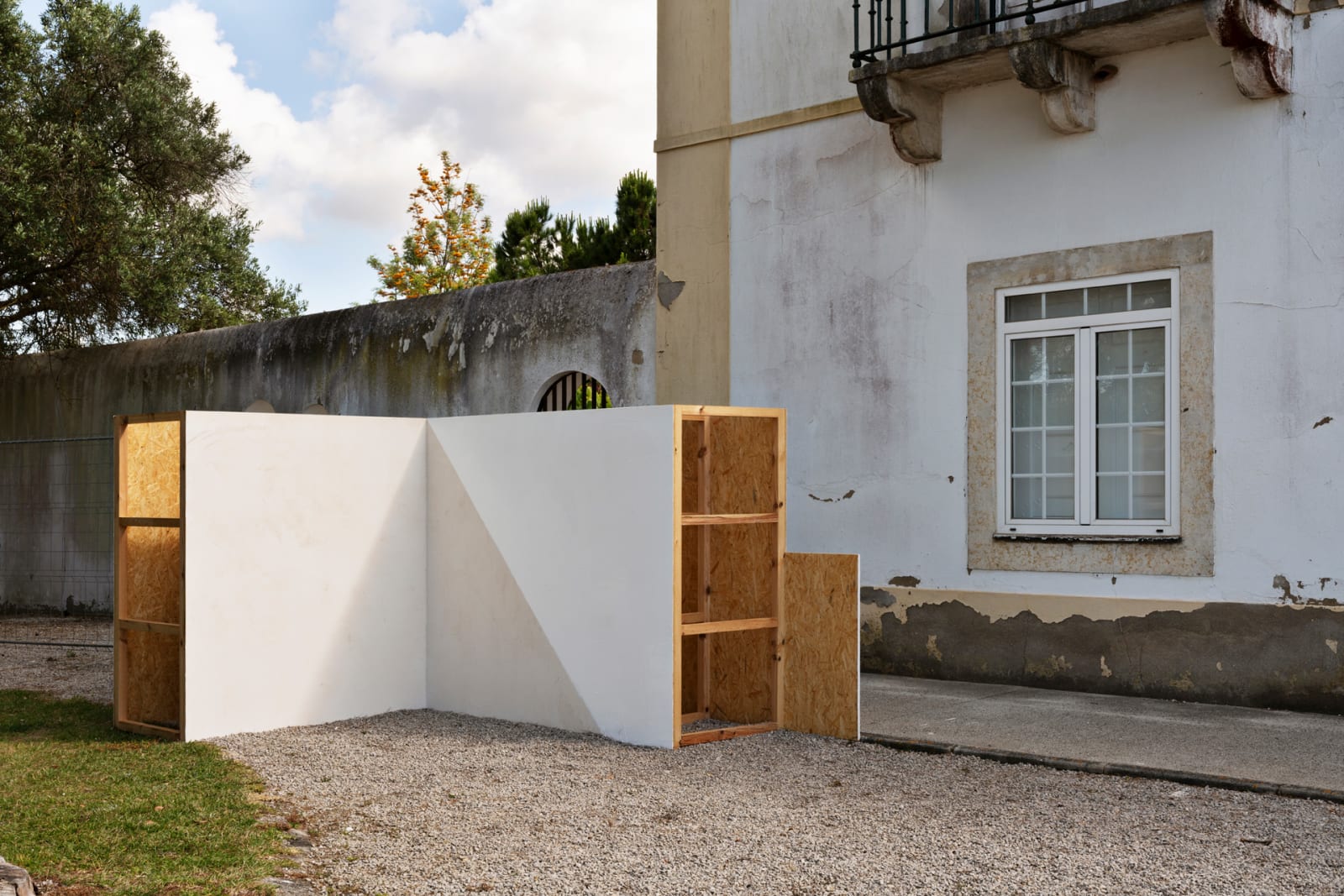
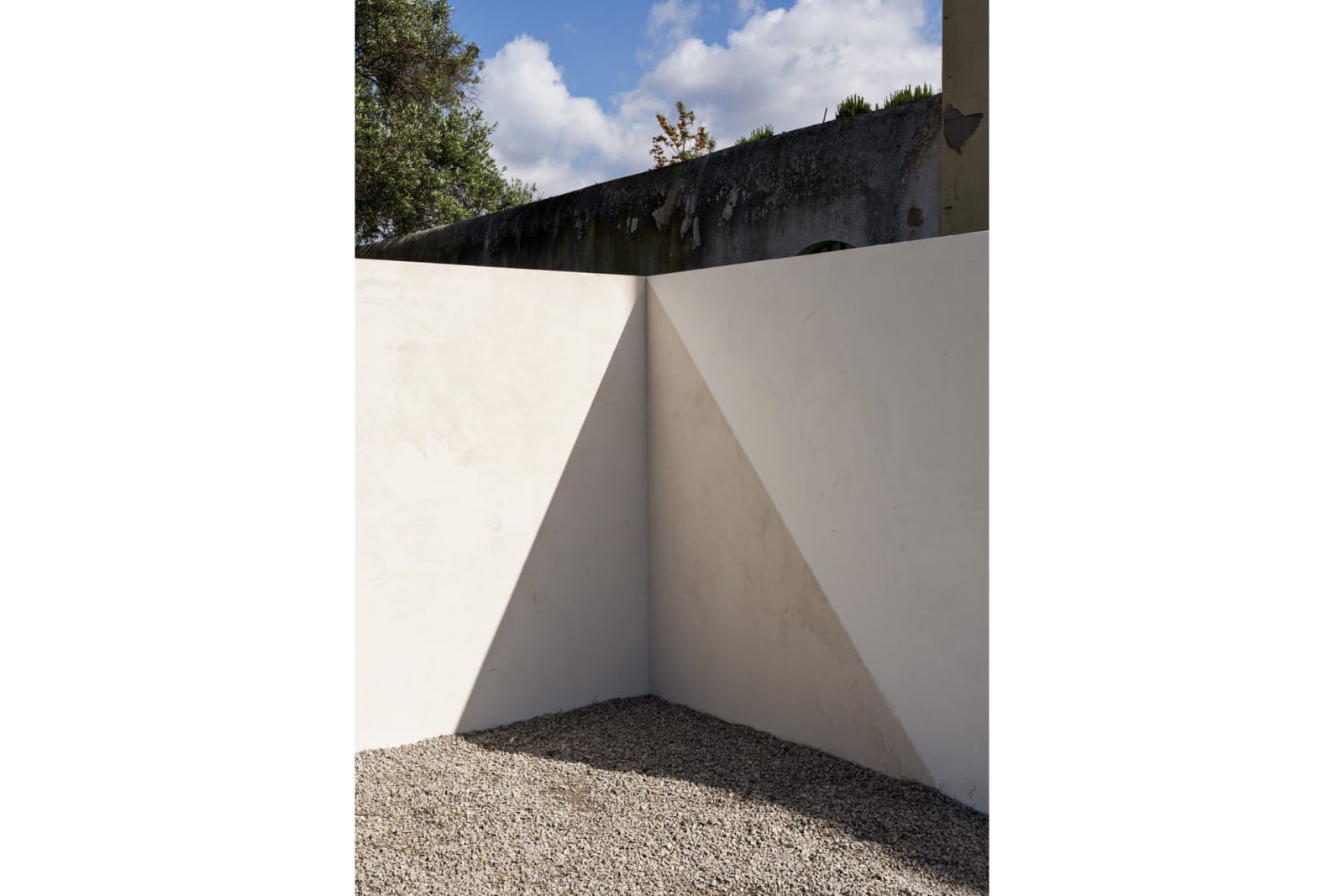
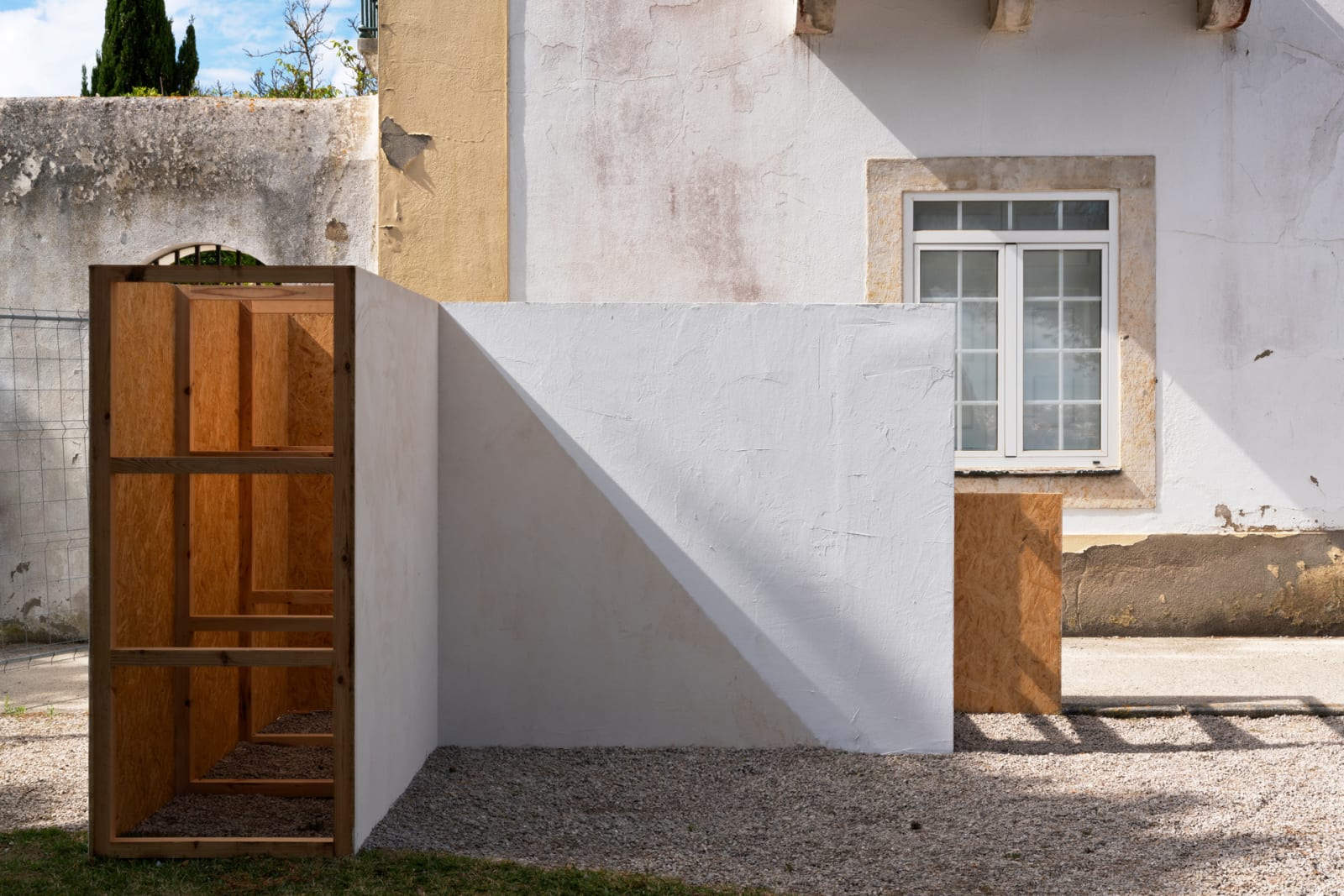
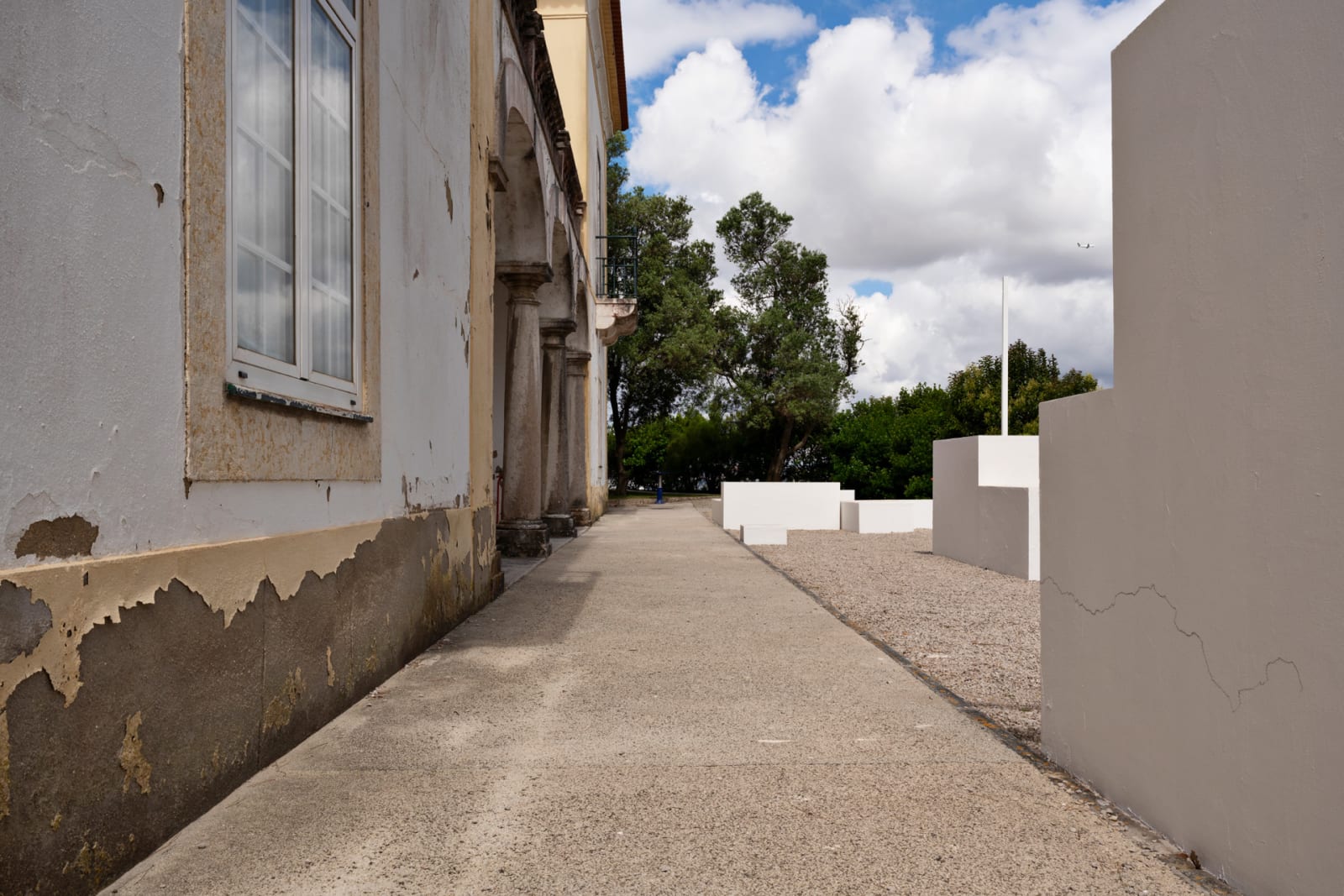
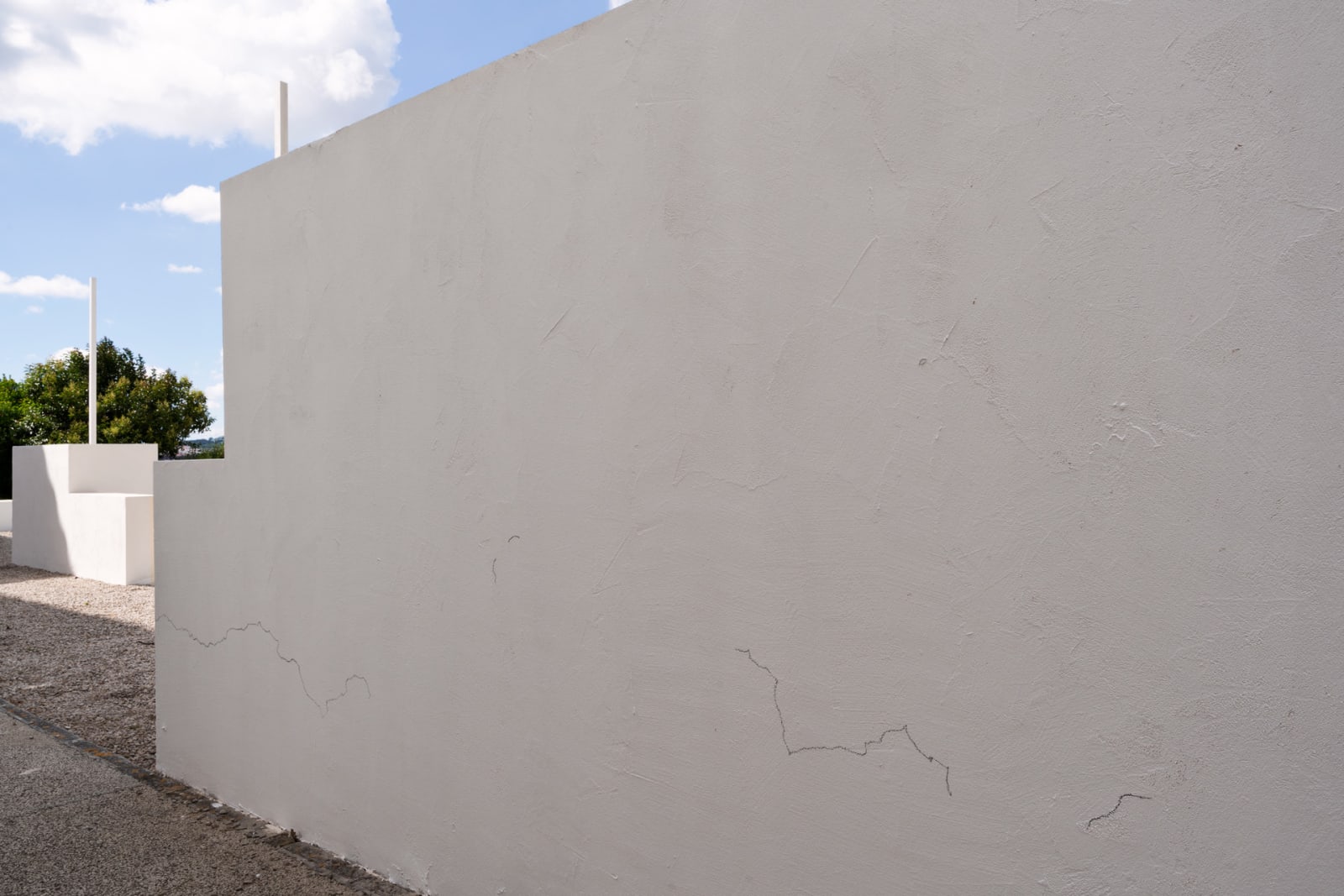
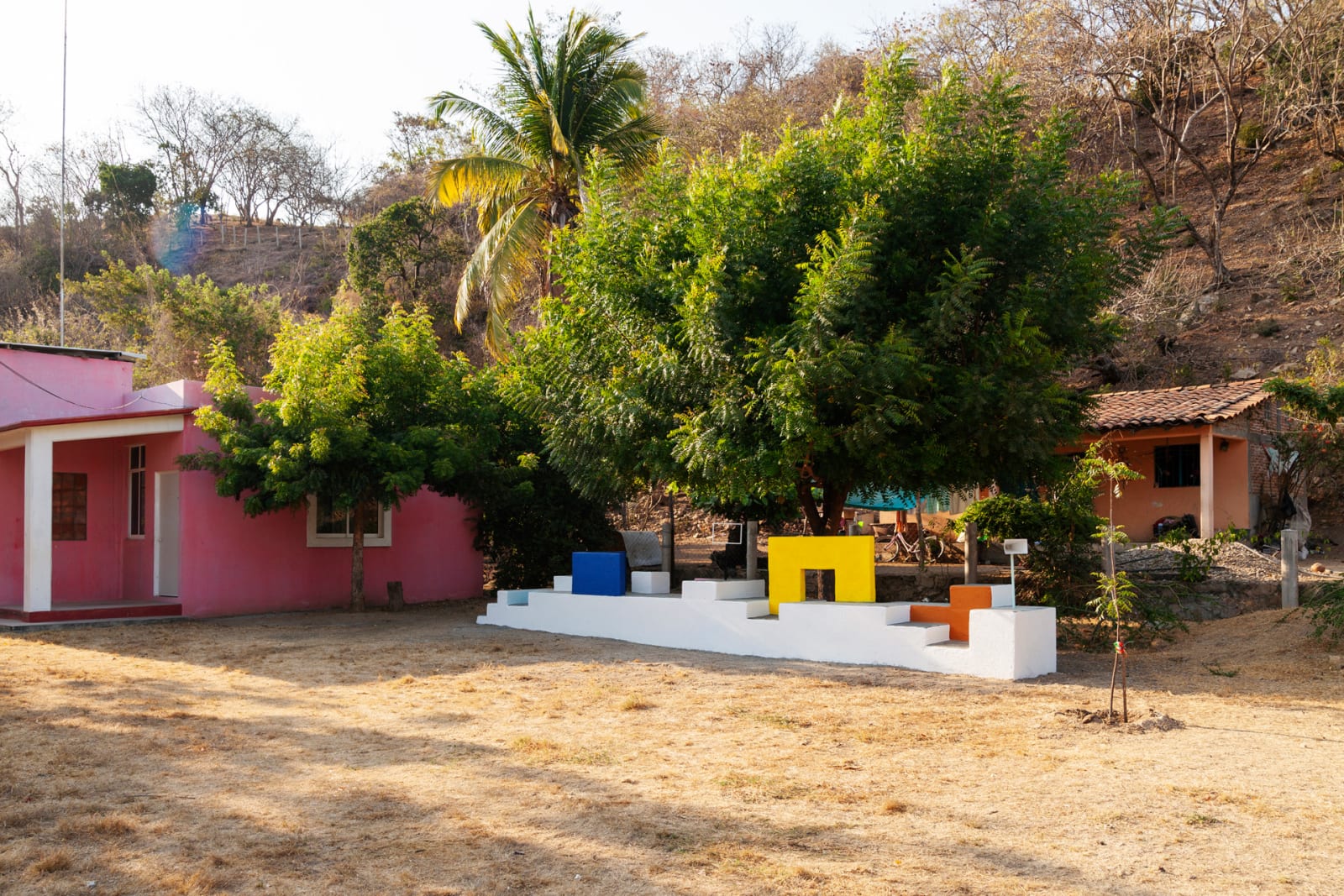
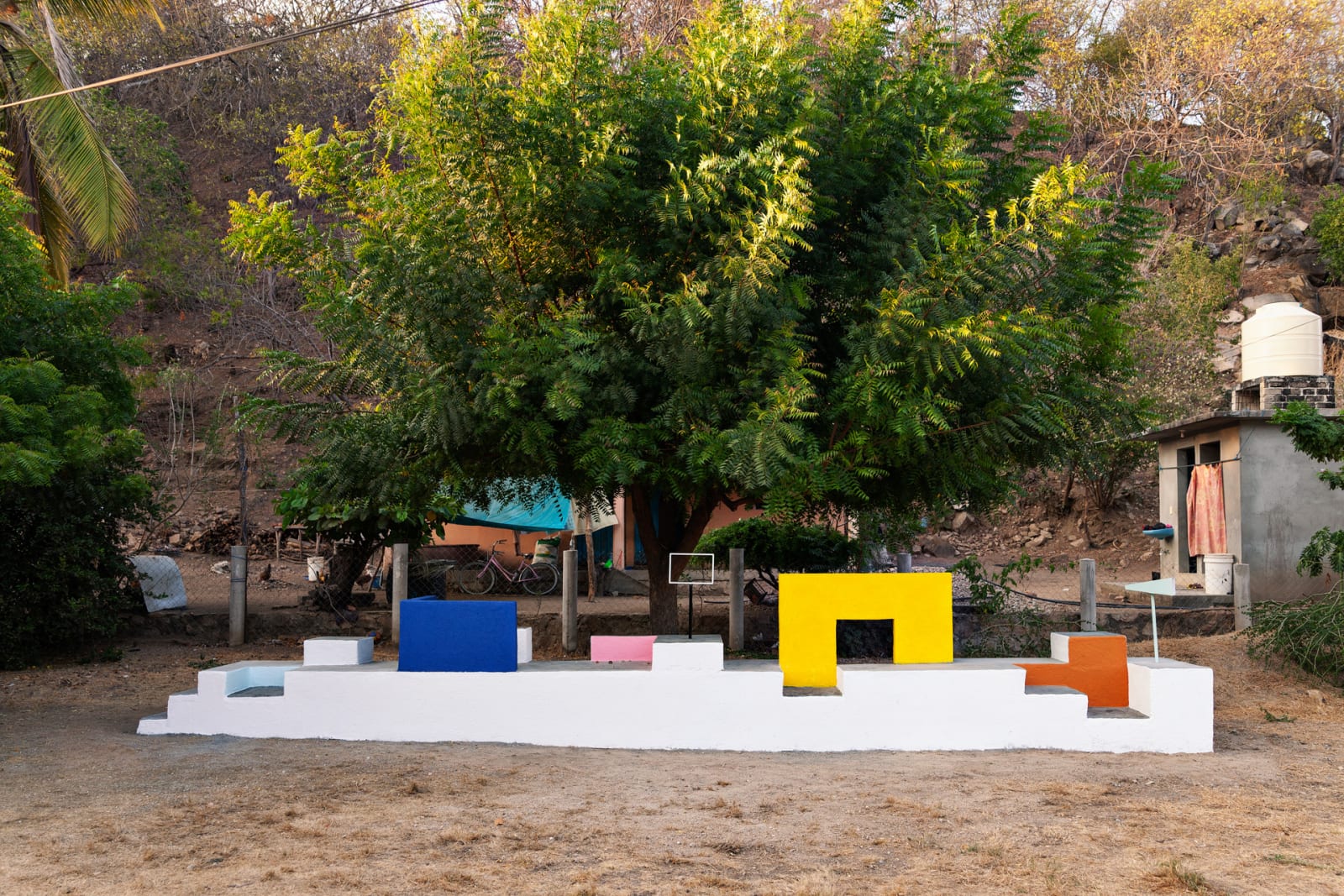
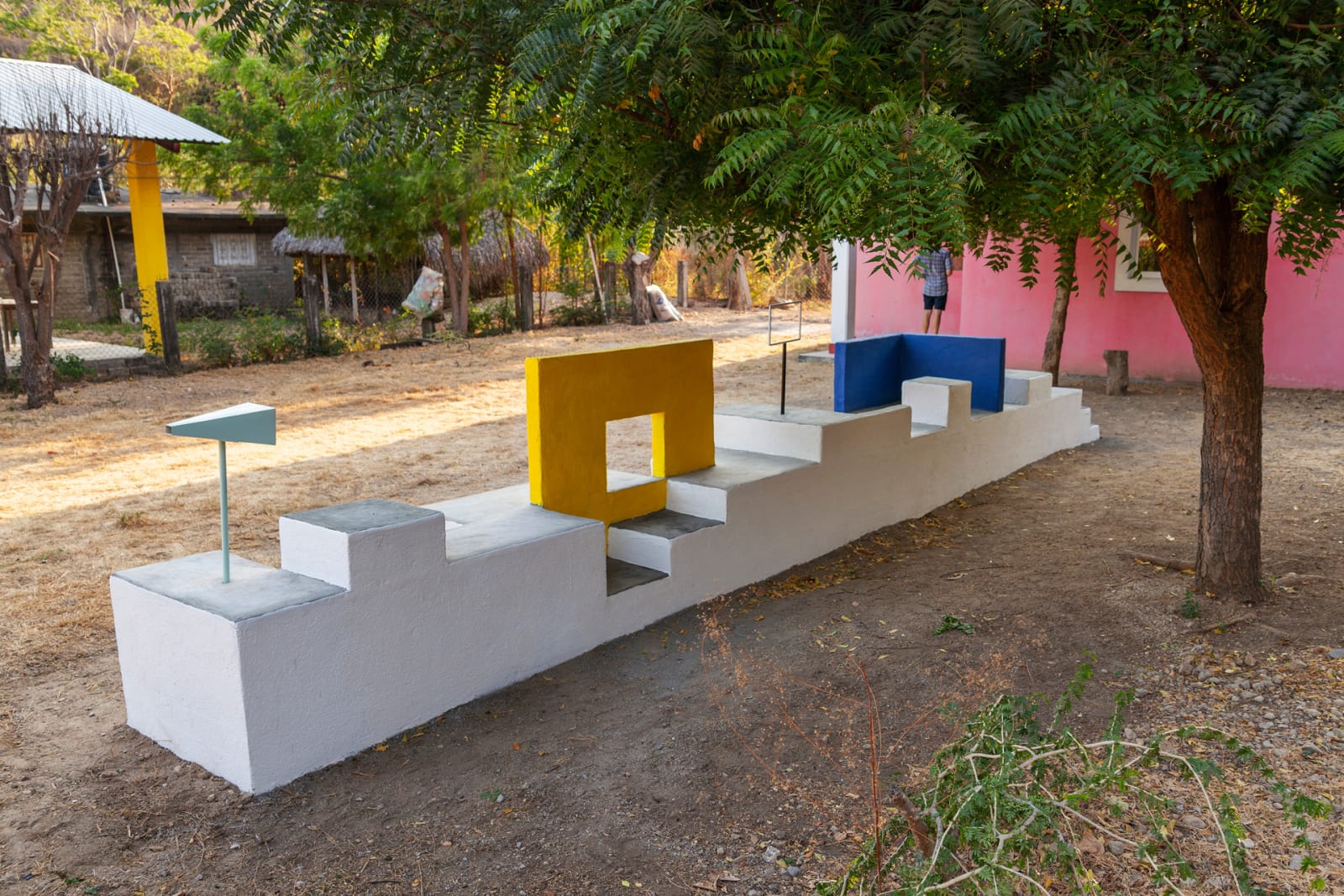
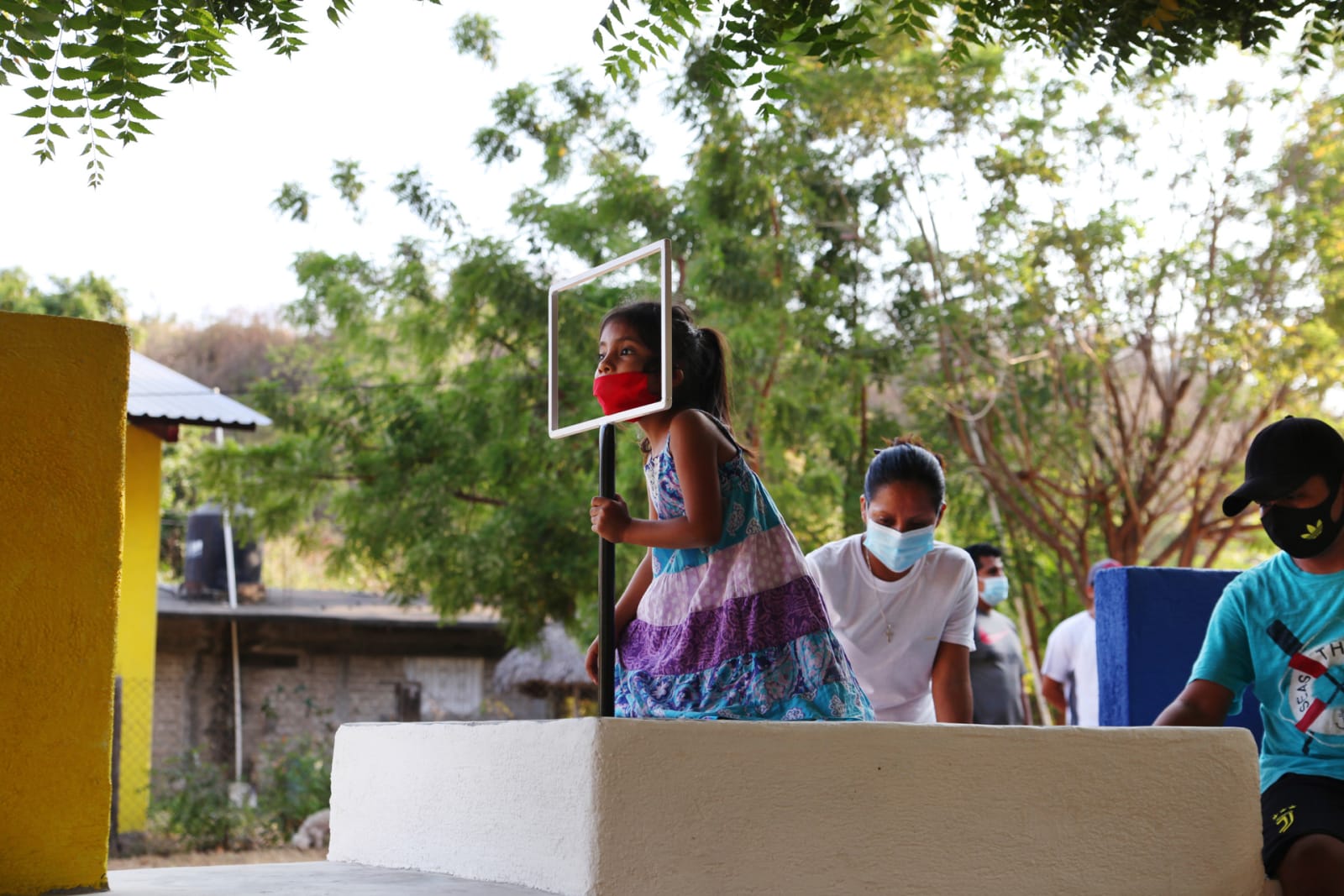
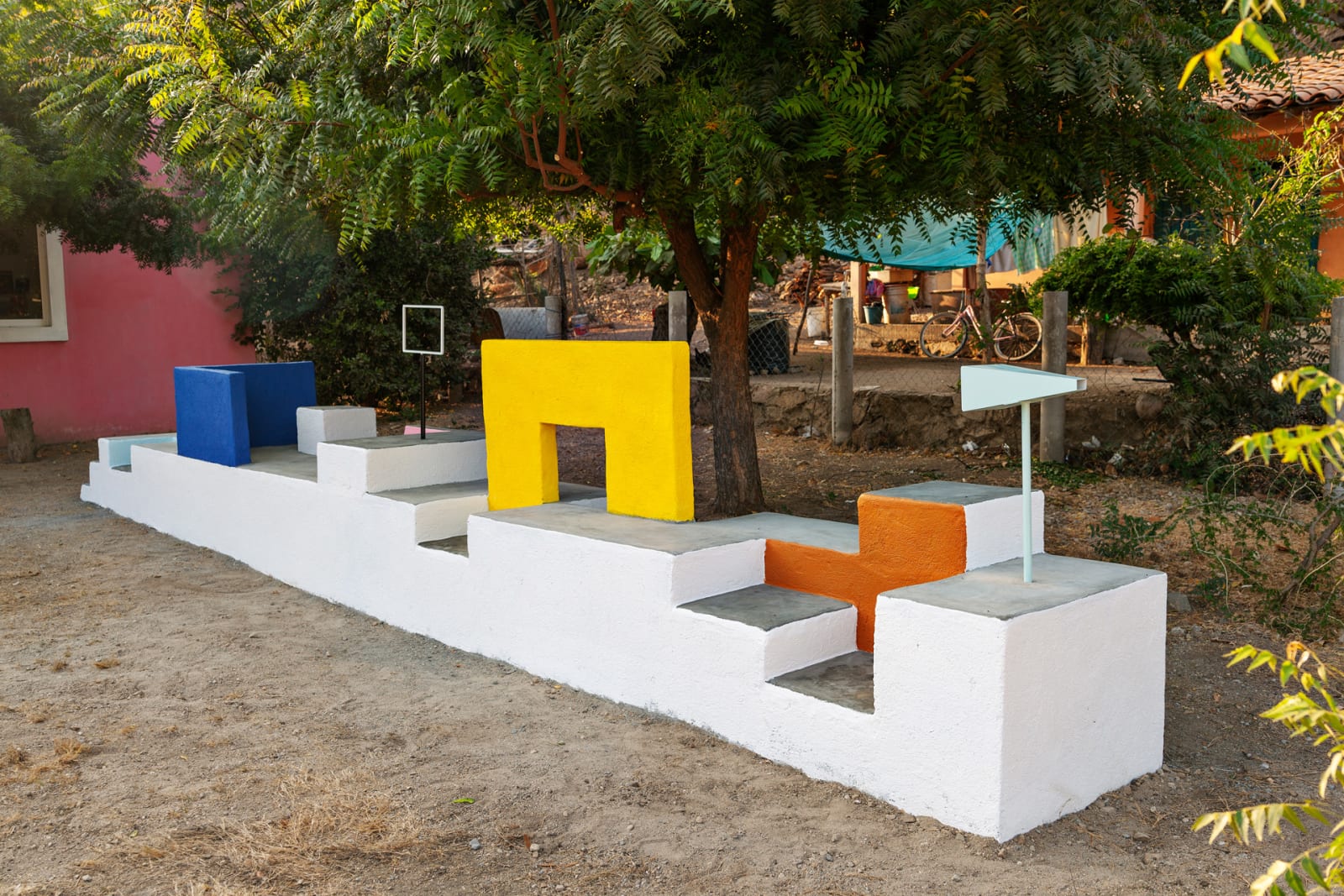
In his installation “O Espelho” [The Mirror] Julius Heinemann proposes an exercise in perception consisting of the construction of a kind of inhabitable parallel reality. This is a reflection of the interior of the Casa da Cerca. The installation is constructed through the arrangement of fragments that replicate structural parts of the building – elements that are distributed according to the mirrored floor plan and projected onto the open space of the terrace. In this way, the façade acts as a mirror, projecting a calculated, brief, carefully placed dissymmetry that cuts through and reveals the grid.
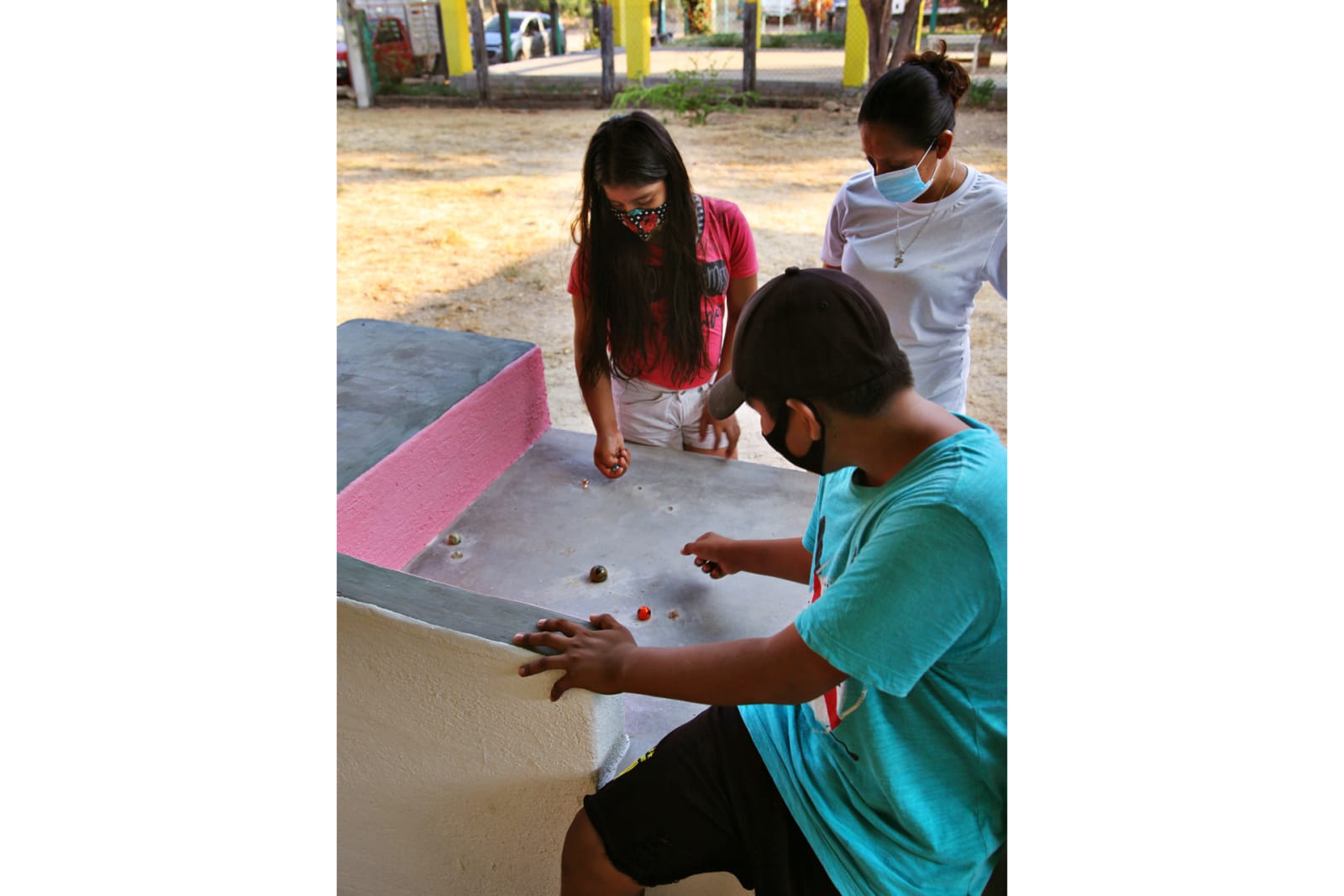
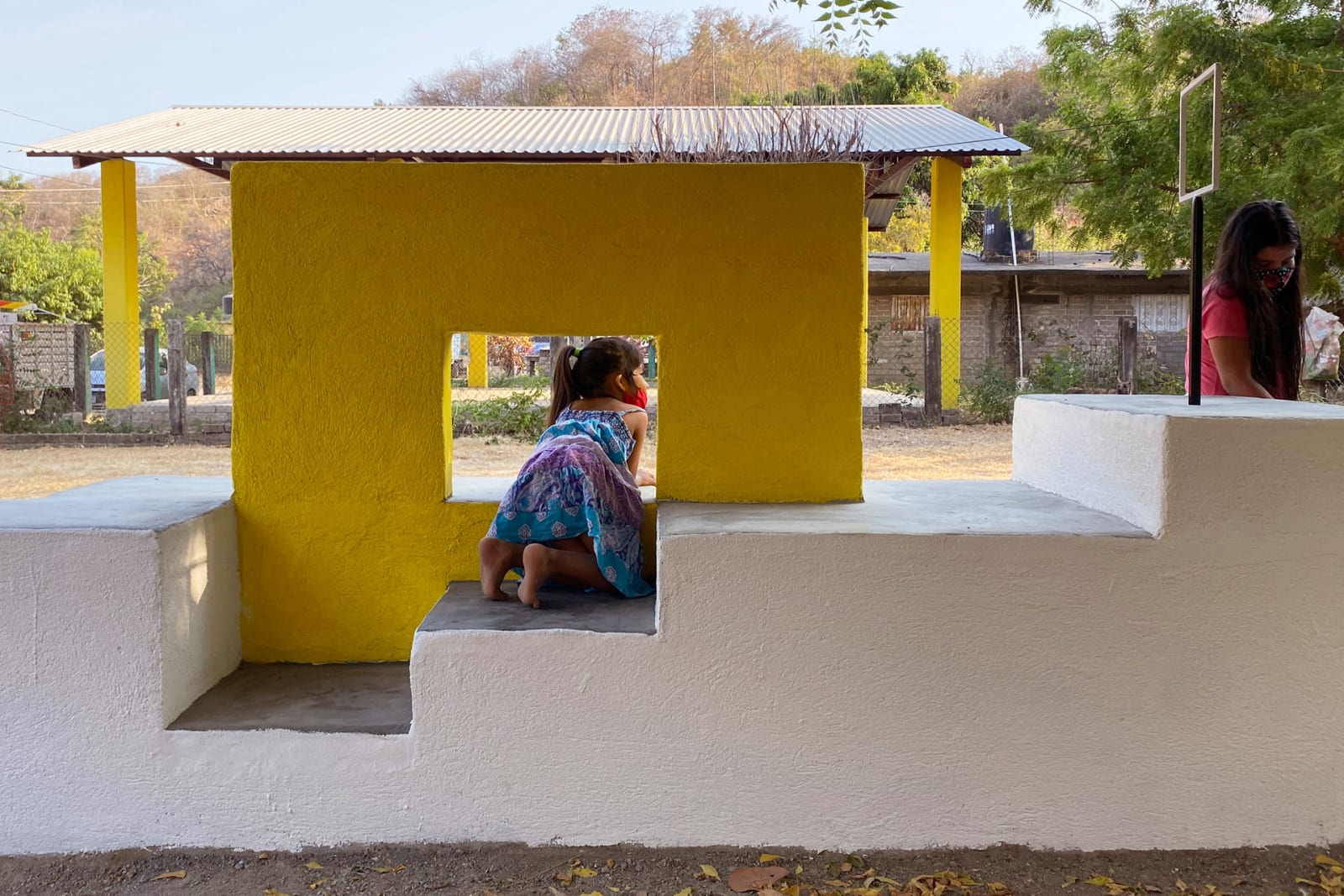
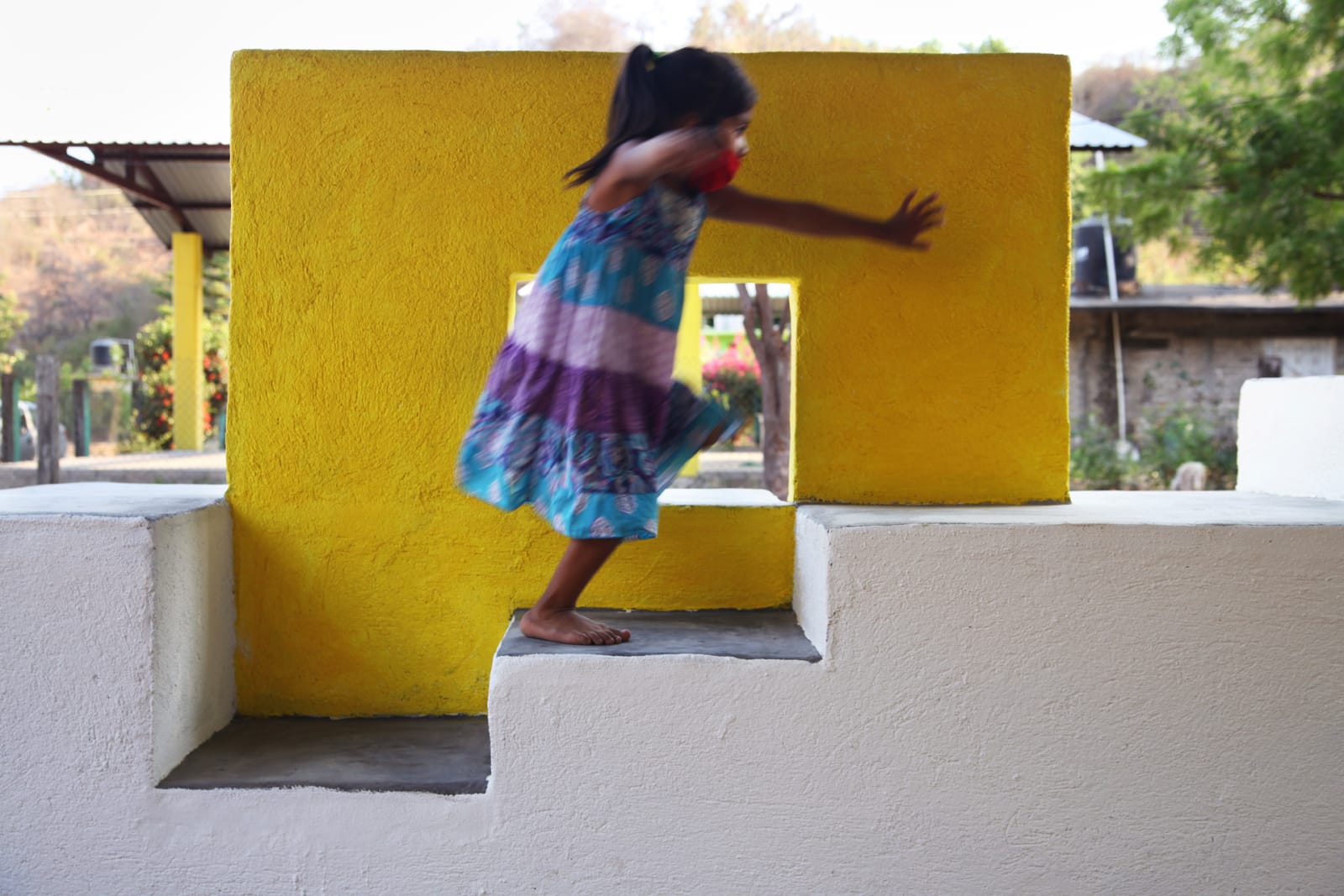
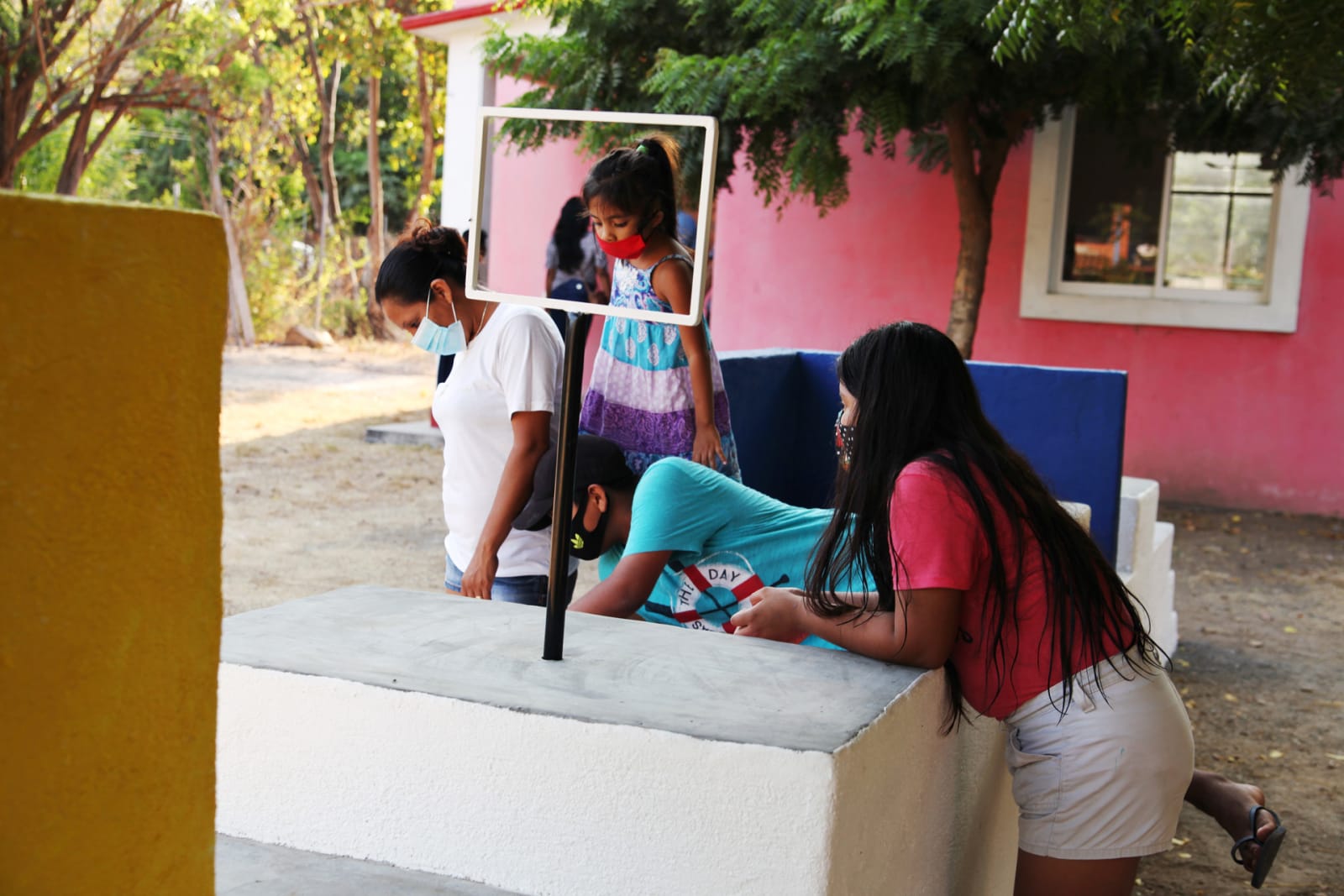
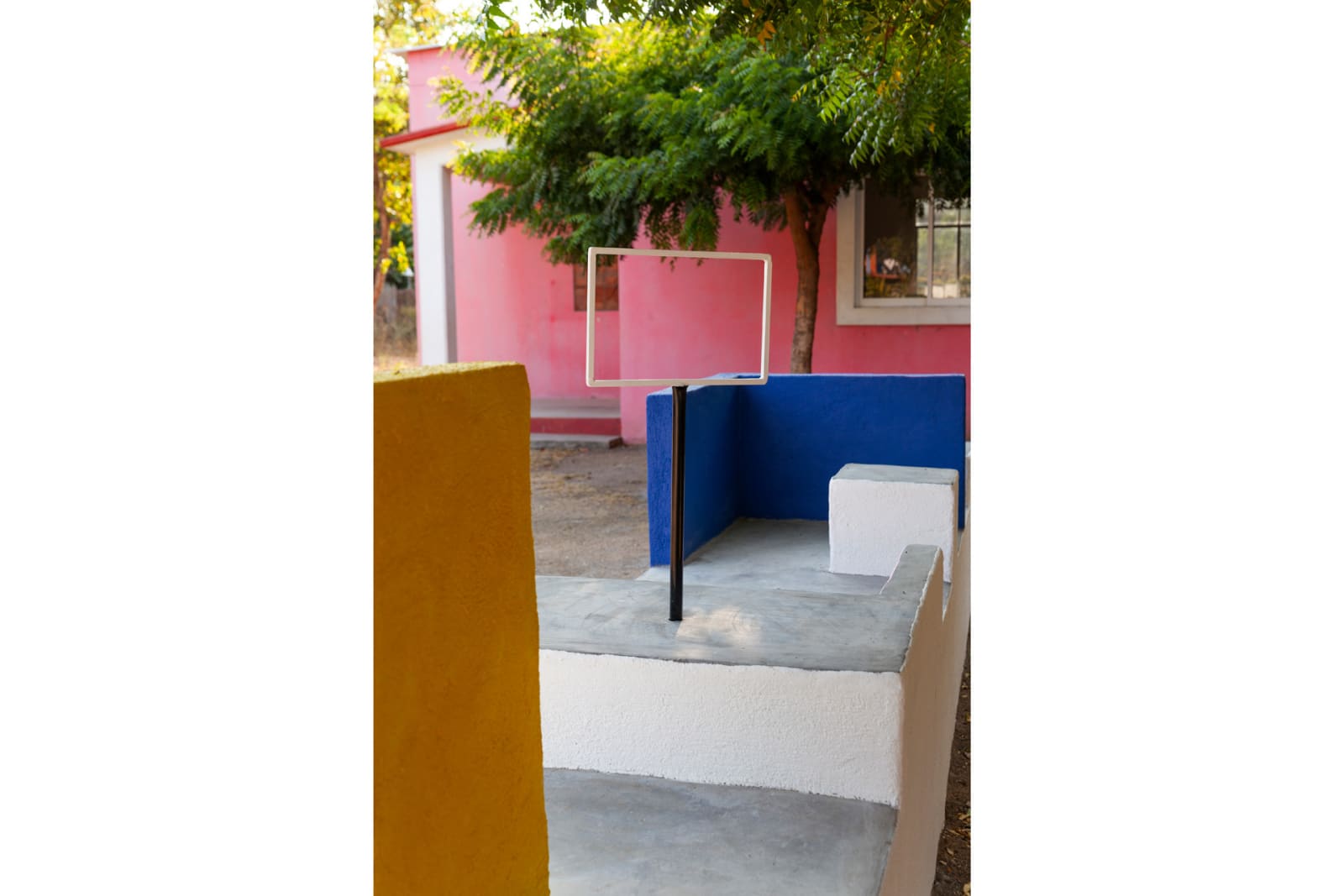
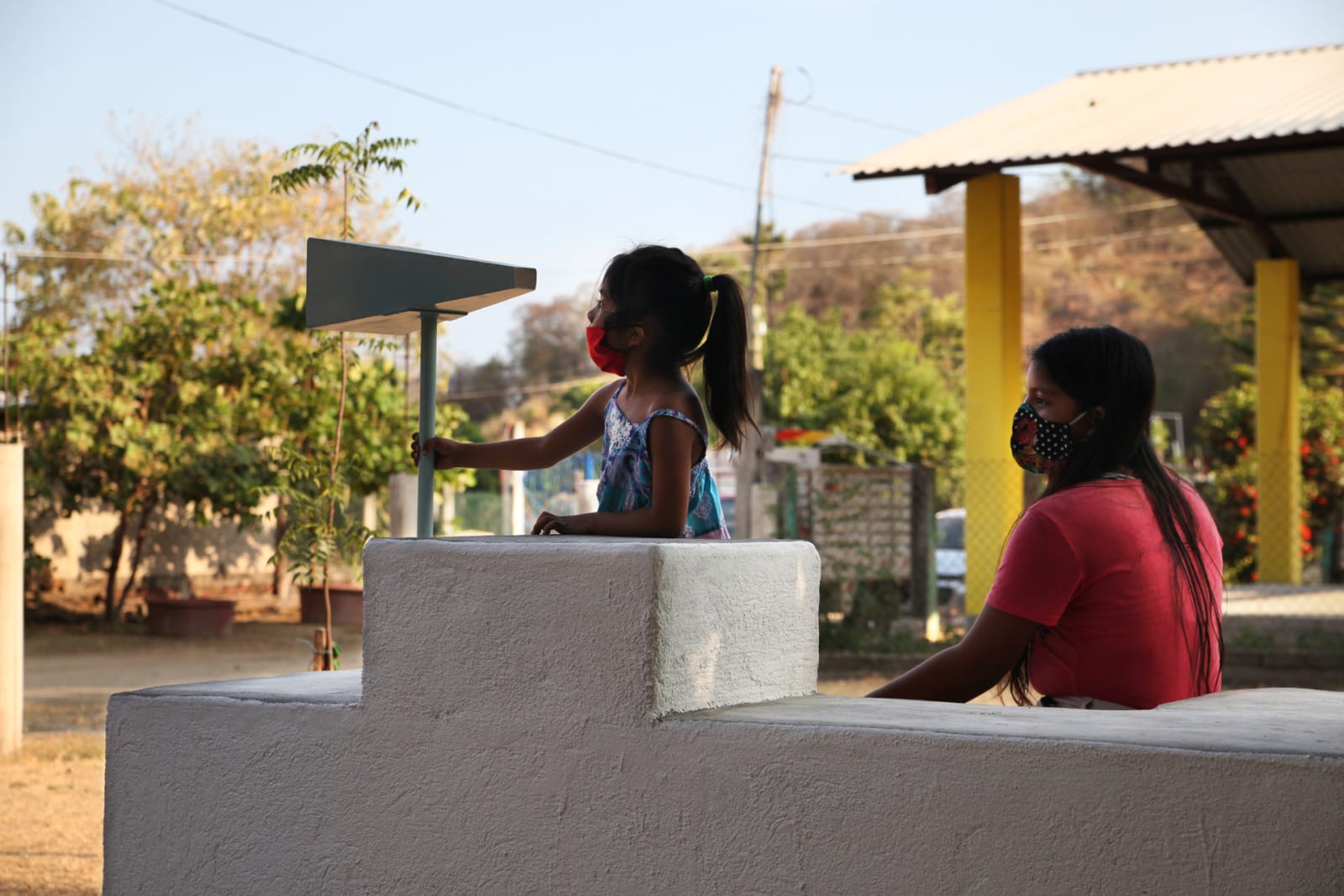
The building is currently closed to the public due to restoration work. The aforementioned architectural elements on the terrace are therefore the only accessible reference point for understanding the interior space. Between the panoramic view and the façade of the building, you find a wall to lean against, a corner, part of a pillar that functions as a seat, a deconstructed partition that functions as a bench, poles that demarcate the scale of certain features of the building. The conceptual elegance of this proposal lies in its attempt to enclose an open space, turning the frame into a vanishing point. A space open to the landscape and to transit, presented as a virtuality of an interior.
In this projection – within the mirror – everyone will experience the Casa da Cerca as every house is perceived when it is lived in: fragmented, subjective, through an accumulation of flashes. By using the memory of the body as it walks through an everyday space, by framing certain angles that are only visible from the table at which one sits, by erring on the height of a wall according to the shadow projected on it at a certain hour. “O Espelho” is the portrait of a house that can be experienced by each and every visitor, simultaneously a personal and shared experience.
Yara Sonseca-Mas
Na sua instalação “O Espelho”, Julius Heinemann propõe um exercício de perceção que consiste na construção de uma espécie de realidade paralela habitável. Trata-se de um reflexo do interior da Casa da Cerca. A instalação é construída através da disposição de determinados fragmentos que espelham partes estruturais do edifício. Elementos que são distribuídos de acordo com a sua planta invertida e projetados no espaço aberto do terraço. Desta forma, a fachada funciona como um espelho que projeta uma dissimetria calculada, breve, diligentemente colocada, que corta a grelha, por assim dizer, e a denuncia.
Devido a obras de restauro, o edifício encontra-se atualmente encerrado ao público. Os elementos arquitetónicos do terraço acima mencionados são, portanto, a única referência acessível para compreender o espaço interior. Entre a vista panorâmica e a fachada do edifício há uma parede para encostar, um canto, parte de um pilar que funciona como assento, uma divisória desconstruída como banco, postes que demarcam a escala de certos elementos do edifício. A elegância conceptual desta proposta reside na tentativa de encerrar um espaço aberto, transformando precisamente a moldura num ponto de fuga. Um espaço aberto à paisagem e ao trânsito, que se apresenta como a virtualidade do interior.
Dentro desta projeção, dentro do espelho, todos experimentarão a Casa da Cerca como qualquer casa é percebida quando é habitada: fragmentada, subjetivamente, através de uma acumulação de cintilações. Recorrendo à memória do corpo que percorre um espaço quotidiano, enquadrando certos ângulos só visíveis da mesa onde se senta, errando a altura de uma parede em função da sombra que a certa hora se projeta sobre ela. “O Espelho” é o retrato de uma casa que é de todos e para todos, ao mesmo tempo partilhada e própria.
Yara Sonseca-Mas


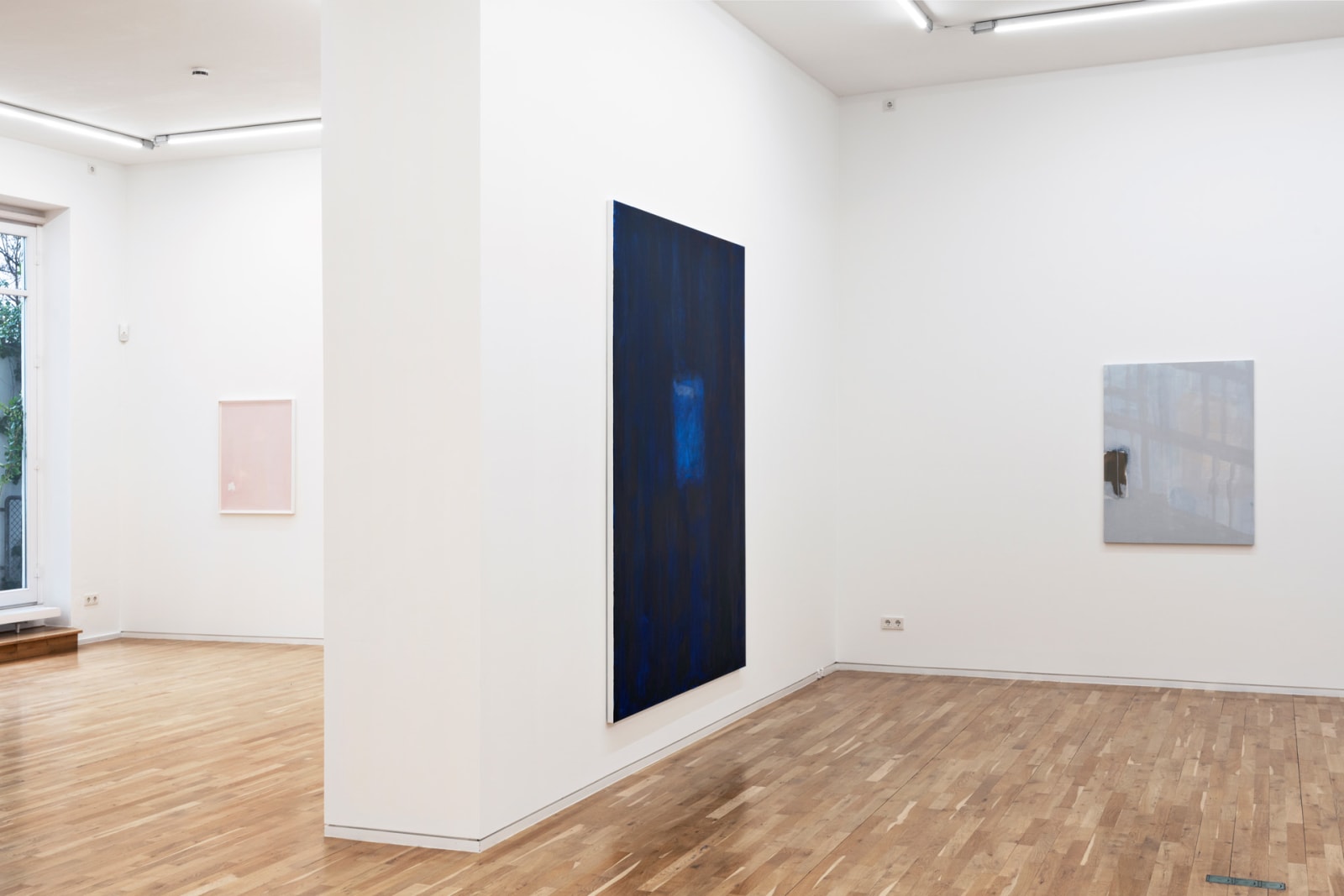


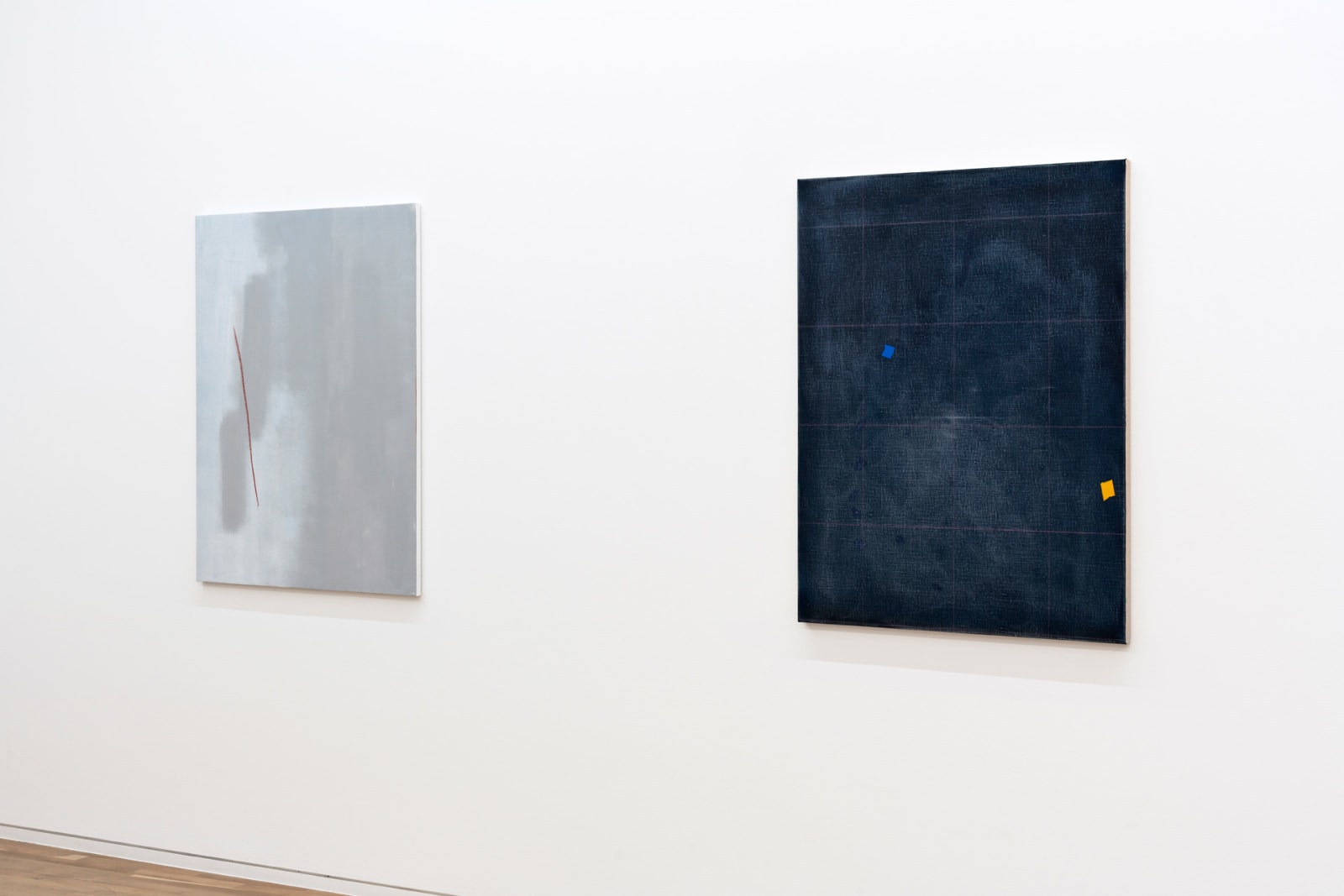

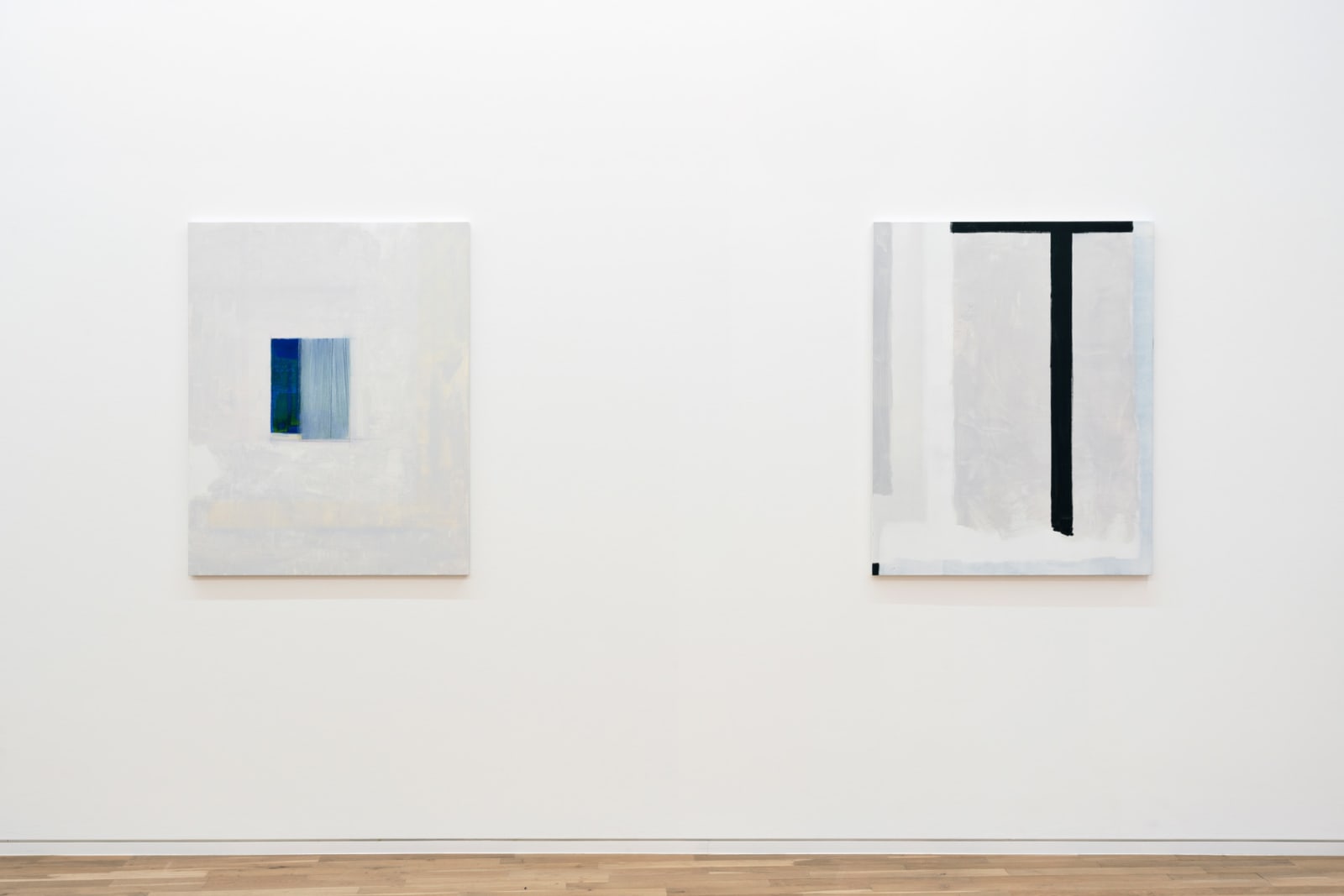

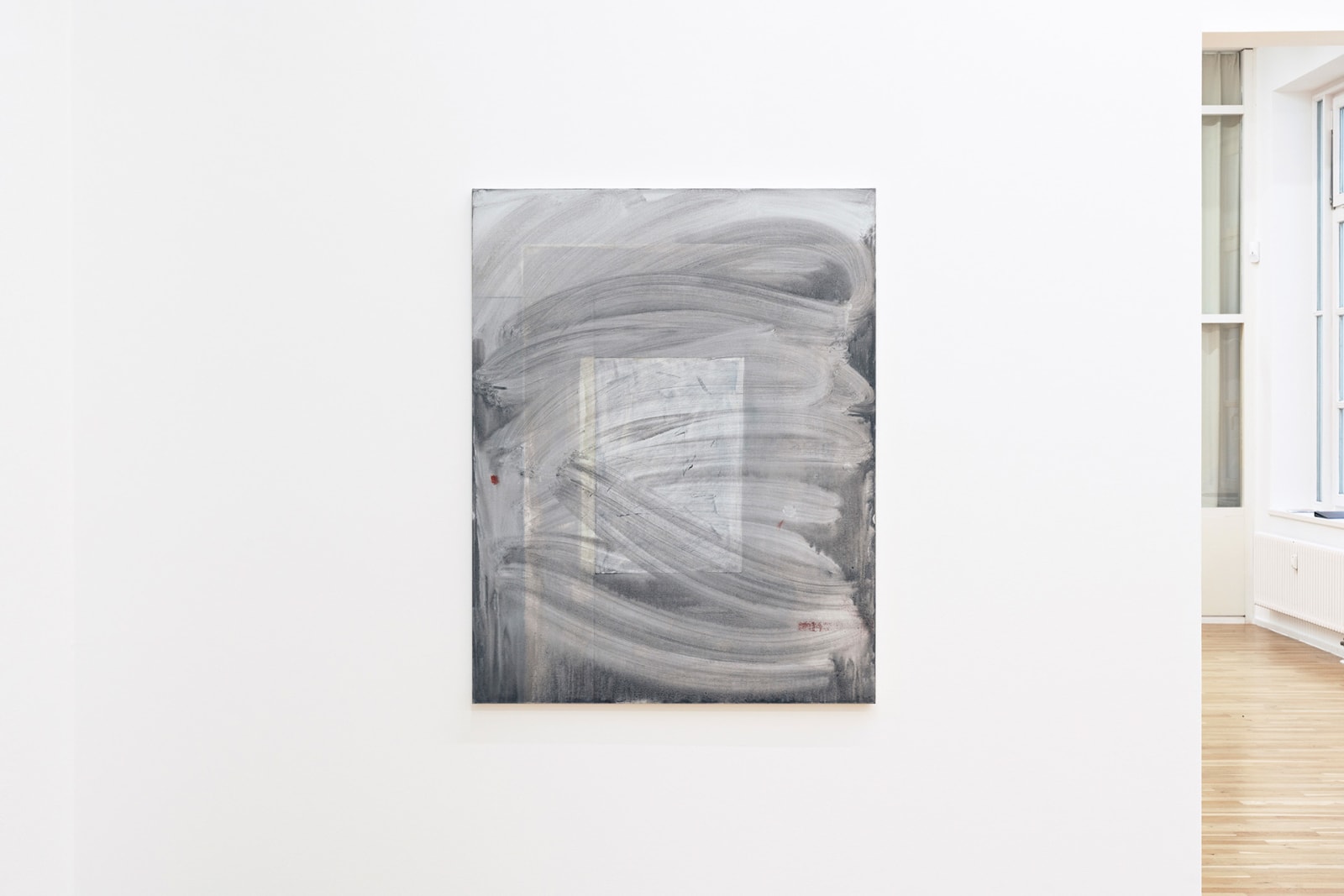
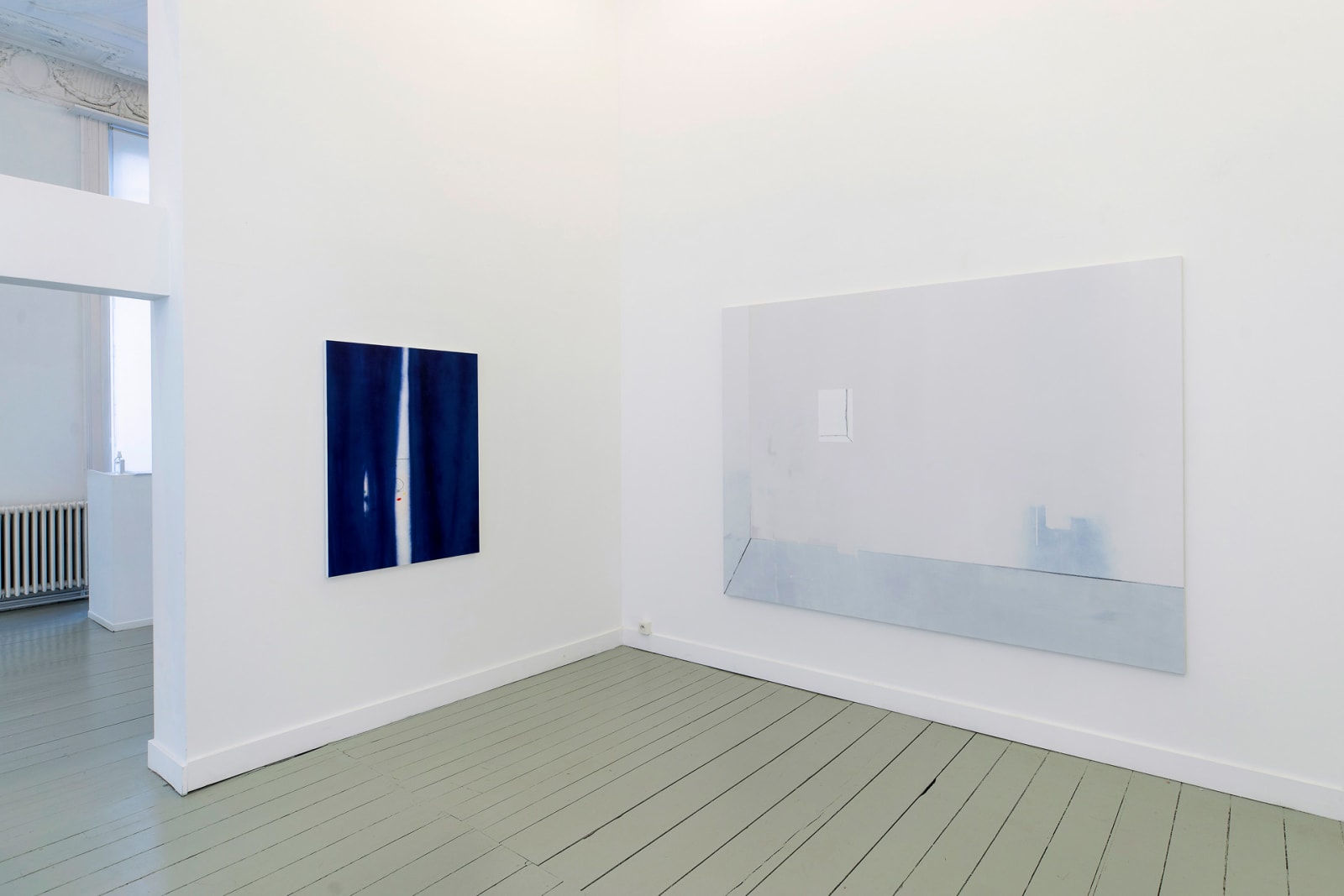
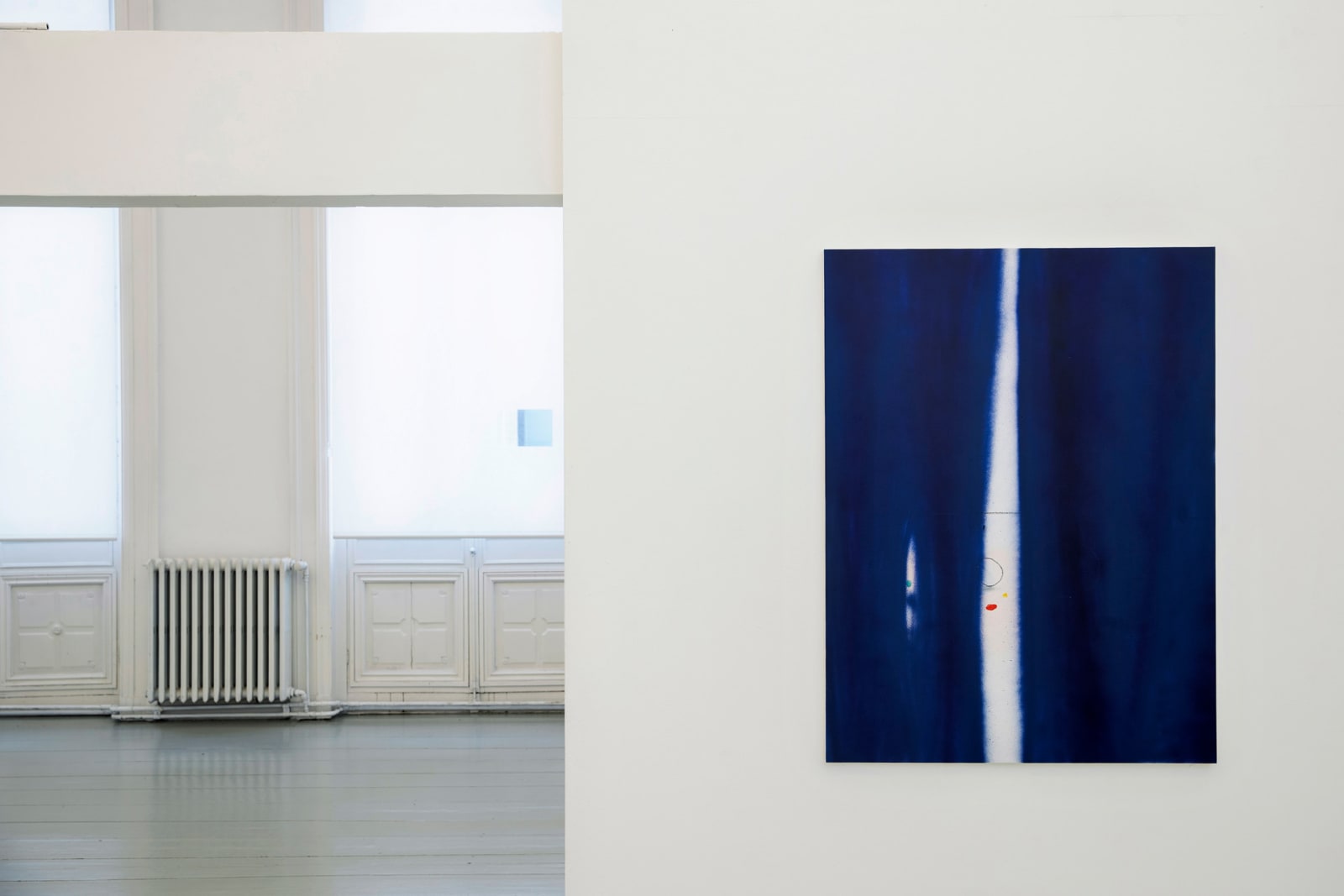
Jahn & Jahn presents the second solo show by Julius Heinemann at the gallery. Trained as a photographer with a practice informed by his subsequent studies as a sculptor, Heinemann has constructed a painterly oeuvre that comes to fruition in the exhibition entitled The Sound of Words Falling, a quote derived from American artist Robert Ryman (1930-2019). Following the natural divisions of the gallery the artist presents a new body of work composed of paintings and watercolours, some of which on first sight allude to represent curtains fluttering in the wind, obstructing ones view only to subsequently give way to a clearer vision. Read in analogy with the citation of Ryman, the installation of the works in space epitomizes a poetic attempt to grasp the contemporary moment full of potential amidst abundant ambiguity.
In recent years Heinemann has been interested in subject matters ranging from the transformation of painting in history to the developments of photography from the camera obscura as a large eye apparatus into modernity – all the way thinking sculpturally and architecturally. Balls and rocks have served as placeholders in his works eliciting children games or playground experiences. Elsewhere a vertically suspended sundial beam broke the exhibition vista, while an angle at the tip of a removed ceiling dwelled on a galleries former height limit (Camera Lucida (Roman Road, London) 2014). If in previous series Heinemann has also challenged classical painting with a paint roller or impregnated walls and other supports with poetic traces generated by the spray can, these works also evoked the memories of the late 1990’s Munich urban hip-hop era as manifested in the Graffiti Hall of Fame and to which the artist contributed as a teenager.
Departing from a palette of primary pigment, Heinemann’s work now pays witness to the interplay of colours, with brush strokes that evidence the tension between landscapes and opacities. His paintings reference architectural elements that are geometrically structured and rectangular, their layers tracing a palimpsest of actions, with gestures of colours receding into the background, re-emerging organically and alluding to myriad temporalities: the longer the process of creation lasts, it seems, the less imminent meaning surfaces.
The Sound of Words Falling thus also represents a departure from spatial painting installations in the artists practice, as inherent to the concept of fresco painting. Inspired by his studies of the Danish philosopher Søren Kierkegaard’s studies on existentialism, Heidegger’s quest for being and turn from modern subjectivism as well as Novalis’ influence on early Jena romanticism, Heinemann’s work on view is geared towards an understanding of what we perceive and a questioning of how we process information and construct reality. The artist explores space through drawing with paint, relying on the interplay and dependability between light and the structure of volume. Reflecting on site and notions of site as experience, the paintings and watercolours emanate the desire to overlap with reality through a painterly process, addressing the complexity mediated by social location, indeterminacy as well as ontological equivocacy. The works on view at The Sound of Words Falling stem from a studio production and represent a move away from the spray can, employing brushes for the first time. They thus transmit a sense of fragility or realisation akin to tropes of mind games, abstract connections, the ephemeral, daydreaming, the unreal, fantasy, that connect the viewers subjectivity with a metaphysical tincture of being, merging our own existence with reality.
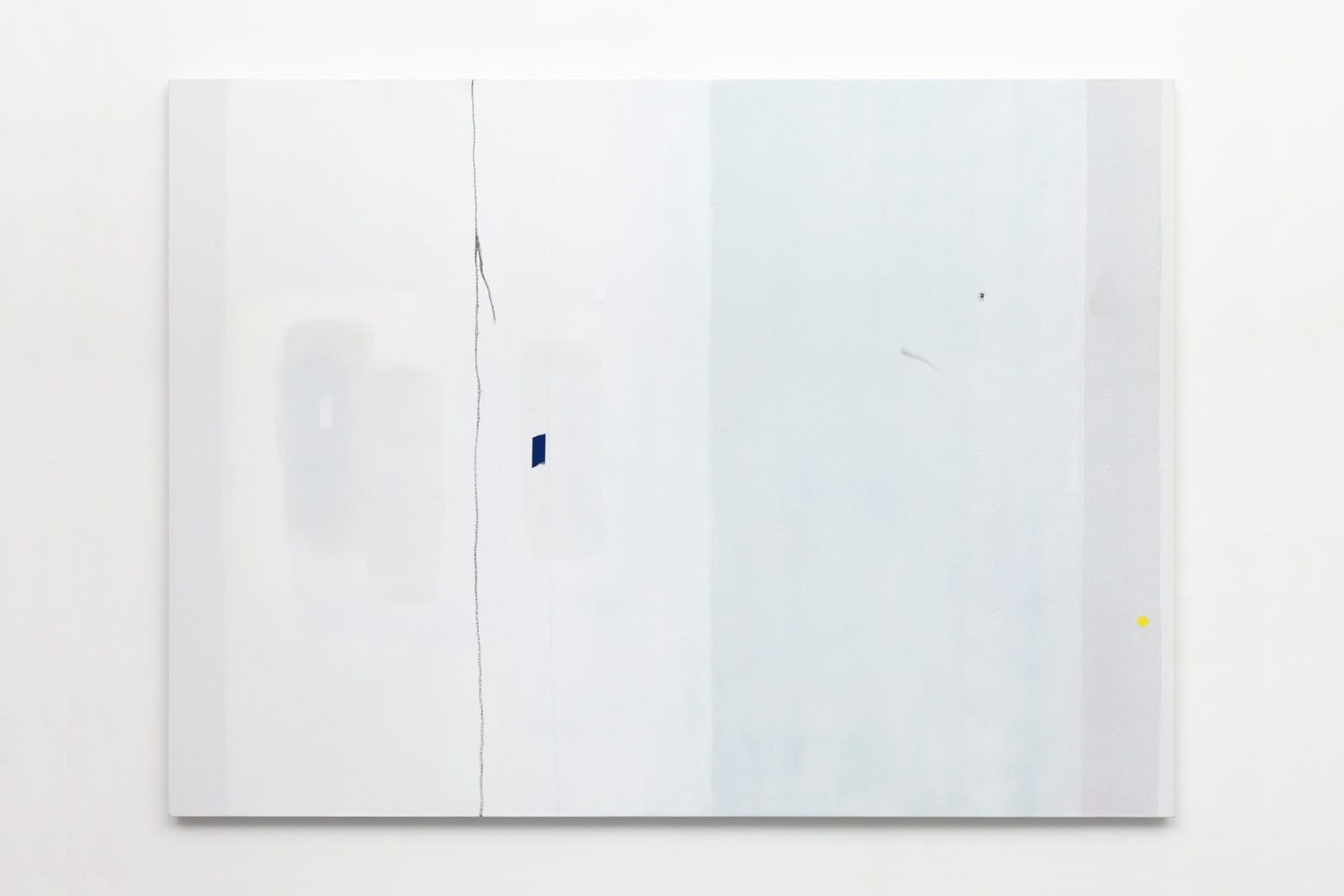
The watercolours on view test materiality as media and represent an extended exploration of pictorial elements, letting the process run free, a modus operandi close to expressionist painting. In line with prior productions, the works on view in The Sound of Words Falling toy with the perception of ephemeral light in the studio, thrown and cascading shadows – they are pictures that take on a life of their own. Light reflections acquire different shades of grey as a narrative of projections and superimpositions. While the watercolours are additive, in the paintings the colours do overlap subtractively. Where previously the white wall was the reference in Heinemann’s paintings, now the texture of the canvas has become the common denominator. A sanded surface contains moments and colour nuances recorded in the winter days of Berlin, sparks of colour are emanating from a muddy primer. The viewer encounters a classic exhibition that focuses on the existentialist, subjectivist and romantic notions of being in the world derived from the artist’s own subjectivity and relayed in the individual works as signifiers of vital force.
Text by Tobi Maier
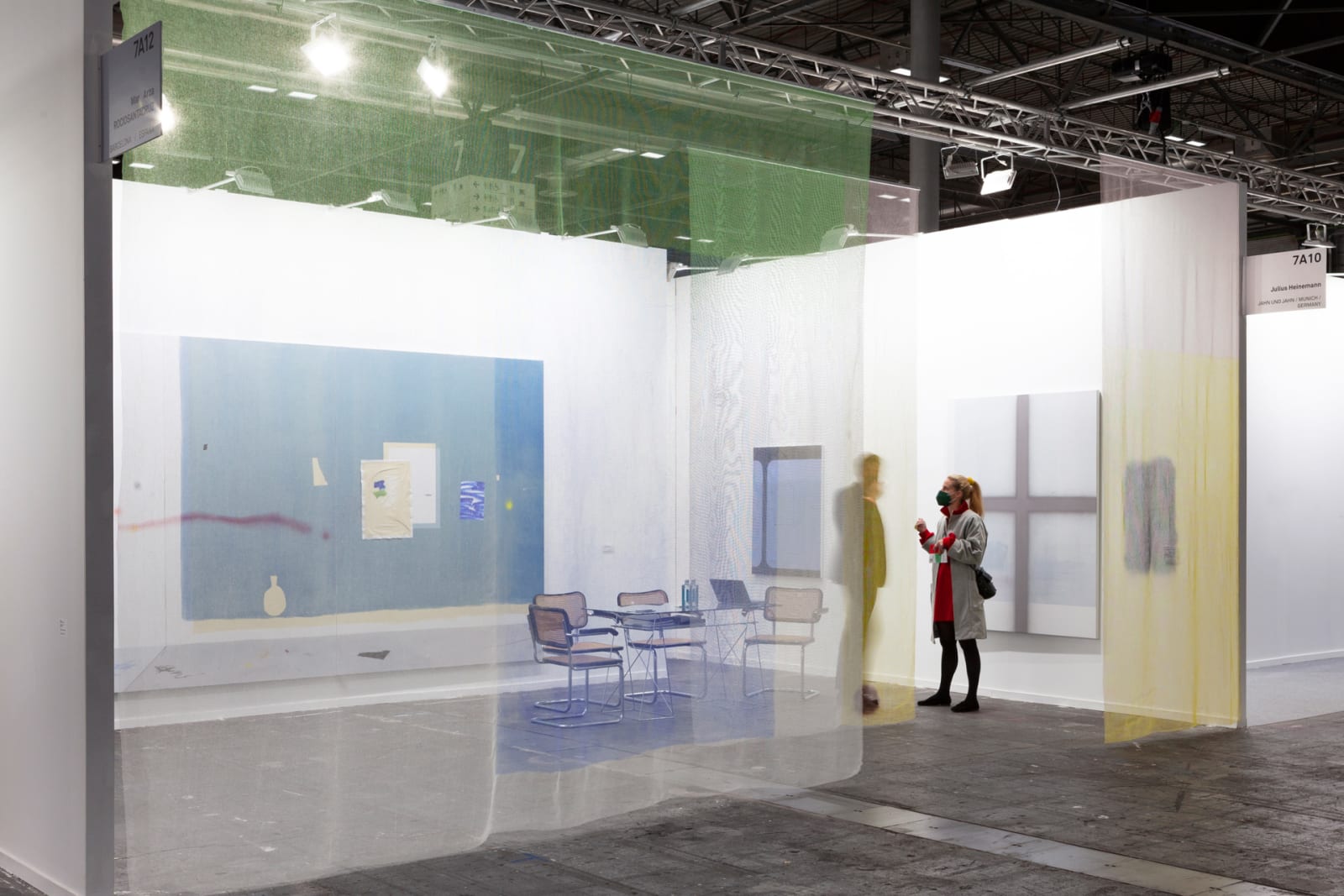

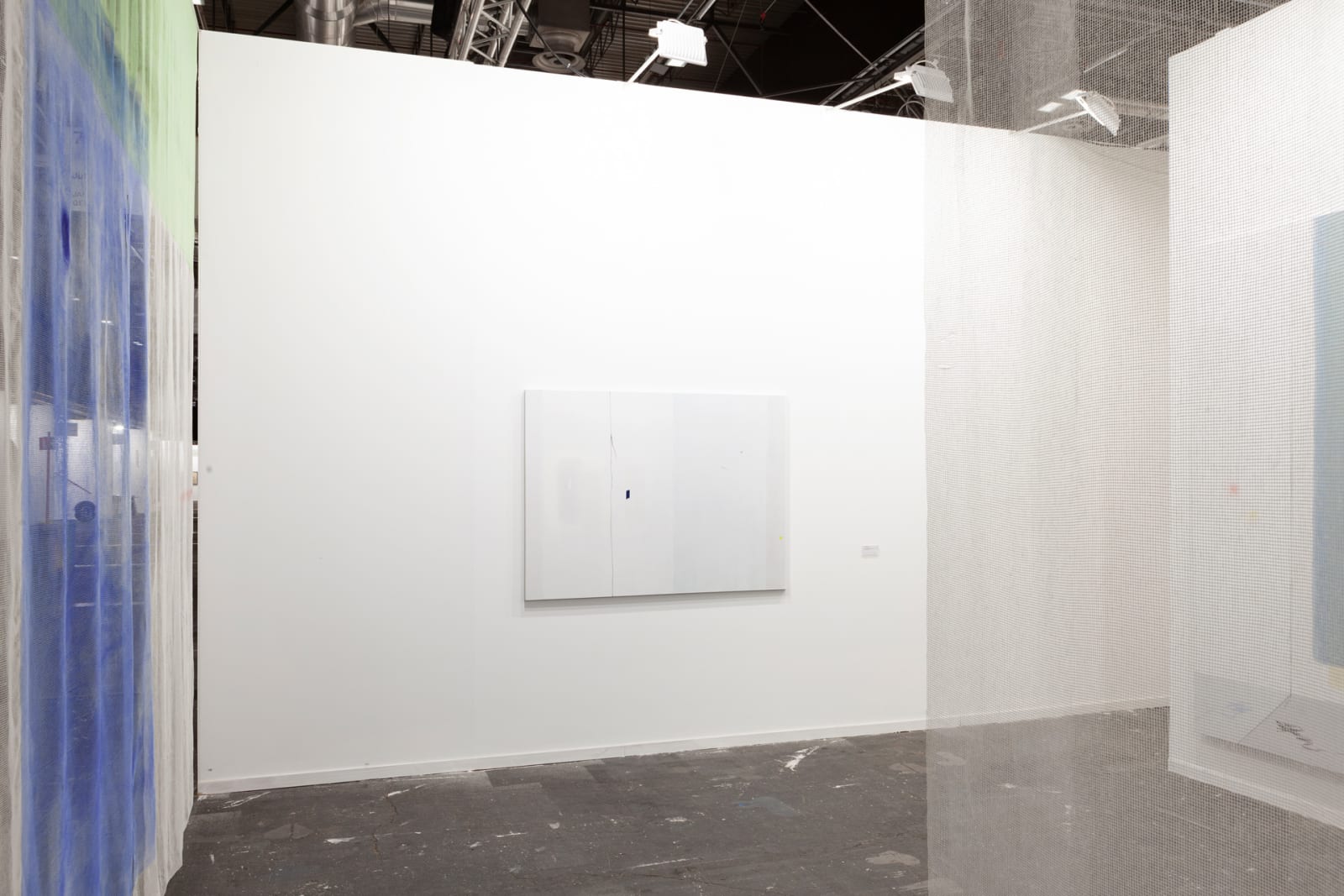
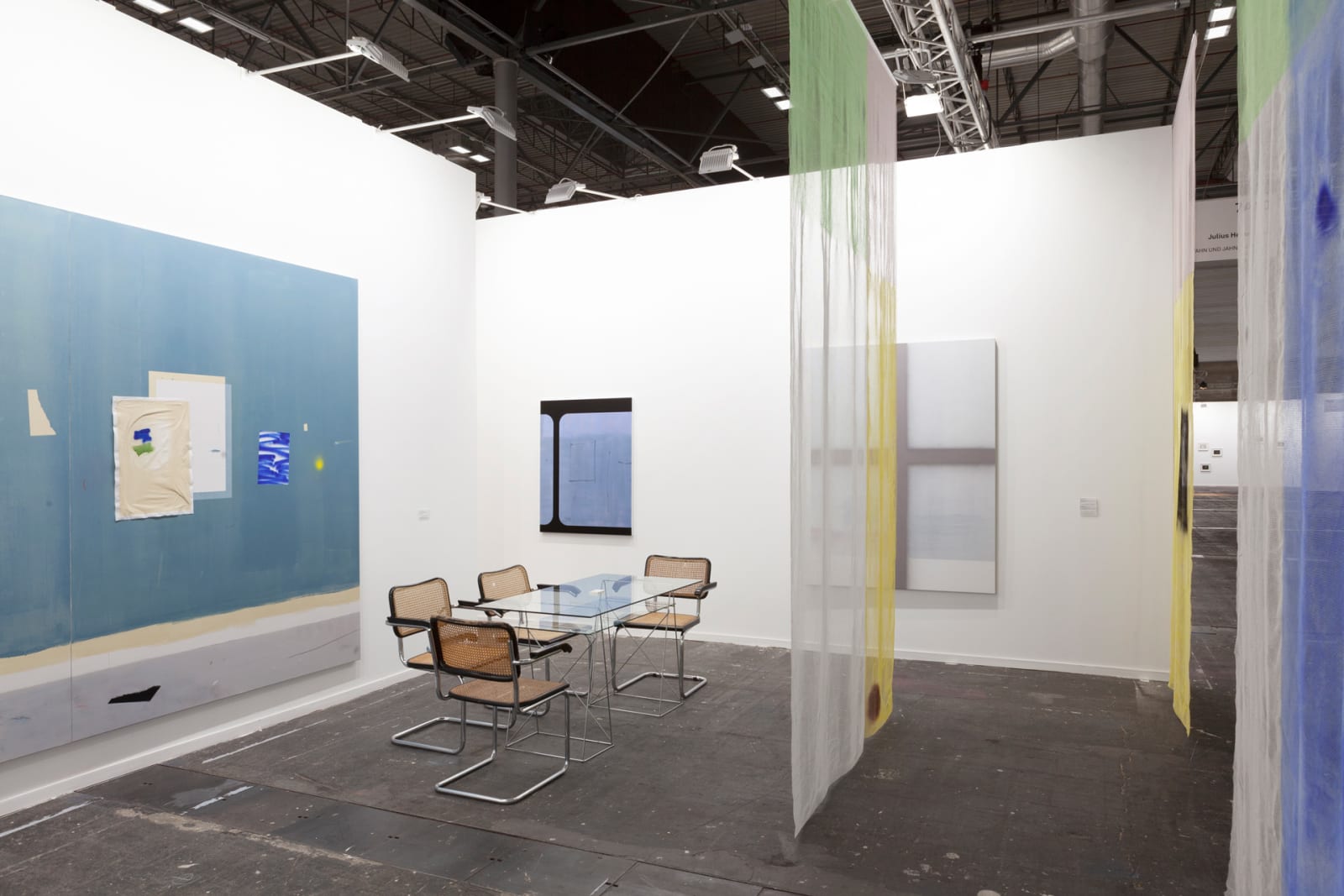
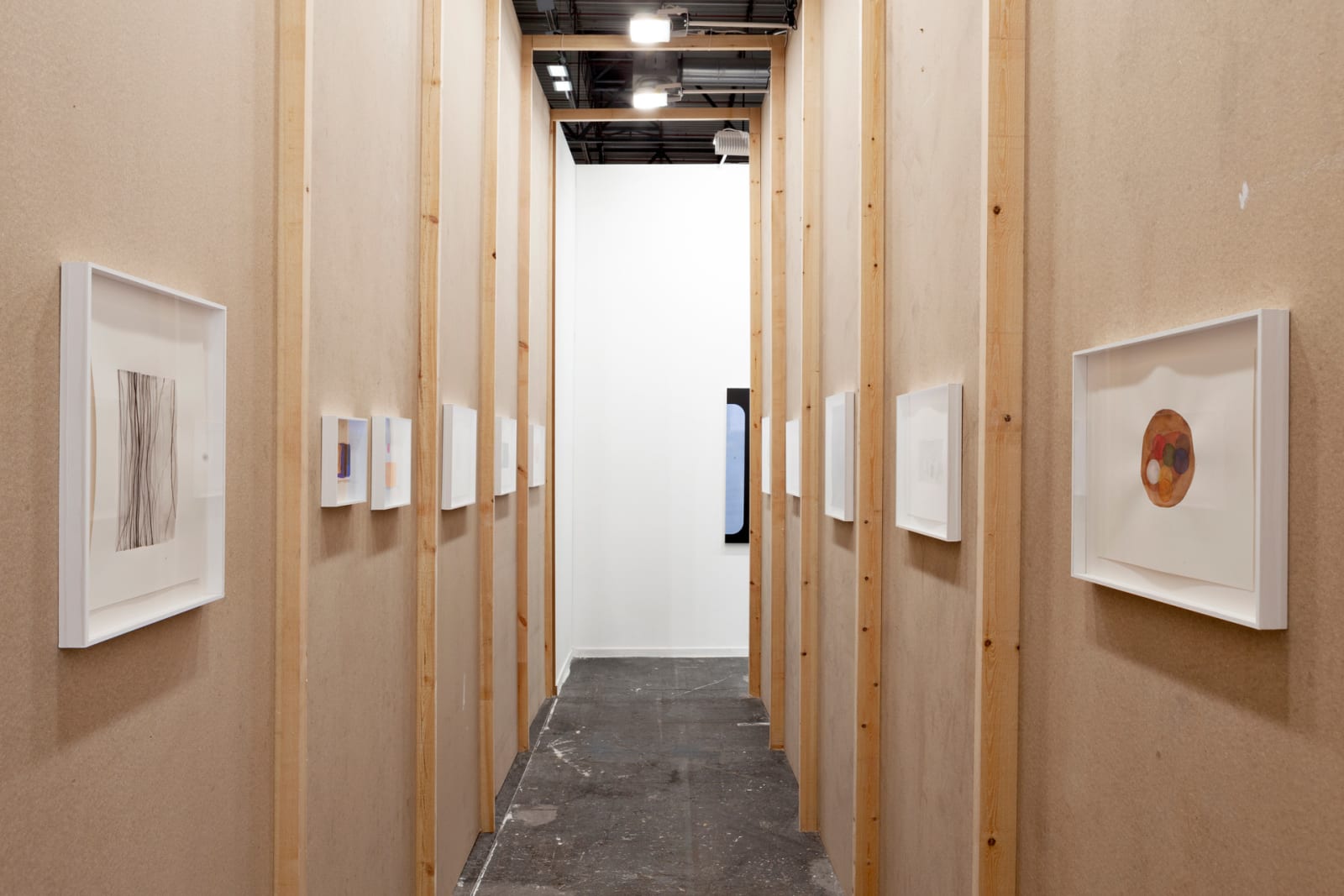
Based on the study of the different layers of perception, Heinemann presents for ARCO MADRID a proposal that considers the booth as a space of experience. In this scenario Heinemann plays with different cinematic shots that introduce the viewer to the stage (the booth), his paintings (wall fragments), and to his watercolours. This happens progressively and in a panoramic way at the same time. The scenography of the booth unveils the inner structure of the white cube trough change of scale and intervals and introduces movement and timeframes in the form of the viewer’s path.
A fabric at the front of the booth transforms the space into a stage and into a painting in itself. This installation element works as an interface and refers to the wider shot towards the booth. Through the fabric the viewer will access the medium shot – the booth itself – where the canvases are displayed. Behind the back wall – cut out from the very back of the cube and standing parallel to the fabric – hides a corridor. On the inside walls of the corridor – which are left in a raw construction state – the watercolours are displayed. This space forces a close-up perspective on Heinemann’s most intimate works.


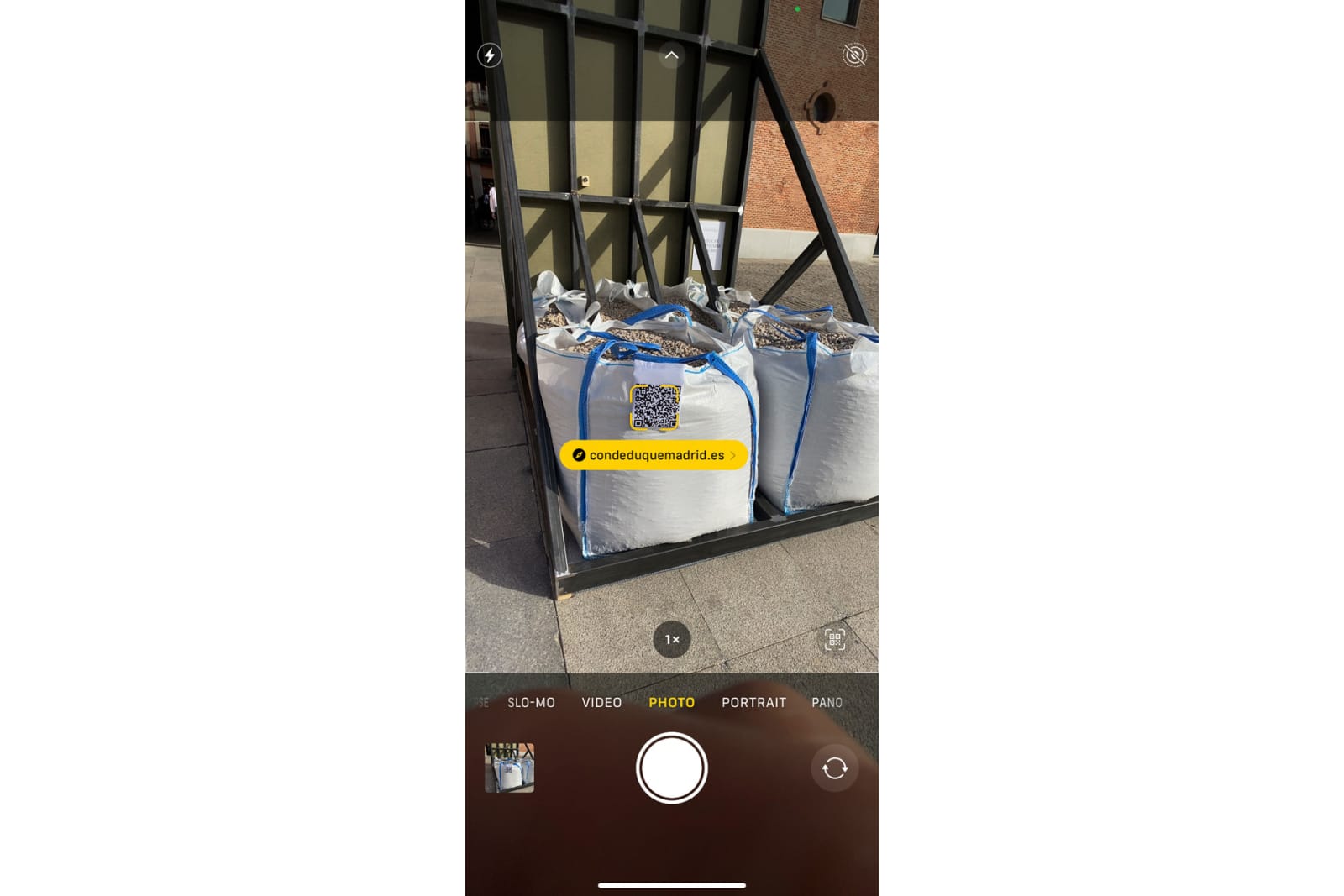

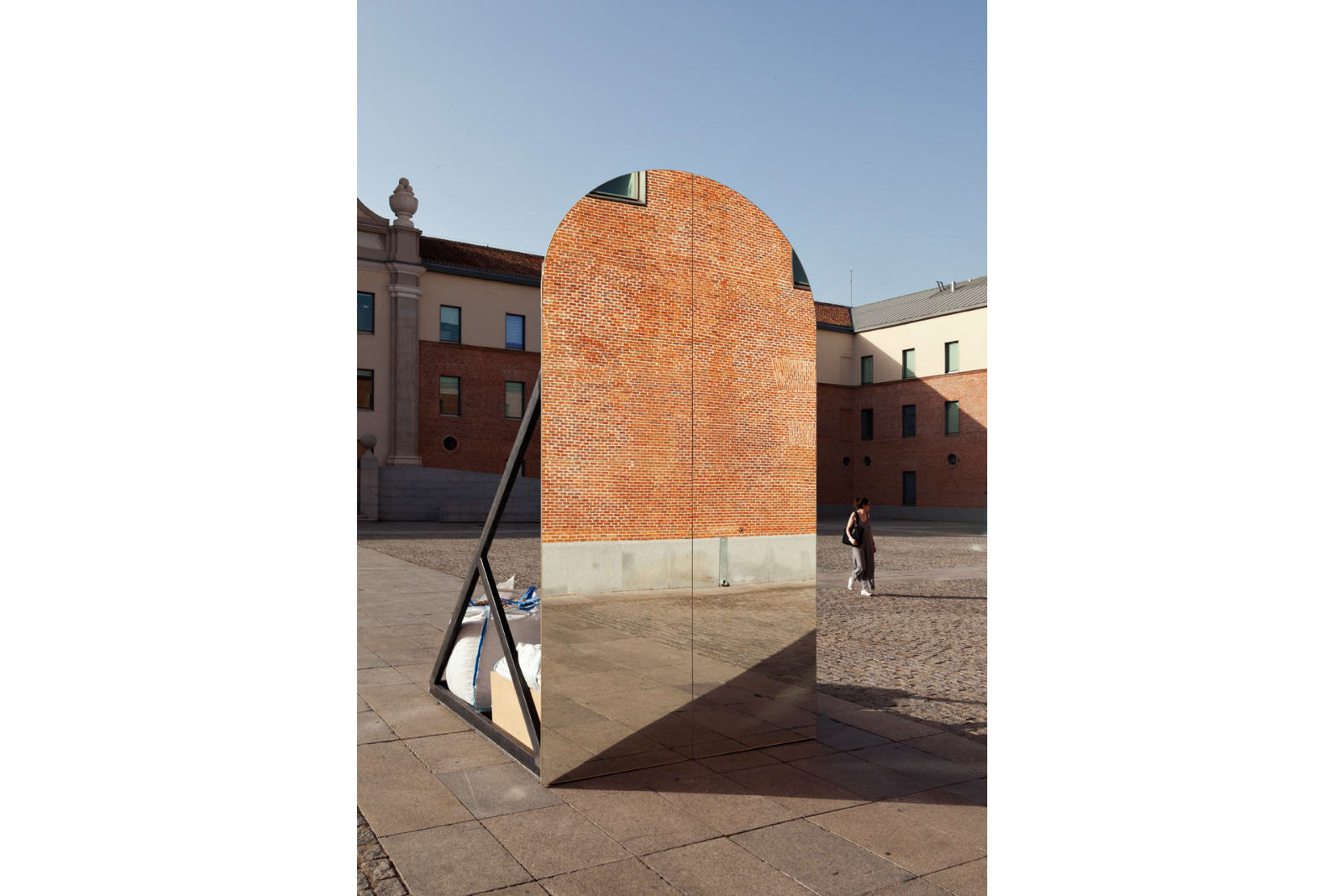


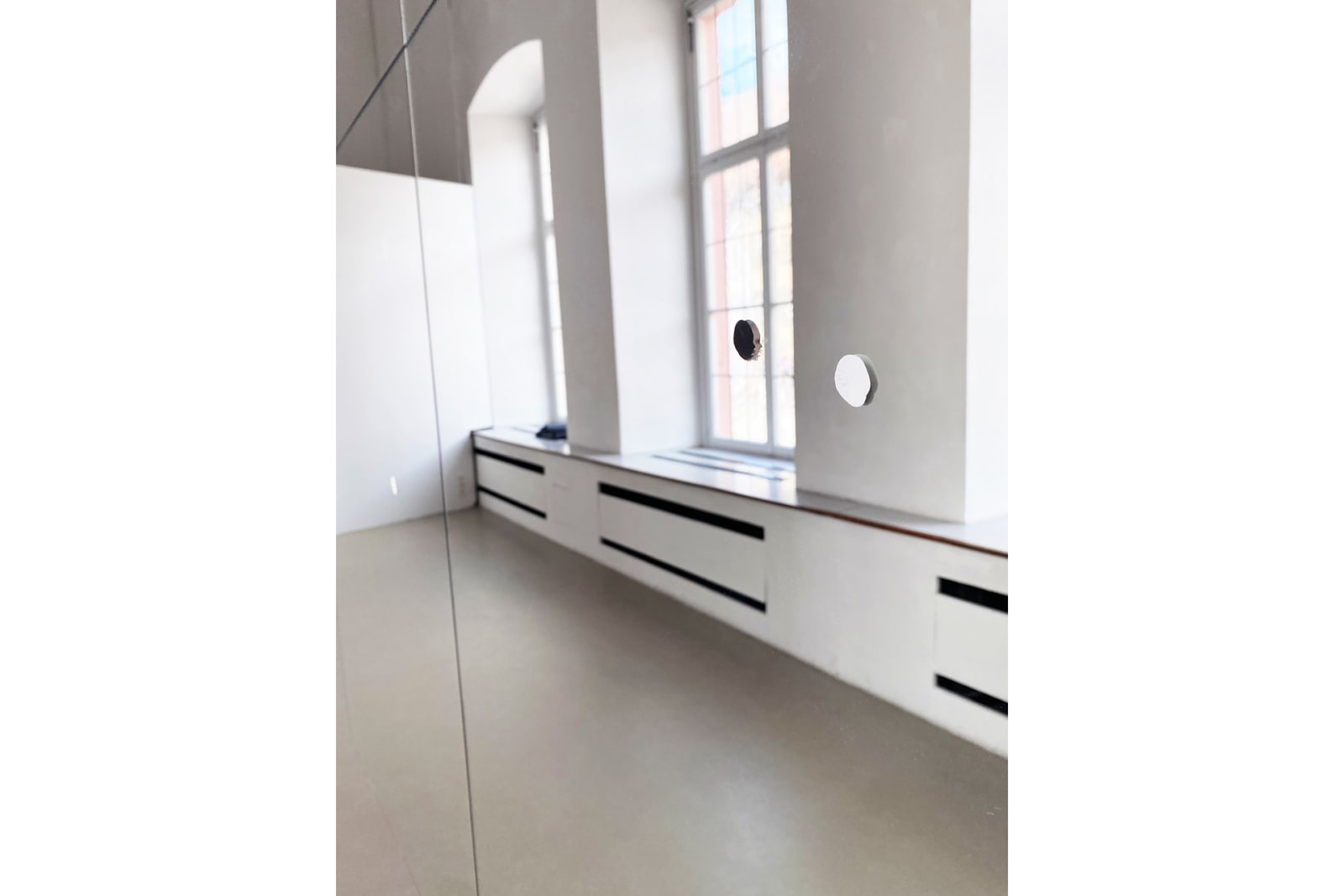
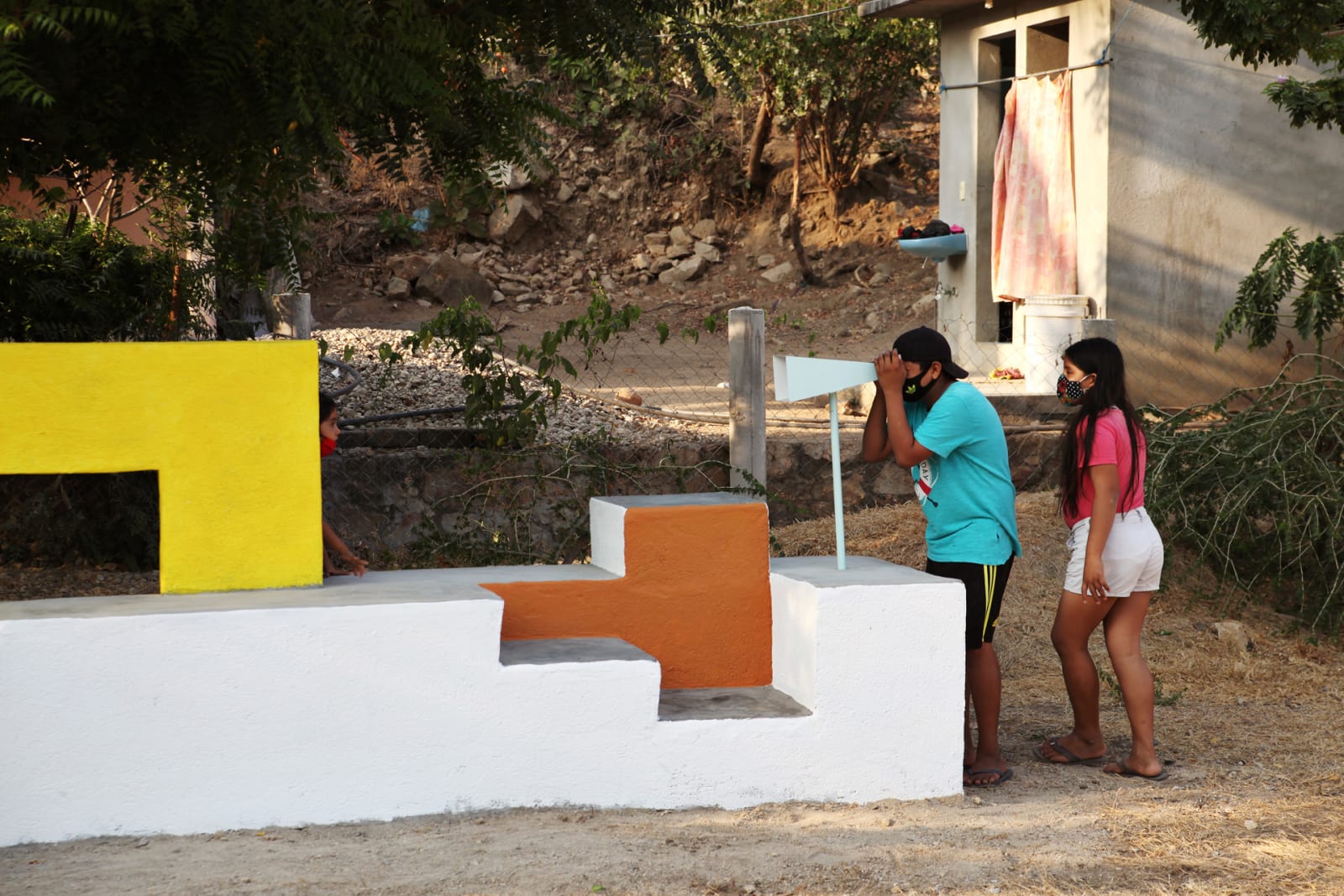
Julius Heinemann proposes a visual paradox in the courtyard of the Condeduque through the construction of a single element that is both façade and window, mirror and void, plane and vanishing point.
A Potemkin village is a real or figurative construction whose purpose is to generate an outward appearance of prosperity in order to conceal an impoverished reality, politically and economically. Originally the expression “Potemkin village” comes from the ephemeral architectures that Catherine II’s favourite, Grigori Potemkin, supposedly ordered to be erected in 1787.
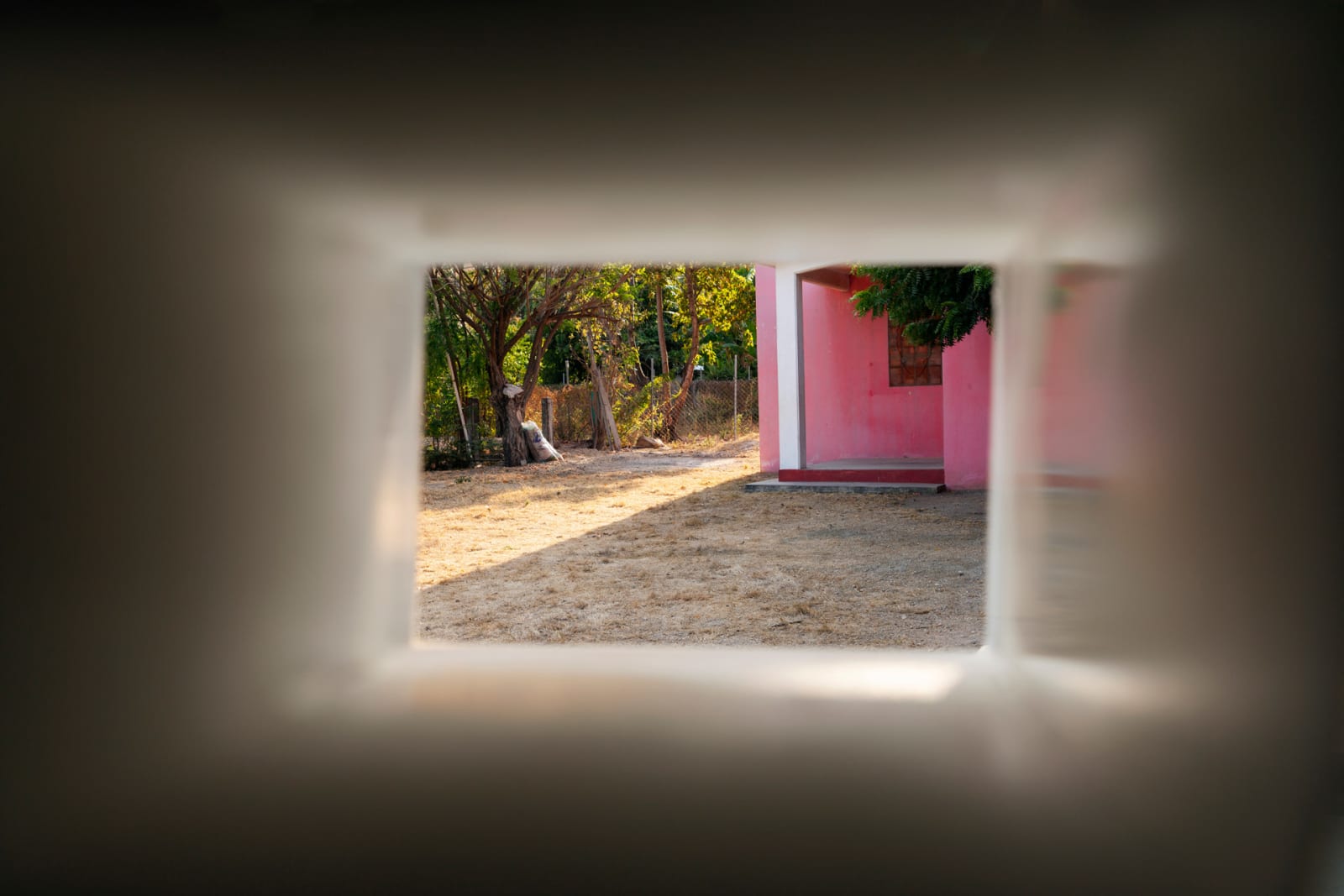
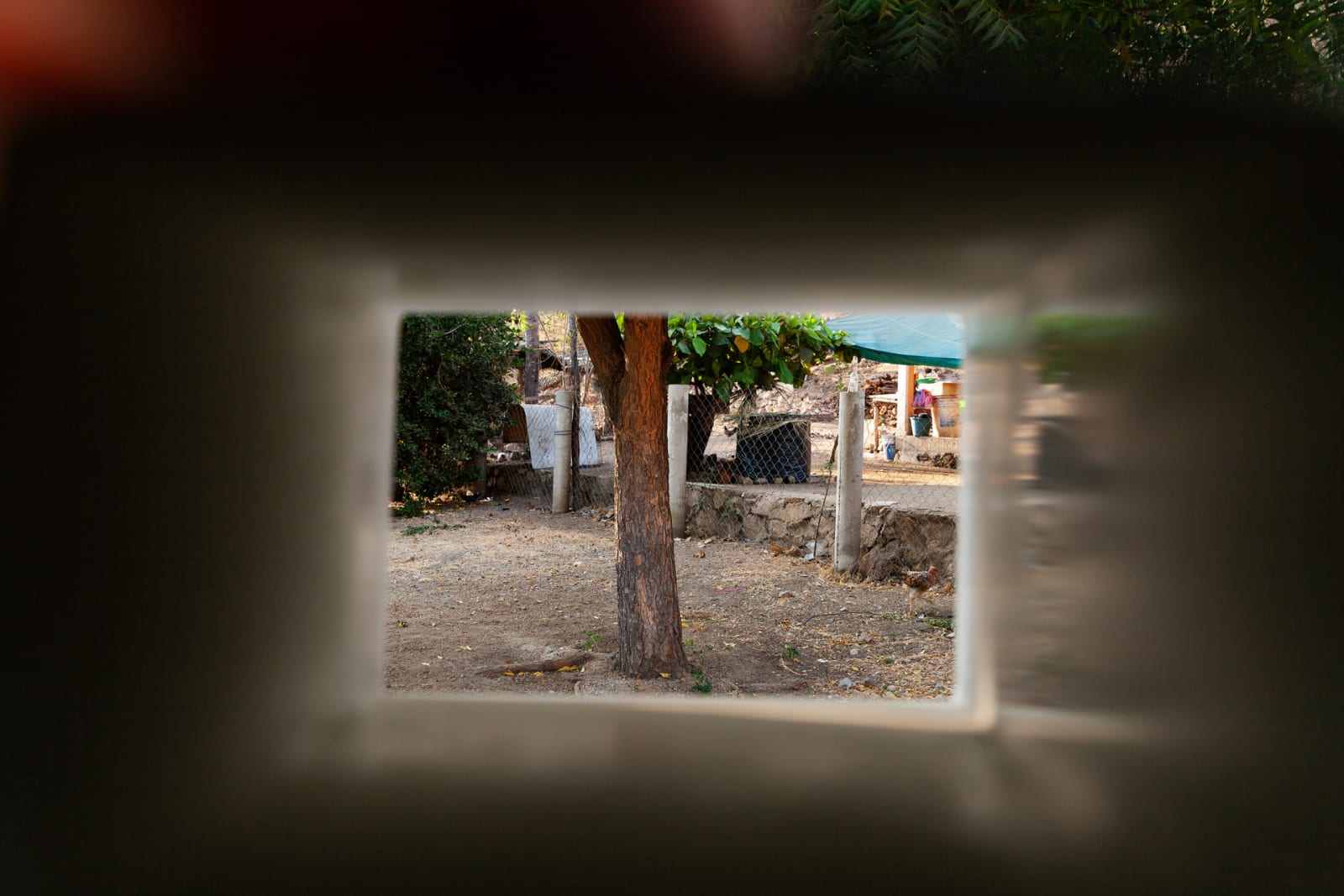
With these references in mind, Heinemann proposes an alternative view of the physical space and historical context of the Condeduque courtyard in an intervention that connects past and present through a mirror façade. He constructs a mirror door that contains the totality of the reality it conceals: a small peephole allows us to see the courtyard, while the wall itself reflects us. This produces a spatial-temporal collapse resolved in the present through this optical mechanism.
Heinemann creates a magical wall that connects the 18th century with the present and invites us to reflect on the screen on which identities are constructed and metaverses are fabricated, and which ultimately conceals as much as it exposes the reality of the now.
Yara Sonseca-Mas
Julius Heinemann utiliza la abrumadora potencia representativa del patio de Condeduque para abordar la cuestión de la percepción en relación con el espacio físico y reflexionar sobre la realidad digital desde la poética de su lenguaje visual. A las herramientas básicas de la abstracción pictórica, tales como la escala, la luz, el plano y la perspectiva que Heinemann viene utilizando en sus intervenciones artísticas, se añaden las narrativas históricas que dan base conceptual al proyecto.
Un pueblo Potemkin es una construcción real o figurada cuyo propósito es generar una apariencia externa de prosperidad para ocultar una realidad empobrecida, en los ámbitos político y económico. El término se ha extendido abarcando toda construcción ficticia, de fachada, cuyo propósito sea simular una arquitectura real. Originalmente la expresión “pueblo Potemkin” proviene de las arquitecturas efímeras que supuestamente el valido de Catalina II, Grigori Potemkin, mandó erigir en 1787. Estas representaban falsos asentamientos y fueron levantados con la intención de proyectar una imagen de bonanza en la recién anexionada Crimea durante la visita de la emperatriz a la región. Por otra parte, el patio de Condeduque fue concluido en torno a 1730 bajo el reinado de Felipe V, tras la Guerra de Sucesión Española y en un contexto de decadencia económica.
Con estas referencias en mente, Heinemann propone un punto de vista alternativo sobre el espacio físico y el contexto histórico del patio de Coneduque en una intervención que conecta pasado y presente a través de una fachada especular. Construye una puerta de espejo que contiene la totalidad de la realidad que oculta: una pequeña mirilla permite visualizar el patio, mientras que el propio muro nos refleja. Se produce así un colapso espacio temporal resuelto en el presente a través de este mecanismo óptico. Heinemann crea un muro mágico que conecta el siglo XVIII con el ahora e invita a reflexionar sobre la pantalla en la que se construyen identidades y fabrican metaversos y que, en última instancia, esconde tanto como expone la realidad del ahora.
Yara Sonseca-Mas

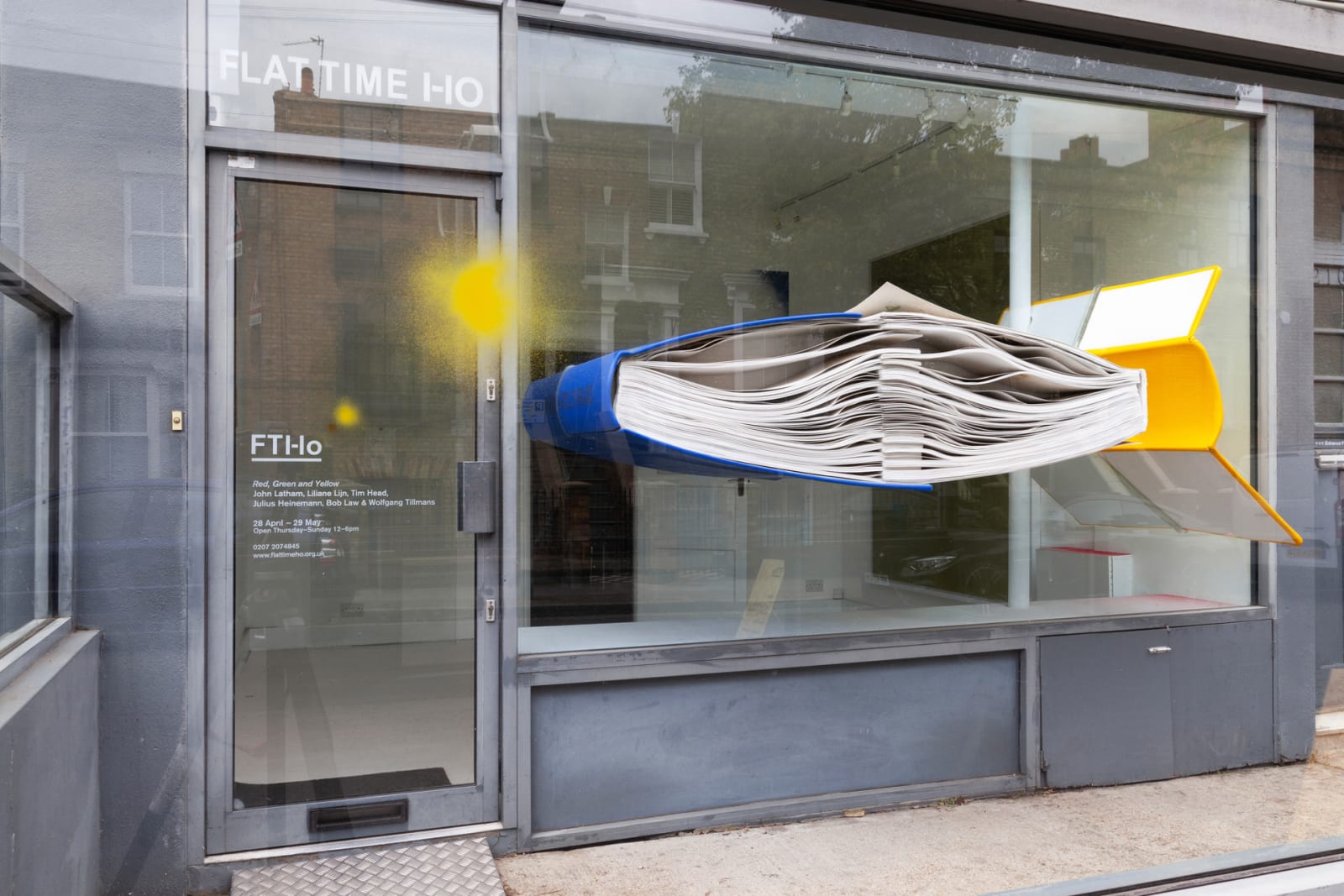
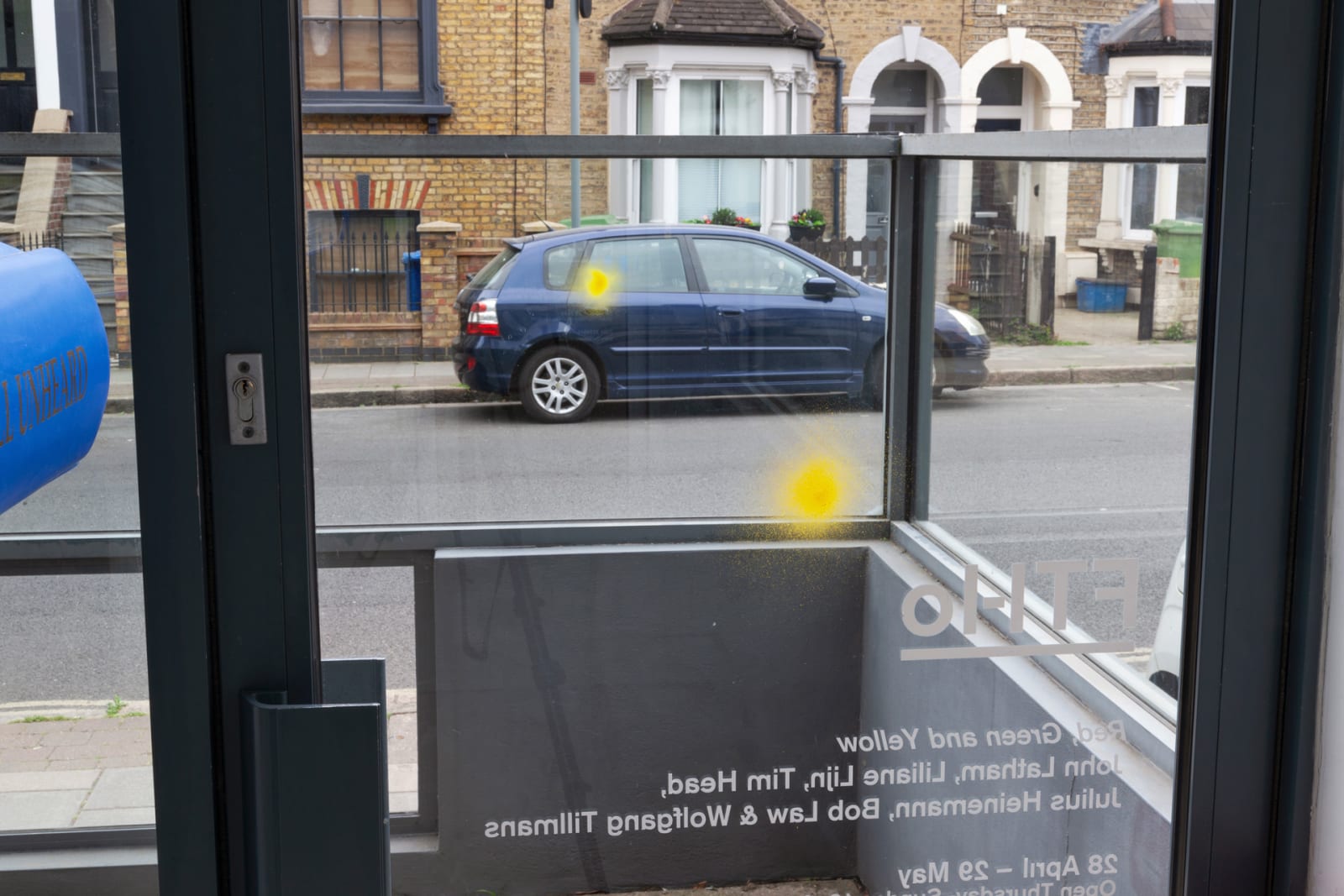
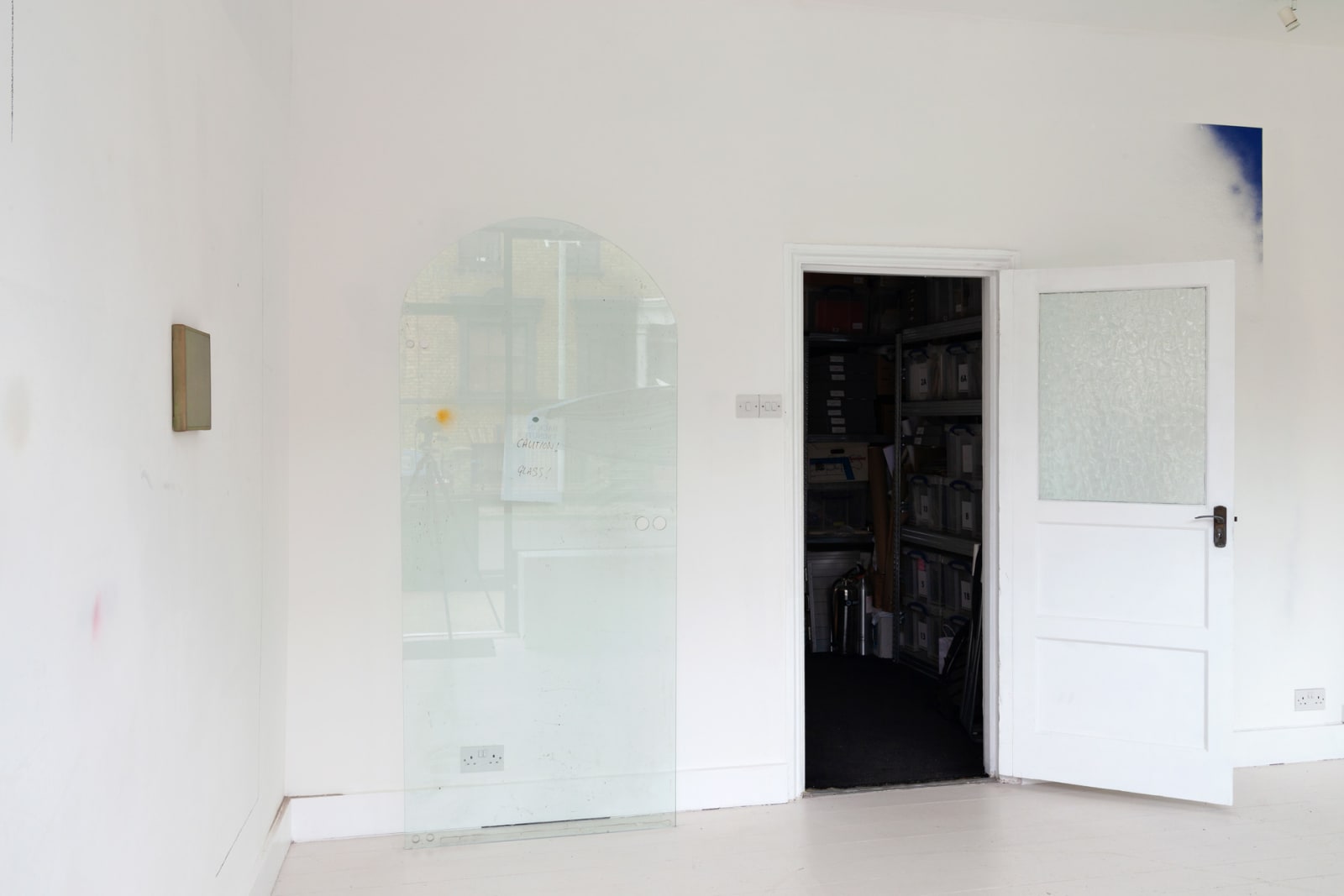
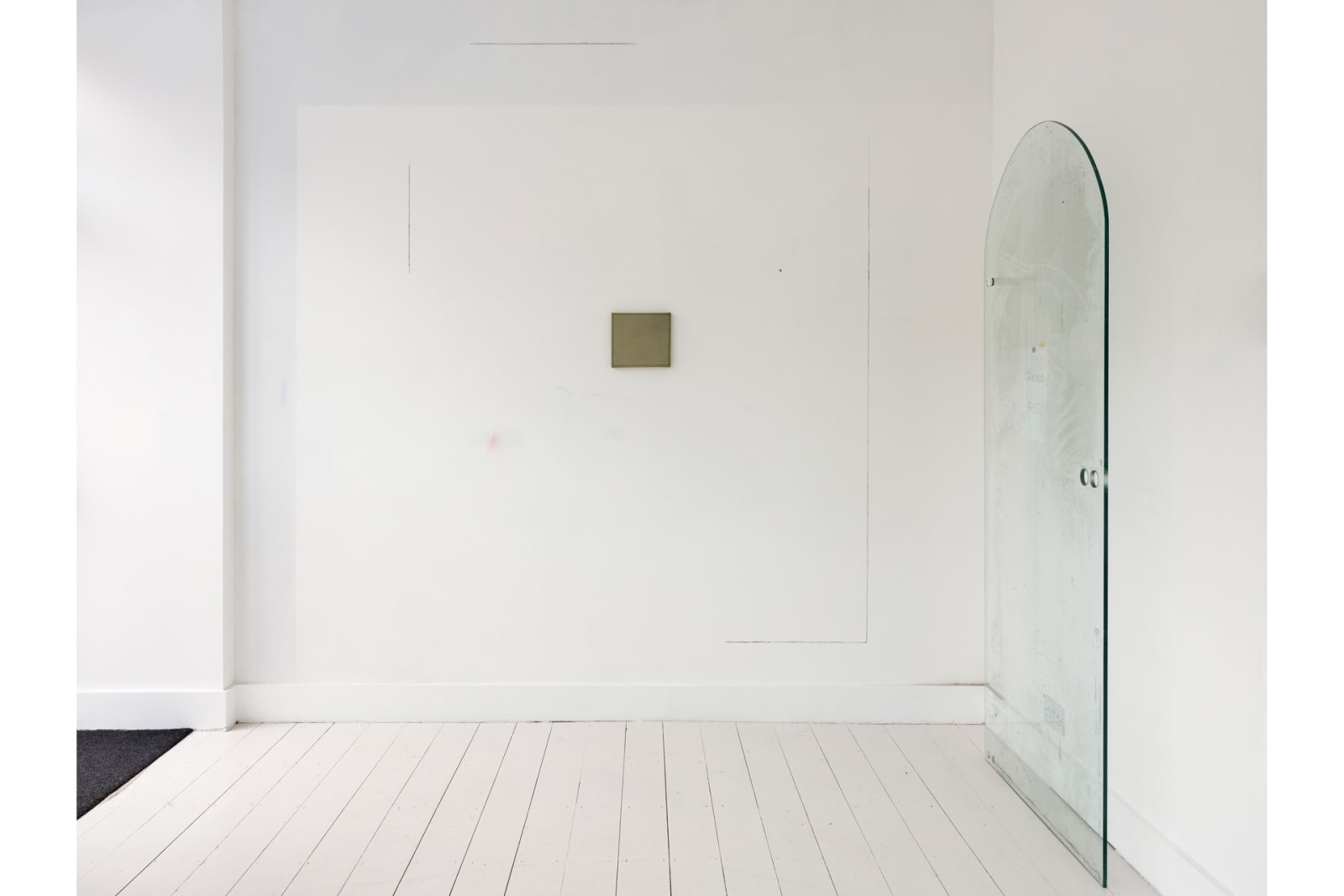

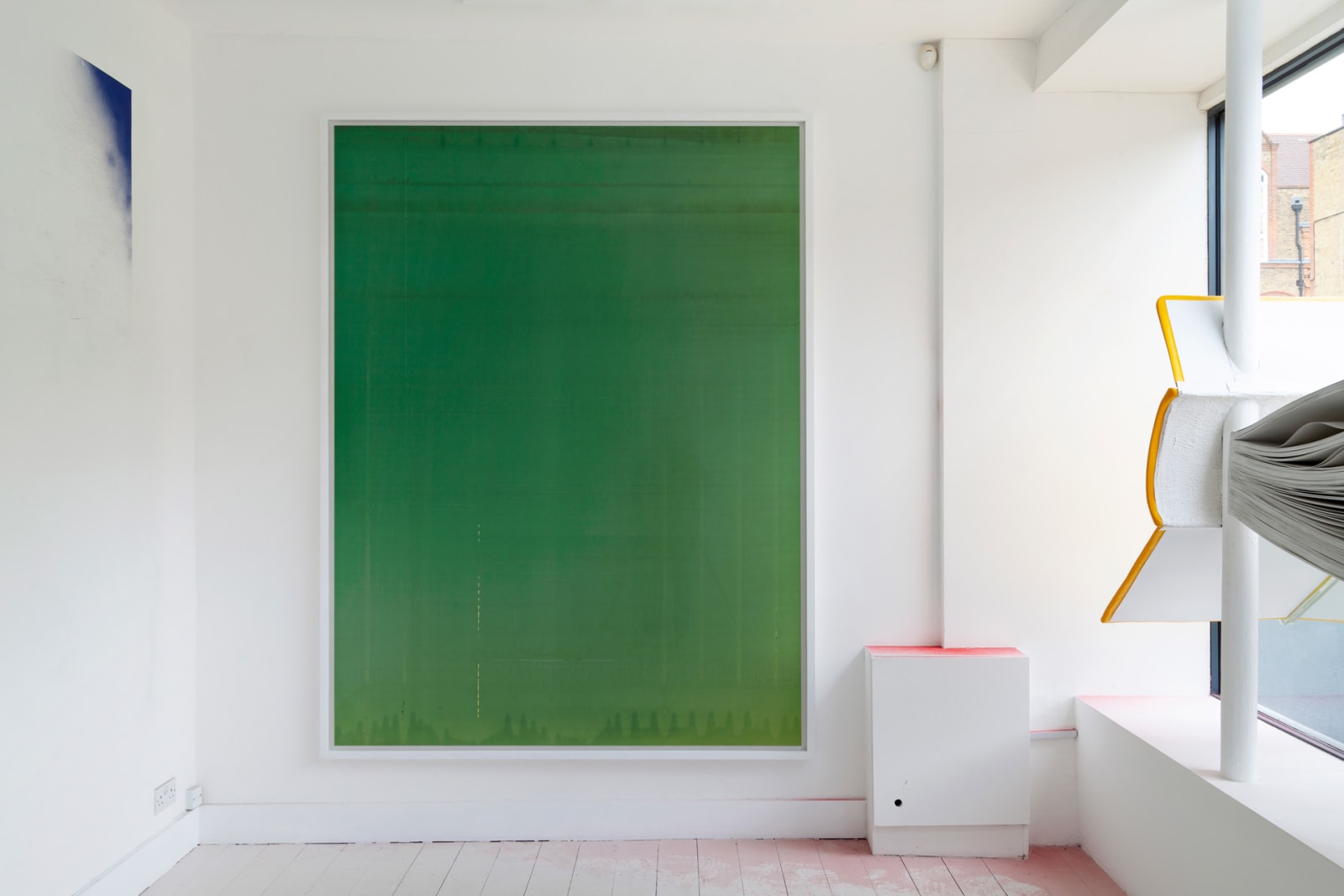

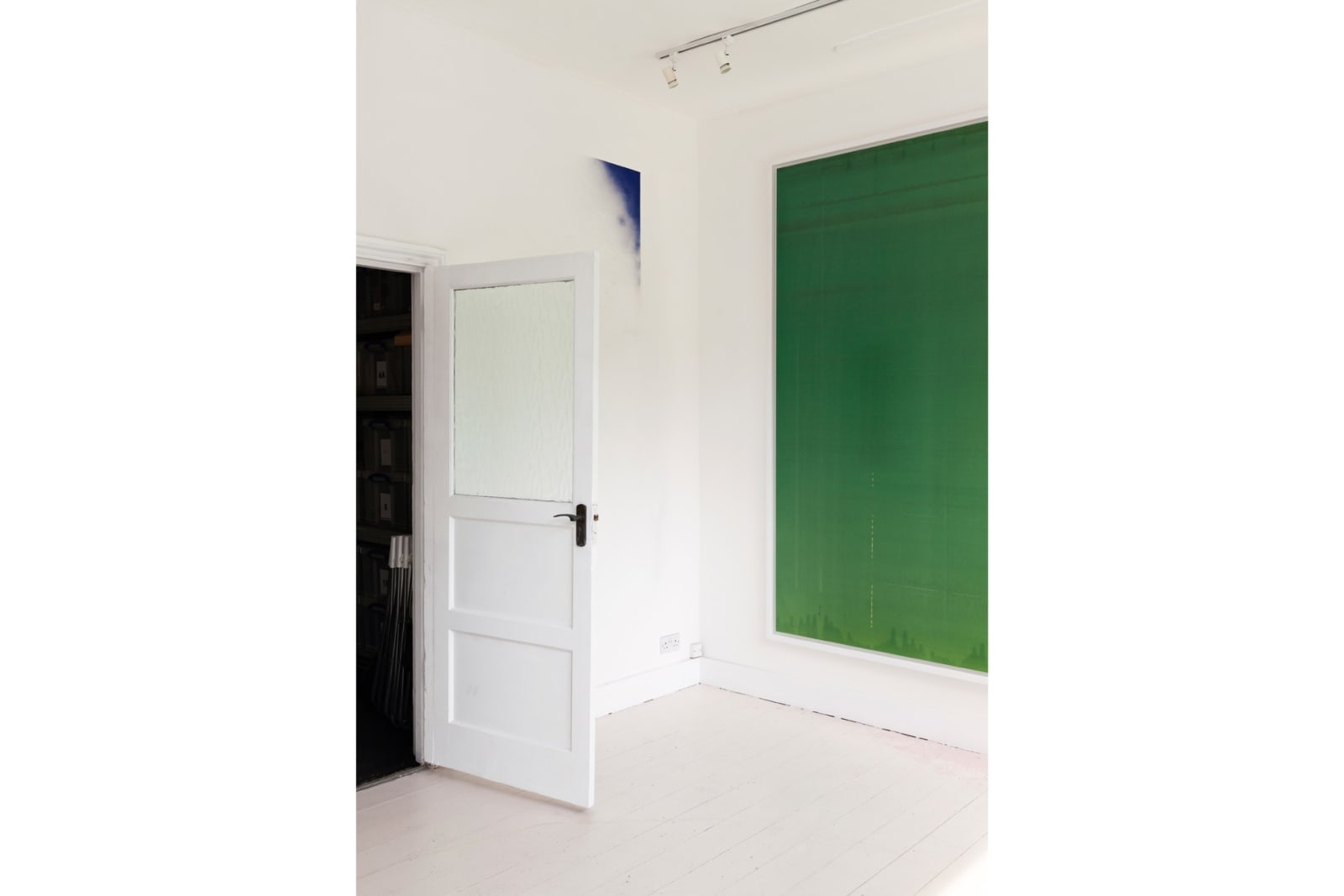
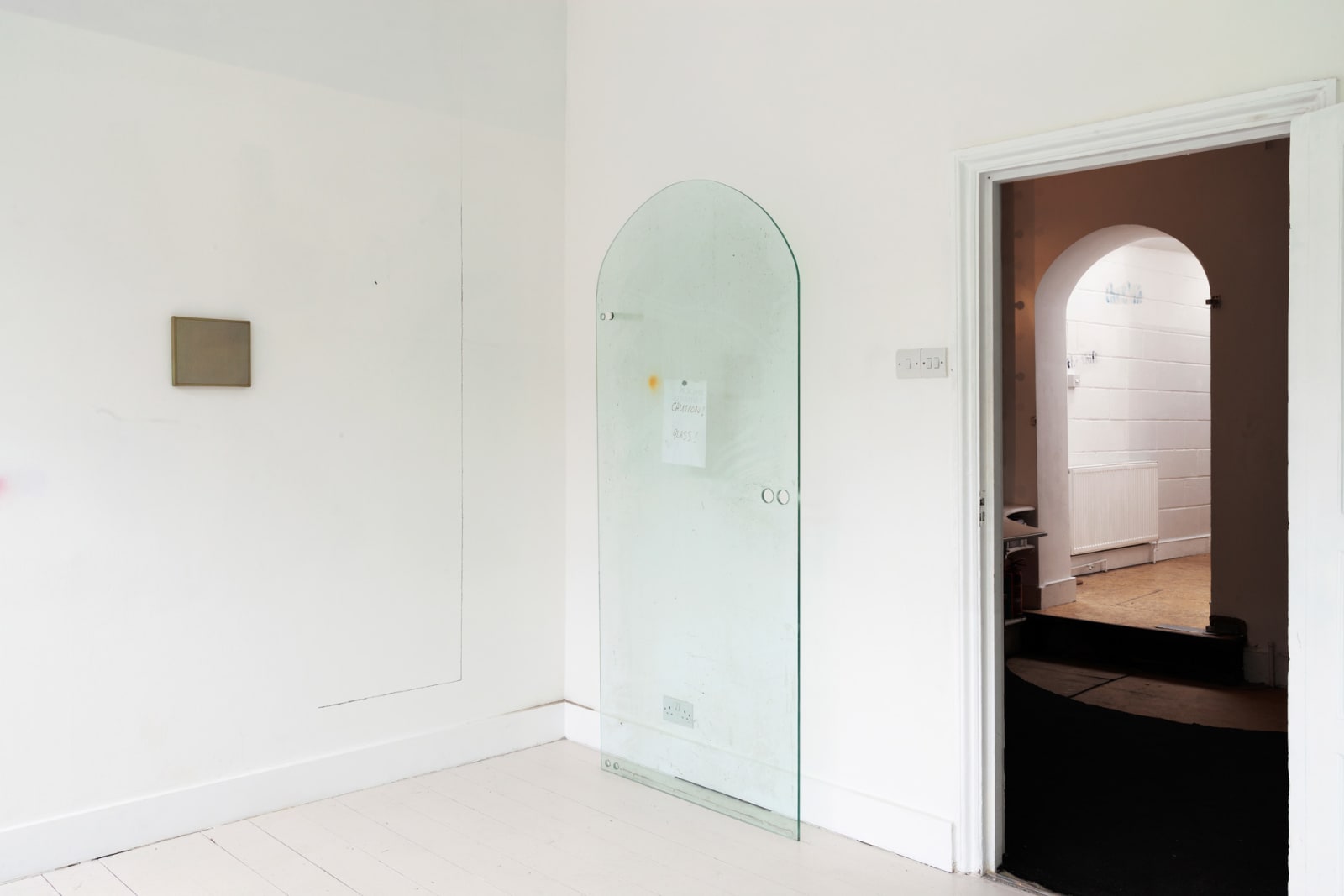
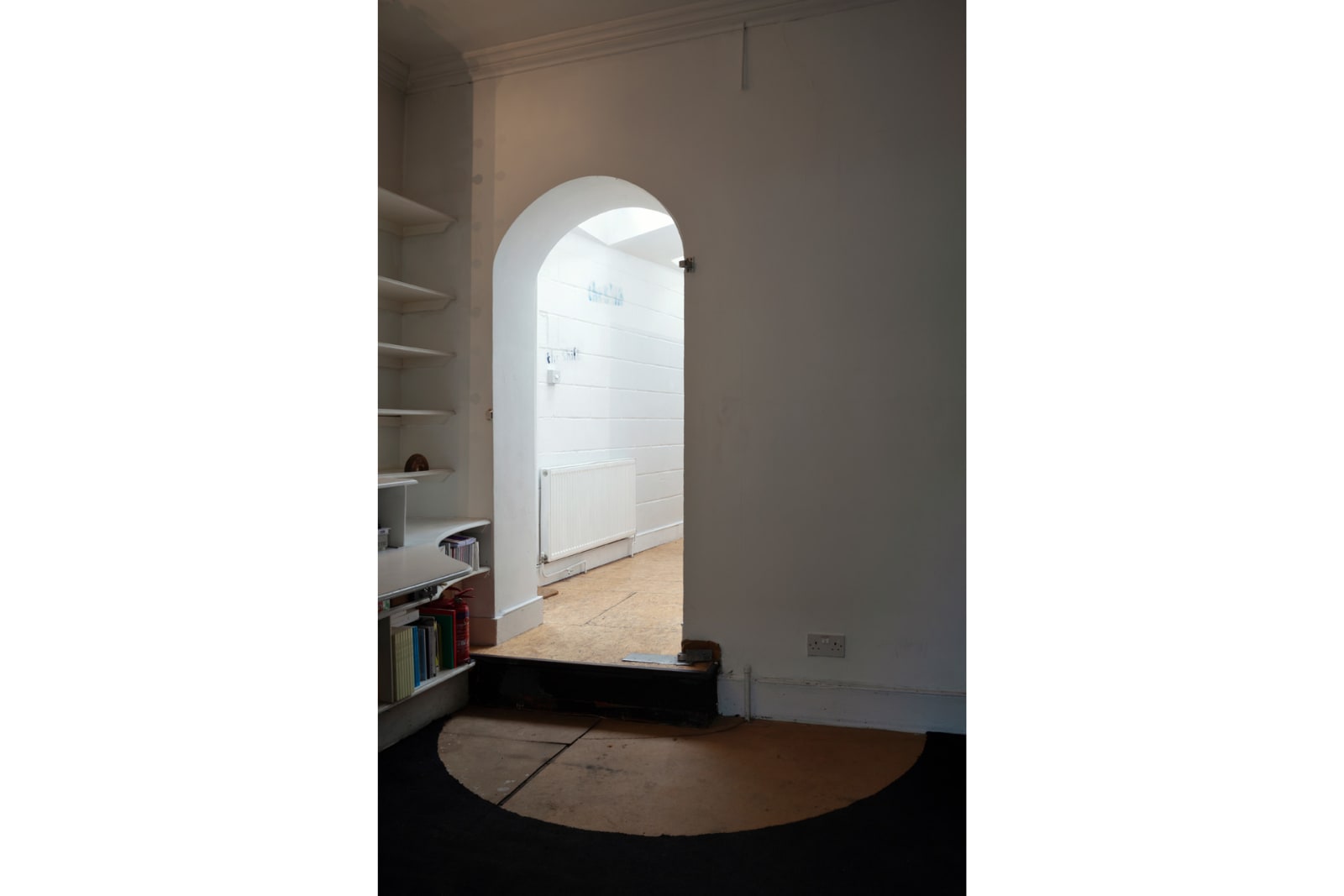
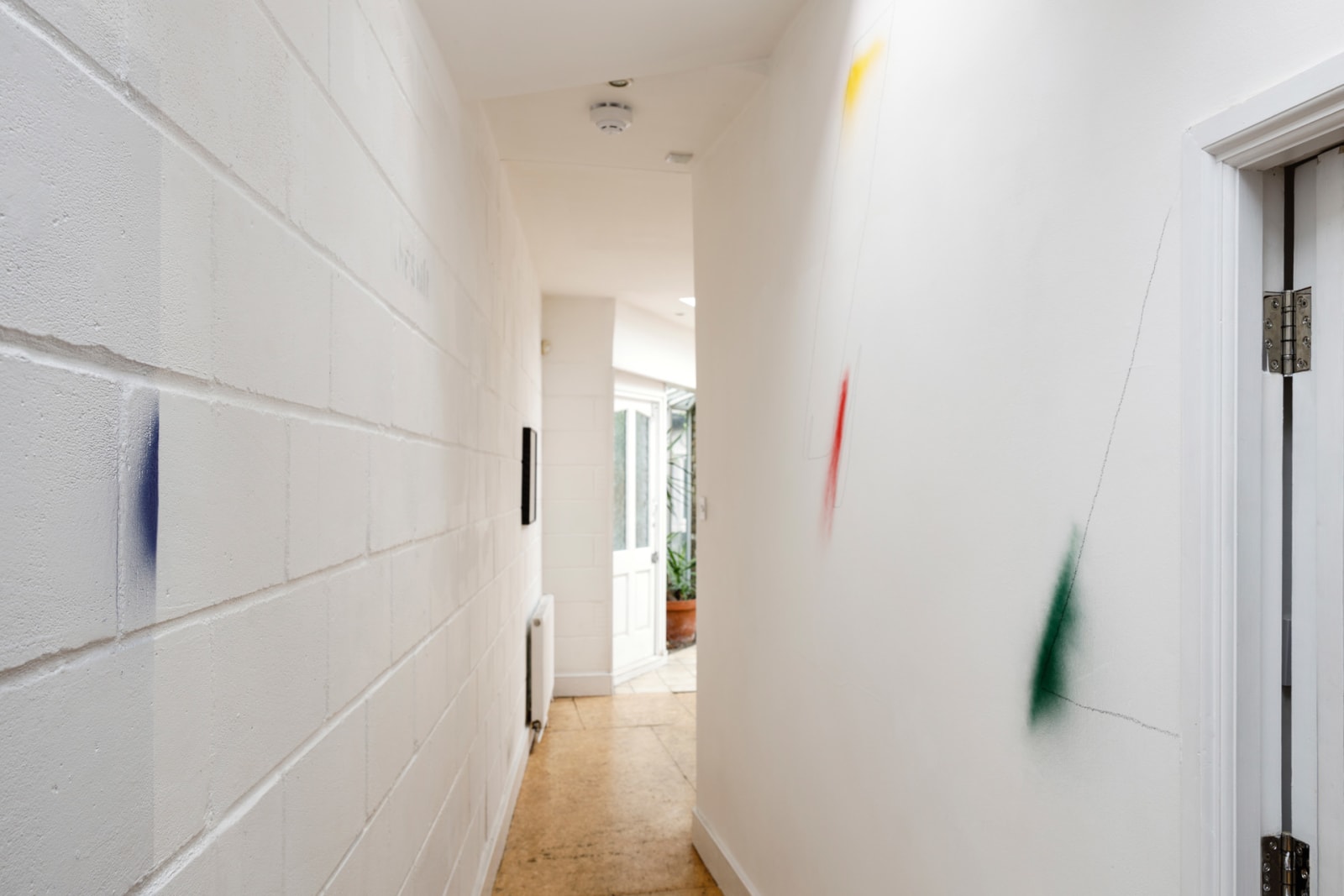

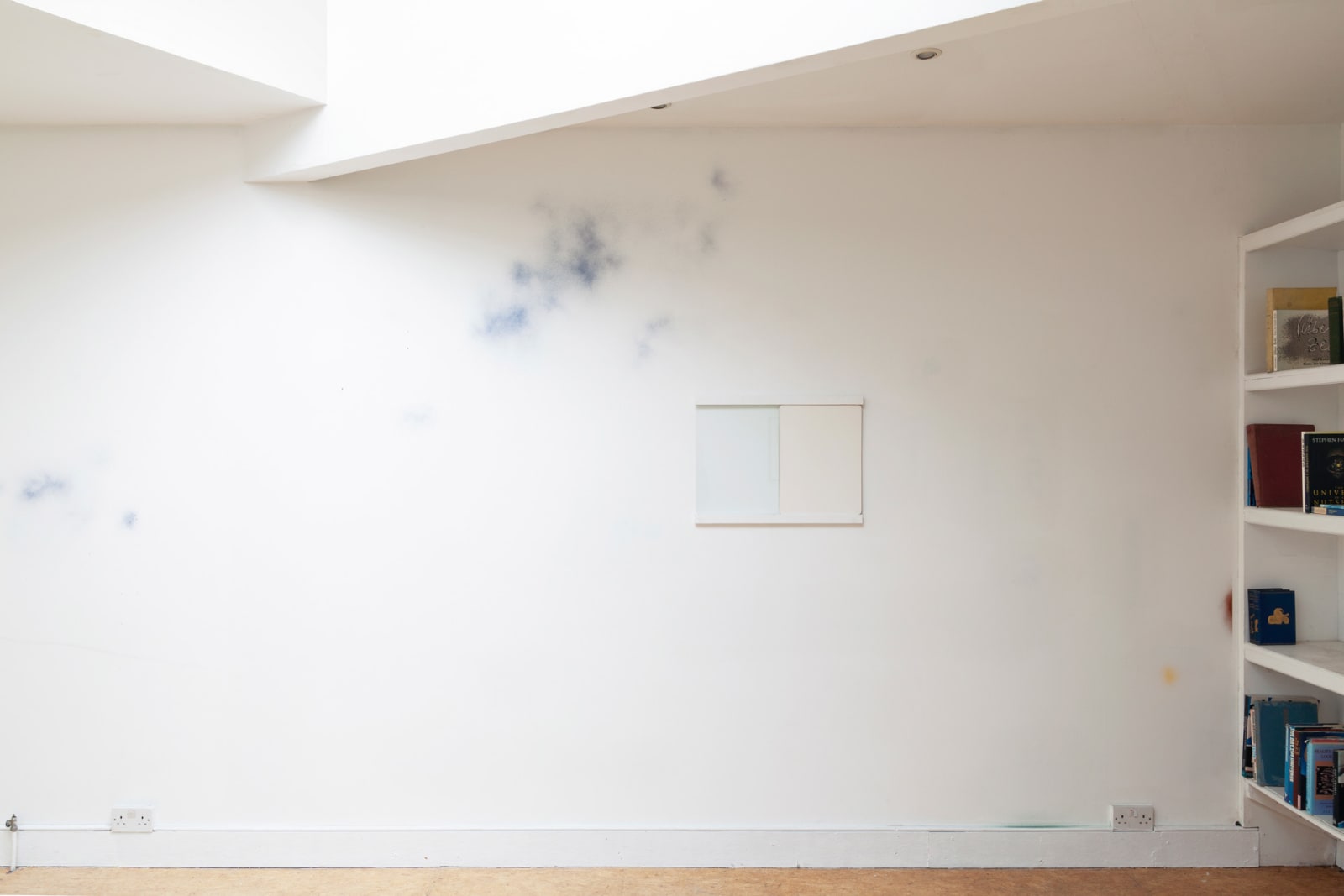
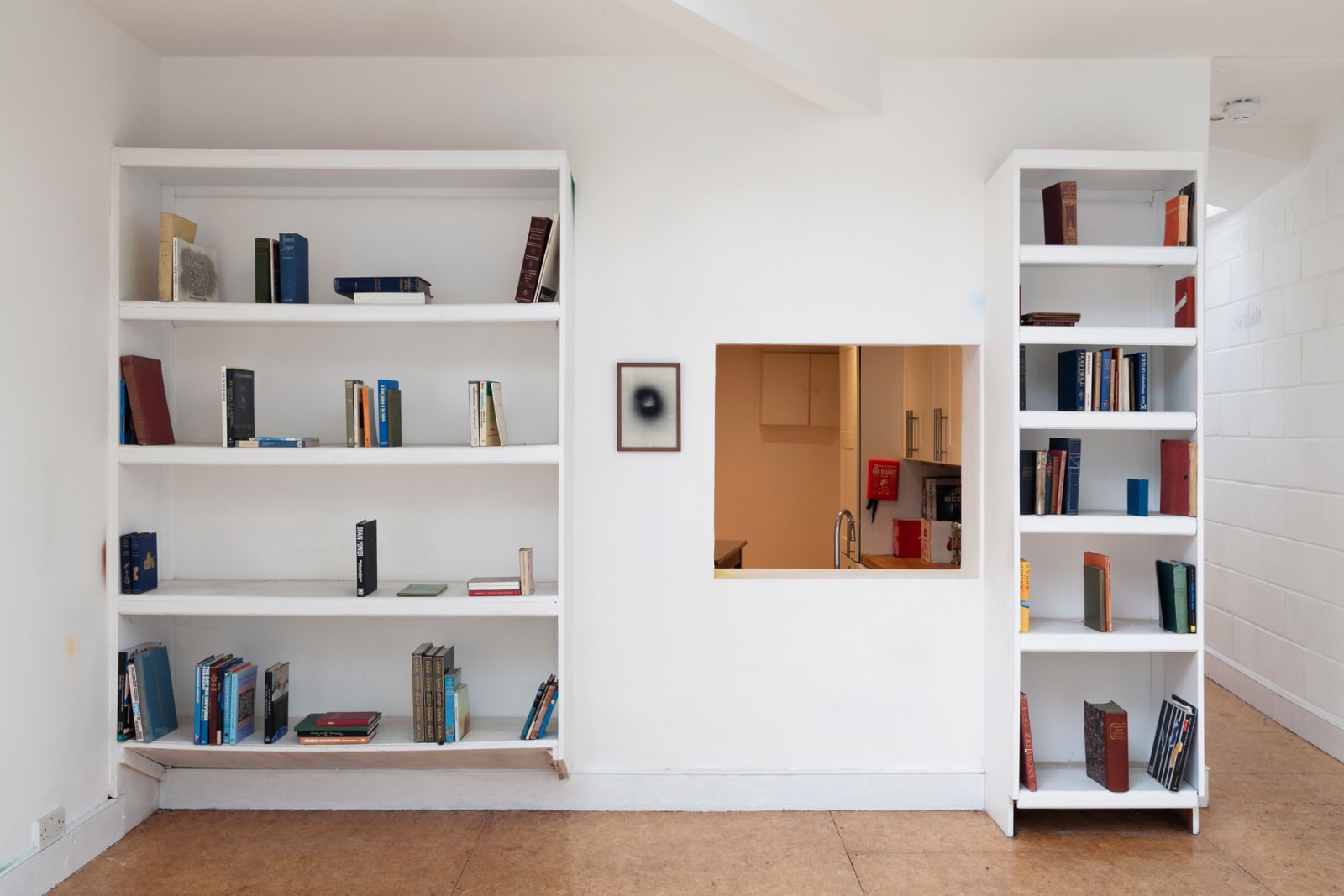
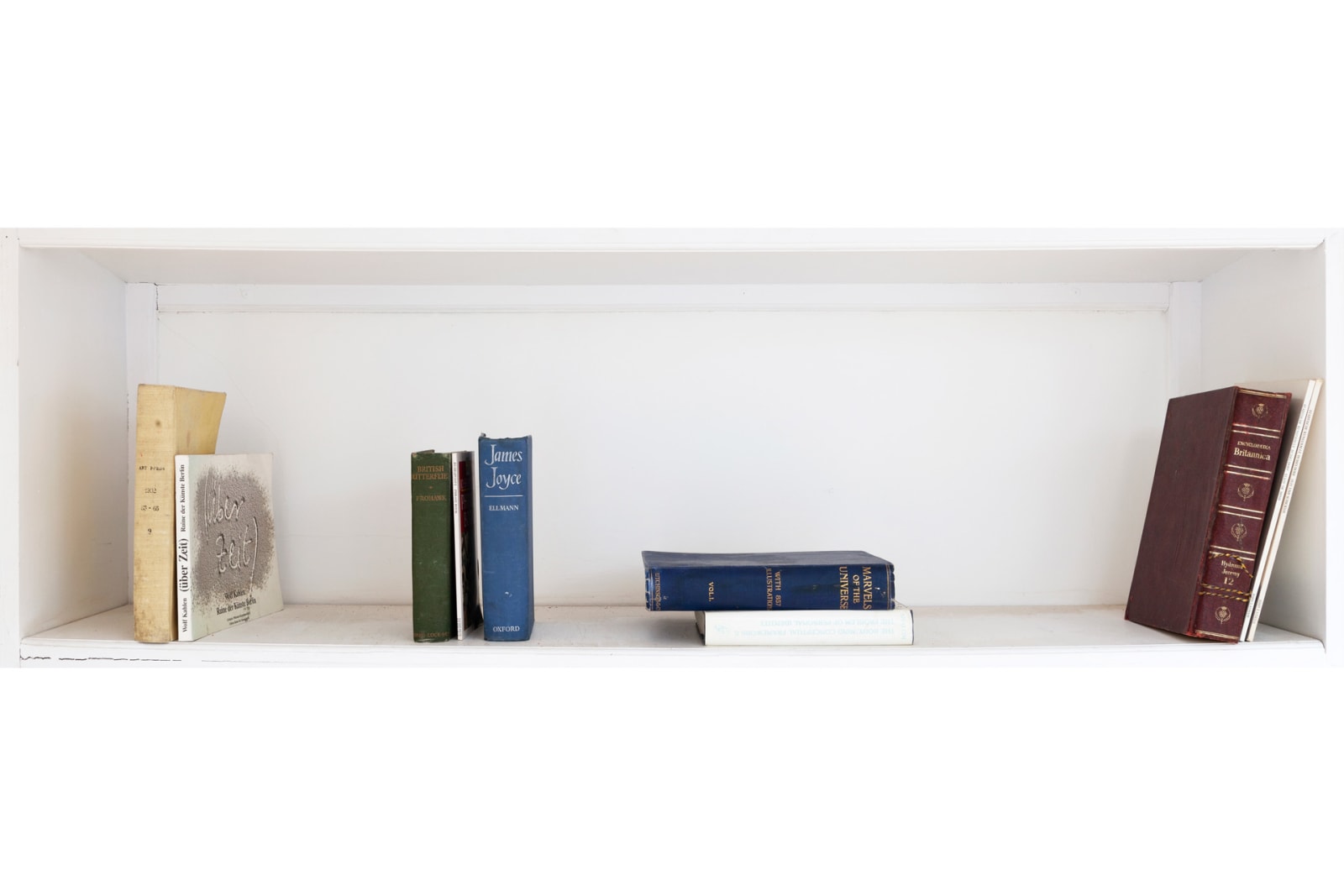
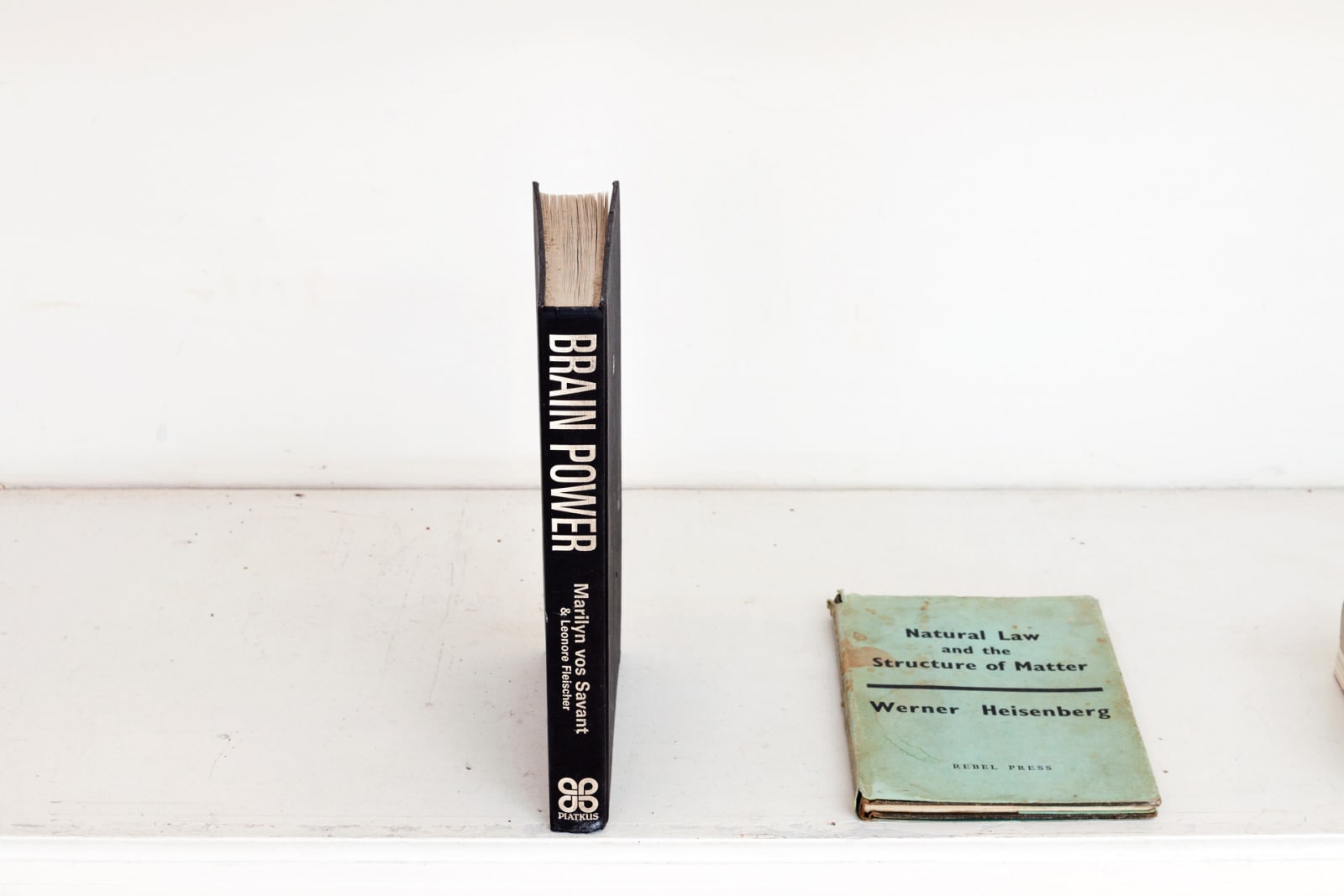
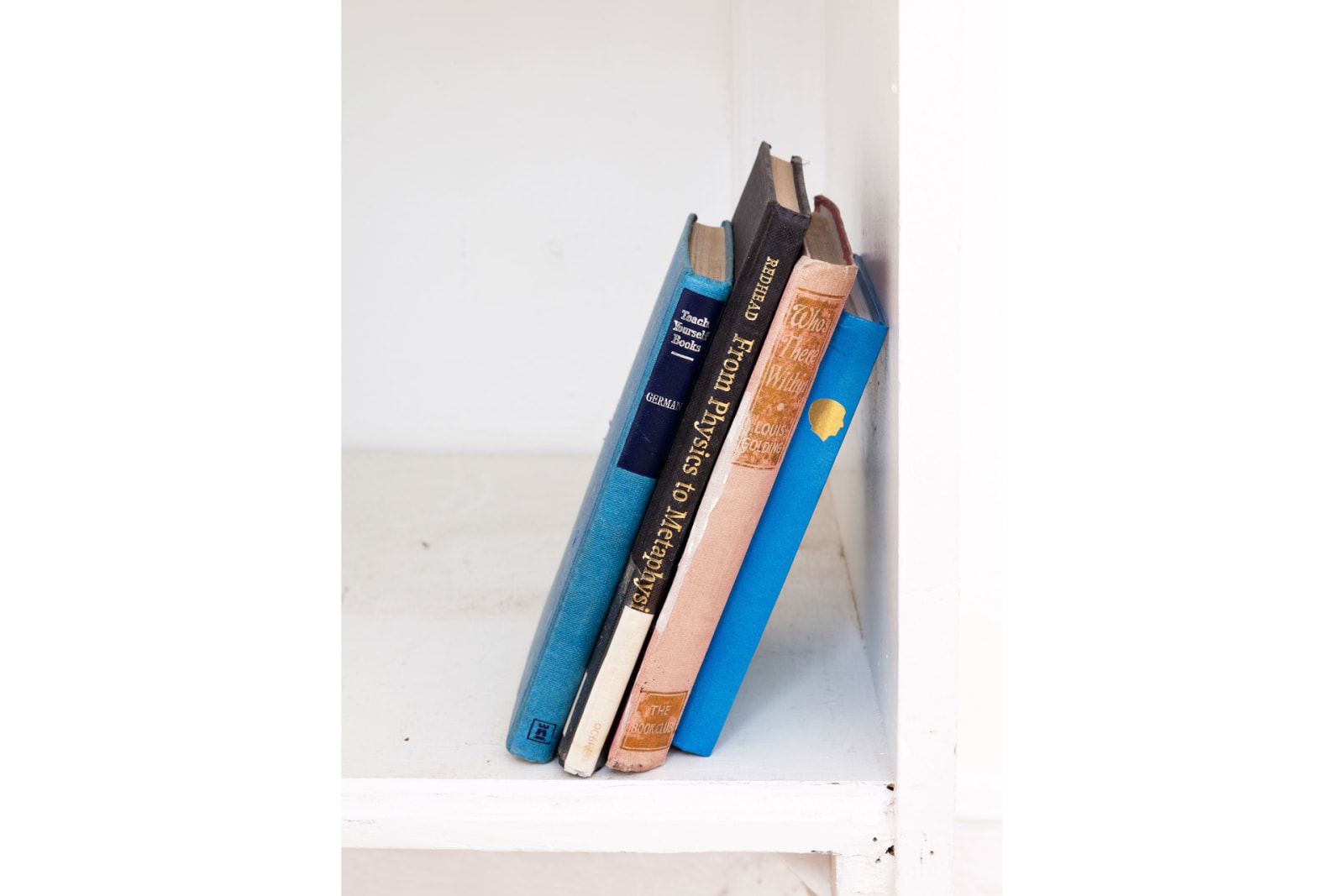
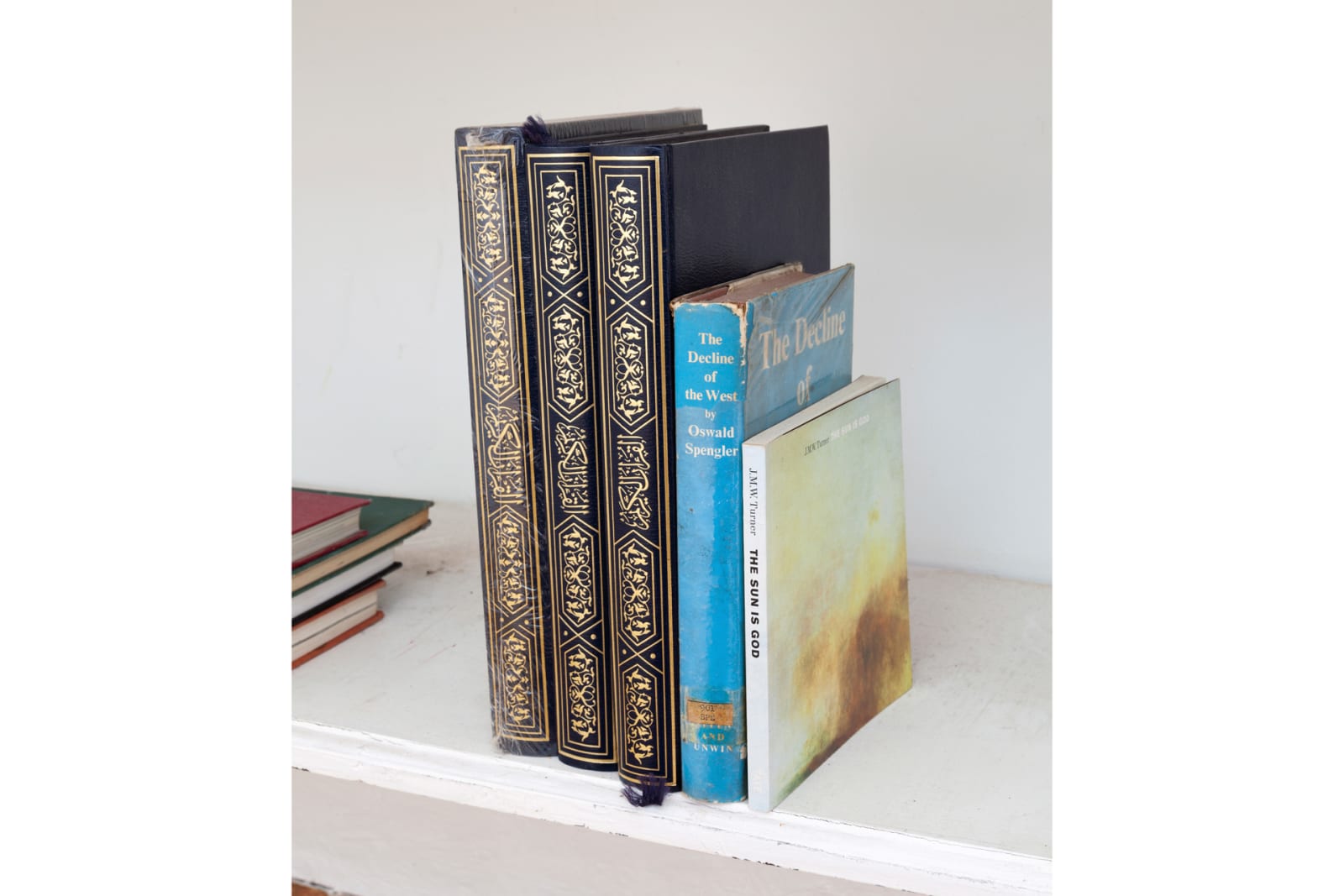

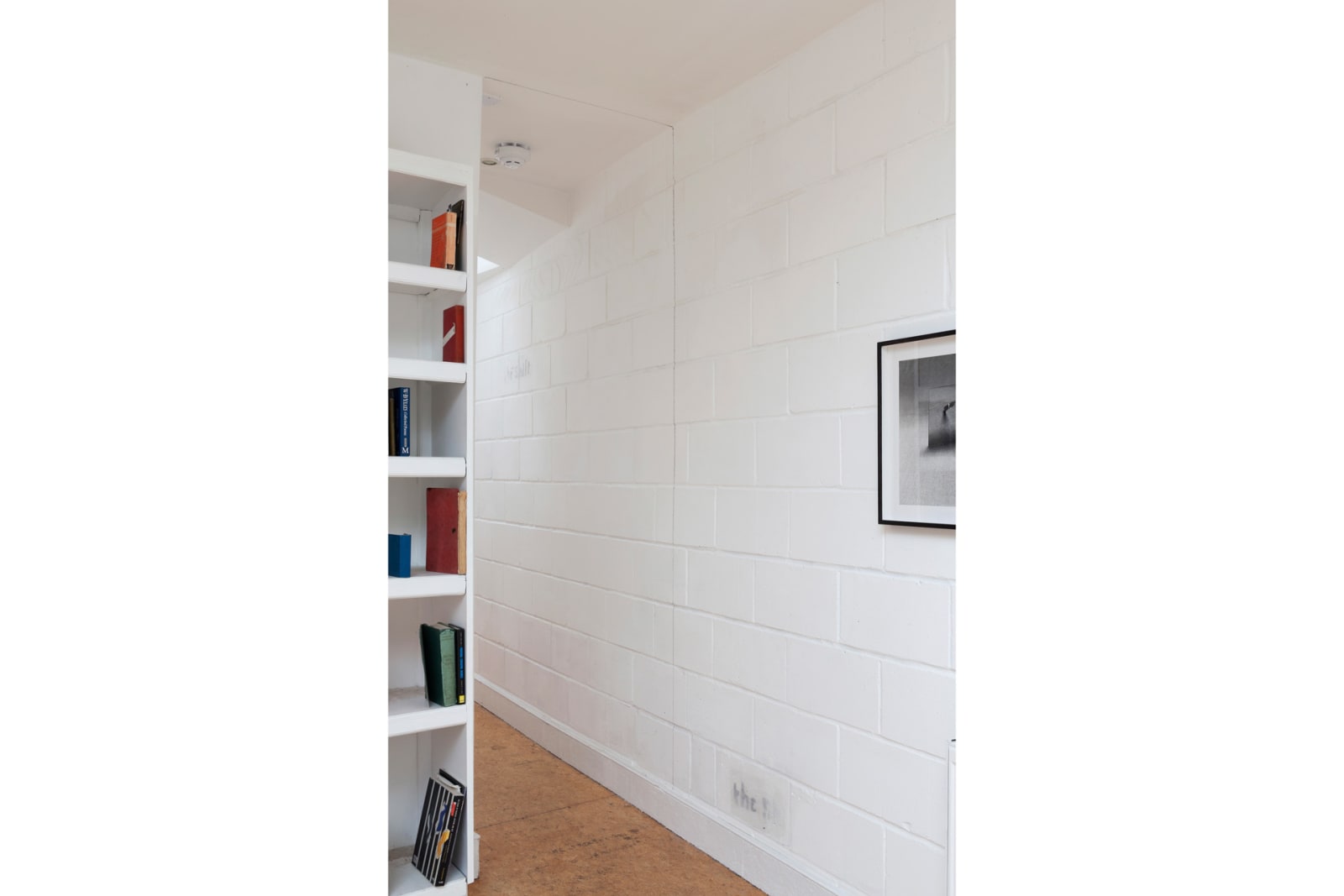
Red, Green and Yellow
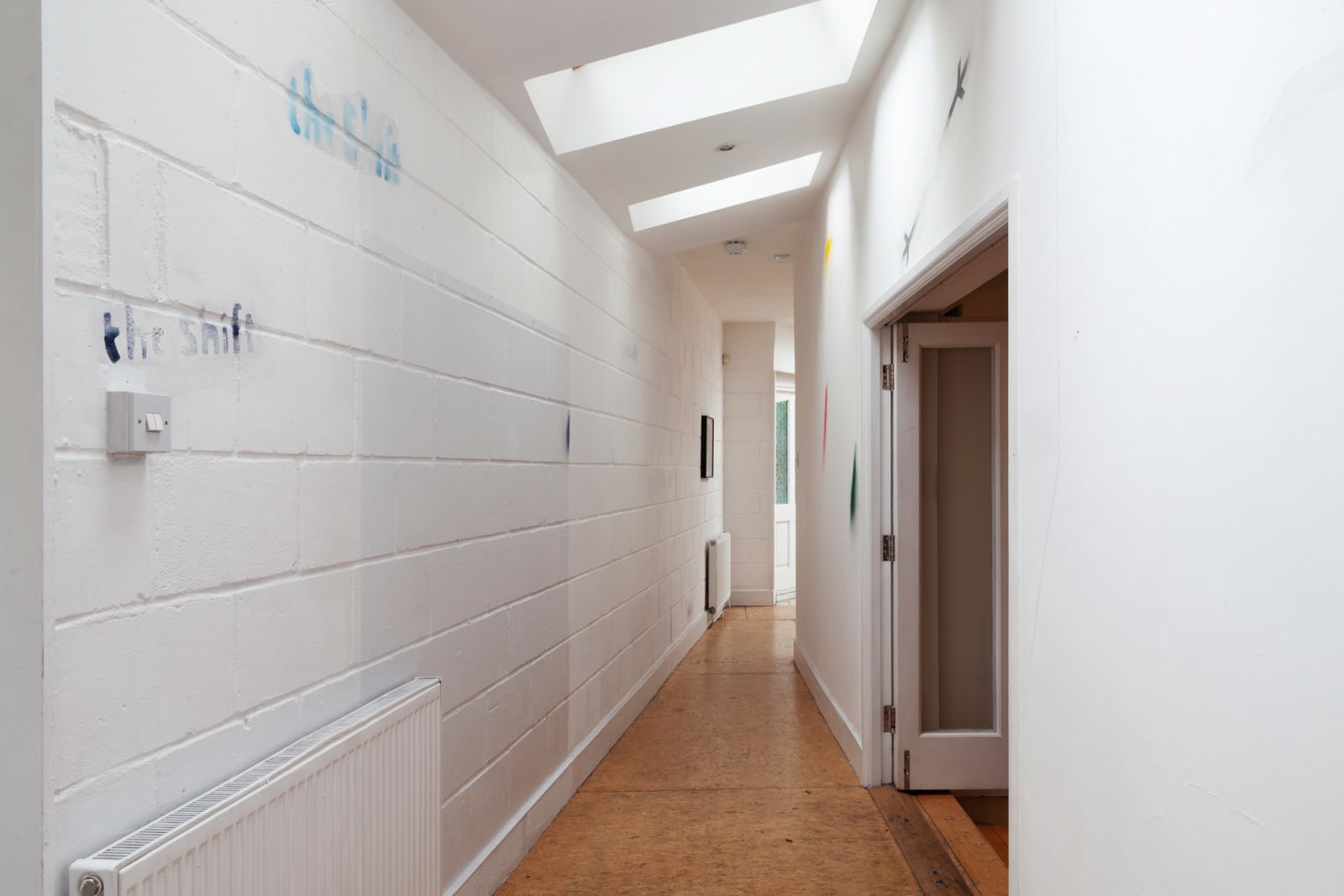
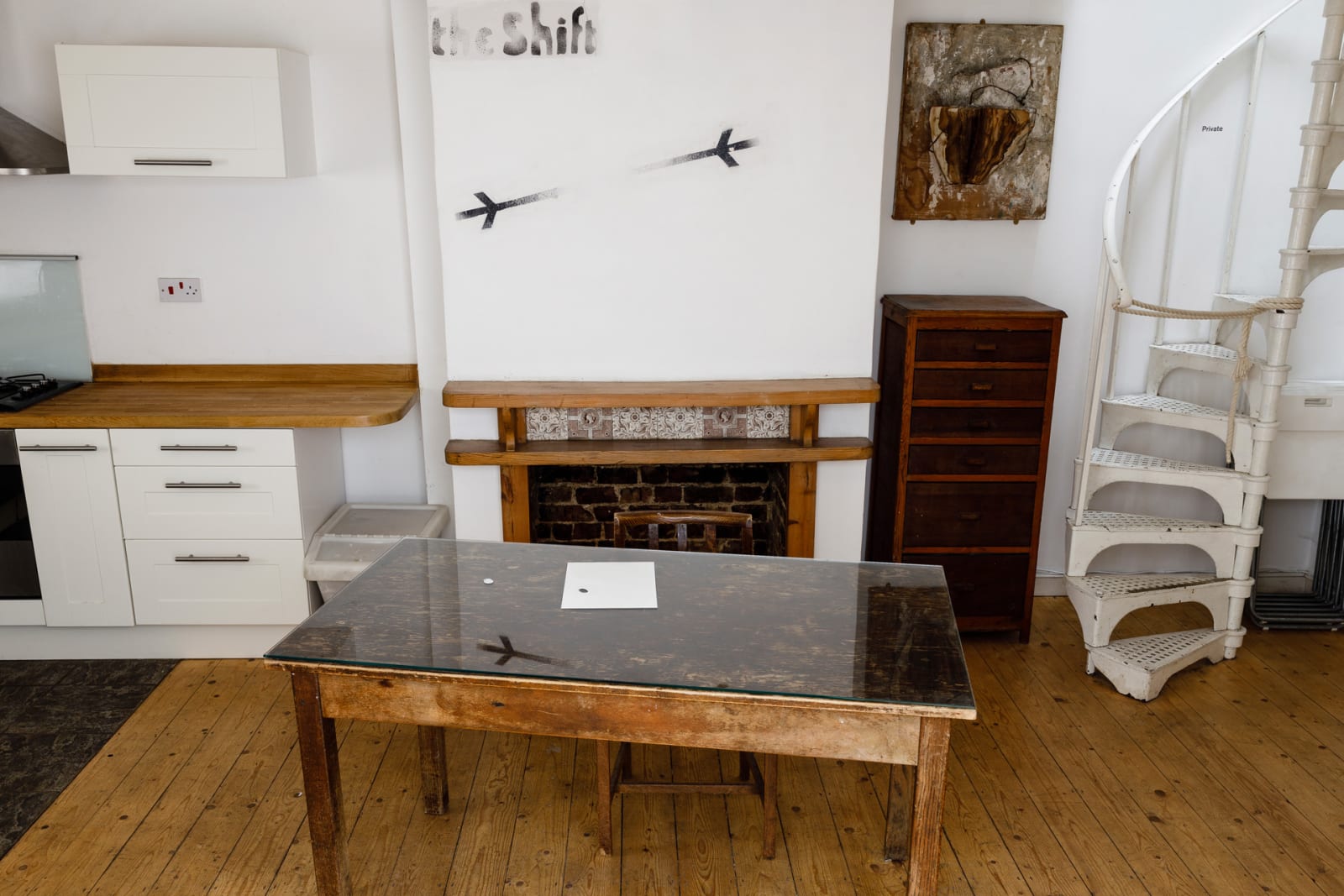
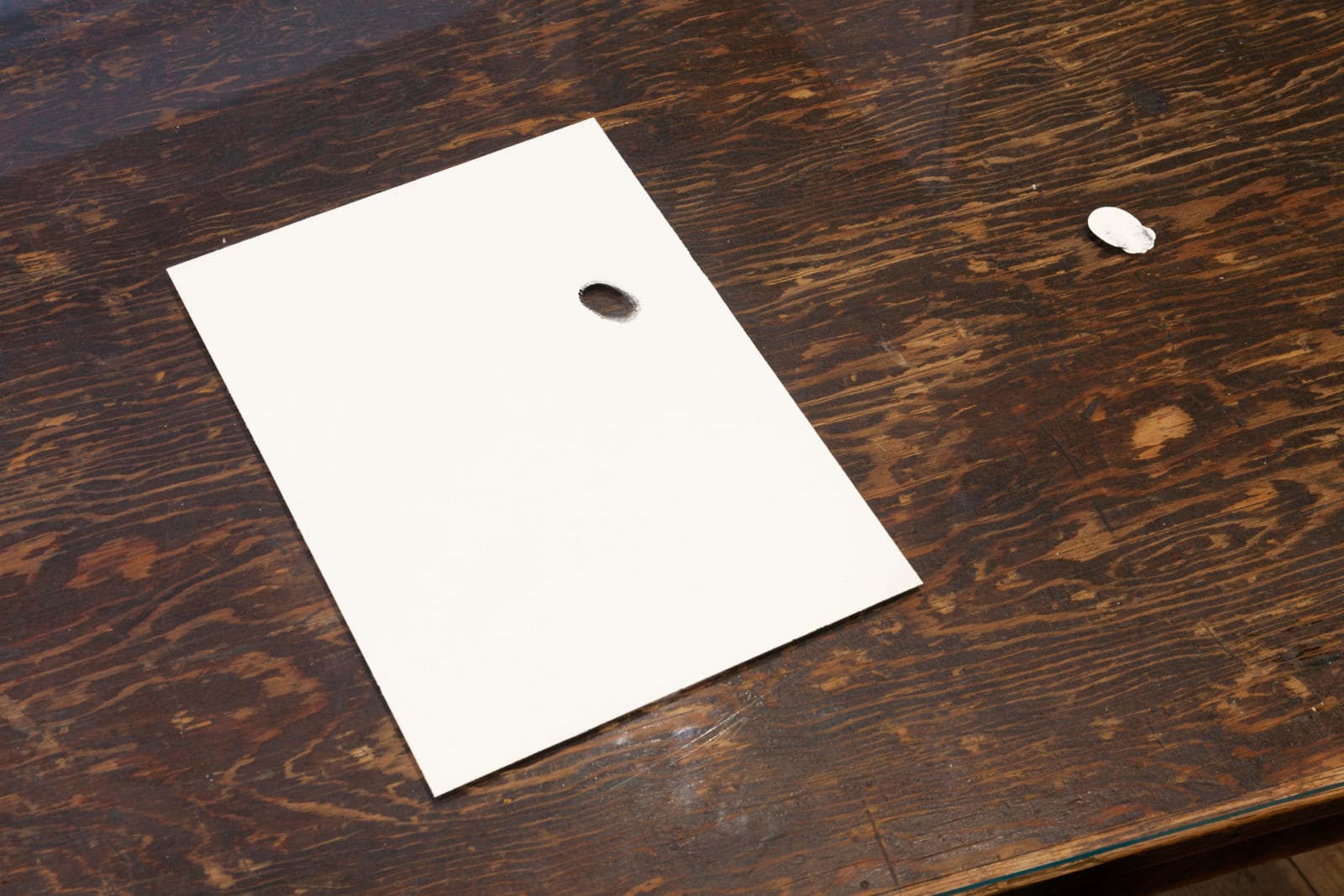
Red, Green and Yellow is the second in an ambitious trilogy of exhibitions produced in a collaboration between Flat Time House (FTHo) and the Roberts Institute of Art (RIA). Each exhibition explores a different facet of the complex network of ideas and relationships surrounding John Latham’s work in dialogue with important works from the David and Indrė Roberts Collection. Part II of the trilogy builds from Latham’s vivid spray-painted work Red, Green and Yellow (1967) which is presented alongside minimal and conceptual works by Liliane Lijn, Tim Head, Bob Law and Wolfgang Tillmans. These works all experiment with light, space and duration and resonate with Latham’s belief in reflective and intuitive modes of working. A new work has been commissioned in response to the exhibition by Berlin-based artist Julius Heinemann who has devised a new installation specially conceived for the space.
When John Latham used spray-paint as he did in Red, Green and Yellow, he was referring to the time based nature of all things. His first spray work from 1954 was a mural for a domestic dwelling, using the spray gun in an attempt to capture the essence of time through an almost instantaneous painterly act. Julius Heinemann’s subtle yet immersive installations, often produced with spray paint, explore layers of perception. Using the exhibition space as material – its dimension, structure and use as well as the change of light and shadow – the work reveals itself slowly, becoming all encompassing once discovered. He considers his mural interventions as echoes of events in time, recording the different layers and shifting experience of our surroundings.
Tim Head’s artwork deals with the instability and uncertainty of images and perception. His early conceptual photographs, made using hand mirrors, play on mirror-image illusions to create paradoxes and question how we view reality. Bob Law’s watercolours can appear like mirrors unless inspected at very close quarters. Due to the glazing on their surface, the viewer is forced to stand close to the work and to focus intently, treating the work as a contemplative object. Wolfgang Tillmans’ abstract ‘Silver’ series are photographs created without a camera. The imagery is created by traces of dust from the surface of the photosensitive paper reacting to light and chemical processes. Liliane Lijn’s Cosmic Flares III (1966) is a kinetic sculpture within which spotlights illuminate the surface at changing angles. For Lijn this play of light is suggestive of elemental forces, performing a visual investigation into the laws of physics.
by Gareth Bell-Jones
–––––––––––––––––––––––––––––––
A poetic reading of the artworks
A photograph. A watercolour. A red, green and yellow. A silver. A light. A spray of paint.
These artworks are minimal and conceptual. They engage with light, space and duration. They ask what is ahead, behind and alongside. These works may be temporary, a spontaneous act, or perhaps, they are changing. Evolving. The passing of hours, days, weeks, years. They are events in time.
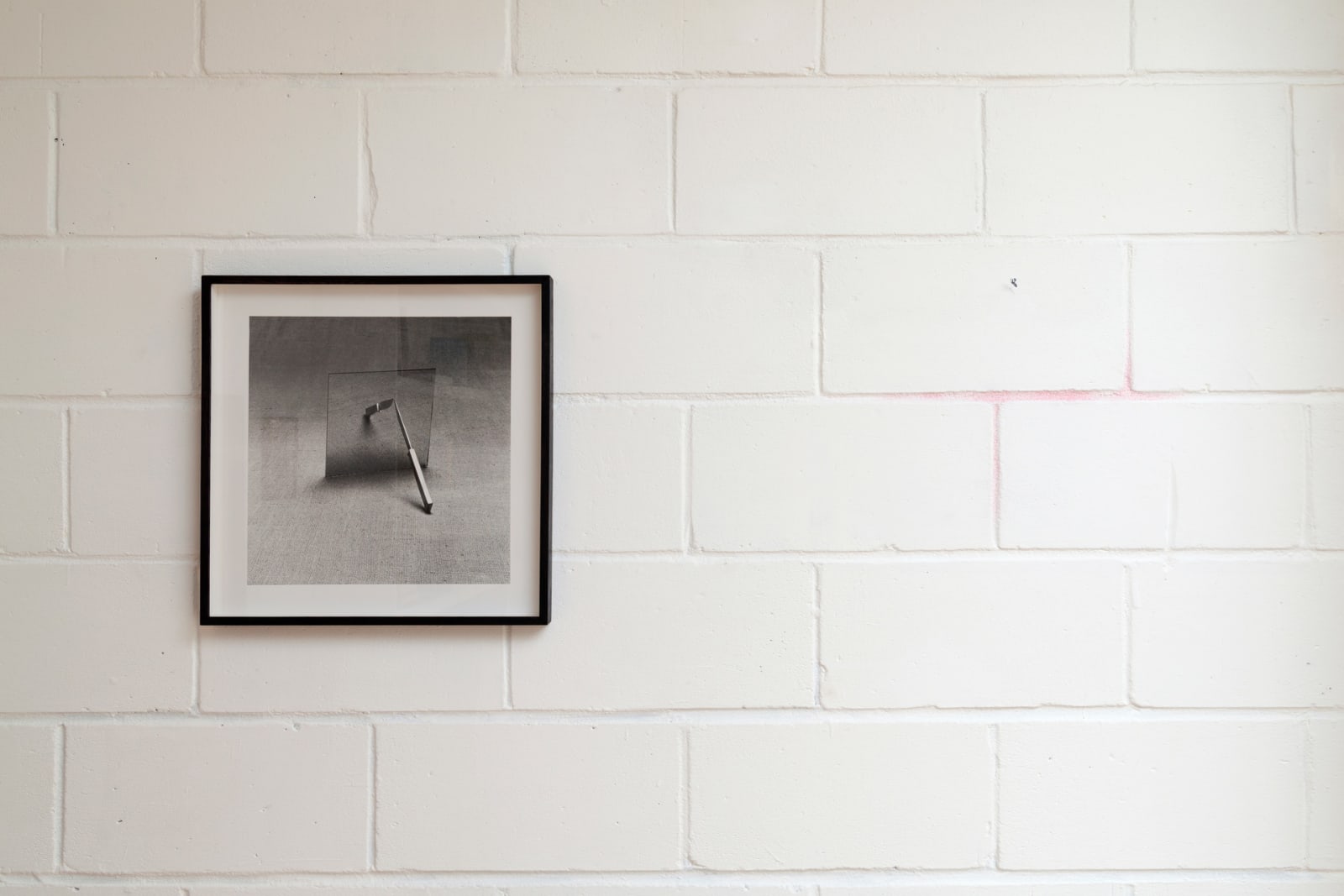
A photograph. It is black and white and printed on paper. A mirror propped up by a silver knife or a silver knife supported by a mirror. Agency is in question here as the viewer asks which of the two objects is exerting its force. Objects. Force. Reflection. The mirror reflects the colour and materiality of the space. Silvery grey woven fabric. It reflects the position of the knife: a 45-degree angle. It is a photograph of two knives meeting point to point. An illusion. Opposing forces holding each other in balance.
A watercolour. It is colour on canvas. The viewer is invited to observe this artwork closely. Notice its pastel flecks of green and pink. A pencil outline. A framed square (square within a square) containing colour. Pigment. The eye of the viewer focuses on the pigmentation and the edges. The work is a distraction: textured hues and straight edges meet at sharp 90-degree angles.
A red, green and yellow. It is a spray painting which uses the spray gun to concentrate and disperse colour. Circular dots and specks of black spread across the canvas. Warped rectangles in vivid primary colours erupt from a black rectangular centre. Sharp angled lines invite the viewer to consider perspective and movement. The work is in motion. It captures the immediate act of painting. Each spray of the gun marks a passage of time. These blocks, dots and specks are indicators of time. A record of time through the accumulation of colour.
A silver. It is a photograph created in the absence of a camera. Photosensitive paper. Paper, green. Traces of dust resting on the surface of the paper interact with light and chemical processes. This is the artwork. Horizontal and vertical lines intersect as the viewer observes carefully. Variations in colour from a darker green to a greenish yellow. The work ruptures the visual field through its streaks of colour. A pattern emerges. The process is unstable. The process is a trace. It is also an event.
A light. It is an acrylic sheet with directional light bulbs. On, off, on, off, on and off. Diagonal lines. Horizontal and vertical trajectories of light. The viewer’s eye focuses on a spiralised pattern. Swirls, undoing and becoming. Drops of varnish. The whirring of a box. The mechanic of change. Light. Bulbs. Change.
A spray of paint. It is an installation of space, light and architecture. The site is the material. The movement from public to private. Painted shadows reveal the artwork. A repurposed door, flipped and forward, the words Caution! Glass! Spray. Each spray an event in time. Action is doing. Action is in the trace. The viewer is both inside and outside. Individual, social and subjectivity. This is the vocabulary for seeing and experiencing art.
by Karenjit Sandhu
Photos 1-4, 6, 11, 13-16, 18, 20-31: Julius Heinemann; Photos 5, 7, 12, 17, 19, 32: Melanie Issaka/Plastiques; Courtesy the David and Indrė Roberts Collection and Flat Time House, London
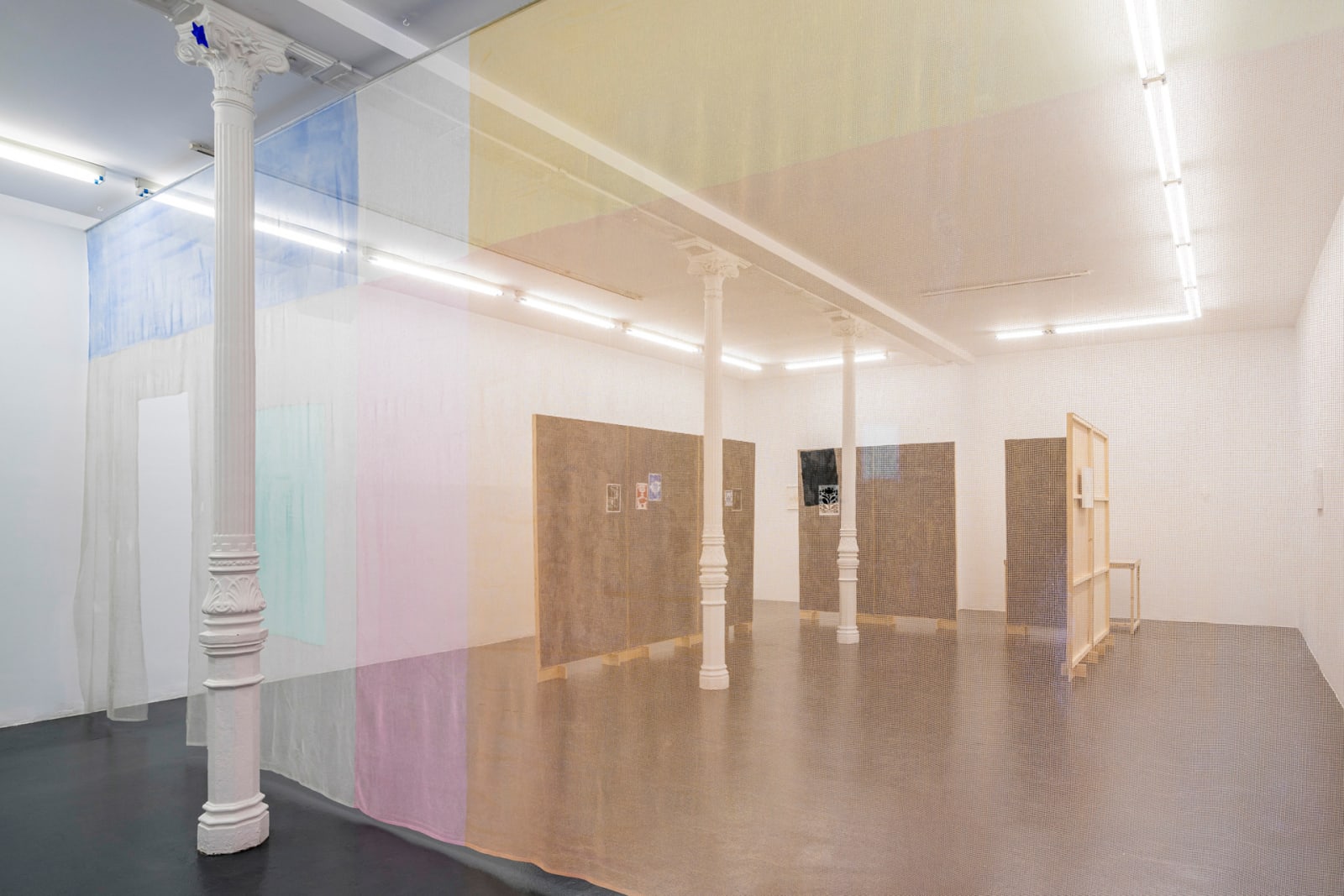


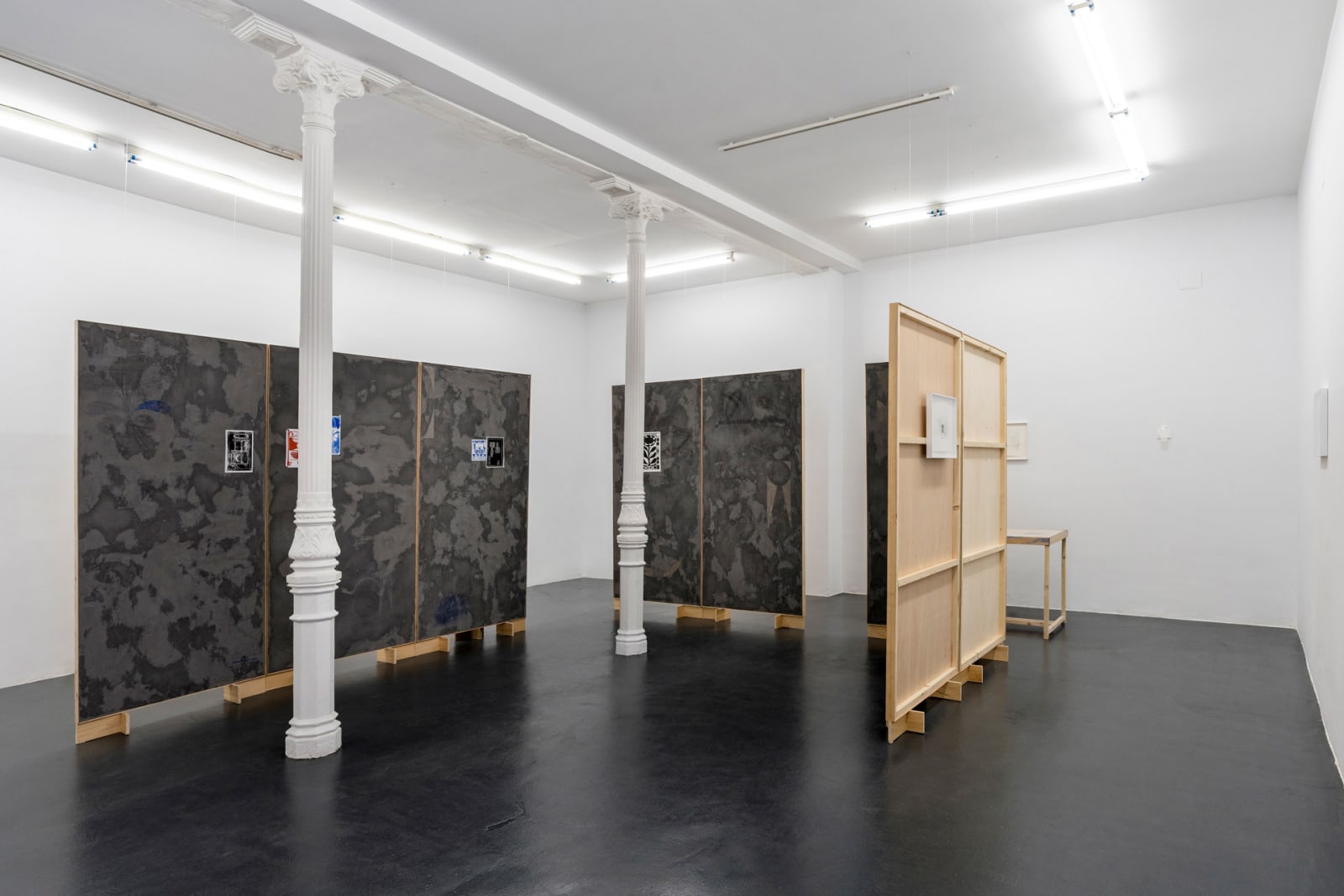



Several shared interests by Diego Delas and Julius Heinemann are at the core of their project A Warmth from Within. One of these is an understanding of architecture concerned with notions of the self; that is, not only a space of functional habitation but also a site for dwelling and to articulate a symbolic situation. Under this light, it is not surprising that both share an interest on modern architects such as Le Corbusier and Luis Barragán who developed a practice concerned with constructing spatial scenes that motivate reflection, introspection, imagination. In order to do this, the two architects relied heavily on a plastic dimension in order to construct buildings as perceptual experiences able to elicit different kinds of thoughts and associations. It is not coincidence that the Swiss and Mexican architect built spaces for recreation or reverie (museums, parks, gardens) but also for isolated reflection and meditation (churches, convents, monasteries).
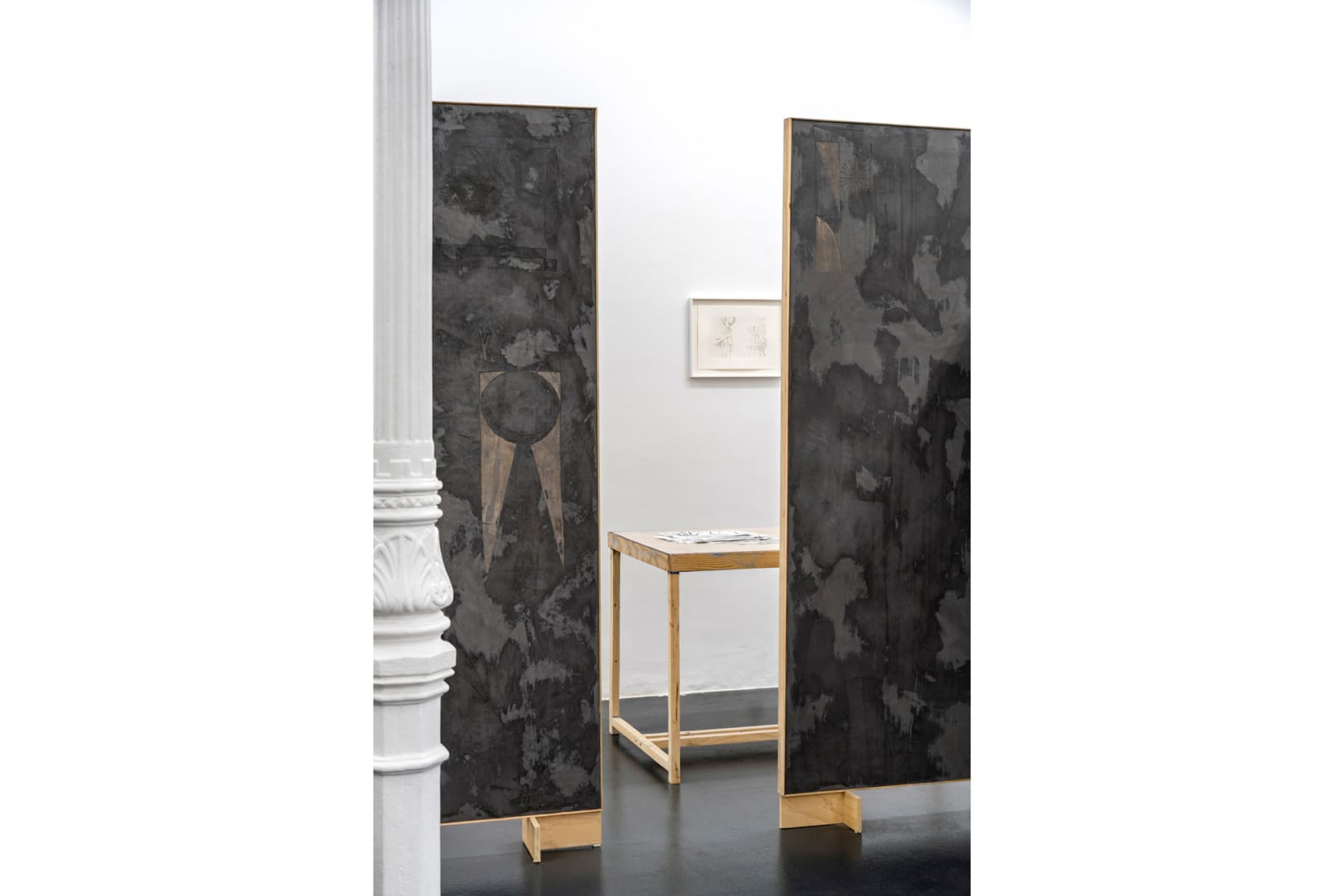
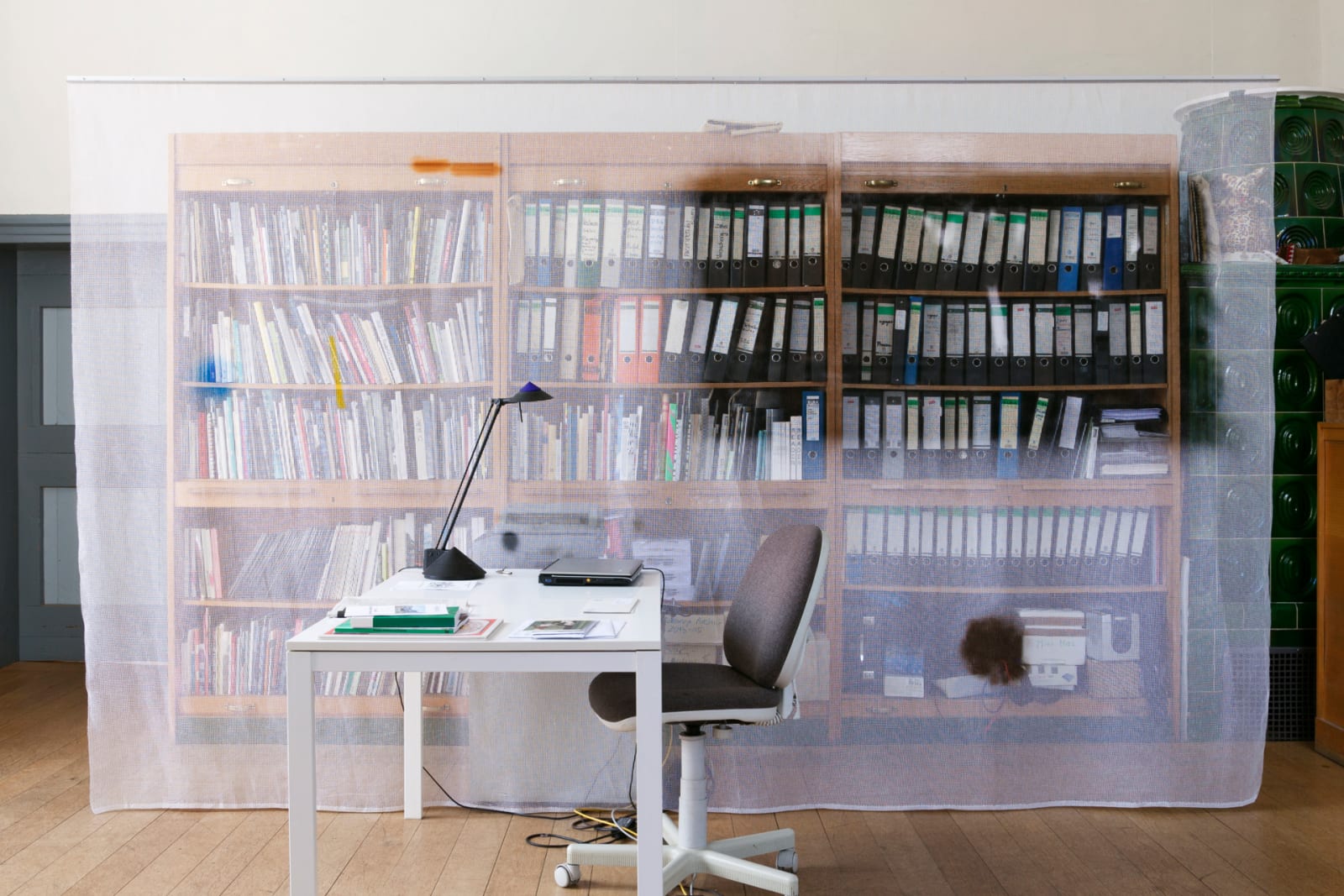
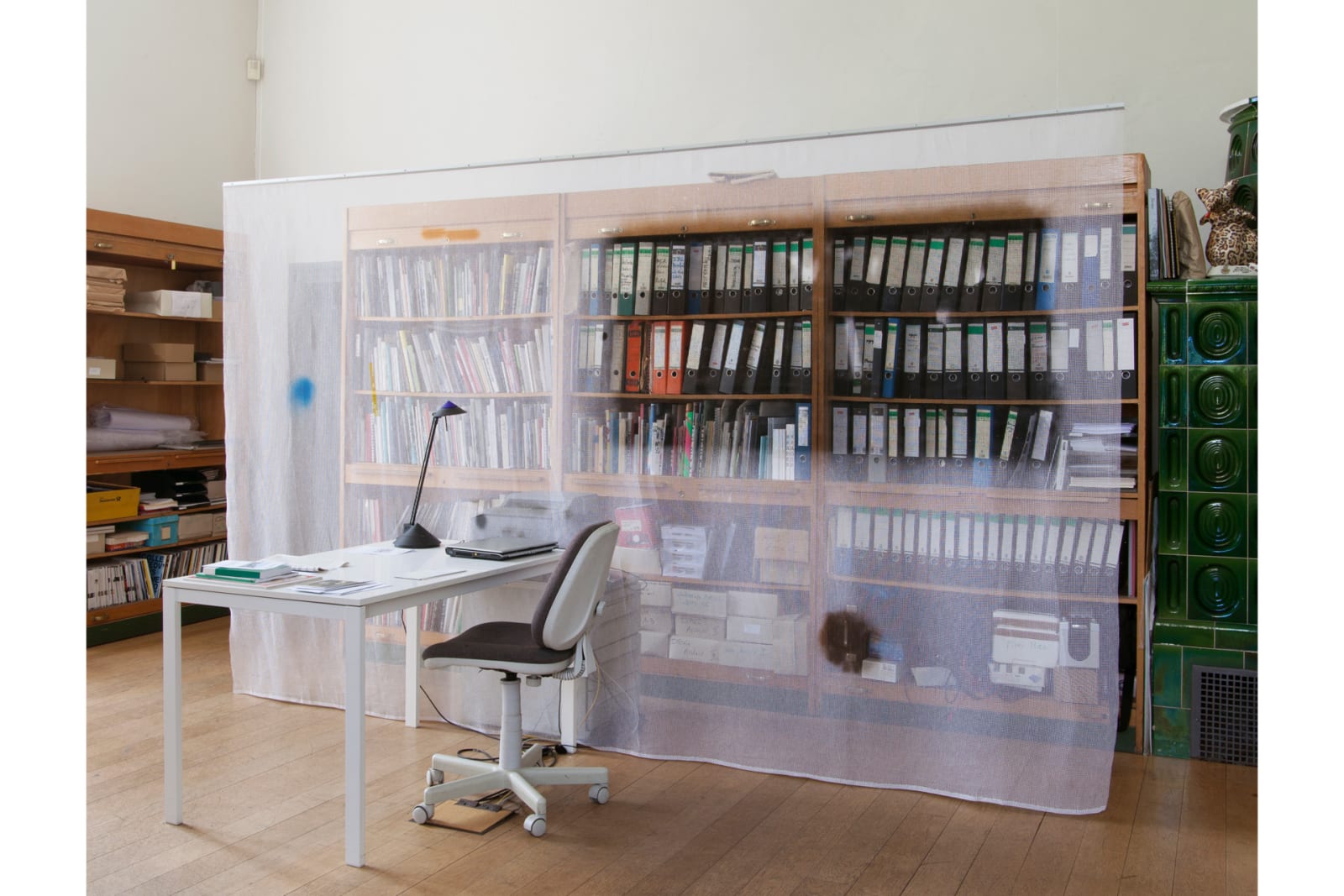
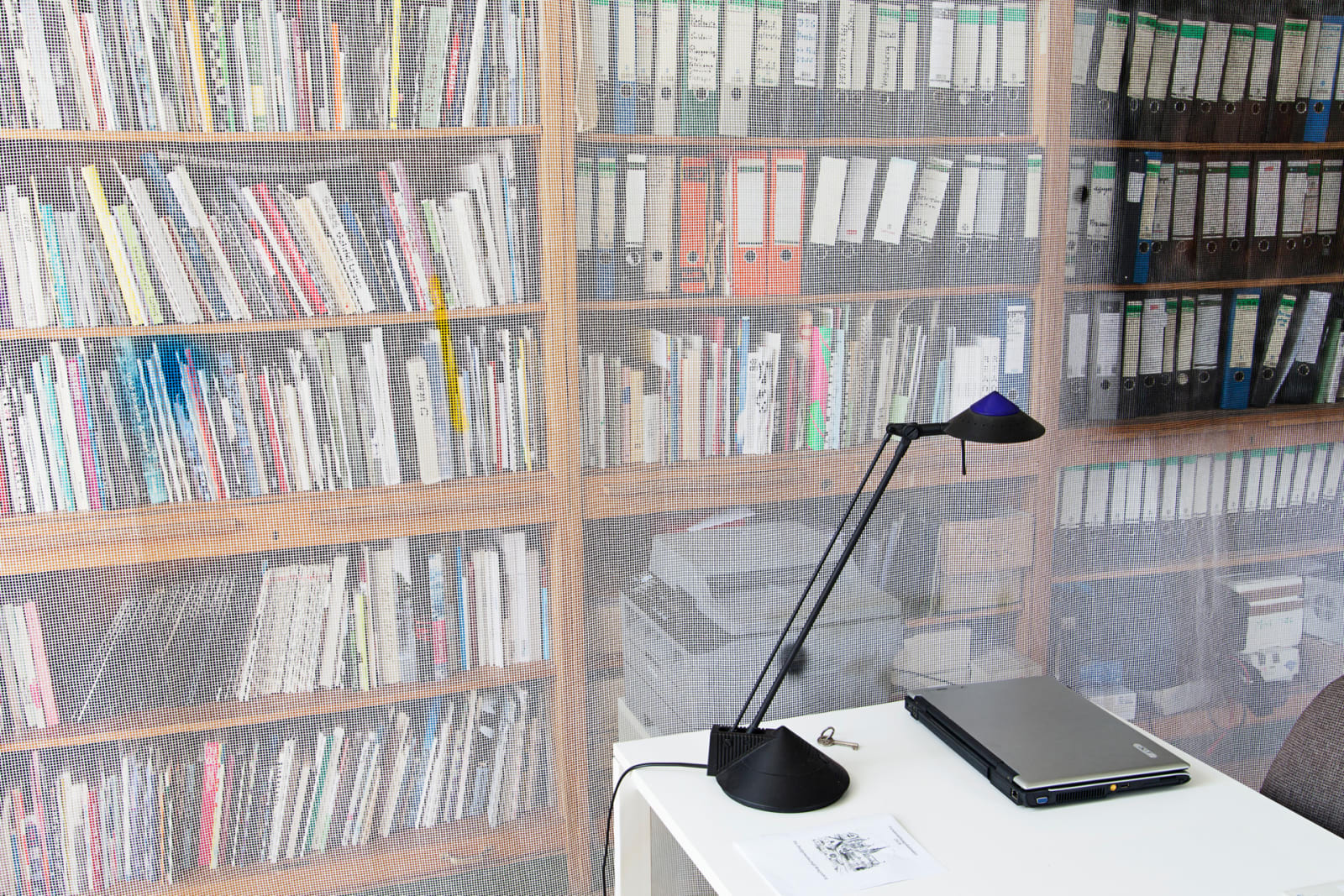
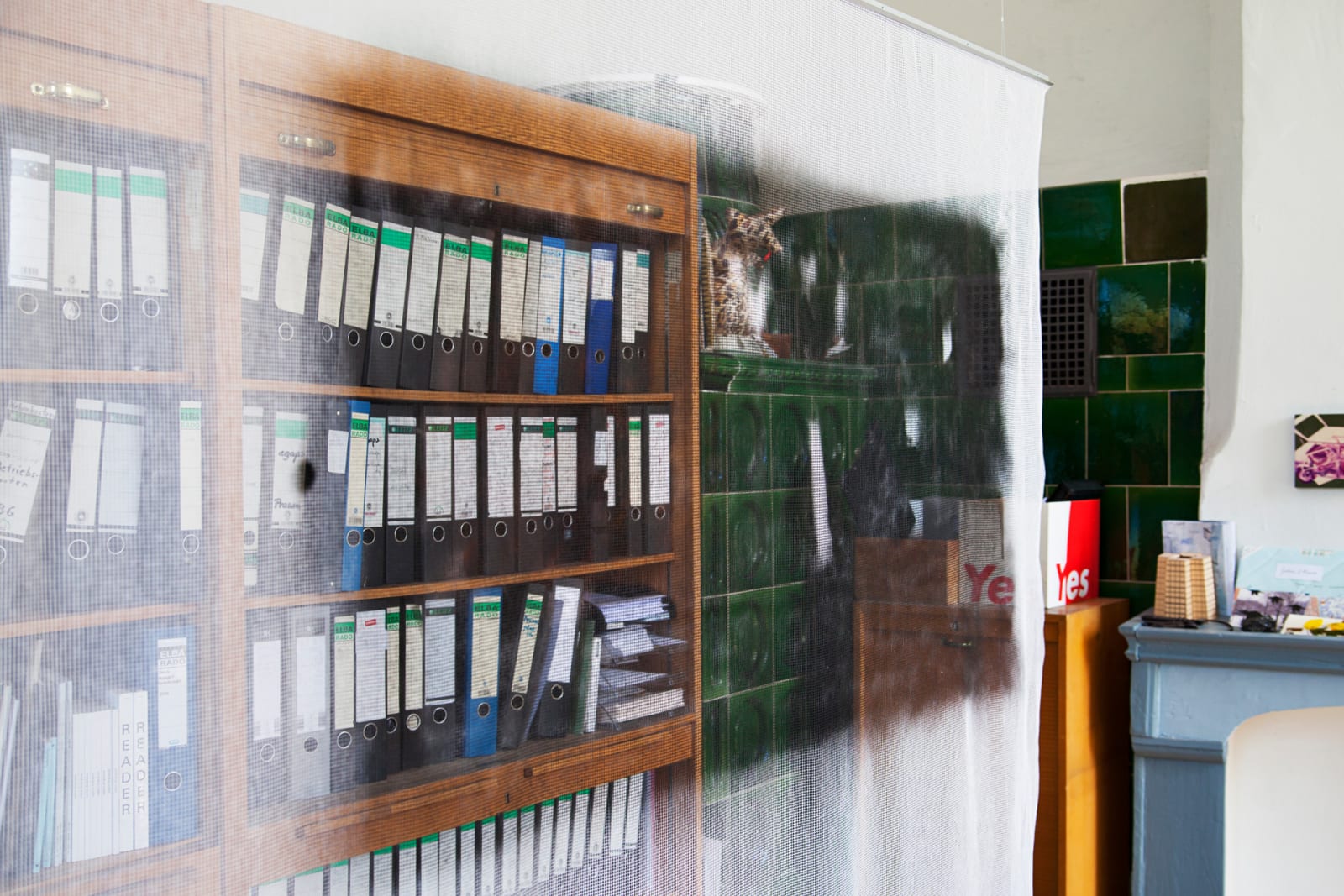
A Warmth from Within, in fact, could be seen as such an exercise, in which Delas and Heinemann build together a kind of monk’s cell that, however, is highly profane. Heinemann has built a soft interior architecture within the gallery space using mesh fabric that has been painted with a suggestive plastic solution. The transparency of the material is essential since it allows visual association with the physical architecture of the gallery space and the rest of the works on display. Also, it creates an ephemeral overlap of painting and architecture that change with the spectator´s movement. Delas, for his part, has built several vertical panels with a concrete surface, creating tension with Heinemann’s large-scale mesh canvas. He has inscribed these structures with designs reminiscent of symbols, or their fragments, capable of activating subjective memory. Through these spatial interventions, the artists set the stage for a symbolic interior within the white, non-referential walls of the gallery.
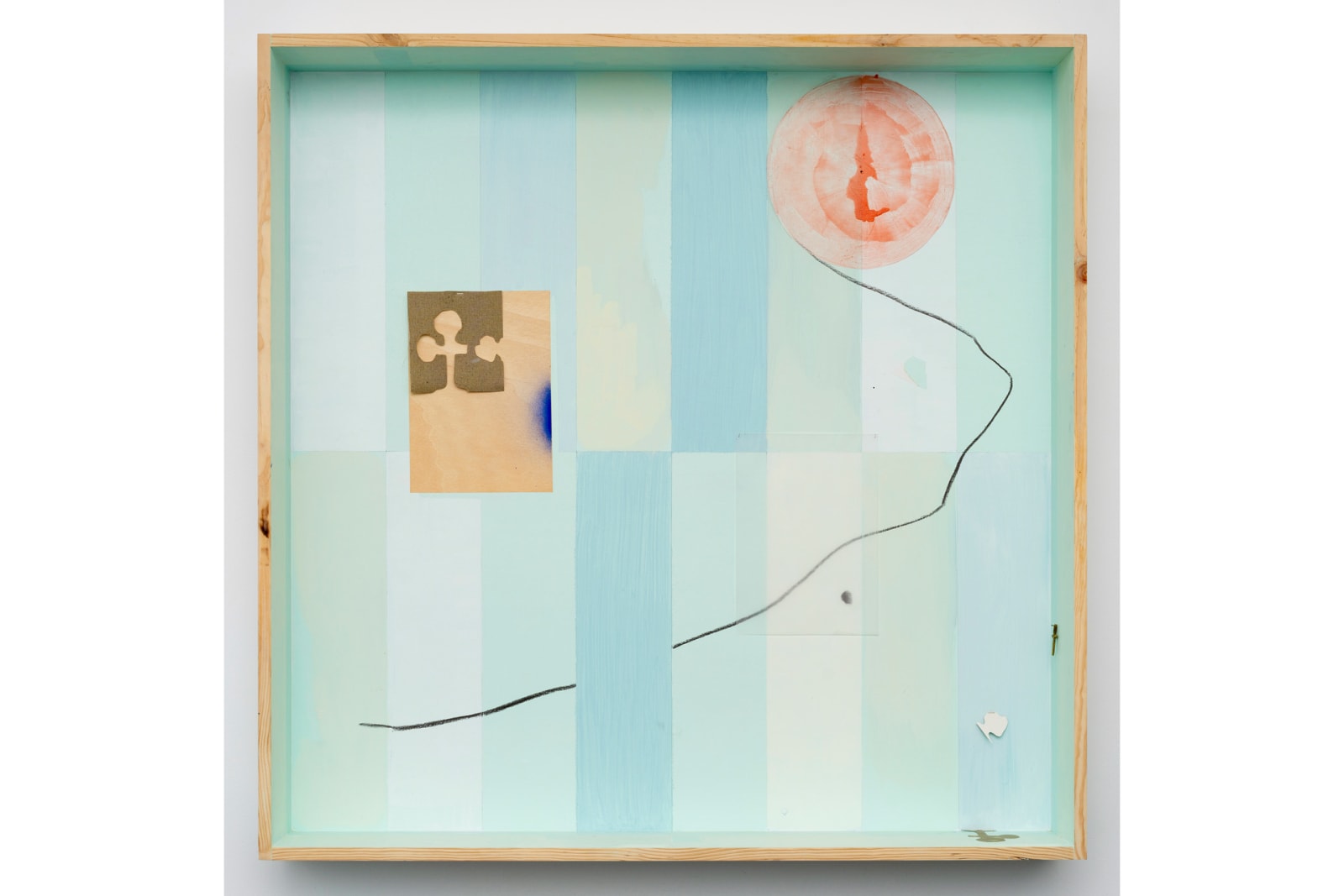
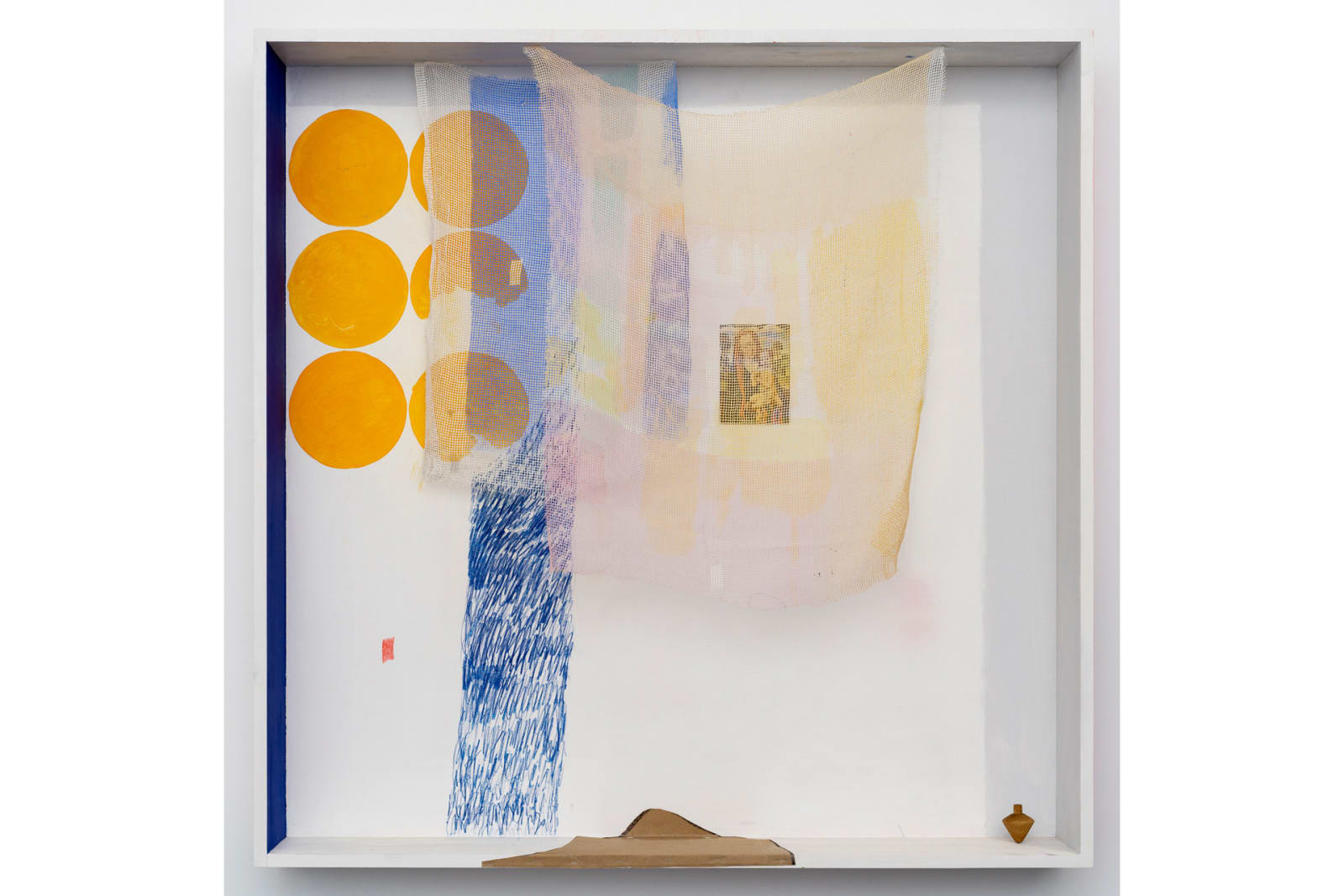
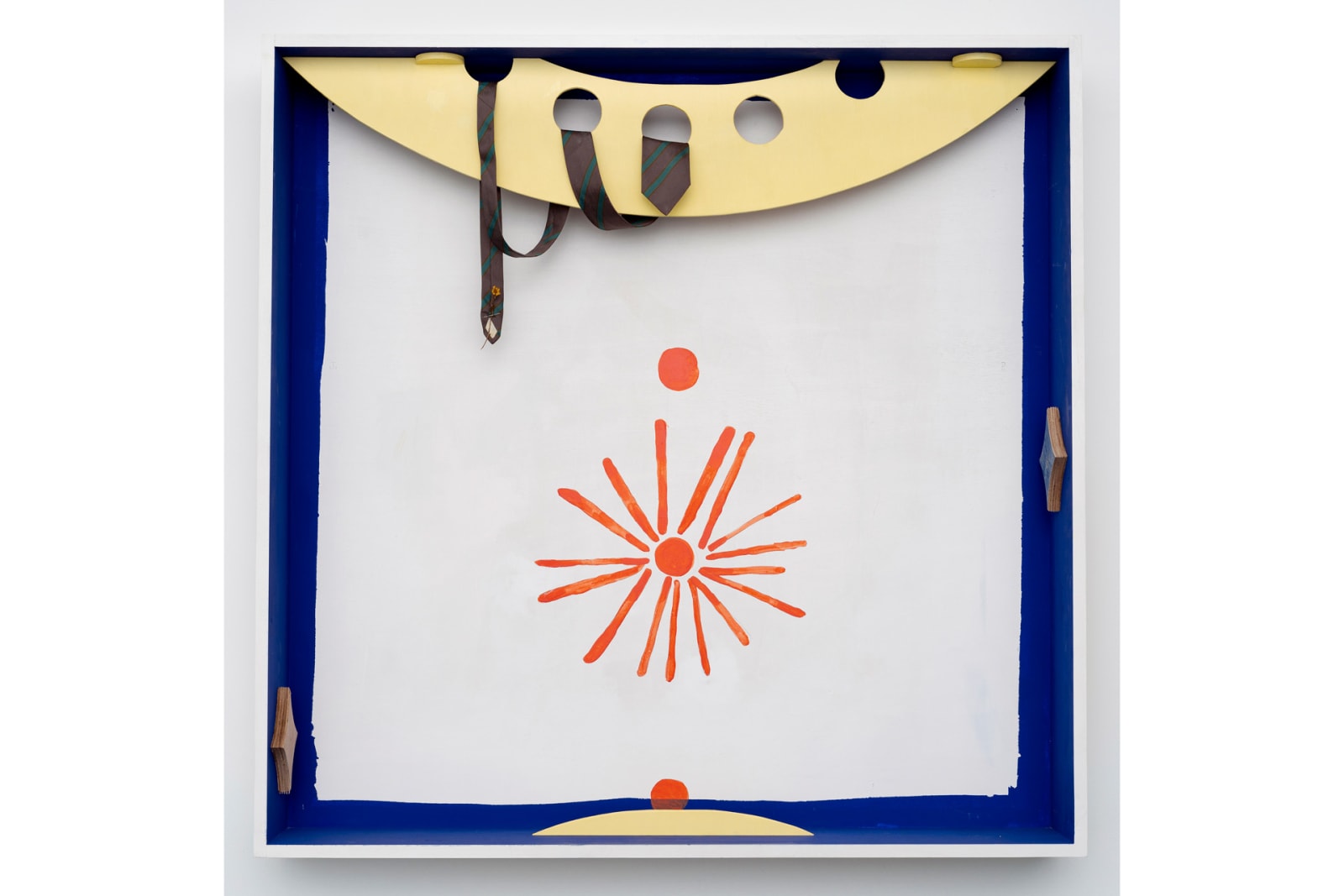
Within this interior, the artists have displayed an array of objects and works. Together, they have designed pieces of furniture that are basic in the structure of a minimum dwelling, like a table or a couple of stools. A plastic dimension overrides these objects, problematizing their functional nature. One stool, for example, turns into a sculptural totem while the table is transformed into a canvas. Heinemann and Delas have also produced collaboratively several boxes articulated through the juxtaposition of objects, images, and works on paper, which could recall the work of Joseph Cornell. These pieces seem to reconcile the pictorial, sculptural and spatial concerns of the two artists. They were conceived by the artists as altars or shelves, as places of identification of an individual with a place, of collections or reflections. Finally, there are several works on paper executed, individually, by Delas and Heinemann. These pieces are located at several points of the exhibition: on the vertical panels, the table, and the walls of the gallery. Heinemann´s are watercolors and Delas´s oil-based ink mono prints (spoon hand pressed) are endowed with designs that evoke exlibris. These works on paper seem to condense the entire formulation of their proposal as it is displayed in the gallery as spatial installation. They could be seen as clues for understanding the articulation of this symbolic interior, a sort of cosmos in itself. Daniel Garza-Usabiaga
El proyecto A Warmth from Within / Calidez del Adentro tiene como eje central varios intereses compartidos por Diego Delas y Julius Heinemann. Uno de ellos es la comprensión de la arquitectura que atiende a las nociones del yo; es decir, entendida ésta no solo como un espacio funcional sino también una morada en la que articular una situación simbólica. Con esa perspectiva, no es de extrañar que ambos compartan un interés por arquitectos modernos como Le Corbusier y Luis Barragán quienes desarrollaron una práctica preocupada por construir escenas espaciales que estimularan la reflexión, la introspección y la imaginación. Para hacer esto, ambos arquitectos se basaron, en gran medida, en una dimensión plástica para construir edificios como experiencias perceptivas capaces de provocar diferentes tipos de pensamientos y asociaciones. De forma que no es casualidad que tanto el arquitecto suizo como el mexicano construyeran espacios concebidos para la recreación y la ensoñación (museos, parques, jardines) y también para la reflexión y la meditación apartadas (iglesias, conventos, monasterios).
De hecho, A Warmth from Within / Calidez del Adentro podría verse como un ejercicio de este tipo, en el que Delas y Heinemann construyen juntos una especie de celda conventual que, sin embargo, es muy profana. Heinemann ha construido una delicada arquitectura interior dentro del espacio de la galería en la que ha utilizado tela de malla, la cual ha sido pintada con una sugerente solución plástica. La transparencia del material resulta fundamental, ya que permite la asociación visual con la arquitectura física del espacio de la galería y el resto de obras expuestas. Además esto crea un solapamiento efímero entre pintura y arquitectura que cambia con el movimiento del espectador. Delas, por su parte, ha construido varios paneles verticales con una superficie de hormigón, creando una tensión con el lienzo de malla de grandes dimensiones de Heinemann. Delas ha inscrito estas estructuras con diseños que recuerdan a símbolos, o a sus fragmentos, capaces de activar la memoria subjetiva. A través de estas intervenciones espaciales, los artistas preparan el escenario para un interior simbólico dentro de las paredes blancas y no referenciales de la galería.
En este interior, los artistas muestran una variedad de objetos y obras. Juntos han diseñado mobiliario básico en la estructura de una vivienda mínima, como una mesa o un par de taburetes. La dimensión plástica prevalece sobre estos objetos, lo que problematiza con su naturaleza funcional. Un taburete, por ejemplo, se convierte en un tótem escultórico, mientras que la mesa se transforma en un lienzo. Heinemann y Delas también han creado, en colaboración, varias cajas articuladas gracias a la yuxtaposición de objetos, imágenes y obras sobre papel, que podrían recordar a la obra de Joseph Cornell. Estas piezas parecen conciliar las preocupaciones pictóricas, escultóricas y espaciales de los dos artistas y fueron concebidas por estos como altares o estanterías, como lugares de identificación del individuo con el lugar, como colecciones o reflexiones. Finalmente, hay varias obras en papel ejecutadas individualmente, por Delas y Heinemann. Estas piezas se ubican en varios puntos de la exposición: en los paneles verticales, en la mesa y en las paredes de la galería. Las de Heinemann son acuarelas y las de Delas, monograbados prensados a mano con cuchara en tinta al óleo, dotados de diseños que evocan a un exlibris. Estas obras sobre papel parecen condensar toda la formulación de su propuesta, ya que se exponen en la galería como una instalación espacial. Podrían verse como pistas para comprender la articulación de este interior simbólico, una especie de cosmos en sí mismo.
Daniel Garza-Usabiaga
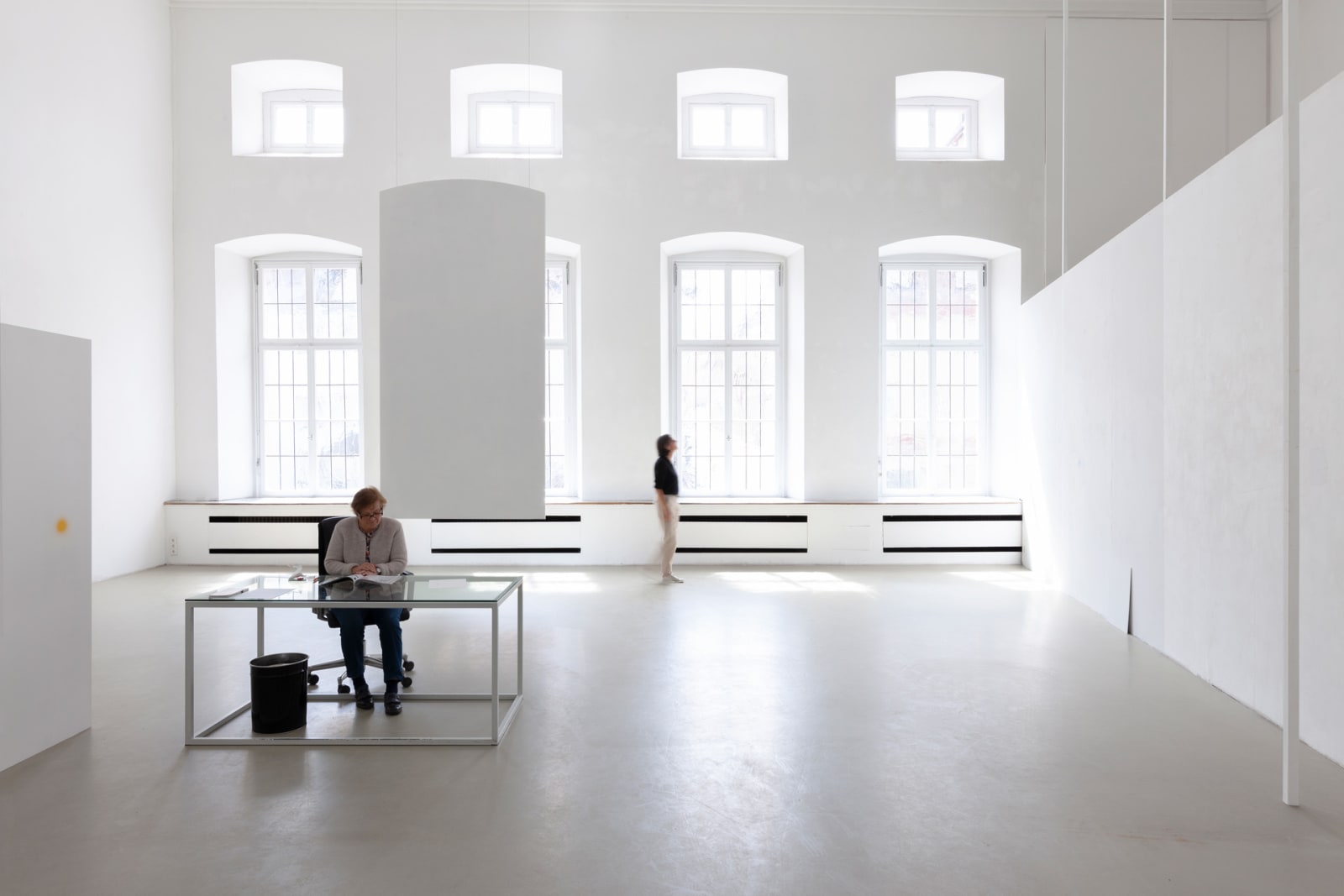
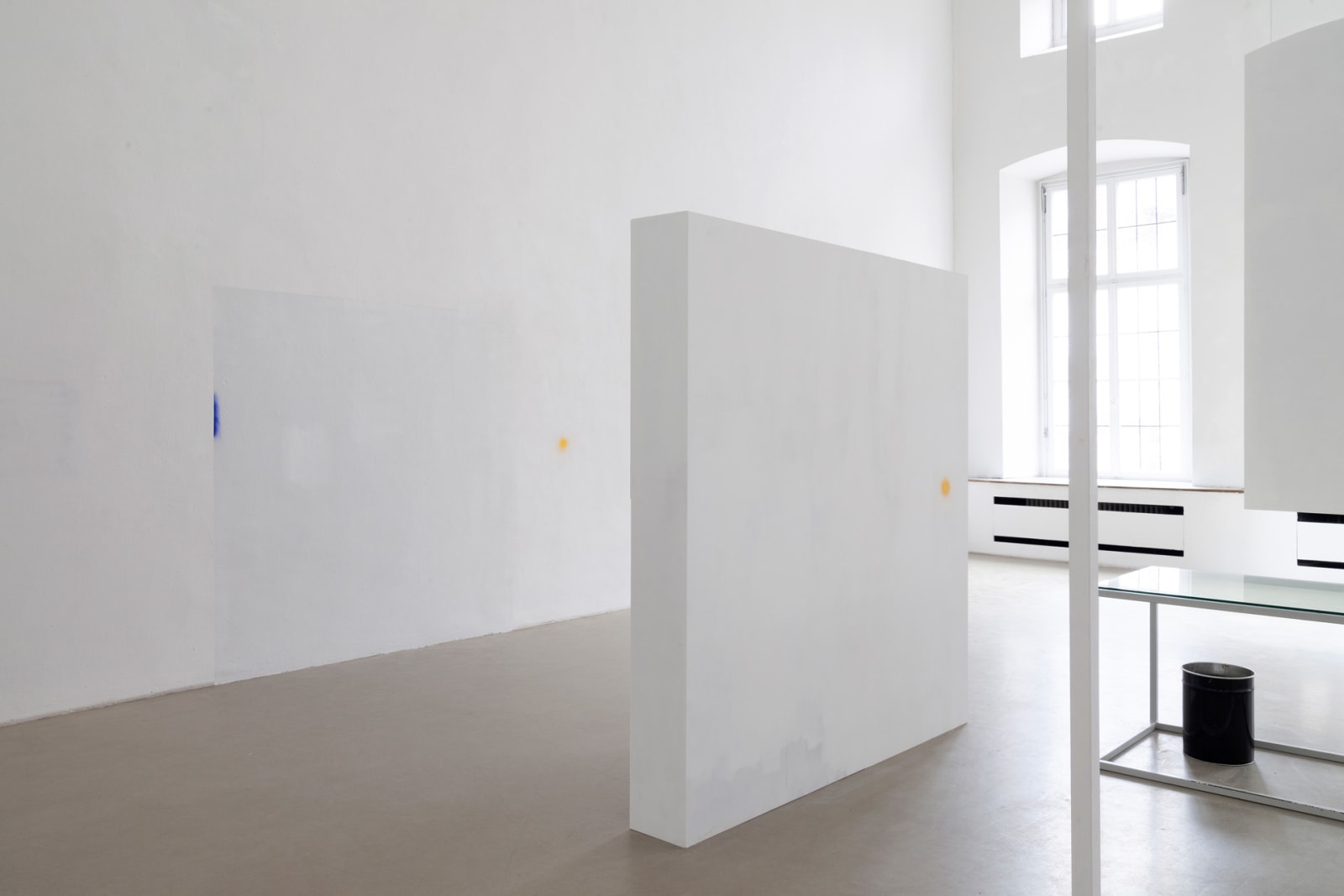

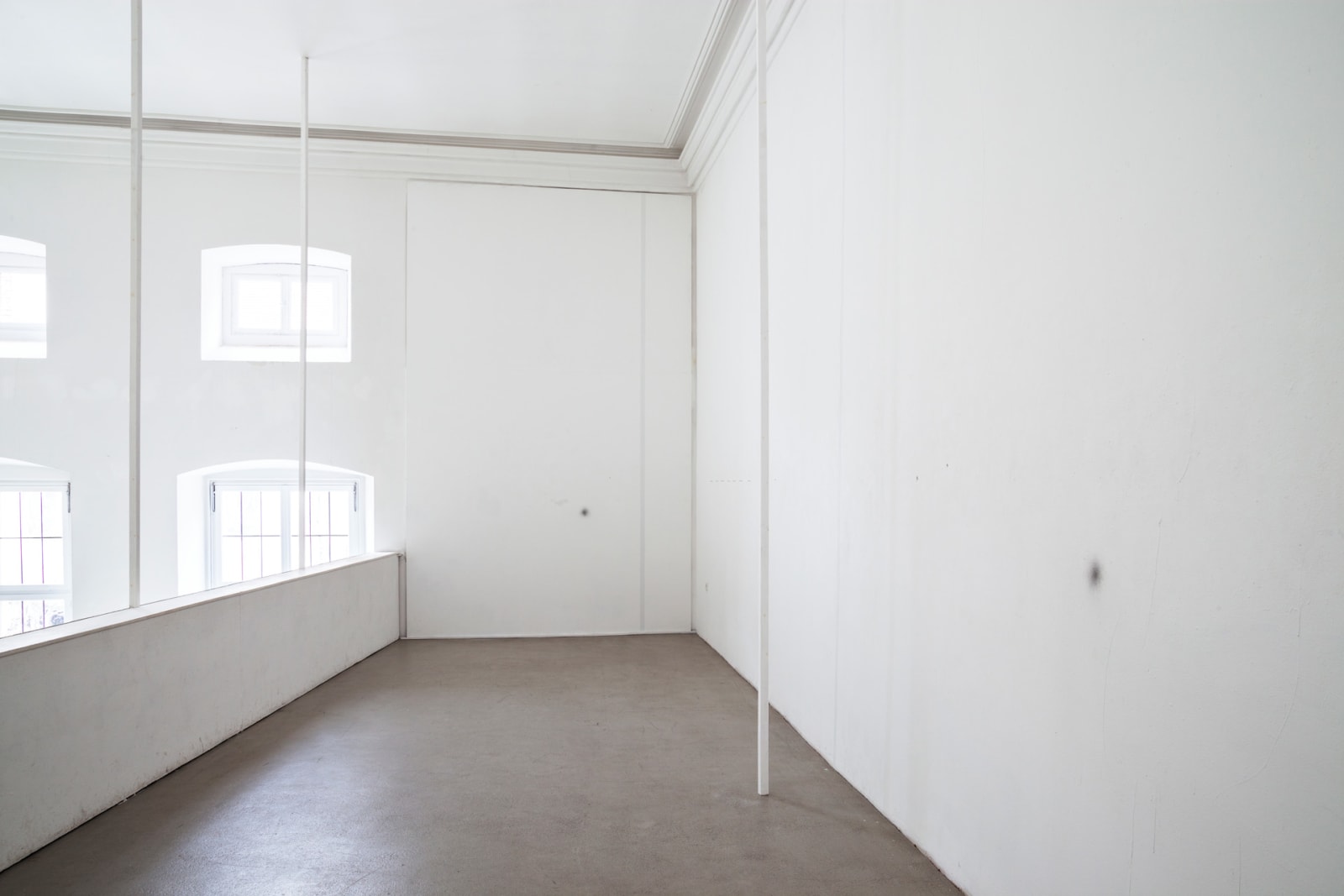
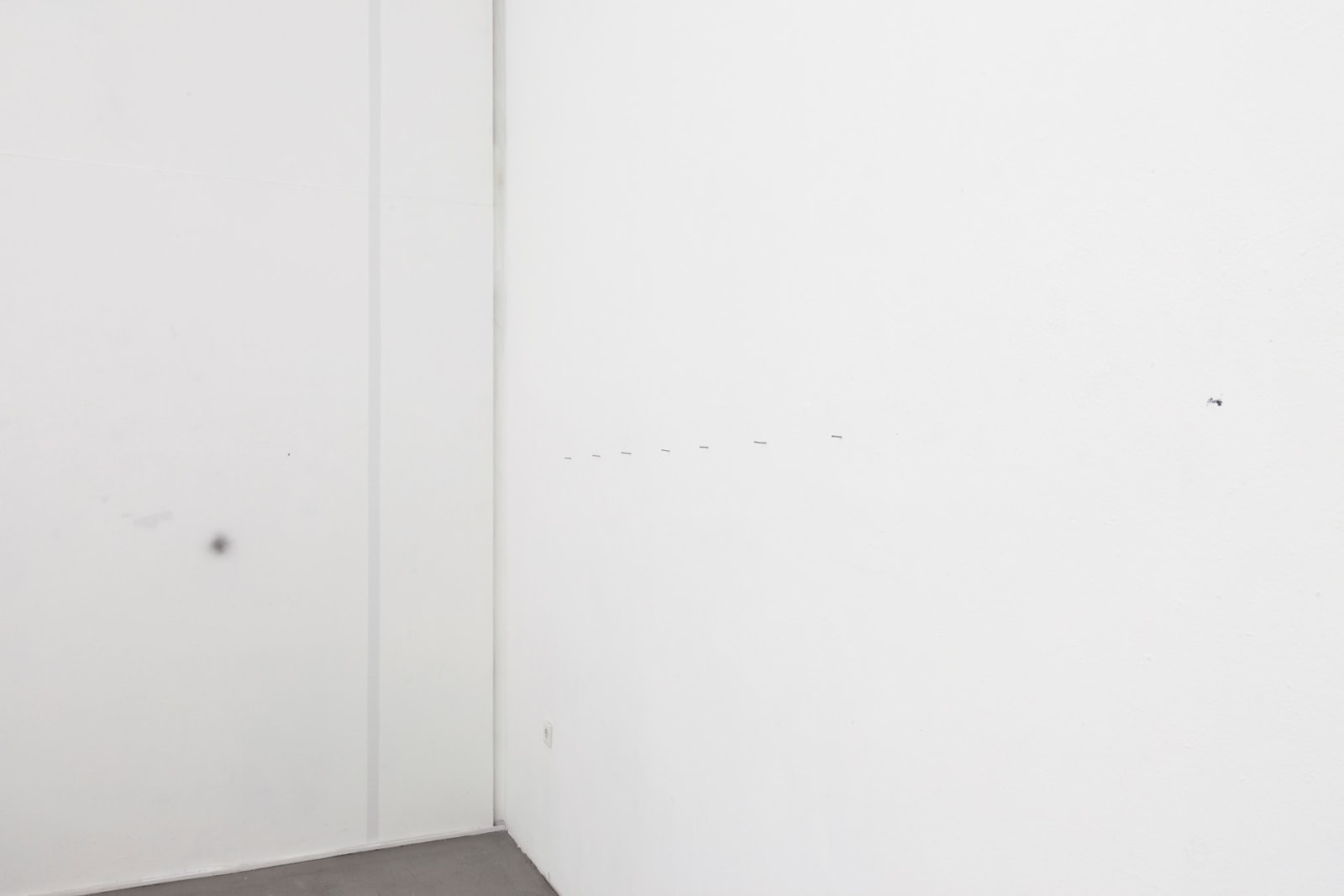
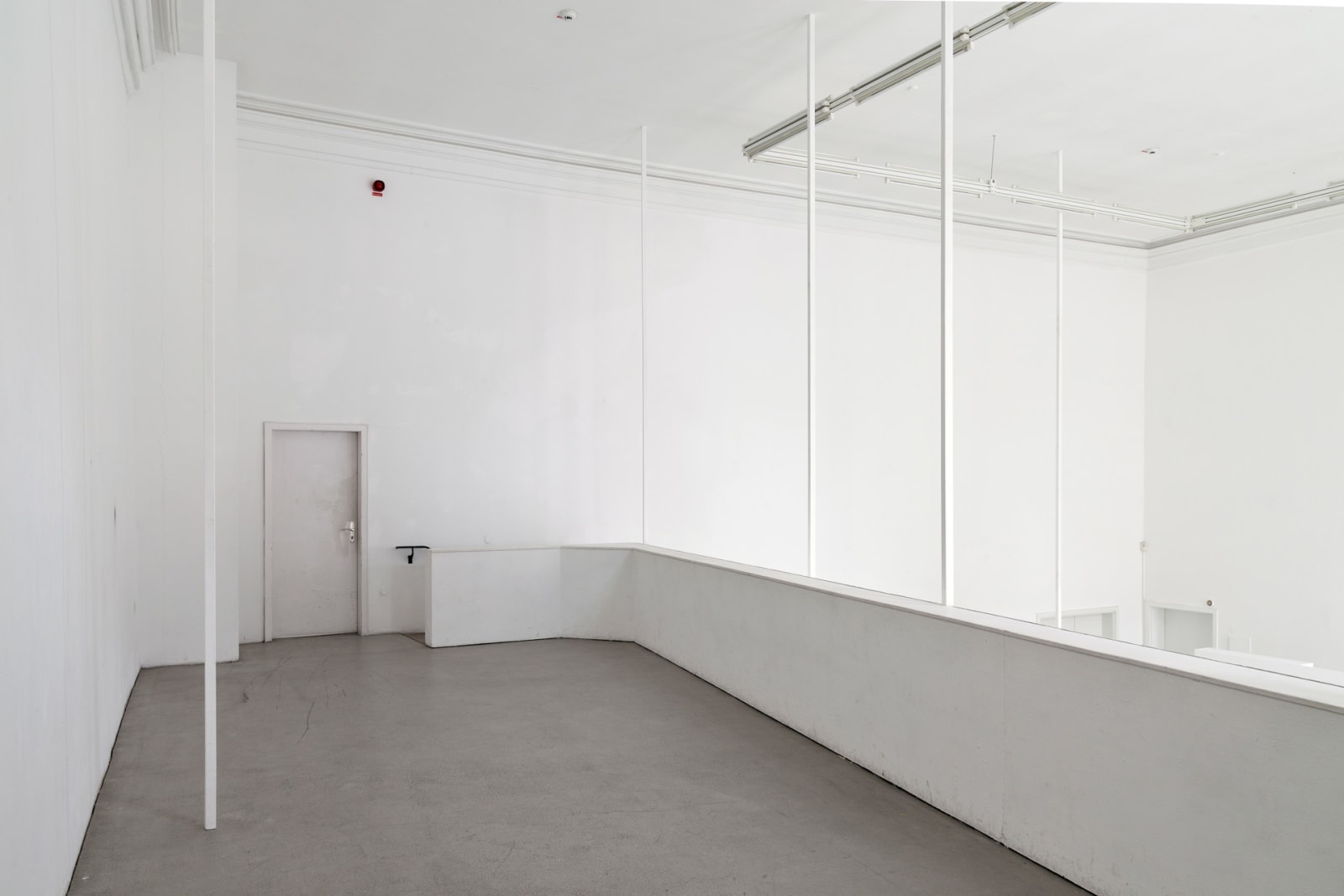
Here we are. Seeing, sensing, experiencing: This exhibition invites us to explore the momentary relations between space and our subjective experience. Drifting between past and future, our perceptions and senses define what we accept as reality. Thus, Julius Heinemann explores the potentials of a bare existence in this world.
A guiding principle for Heinemann's installation at Forum Kunst Rottweil is the Japanese concept of 'MA'. Where Western notions of space are derived by boundaries, 'MA' constitutes space as a phenomenon that exists because it is experienced: As intervals, as emptiness, as that which occurs in passing.
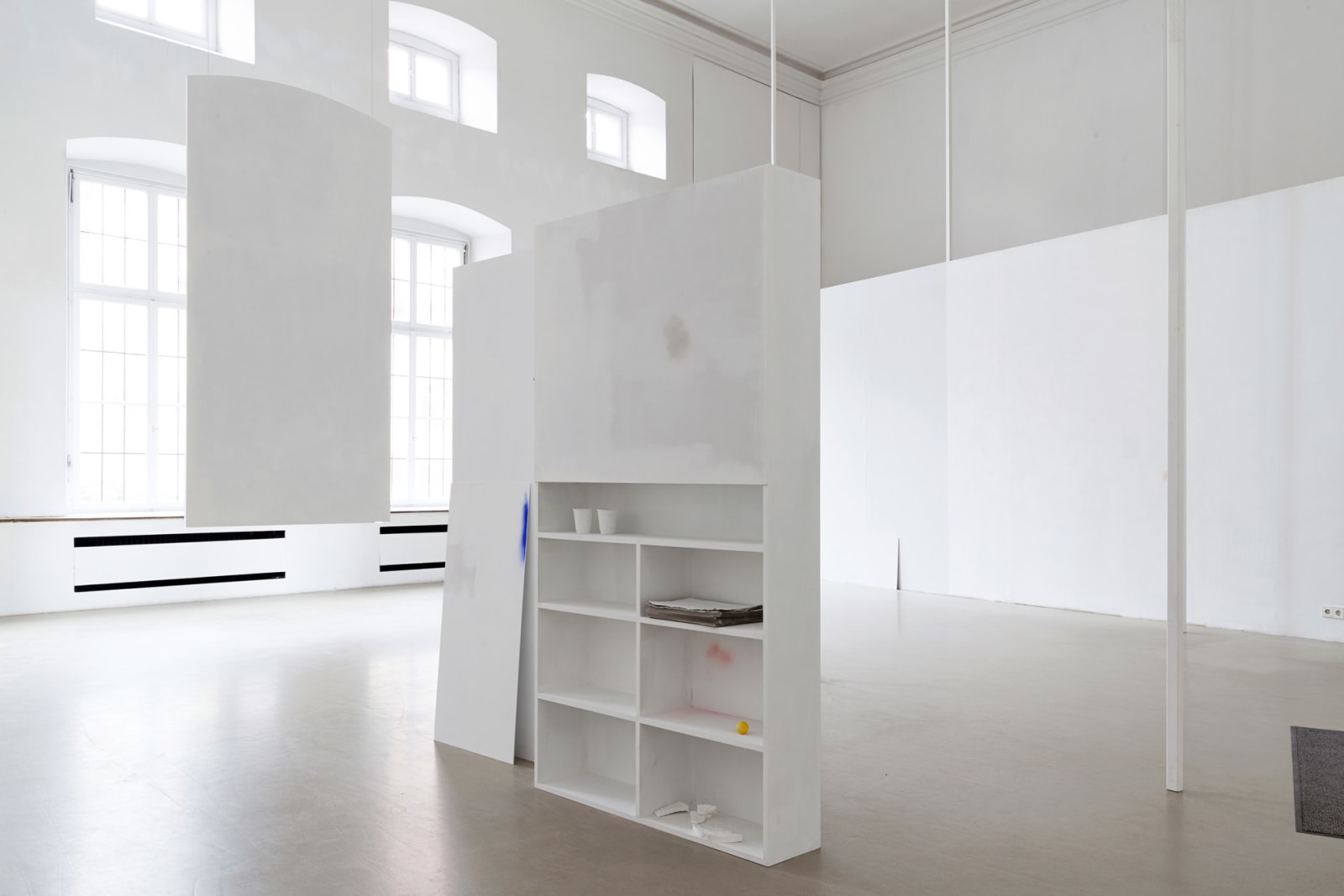
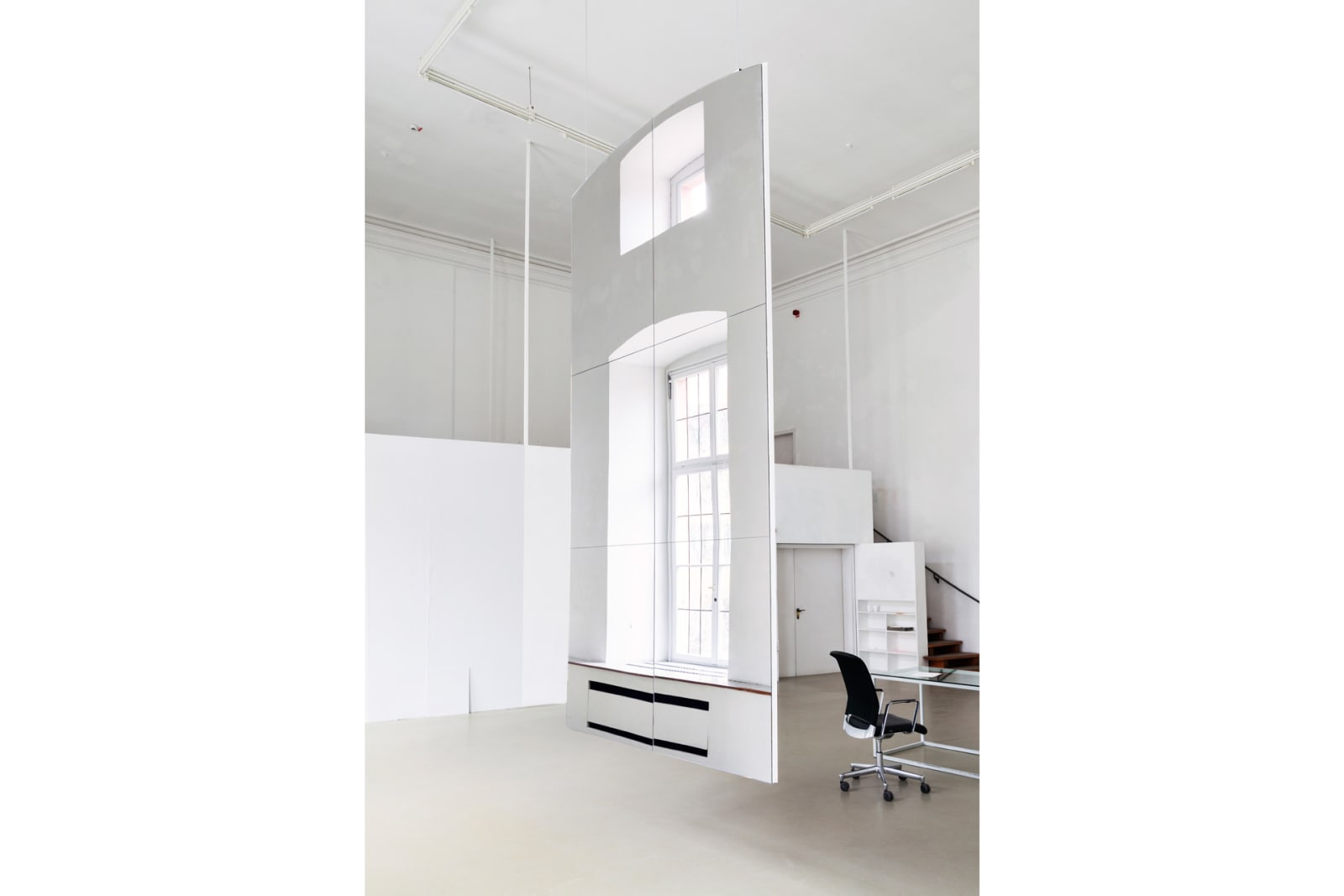
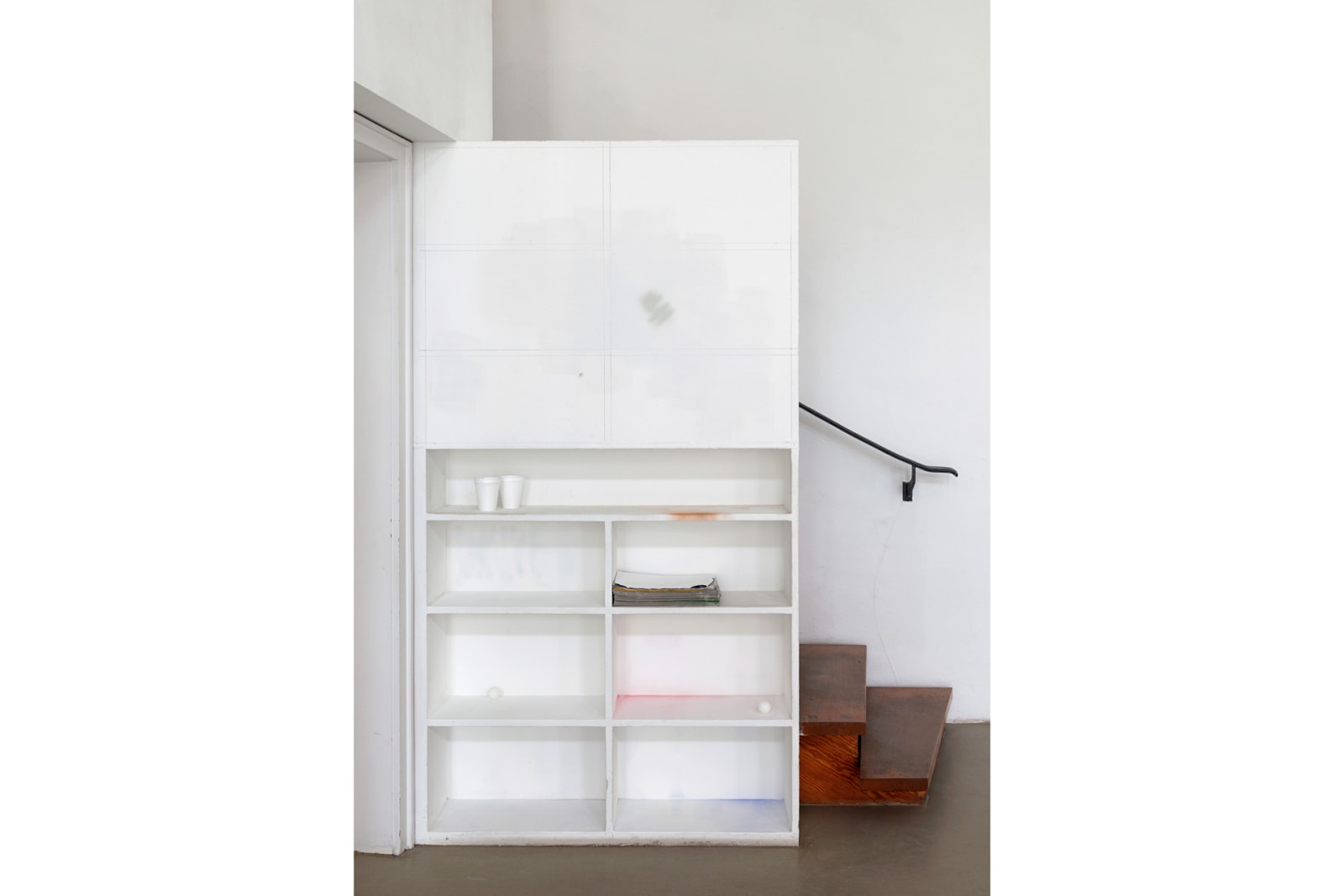
Heinemann interprets this concept of 'MA' within the exhibition space, exploring its properties and relations. He’s introduced vertical rods, a large mirror and a replica of the shelf found at the entrance. Here and there, painterly traces accentuate the walls.
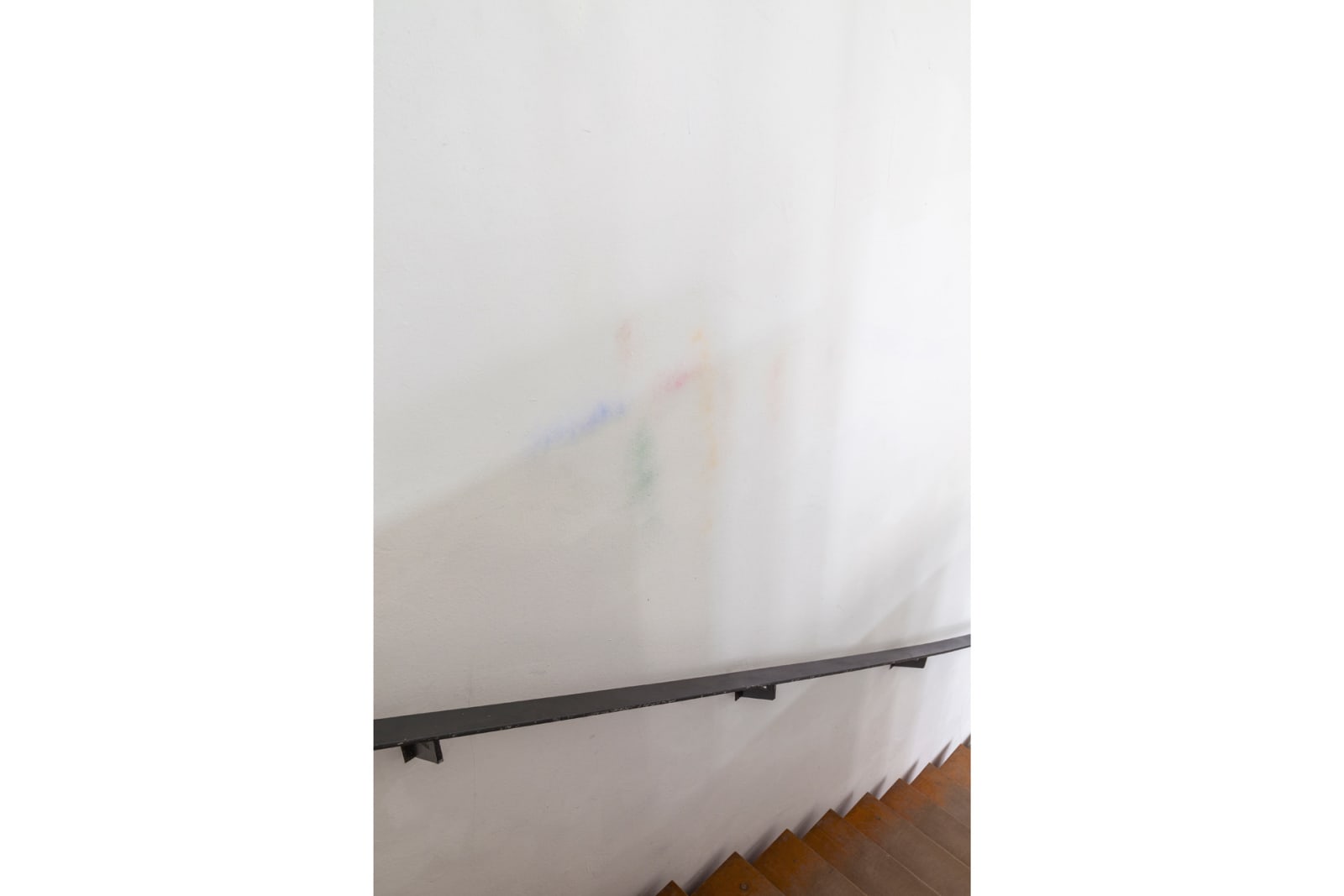
The installed rods act as architectural lines connecting above and below, whilst positing a tension between the gallery and main room. At first glance, these rods are a unit, however with each step through the space, they may be experienced as a sequence, an echo structuring both space and time. Heinemann continues the rhythmic nature of these elements by accentuating their shadows — drawing on the light within the space.
A mirror hanging in front of the window reflects the outside world, whilst erasing the world inside at this spot – creating a non-space, a space in-between. The replica of the shelf, in proxy with the shelf from which it was cloned, suggests an irritating déjà vu. But on closer inspection, its details and compartments hold subtle changes, as if the objects had magically shifted during one's stay in the room. Though time has irretrievably gone by, there are limits to what is lost: The shelf still has the same basic constitution.
MA offers its visitors a field of experiential and conceptual experimentation. They become co-creators of an exhibition both spatially and temporally relative and absolute at the same time. In an age focused on futures, and characterized by exponential speeds, the cult of the spectacle and the migration from material to virtual realities, Heinemann invites us to an alternative. His proposition is one of preservation, though not of attachment. The cycle of inception, passing and return is localized within the here and now, in its inexhaustible potential. Julius Heinemann's work is neither an escape, nor does it proclaim deep, hidden truths. Instead, its radical temporality throws us into a world conceived by the artist and opens us up to the naked facts of a nowness we all share.
We become one —however, not in the form of a social utopia, but as independent individuals held in space and time. Catching the weight and simultaneously, the banality of this fleeting realization, is Heinemann's encouragement for us to consider alternative scopes of thought, action, and togetherness. He is interested in the ephemeral traces and paths leading to such alternatives. His work can be read as an indication in the sense of the old Japanese proverb: Catch the MA.
Enno Schramm, 2021. Translated from German by Valerie von Kittlitz and Blake Kendall.
Hier stehen wir, sind wir, erleben wir – jetzt. Diese Ausstellung ist uns für den Moment als Beziehung zum Raum und zu unserer subjektiven Erfahrung gegeben. Dabei fließen wir gegenwärtig aus der Vergangenheit in die Zukunft hinein und sind darauf angewiesen, das von unseren Sinnen Wahrgenommene als Wirklichkeit an- und hinzunehmen. Ausgehend von diesen Voraussetzungen erforscht Julius Heinemann im Forum Kunst Rottweil die Potenziale eines bloßen Daseins in dieser Welt.
Leitend hierfür ist Heinemanns Auseinandersetzung mit dem aus dem Japanischen stammenden Begriff ‚MA‘. Dieser versteht Raum als Phänomen, das erfahren werden muss und erst dadurch existiert: als Intervall und Hohlraum, als Zeit zwischen Momenten – im Kontrast zur westlichen Auffassung von Raum als Resultat von Grenzen.
Im Ausstellungsraum verschafft sich der Künstler in Auseinandersetzung mit den vorgefundenen Raumqualitäten und -bezügen eigene Begriffe von MA. Als gestalterische Mittel setzt er dafür Stäbe ein sowie eine von ihm angefertigte Kopie des im Ausstellungsraum vorhandenen Regals und einen großen Spiegel. An den Wänden erkennen die Betrachtenden zudem malerische Spuren.
Die von Heinemann installierten Stäbe – architektonische Linien – verbinden Oben mit Unten, grenzen Galerie und Hauptraum voneinander ab und schaffen für die Betrachtenden Momente einer räumlichen Ganzheit: einerseits als Mehrklang (auf den ersten Blick) sowie andererseits vereinzelt als Abfolge (beim schrittweisen Vorbeigehen). So entsteht ein den Raum wie auch die Zeit strukturierendes, sich wiederholendes Intervall. Heinemann interpretiert und führt diese wiederkehrenden graphischen Rhythmen fort, indem er ihre Schatten malerisch andeutet und dadurch die spezifischen Lichtphänomene des Raums verarbeitet.
Mit einem vor den Fenstergläsern aufgehängten Spiegel reflektiert er die Außenwelt und löscht damit die Innenwelt an dieser Stelle aus: es entsteht ein Nicht-Raum des Dazwischen. Durch die zeitlich versetzte Wahrnehmung der fast identisch nachgebauten und sensibel im Raumgefüge platzierten Kopie des Regals, ergibt sich ein irritierendes déjà vu: Bei genauem Hinschauen erkennen die Betrachtenden subtile Veränderungen in der Gestaltung der Fächer, zarte Andeutungen eines während des Aufenthalts in der Ausstellung quasi magisch erwirkten Wandels. Zwar ist die Zeit zwischen den wiederholten Wahrnehmungen unwiederbringlich vergangen – ihr Verlust hält sich allerdings in Grenzen: Das Regal verfügt immer noch über die gleiche Grundkonstitution.
Die Betrachtenden befinden sich bei MA in einem vom Künstler verantworteten Versuchsfeld, sind Wahrnehmende und sich-Begriffe-Machende. Sie können als Koproduzenten einer Ausstellung gelten, die sowohl räumlich als auch zeitlich relativ und absolut zugleich ist. Abstrakt entwirft Heinemann Alternativen zu einem globalen Zeitalter, das mit zunehmender Geschwindigkeit die Zukunft feiert, das Spektakel liebt und aus dem Konkreten in die virtuelle Welt flieht. Seine Geste ist bei allem eine konservierende, ohne dass sie dabei an den Dingen festhalten würde. Der Schaffensprozess und die Ausstellung selbst lassen entstehen, vergehen und wiederkehren. Ihre Verortung ist nicht mehr und nicht weniger als das Hier und Jetzt in seinem unerschöpflichen Potenzial.
Julius Heinemanns Arbeit ist weder eine Flucht, noch verkündet sie tiefe, verborgene Wahrheiten. Stattdessen wirft ihre radikale Temporalität uns in eine von dem Künstler gestaltete Welt hinein und öffnet uns der nackten Tatsache der von uns allen geteilten Jetzigkeit.
Durch diese Erfahrung werden wir eins – jedoch nicht in Form einer gesellschaftlichen Utopie, sondern als unabhängige Individuen, welche die Erfahrung des bloßen In-der-Zeit-Seins und Im-Raum-Seins teilen. Es ist das Einfangen des Gewichts und in eins damit der Nichtigkeit dieser flüchtigen Erkenntnis, durch welches Heinemann zu alternativen Möglichkeiten des Denkens, des Handelns und des Miteinanders anregt. Ihn interessieren die flüchtigen Spuren und Wege, die zu diesen Alternativen führen können. Sein Werk lässt sich lesen als ein Wink im Sinne eines alten japanischen Sprichworts, hier in englischer Übersetzung. Catch the ma.







Die Hände wollen sehen, die Augen wünschen zu streicheln
– J.W. von Goethe
Julius Heinemann’s artistic practise is based on an intuitive and process-based narration. Rather than translating a preconceived idea into a composition, his work follows an organic set of motions, investigating the intersection of space, time, observation and perception.
In his work, painting becomes a system that plays with the relation between subject and reality. It is no coincidence that the title of the show refers to the eponymous poem by Austrian writer Peter Handke, who uses the structure of language as ‘a tool to set in motion’ (zum Schweben bringen).
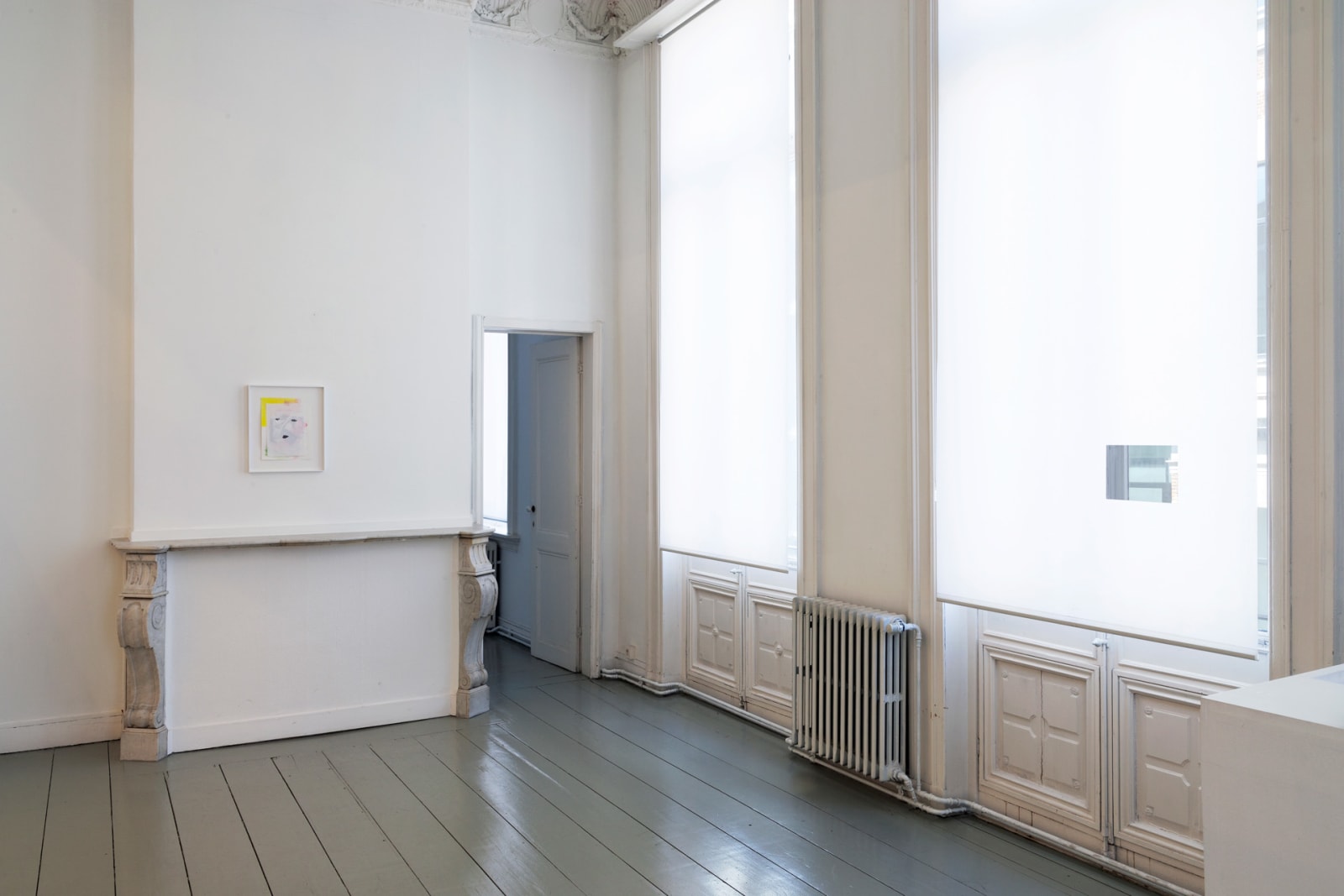
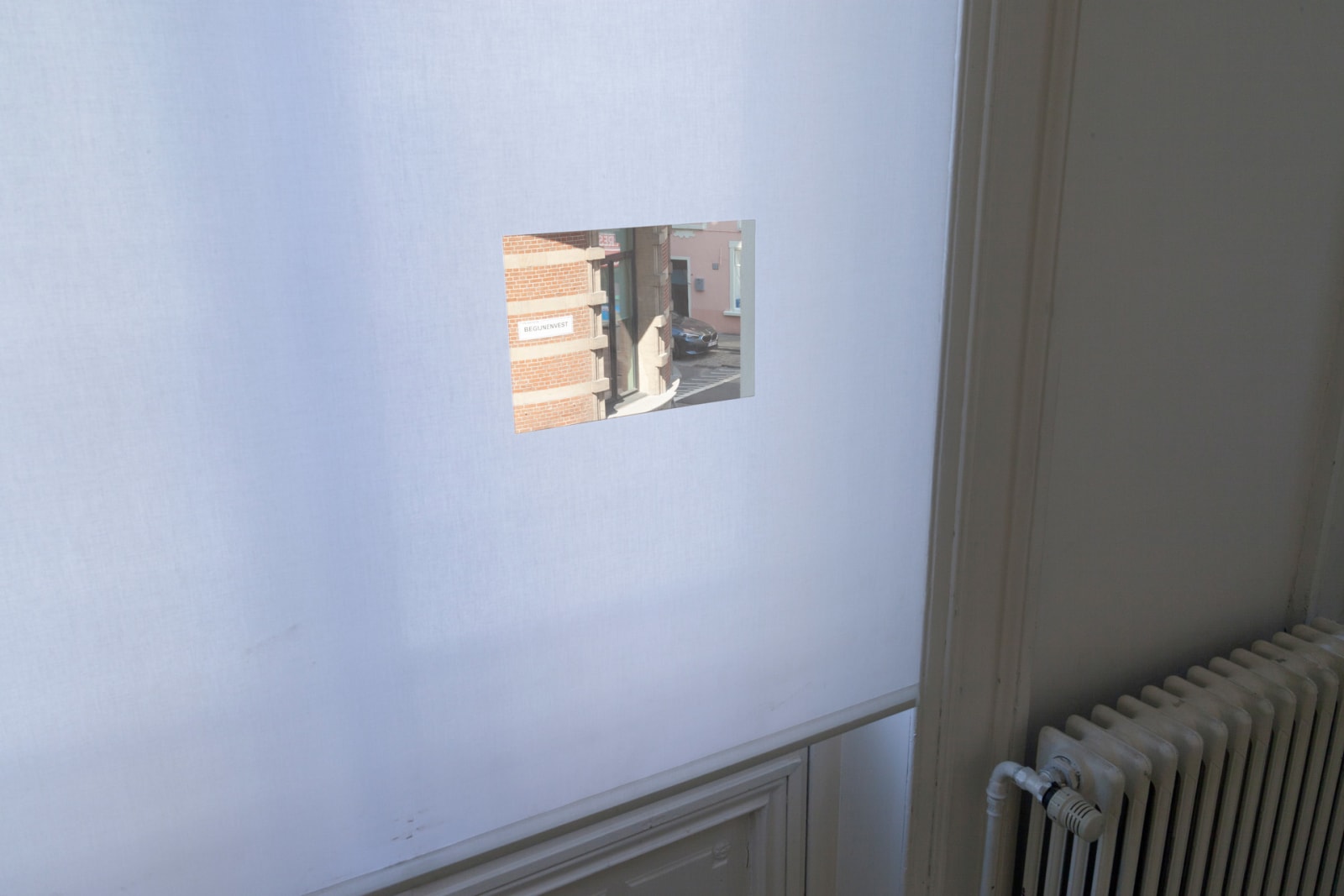
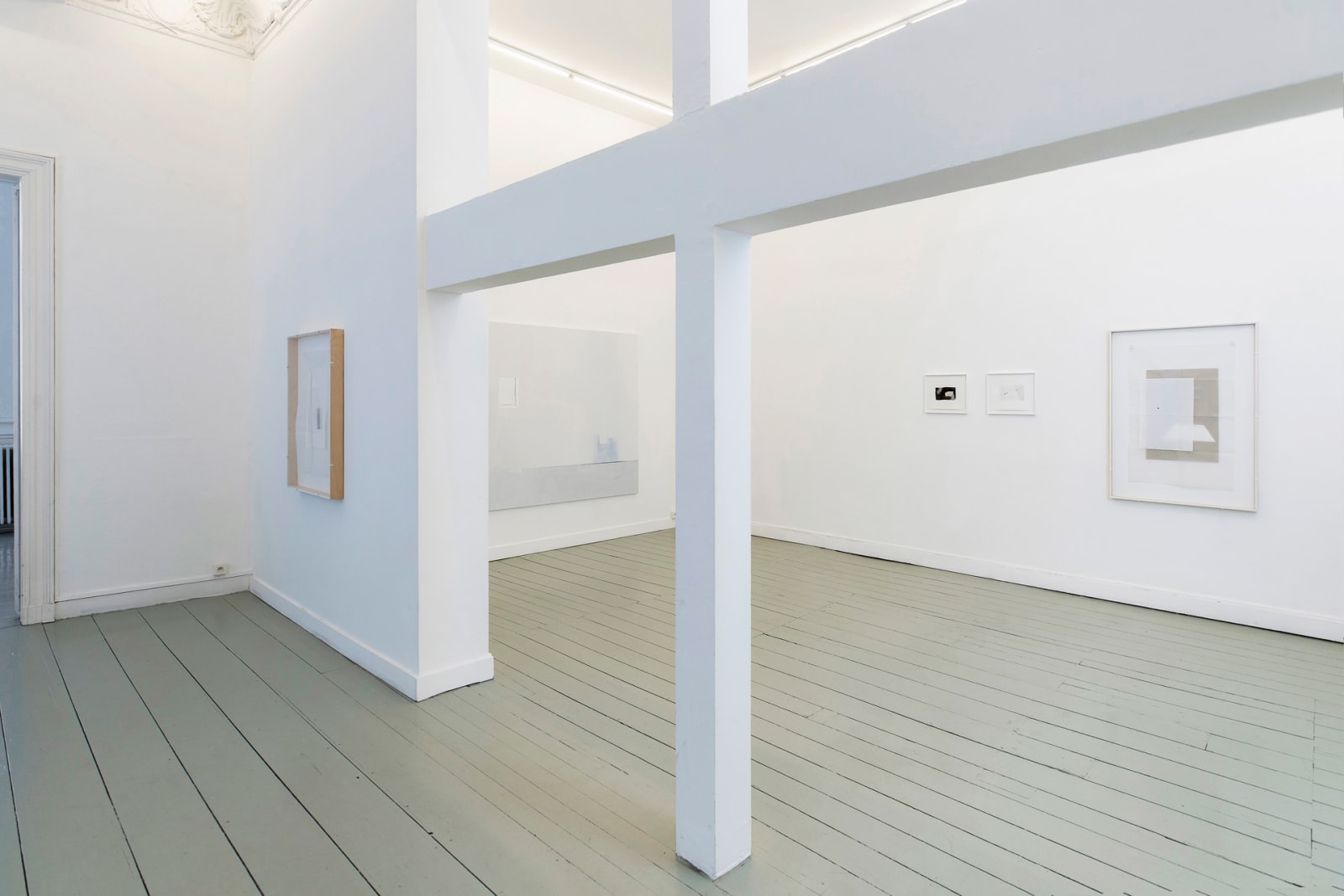
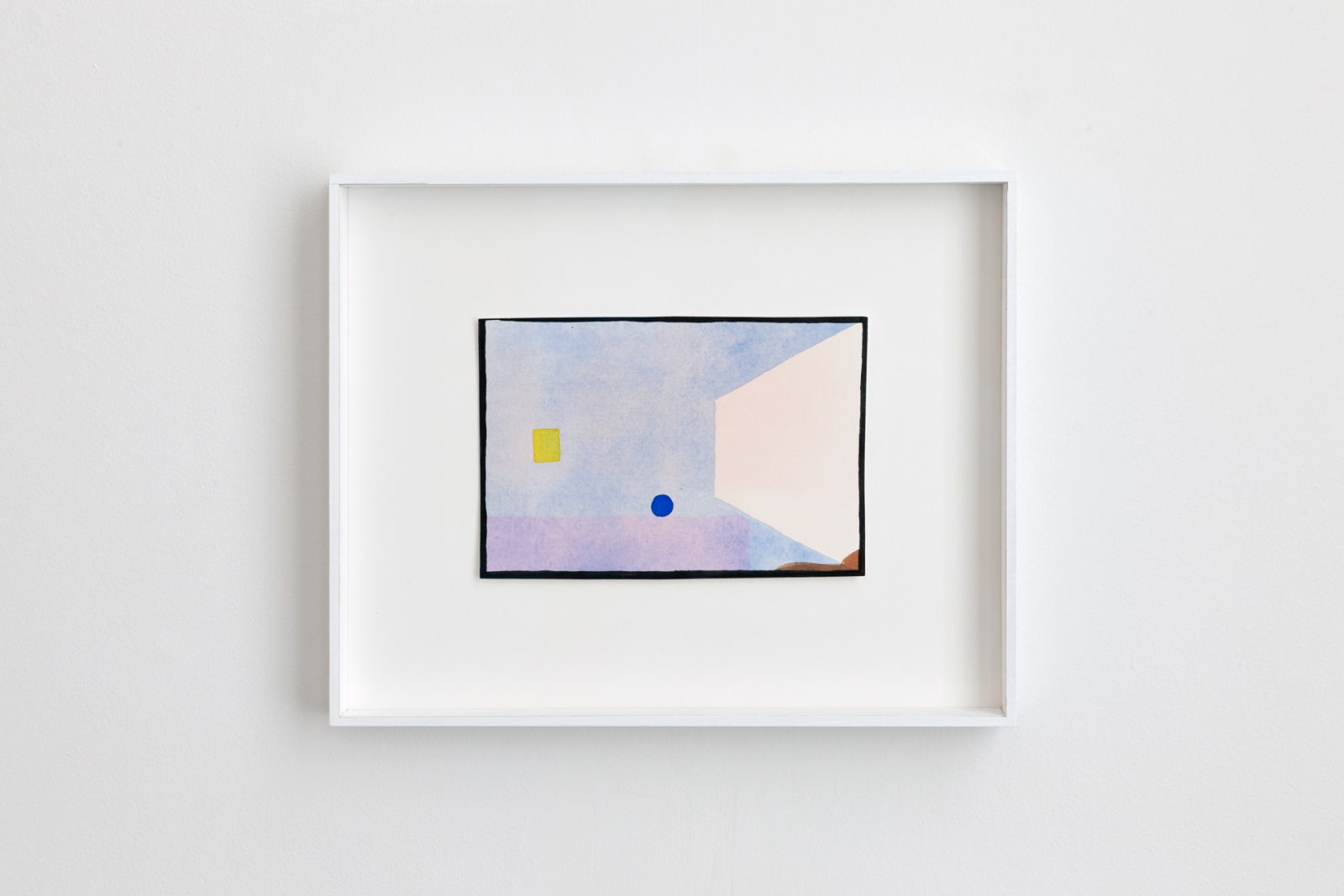
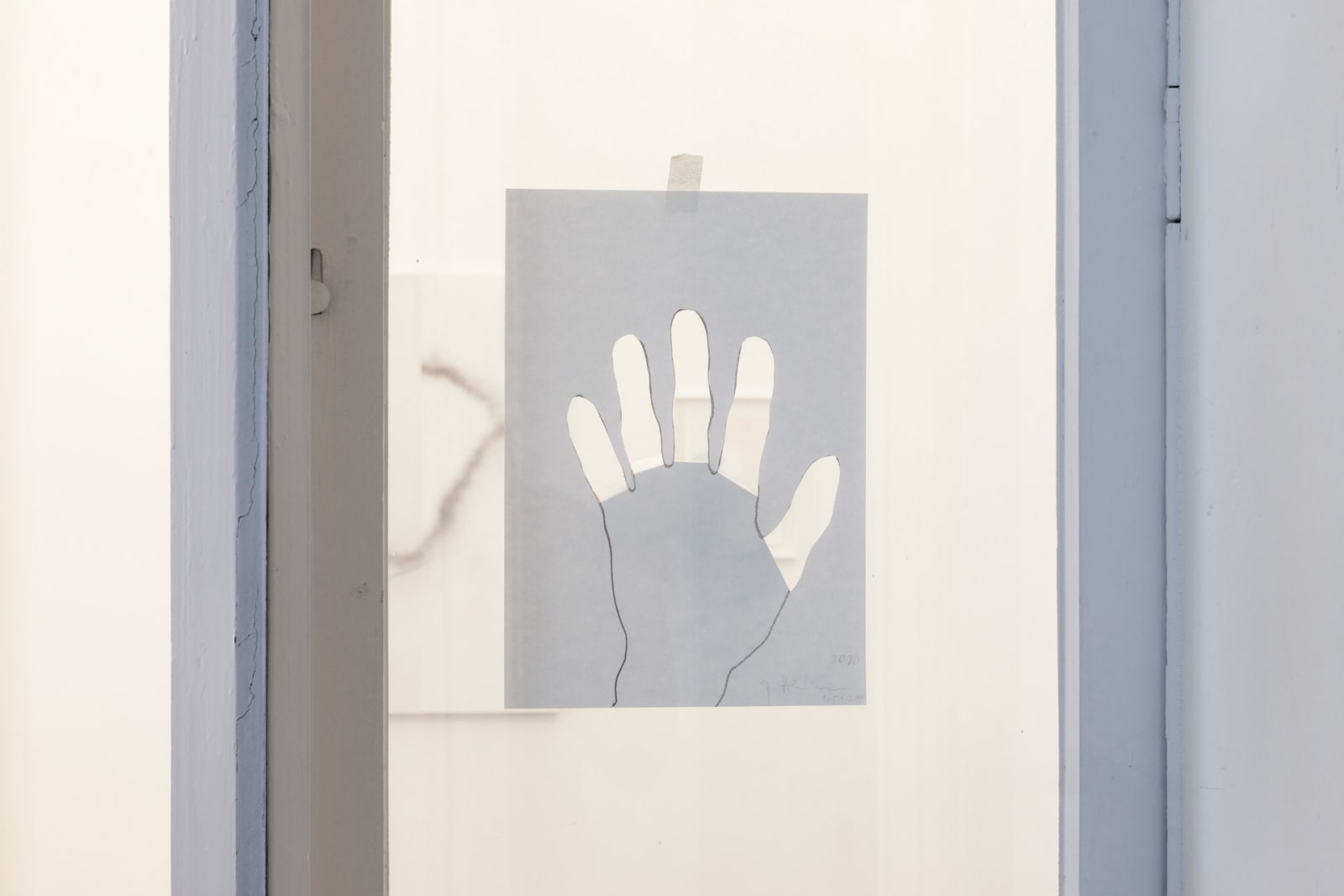
More than being a reference, the paradoxical title – The Innerworld of the Outerworld of the Innerworld – touches upon the essence of the show. Presenting themselves in relation to their immediate surroundings, the paintings’ surface can be perceived as a ‘skin’, a border blurring boundaries between the real and the imagined, between ‘inside’ and ‘outside’. In addition to being carriers of an image, they are physical objects that function as fragments on the walls, referencing the gallery space itself. Heinemann divides the space into four rooms that interact with one another through paintings, watercolours, collages, and paper objects. The gallery isn’t a blank canvas, nor is the viewer an objective perceiver. This idea is enhanced by a small cut-out in one of the closed gallery blinds that let the light in, but block the view. Through this intervention one is aware of a world outside, but is only able to see it like an image, as if through a TV screen.
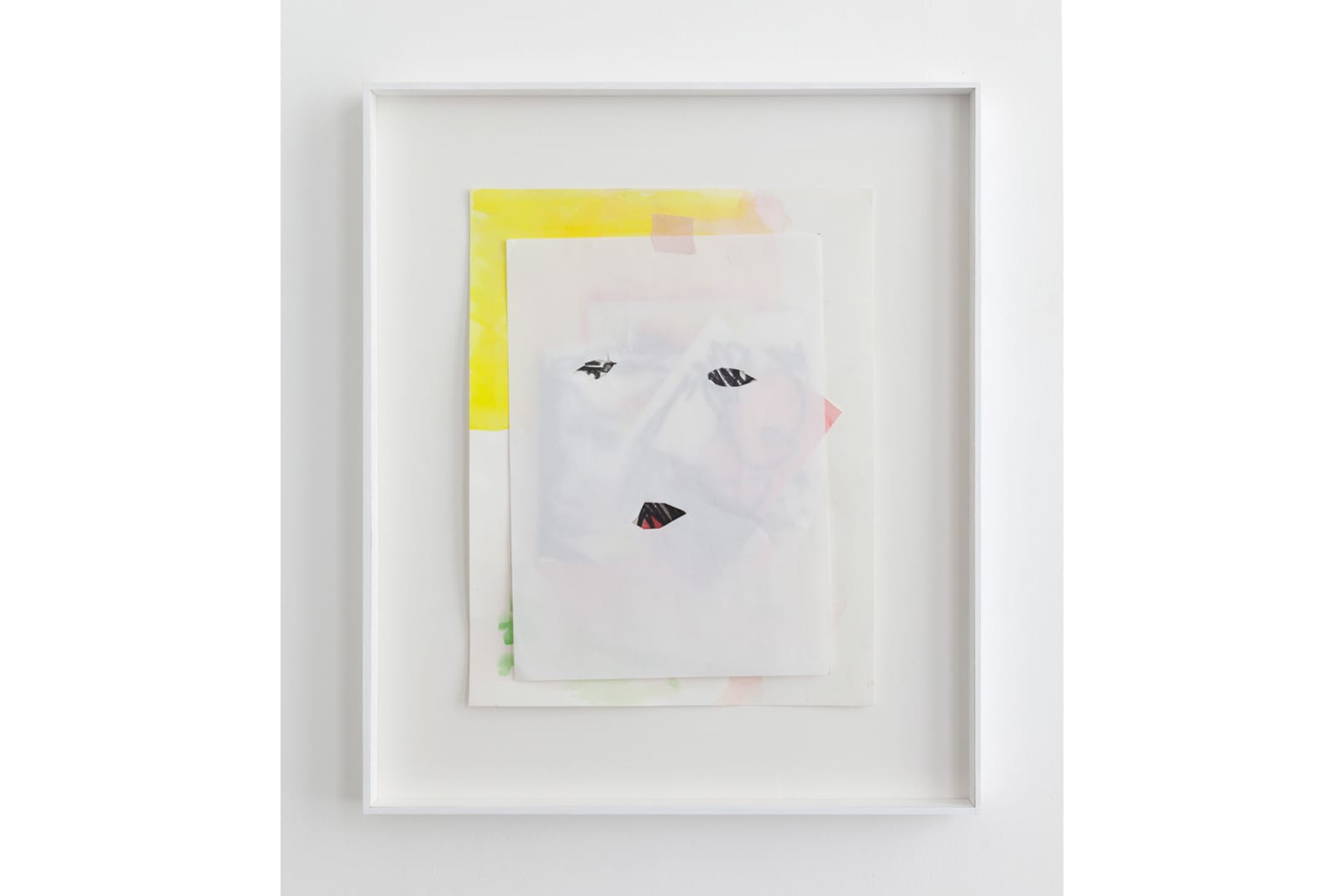
When looking at a work, our observation tends to be dominated by our sense of seeing – seeing the image as an isolated object. To counterbalance this notion, Heinemann raises questions like: Which piece of tape is paper and which one is painted? Is this shade a shadow cast inside the room, or is it drawn onto the work? And is this even relevant?
Phenomenological philosopher Merleau-Ponty states, “the senses translate each other without any need of an interpreter and are naturally comprehensible without the intervention of any idea”. Without providing a stern framework, Heinemann’s practise appeals to various senses, making us experience the space by touching with the eyes, while gazing with our hands.
by Lien Craps
Photos 3, 5, 6, 7, 12, 13, 18, 20, 21, 22, 25 and 29: David Samyn; other photos: Julius Heinemann
Courtesy Julius Heinemann and Geukens & De Vil, 2021
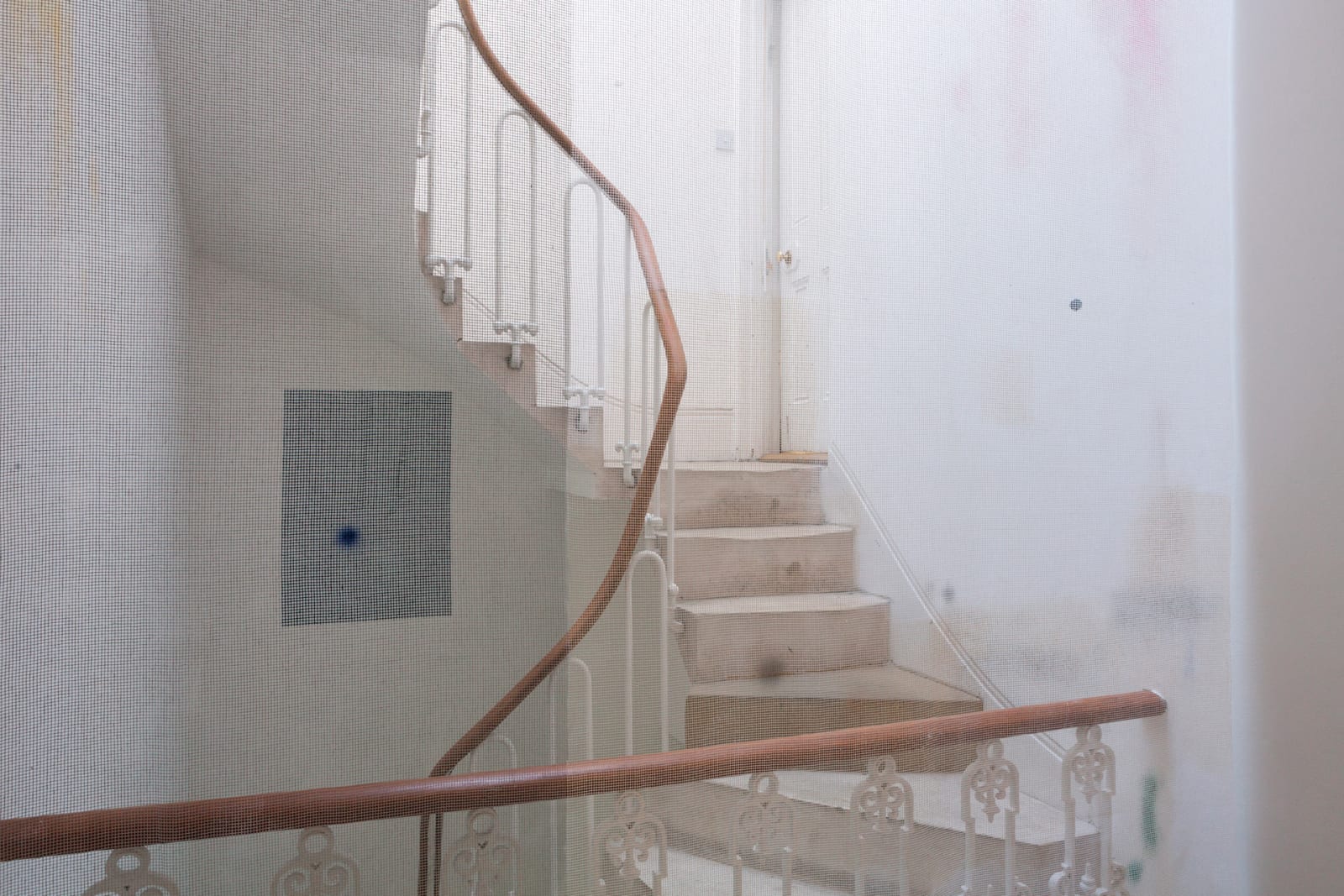
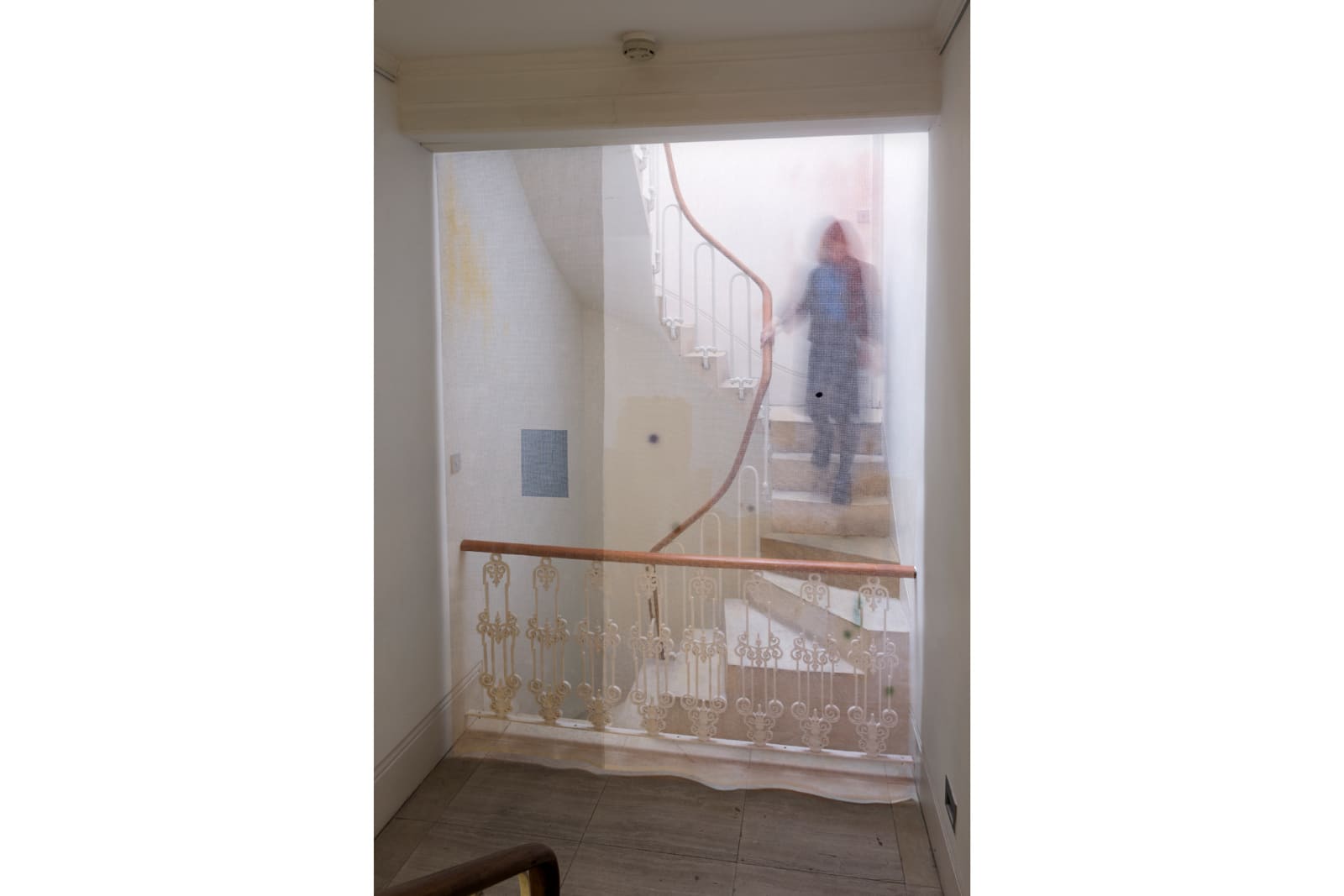
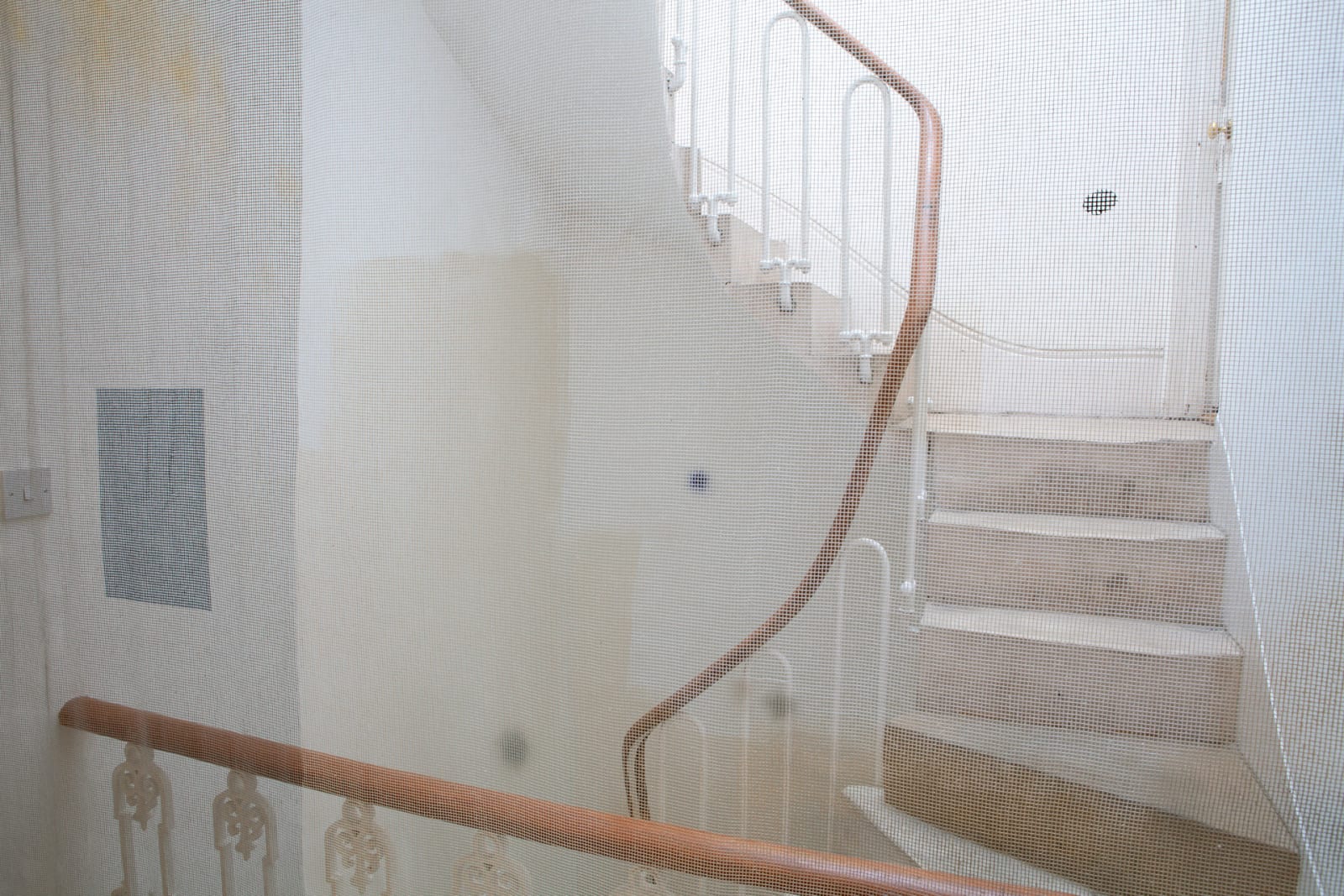
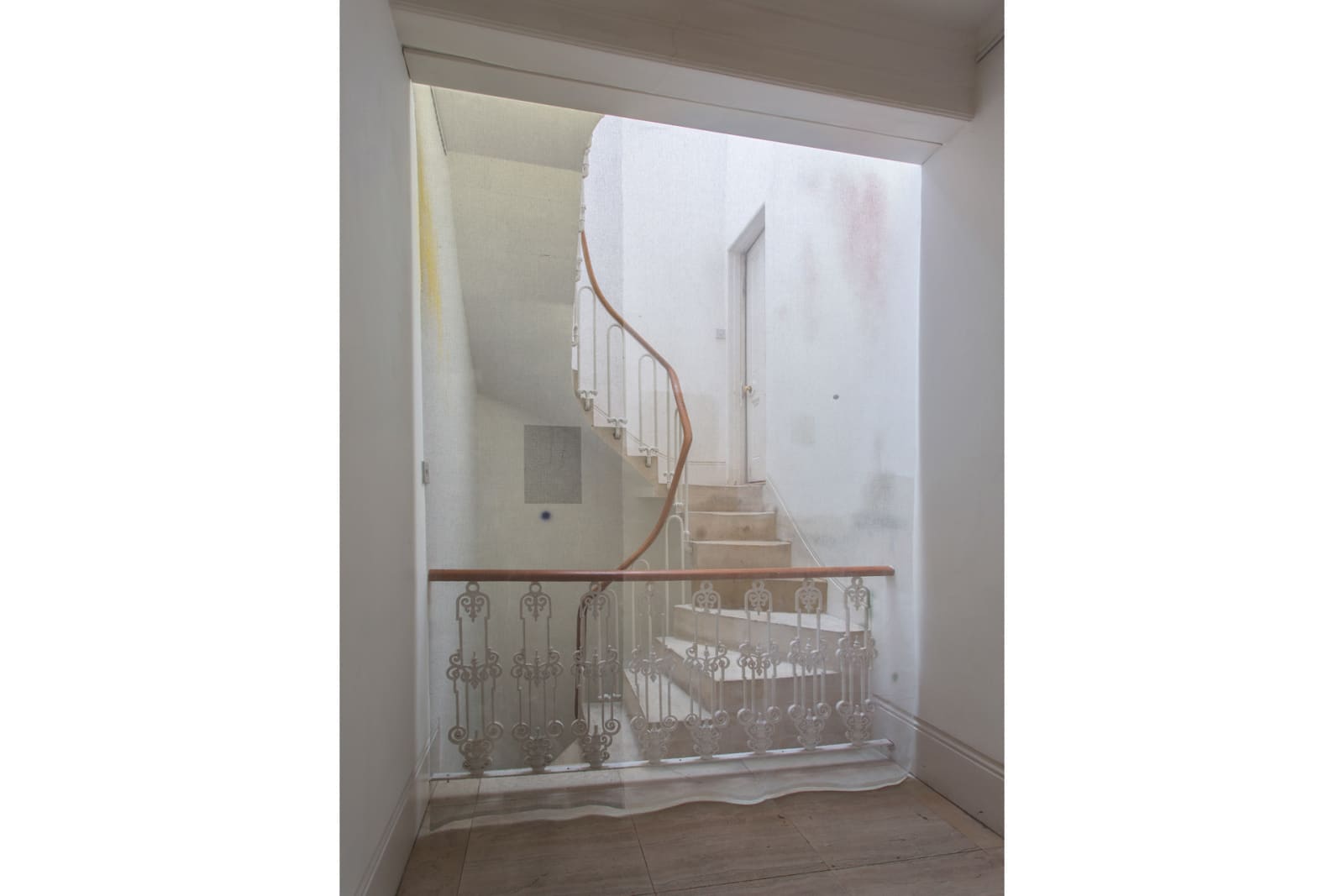
"The Staircase (Austrian Cultural Forum, London)" is a site specific installation that was commisioned by Caterina Avataneo and Nicole Tatschl for the group show "Hypersurface" at Austrian Cultural Forum, London.
"Hypersurface" is a group exhibition exploring the porosity of surfaces – from the human skin to walls and screens – in order to present possibilities beyond materiality and signification, and alternative understandings of our surroundings. Employing a transversal approach, the selected artists present works that showcase their perception of the world and blur antinomies such as micro/macro, inside/outside, real/virtual and beyond. Surfaces themselves become, rather than a separator or protective layer, a channel and a connector between worlds. The show presents a combination of different mediums playing with softness, transparency, site specific interventions and virtual realities where technology functions as a gate to access extended notions of space and shape reality.
The participating artists are: AVD (UK), Daniel Ferstl (AT), Julius Heinemann (DE), Barbara Kapusta (AT), Sophia Mairer (AT), Simon Mathers (UK), Florian Mayr (AT), Marie Munk & Stine Deja (DK), Hannah Neckel (AT), Stefan Reiterer (AT) and Rustan Söderling (SE).
First Photo: Rob Harris
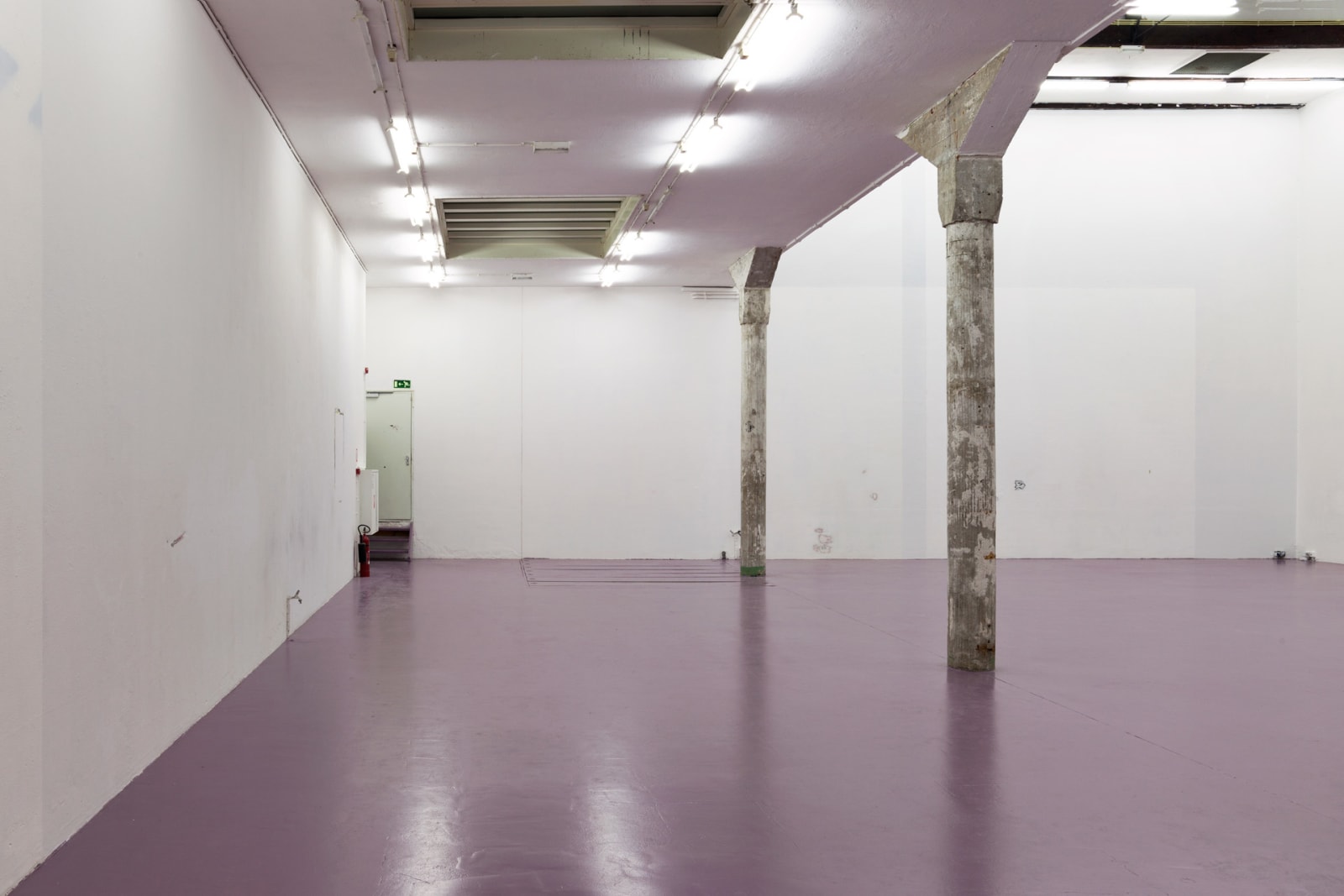

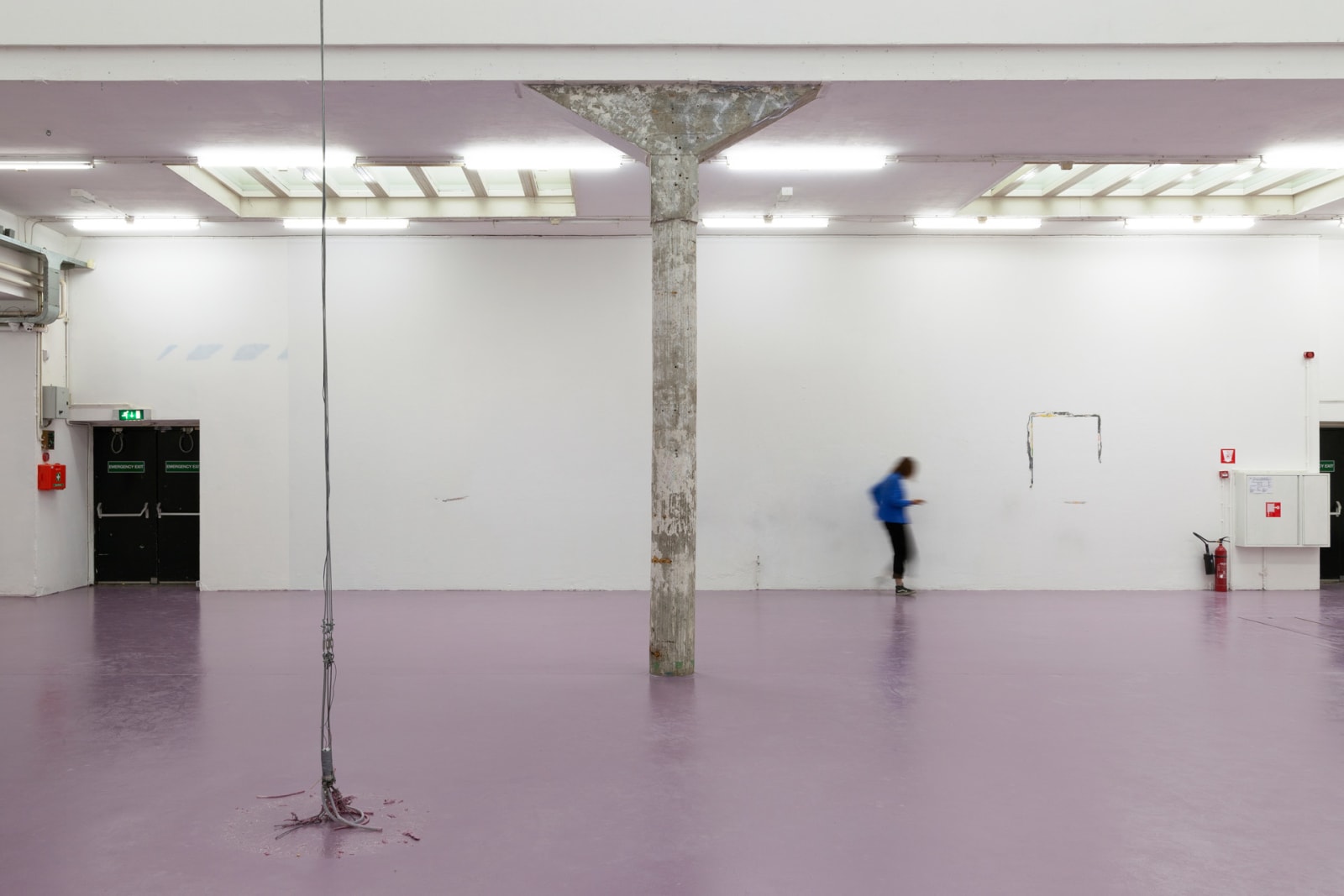
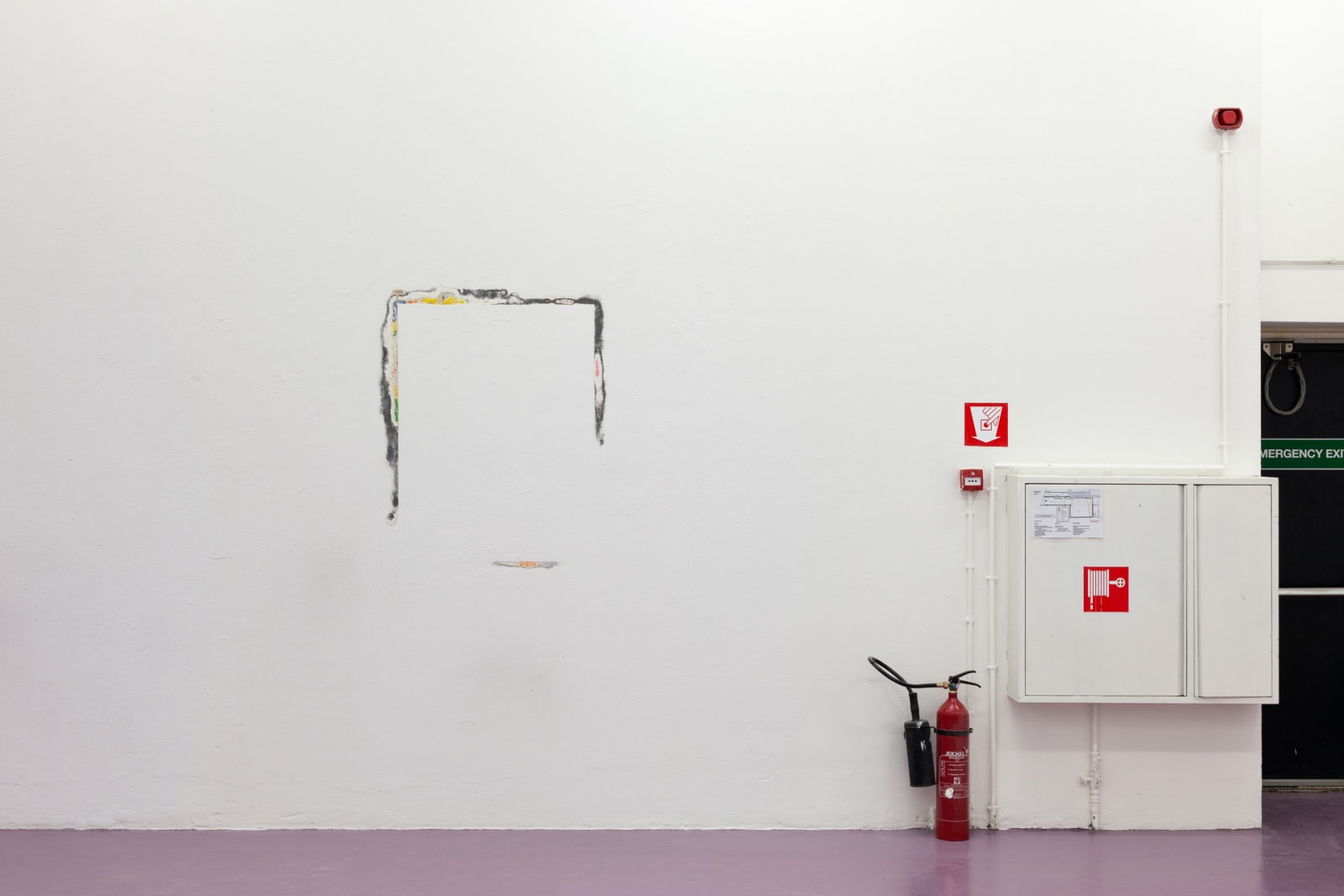
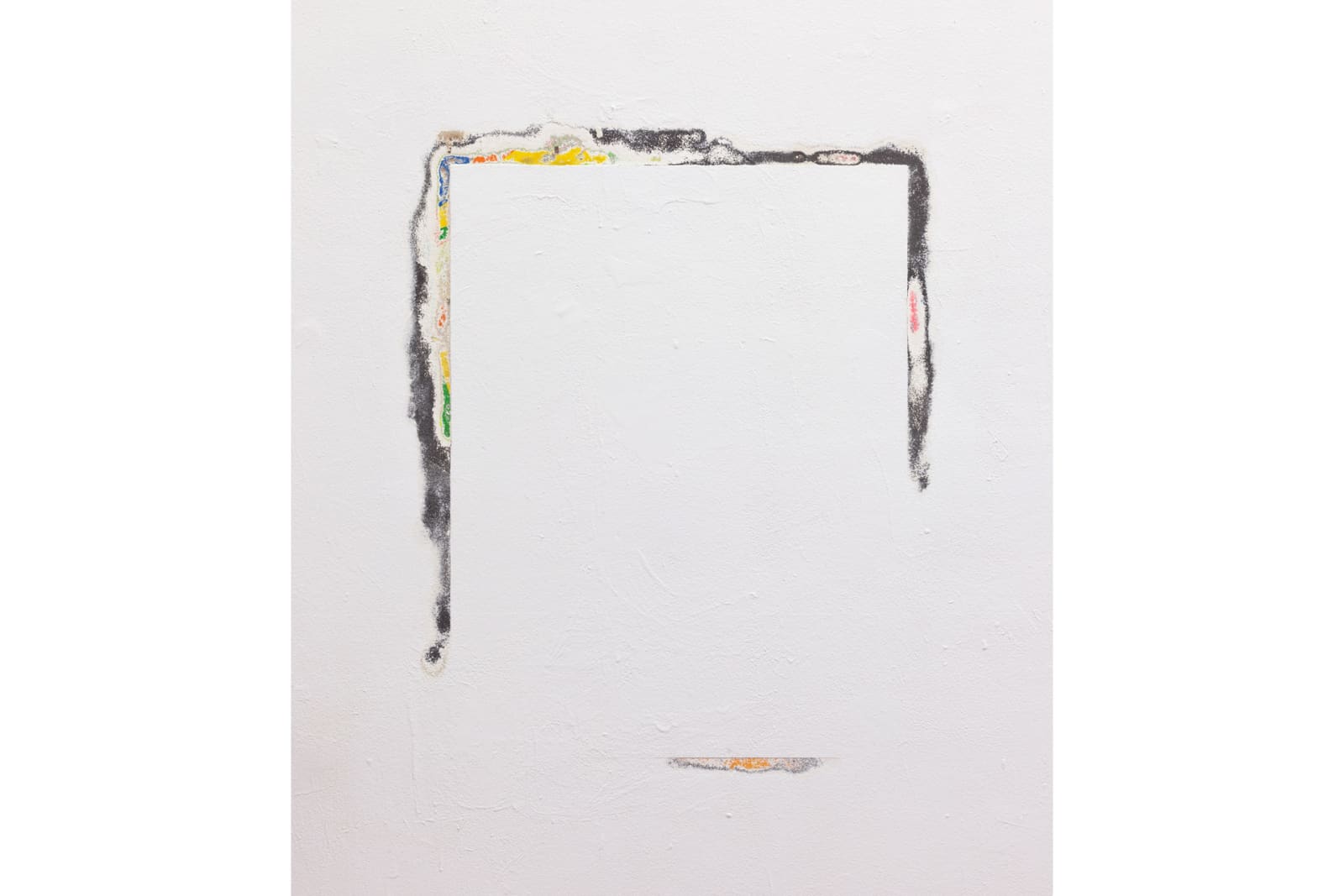

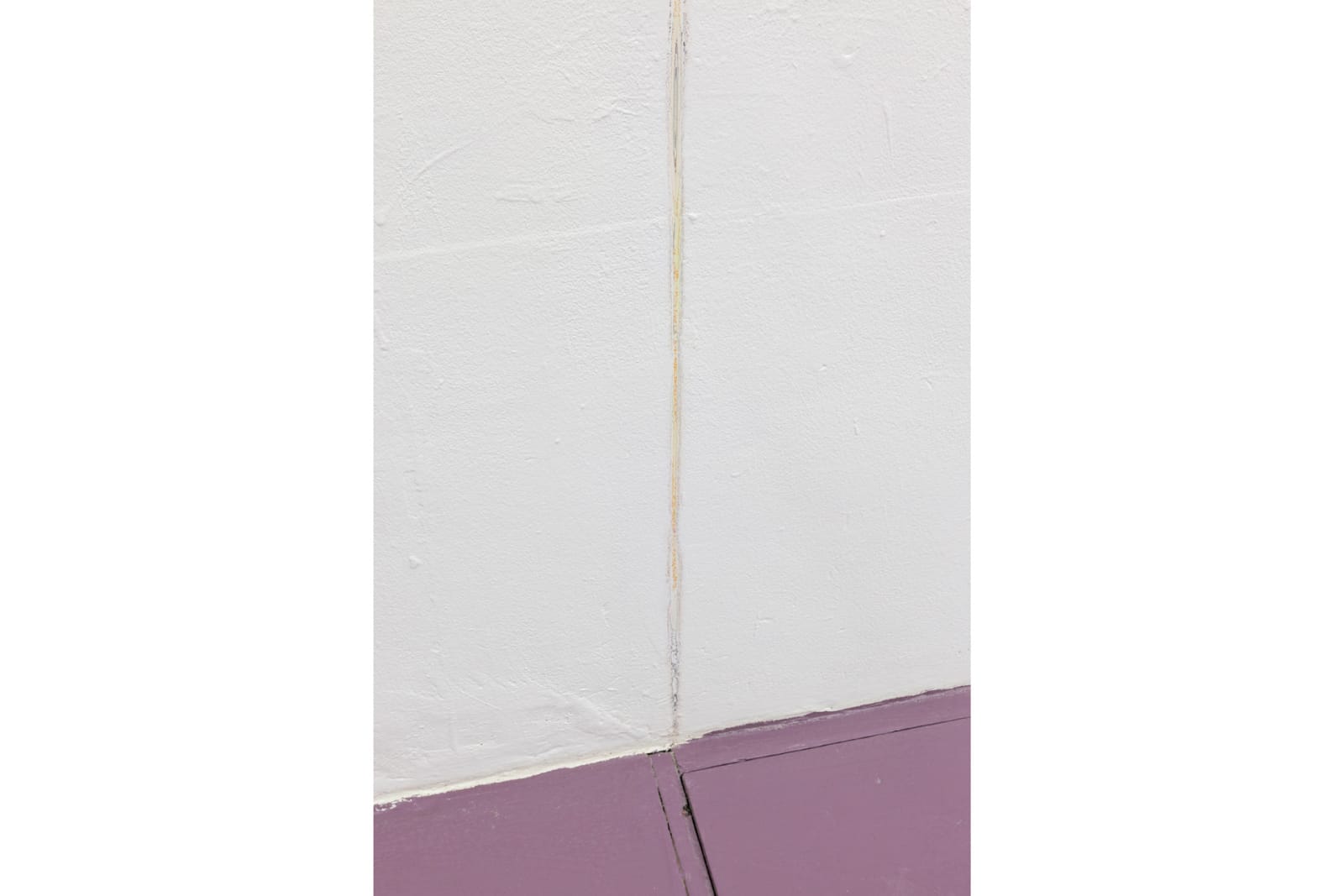
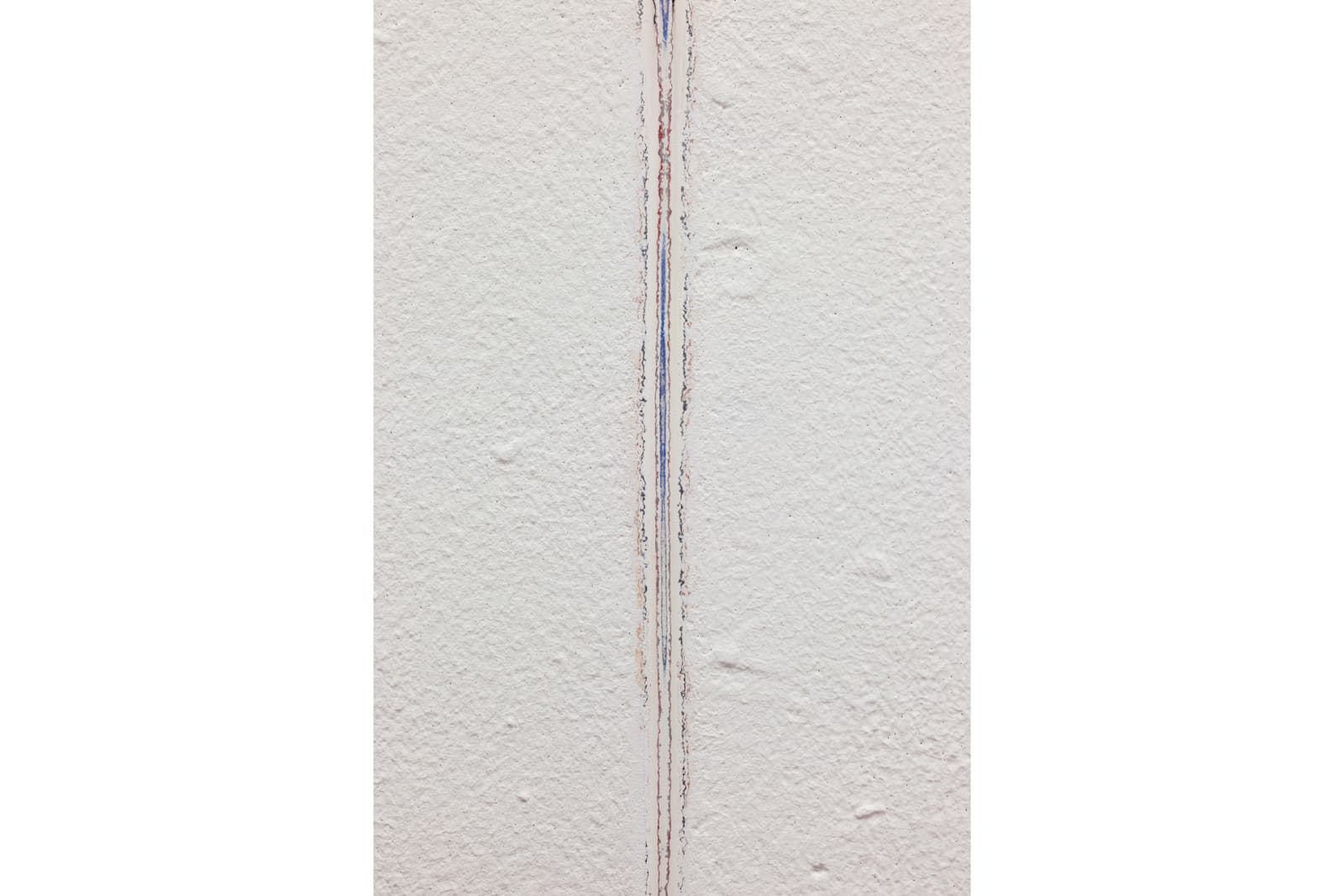
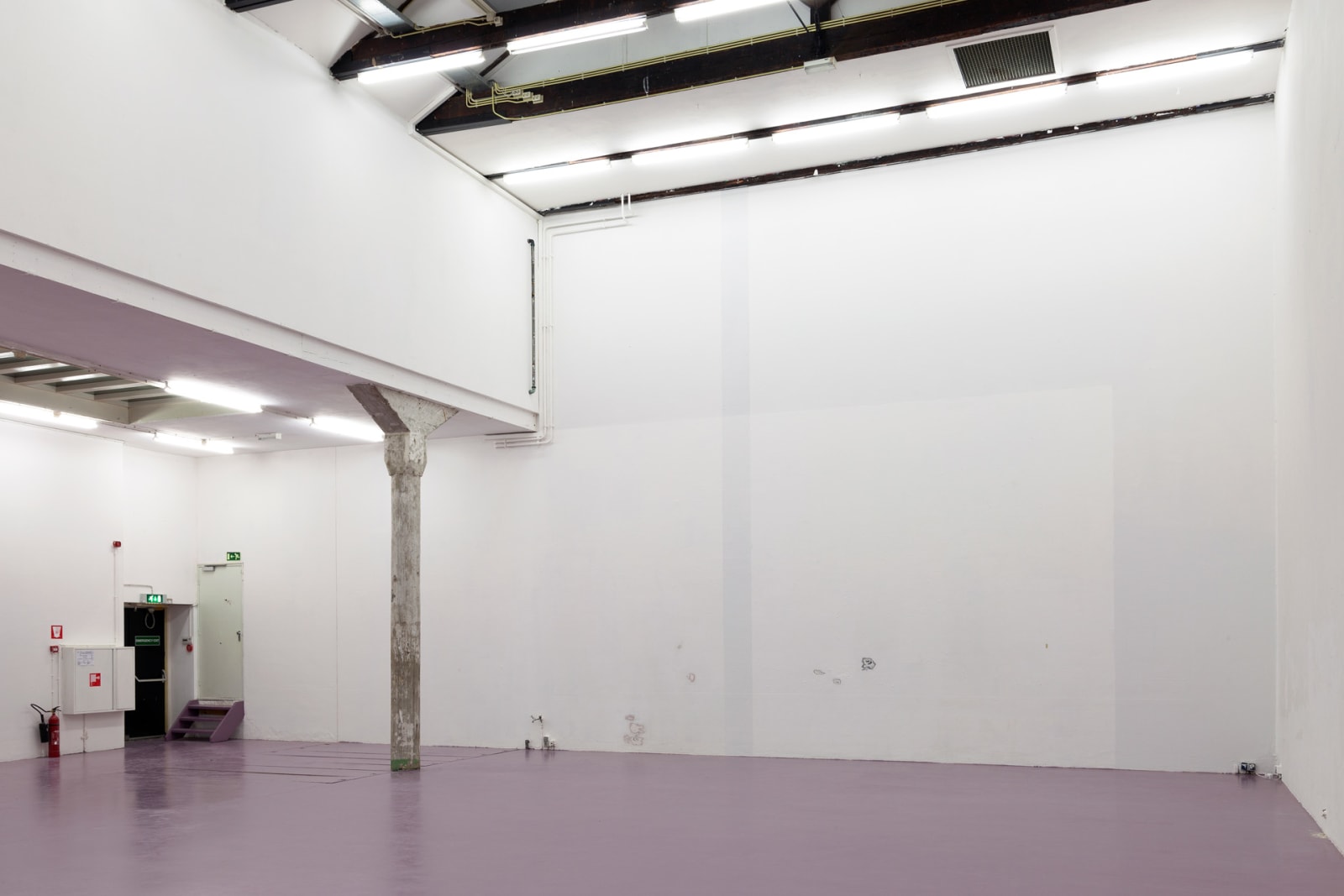
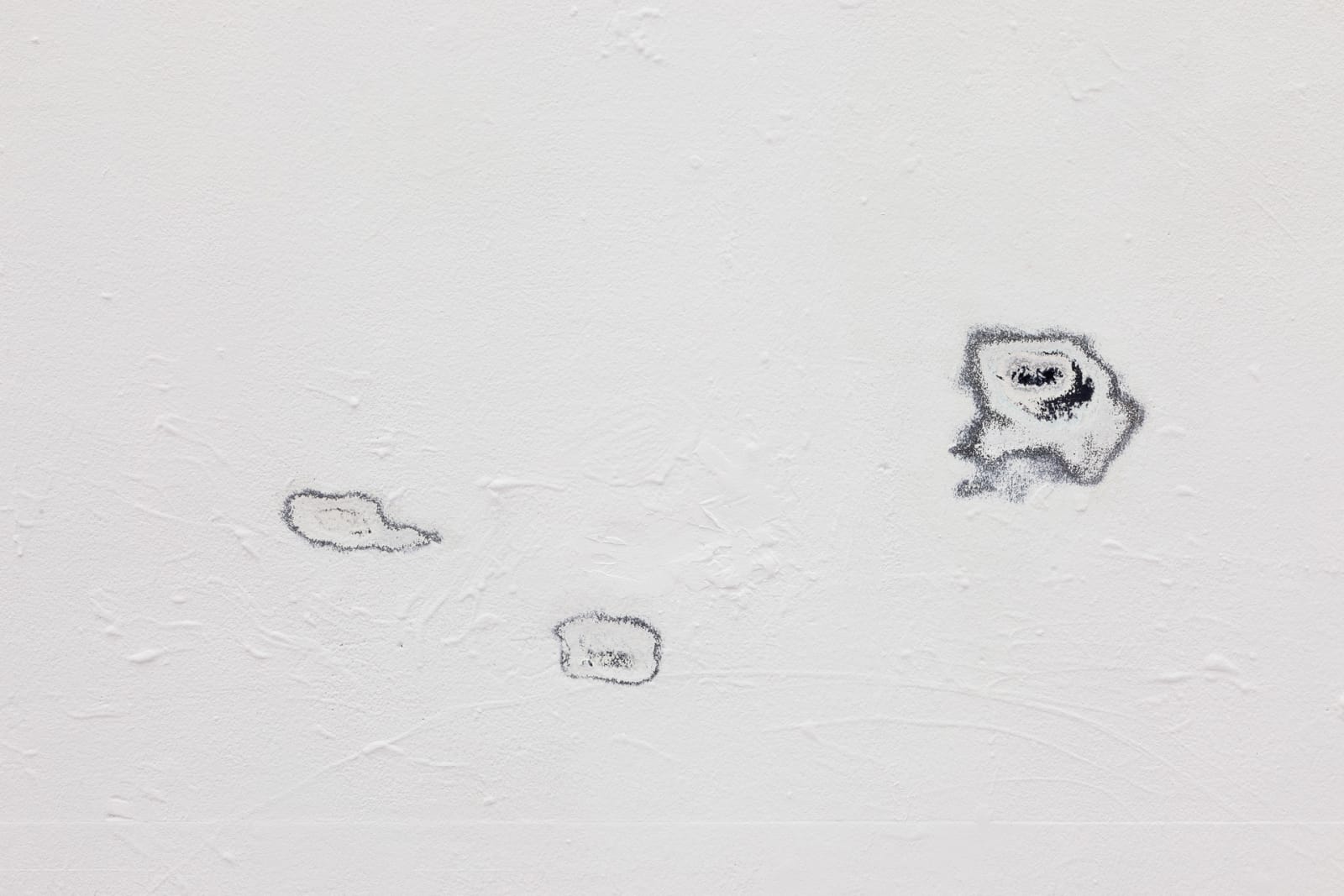
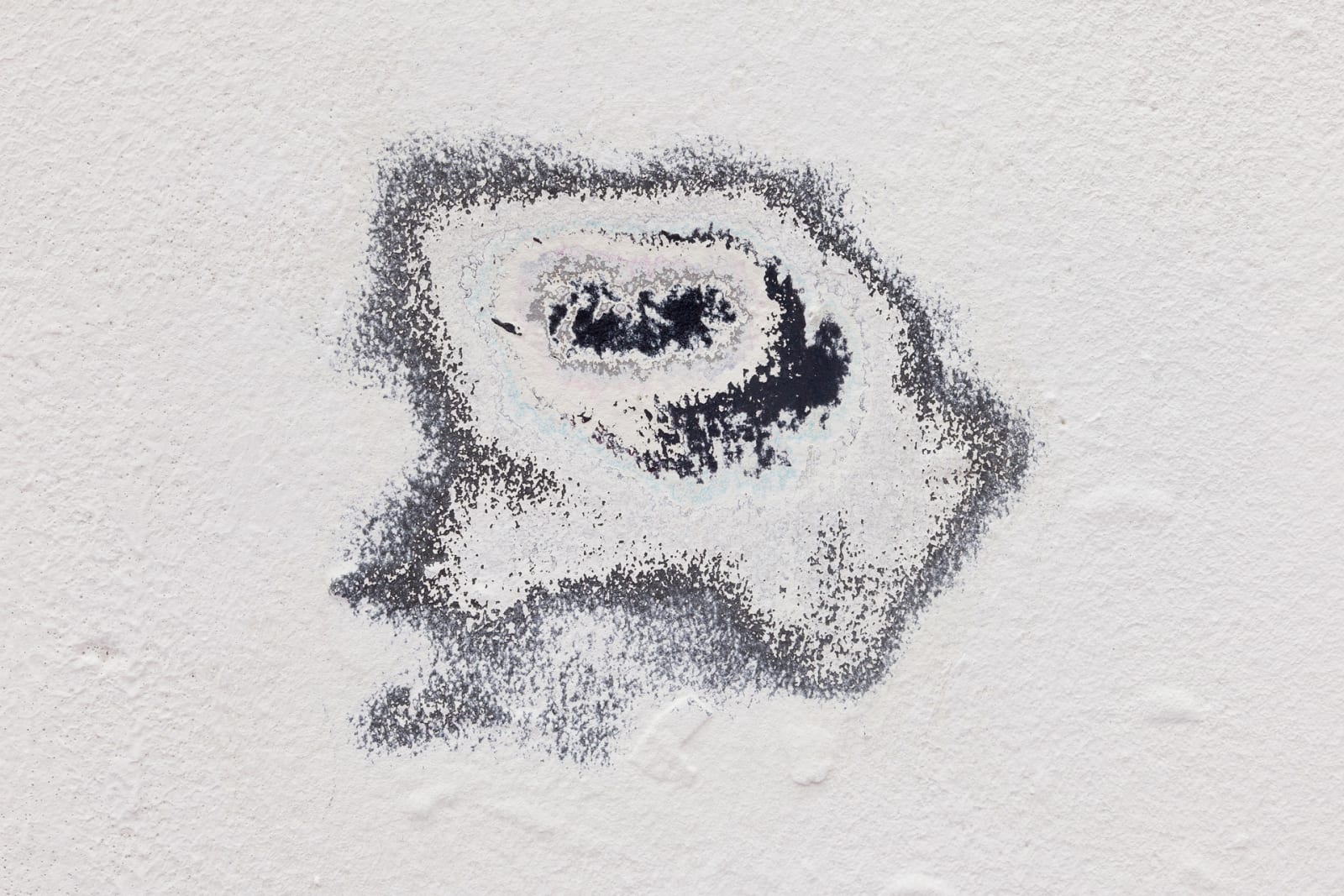
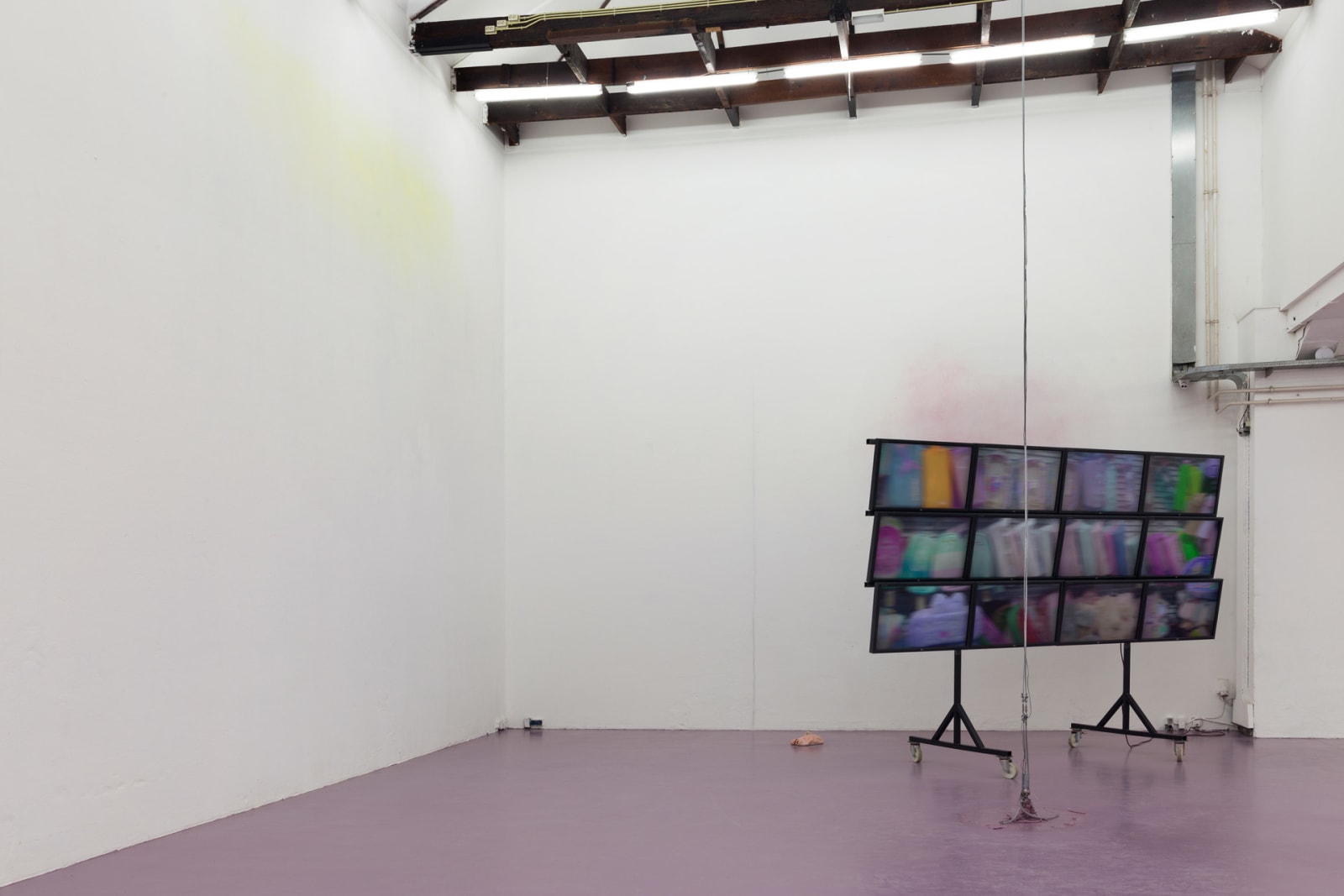
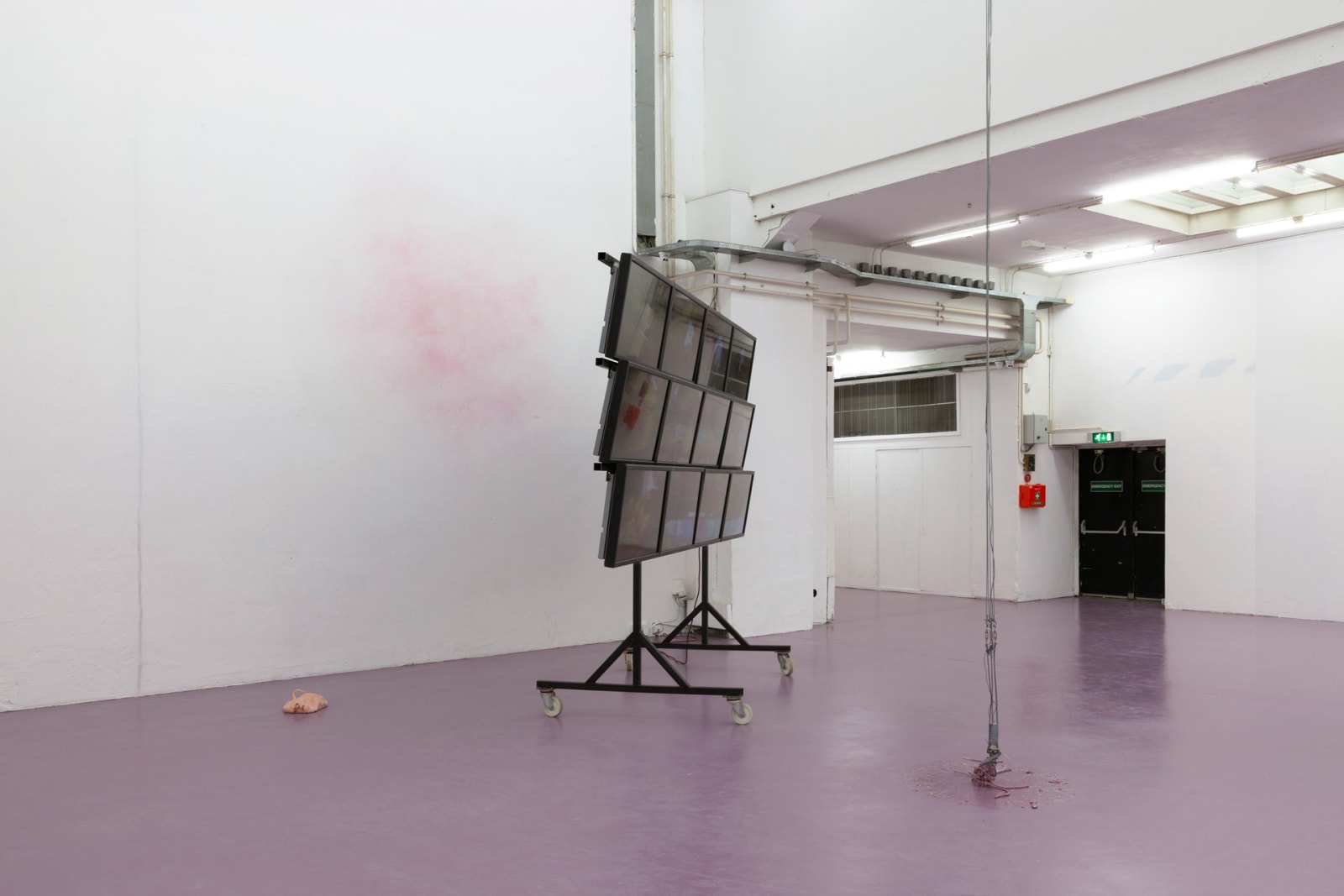
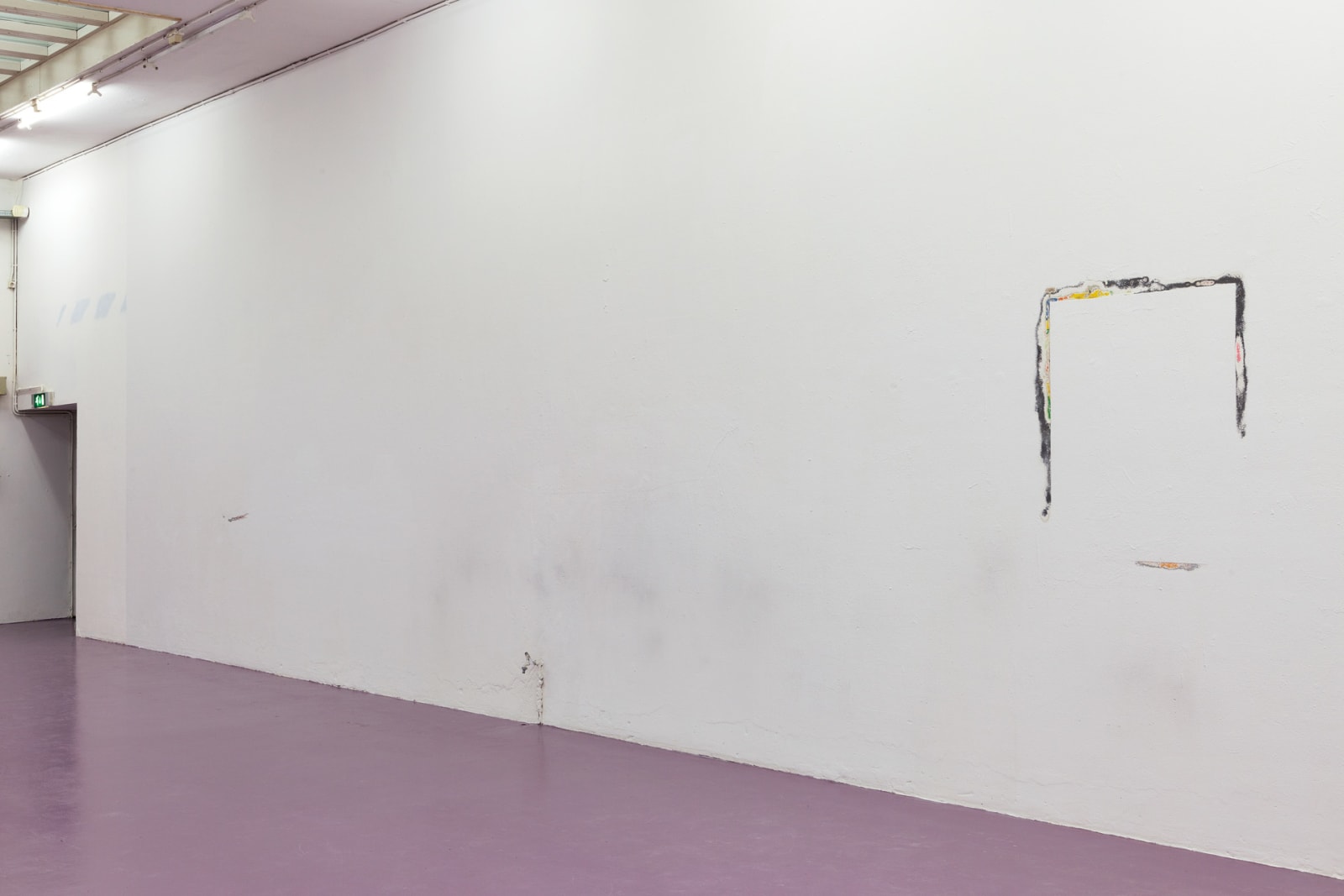
The installation is part of the group show „It is very difficult to be an island of perfection in a sea of misery, but please do not doubt our sincerity“ initiated by Simon Wald-Lasowski for W139 in Amsterdam. With contributions by Kasper De Vos, Serge Onnen, Ryan Gander, Mire Lee, Aline Bouvy, Julius Heinemann, Maya Brauer & Annabelle Broos, Simon Wald-Lasowski, Bas de Wit, Thomas van Linge, Andrea Éva Győri and Dodi Espinosa.






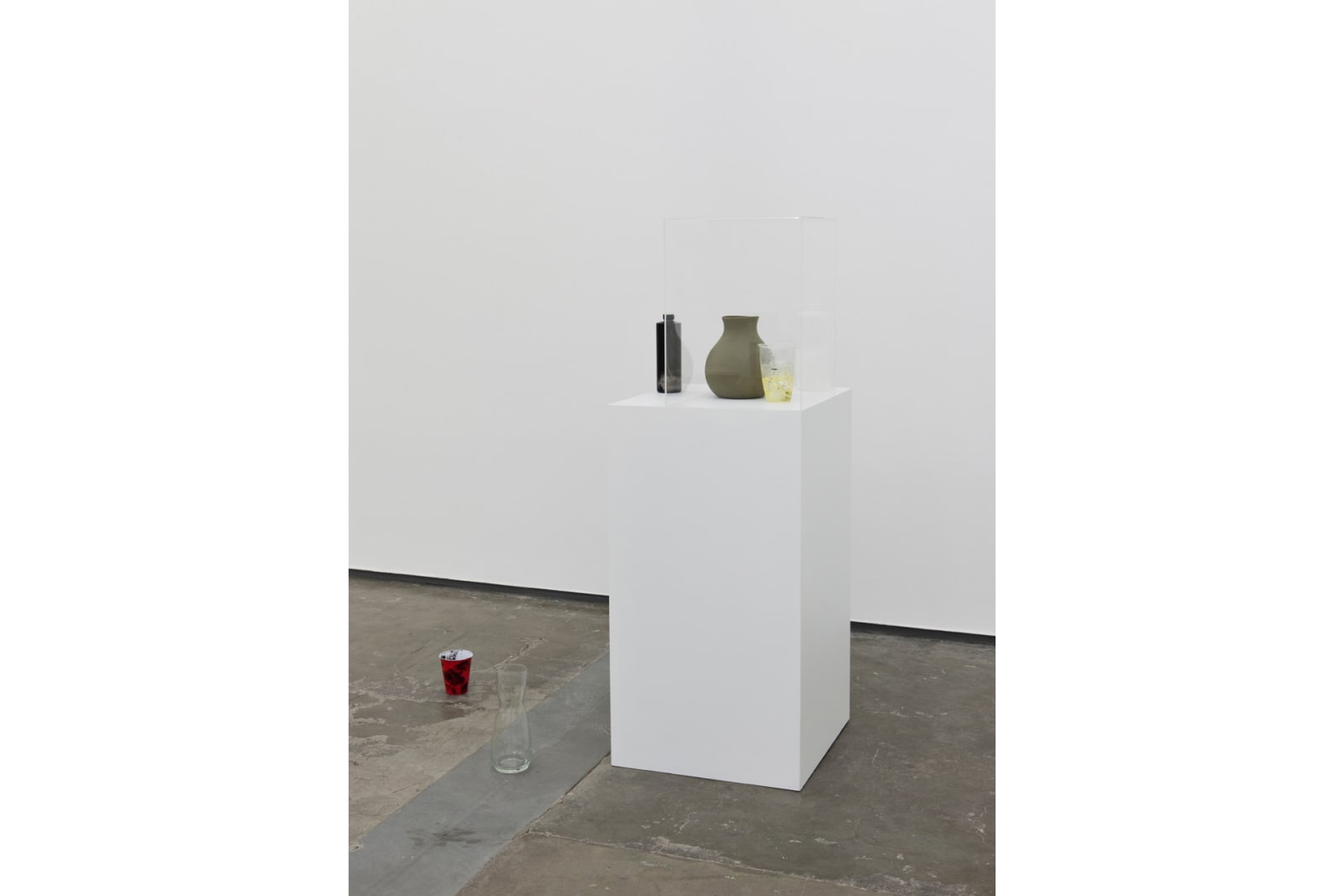
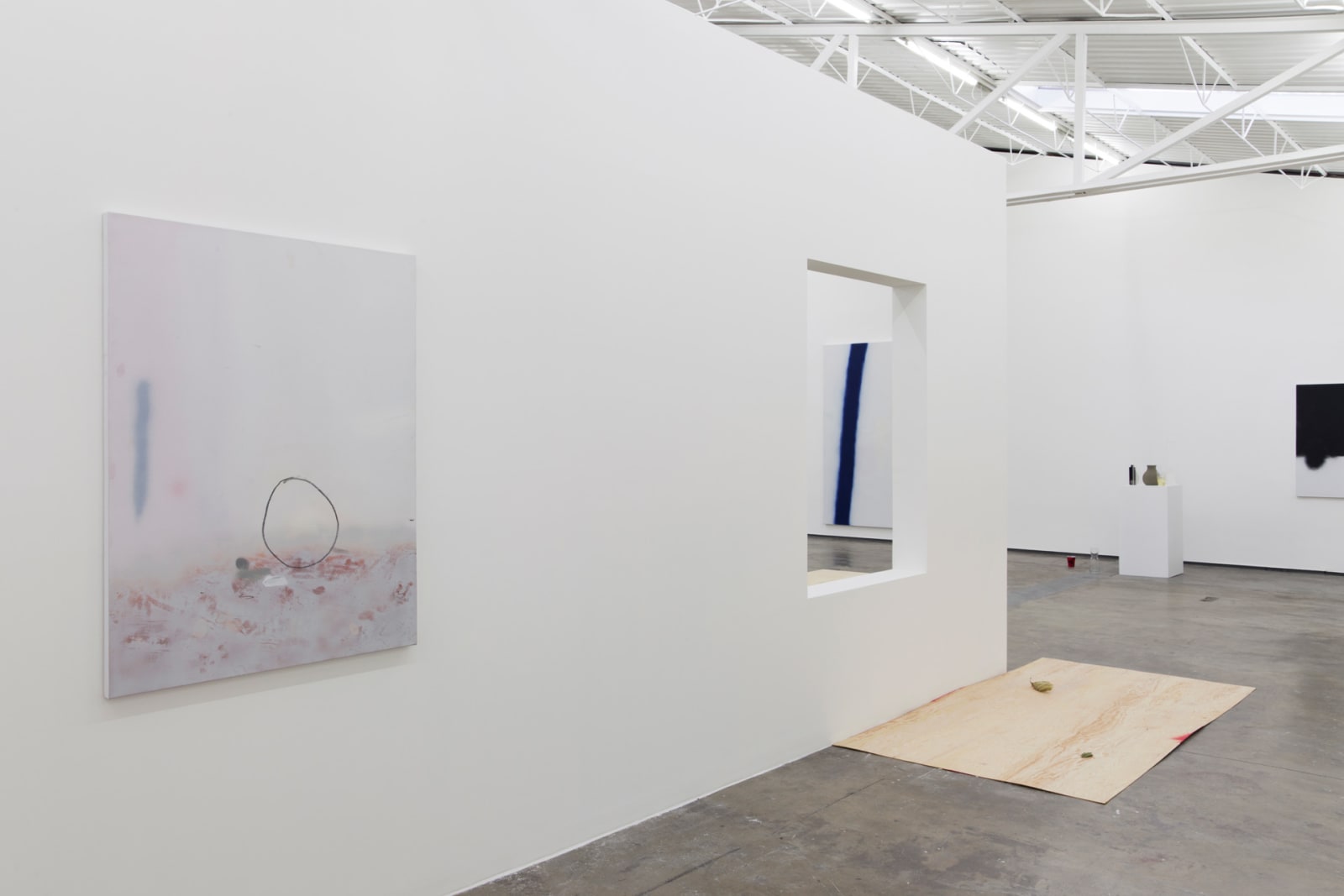
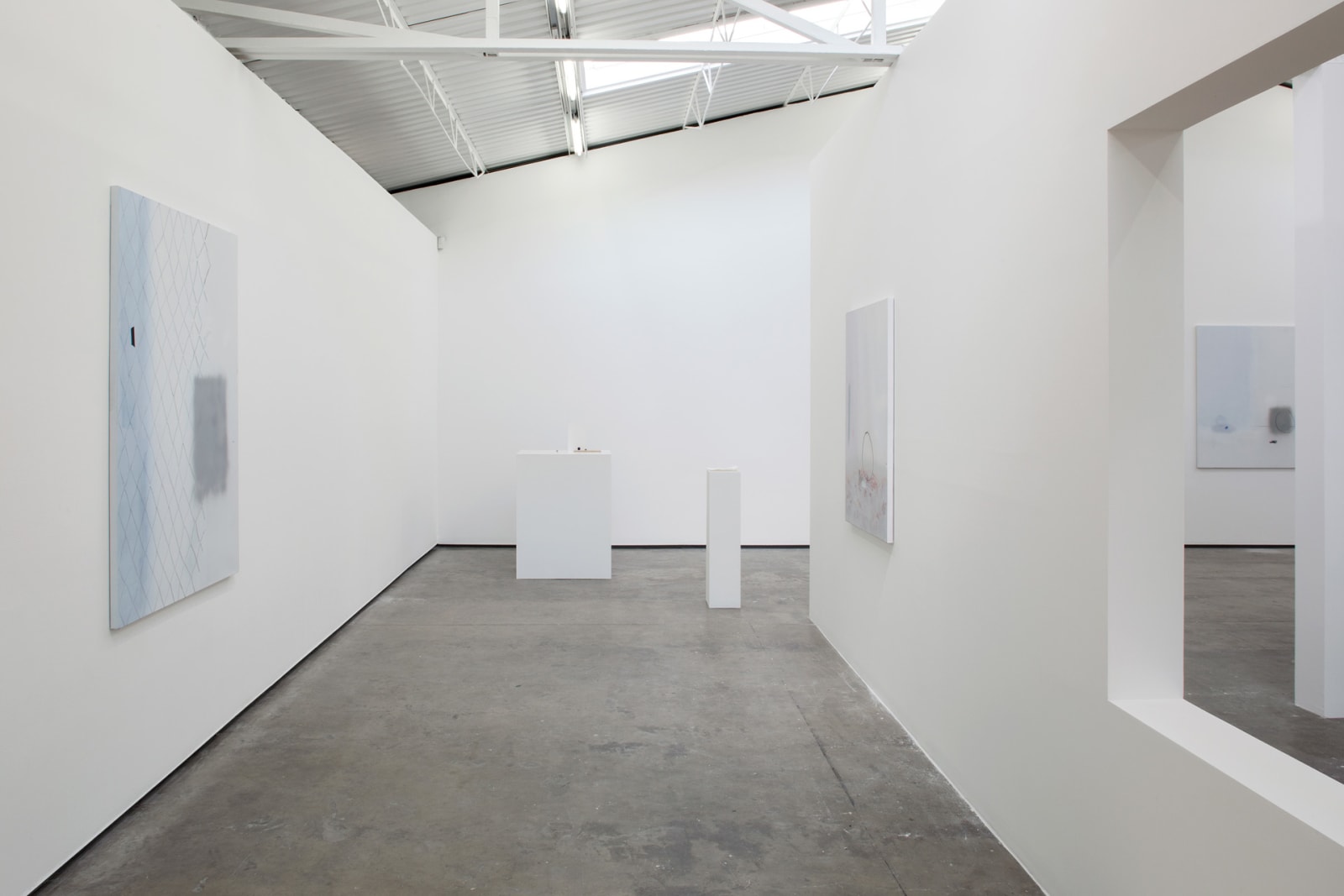
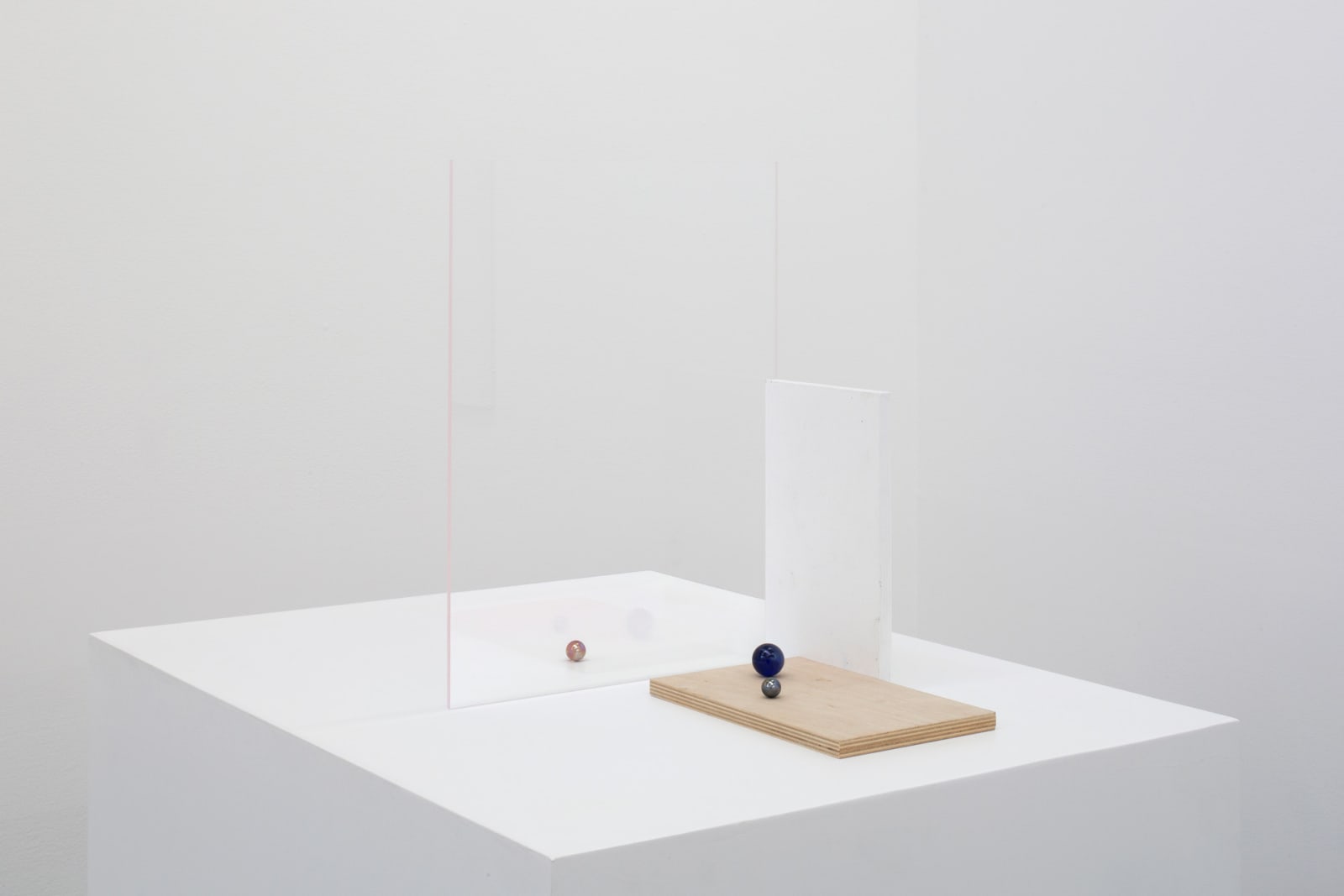
We know not through our intellect but through our experience.
– Maurice Merleau-Ponty
Since the beginning of thought, reason and perception have embodied a profound polemic. Within this debate about the relationship between the senses and rationality, Julius Heinemann’s artistic practice suggests a study of different layers of perception, understood as a key for the relationship between the subject and reality.
Perception is a crucial element of Heinemann’s work, as he proposes a practice that distances us from the occidentalization of knowledge – in which an object is limited to its mere function within the rational discourse – and approximates us to the object and the world through an unmediated experience beyond the boundaries of reason.
As Paul Valéry, who once said that a bad poem is one that vanishes into meaning, Julius Heinemann is not interested in an art work that is caught in linguistic categories, intellectual attributions of meaning and interpretations, but rather privileges the primacy of perception, presence and nowness. The act of seeing and allowing for seemingly random constellations of primary elements such as light, shadow, paint, shape, gesture, trace, space and simply things to interplay and generate a merely subjective ephemeral experience, without giving it a name, becomes vital. Let things just be what they are: things. No further symbolization. What you see, is what you see in that very moment. And what you don’t see might reveal itself next.
The exhibition title “Dinge und Undinge (o las formas de las cosas)” – which not by chance incorporates both, German and Spanish speech thus becoming partly a visual element for those who don’t speak both languages – suggests this thin line between the concrete and the abstract,
the identifiable and inconceivable: both existing inseparably.
In this exhibition Heinemann proposes an immersive setting, consisting of paintings, objects, spatial interventions and loose, seemingly accidental shapes as a commentary towards the act of seeing as well as the act of the production of an image, while considering the former. How do we absorb light, how do we focus an object, how do the surrounding elements as well as our past and our present integrate into the imagery? And what do we actually see in physical terms? Is this shade part of the painting or an actual shadow falling onto the canvas? And is there a real difference if the perceived result is the same?
Given the fact that we might not be able to elucidate this difference, we might consider Wittgenstein’s advice, accept linguistic limitations and just perceive:
Whereof one cannot speak, thereof one must be silent.
– Ludwig Wittgenstein, Tractatus Logico-Philosophicus
By Polina Stroganova
Photos 5, 6, 7, 11, 12, 14, 17, 18 and 19: Ramiro Chaves
No sabemos a través de nuestro intelecto sino a través de nuestra experiencia
– Maurice Merleau-Ponty
Desde el inicio de la historia del pensamiento humano, los conceptos de razón y percepción han sido objeto de profunda polémica. Es dentro de este debate acerca de la relación entre la esfera de lo sensible y la racionalidad, que la práctica artística de Julius Heinemann sugiere una exploración de las diversas capas de la percepción, entendidas como la clave de la relación entre el sujeto y la realidad.
La percepción es un elemento crucial en el trabajo de Heinemann, puesto que propone una práctica artística que nos aleje de la occidentalización del conocimiento – en la cual un objeto es limitado a su mera función práctica dentro del discurso racional – y que nos acerque al objeto y al mundo a través de una experiencia sin mediación, que traspase la frontera de la razón.
Así como alguna vez dijo Paul Valéry, un mal poema es aquel que se desvanece en el significado; Julius Heinemann no está interesado en la obra de arte coptada por las categorías lingüísticas, atribuciones intelectuales o interpretaciones, sino que privilegia la primacía de la percepción, presencia e inmediación. El acto de ver y permitir constelaciones aparentemente aleatorias de elementos como luz y sombra, pintura y figuración, gesto y trazo, vacío y objetos simples para interactuar y generar una experiencia efímera meramente subjetiva sin darle un nombre, se vuelve vital en la obra de Heinemann. Que las cosas sean lo que son: cosas. Sin más simbología. Lo que ves, es lo que ves en ese mismo instante. Y lo que no veas podría revelarse después.
El título de la muestra: “Dinge und Undinge (o las formas de las cosas)” que no por casualidad incorpora tanto alemán como español, se convierte así en un elemento visual para aquellos que no hablan ambos idiomas – sugiere esta delgada línea entre lo concreto y lo abstracto, lo identificable y lo inconcebible: ambos existen inseparablemente.
En esta exposición, Heinemann propone una instalación envolvente, que consiste en pinturas, objetos, intervenciones espaciales de formas aparentemente accidentales o sueltas; un doble comentario acerca del acto de ver y al mismo tiempo el acto artístico de producir una imagen considerando su percepción.
¿Cómo percibimos la luz? ¿Cómo enfocamos un objeto? ¿Cómo influyen los elementos circundantes, nuestro pasado y nuestro presente, todo integrado en la imagen? ¿Qué vemos realmente en términos físicos? ¿Es ese tono parte de la pintura, o es una sombra real que cae sobre
el lienzo? Y ¿existe una diferencia real si el resultado percibido es el mismo?
Dado que podríamos no ser capaces de dilucidar esta diferencia, sería posible considerar el consejo del filósofo Ludwig Wittgenstein, aceptar las limitaciones lingüísticas y solo percibir: “De lo que no se puede hablar se debe callar.
– Ludwig Wittgenstein, Tractatus Logico-Philosophicus
Por Polina Stroganova
Fotos 5, 6, 7, 11, 12, 14, 17, 18 and 19: Ramiro Chaves




‘an action
distress over parliament to mark the occasion of its assent to acts of official censorship, conversion and contempt of truth, the bearing of false witness and assassination by stealth under cover of Royal Charter…
will take place during Sunday, 1st May, 1983’
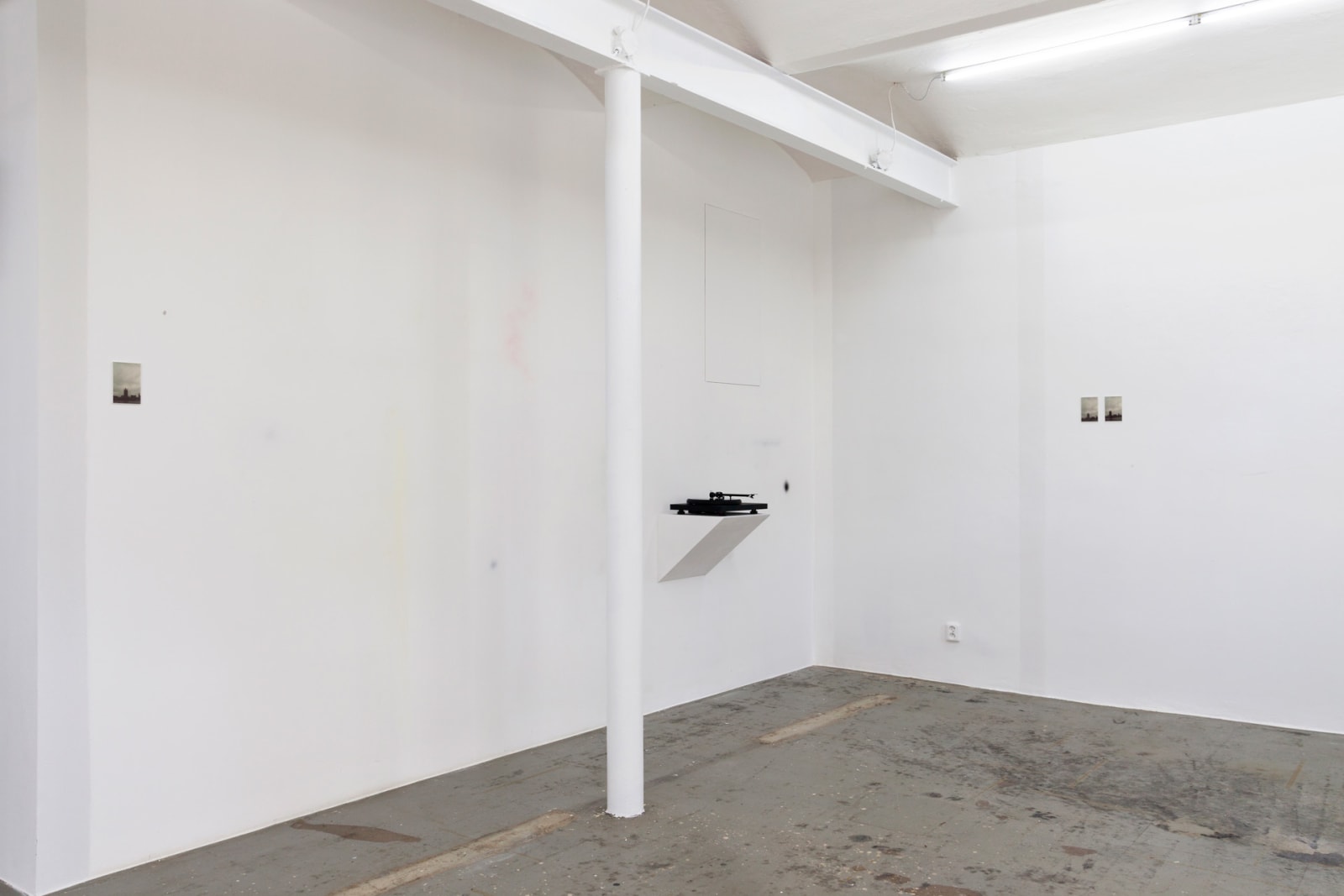
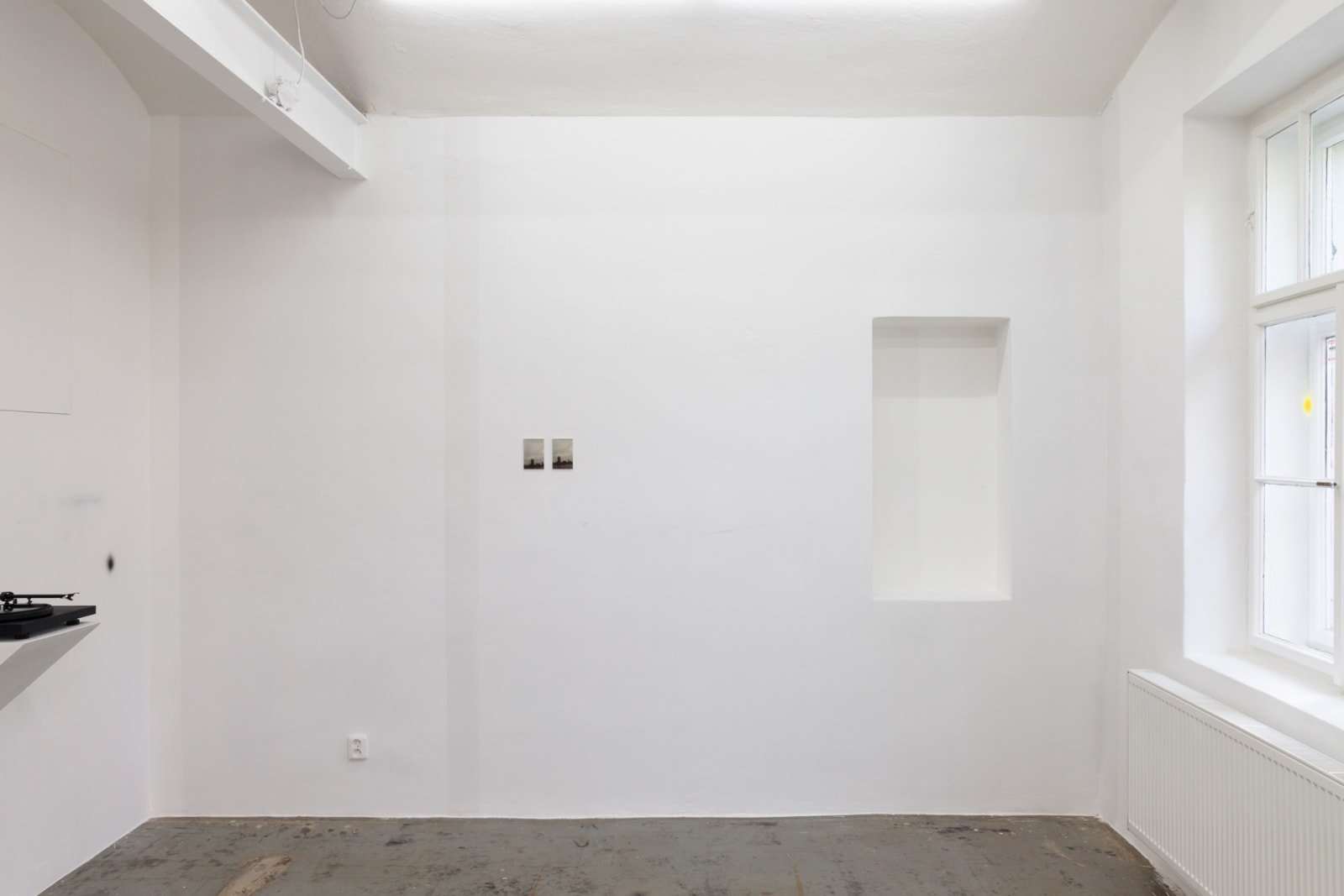
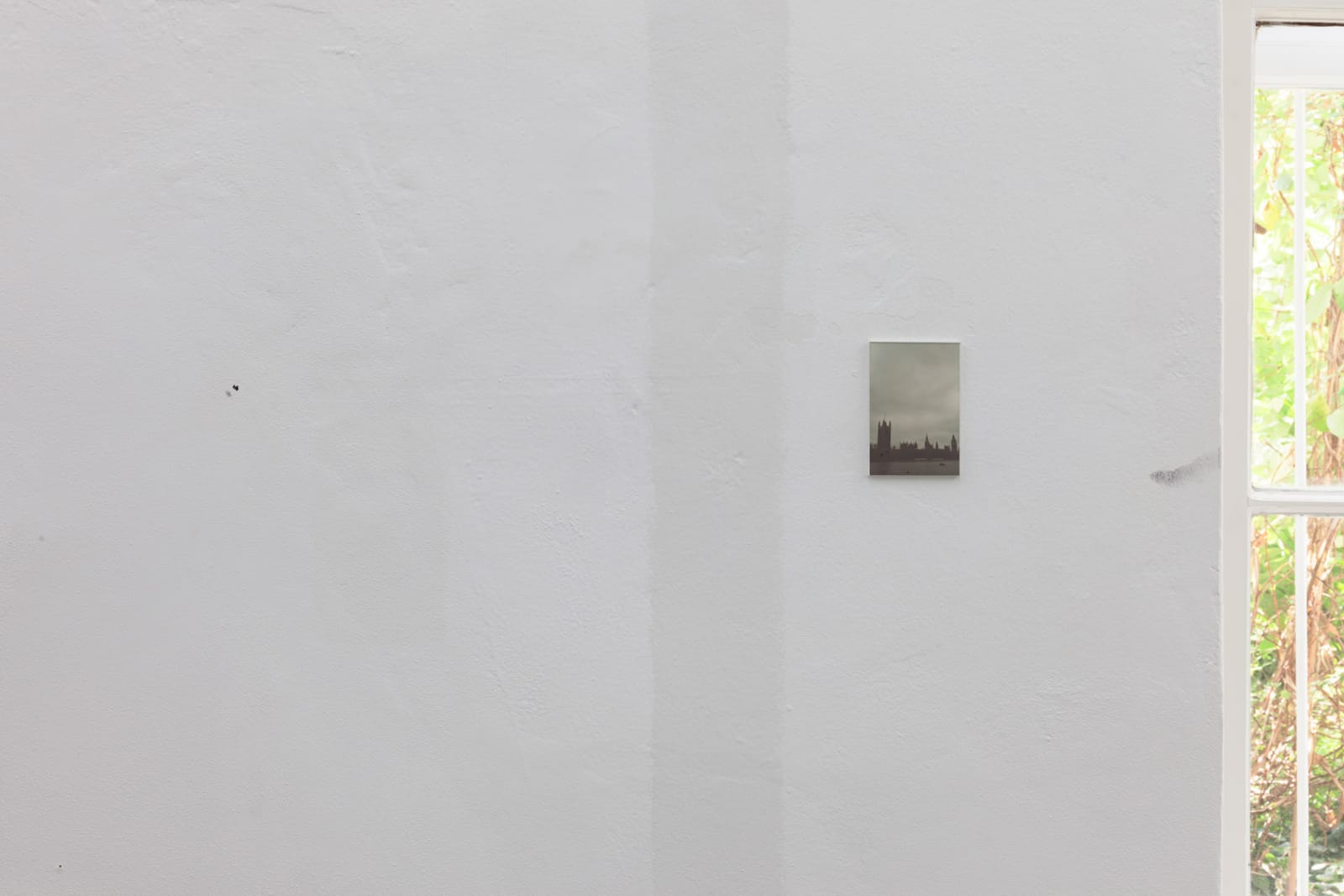
Distress Over Parliament curated by Gareth Bell-Jones takes its title from John Latham's rarely acknowledged 1983 happening of the same name. Photographic documentation of Latham's performance, never previously exhibited, provides the centrepiece of the show. Presented alongside are artworks by Athanasios Argianas, John Baldessari, Julius Heinemann, and Rachel Reupke, each resonating and existing in intuitive dialogue with Latham's work.
John Latham (1921-2006) is one of the few genuine radicals of post-war British art. His artwork extended the boundaries of nearly every artistic genre conspicuous in Western art, and from the 1960s his work became increasingly driven by theoretical questionings. He believed the non-linguistic media of art were the keys to resolving society's conflicted relationships with objects, money and possessions. He proposed a shift towards a time-based cosmology to compensate for our sensory, spatially dominated view of the world. Latham passionately believed that this would free the mind, language and pedagogy from dangerous specialisations and inevitable divisions. He developed a theory of time – Flat Time – relating the notions of time-base, passing the time and the atemporal.
The work distress over parliament is an action, which characteristically proves hard to pin down. In a publicised event on Mayday 1983, John shot two maritime flares over the top of the Houses of Parliament. The event was produced in response to the Arts Council of Great Britain's refusal to take his time-based ideas seriously and coincided with the aftermath of the UK's involvement in the Falklands War, particularly Margaret Thatcher's defence of the controversial sinking of the Argentine cruiser the Belgrano to significant loss of life. This deliberately controversial action, intended to bring attention to the issue, was barely noticed. As his one-time partner, Barbara Steveni has stated: 'Sometimes when John was attempting to be controversial no-one noticed, and at times when he thought he was making something innocuous, people were outraged'. The small photographic prints documenting this act, never previously exhibited, provide the backdrop to the exhibition.
The action can be understood as a political act of protest but should also be understood within the broader context of Latham's practice. Presented at lítost alongside the piece are artworks by artists that resonate and exist in intuitive dialogue with Latham's work. Although Latham and John Baldessari followed different trajectories in conceptual art, in work Throwing Three Balls in the Air (Best of 36 Attempts), (1973) Baldessari reaches a similar aesthetic end to Latham from an entirely different thought process: Baldessari's red balls in the sky and Latham's red flares in the Air, poetic thought experiments, transient events captured on film.
Latham is well known for his work in spray paint, and it is logical to consider the flares of distress over parliament as an event-based painting in four dimensions. A full gallery mural installation by Julius Heinemann responds to this understanding. Heinemann considers his mural interventions as echoes of events in time, recording the different layers and shifting experience of our surroundings.
A new sound-based work by Athanasios Argianas provides an overtly durational aspect to the exhibition. Argianas has an interdisciplinary practice, which concerns itself with translations between media and the production of effect and hybridity. Finally, Rachel Reupke's artwork often operates within the interplay of the still frame and moving imagery. In the video work Infrastructure, fleeting moments of human drama punctuate fixed shots of major infrastructural hubs. These almost imperceptible gestures or acts are framed by and situated within a broader indifferent and unceasing context.
In 1983 John Latham's distress over parliament was an ultimately futile gesture of activism, heavily reliant on an esoteric and conceptual understanding on the nature of time. This radical act of protest against the British Government would be impossible to recreate in the current climate, and all that remains are the invitation and small snapshots with which Latham recorded the event. While the present-day disorder within the UK parliament persists, the unknowing and uncaring reception of this action continues to resonate.
Distress Over Parliament is conceived in a cooperation with Flat Time House, London, and the opening weekend takes place in conjunction with a gallery sharing initiative Friend of a Friend Prague 2019.
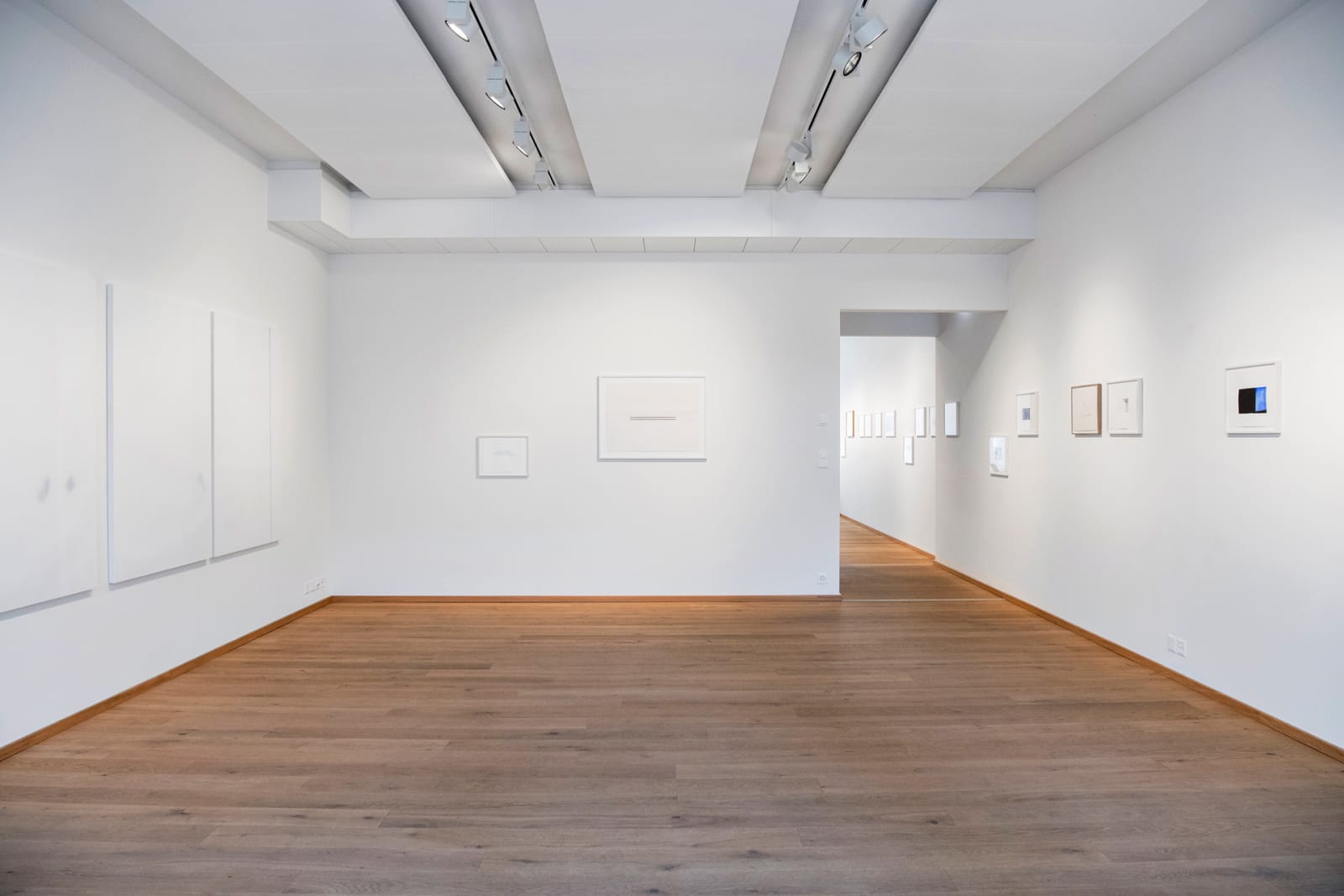
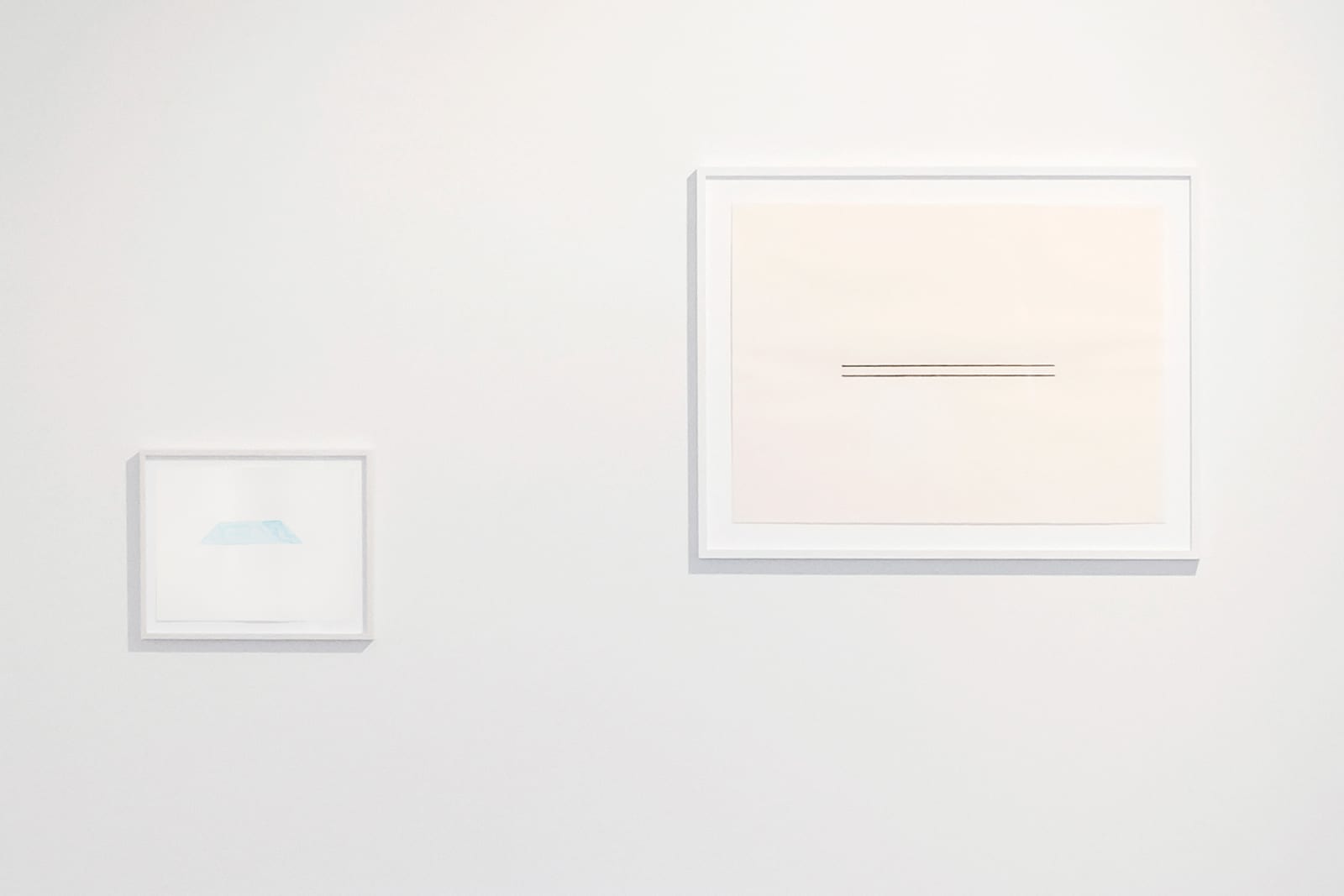
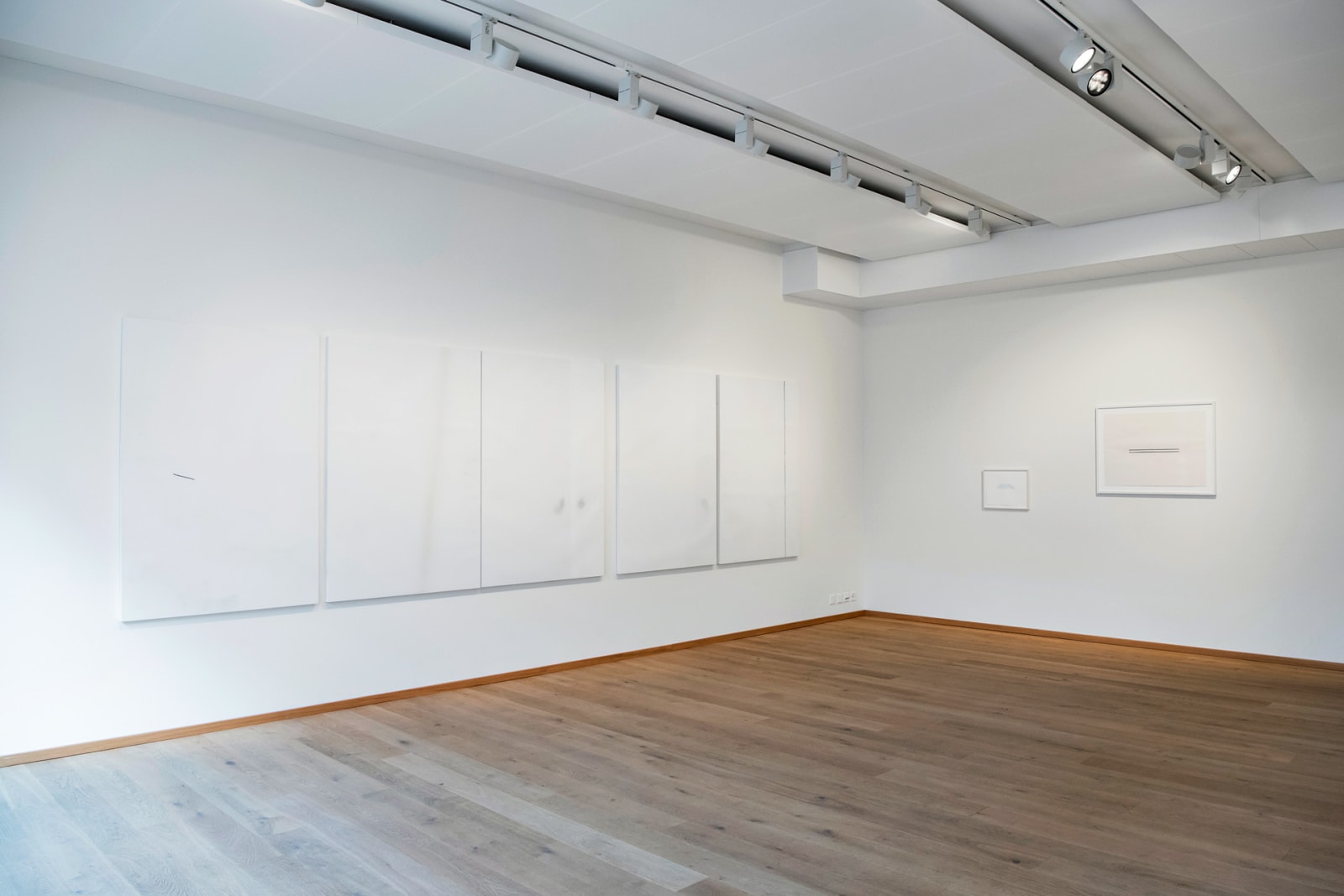
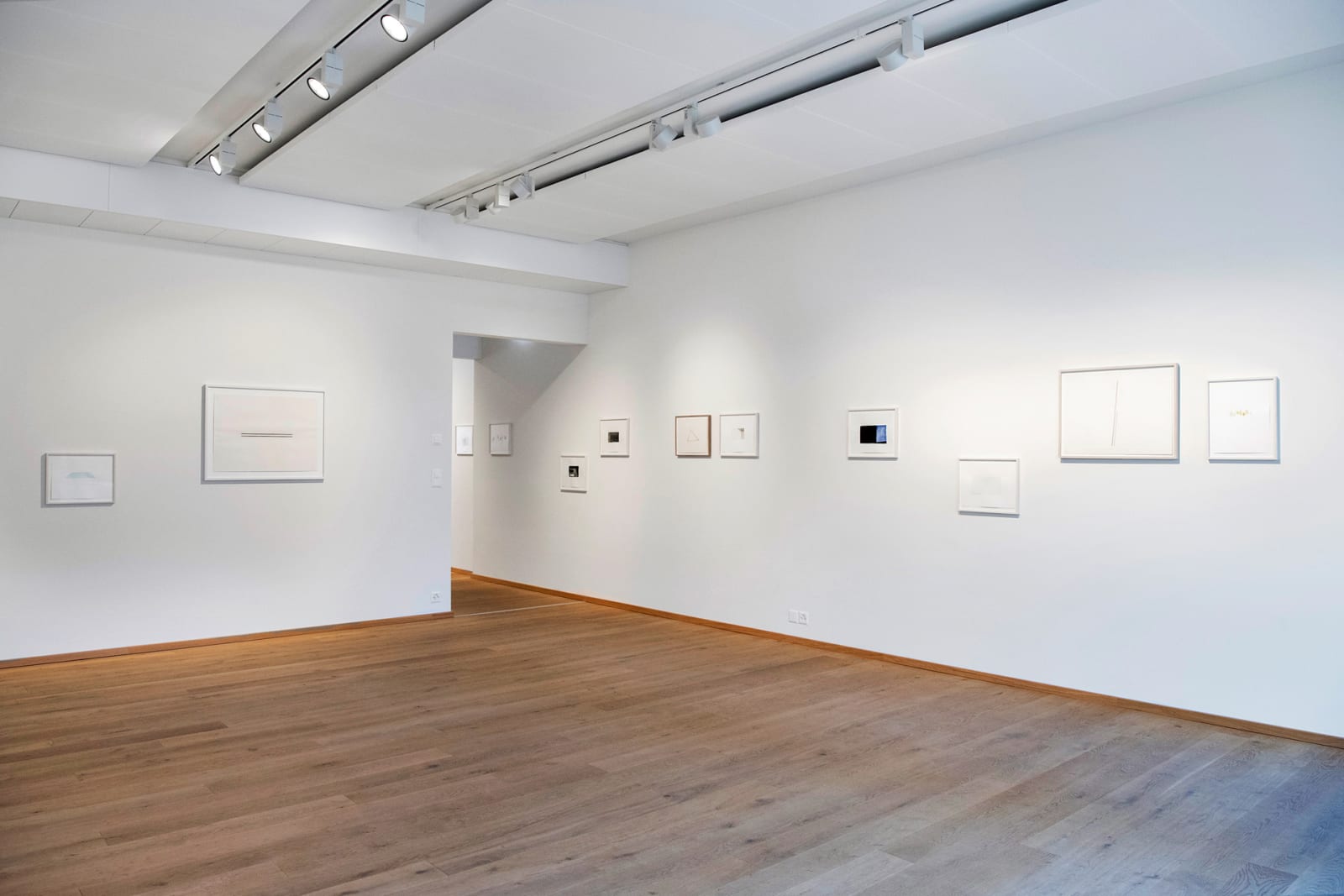
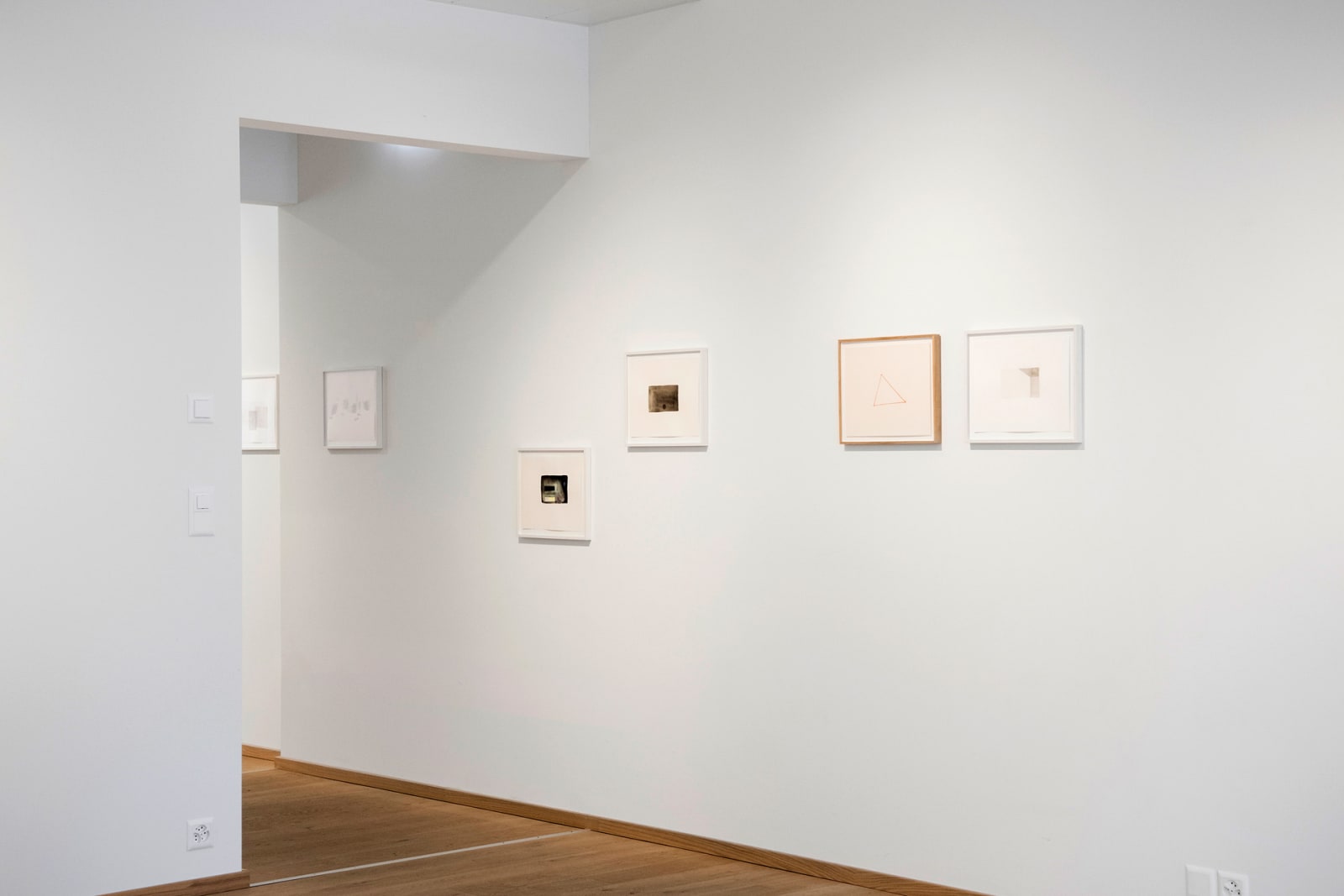
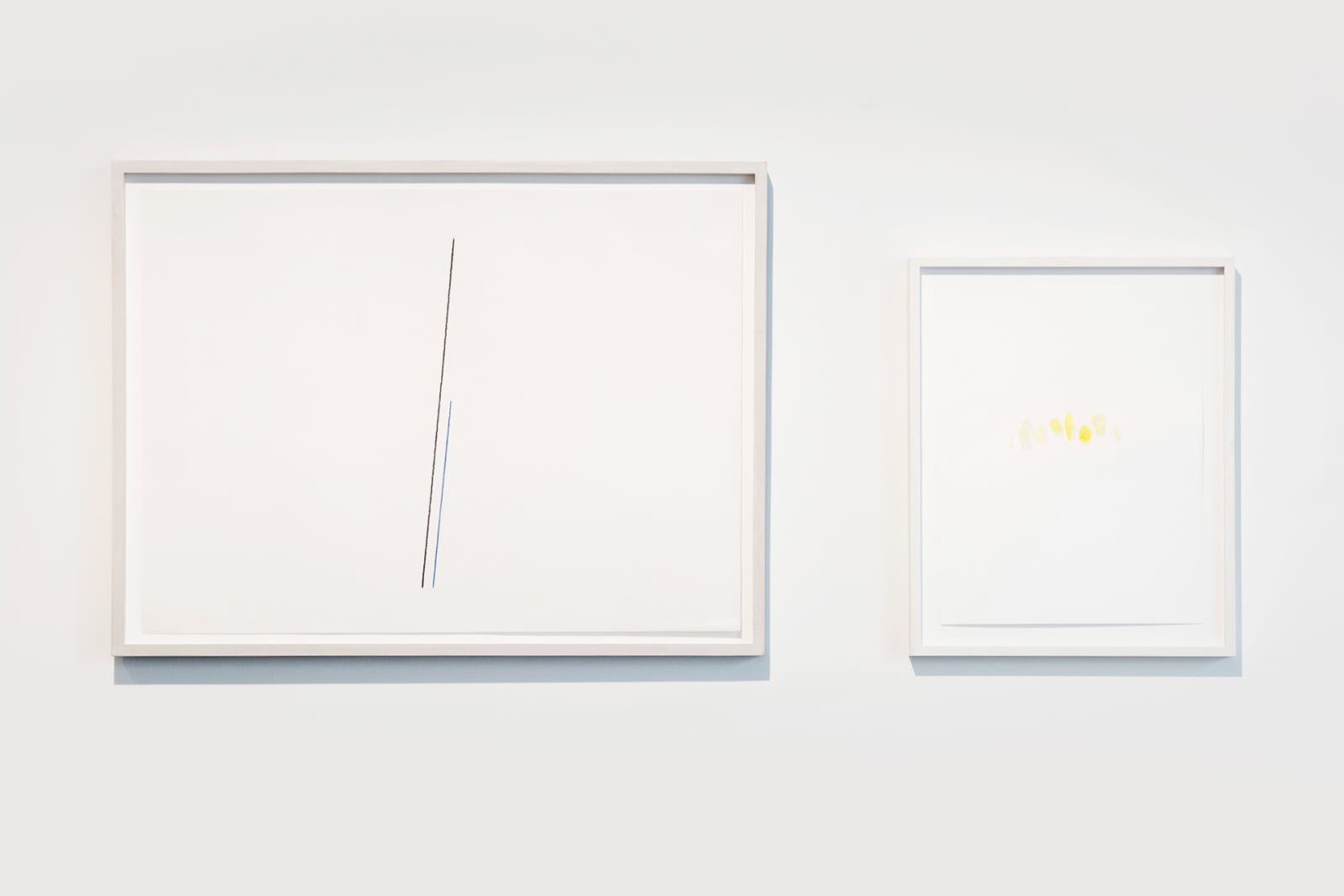

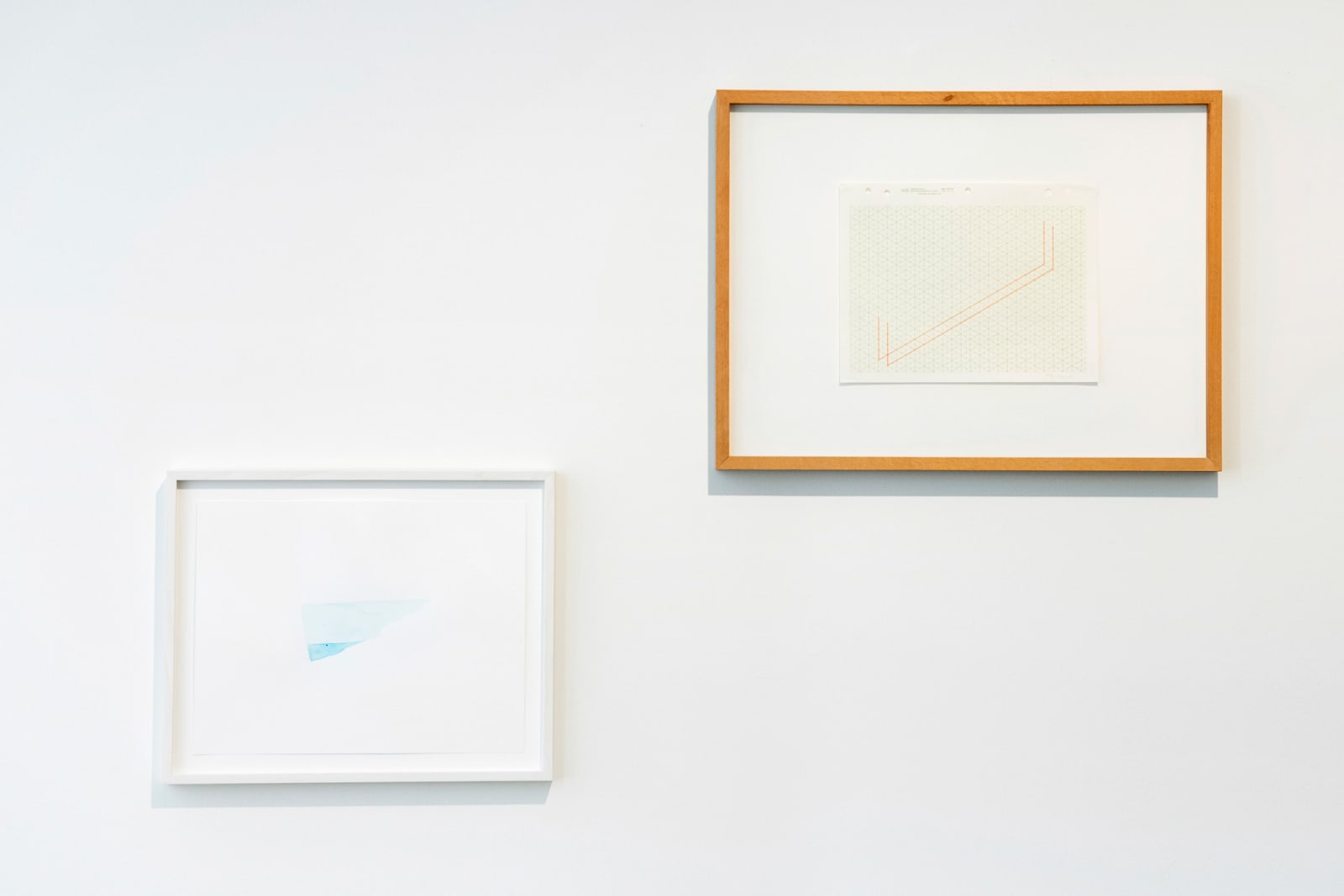
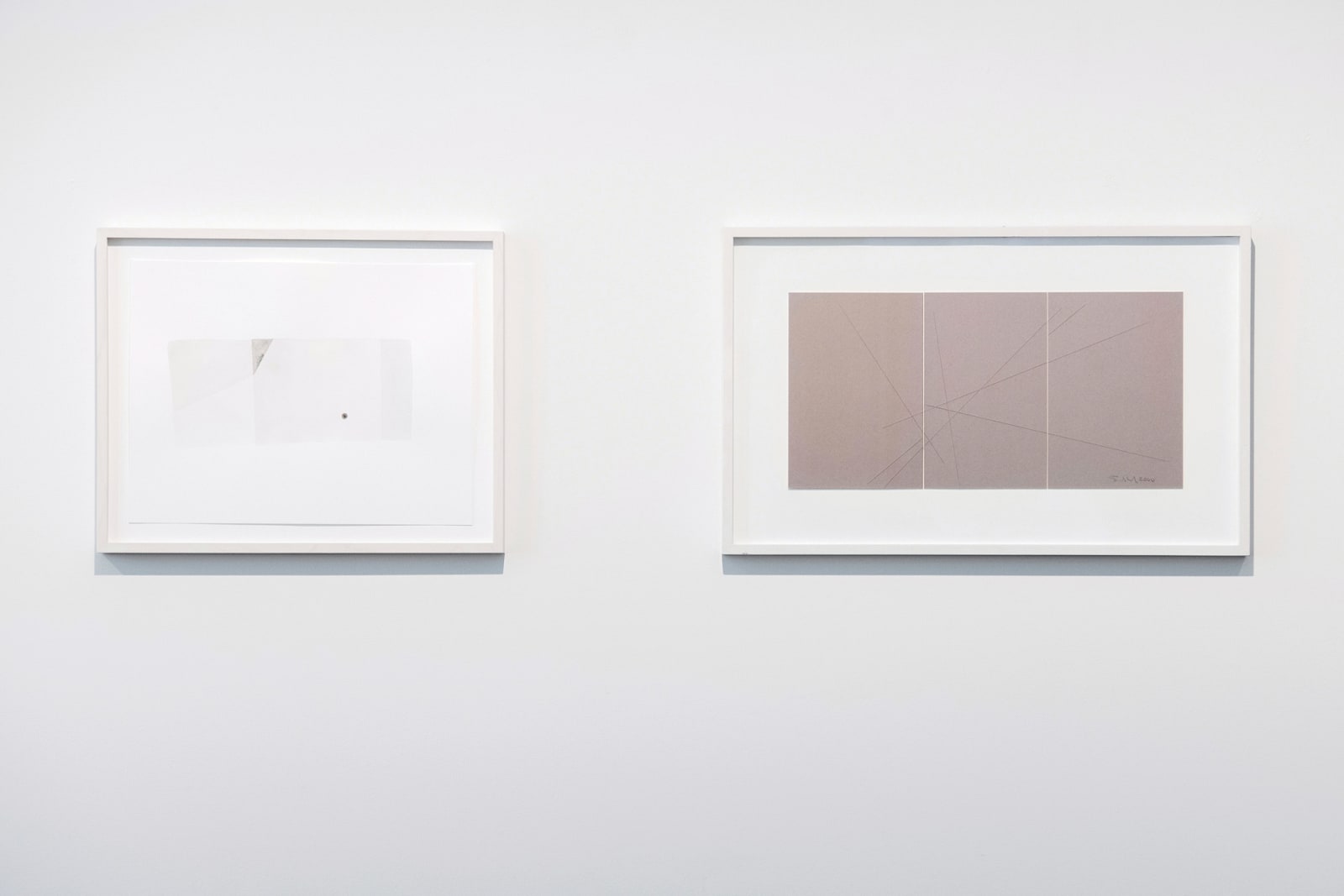
Our fall exhibition is dedicated to the artists Julius Heinemann and Fred Sandback. Julius Heinemann, born 1984 in Munich and now based in Berlin, investigates in his work the physical, neurological and cultural structures that traditionally underlie the perception of the world. Fred Sandback (1943-2003), pioneer of the American Minimal Art movement, had a decisive influence on art history through his spatial sculptures and drawings, dedicated to the relationship between line and space, between abstraction and reality. Sandback, like few other artists before him, knew how to establish a relationship between work and exhibition space; an aspect that also plays an important role in Heinemann’s work.
The starting point of the exhibition is Julius Heinemann’s work ‚Panorama‘, a five-part canvas in which not only the work itself, but also the distances between the canvases play an essential part. Here the formal reference to Fred Sandback becomes most apparent. However, Heinemann breaks with the formal stringency of Sandback through his use of subtle color surfaces and traces that vibrate in interrelation with light and space.
The second part of the exhibition is dedicated to Julius Heinemann’s watercolors, which enter into dialogue with selected works on paper by Fred Sandback from the 1970s and 80s. On the one hand, there is Sandback as a theoretician of space, oriented entirely towards a clear methodology and conceptualism, on the other hand Heinemann, who proceeds phenomenologically and is guided by the inherent properties of watercolor and the painting process. Despite the different approaches, the focus of both artists in reduction and concentration becomes the uniting factor.
Unsere Herbstausstellung ist den Künstlern Julius Heinemann und Fred Sandback gewidmet. Julius Heinemann, 1984 in München geboren und in Berlin tätig, untersucht in seinen Arbeiten die physischen, neurologischen und kulturellen Strukturen, die der Wahrnehmung der Welt traditionell zugrunde liegen. Fred Sandback (1943-2003), Pionier der amerikanischen Minimal Art Bewegung, prägte die Kunstgeschichte massgeblich durch seine Raumskulpturen und Zeichnungen, in denen er das Verhältnis von Linie und Raum, von Abstraktion und Realität, untersuchte. Sandback verstand es wie wenige andere Künstler vor ihm, einen Bezug zwischen Werk und Ausstellungsraum herzustellen; ein Aspekt, der auch für Heinemann eine massgebliche Rolle spielt. Den Ausgangspunkt der Ausstellung bildet Julius Heinemann’s Werk “Panorama”, eine fünfteilige Leinwand, in dem nicht nur das Werk selbst, sondern auch die Abstände zwischen den Leinwänden zu einem essentiellen Teil der Arbeit werden. Hier wird der formale Bezug zu den Arbeiten Fred Sandbacks sichtbar, wobei Heinemann die formale Stringenz durch subtilen Farbflächen und -spuren aufbricht, die in vibrierender Wechselbeziehung zu Licht und Raum stehen. Ein Schwerpunkt der Ausstellung liegt auf den Aquarellen Julius Heinemanns, welche mit ausgewählten Arbeiten auf Papier von Fred Sandback aus den 1970er und 80er Jahren in Dialog treten. Auf der einen Seite findet sich Sandback als Theoretiker des Raumes, der sich ganz an klaren Methoden und Konzepten orientiert, auf der anderen Seite Heinemann, der phänomenologisch vorgeht, und sich vom verwendeten Medium und dem Malprozess leiten lässt. Trotz den unterschiedlichen Vorgehensweisen wird dabei das Interesse beider Künstler an einer Reduktion und Konzentration auf wesentliche Elemente deutlich.

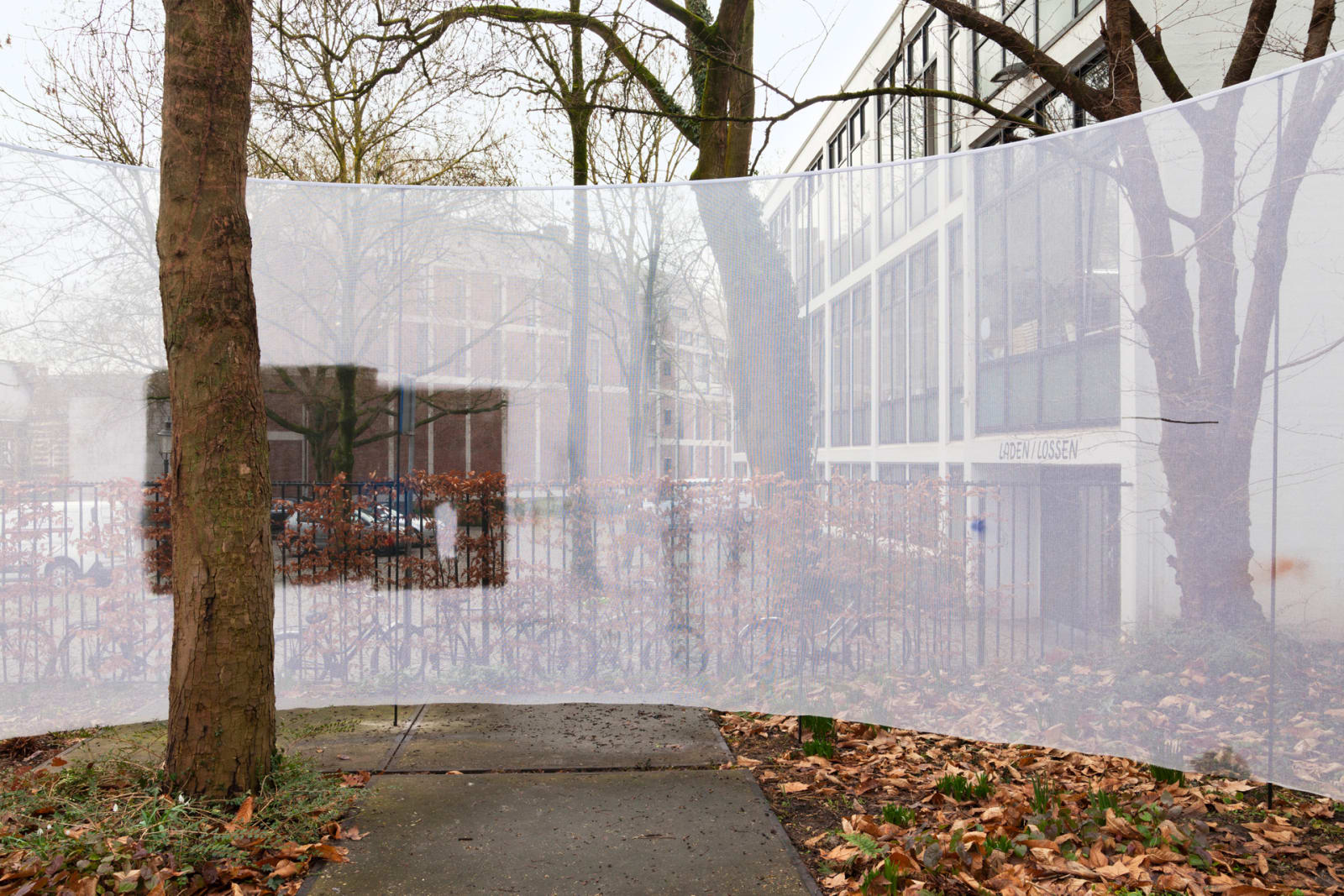
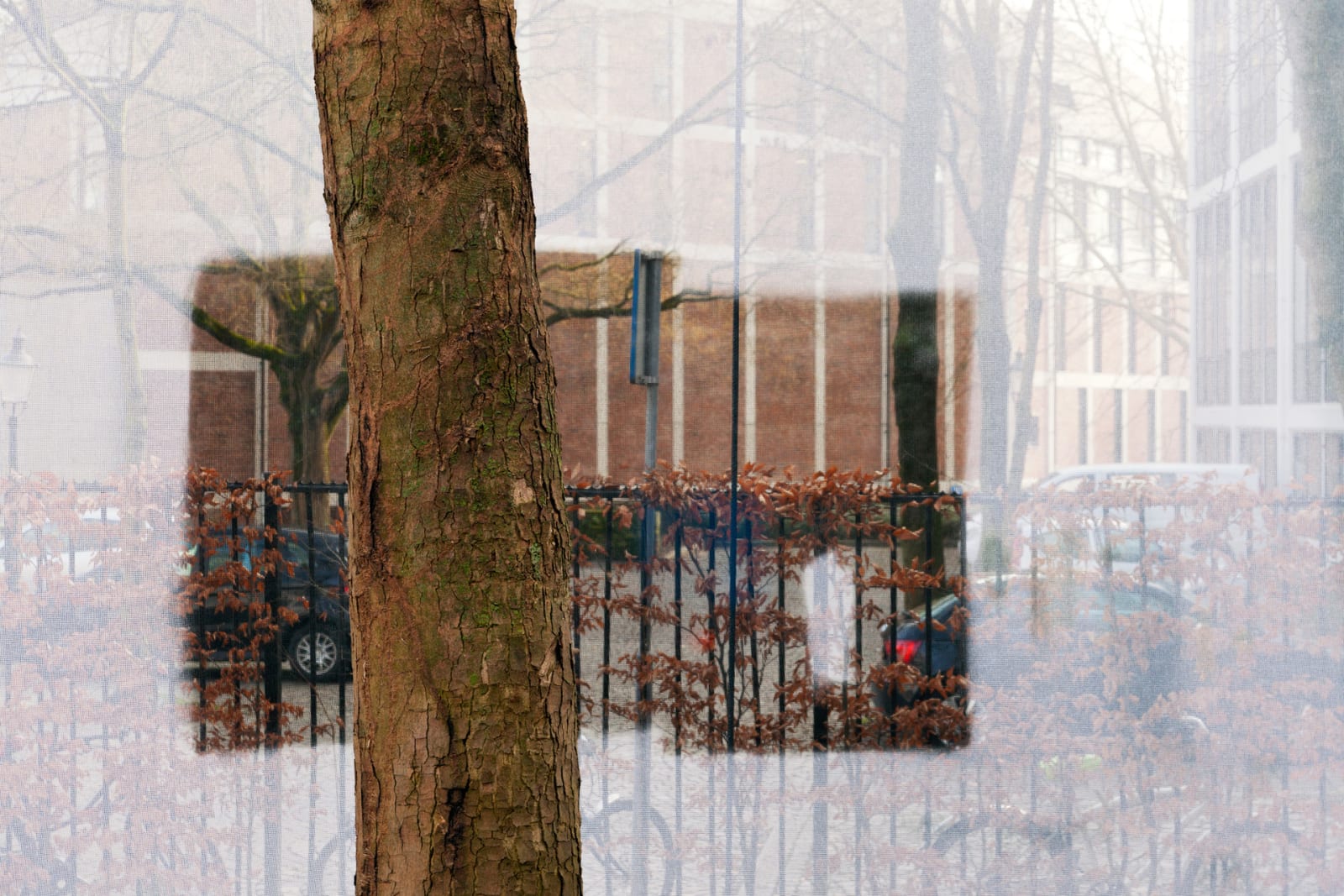
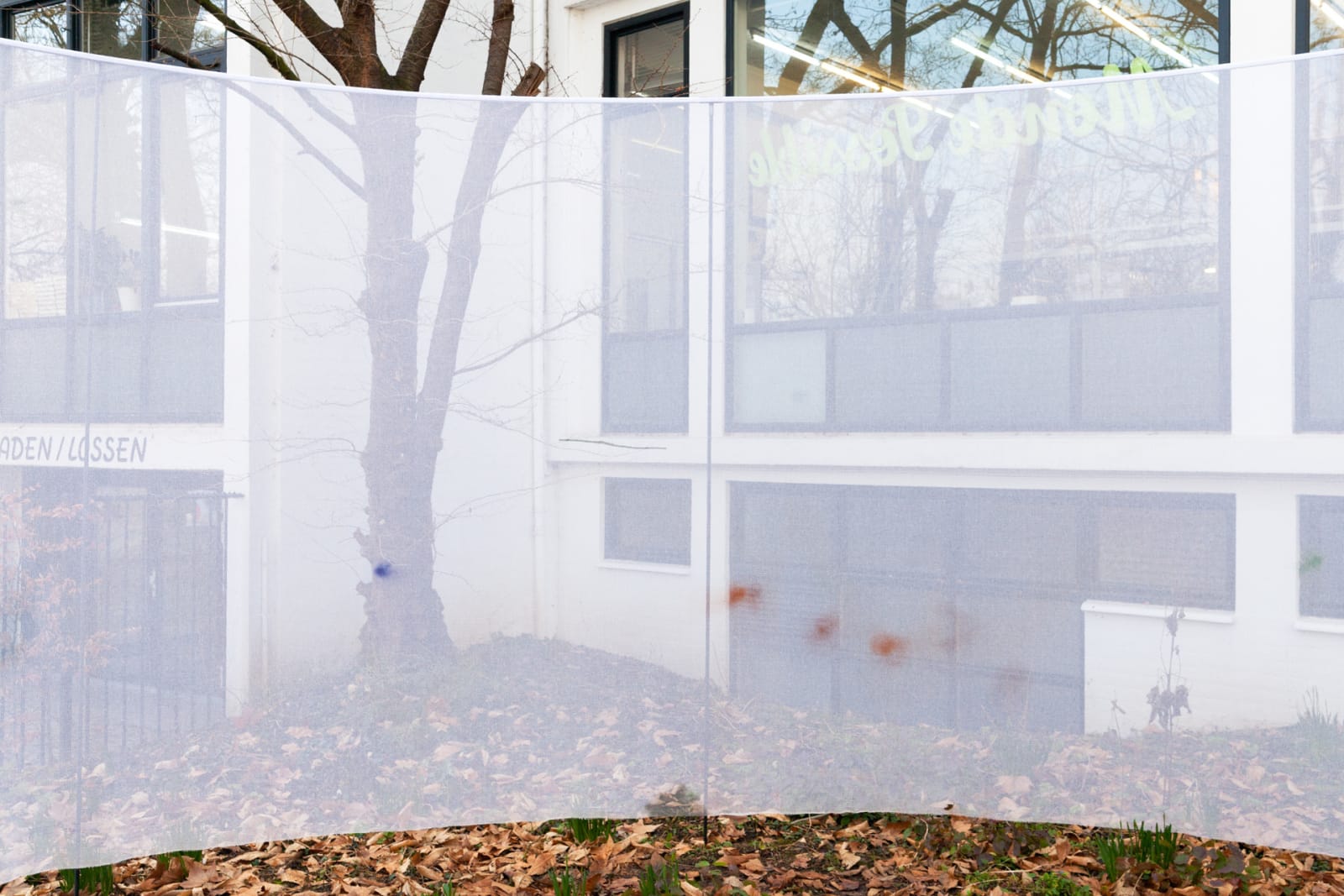
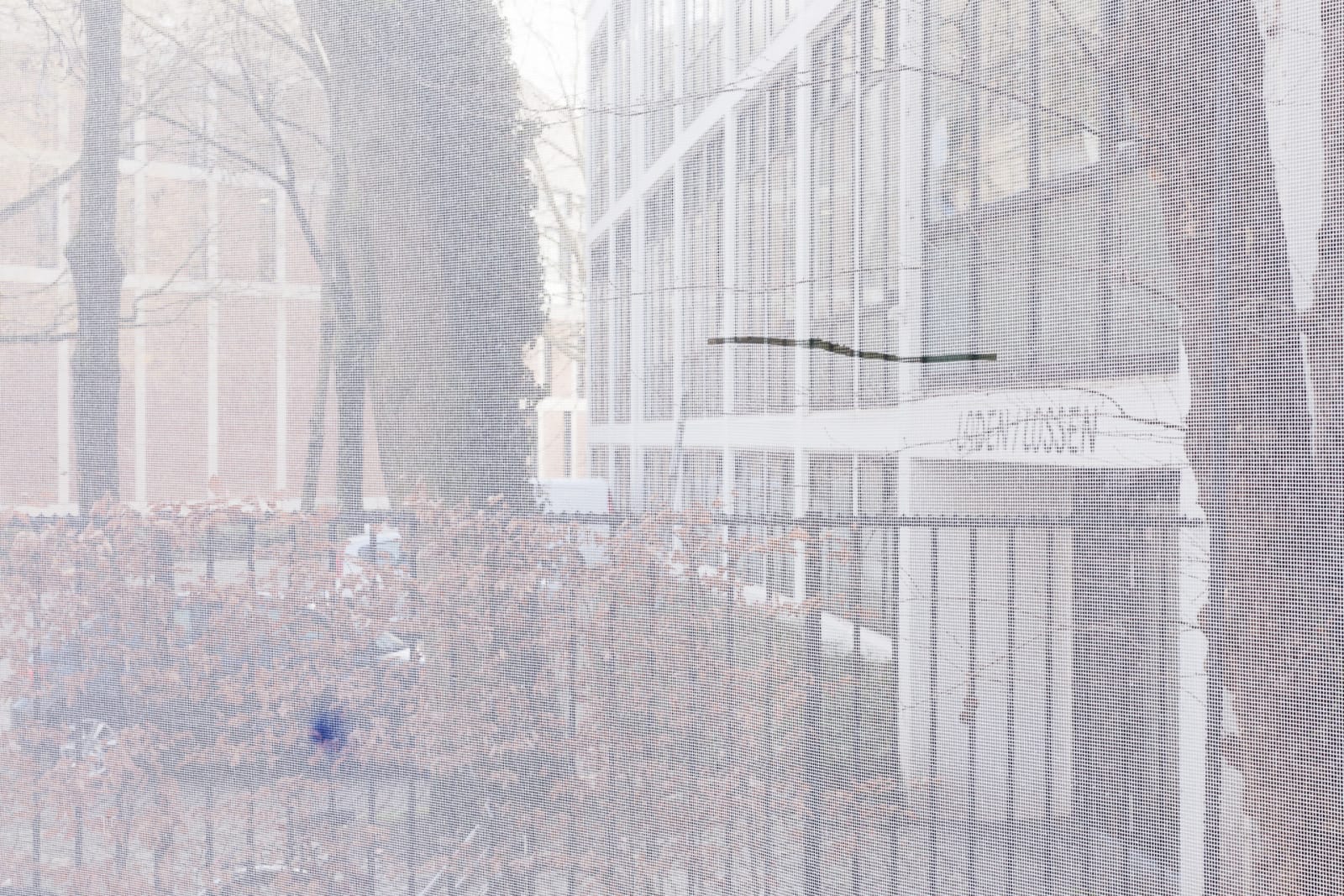
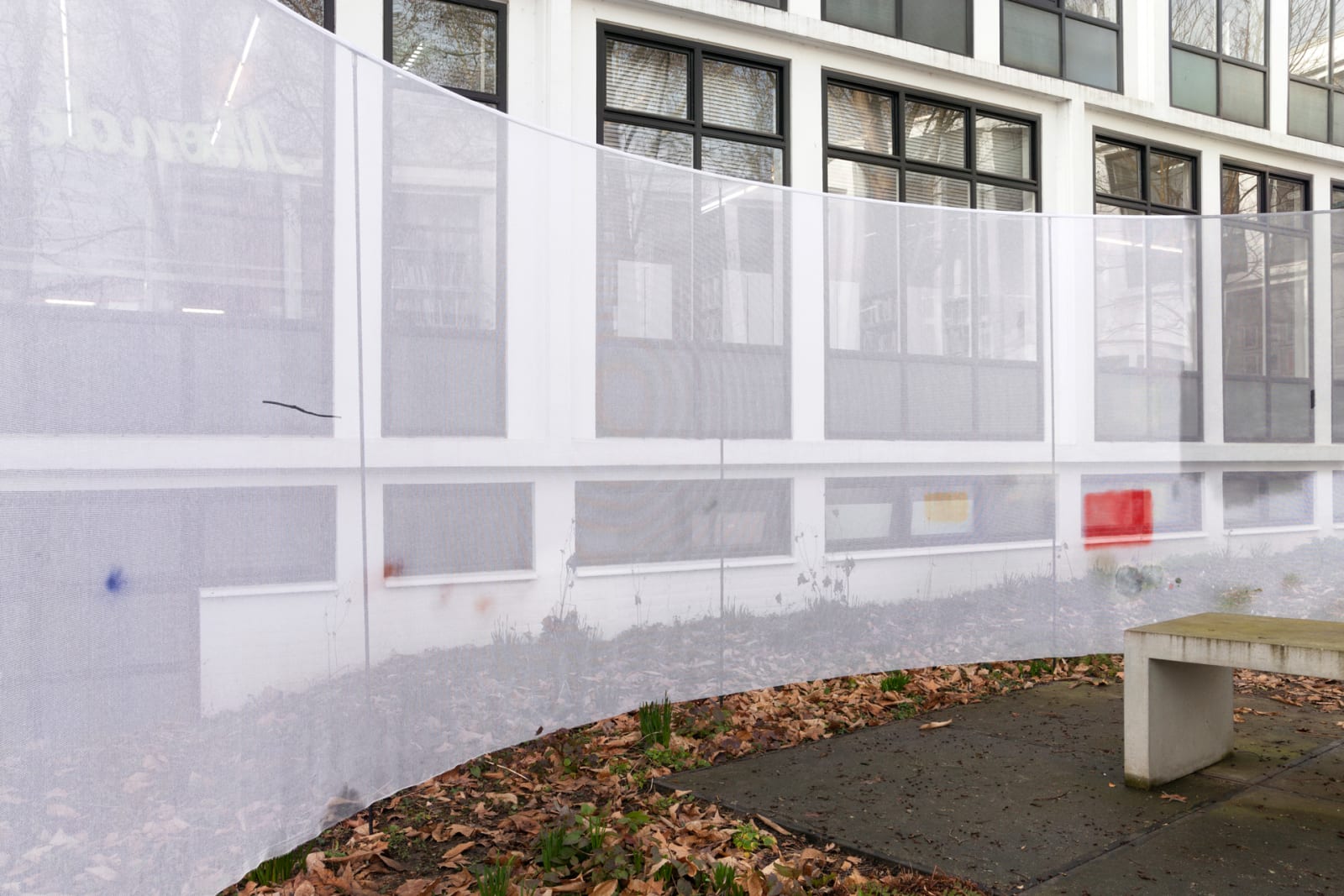
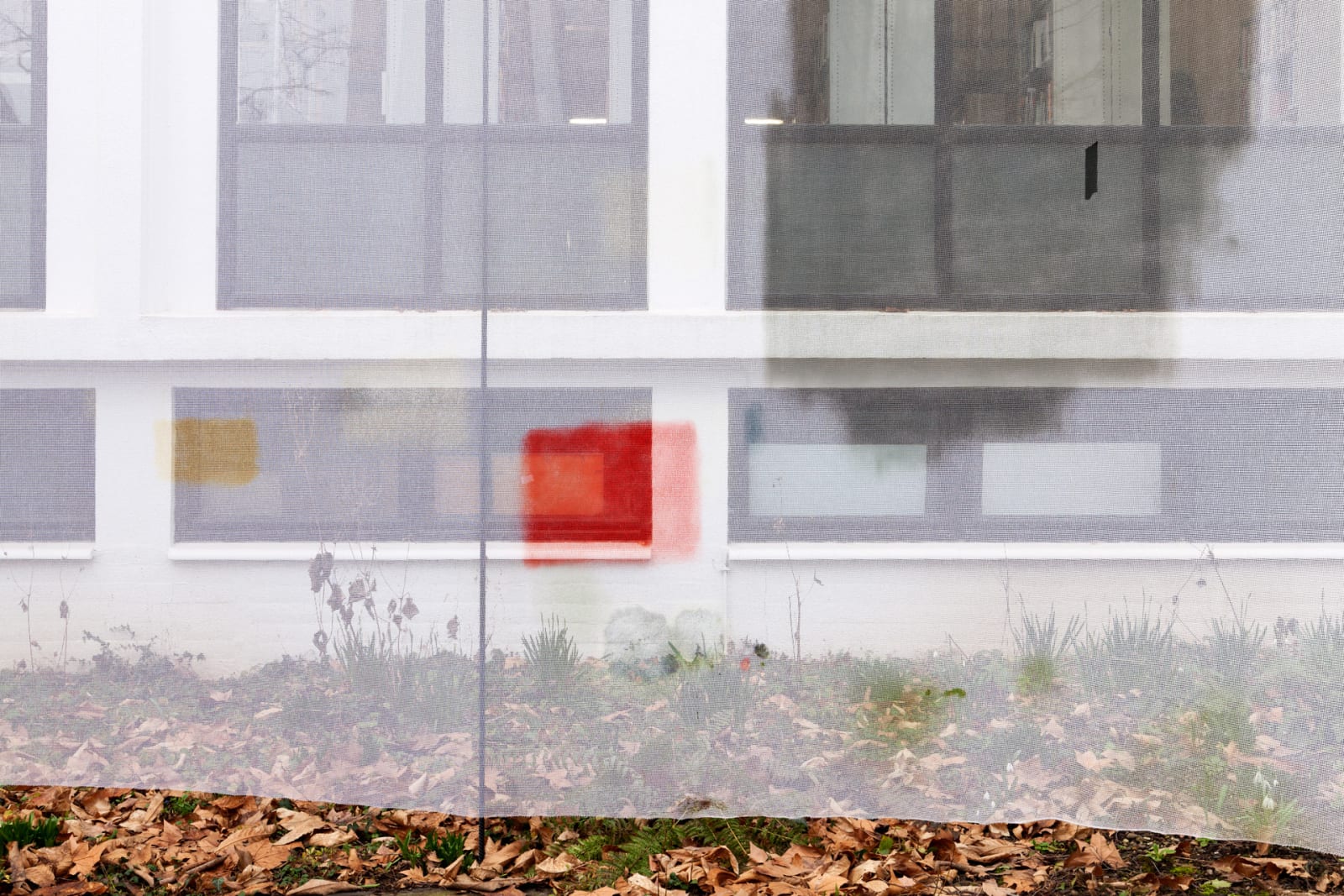
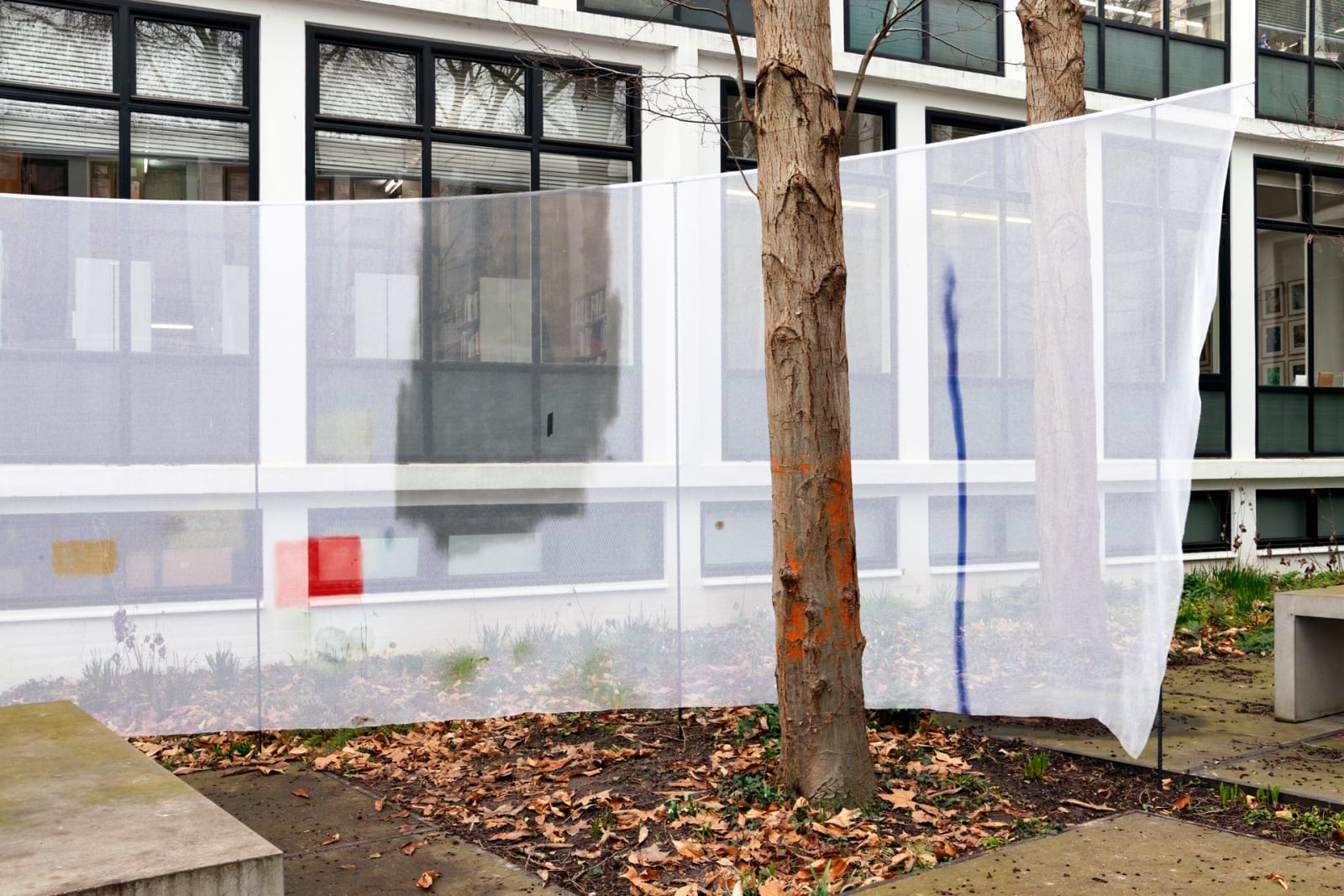

Julius Heinemann endeavours to depict the invisible with minimal painterly resources; in classical terms, to paint. Seemingly casual smudges of colour, in some places thinly overpainted or accentuated, are sufficient for this purpose. Whitish layers, in various faint tints, emerge as brighter or retreat into shade. Working meticulously, Heinemann creates white fields and compartments on his canvases or walls, rendering them unstable and charged with a tense energy. Something is going on in that taut emptiness but, transparent though it all is, it is hard to say exactly what is happening there.\
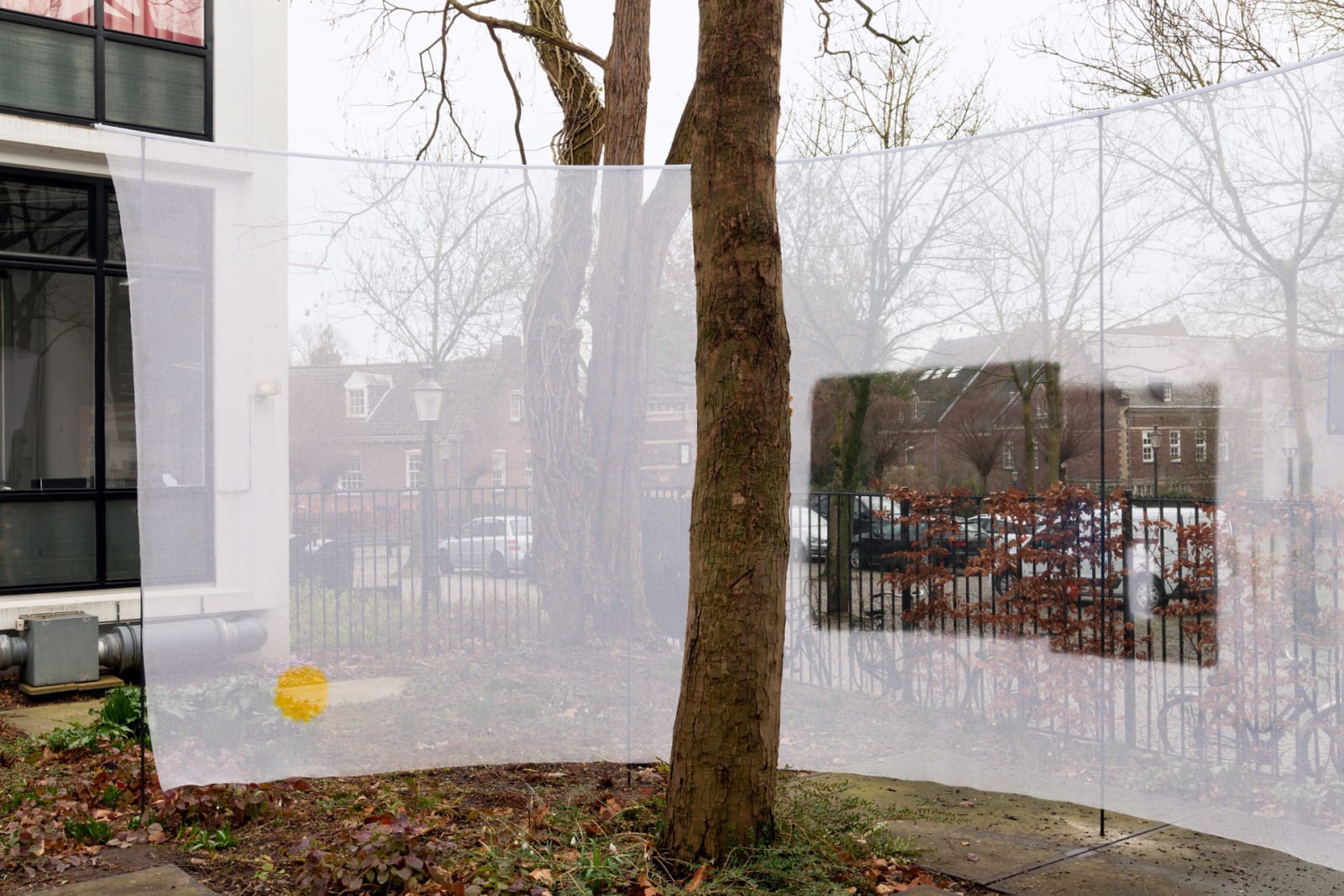
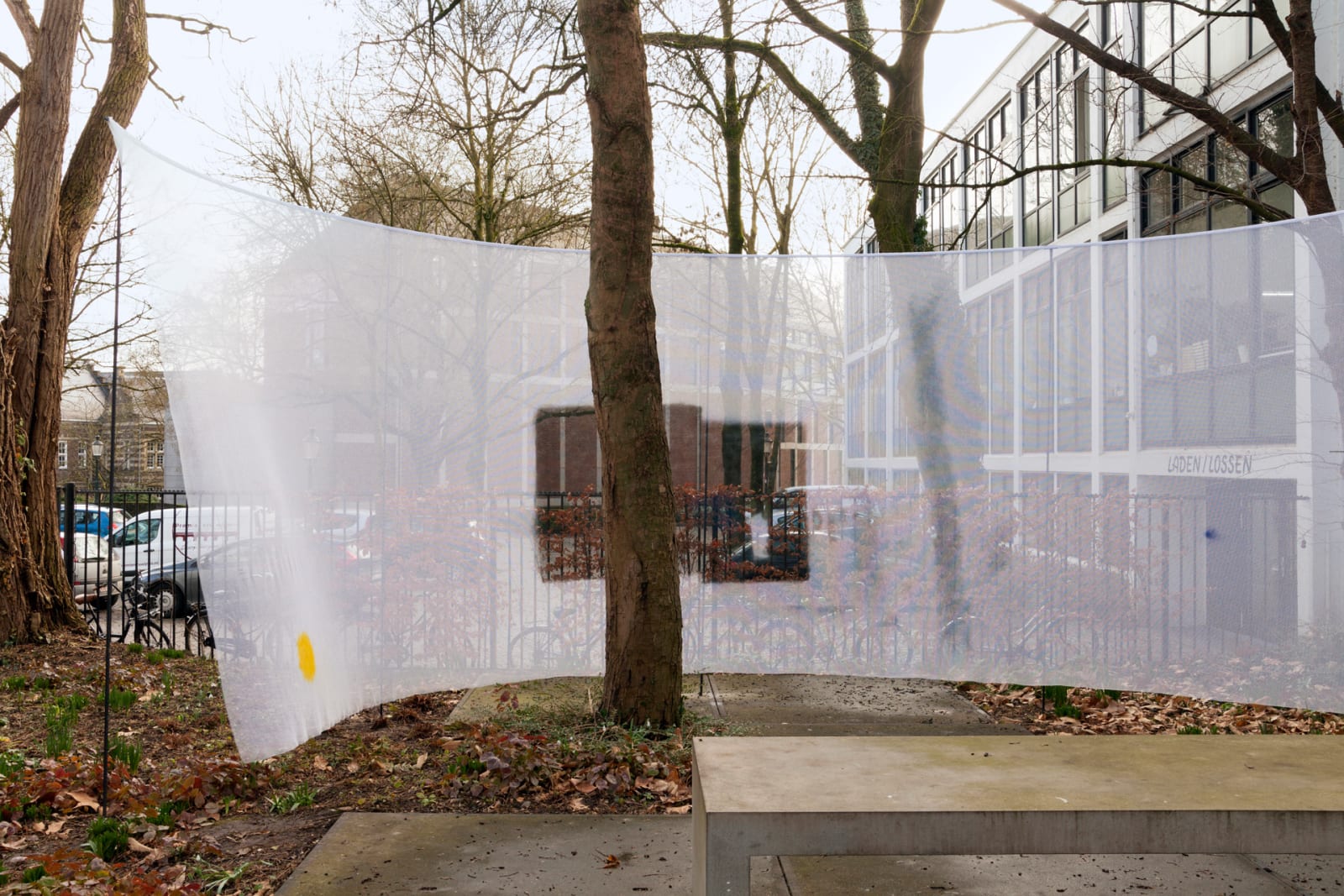
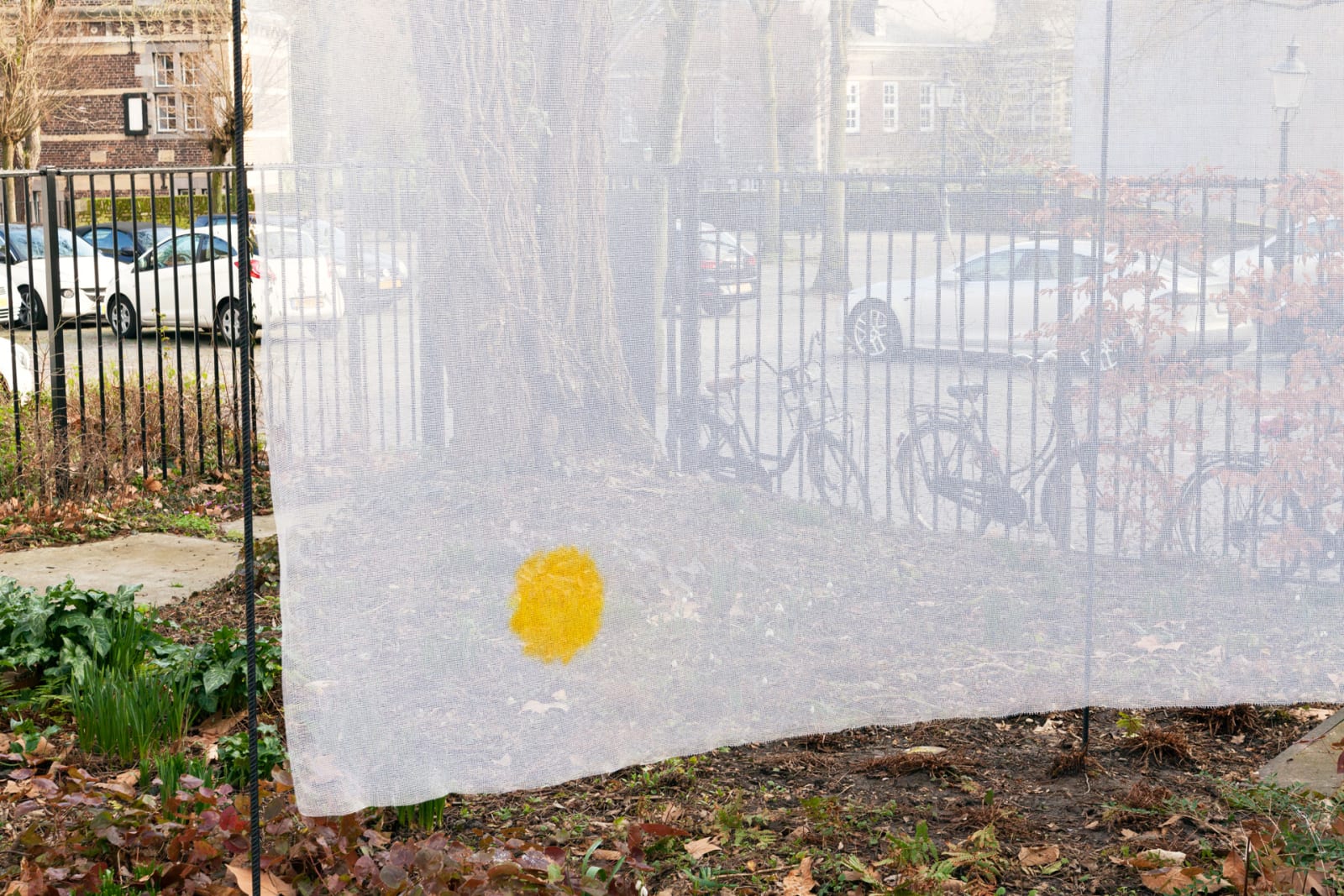
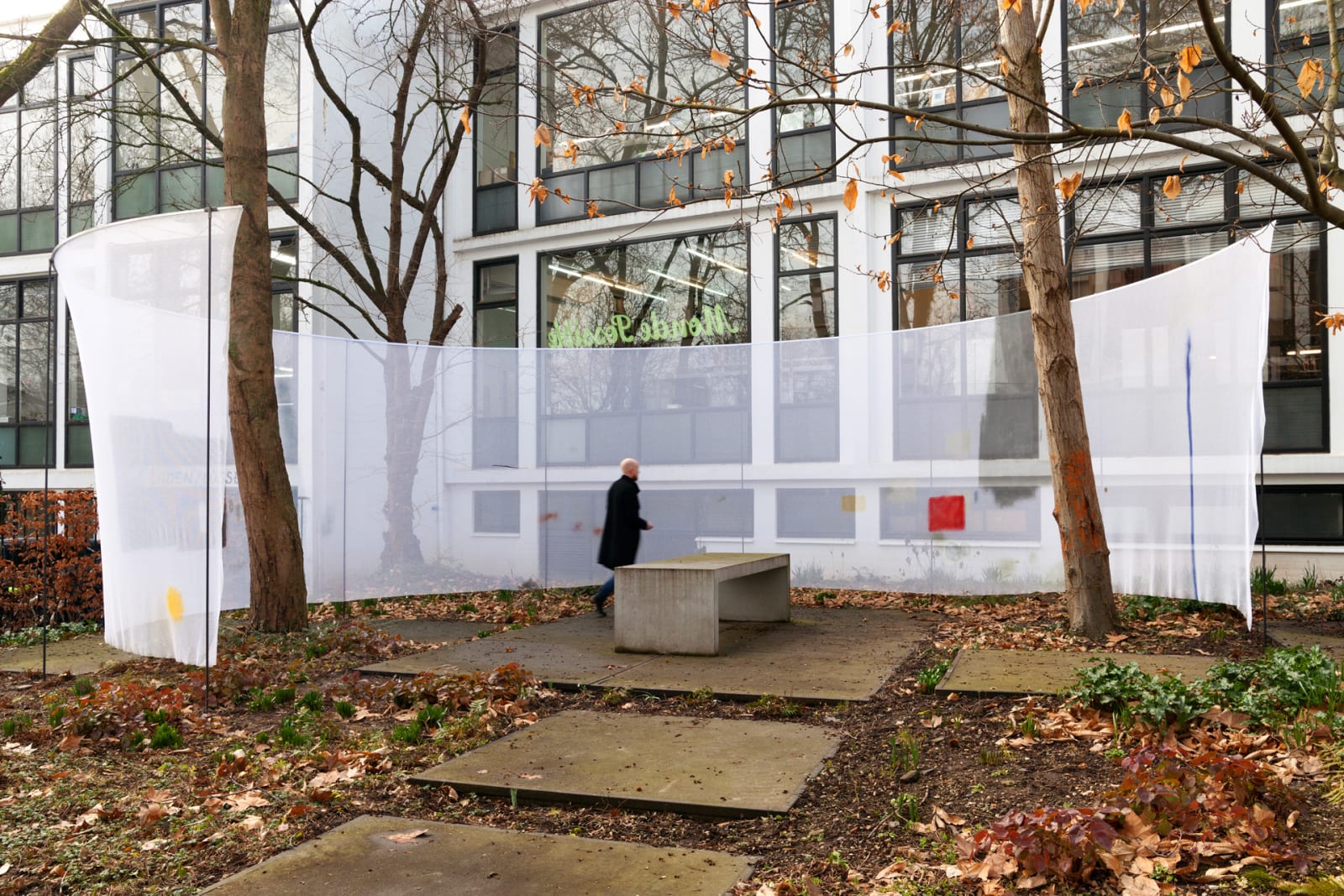
In extension to the sensory idiom of these paintings, Heinemann sometimes partitions a space with translucent fabric so that architecture, light and visibility suddenly lose their familiarity. The spatial experience of the fabric morphs into a painterly experience of the space itself.
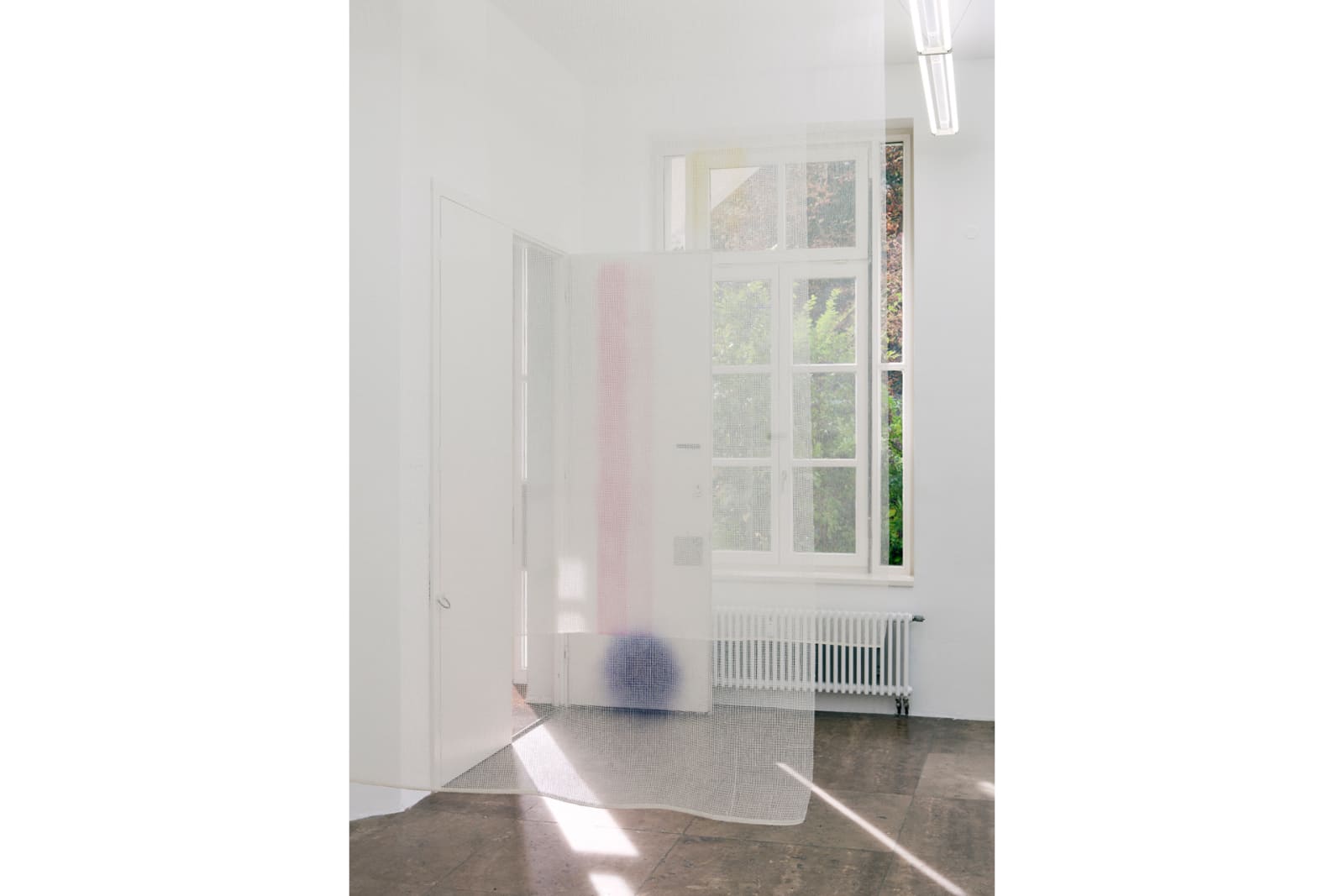
For the Open Studios, in the Woodland Garden, Julius Heinemann has created a curving structure of gauze which seems to turn its back on the blunt modernism of the building. From inside the structure, however, the curvature seems to mimic the rounded shape of the stairwell. Standing in the curved form, something magical seems to happen. What ought to be transparent now blocks your view, while the black-painted parts allow unimpeded vision as though there were no separating gauze. The curving form has become a panorama that invites the spectator to reflect on painting and its power, on looking and its inherent illusions.
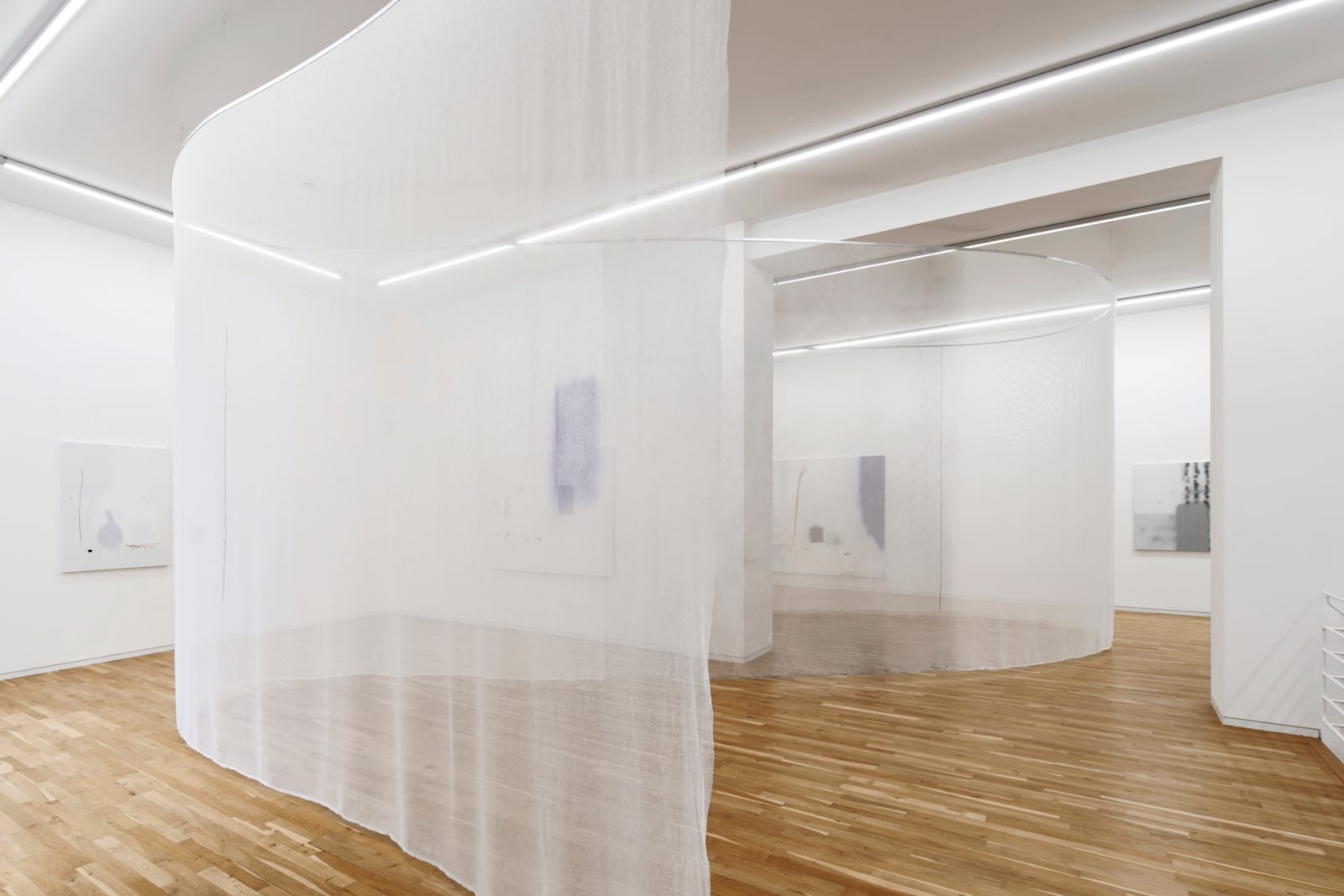
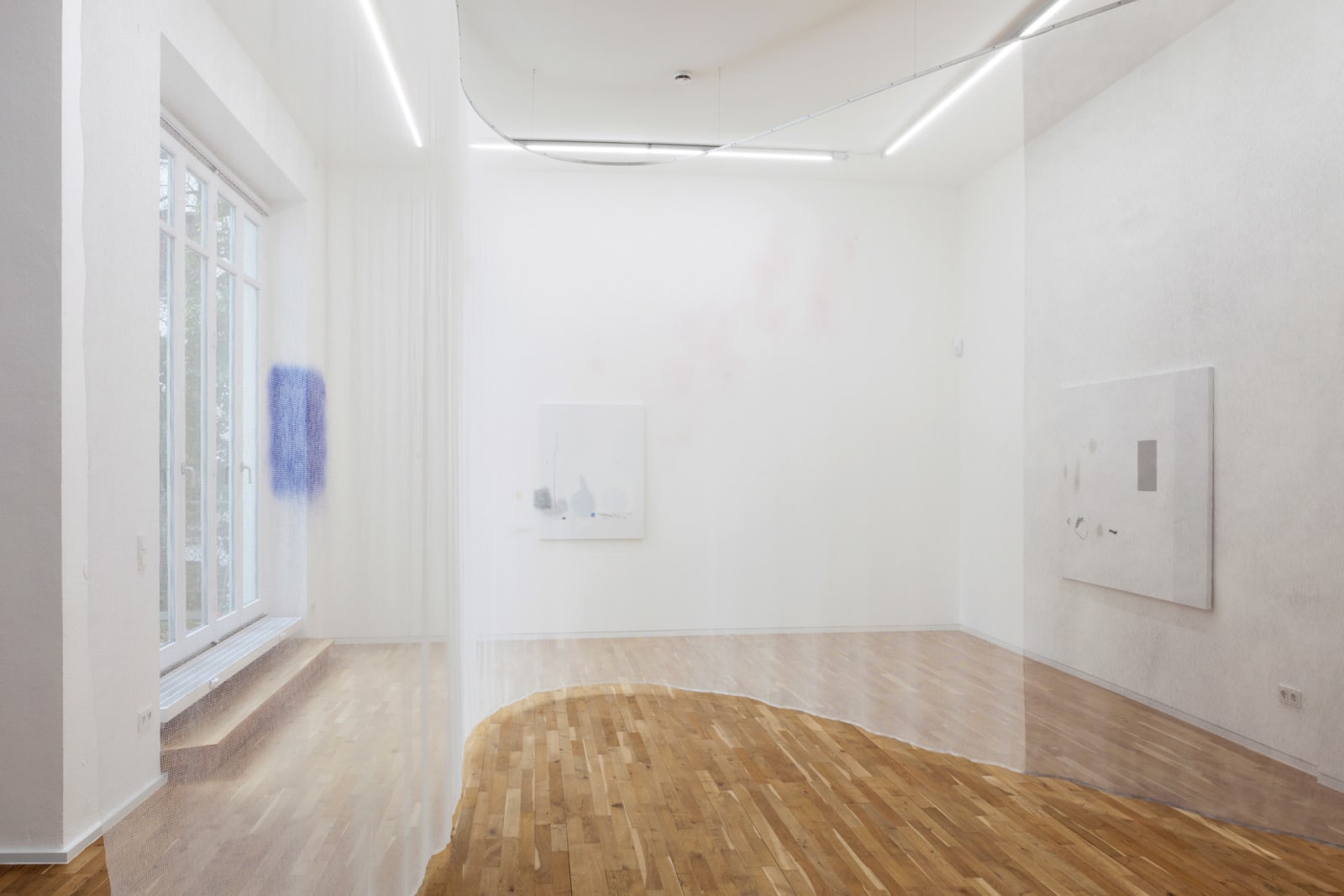
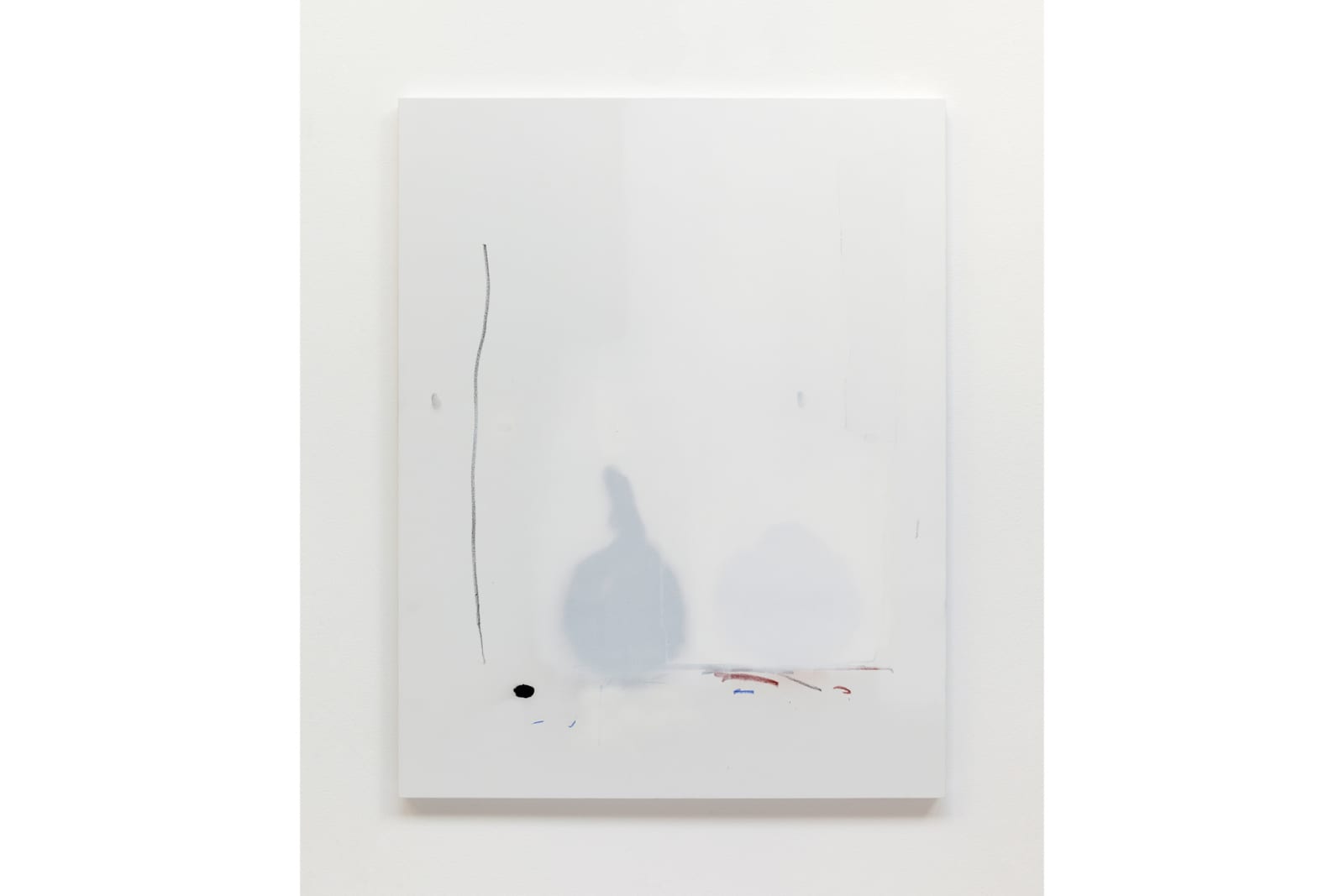
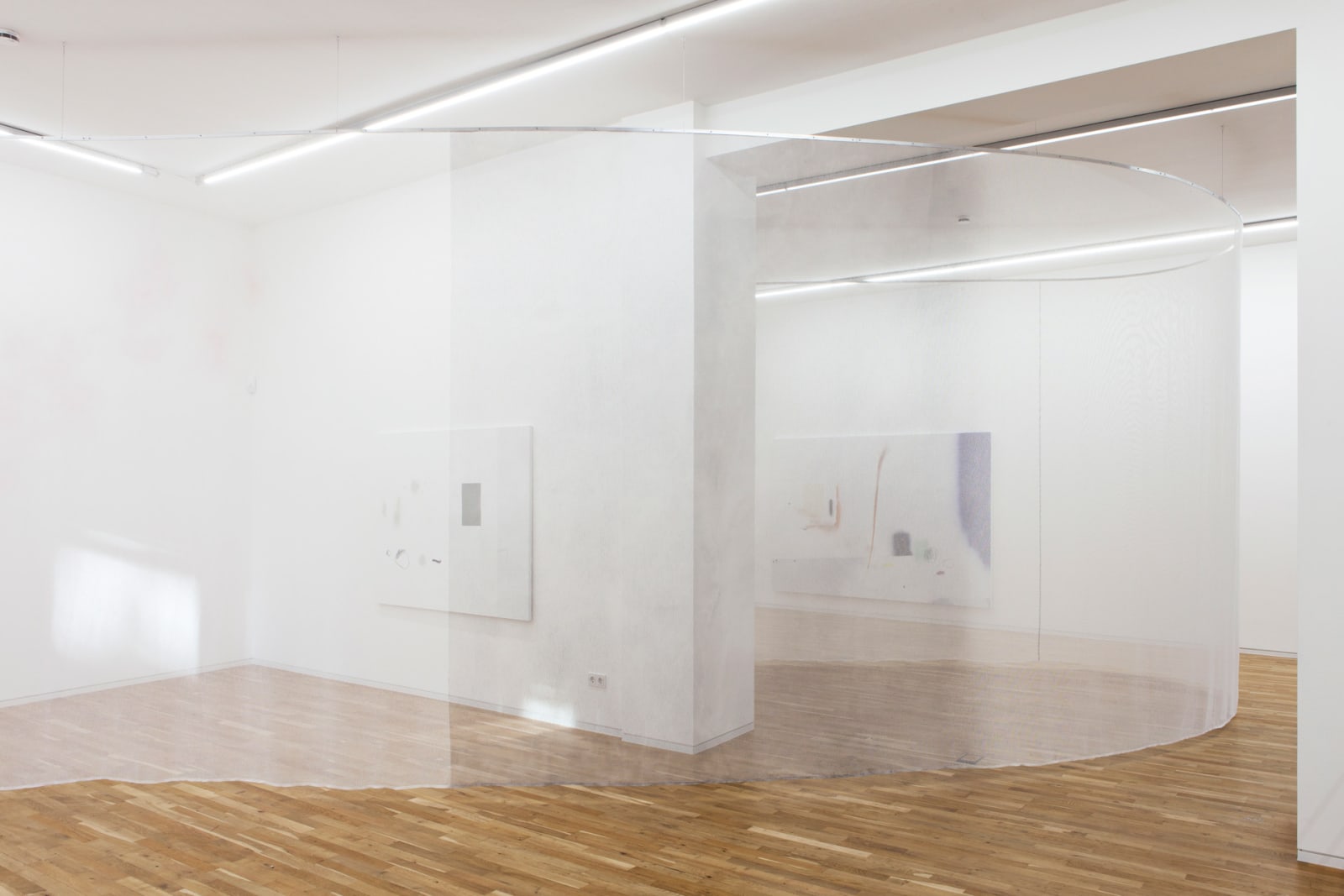
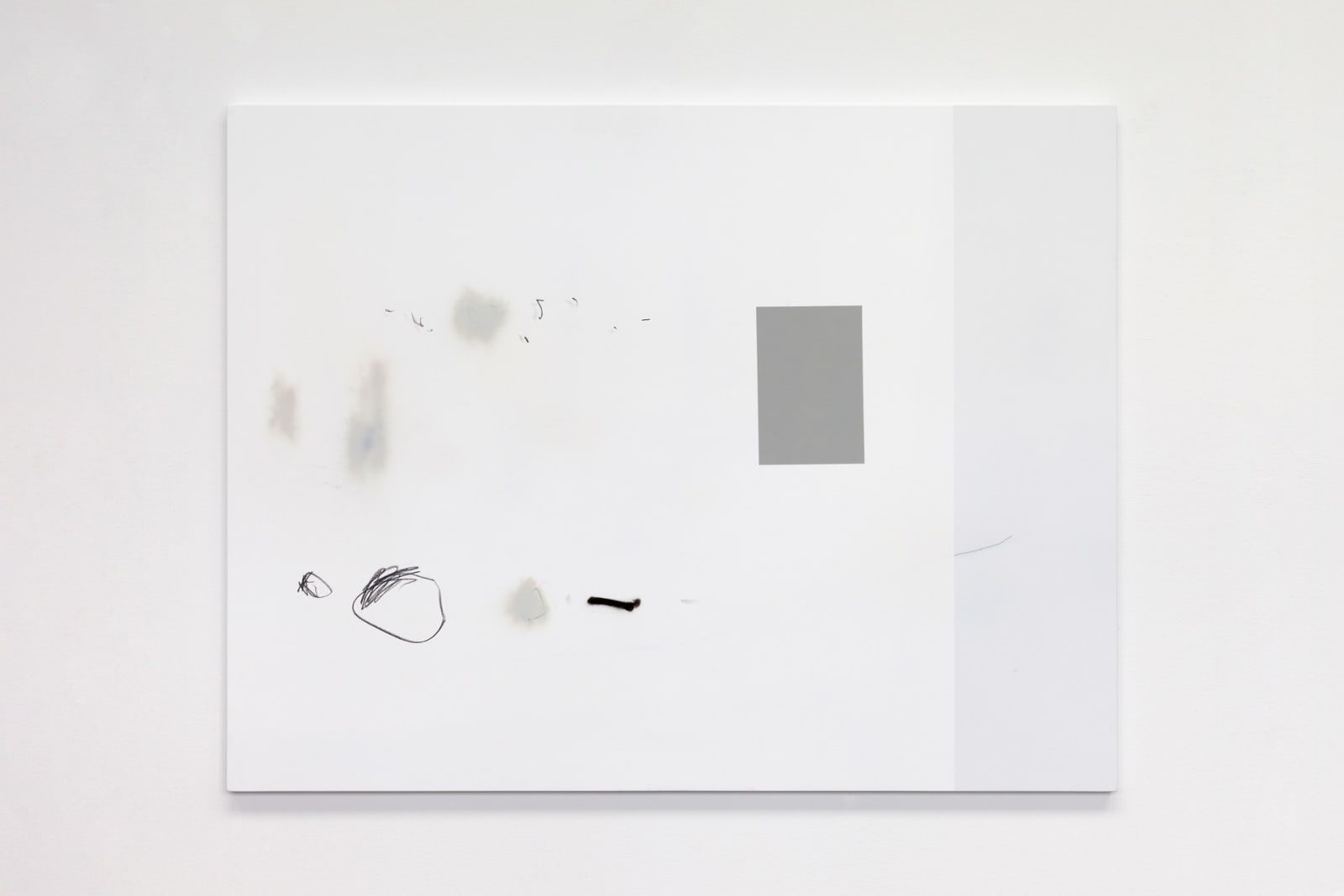
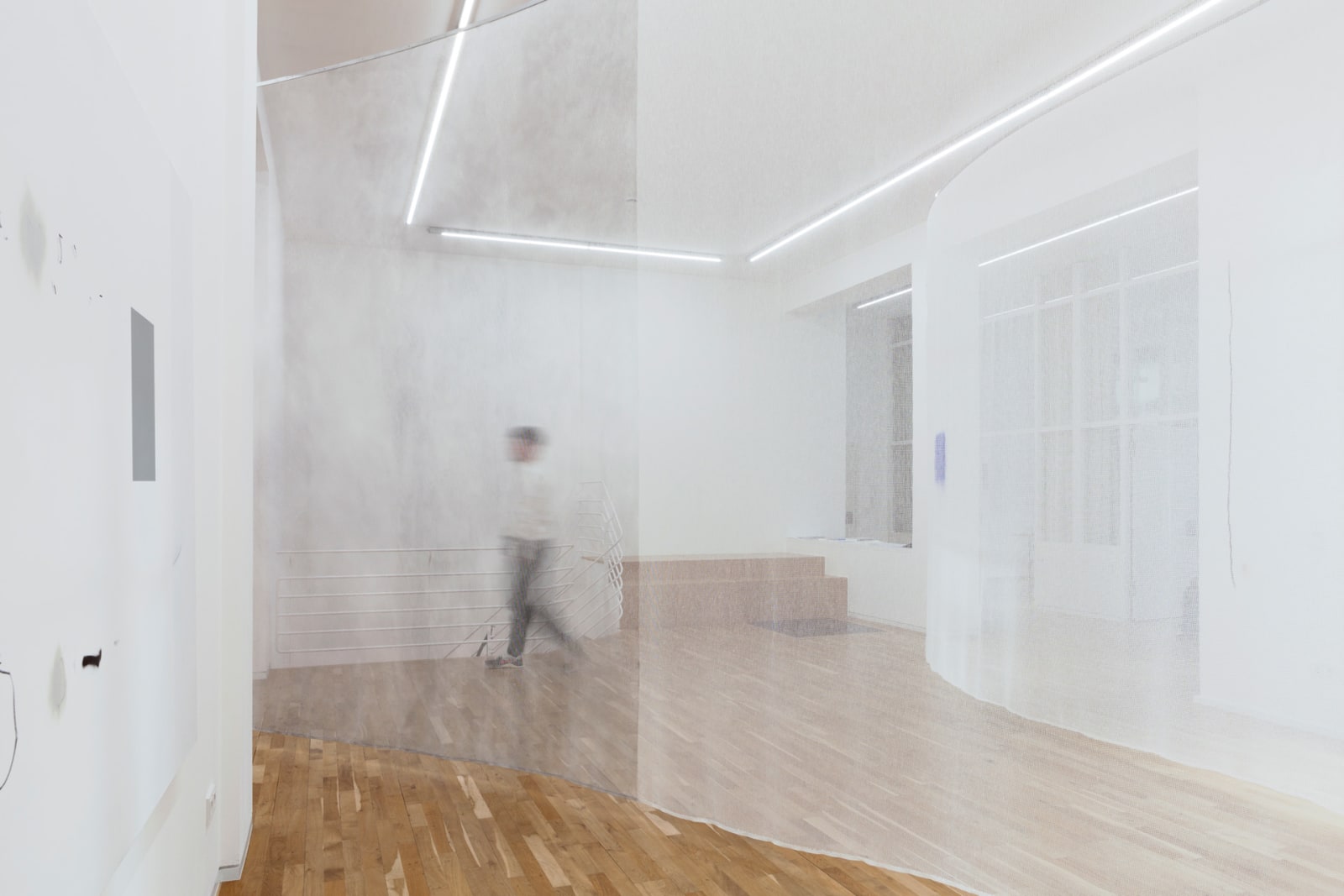
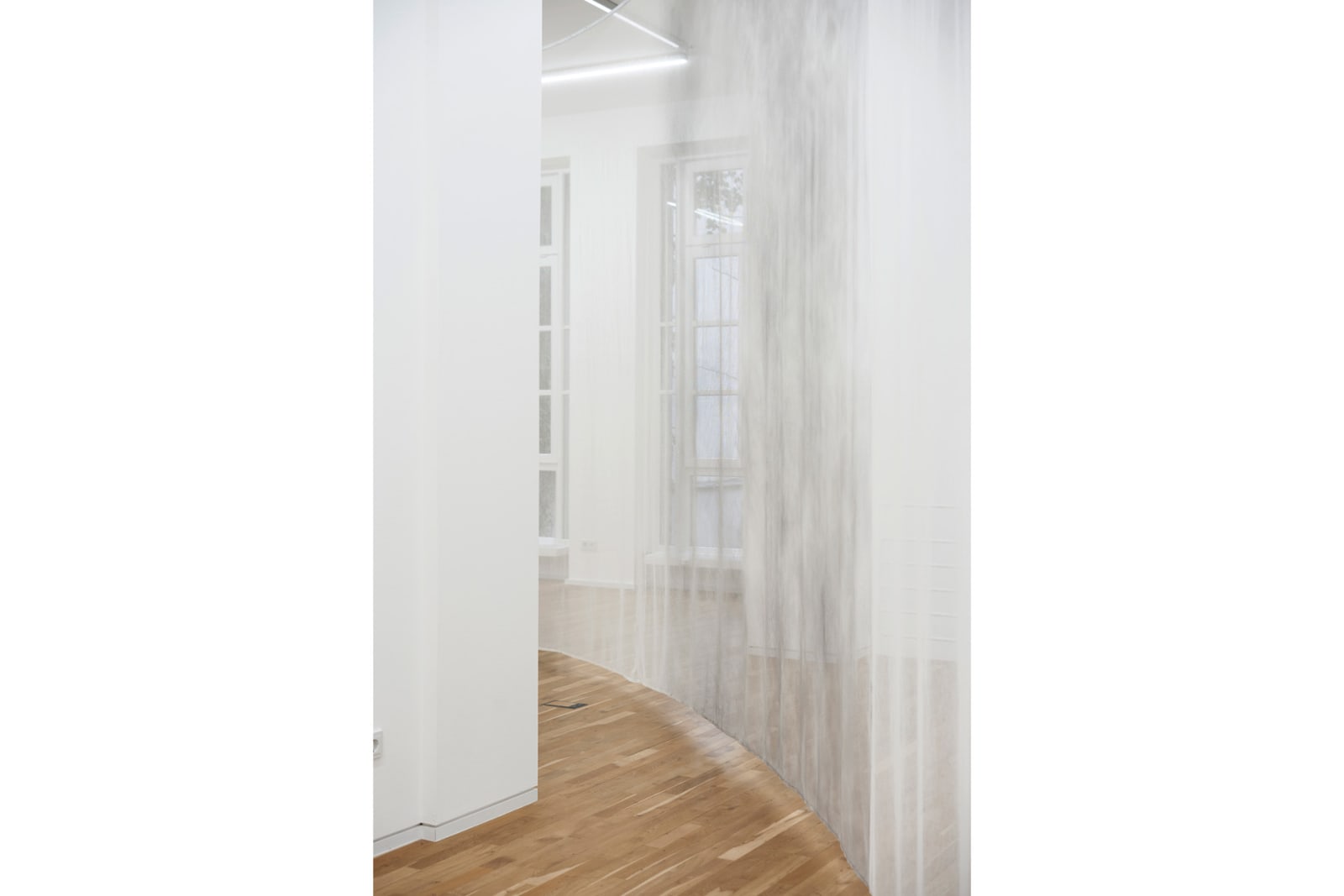
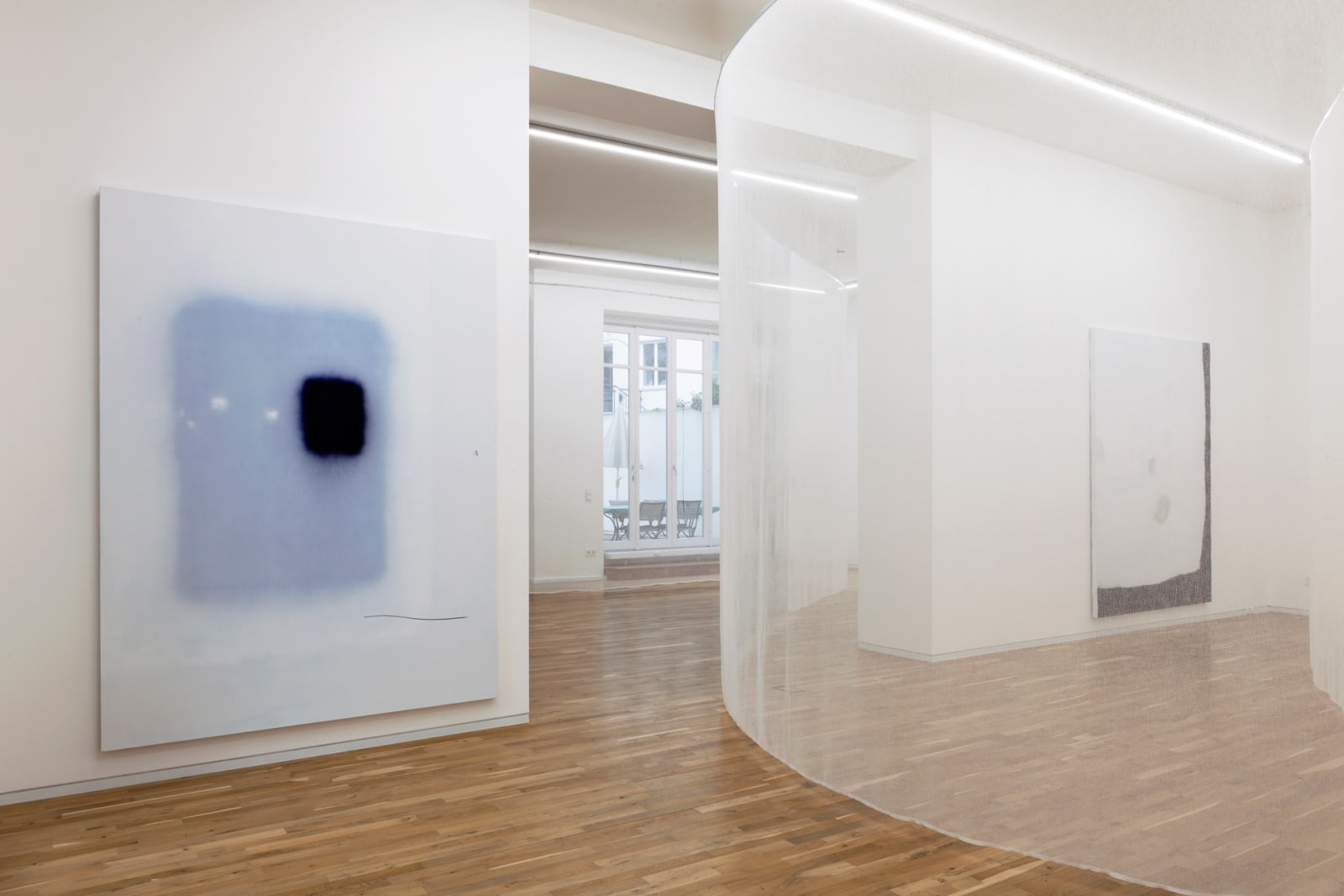

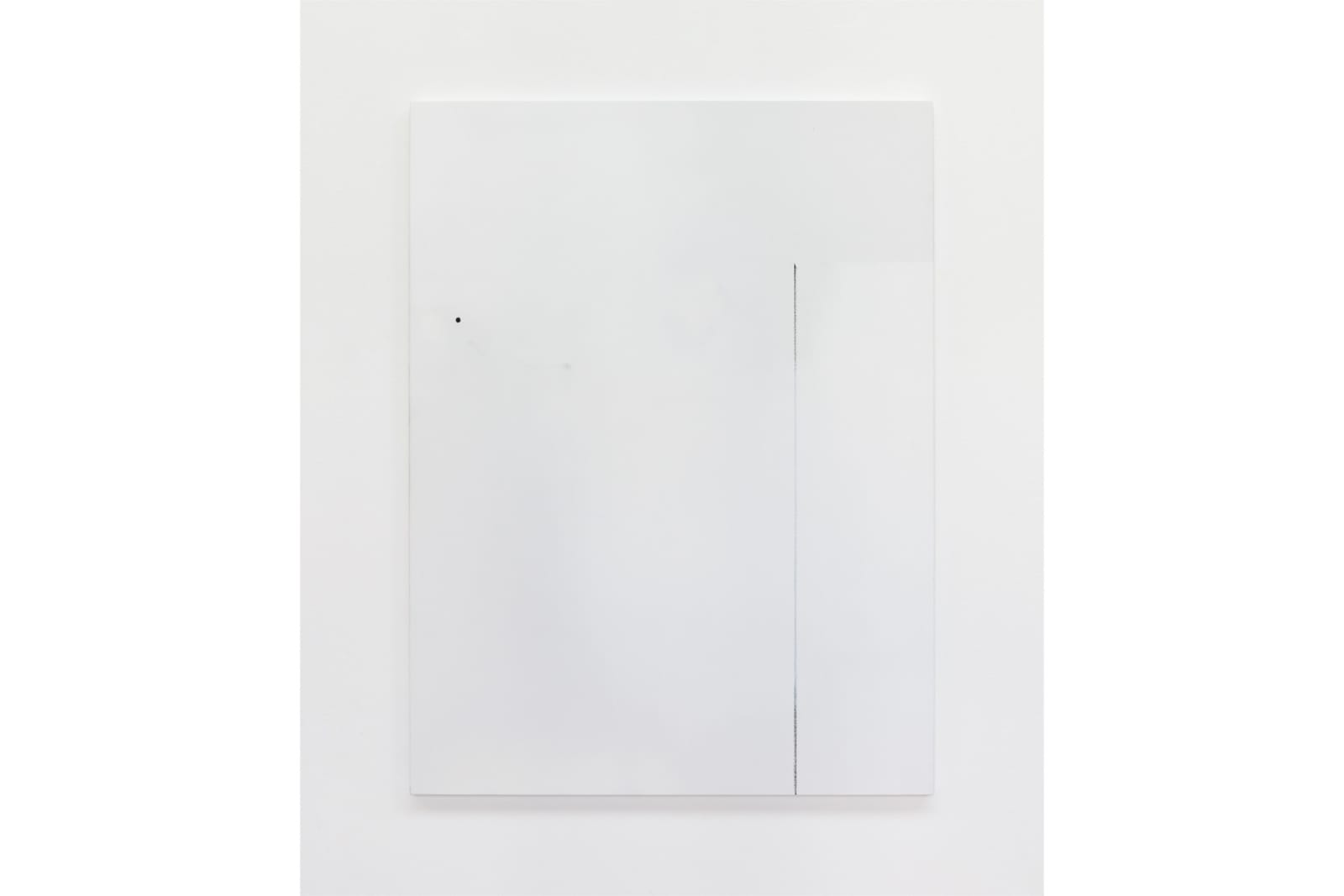
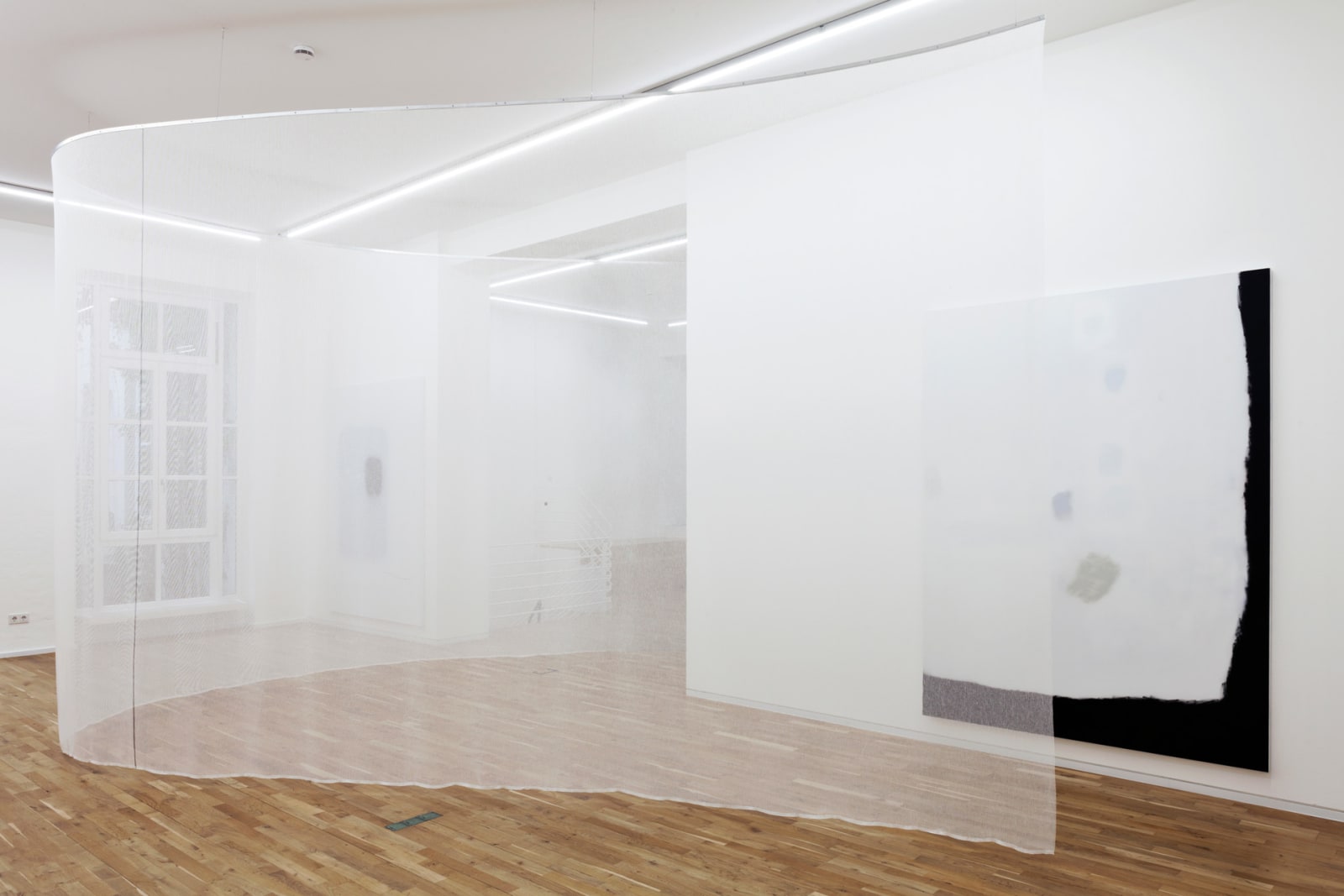
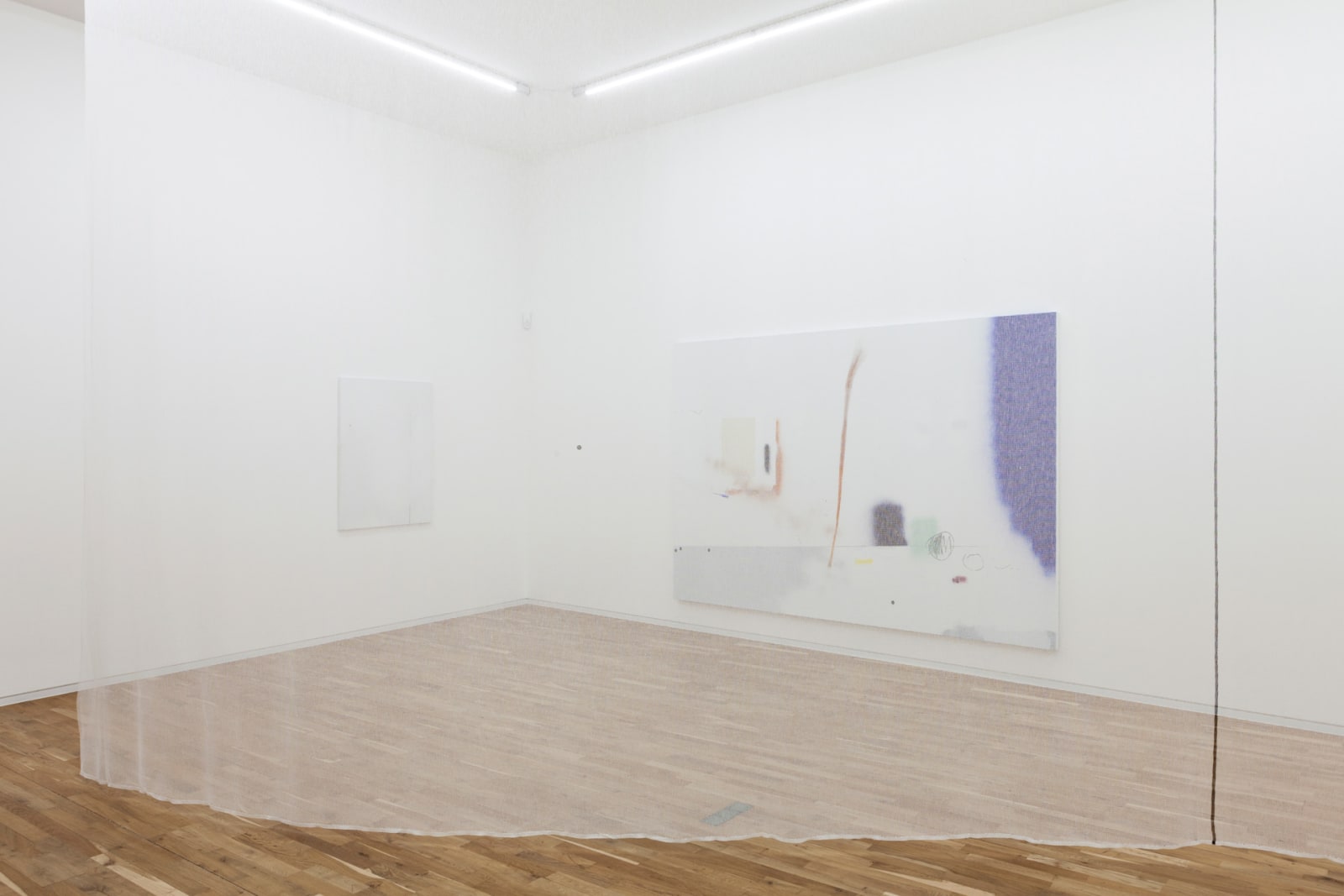
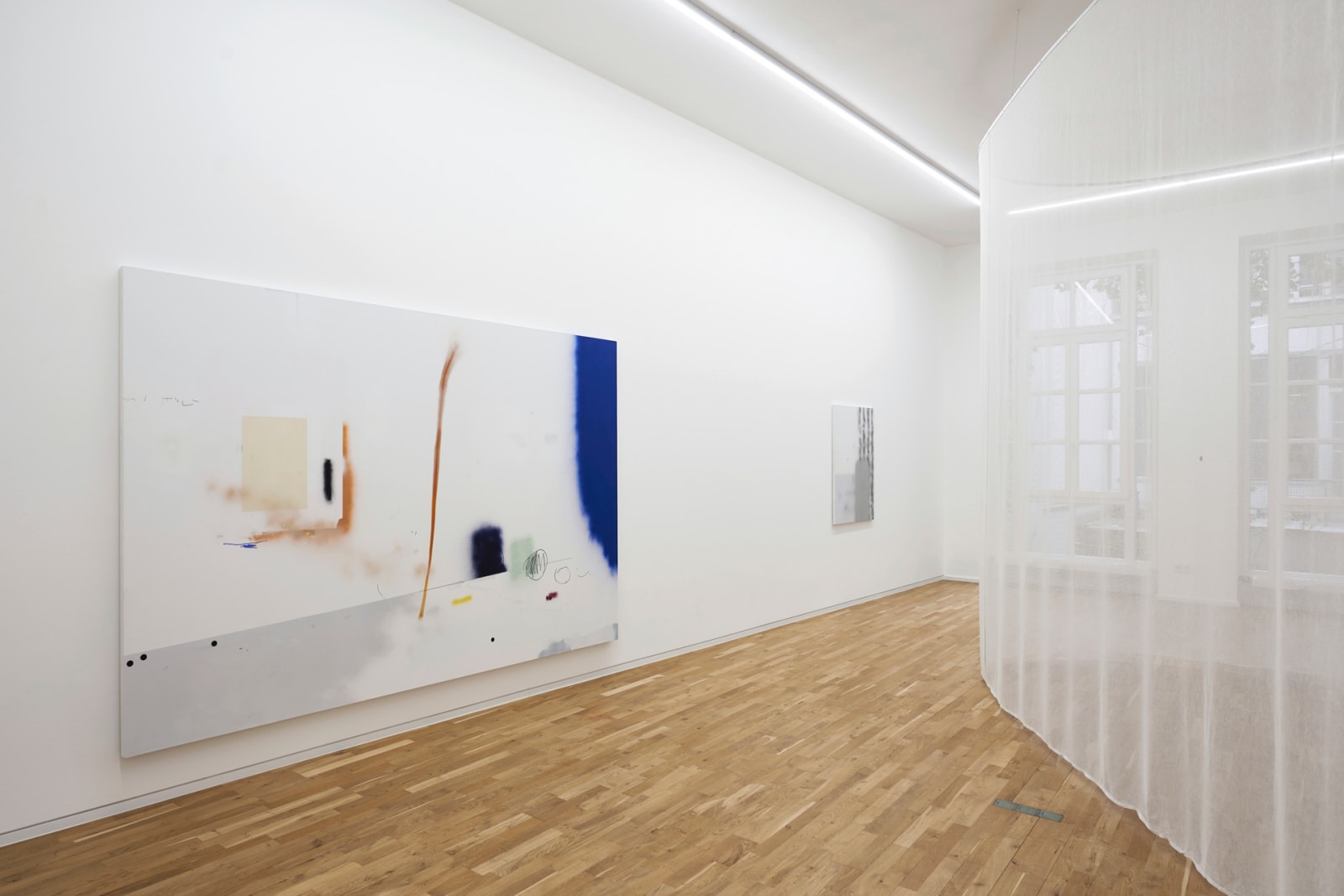
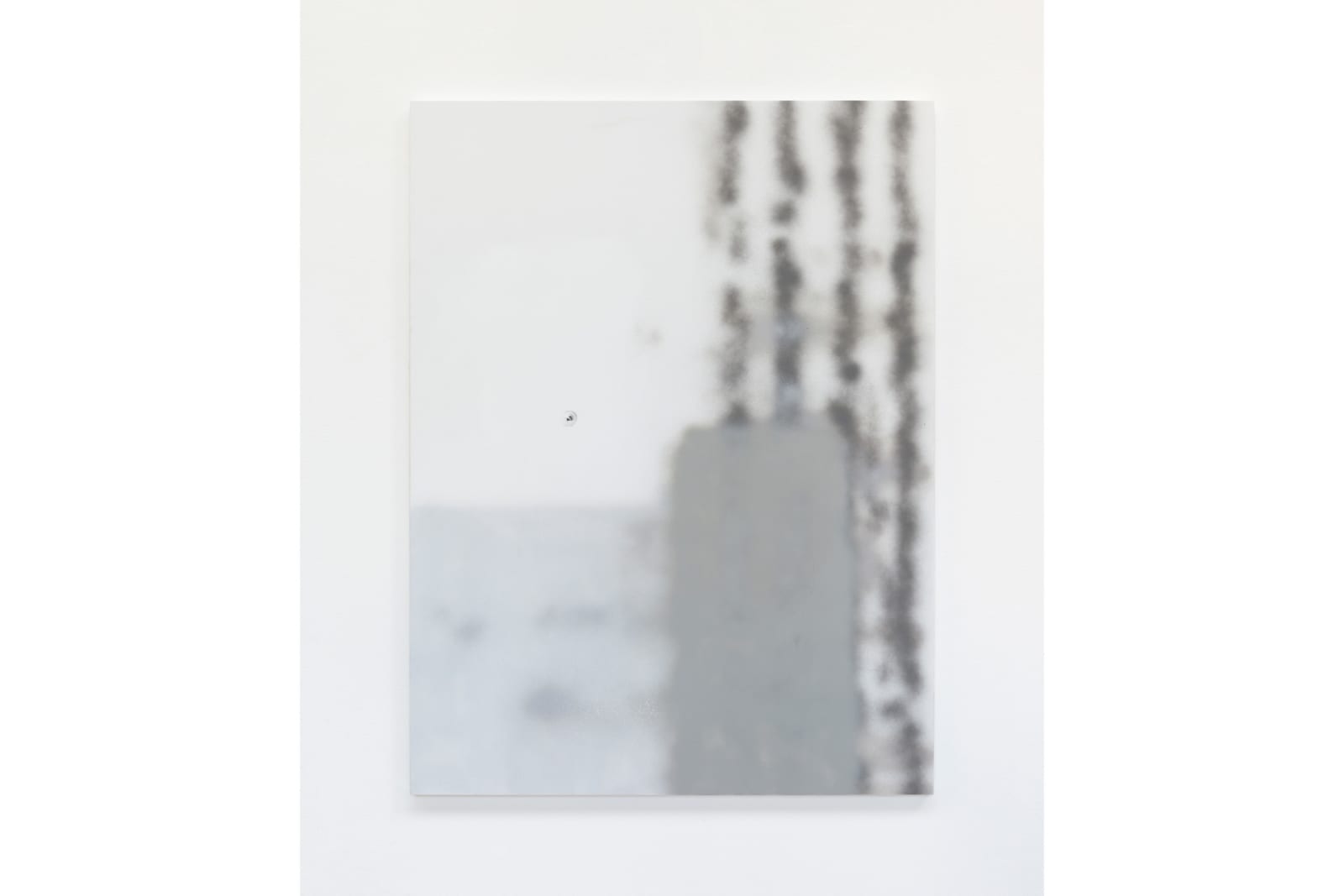
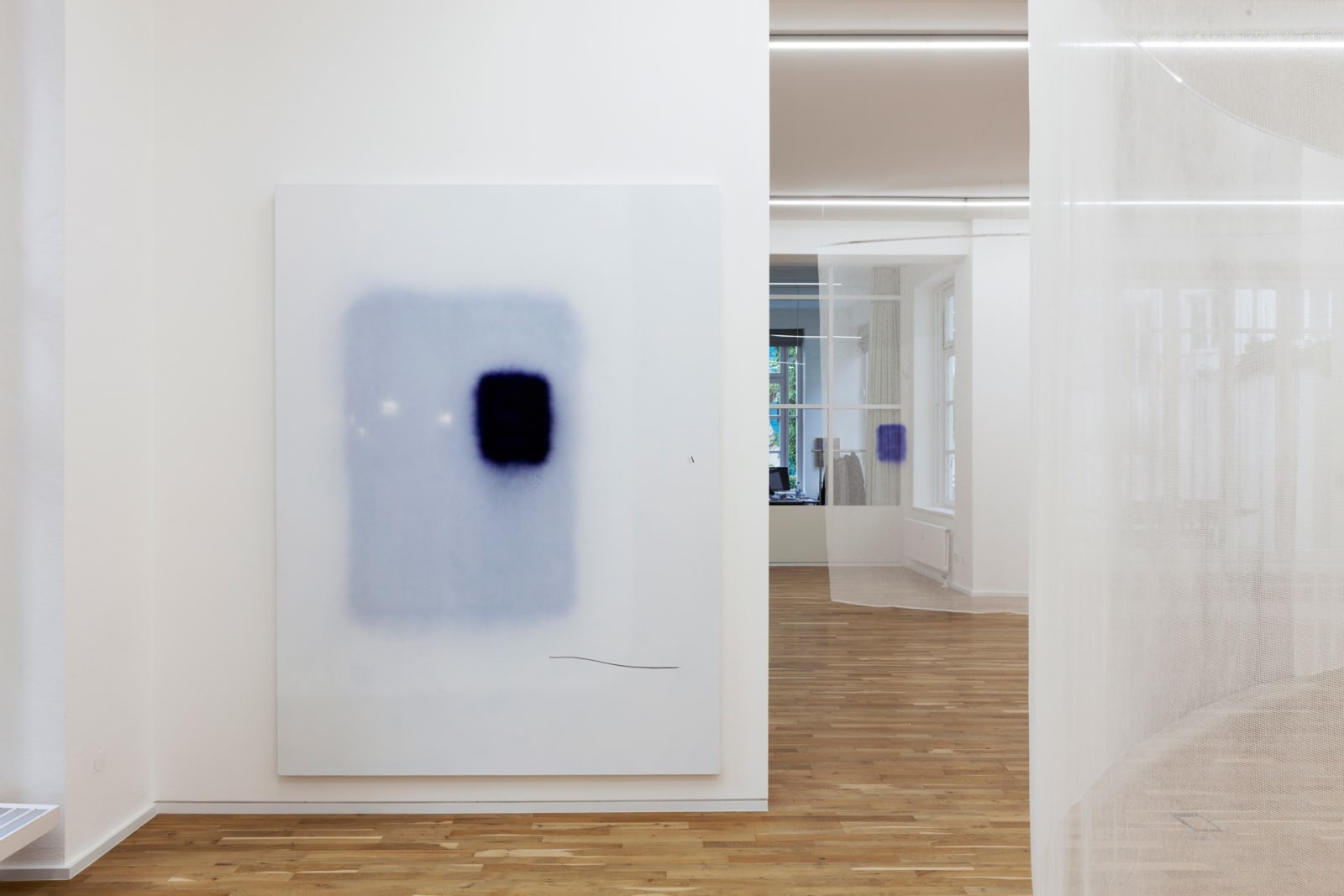
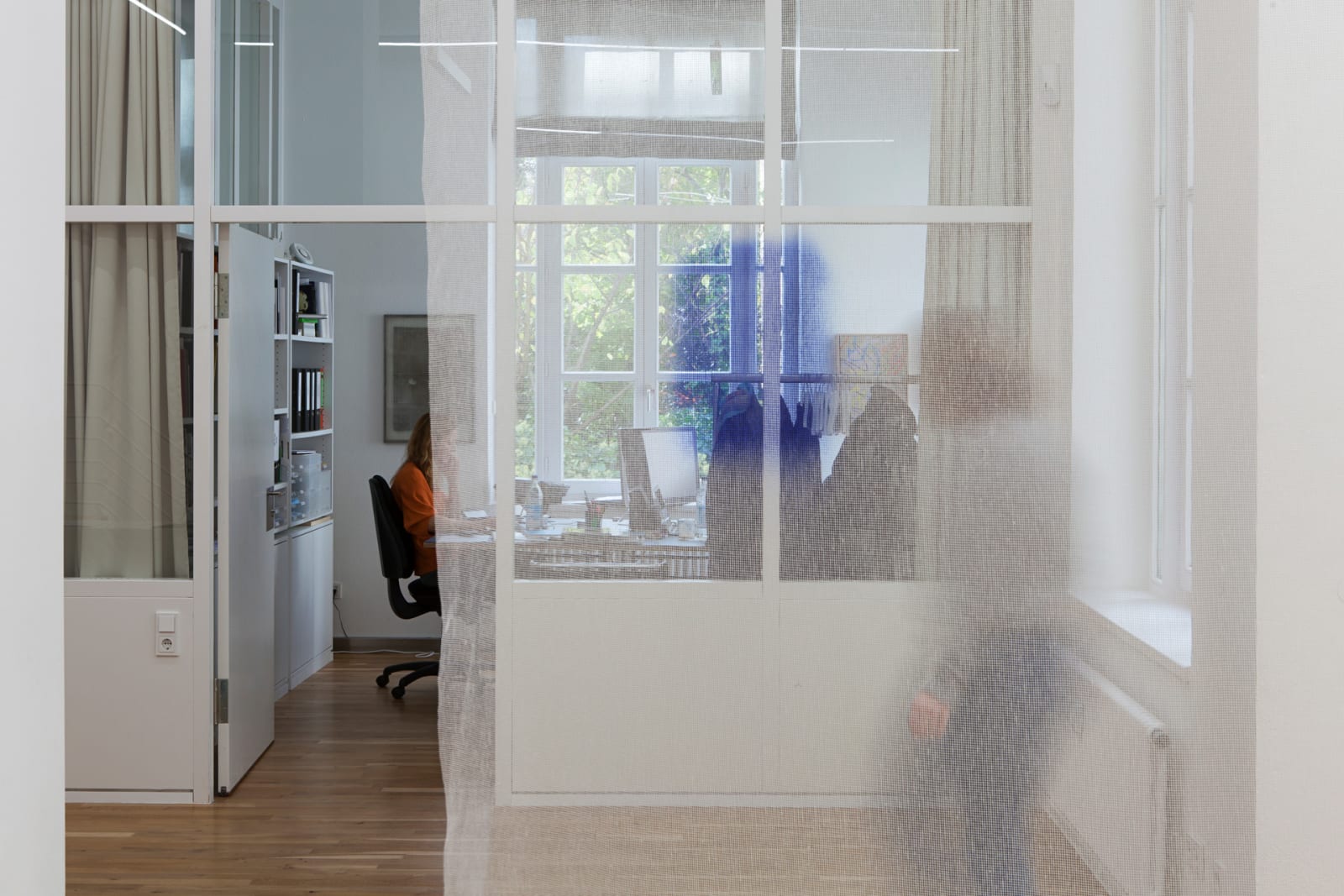
Subtle traces encounter powerful streaks of color on a white surface. Peering through semi-transparent gauze, which organically traverses the gallery space and creates a new spatial structure, alters the perception of what is depicted. Julius Heinemann does not limit himself to the classical painting format but instead understands the entire exhibition space as a place of experiencing, which can be opened up through painting. As such, each work is generated individually in the head – fragments intertwine with subjective experience in the here and now.
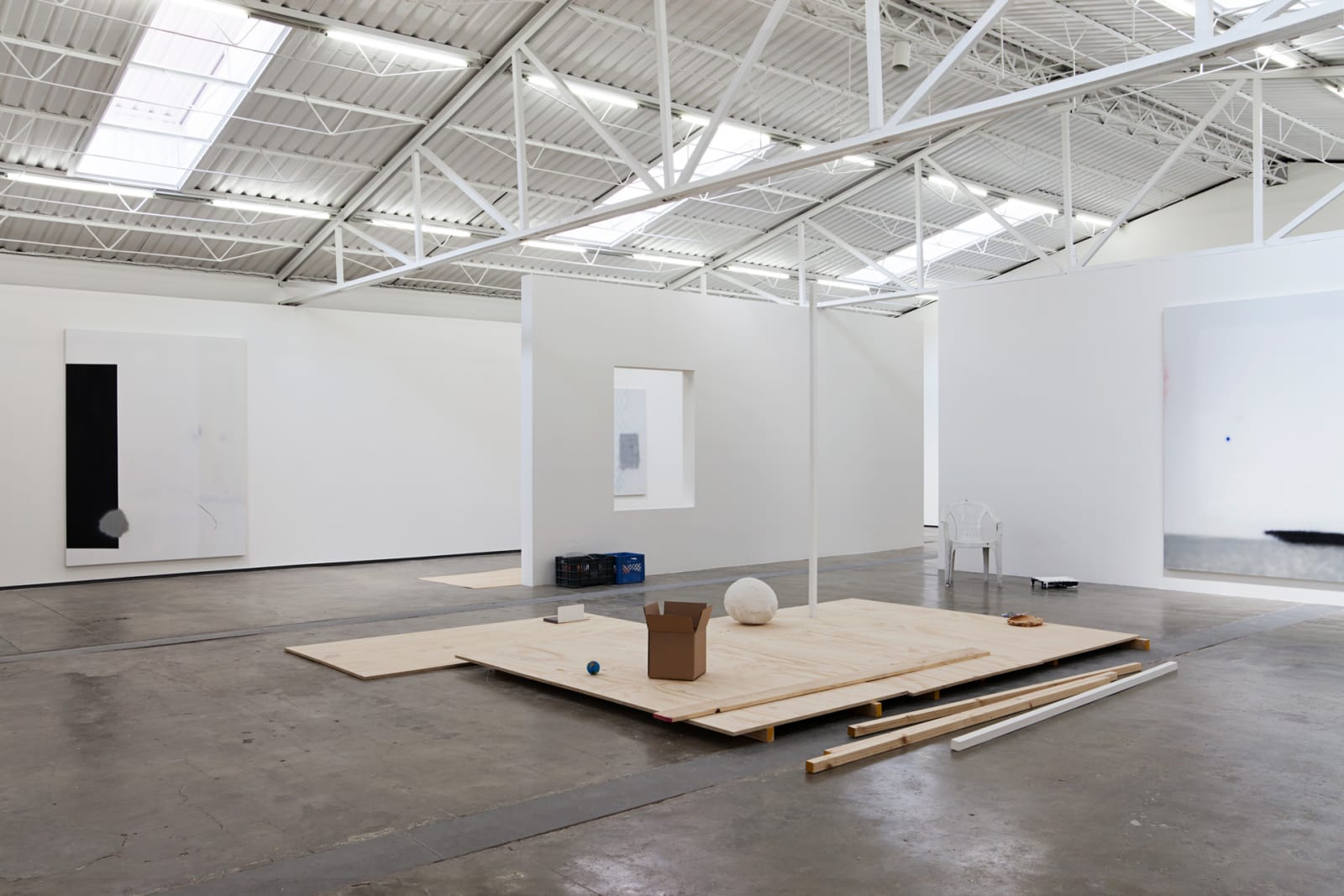
Heinemann’s painting, which is closely linked to the visual experiences of everyday life, is process-based and occurs intuitively. It revolves around the unconscious and subconscious, the ephemeral and unstable; it is both observation and expression in one. The painting process is fundamentally open and investigative. As in concrete poetry, painting itself becomes the purpose and object of investigation – painting presents itself. Alongside color, shape and materiality, the spatial dimension proves to be an important parameter in the physical experience of the work. Heinemann sees his tableaus as fragments of wall and – with their empty white areas – simultaneously as a reference to the White Cube. They are bearers of images and also serve as structural elements that always defne themselves in relation to the current environment and lighting conditions. Through spatial interventions Heinemann transfers painting from an image into the room, blurring boundaries between the imaginary and the real, the abstract and concrete. Lastly, the title 'Double Exposure' alludes to the many layers and modalities of perspective that exist in his work.
Subtile Spuren und kraftvolle Farbmarkierungen begegnen sich auf weißem Malgrund. Der Blick durch die semi-transparente Gaze, die organisch den Galerieraum durchzieht und eine neue Raumstruktur erschafft, verändert die Sichtweise auf das Dargestellte. Julius Heinemann beschränkt sich nicht nur auf das klassische Format des Gemäldes, sondern begreift den gesamten Ausstellungsort als Erfahrungsraum, der sich durch die Malerei erschließen lässt. Die einzelnen Bilder werden dabei individuell im Kopf generiert – Fragmente verknüpfen sich zu einer subjektiven Empfindung im Hier und Jetzt.
Heinemanns Malerei, die eng mit den Seherfahrungen des Alltags verbunden ist, entsteht intuitiv und prozessbasierend. Sie kreist um das Unbewusste wie Unterbewusste, das Ephemere wie Instabile, ist Beobachtung und Ausdruck in einem. Der malerische Vorgang gestaltet sich grundsätzlich offen und investigativ. Wie in der Konkreten Poesie wird die Malerei selbst zum Zweck und Gegenstand der Auseinandersetzung – die Malerei stellt sich selbst dar. Neben Farbe, Form und Materialität erweist sich
die räumliche Dimension als wichtiger Parameter in der physischen Erfahrbarkeit der Arbeiten. Heinemann versteht seine Tableaus als Wandfragmente und – mit ihren weißen Leerstellen – zugleich als Referenz an den White Cube. Sie sind Bildträger und dienen zudem als strukturelles Element, das sich immer in Relation zu seinem Umraum und den aktuellen Lichtbedingungen definiert. Durch Rauminterventionen überführt Heinemann die Malerei vom Bild in den Raum und verwischt so die Grenzen zwischen dem Imaginierten und Realen, dem Abstrakten und Konkreten. Nicht zuletzt deutet der Titel 'Double Exposure' auf die vielfach vorhandenen Überlagerungen und Perspektivwechsel hin.
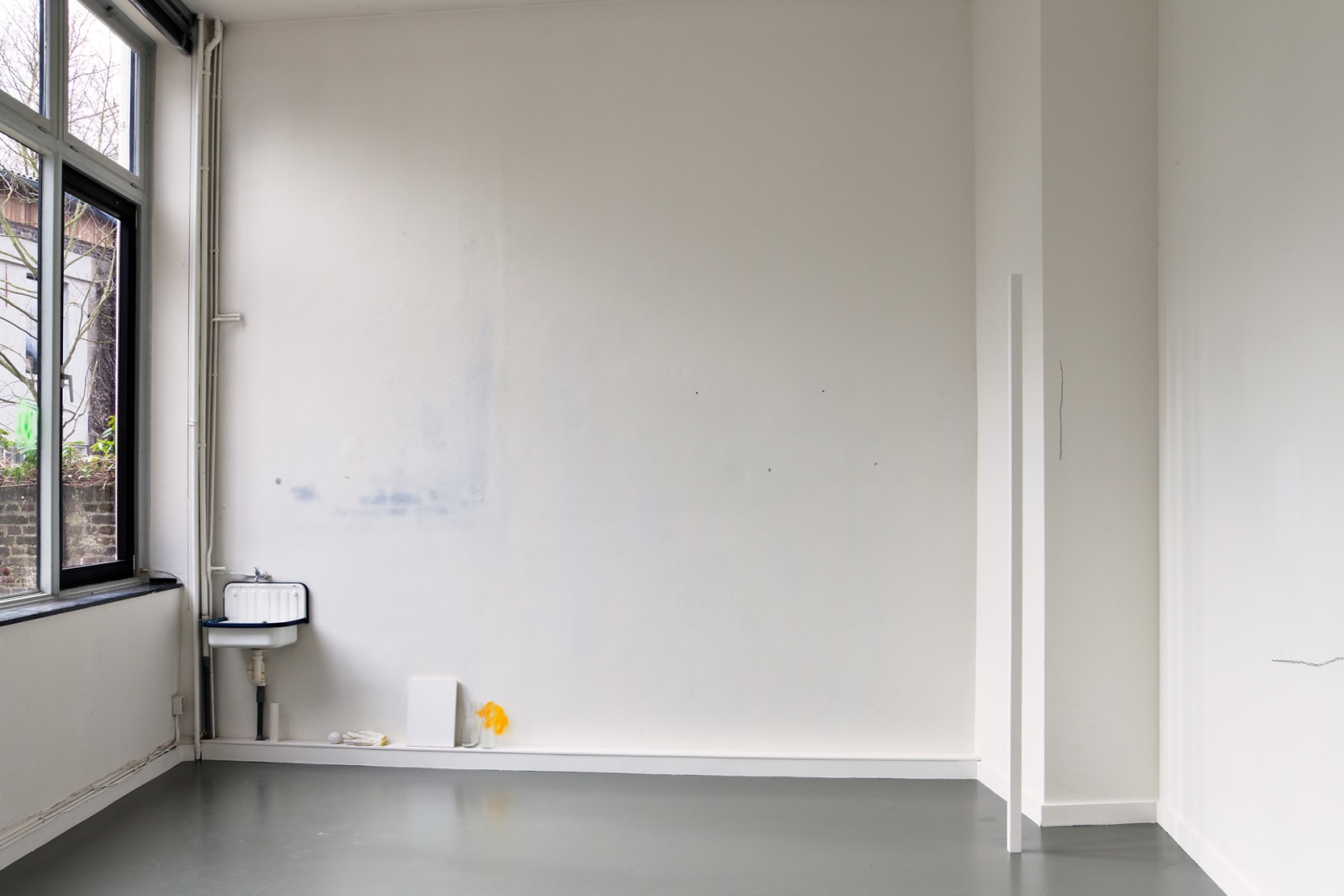
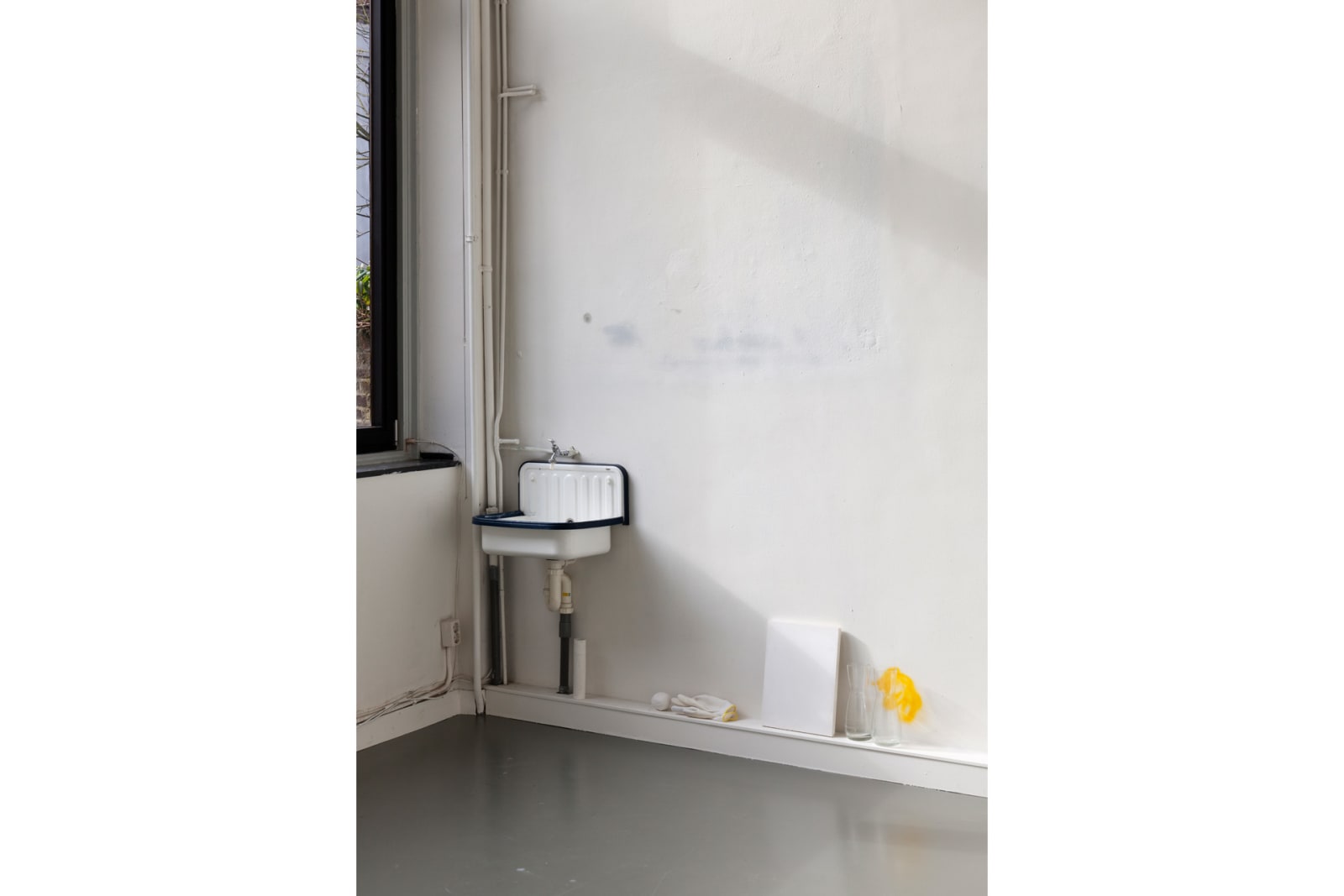

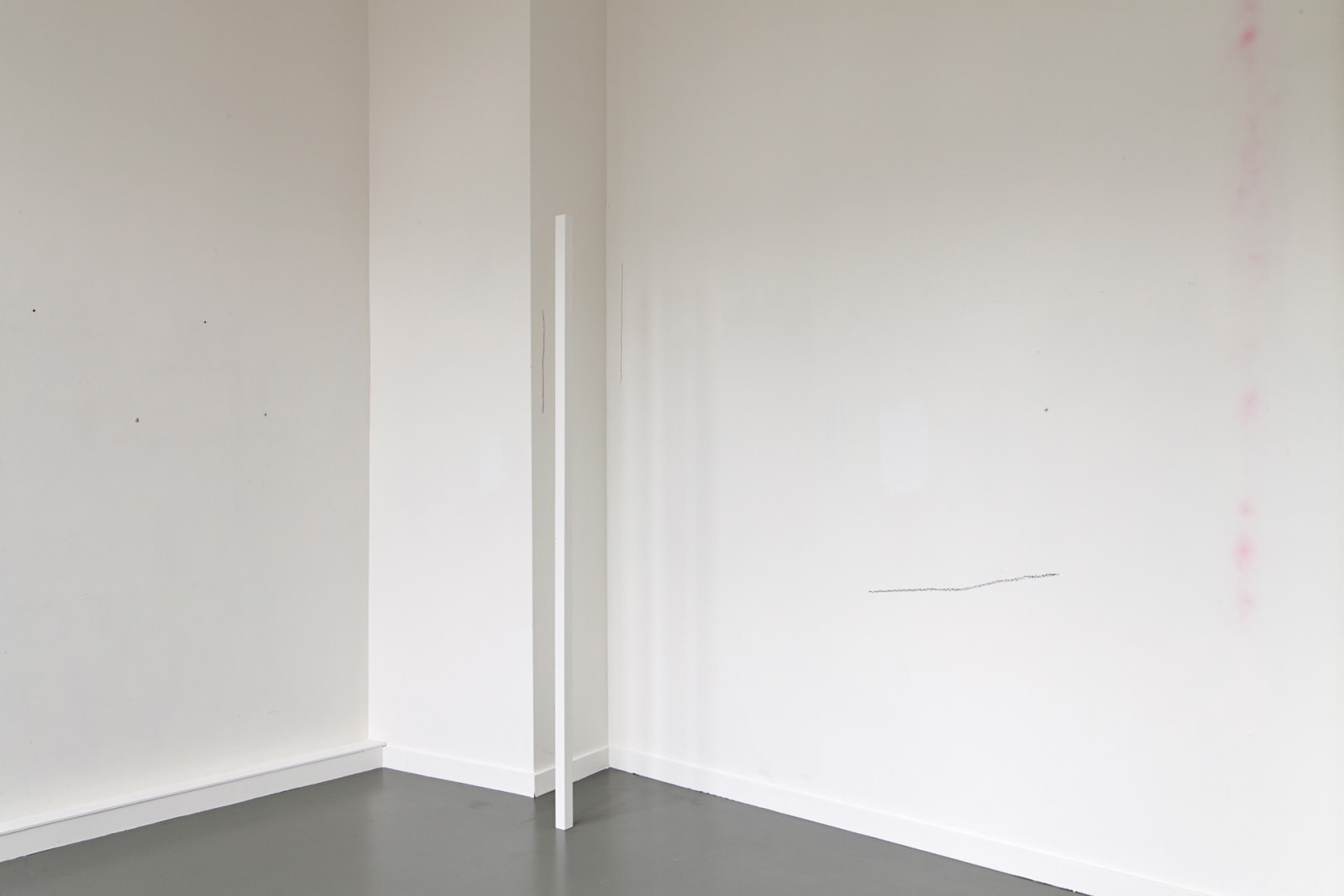
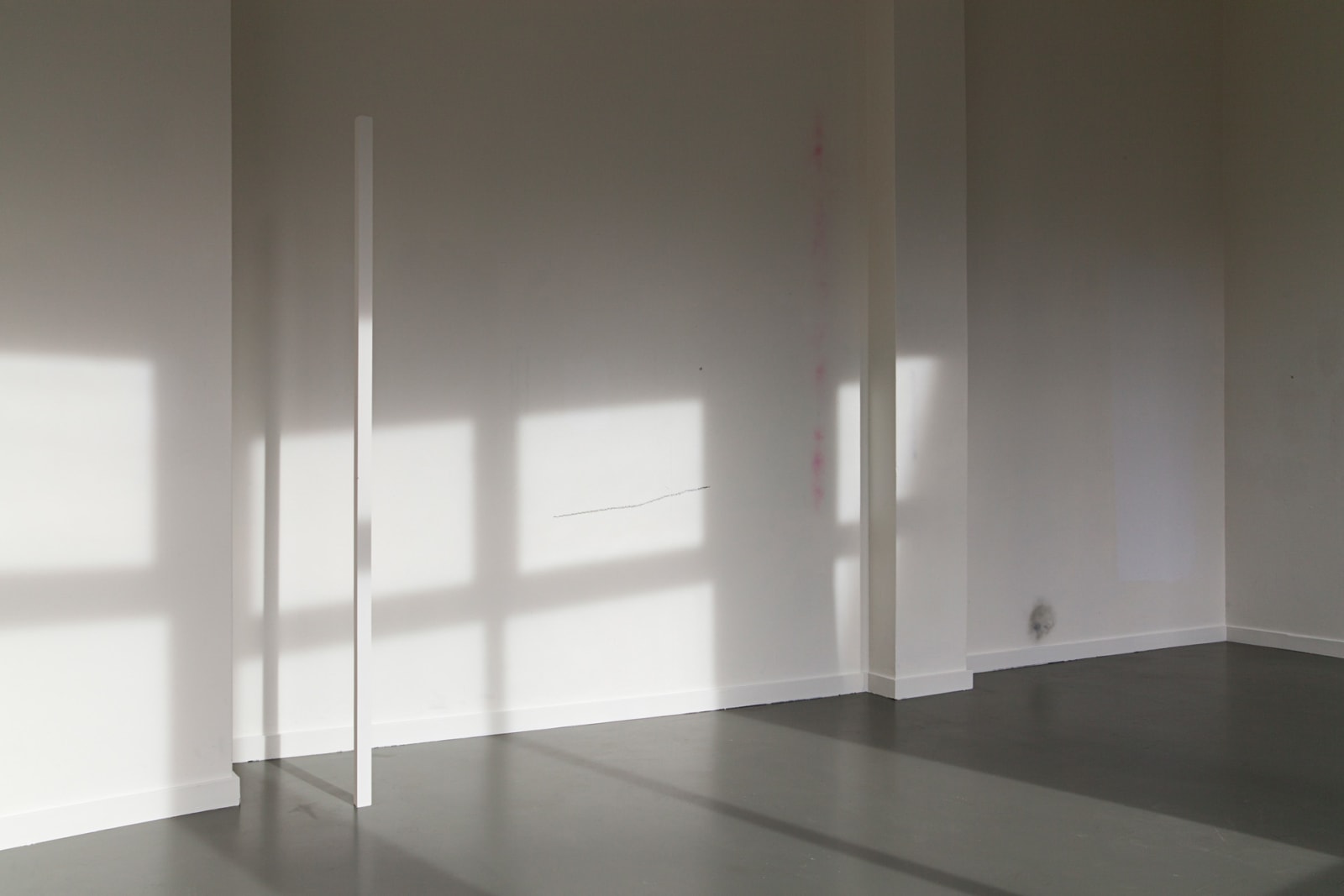
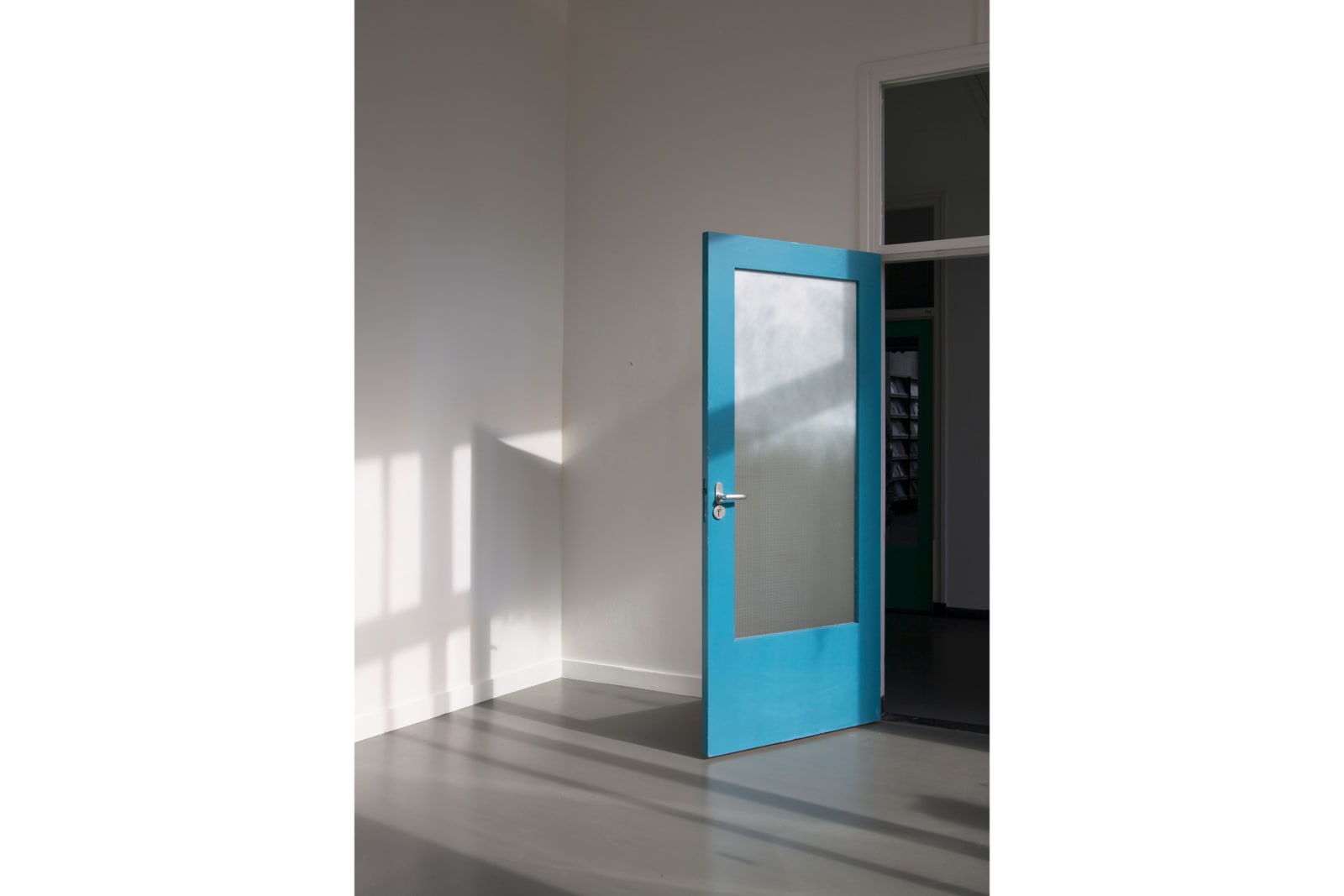

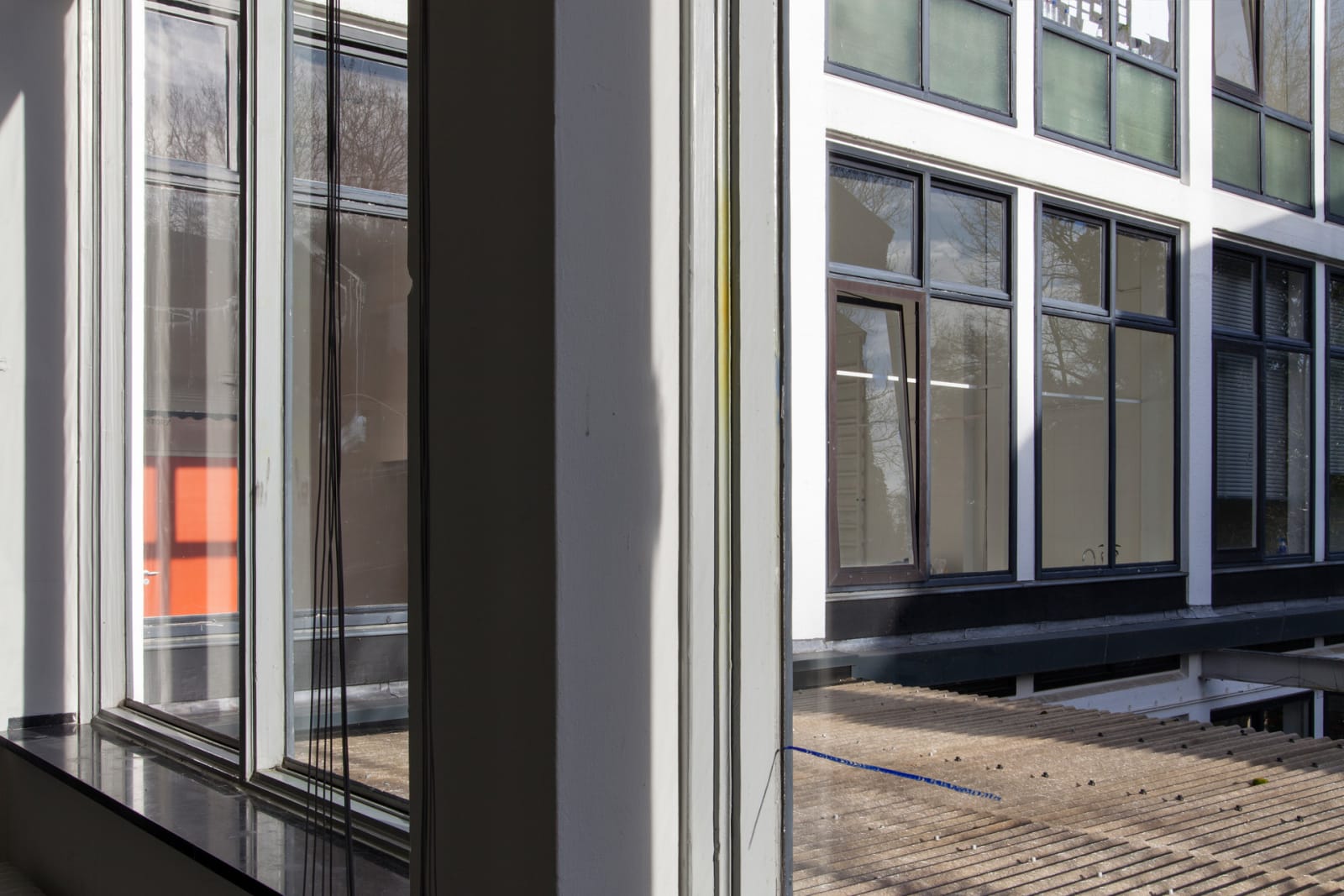

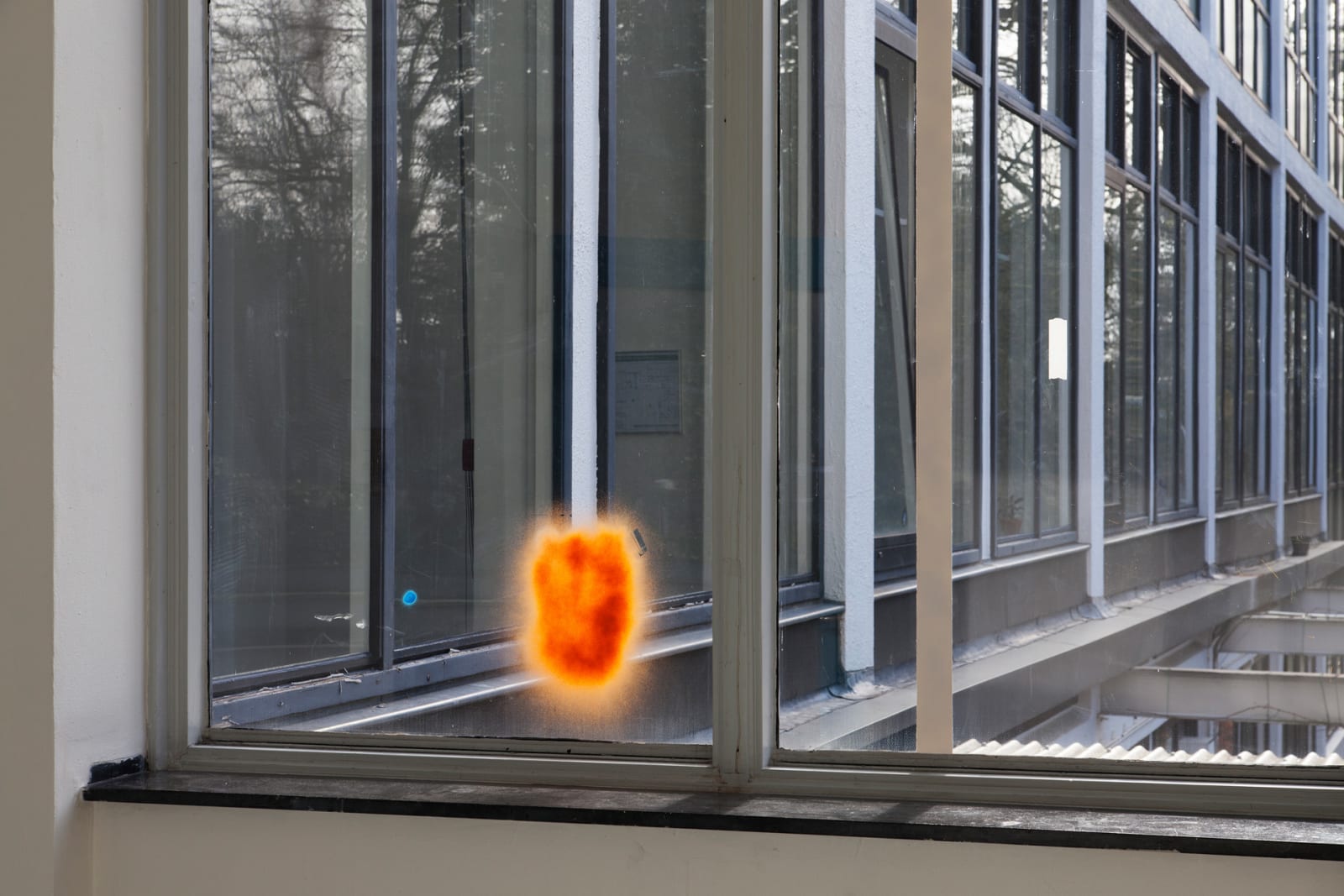
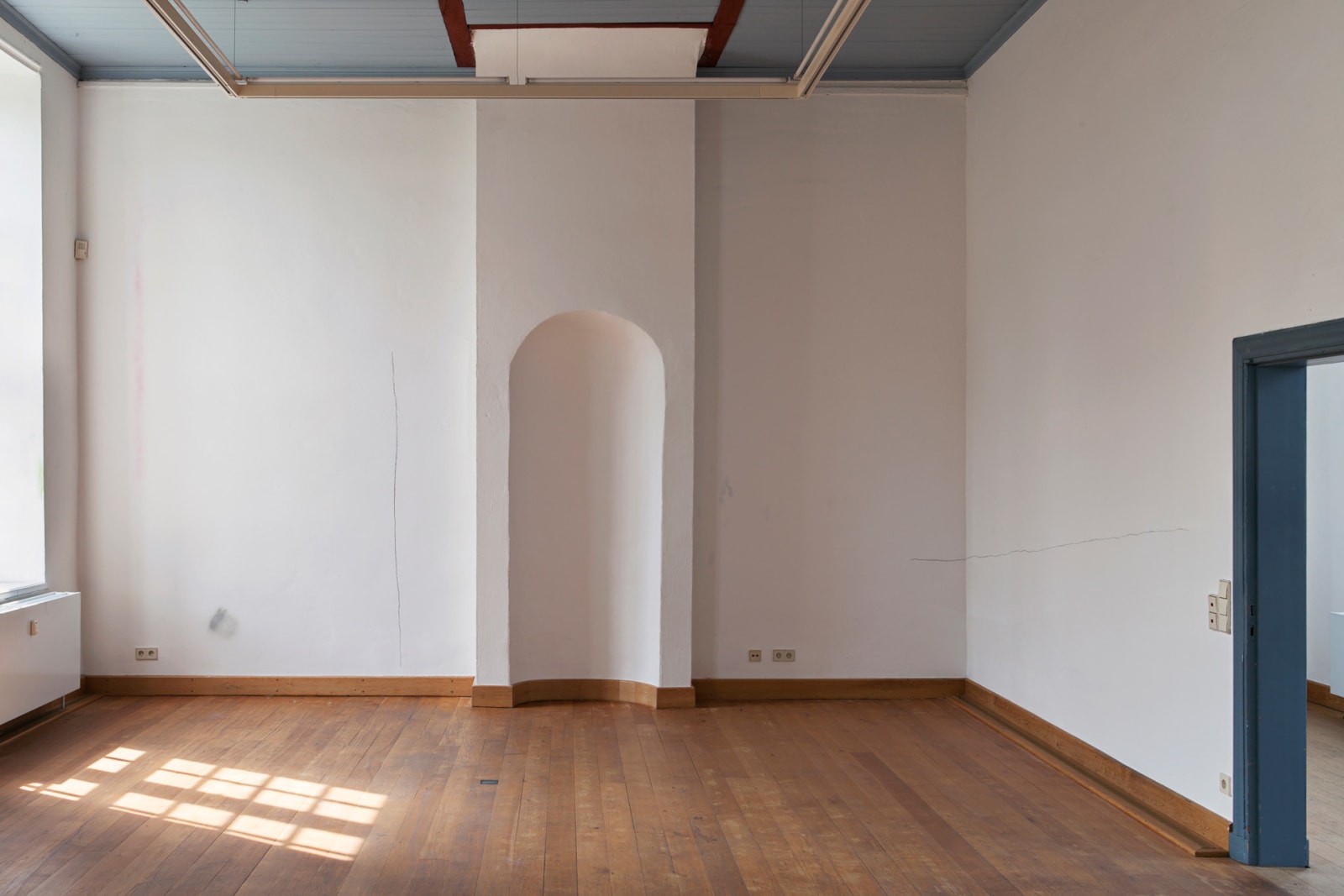
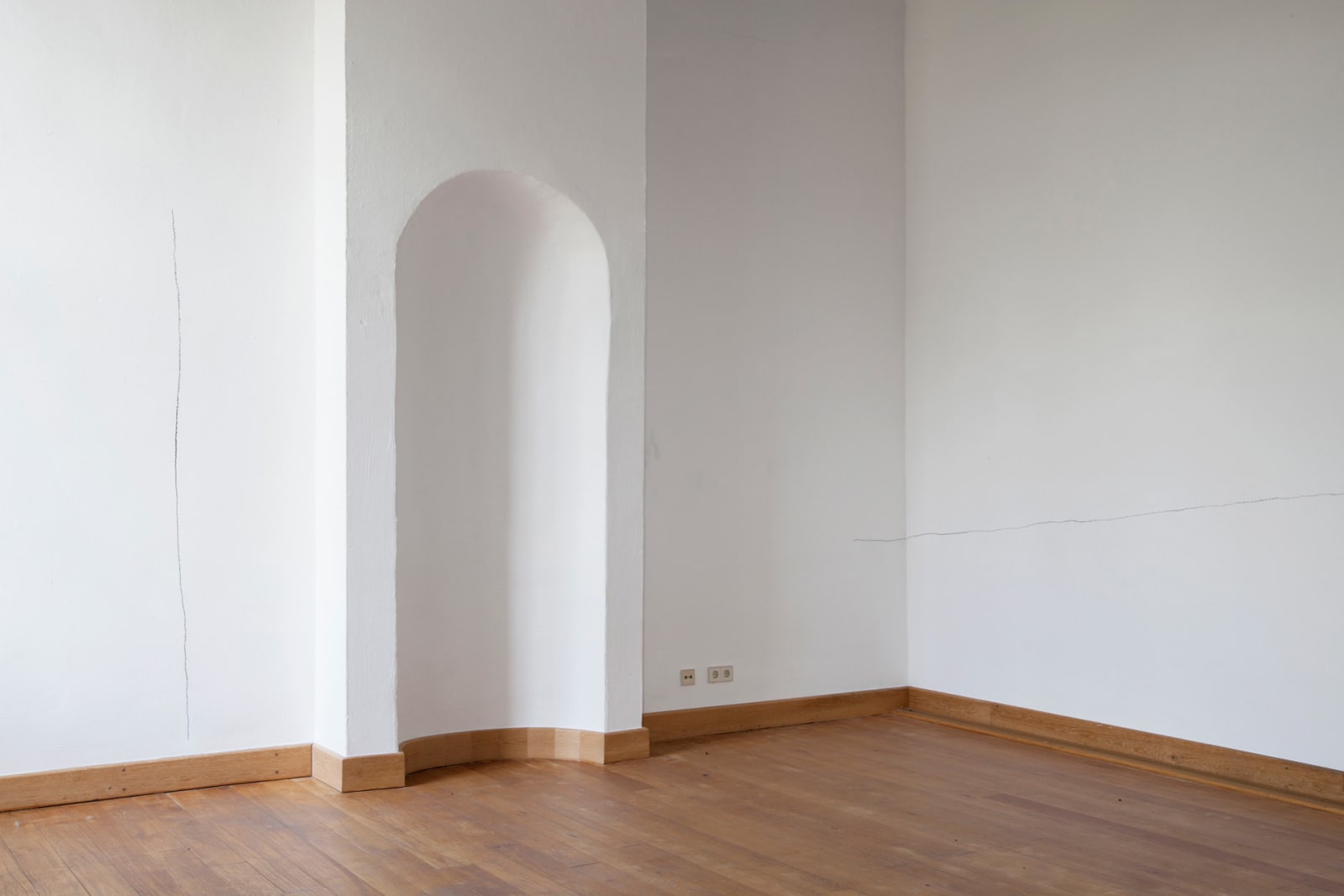
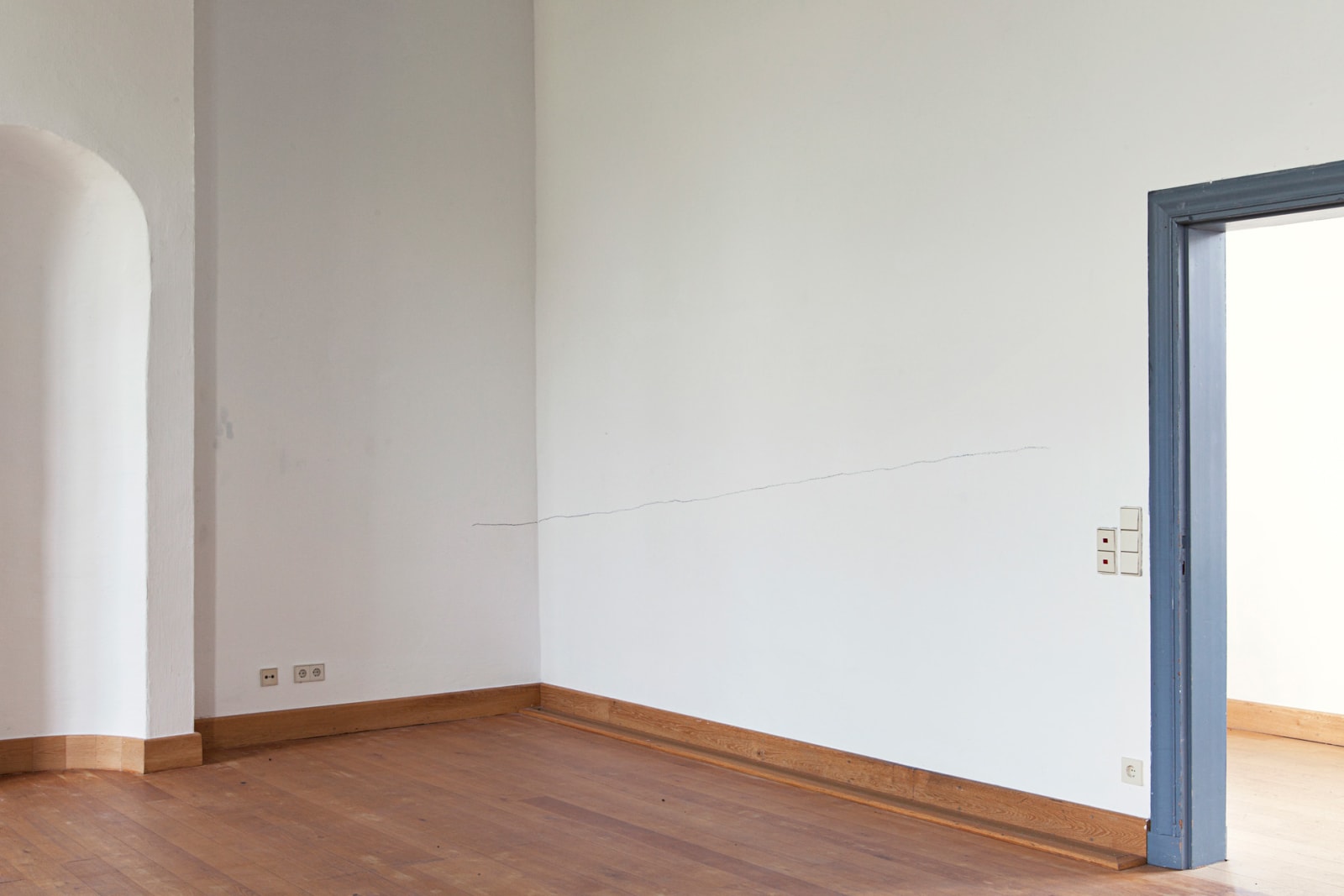
Heinemann makes installations that are tied to a specific location. You see a trace on a studio wall. And perhaps you see a reminiscence of the sun, or the emphasis may be on a particular forgotten corner of the interior. Heinemann uses the shifting daylight to mark walls. He treats shadows as part of the architecture of a building, and the building as a component of his work. All elements ‒ including time ‒ are equally important. Traces, light, colours, shapes, and signs in their presence are treated on an equal level to the space itself. He plays with them. And through this process he researches how we perceive and construct reality, its ephemerality and instability. Thus, in his work, as in reality, everything is as real as it is unreal, and as concrete as it is abstract.

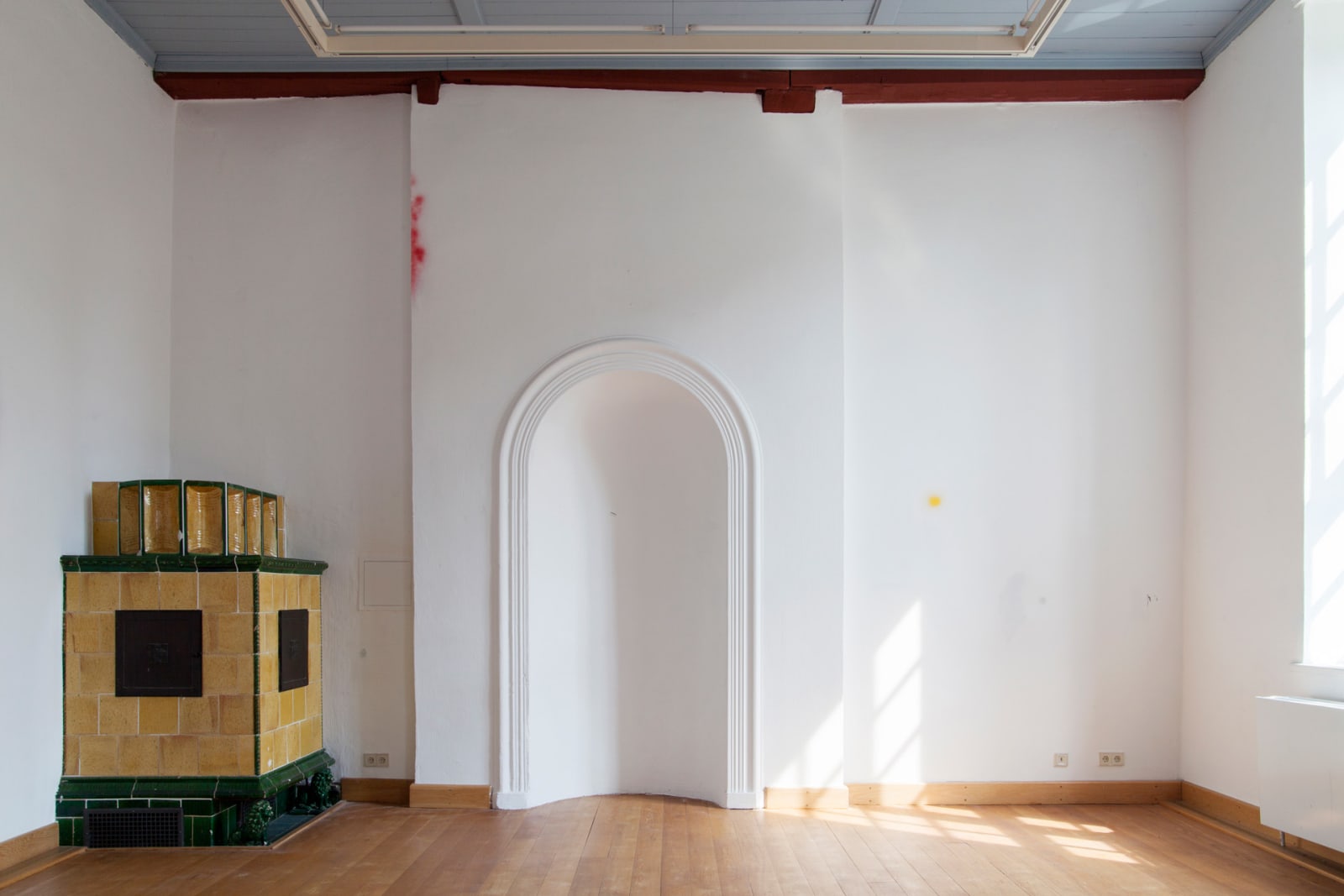
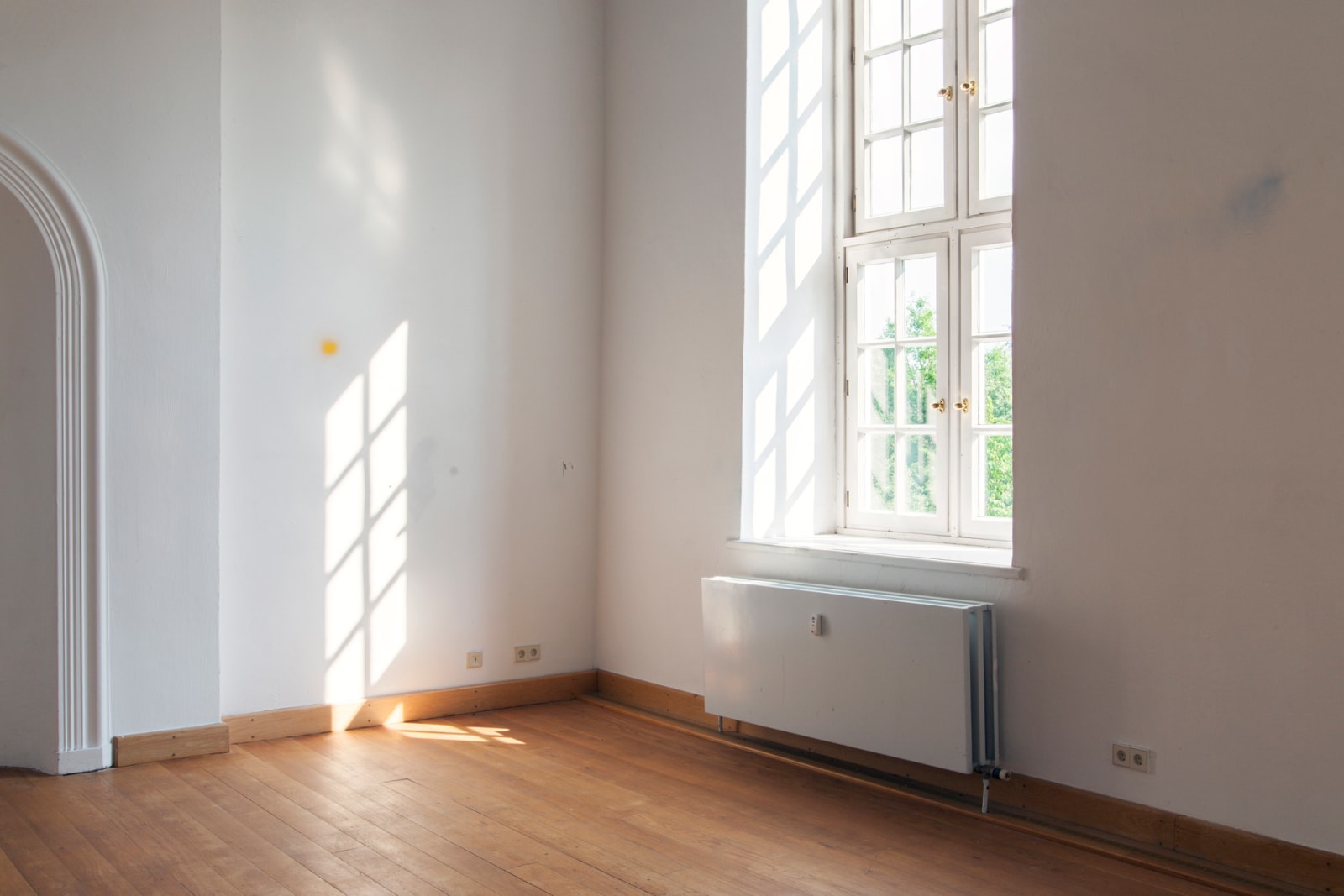
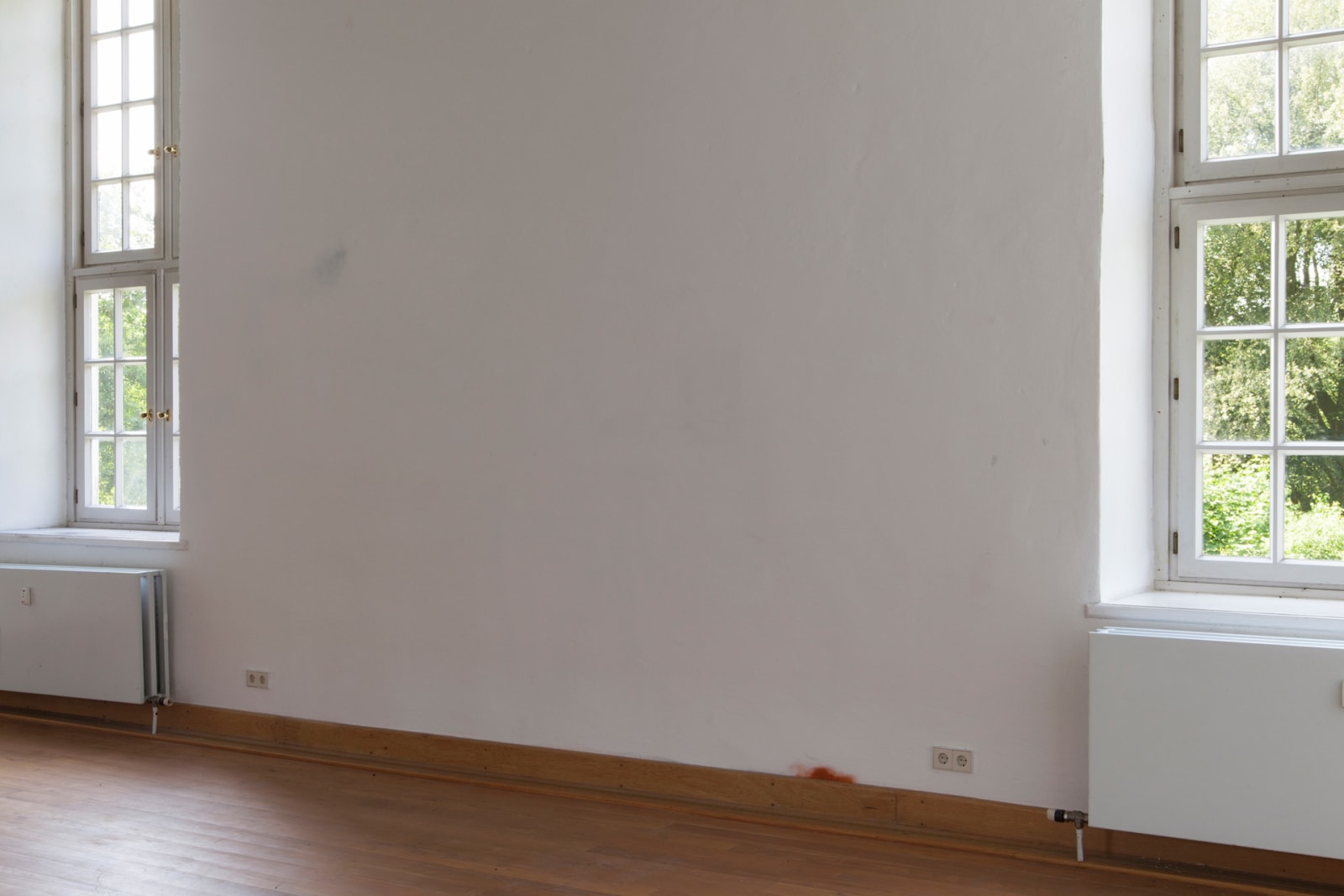
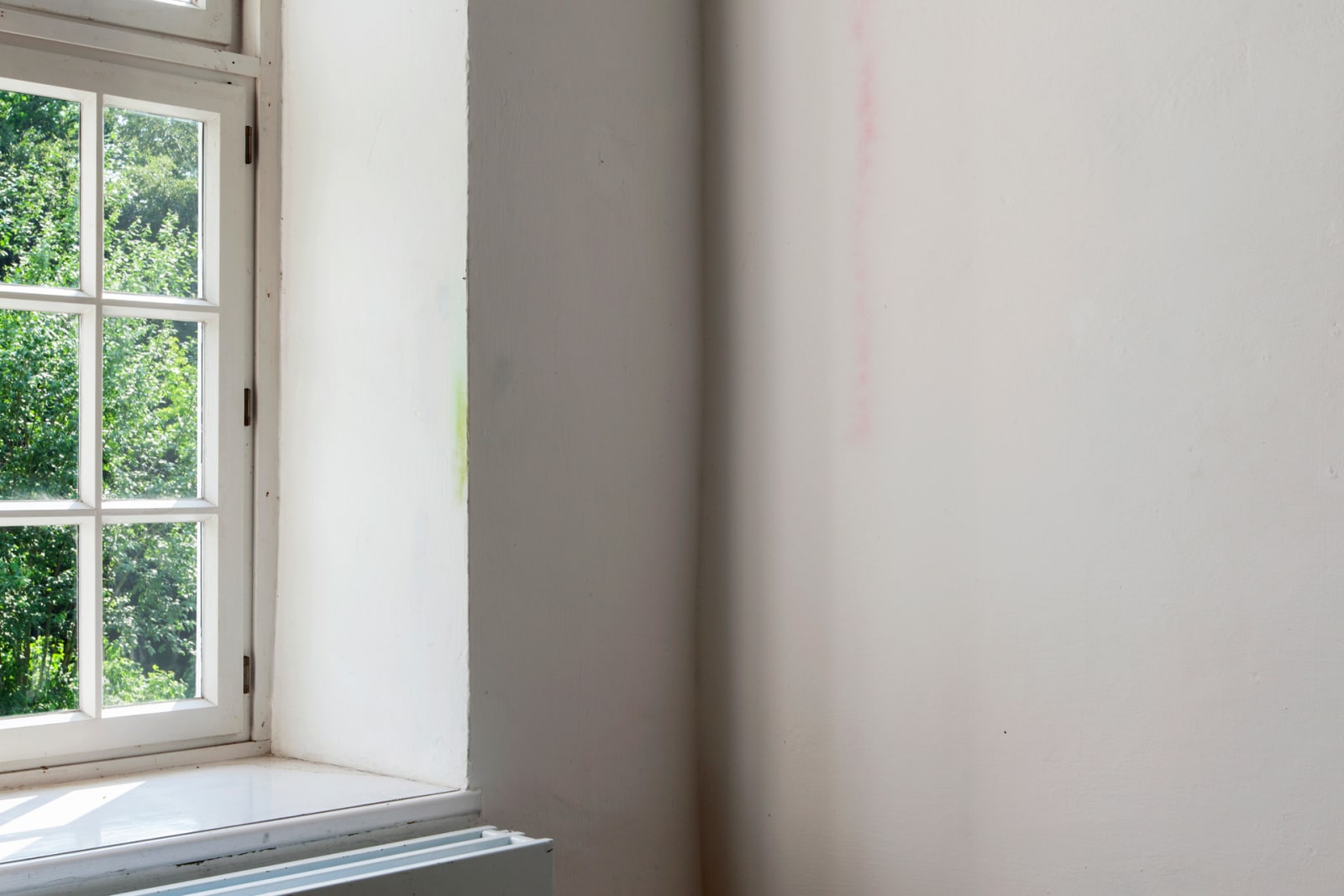
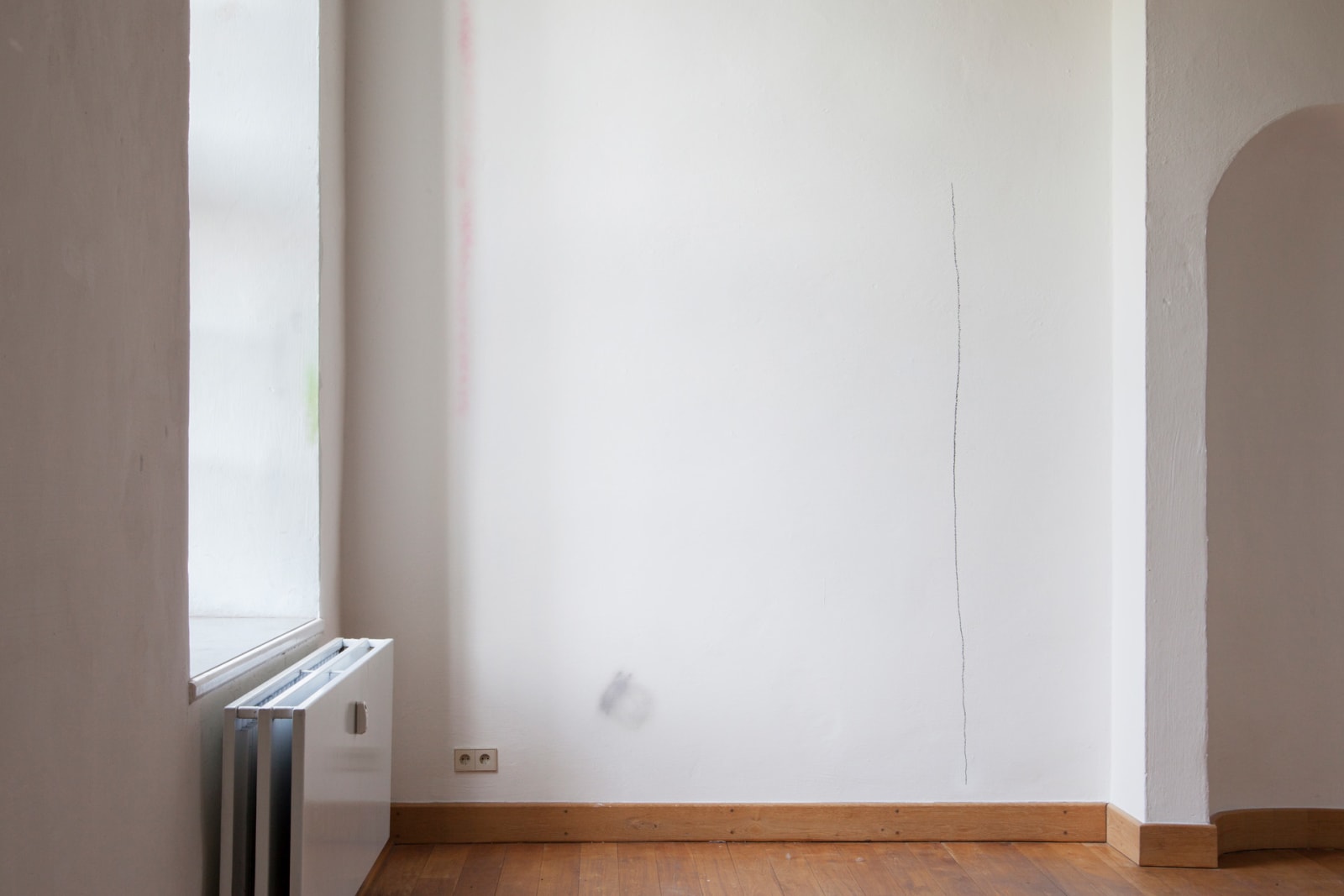
Some observations and some references to Dogen Zenji
“Nothing in the entire world is ever without movement, is ever without advancing or receding
— it is always in shift.”1
The work of Julius Heinemann reminds me that the act of looking is never static. The eyes are constantly moving, always subtly quivering even when resting on a single point. The images our brain makes of an endless flow of visual signals are only poured into firmer shapes when our mind starts making sense of it all. This shift from pure seeing to making images happens (almost literally) in the blink of an eye, and we rarely even know that it’s happening. But it is this exact shift that the spacious painting of Julius Heinemann brings to the surface. It moves within in the gap between rational thinking, dream and imagination, by creating just that little glitch in the corner of your eye that could be reality or a trick of your mind.
“ […]When someone riding in a boat turns his gaze towards the shore, he misjudges the shore to be moving: when he fixes his eye firmly upon the boat, he will recognize that the boat is plowing on.”2
Upon first noticing these painterly traces the whole room is suddenly activated. There is no telling where it ends or begins, and thinking within these dichotomies becomes somewhat trivial. Wherever you stand, new (possible) painterly gestures become faintly visible, but also blend in so strongly with their environment that they stay just beyond the reach of your mind. And because it cannot be fixed, it’s not just your eyes that are always moving, it is space, it is all of space that is constantly moving. Like all matter is built up from only emptiness and shifting electrons, from moment to moment, the work of Julius Heinemann is always in transition.
“Since we are provided with both a body and a mind, we grasp onto the physical forms we see: since we are provided with both a body and a mind, we cling to the sounds we hear.”3
You mostly notice your views on how things should be when something comes along that messes it up. Why is it both delicious and painful to look at the bold black stripe that Heinemann mercilessly drew across a white wall? Certain unwritten but clear rules about harmony and beauty are broken by this gesture, although any child can tell you that freely drawing on the wall can be a liberating act. Despite the fact that every painterly intervention of Heinemann is an intended move, his work pinpoints your own small visual neuroses, perhaps giving them a little nudge to loosen up.
“Do not lose sight of the fact that the ways of letting go are incalculable.”4
Adelheid Smit
[1] Fragment of ‘Uji’ (usually translated as ‘Being-time’) fascicle of the Shobogenzo by Dogen Zenji (1200-
1253), translation by Rien Raud, Philosophy East and West Vol. 62 No. 2, April 2012, p. 166.
[2] Fragment of ‘Genjo Koan’ by Dogen Zenji (1200-1253), translated by Hubert Nearman in Shobogenzo,
2007, p. 33.
[3] Ibid., p. 32.
[4] Fragment of ‘Gyōbutsu Iigi' by Dogen Zenji. Ibid., p. 283.
Einige Beobachtungen und einige Referenzen auf Dogen Zenji
Nichts auf der ganzen Welt ist jemals ohne Bewegung, ohne vorausgehen oder zurückweichen – es ist immer in Veränderung. [1]
Das Werk von Julius Heinemann erinnert mich daran, dass der Akt des Betrachtens niemals statisch ist. Die Augen bewegen sich ständig, immer leicht zuckend wenn sie auf einem einzigen Punkt ruhen. Die Bilder die unser Gehirn aus einem unendlichen Fluss aus visuellen Signalen produziert werden nur in feste Formen gegossen, wenn unser Verstand beginnt aus allem Sinn zu machen. Dieser Übergang von reinem Sehen zum Bilder-machen passiert (fast wörtlich) in nur einem Augenblick und wir merken kaum, dass es geschieht. Doch es ist dieser exakte Übergang der die räumliche Malerei von Julius Heinemann an die Oberfläche bringt. Es bewegt sich in der Lücke zwischen rationalem Denken, Traum und Imagination, durch die Herstellung nur eines kleinen Störungsimpulses in der Ecke des Sichtfeldes der Real sein könnte oder nur ein Trick des Verstandes.
Wenn jemand, der in einem Boot fährt, seinen Blick zum Ufer wendet, missinterpretiert er das Ufer als würde es sich bewegen: wenn er seine Augen fest an das Boot fixiert, wird er erkennen, dass es das Boot ist das weiter fliest. [2]
Nach der ersten Wahrnehmung dieser malerischen Spuren ist der ganze Raum plötzlich aktiviert. Da gibt es keinen Anhaltspunkt wo es endet oder beginnt, und in solchen Dimensionen zu denken wird ziemlich trivial. Wo immer man steht werden immer neue (mögliche) malerische Gesten leise sichtbar, doch verschwimmen zugleich so stark mit ihrer Umgebung, dass sie unmittelbar außer Reichweite des Geistes bleiben. Und da diese Gesten nicht fixiert werden können, sind es nicht nur die eigenen Augen die sich immer zu bewegen, es ist der Raum, es ist der ganze Raum der sich beständig bewegt. Wie alle Materie die nur geformt wurde aus Nichts und sich verändernder Elektronen, ist das Werk von Julius Heinemann immer im Übergang von Moment zu Moment.
Da wir sowohl mit einem Körper als auch einem Geist ausgestattet sind, greifen wir die physikalischen Formen die wir sehen: Da wir sowohl mit einem Körper als auch einem Geist ausgestattet sind, schmiegen wir uns an den Klang den wir hören. [3]
Du bemerkst meist deine Ansichten wie die Dinge sein sollten, wenn etwas daher kommt, das sie durcheinander bringt. Warum ist es sowohl herrlich als auch schmerzhaft den dicken schwarzen Strich den Heinemann schonungslos auf eine weiße Wand zeichnet anzuschauen? Gewisse ungeschriebene aber klare Gesetze über Harmonie und Schönheit werden durch diese Geste gebrochen, wenngleich jedes Kind davon erzählen kann, dass frei zeichnen an der Wand ein befreiender Akt sein kann. Trotz der Tatsache, dass jede malerische Intervention von Heinemann eine intendierte Bewegung ist, weist sein Werk punktgenau auf deine eigenen kleinen visuellen Neurosen hin, und möglicherweise gibt es ihnen einen kleinen Anstoß um sie zu lösen.
Verliere nicht die Tatsache aus dem Auge, dass die Wege des Loslassen unzählbar sind. [4]
Adelheid Smit
[1] Fragment von "Uji" (meistens übersetzt als "Sein-Zeit") Faszikel des Shobogenzo) von Dogen Zenji (1200-1253), Übersetzung von Rien Raud,Philosophy East and West Vol. 62 No. 2, April 2012, p. 166.
[2] Fragment von ‘Genjo Koan’, Dogen Zenji (1200-1253), Übersetzung von Hubert Nearman in Shobogenzo, 2007, p. 33.
[3] Fragment von ‘Genjo Koan’, Dogen Zenji (1200-1253), Übersetzung von Hubert Nearman in Shobogenzo, 2007, p. 32.
[4]Fragment von ‘Gyōbutsu Iigi’, Dogen Zenji (1200-1253), Übersetzung von Hubert Nearman in Shobogenzo, 2007, p. 283.
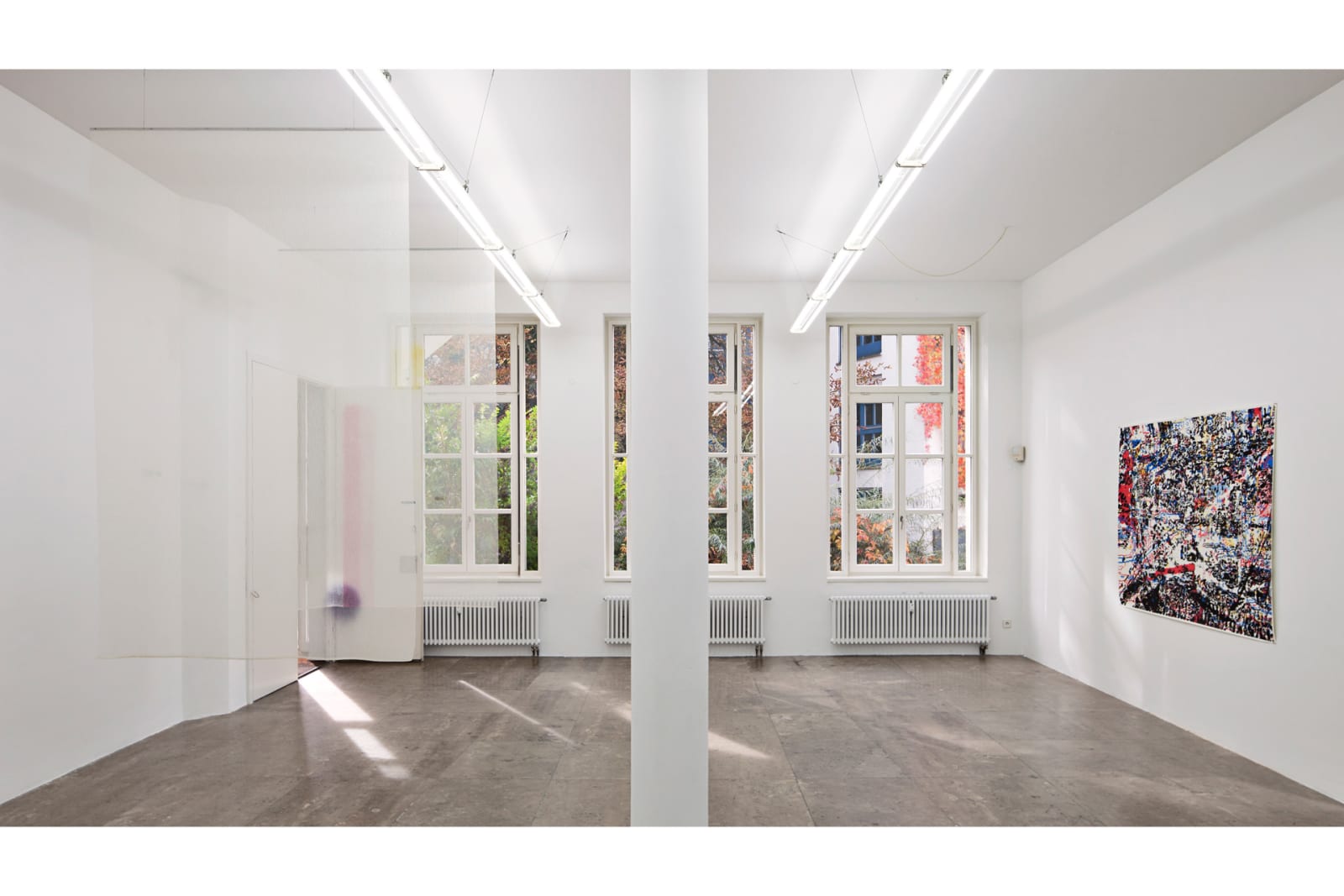
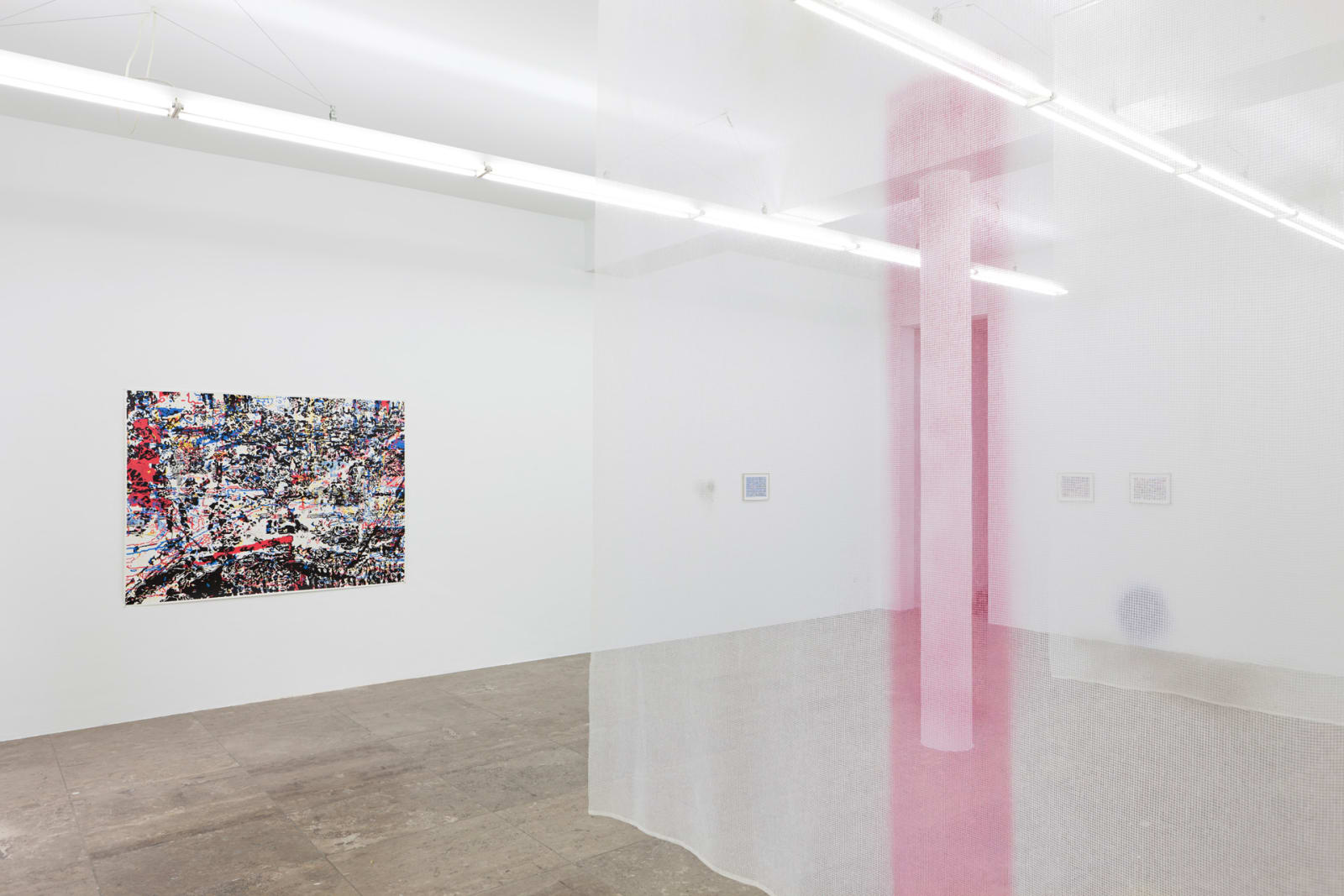
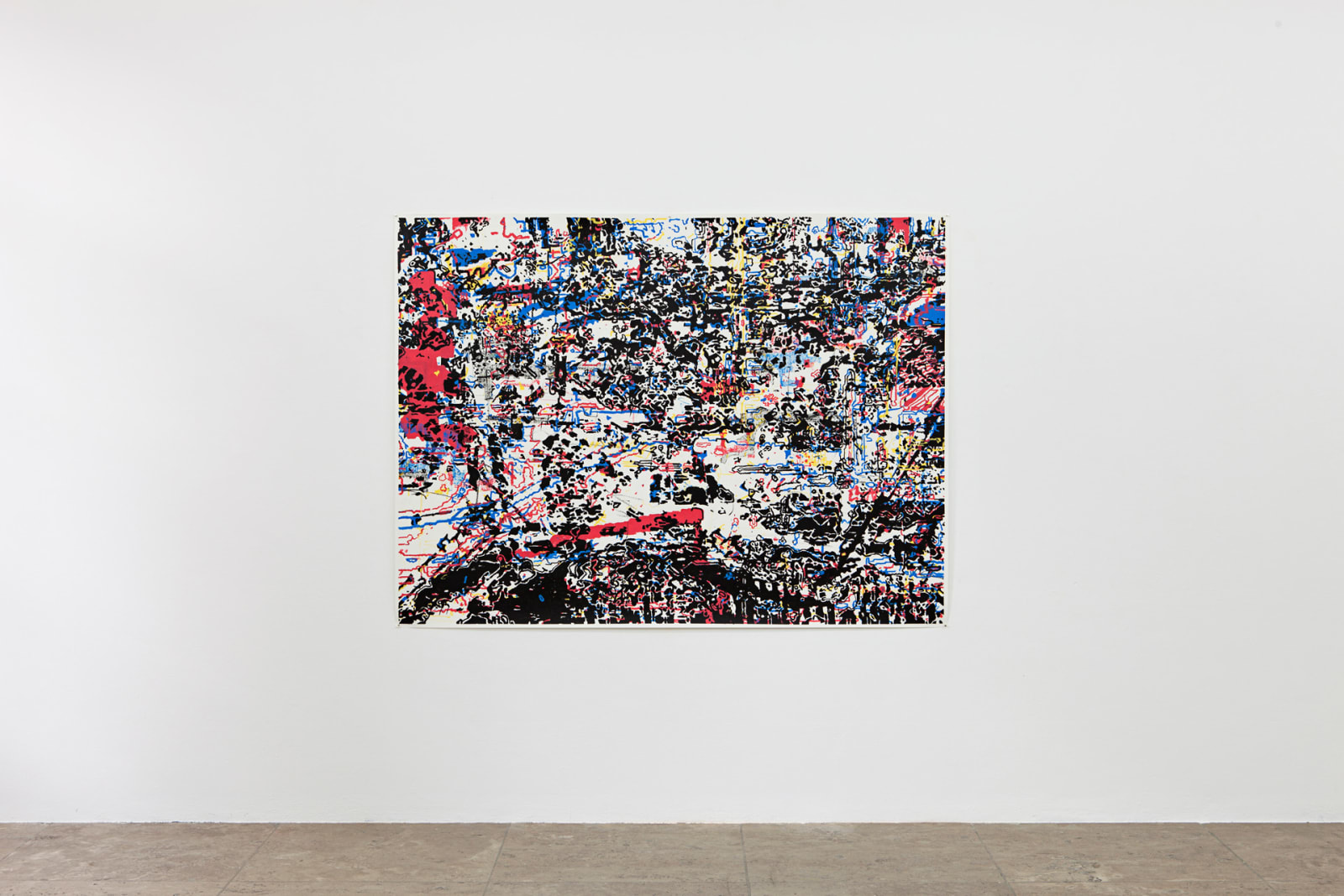

…In that Empire, the Art of Cartography attained such Perfection that the map of a single Province occupied the entirety of a City, and the map of the Empire, the entirety of a Province. In time, those Unconscionable Maps no longer satisfied, and the Cartographers Guilds struck a Map of the Empire whose size was that of the Empire, and which coincided point for point with it. The following Generations, who were not so fond of the Study of Cartography as their Forebears had been, saw that that vast Map was Useless, and not without some Pitilessness was it, that they delivered it up to the Inclemencies of Sun and Winters. In the Deserts of the West, still today, there are Tattered Ruins of that Map, inhabited by Animals and Beggars; in all the Land there is no other Relic of the Disciplines of Geography.
– Suarez Miranda,Viajes devarones prudentes, Libro IV,Cap. XLV, Lerida, 1658[1]
Rather than a two-person exhibition, Radio City is a dialogical collaboration between Martin Groß and Julius Heinemann in which the artists explore a converging interest in the notion of scale. While there is a noticeable difference in terms of approach, use of media and formal solution in their practices, both have been experimenting with the possibilities of pictorial space for some time, particularly in its relationship with architectural space.
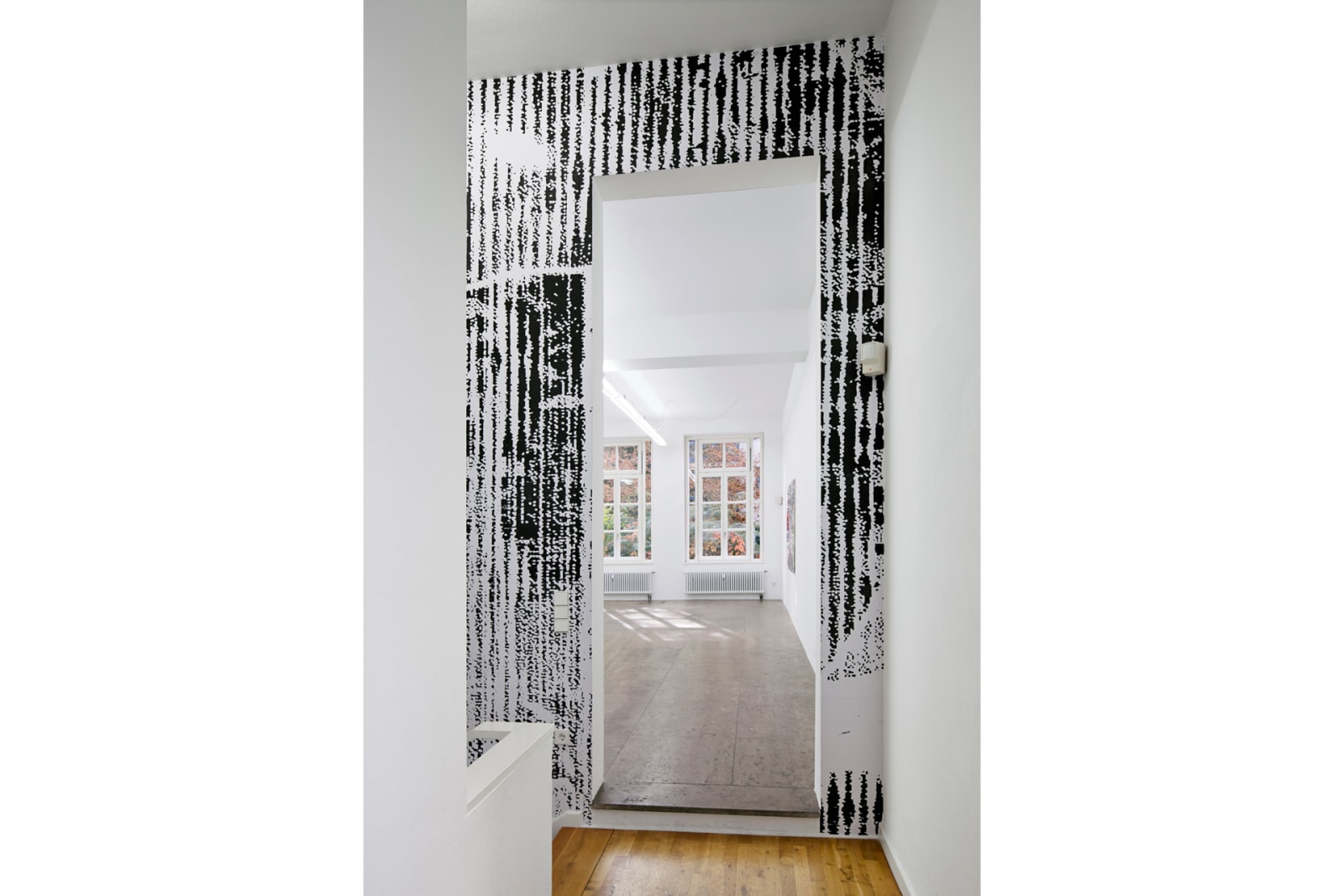
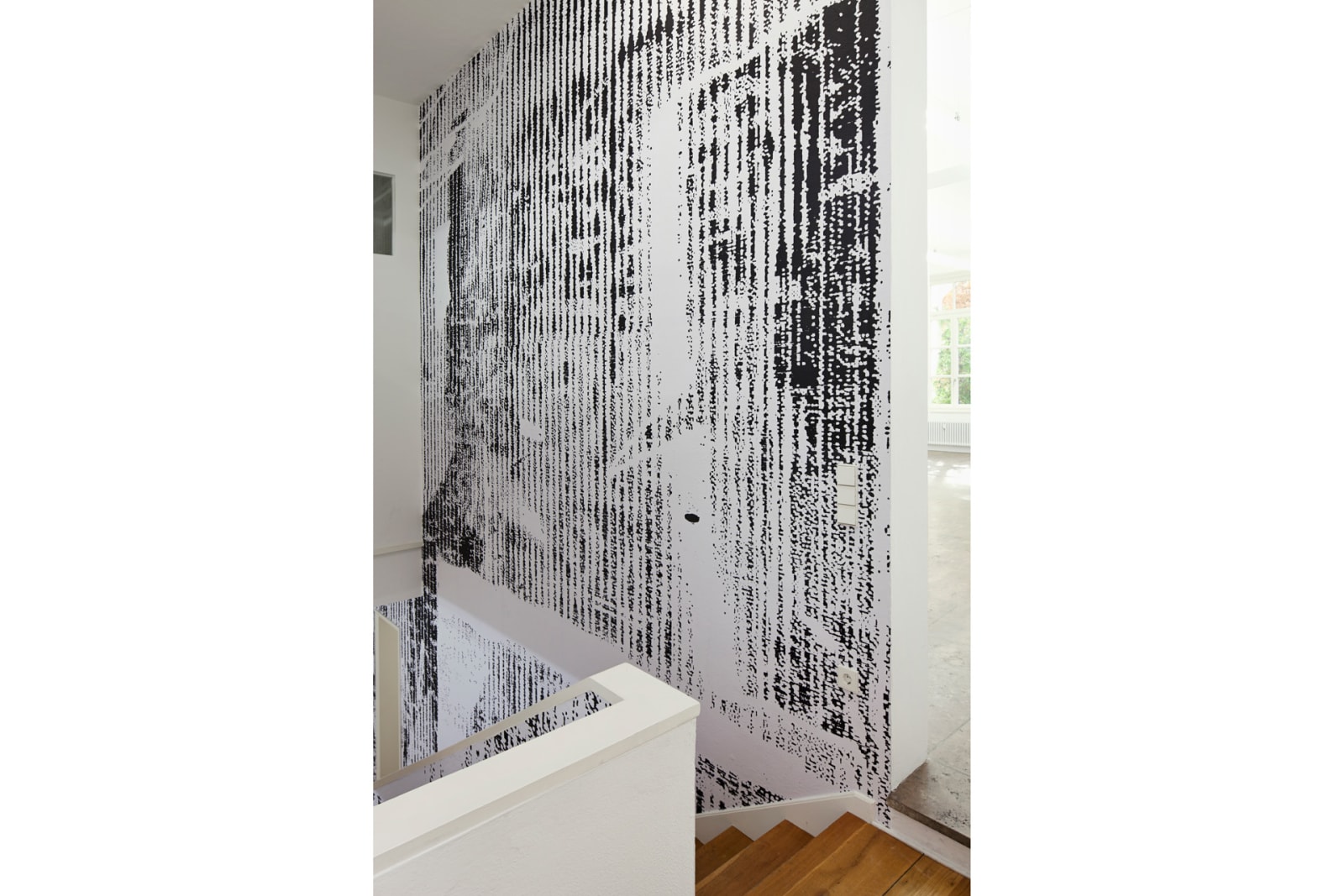
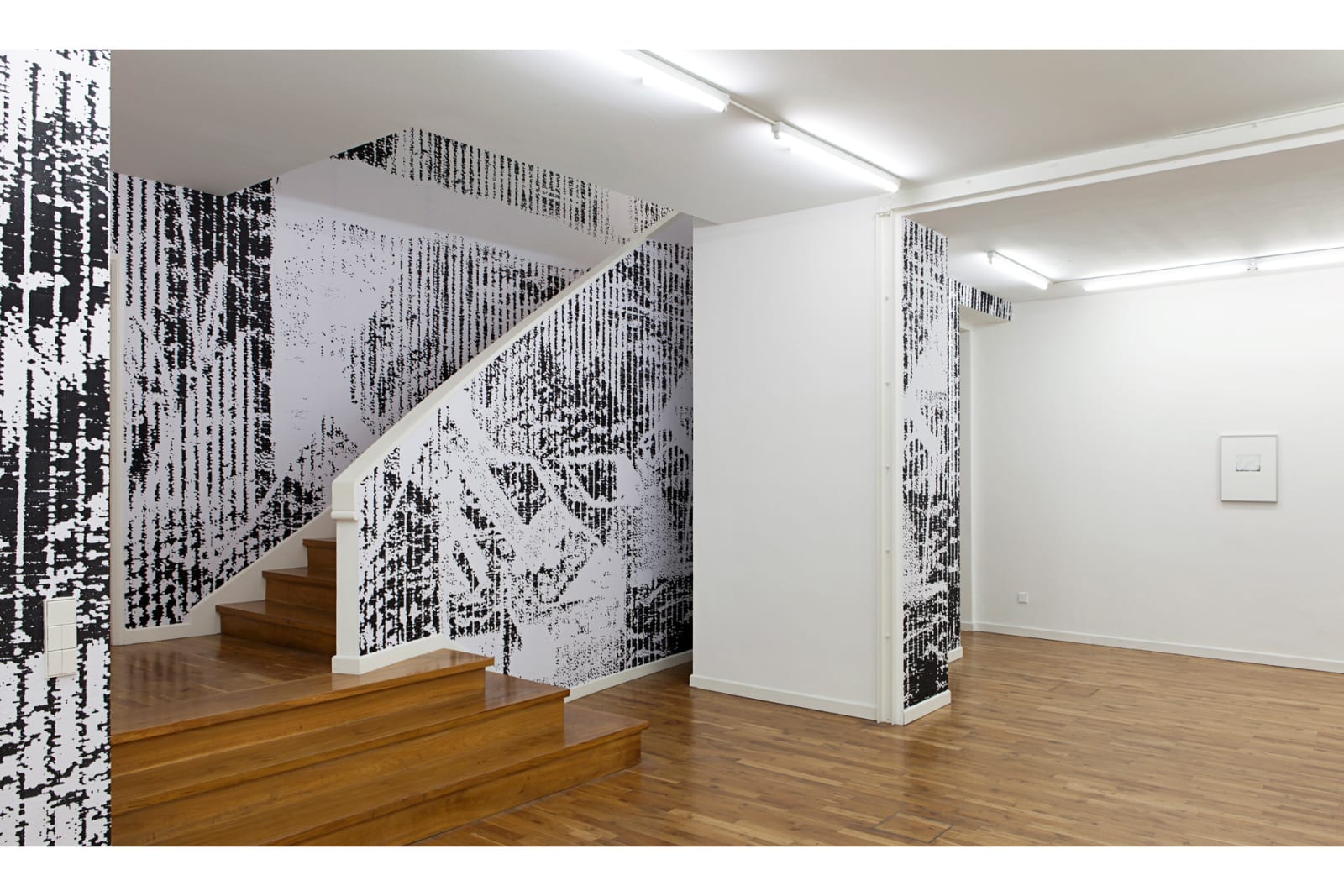
Situated somewhere between the communication of signs and the solipsism of abstraction, Groß’s black and white prints serve as the basis for larger wallpaper installations. His compositions evoke the spectral presence of images, which are rendered unreadable through a process of over-layering figures and motifs that create textured, quasi-abstract surfaces. When enlarged and installed on the walls, these prints take on an environmental quality, interfering directly on the architecture of the exhibition space and the way viewers are affected by and relate to it.
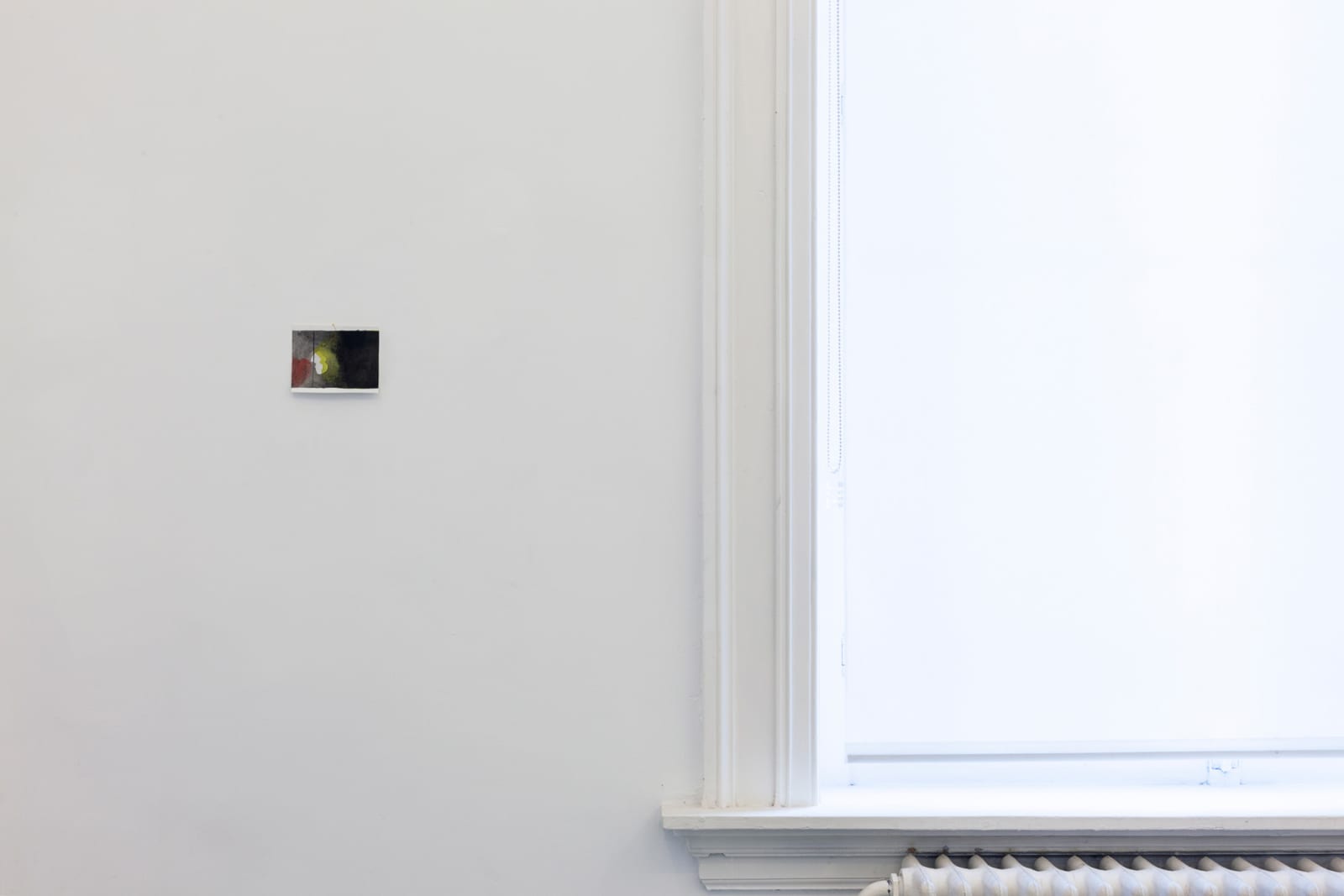
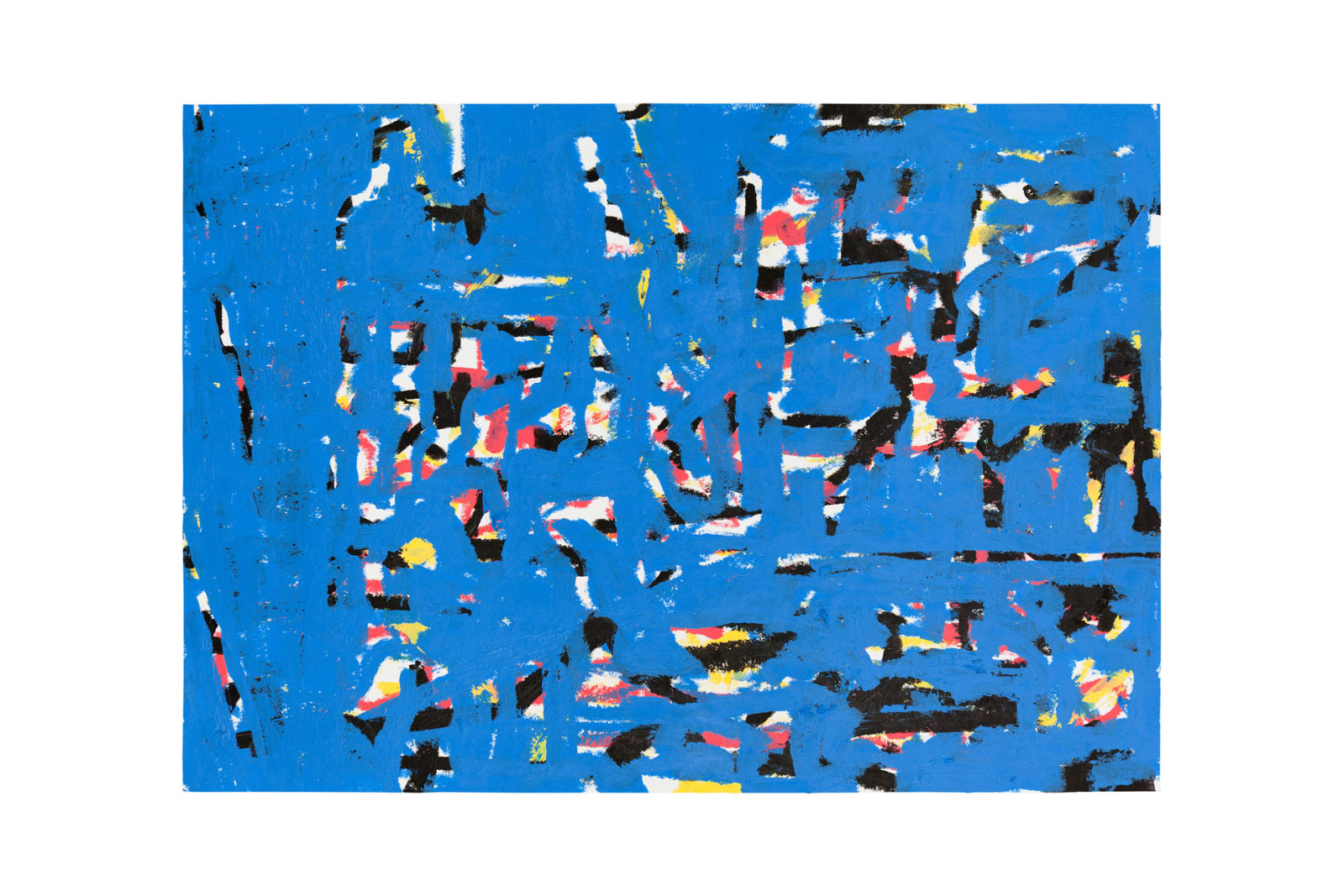
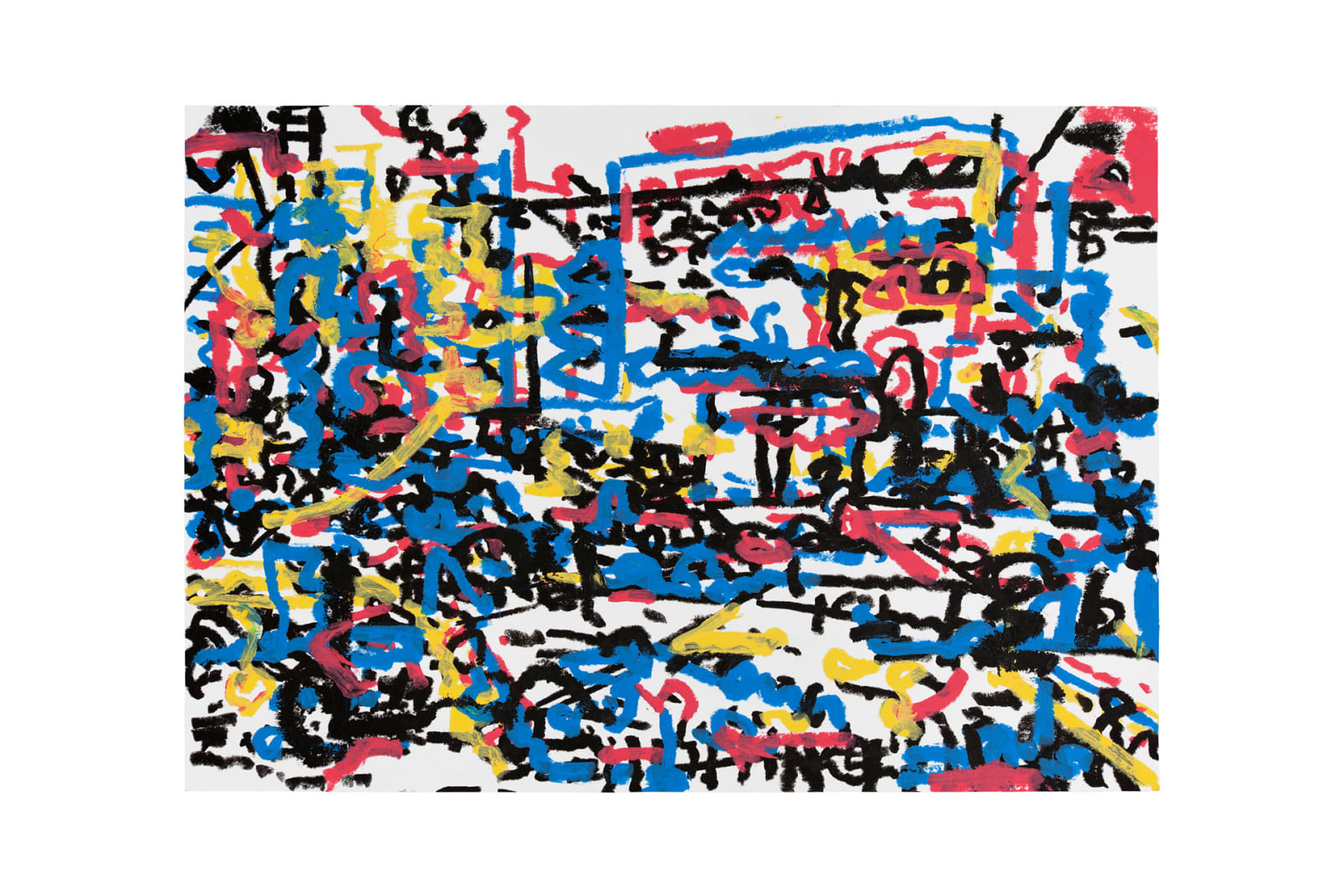
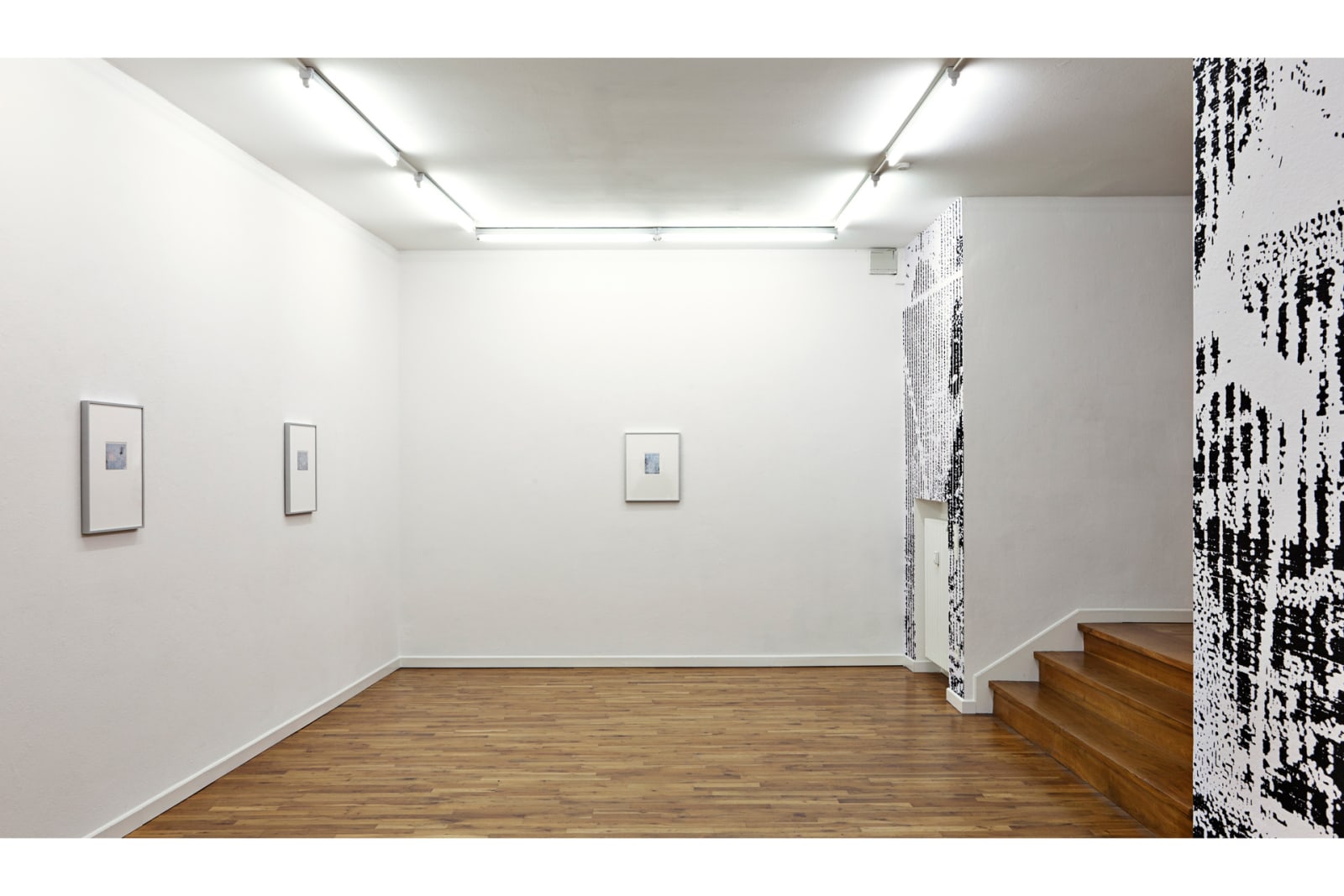
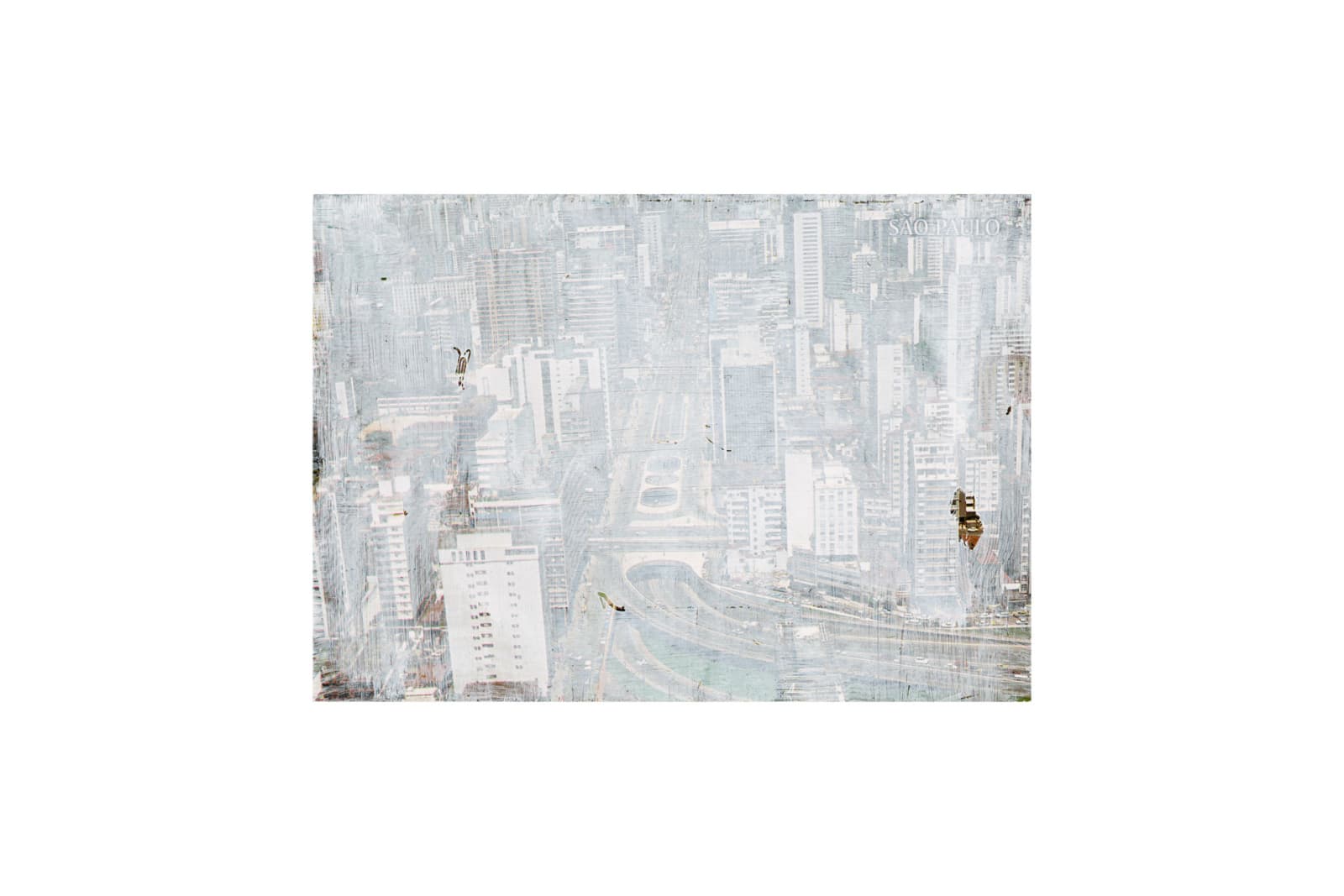
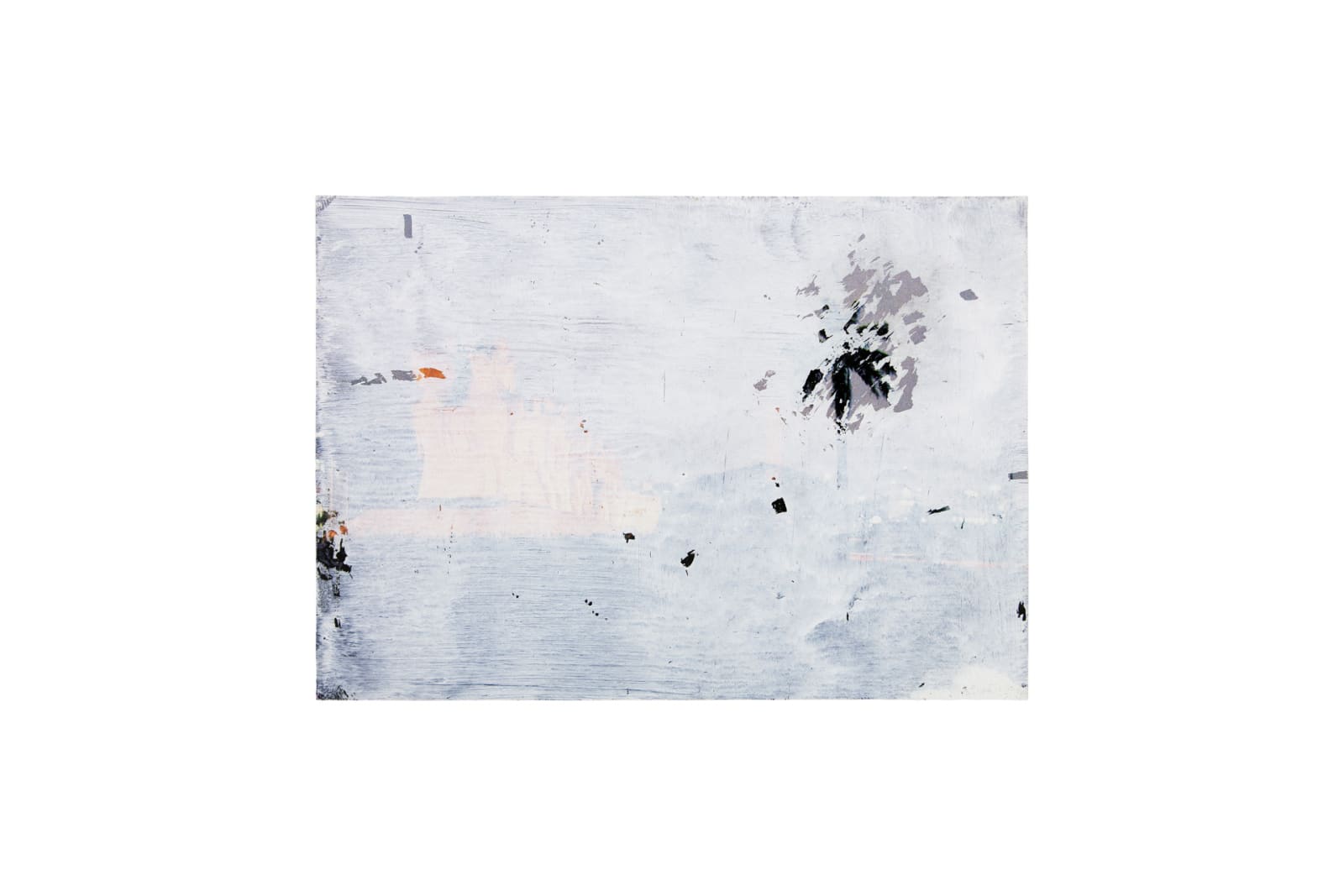
For Radio City, Groß has created a site-specific wallpaper installation that occupies several walls in one side of the gallery’s back room. Sweeping horizontal lines traverse the whole length of this end of the space from floor to ceiling, partially obscuring or revealing images reminiscent of modernist buildings that seem to lie in a latent state in the background. In the same room, Heinemann’s minute postcard paintings, in which the images of cities or monuments are almost completely veiled by white layers of paint, create a kind of zoom out effect when seen in relation to Groß’s installation. The contrasting scales of the wallpaper and postcards, and the fact that both seem to suggest similar images – sections of buildings in the first case and the ‘sea of buildings’ that forms the cityscape in the latter -, creates a kind of ‘Vertigo effect’: the famous dolly zoom immortalized by Hitchcock where the camera is pulled away from the focal object at the same time as it zooms into it.
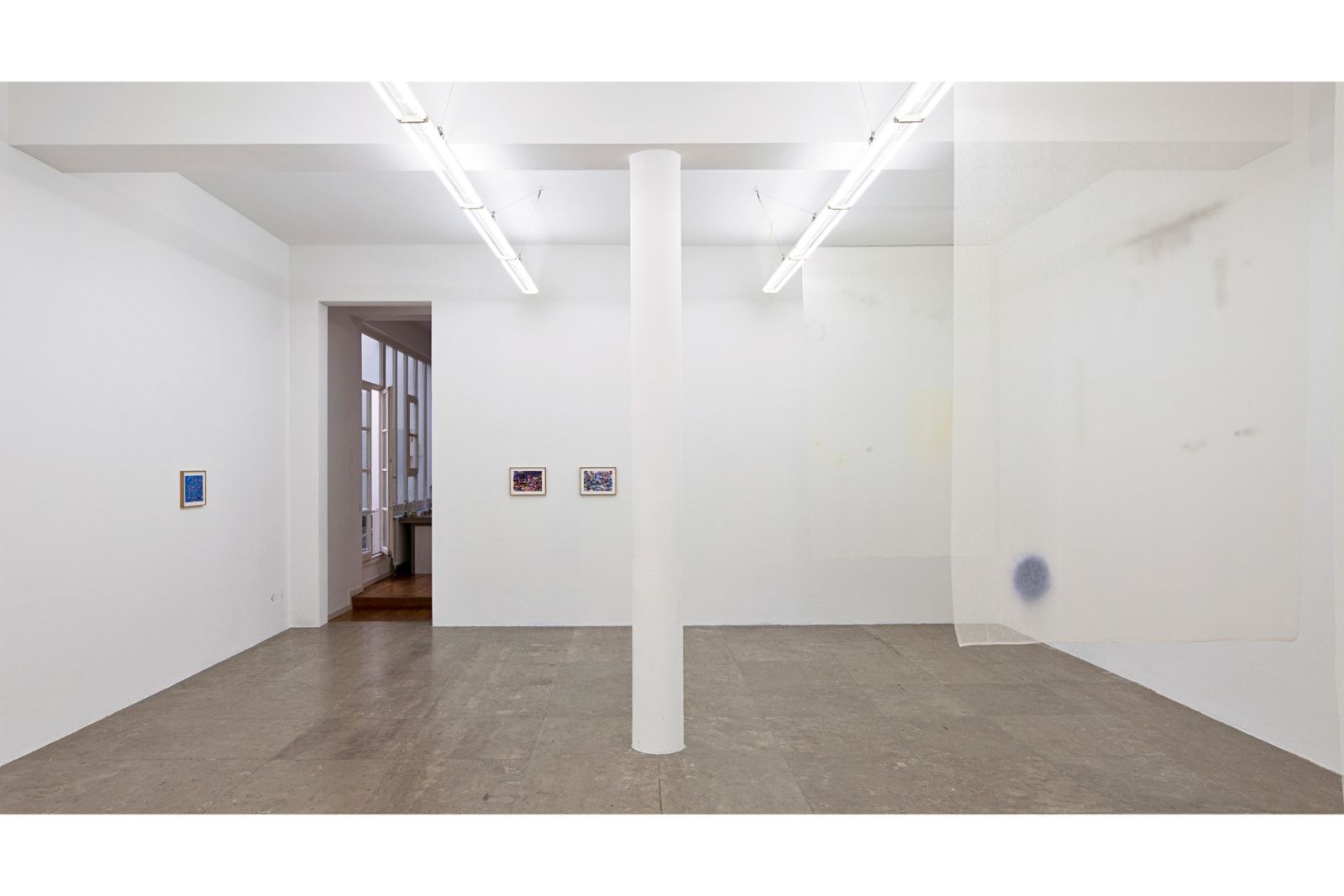
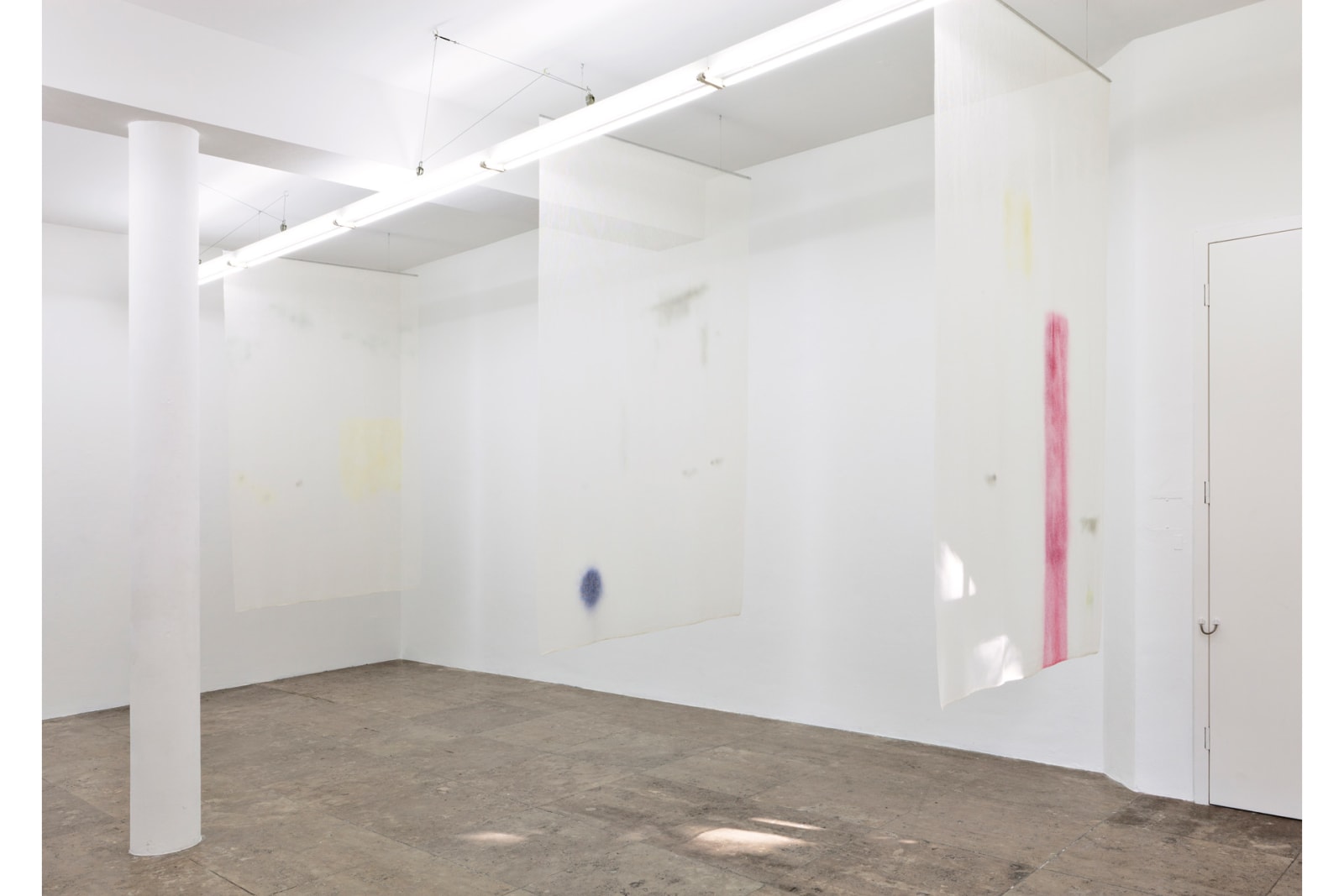
In the gallery’s front room, Heinemann presents an installation in which notions of transparency, depth of field and over-layering are articulated through the placement of three paintings on translucent fabrics that create a temporary and changeable architecture within the exhibition space. The variable character of the installation is further emphasized by the fact that the curtains are aligned with one of the windows in the gallery – whose shape they replicate -, and thus are affected by the changes in natural lighting that constantly transform the way we see them. Painting becomes space, and as we move through it, we are able to apprehend it in multiple ways as our viewpoint is constantly changed according to our position in the room. But it also becomes time, a series of fleeting moments that cannot be fully captured or apprehended. In each fabric panel, Heinemann makes delicate, sparse marks using colours, creating compositional elements that can be constantly recombined as our gaze travels through the gallery. The use of colours is reflected in a series of small industrial marker drawings by Groß presented in the same room. Packed in with juxtaposed lines and scribbles that give them weight and density, the drawings contrast not only in scale with the ethereal fabric installation, but seem to concentrate a lot of energy in a constrained space that is otherwise carefully dissipated across Heinemann’s installation. On the other hand, as much as they diverge in format or style, the works of both artists present fragmentary versions of space that complement each other as they cross back and forth from the traditional two-dimensionality of drawing and painting into actual three-dimensional space.
In Radio City, Groß and Heinemann enact a play on scale through a continuous movement of ‘pulling out’ and ‘zooming in’ that emphasizes the viewer’s awareness of the relationship between their bodies and the work, as one is constantly required to move close, away or through the pieces, while also highlighting the shifting character of perception. Ultimately, the pictorial space embraced by the artists is expanded to include the minute cities depicted in Heinemann’s postcards, the fragmented architectures of Groß’s wallpapers and drawings, finally encompassing the real city beyond the window incorporated in Heinemann’s fabric installation, coinciding, as in Borges’ story, point by point with it.
by Kiki Mazzucchelli
[1] On Exactitude in Science / Jorge Luis Borges, Collected Fictions, translated by Andrew Hurley (1999). The story was first published in the March 1946 edition of Los Anales de Buenos Aires, año 1, no. 3.
… In jenem Reich erlangte die Kunst der Kartographie eine solche Vollkommenheit, daß die Karte einer einzigen Provinz eine ganze Stadt einnahm und die Karte des Reichs eine ganze Provinz. Mit der Zeit befriedigten diese maßlosen Karten nicht länger, und die Kollegs der Kartographen erstellten eine Karte des Reichs, die die Größe des Reichs besaß und sich mit ihm in jedem Punkt deckte. Die nachfolgenden Geschlechter, dem Studium der Kartographie minder ergeben, hielten diese ausgedehnte Karte für unnütz und überließen sie, nicht ohne Ruchlosigkeit, den Unbilden der Sonne und der Winter. In den Wüsten des Westens überdauern zerstückelte Ruinen der Karte, behaust von Tieren und von Bettlern; im ganzen Land gibt es keine andere Reliquie der Geographischen Disziplinen.
– Suarez Miranda,Viajes devarones prudentes, Libro IV,Cap. XLV, Lerida, 1658
Radio City ist keine klassische Doppelausstellung, sondern vielmehr eine Kollaboration, in der Martin Groß und Julius Heinemann ihr gemeinsames Interesse an der Wahrnehmung von Maßstäben erkunden. Obwohl es erkennbare Unterschiede in den Ansätzen, der Verwendung von Medien und bei formalen Lösungen in der künstlerischen Praxis gibt, haben beide Künstler seit einiger Zeit mit den Möglichkeiten und Grenzen des Bildraumes, insbesondere mit dessen Beziehung zum architektonischen Raum, experimentiert.
Groß’ Schwarzweißdrucke – irgendwo zwischen der Kommunikation von Zeichen und dem Solipsismus in der Abstraktion verortet – dienen als Basis für größere tapezierte Wandinstallationen. Seine Kompositionen evozieren die schemenhafte Präsenz von Bildern, die durch den Prozess der Überlagerung von Figuren und Motiven unlesbar werden, und erzeugen strukturierte, quasi-abstrakte Oberflächen. Wenn die Drucke vergrößert auf Wänden installiert sind, nehmen sie eine räumliche Qualität an, die direkt auf die Architektur des Ausstellungsraumes einwirkt und die Weise, welcher der Betrachter sich zum Raum verhält und in Beziehung setzt, verändert.
Für Radio City hat Groß eine ortsspezifische Wallpaper-Installation geschaffen, die mehrere Wände einer Seite des unteren Galerieraumes einnehmen. Kräftige horizontale Linien, die sich vom Boden bis zur Decke erstrecken, überziehen die gesamte Länge des Raumes und verdecken oder enthüllen dabei Erinnerungsbilder von modernistischen Gebäuden, die in einem latenten Zustand im Hintergrund zu liegen scheinen. Im selben Raum erzeugen Heinemanns minuziöse Postkartenübermalungen, in denen die Bilder von Städten oder Denkmälern fast völlig von Schichten weißer Farbe verschleiert werden, eine Art Zoom-Out-Effekt, wenn sie in Beziehung zu Groß’ Installation gestellt werden. Die kontrastierenden Maßstäbe der Wallpaper-Installation und der Postkarten und die Tatsache, dass beide ähnliche Bilder andeuten – Teilstücke von Gebäuden im ersteren, und das „Häusermeer“ im zweiten – erzeugen eine Art „Vertigo-Effekt“: der berühmte Dolly-Zoom von Hitchcock, in welchem die Kamera vom fokussierten Objekt weggezogen wird, während sie es gleichzeitig heranzoomt.
Im vorderen Galerieraum präsentiert Heinemann eine Installation, in der Begriffe wie Transparenz, Tiefenschärfe und Überlagerung thematisiert werden. Dies passiert durch die Platzierung von drei Malereien auf durchsichtigen Stoffen, die eine temporäre und wandelbare Architektur innerhalb des Ausstellungsraumes erzeugen. Der variable Charakter der Installation wird dadurch betont, dass die Stoffe parallel zu einem der Fenster der Galerie ausgerichtet sind – dessen Form sie aufgreifen – wodurch das natürlichen Licht auf sie trifft und somit ständig verändert.
Malerei wird Raum und während wir uns hindurchbewegen, können wir sie auf vielfältige Weise begreifen; denn unserer Blickwinkel verändert sich ständig mit unserer Position im Raum. Aber sie wird ebenso zeitlich begreifbar, in einer Abfolge von flüchtigen Momenten, die nicht vollständig eingefangen oder begriffen werden können. Auf den Stoffschirmen bringt Heinemann zarte, sparsame Farbmarkierungen an, die kompositorische Elemente bilden, welche immerzu neu kombiniert werden können, während unser Blick durch die Galerie schweift. Die Verwendung von Farbe spiegelt sich in einer Serie von kleinen Zeichnungen mit industriellem Filzstift von Groß wieder, die im selben Raum präsentiert werden. Eng nebeneinander gezogenen und überlagernde Linien verleihen ihnen Gewicht und Dichte. Die Zeichnungen kontrastieren nicht nur im Maßstab zur leichten Stoffinstallation, sondern scheinen zudem eine Menge an Energie auf knappem Raum zu konzentrieren, welche in Heinemanns Installation sorgfältig verstreut wird. So sehr die Werke beider Künstler in Format und Stil divergieren, ergänzen sie sich andererseits, da sie fragmentarische Versionen des Raumes entwerfen, die zwischen der traditionellen Zweidimensionalität von Zeichnung und Malerei und dem wirklichen dreidimensionalen Raum hin- und herschwingen.
In Radio City inszenieren Groß und Heinemann ein „Spiel“ mit dem Maßstab, das den wechselnden Charakter unserer Wahrnehmung hervorhebt. Durch die kontinuierliche Bewegung des ‚Herausfahrens’ und ‚Hineinzoomens’ wird der Betrachter für die Beziehung seines Körpers zu den Werken sensibilisiert, da er fortwährend näher, weiter weg oder durch die Arbeiten treten muss. Der von den Künstlern beschriebene Bildraum wird so weit ausgedehnt, dass er von den Mikro-Stadtansichten auf den Postkarten Heinemanns, zu den fragmentierten Architekturen von Groß’ Wallpapers und Zeichnungen, hin zur wirklichen Stadt jenseits des Fensters, die in Heinemanns Stoffinstallation mit einbezogen wird, alles umschließt, um zuletzt mit ihr, wie in Borges’ Erzählung, 1:1 übereinzustimmen.
Kiki Mazzucchelli
[1] Übersetzung von Karl August Horst und Gisbert Haefs. Aus: Borges, Jorge Luis, gesammelte Werke Band VI, München, 1982, Seite 121.
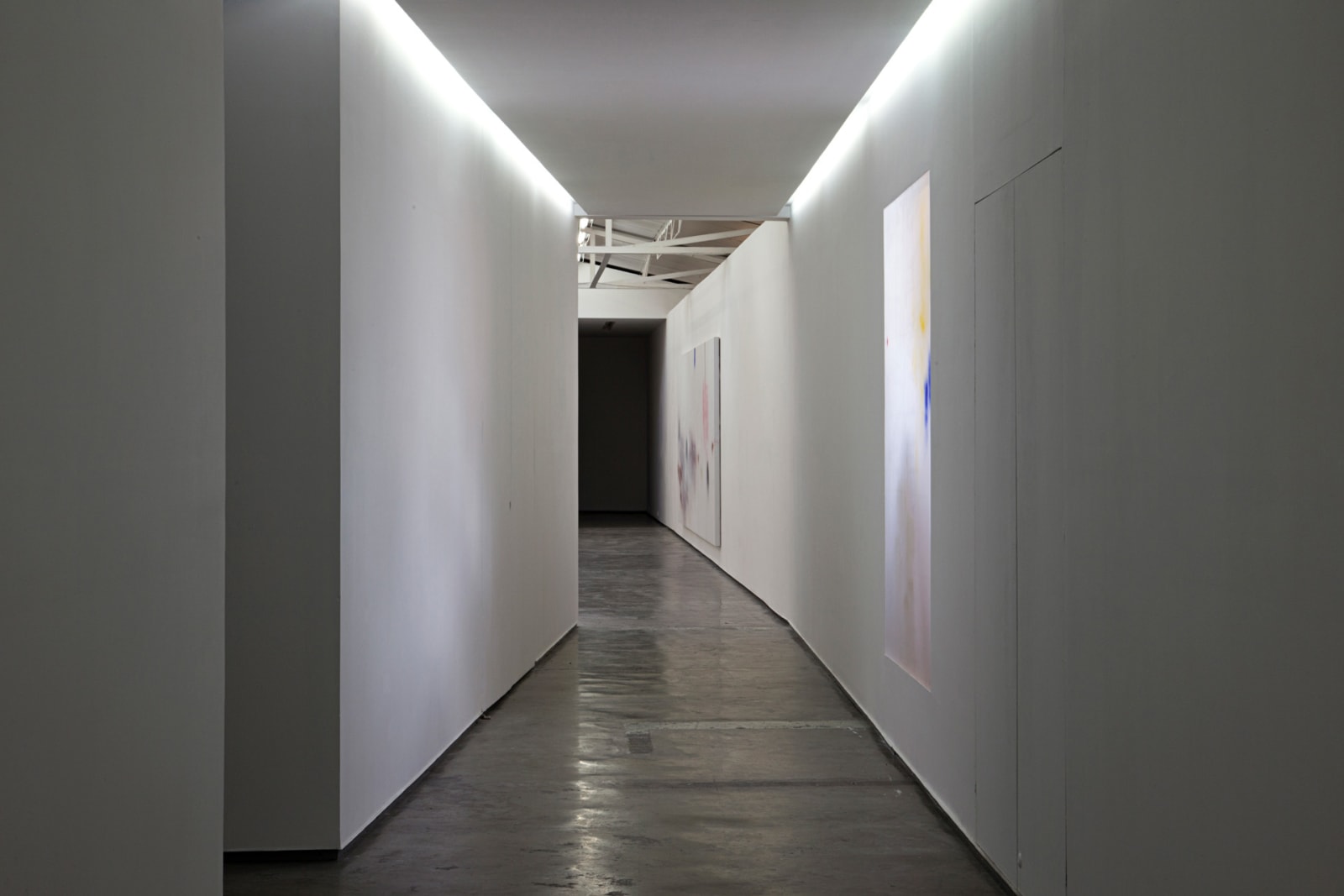
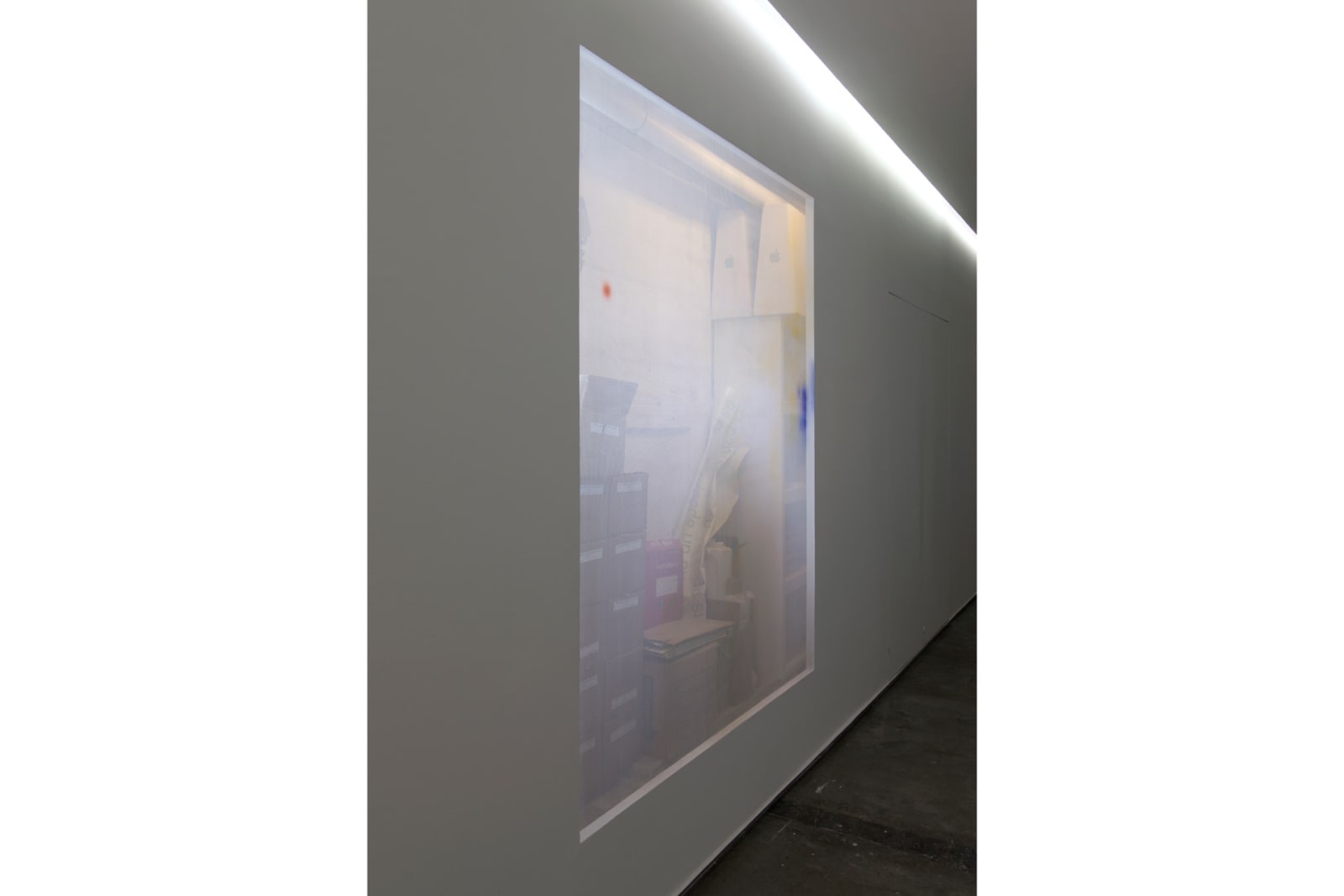
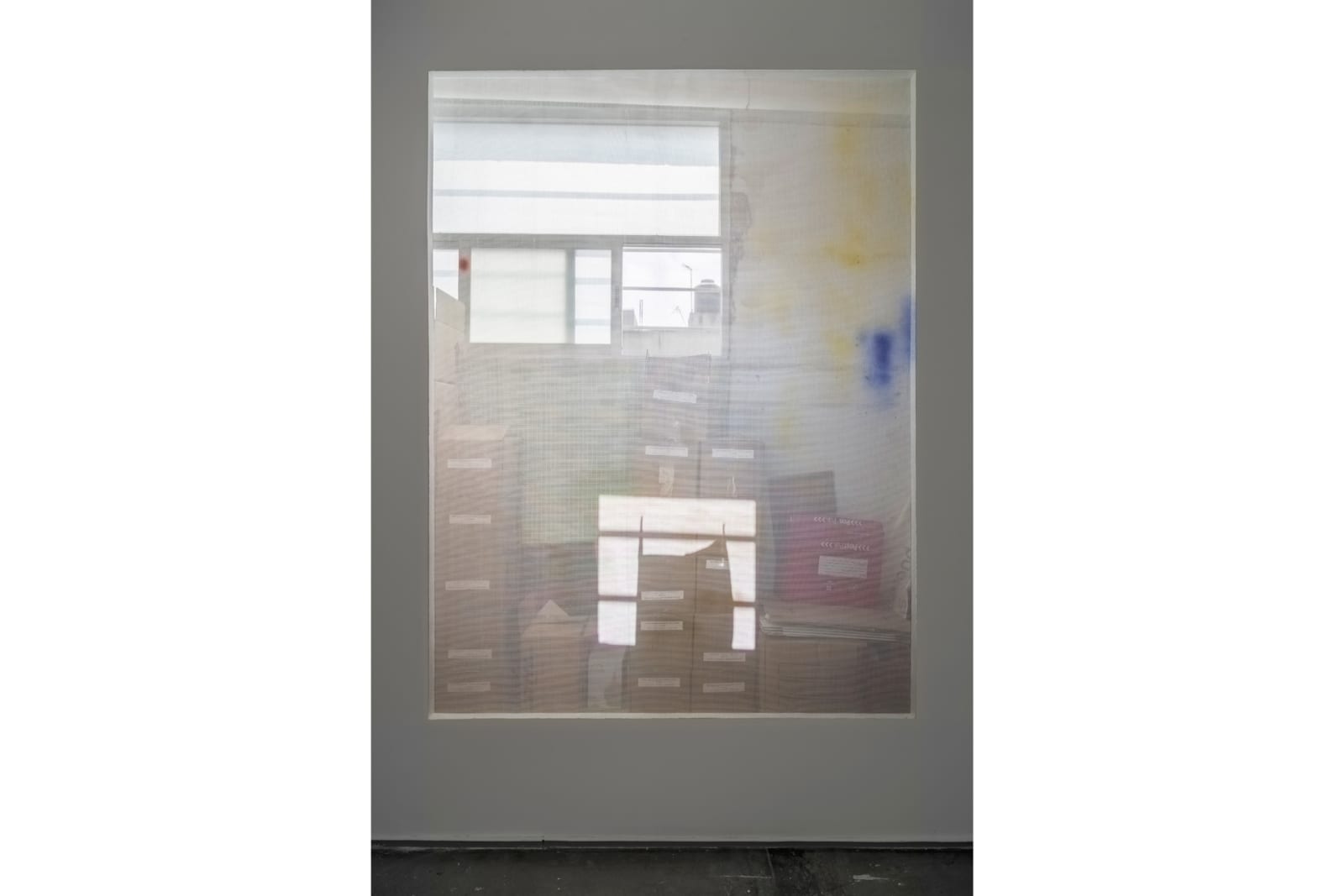
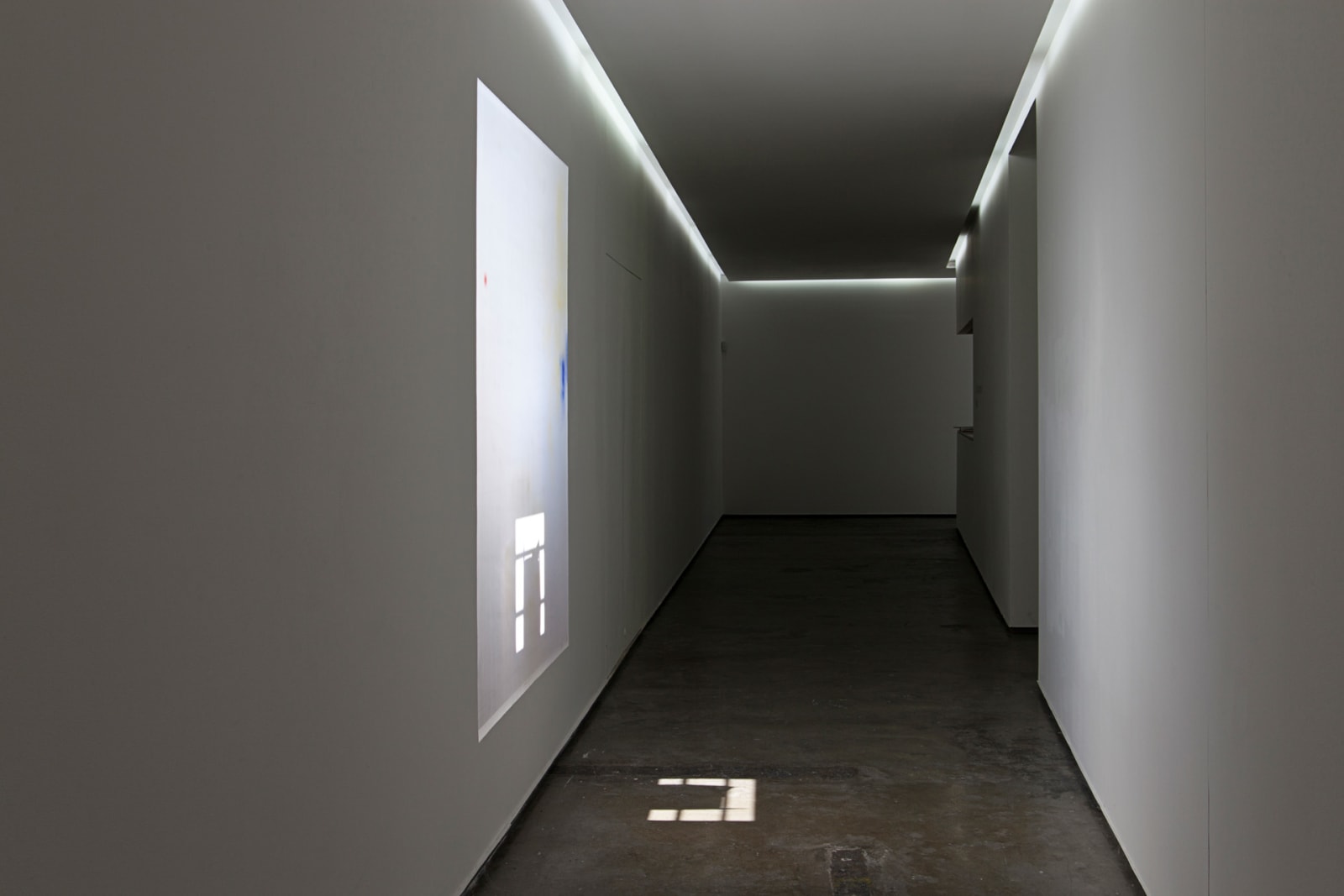
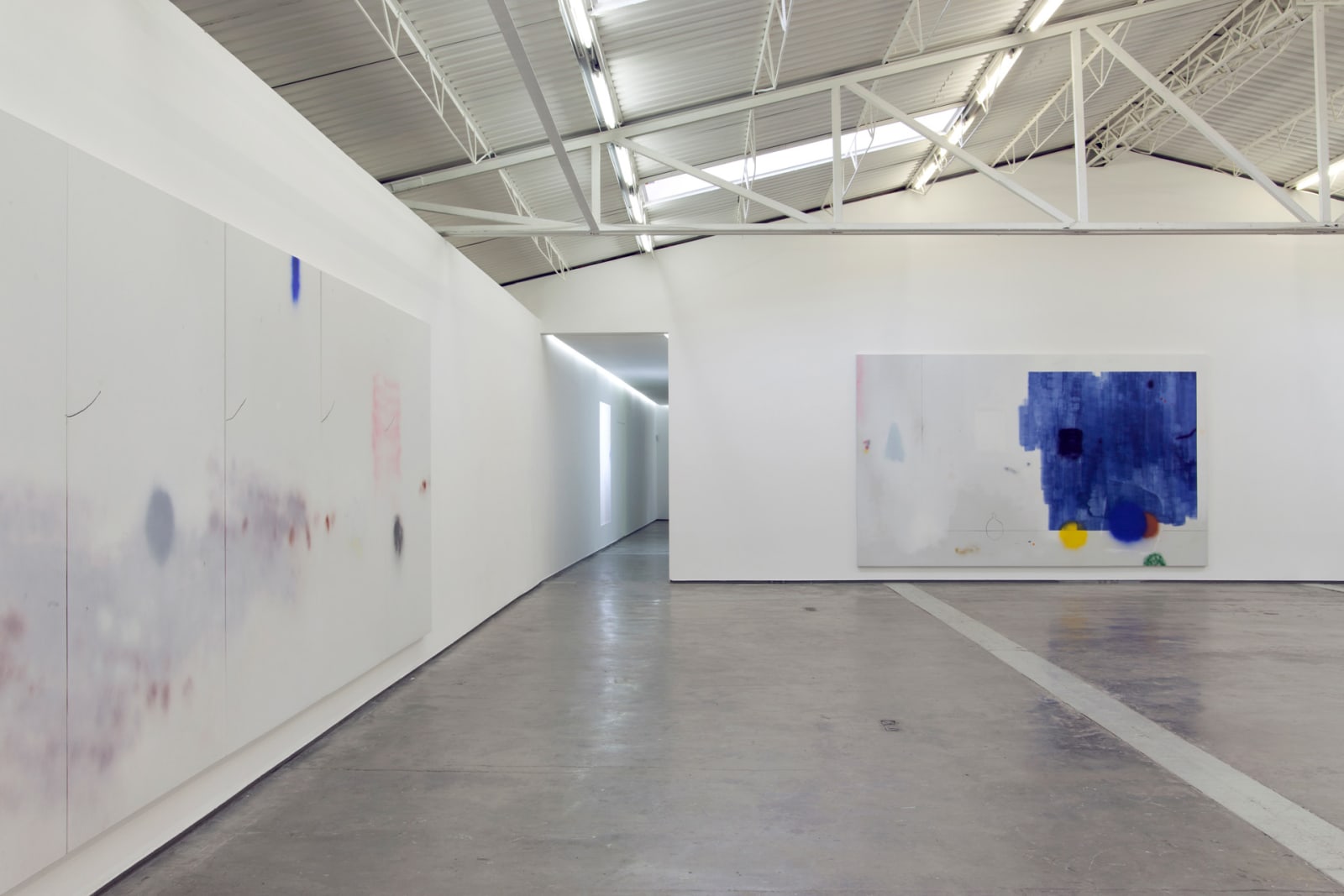
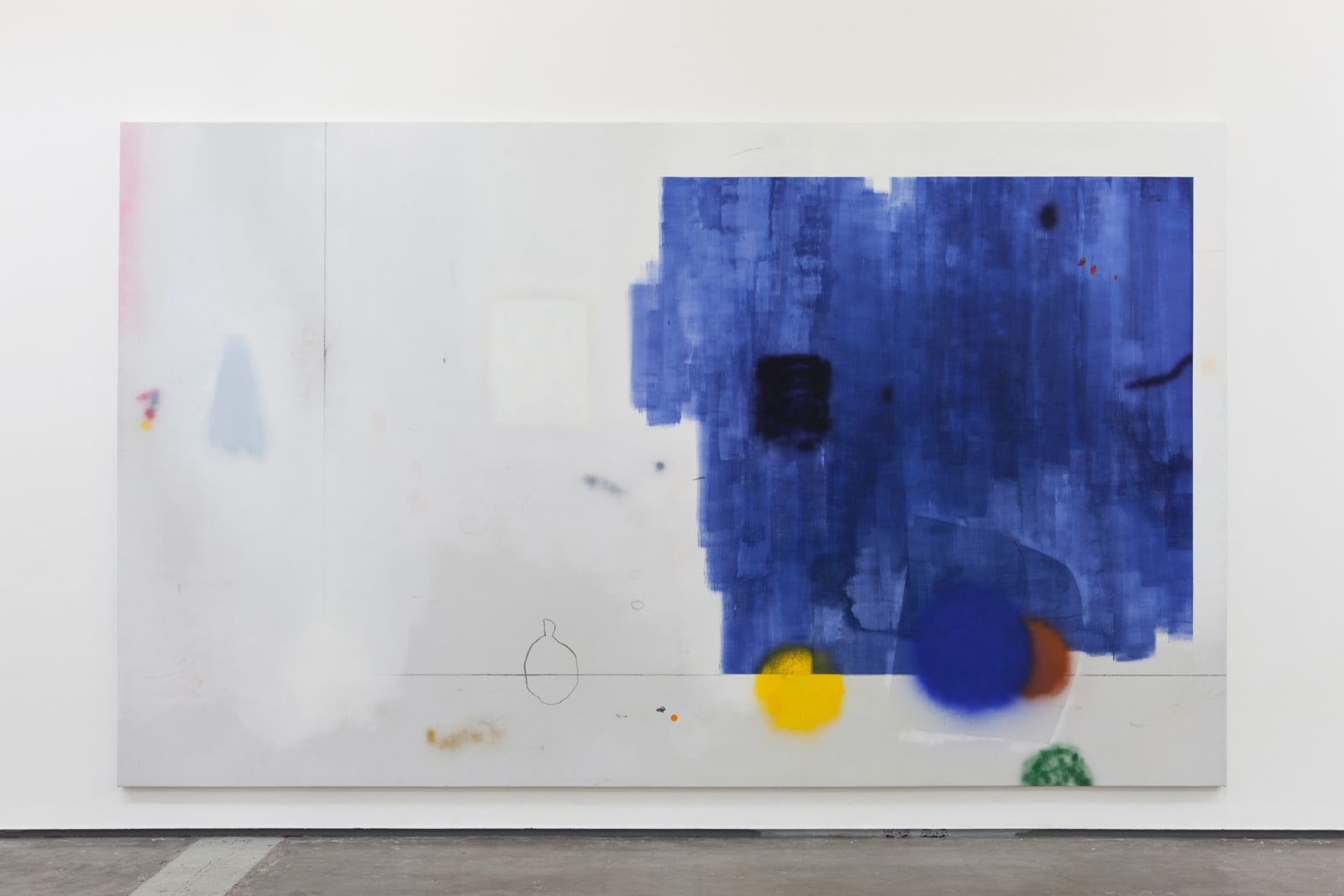
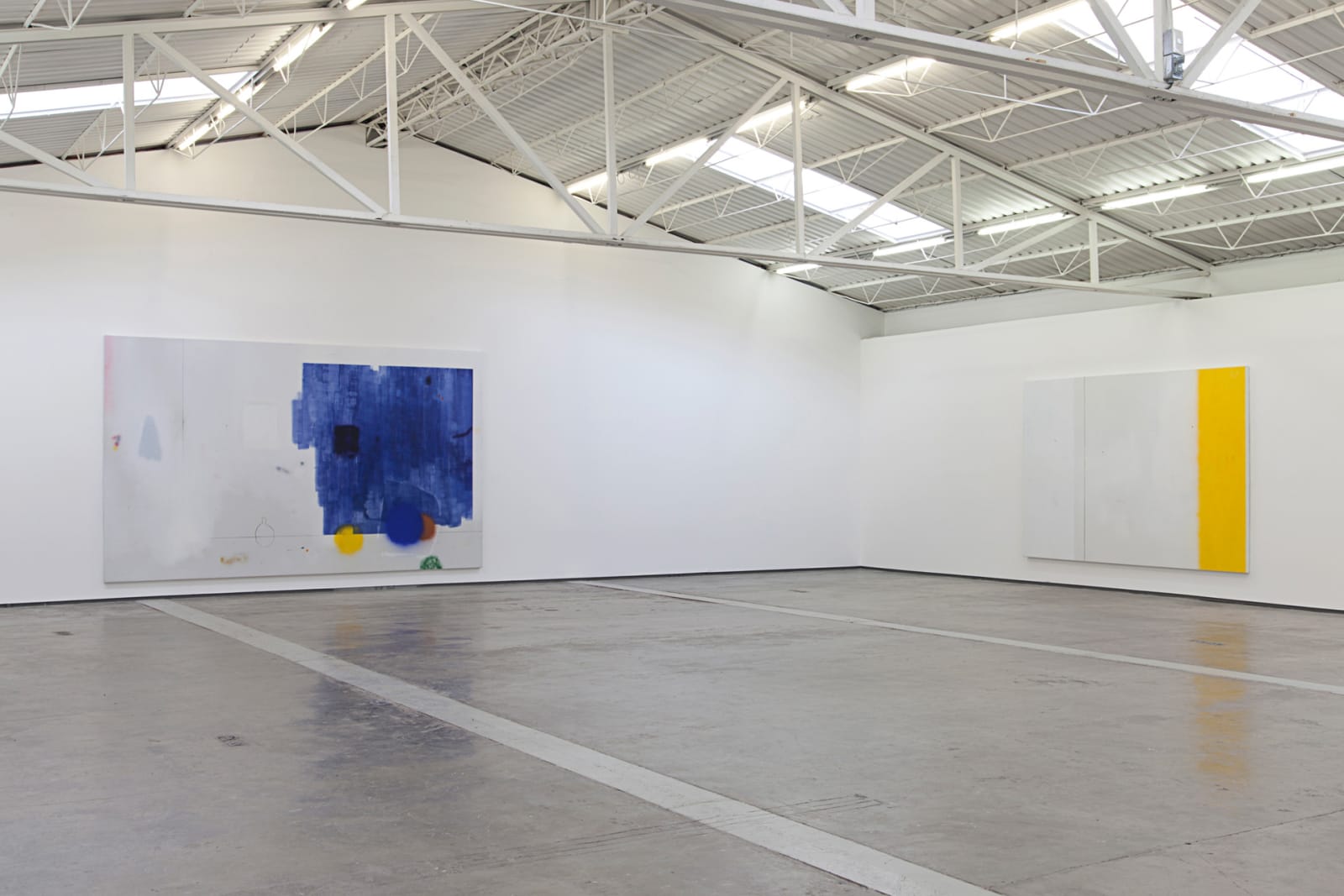
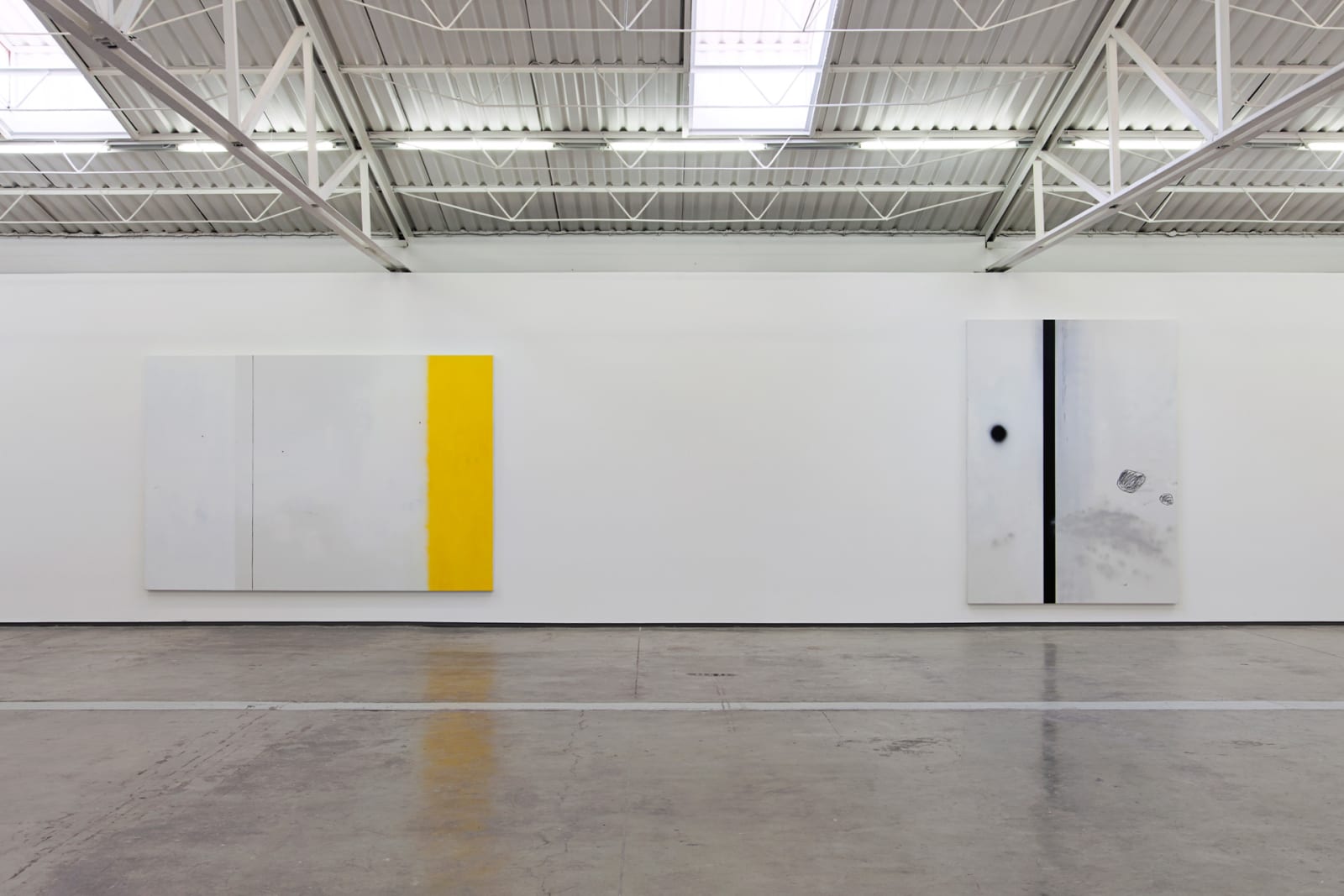
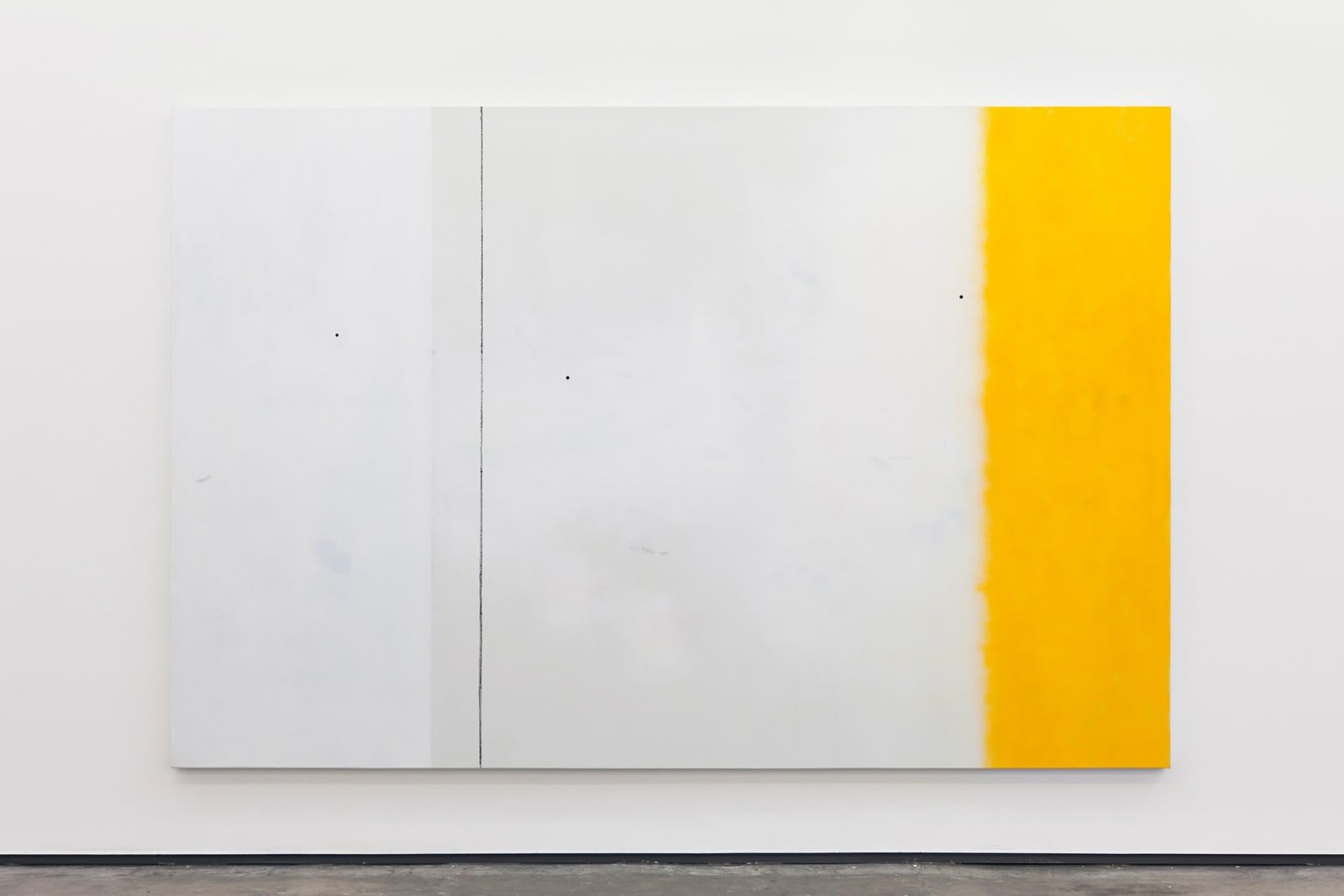
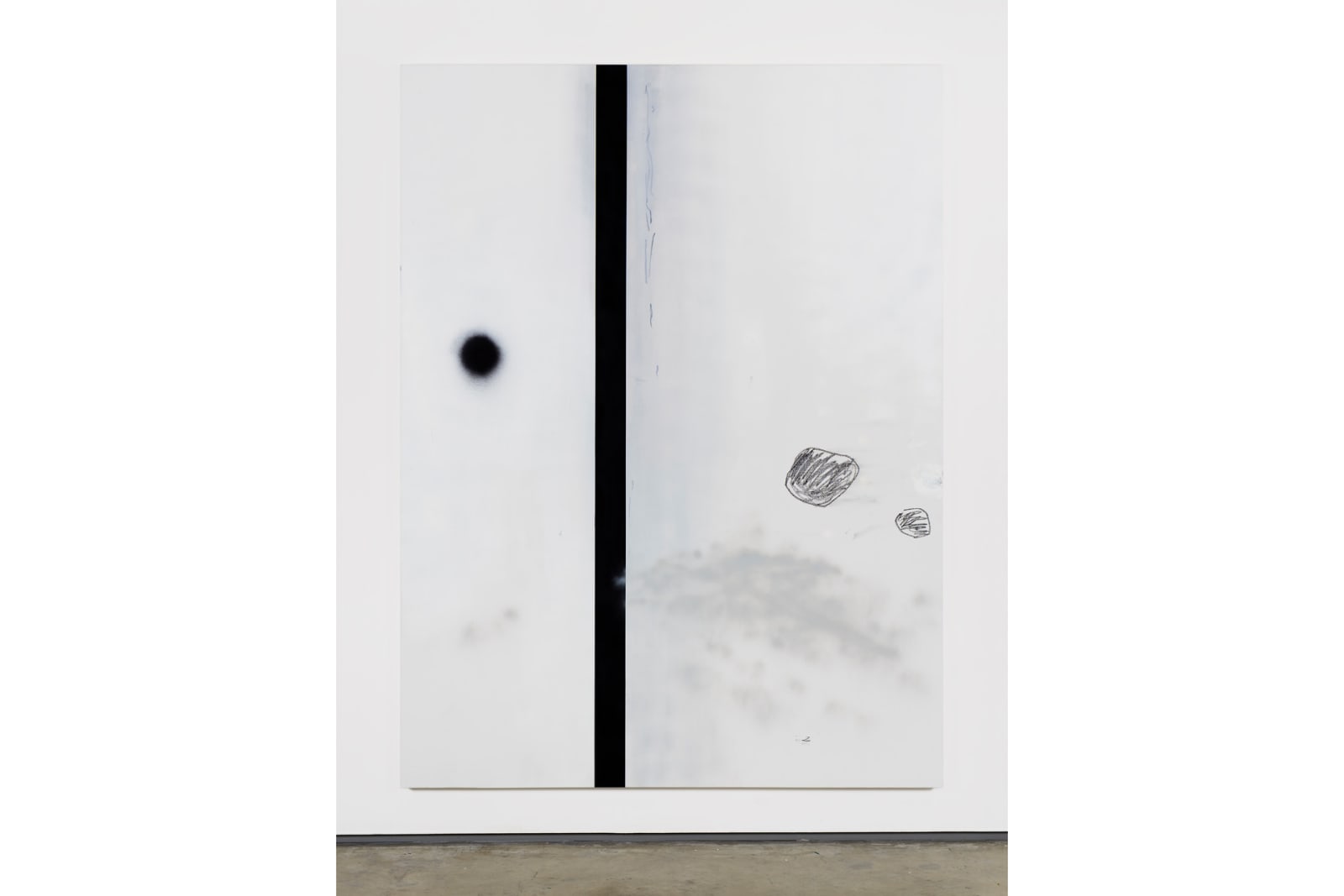

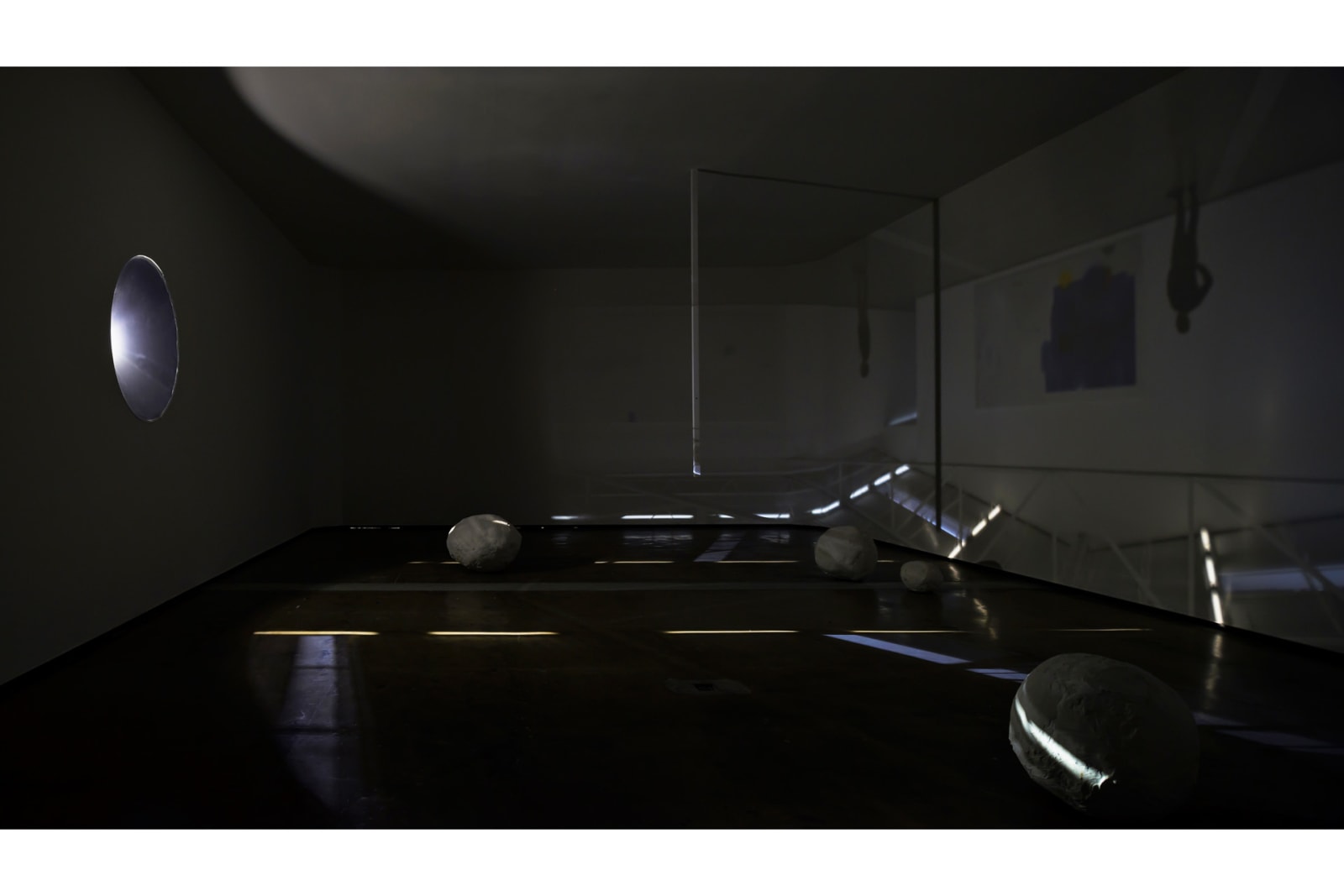
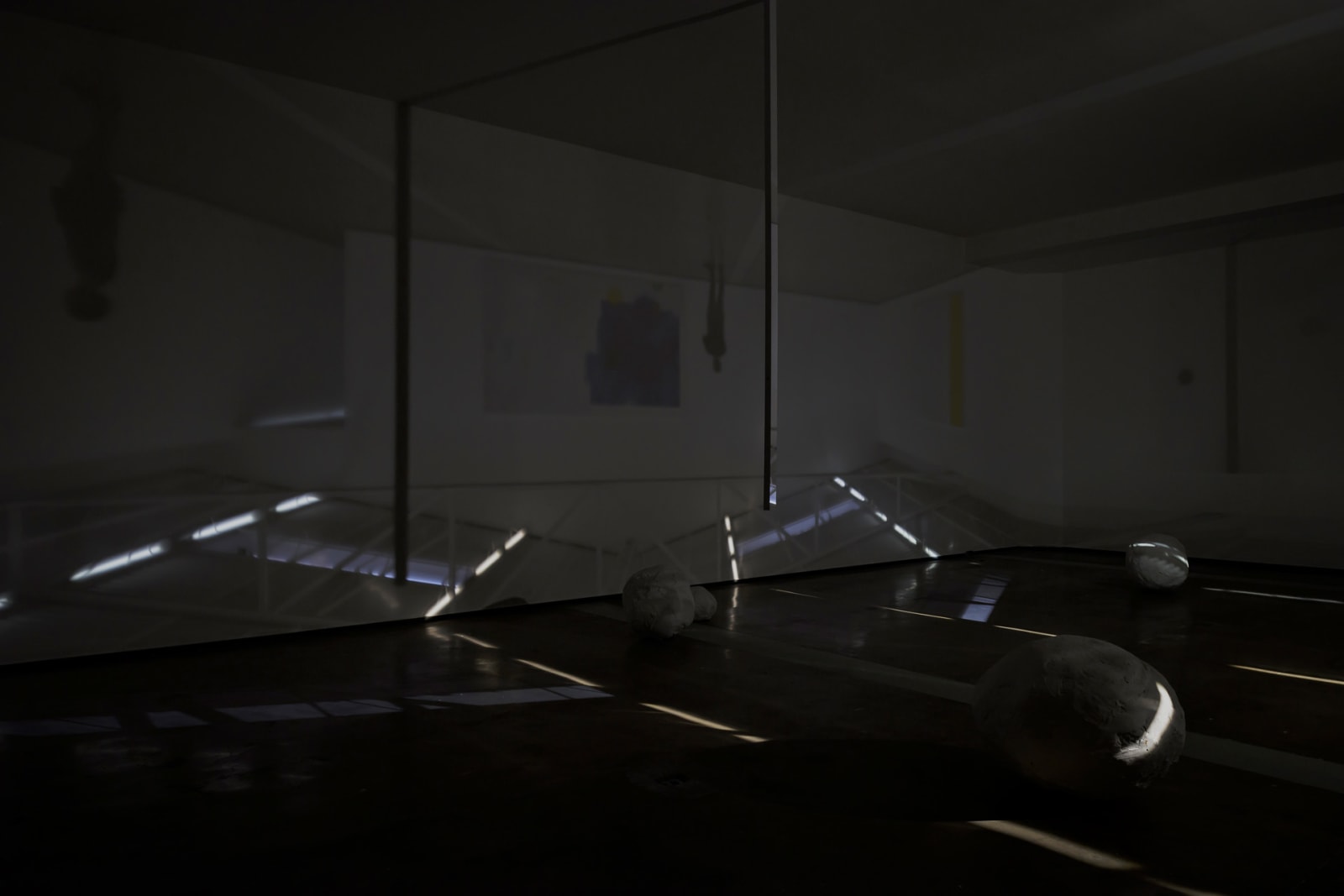
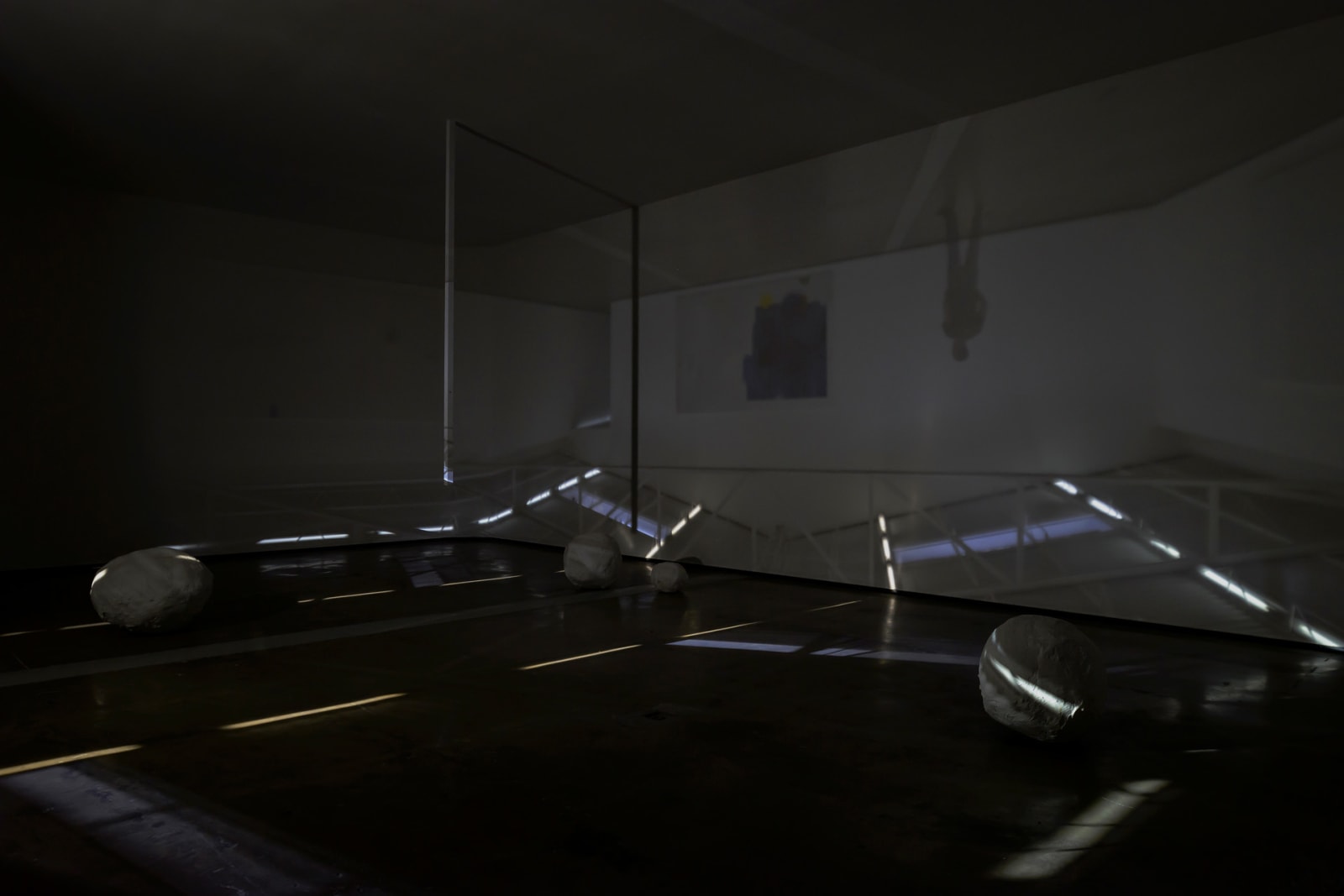

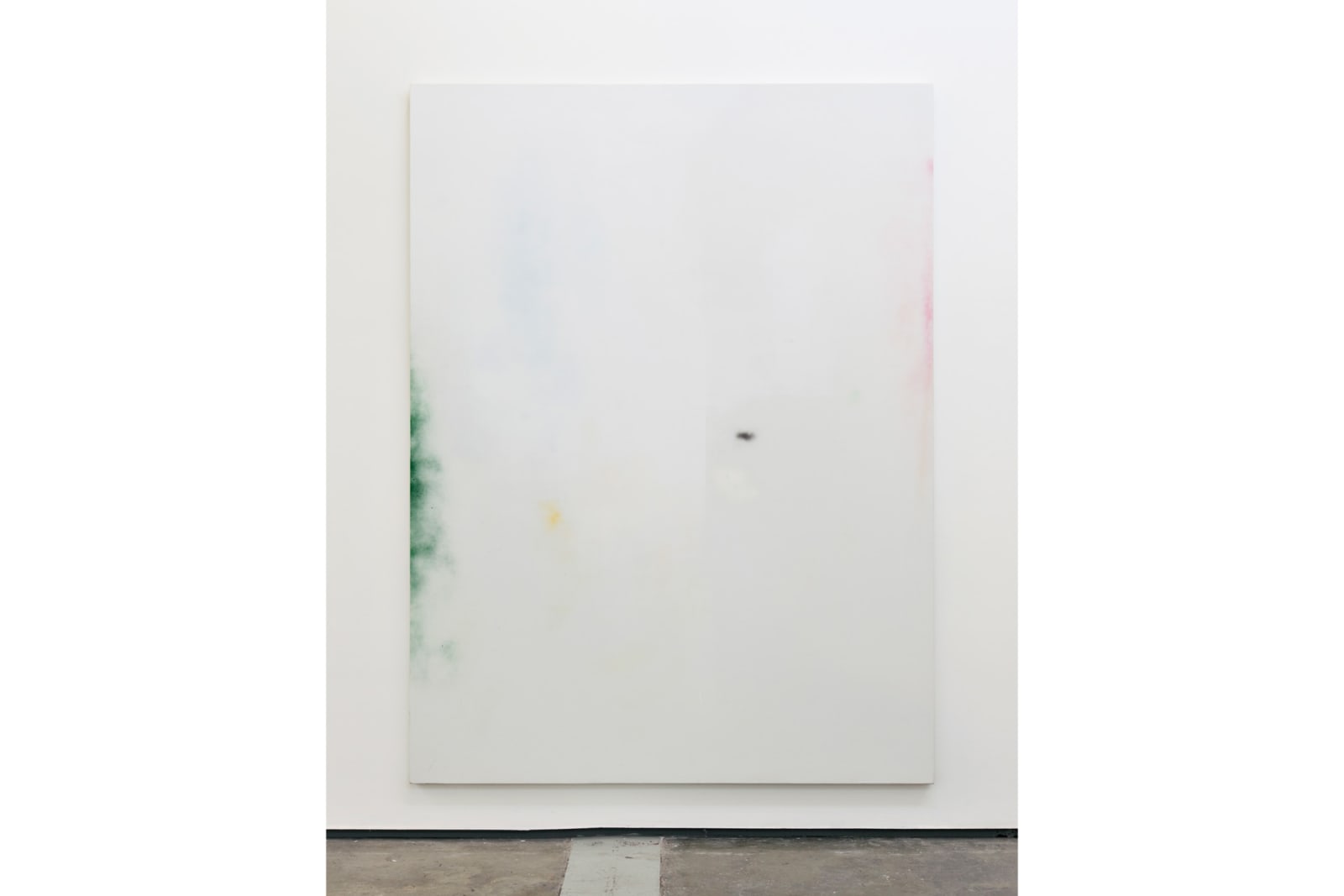
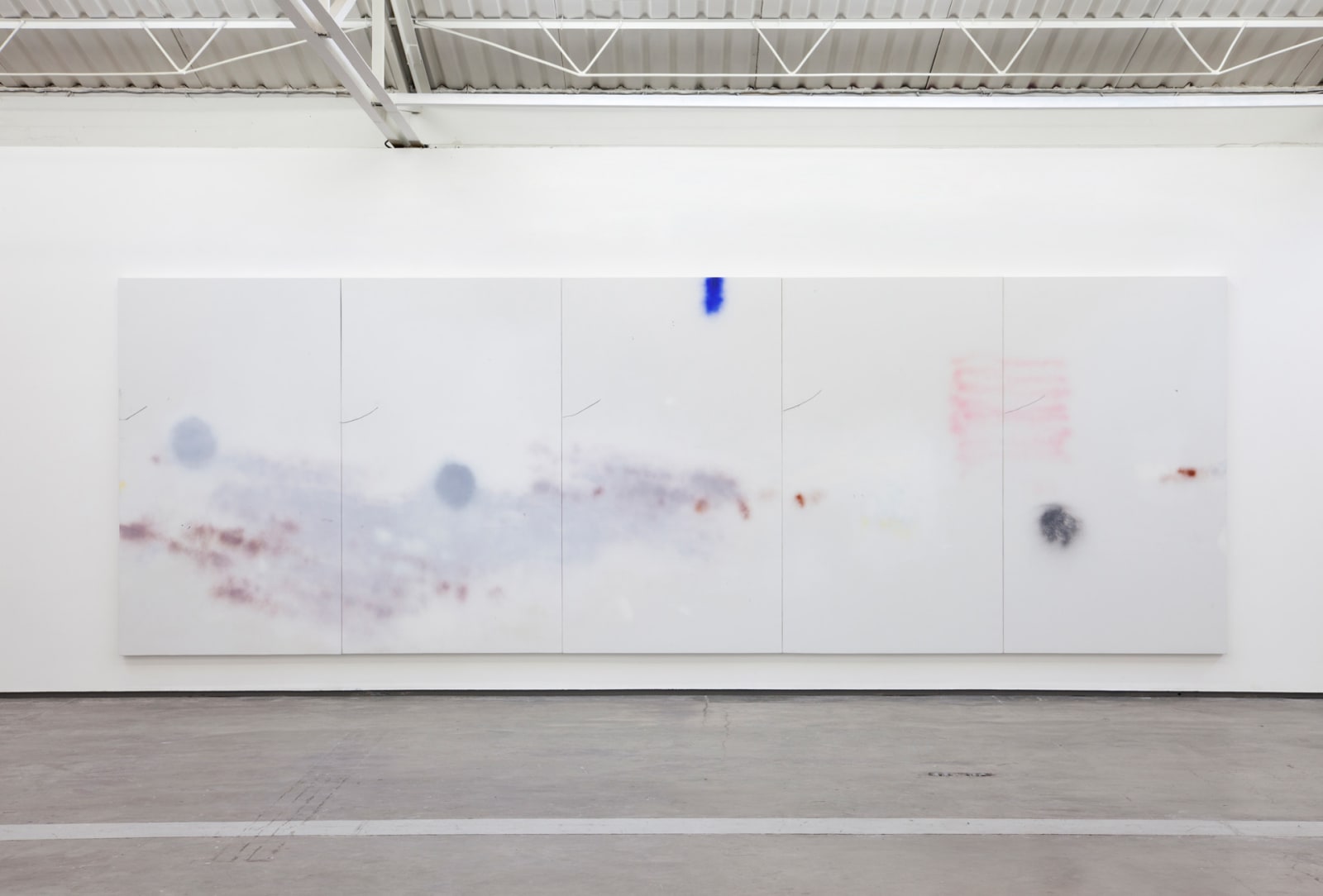
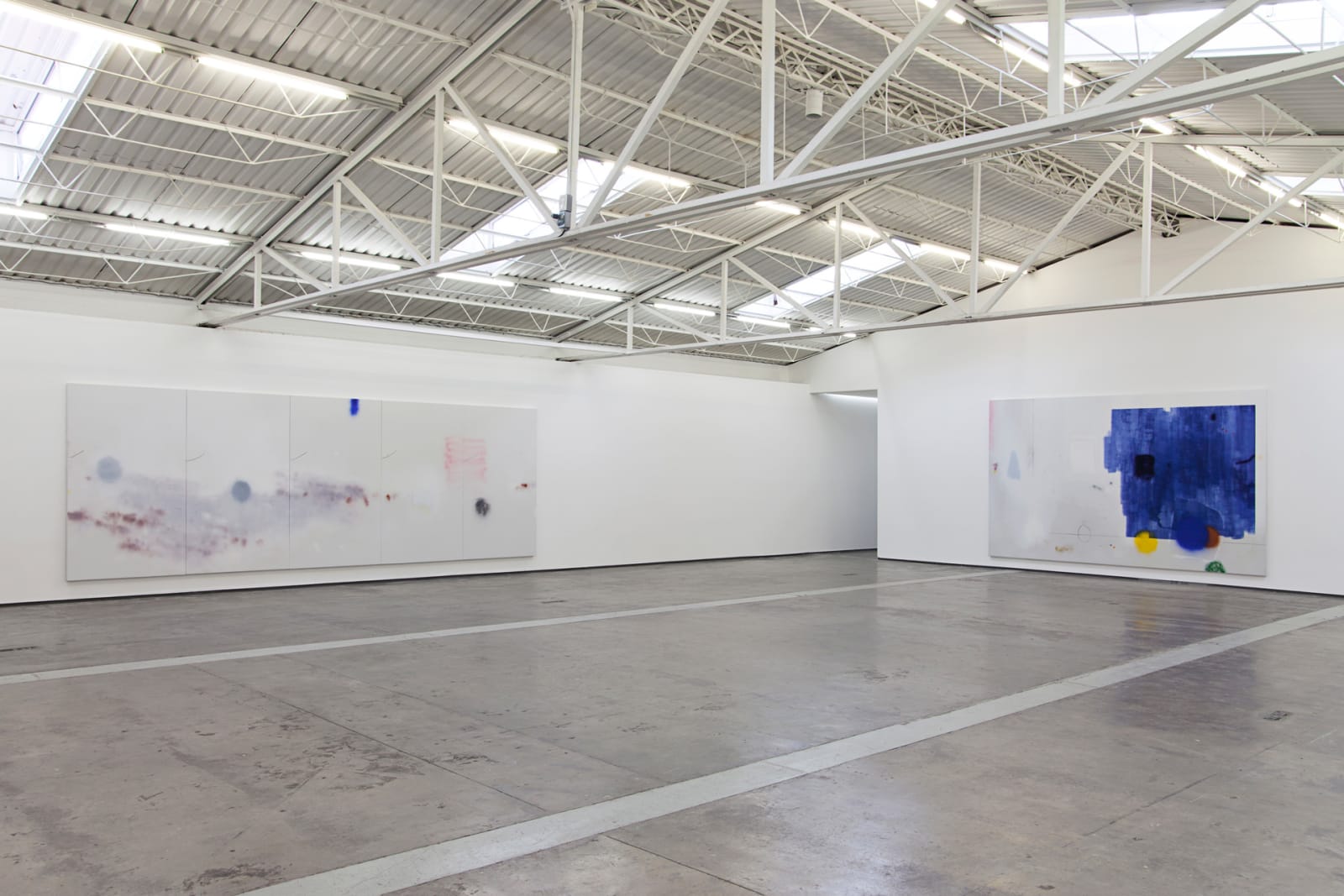
«Light has existed on Earth from its very beginnings. Vision is an adaptation to light. It has not always existed.»
Under the name of Prisma, Julius Heinemann’s exhibition is articulated into three spaces and moments: a pictorial intervention on the wall –the window that reveals the internal structure and simultaneously filters our view of the outside; a set of paintings in the main hall; and their reflection in a camera obscura produced through an opening in the wall.
If we look through the window we see a landscape that blurs in the distance.
Thought nº 1: Piet Mondrian «The straight line is nothing but a tensed curve.»
/ It’s an abstraction.
Thought nº 2: Bartolomé Ferrando «Walk on the horizon until you wear it out.»
/ It’s an illusion.
Paleontology has shown that the first eye appeared as a response to light during the Cambrian period, 544 million years ago. It allowed a biological revolution that gave a new kind of awareness to independent live forms in their relationship with their environment and to their own development. With the eye, vision is born, and with vision, the image. According to its internal architecture, this organ detects and transforms stimuli generated by waves produced by light particles into information that is reproduced in the brain as color, shape and arrangement. But, as quantum physics reminds us, far from apprehending an objective reality, this sensory system forms an individual mental representation.
Syllogism A: From the window to the hall / «As if your eyes did not have lids.» – Hugo von Hofmannsthal
We all have experienced what happens if you look attentively at an object for a few seconds. Aristotle was the first to describe what he called afterimages: the imagetic remanence that vibrates insistently, in our vision, with the complementary color of the object that is being stared at. Understanding what we see and how we see it has been an endeavor both of science and philosophy ever since: Newton, between 1666 and 1672, breaks down the beam of white light into seven colors through a prism; Novalis, a century later, wonders if we see physically or with our imagination; and Goethe explains the internal reaction to external color stimuli in the context of a study that considers the pathologies of vision as facts.
Thus, in his poetic treatise on Theory of Colours (1810), Goethe, in the wake of Aristotle’s theory of afterimages, sustains that «optical illusion is optical truth». It is no coincidence that the Greek philosopher expressed this idea in the context of his treaties about sleep, wakefulness and dreaming, three states of “suspension”. It is this state of epojé which Peter Sloterdijk analyzes in his lecture Apparent Death in Thinking. In this proposal, Sloterdijk goes beyond the exercise of doubt as a philosophical territory that enables active critical thinking through the exercise of looking, and reaches new dimensions by «eliminating aspects of our own existence» , thus allowing a new form of knowledge. A new way of producing theory is implied.
Lets take this expanded practice of epojé as a point of departure to think about the opportunity of consciously building what is indeterminate, uncertain. Hélio Oiticica defined the act of painting as a combination of color and structure. Disassociating himself from the traditional concepts of space and time, he established (dreamed) new relationships between object and subject. Taking a step further, as does Amazonian perspectivism, the object and the subject would relate in the same subjective level. Perception as such would fall apart, and we would have to review «our excessively rationalized mental habits» to reach a previous phase, before established facts, where, maybe, we would see an undetermined image. Thus, Heinemann’s strategies (the painted window, the paintings on the white cube which resemble windows and which are fragments of the wall/structure/world, and finally the reflection of these paintings) disclose how the rational system relies on successive constructions and at the same time releases new subjective space-time relations between the line, the pictorial mark, and the smudge. Thus his painting practice could be seen as a poetic of resistance and deprogramming.
Syllogism B: From the window to the room and to the camera obscura / «The camera, now soundless, as if worn out of the constant effort of addressing the existence of objects, shows one by one things and details which had been brought to life before in the narrative of the film. Now, isolated, fixed in their silence, they are the same, and nothing has changed them.» – Roberto Pontual on L’Eclisse, 1962, by Michelangelo Antonioni
With the light that passes through a focus point, the camera obscura produces a drawing of an ideal world – a projection to be fixed. The paradox is that in both images, on the window as a utopian exterior reality and in the darkened room as a technologically recreated ideal, we cannot escape, as Sloterdijk says, «that area of things which claim to be real.» What we see, what we archive, it arises from handling, ordering and classifying images and/or memories “with claims to the real.” Thus, the space-territory and time-history are bound to constructed and imposed normative notions. Introducing these perceptions into a simultaneous and multiple thought dynamic, as suggested by Bruno Latour , would allow us to examine both the scientific and poetic conventions on temporality. But also, it would allow us to discover uncertainty as an open arena of possibilities instead of looking down on it as a place of ignorance.
Epilogue: «The type of eye we vertebrates have is called a “camera eye”... There is a Mexican cave fish that has eyes where light is present, and no eyes where light is absent».
Marta Ramos-Izquierdo
–––––
Photos 3, 9, 15, 16, 17: Moritz Bernoully; other photos: Julius Heinemann
«La luz ha existido en la Tierra desde el principio. La visión es una adaptación a la luz. No ha existido siempre.»
Bajo el nombre de Prisma, la exposición de Julius Heinemann se articula en tres espacios y momentos: una intervención pictórica en el muro que deja ver la estructura interna y la ventana tras él, al tiempo que tamiza la visión del exterior; un conjunto de pinturas en la sala principal de la galería; y su reflejo en una cámara oscura creado a través de una abertura situada en la pared.
Si miramos a través de la ventana, vemos un paisaje que se mitiga en la distancia.
Pensamiento 1: Piet Mondrian «La línea recta no es sino una curva tensada.»
/ Es una abstracción.
Pensamiento 2: Bartolomé Ferrando «Camine sobre el horizonte hasta desgastarlo.»
/ Es una ilusión.
La paleontología ha demostrado que el primer ojo surgió estimulado por la luz, durante la era Cámbrica, hace 544 millones de años. Permitió una revolución biológica que dio un nuevo tipo de conciencia a las formas de vida independientes, tanto en la relación con su entorno, como en su propio desarrollo. Con el ojo, nace la visión, y con la visión, la imagen. Según su arquitectura interna, este órgano detecta y transforma los estímulos producidos por las ondas creadas por las partículas de luz en fuentes de información que se reproducen en el cerebro como color, forma y disposición. Pero este sistema sensorial, lejos de aprehender una realidad objetiva, como nos recuerda la física cuántica, forma una representación mental individual.
Silogismo A: De la ventana a la sala / «Es como si sus ojos no tuvieran párpados.» – Hugo von Hofmannsthal
Todos hemos podido experimentar qué sucede al mirar atentamente durante unos segundos un objeto. Aristóteles fue el primero en describir lo que llamó post-imágenes, esta permanencia de la imagen que vibra en nuestra visión con el color complementario del objeto contemplado con insistencia. Entender qué vemos y cómo lo vemos, ha sido objeto de estudio tanto en las ciencias como en la filosofía desde entonces: Newton, entre 1666 y 1672, descompone el haz de luz blanca en siete colores a través de un prisma; Novalis, un siglo después, se preguntaba si veíamos físicamente o con la imaginación; y Goethe explicó la reacción interna a los estímulos de color externo, en un estudio que considera las patologías de la visión como hechos.
Así, en su tratado poético de 1810, Teoría de los colores, Goethe declara que «la ilusión óptica es la verdad óptica», siguiendo la teoría de las post-imágenes de Aristóteles. No es casual que el filósofo griego plasmara estas ideas en sus tratados sobre el sueño, la vigilia y la ensoñación, tres estados que podríamos denominar como “de suspensión”. Es este estado de epojé el que analiza Peter Sloterdijk en su conferencia Muerte aparente en el pensar. En su propuesta, va mas allá del ejercicio de la duda como territorio que posibilita el pensamiento crítico activo desde el ejercicio de la mirada, llegando a «eliminar los aspectos de la propia existencia» y permitiendo así una nueva forma de conocimiento. En consecuencia, implicaría una nueva forma de hacer teoría.
Pensemos entonces, desde esta práctica ampliada de la epojé, en la oportunidad de construir lo indeterminado de una manera consciente. Hélio Oiticica definía la acción de pintar como colorear y estructurar. Desligándose de los conceptos tradicionales de espacio y tiempo, estableció (soñó) nuevas relaciones entre objeto y sujeto. Dando un paso más, como apunta el perspectivismo amazónico, el objeto y el sujeto se relacionarían en un mismo nivel subjetivo. Se descompondría la percepción, revisaríamos «nuestros hábitos mentales racionalizados en exceso» , para llegar a un punto anterior a los conocimientos aprendidos, donde quizá se alcanzase la imagen aún sin determinar. Así, las sucesivas estrategias de Heinemann –la ventana pintada, las pinturas en el cubo blanco como ventanas que son fragmentos del muro/estructura/mundo, y finalmente el reflejo de estas pinturas– desvelan el sistema racional de continuas construcciones, liberando en el trazo, la marca, y la mancha, nuevas relaciones subjetivas espacio-temporales. De este modo, su práctica pictórica podría considerarse como una poética de resistencia y desprogramación.
Silogismo B: De la ventana a la sala y a la cámara oscura / «La cámara, ya sin ningún sonido, como cansada del esfuerzo de tratar de la existencia de los objetos, muestra una a una, pausada y rápidamente, las cosas y los detalles de las cosas antes avivados en la narrativa de la película. Ahora, aisladas, fijas en su silencio, son las mismas, sin que nada las haya cambiado.» -Roberto Pontual sobre L’Eclisse, 1962, de Michelangelo Antonioni
La cámara oscura crea a través de la luz que atraviesa un punto focal el dibujo de un mundo ideal –una proyección para ser fijada. La paradoja reside en que ambas, tanto en la ventana como realidad utópica exterior y en la sala en penumbra como ideal recreado tecnológicamente, no dejamos de estar, volviendo a Sloterdijk, en «esa zona de las cosas con pretensión de ser reales.» Lo que percibimos, lo que archivamos, surge de la manipulación que ordena y clasifica imágenes y/o memorias “con pretensiones de ser reales”. Así, el espacio-territorio y el tiempo-historia se ven amarrados a nociones normativas construidas e impuestas. Llevarlos a un pensamiento de dinámicas simultáneas y múltiples, como sugiere Bruno Latour , permitiría examinar las convenciones tanto de la ciencia como de la poesía sobre la temporalidad, y descubrir lo incierto como un campo abierto y no un lugar de desconocimiento.
Epílogo: «El tipo de ojo que tenemos los vertebrados se llama “ojo cámara”… Hay un pez de cueva mexicano que tiene ojos cuando la luz está presente, y no los tiene cuando la luz está ausente.»
Marta Ramos-Izquierdo
––––
Fotos 3, 9, 15, 16, 17: Moritz Bernoully; otros fotos: Julius Heinemann
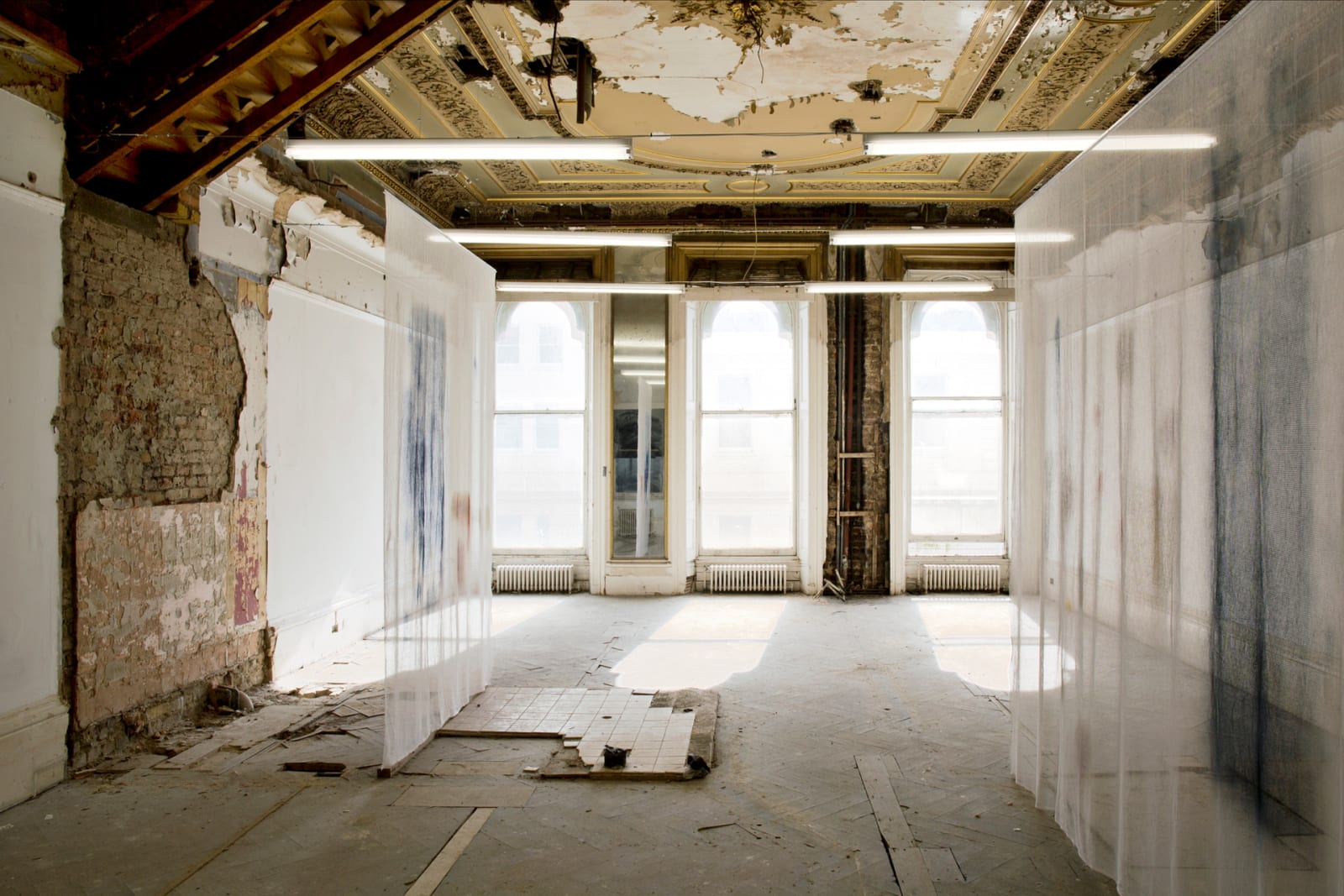
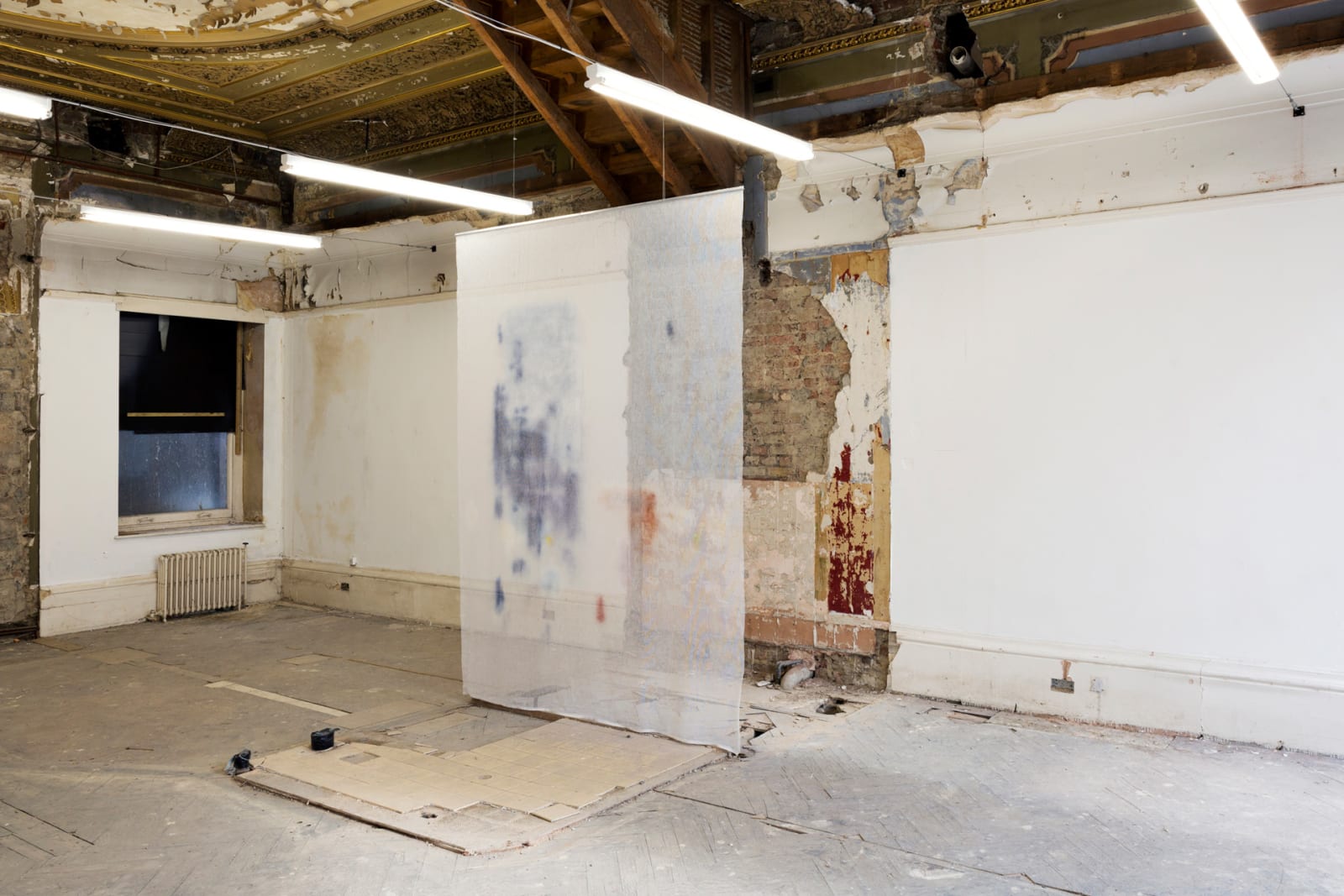
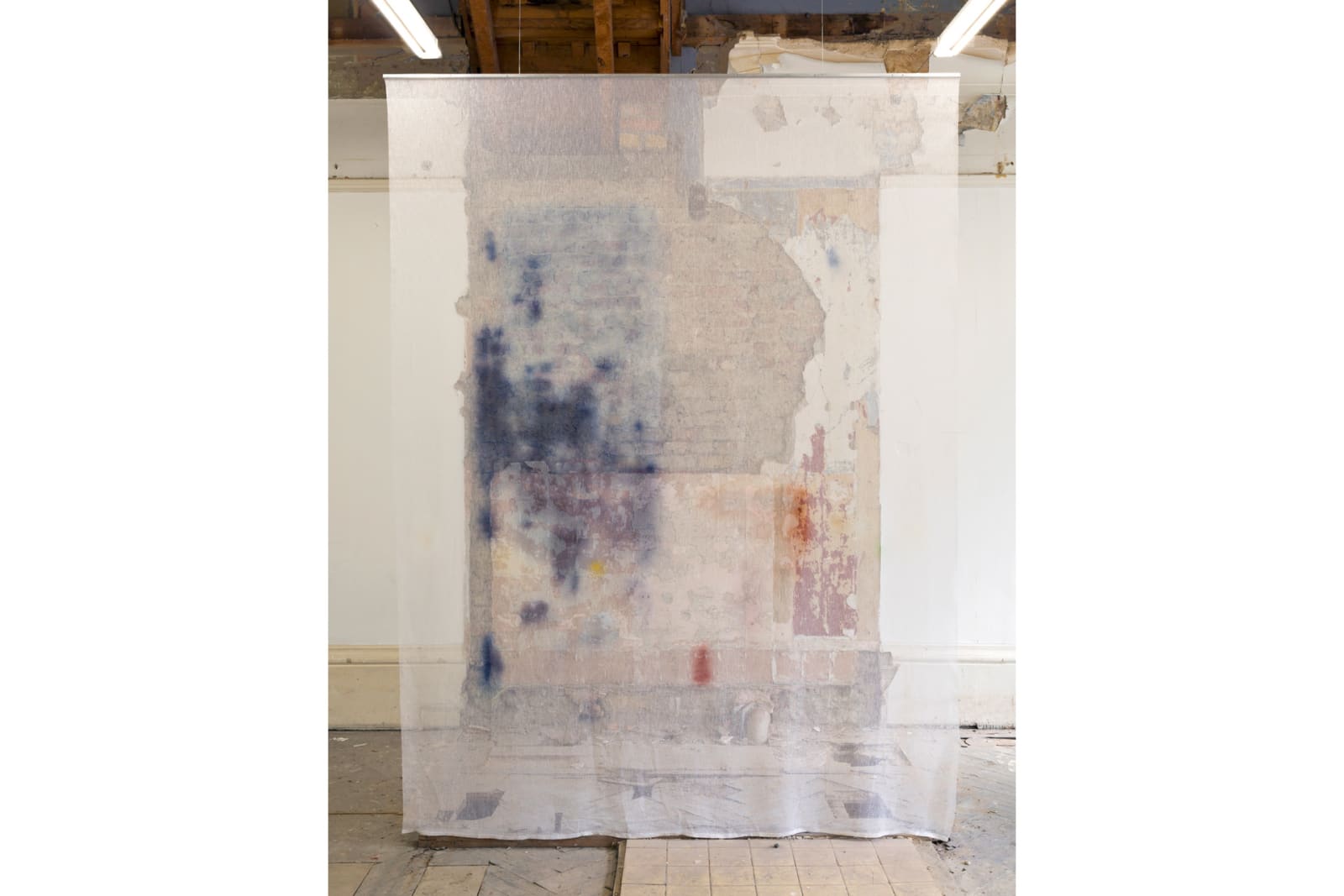
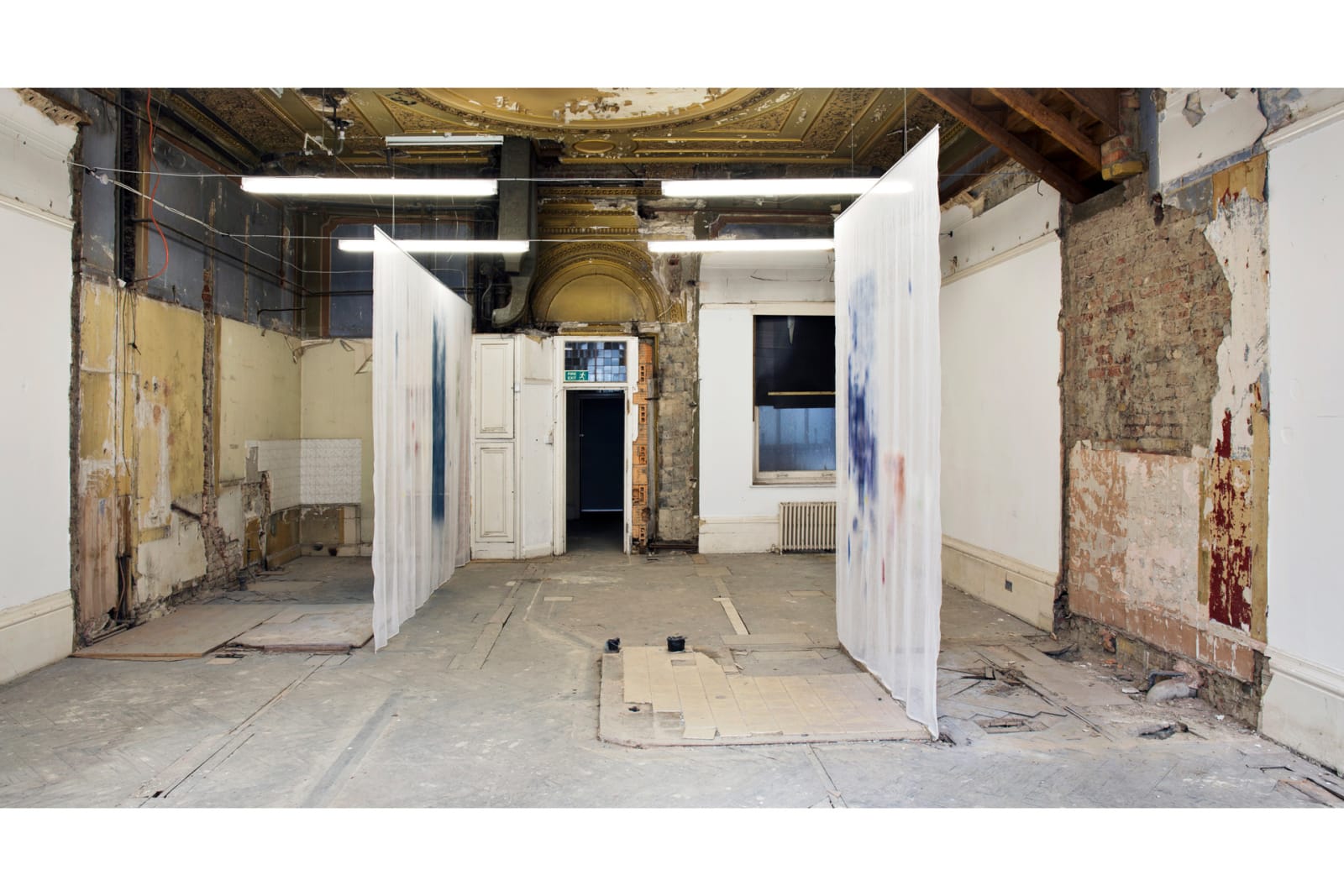
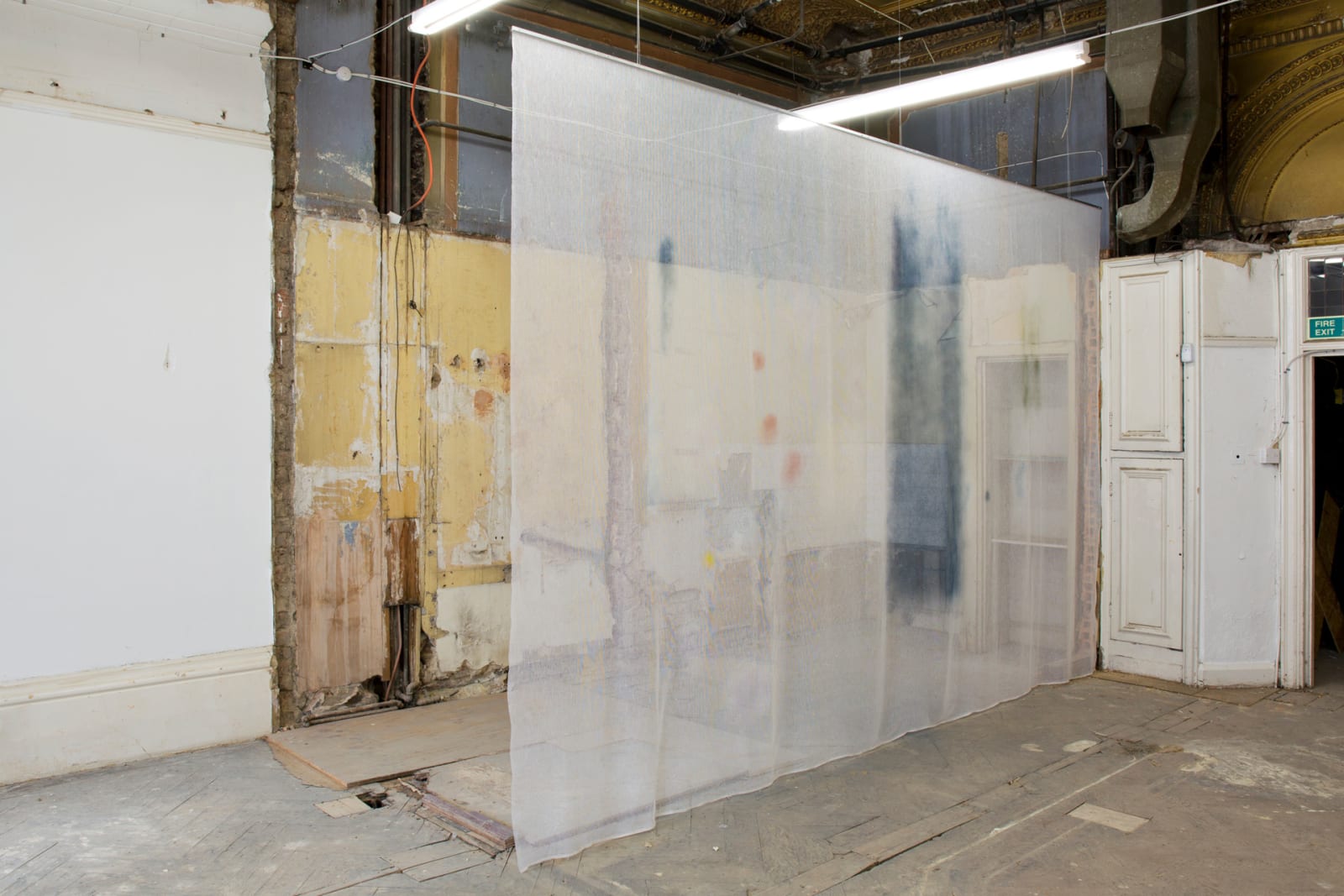
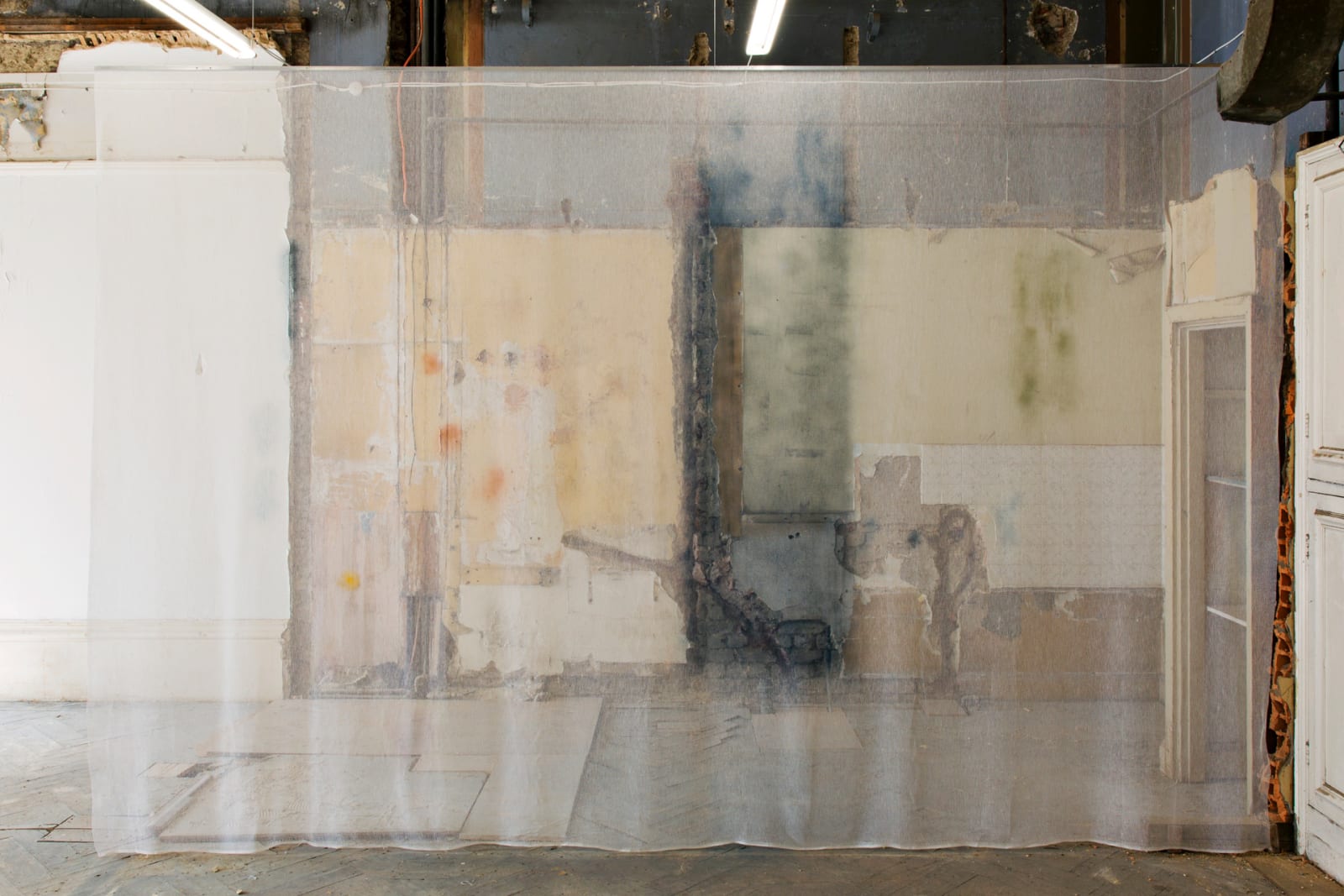
The installation "The Averard Hotel (London)" is presented as part of the group exhibition "With Institutions Like These...", curated by Victor Wang and Alex Meurice. It is situated within a former British mansion located just north of Hyde Park—a building constructed in 1850 that originally served as the residence of a wealthy family. During the Second World War, the mansion was converted into a refuge, subdivided into numerous individual flats, and later repurposed as a hotel. The building has remained unoccupied for over a decade.
The site-specific installation responds directly to the layered history of the space. The walls visibly bear the traces of its many transformations, revealing the various structural and spatial divisions it has undergone over time. As part of the intervention two transparent screens were suspended within the space. These screens were painted in reference to the textures and formations on the walls behind them. Positioned in front of the most textured and time-worn wall surfaces, the screens act both as a form of closure—suggesting a kind of continued 'white cube'—and as a re-evocation of the building's former rooms. Rather than reconstructing these rooms literally, the installation draws them back into the viewer’s awareness through a more gestural, volumetric approach, akin to architectural drawing in space.
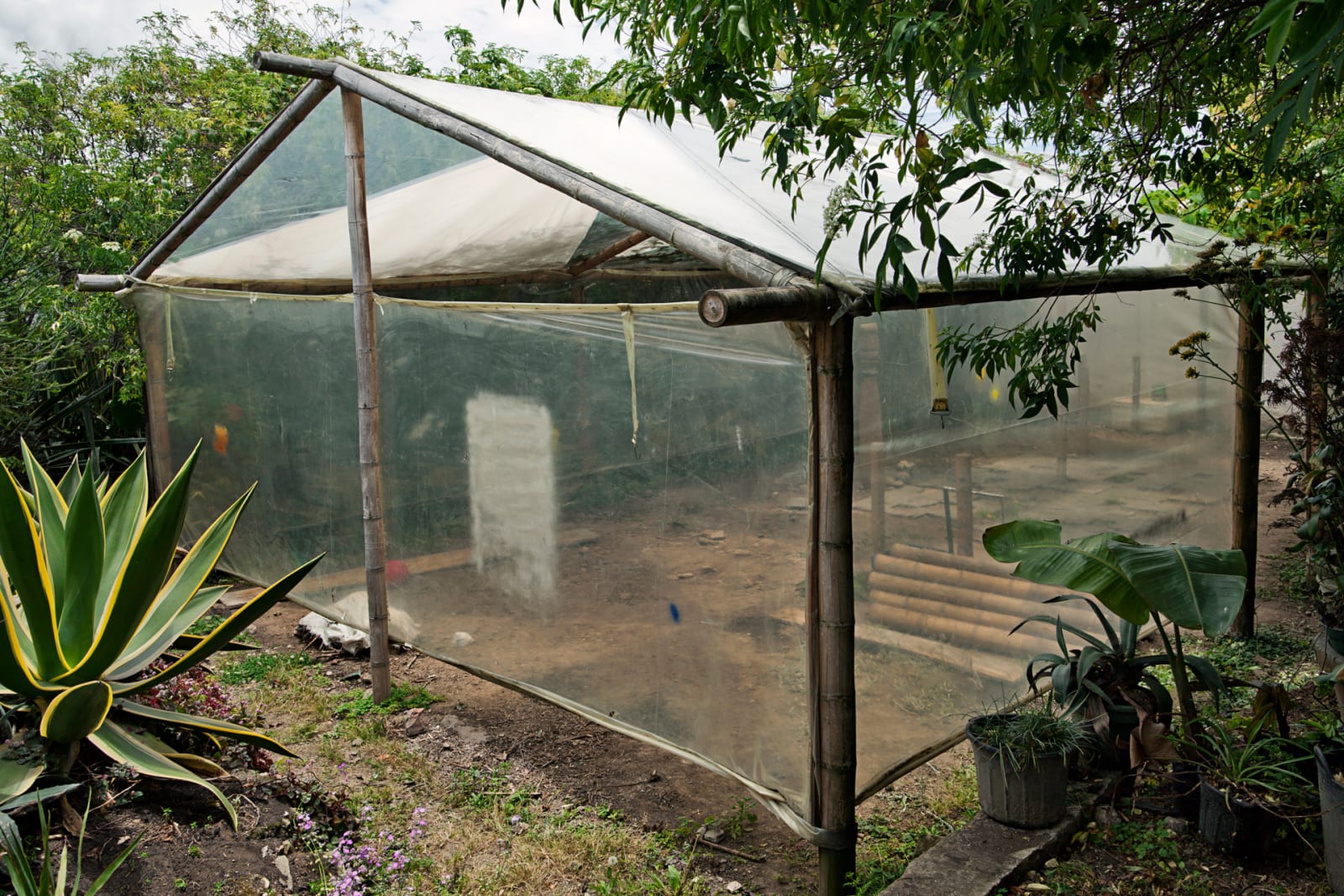

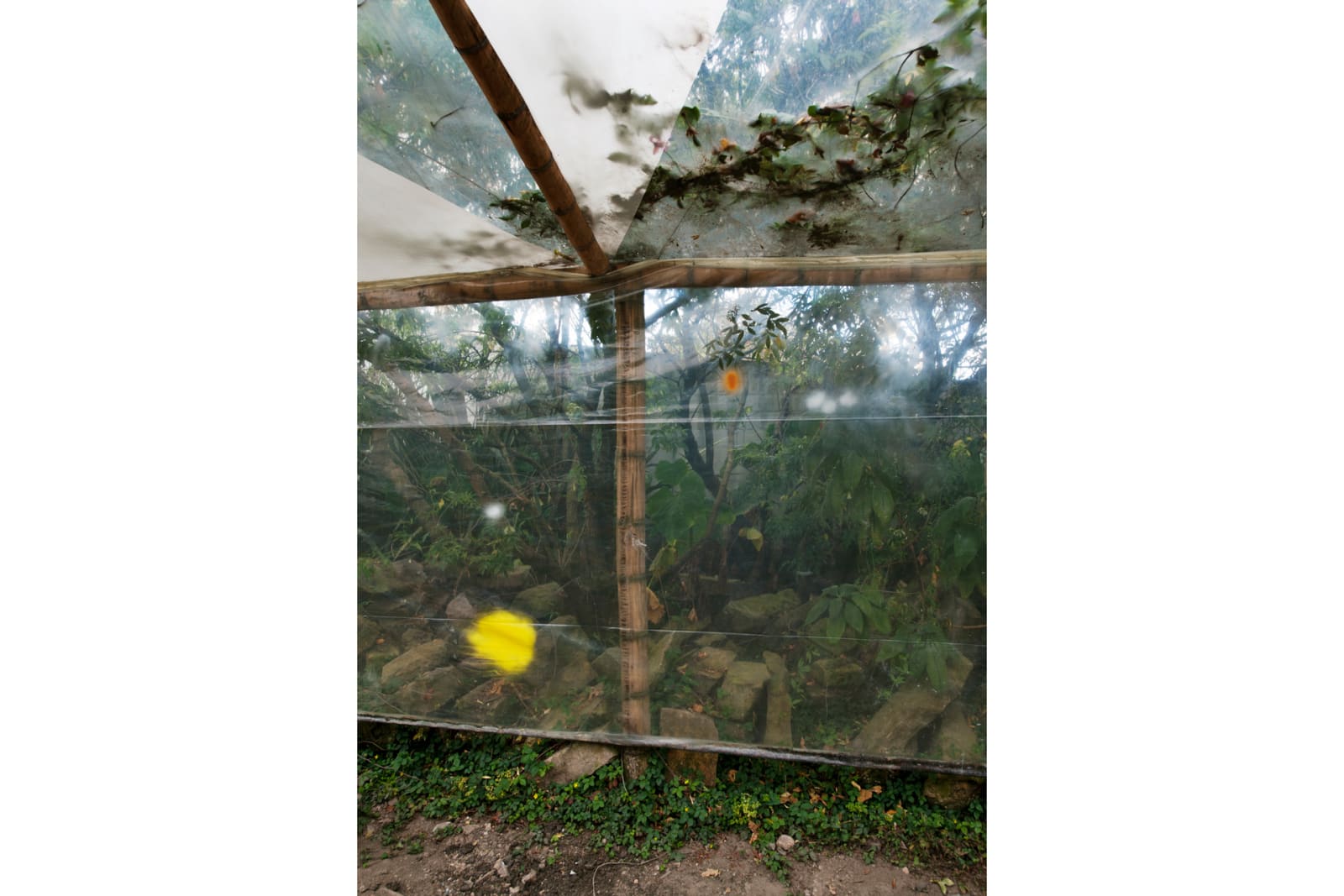
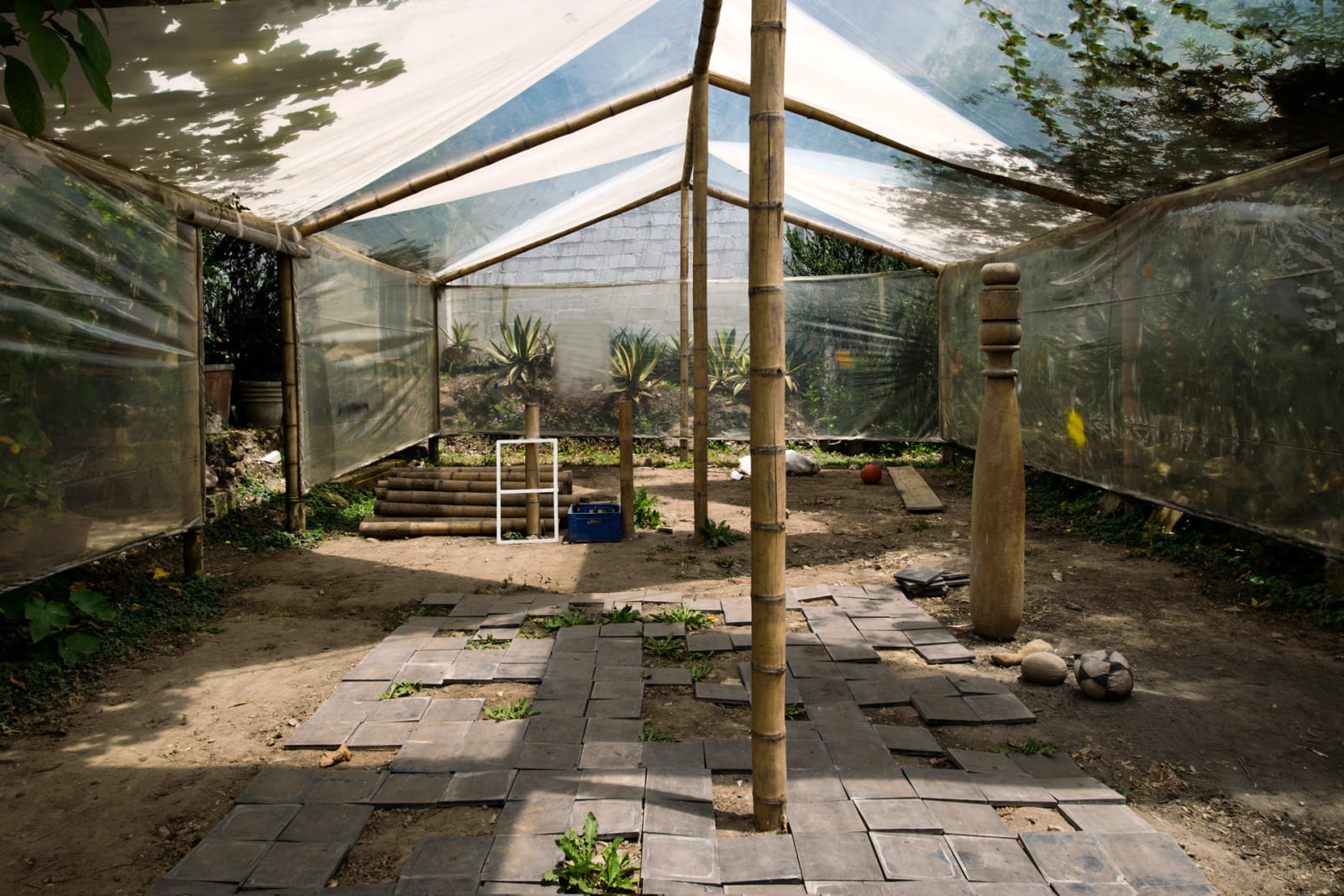
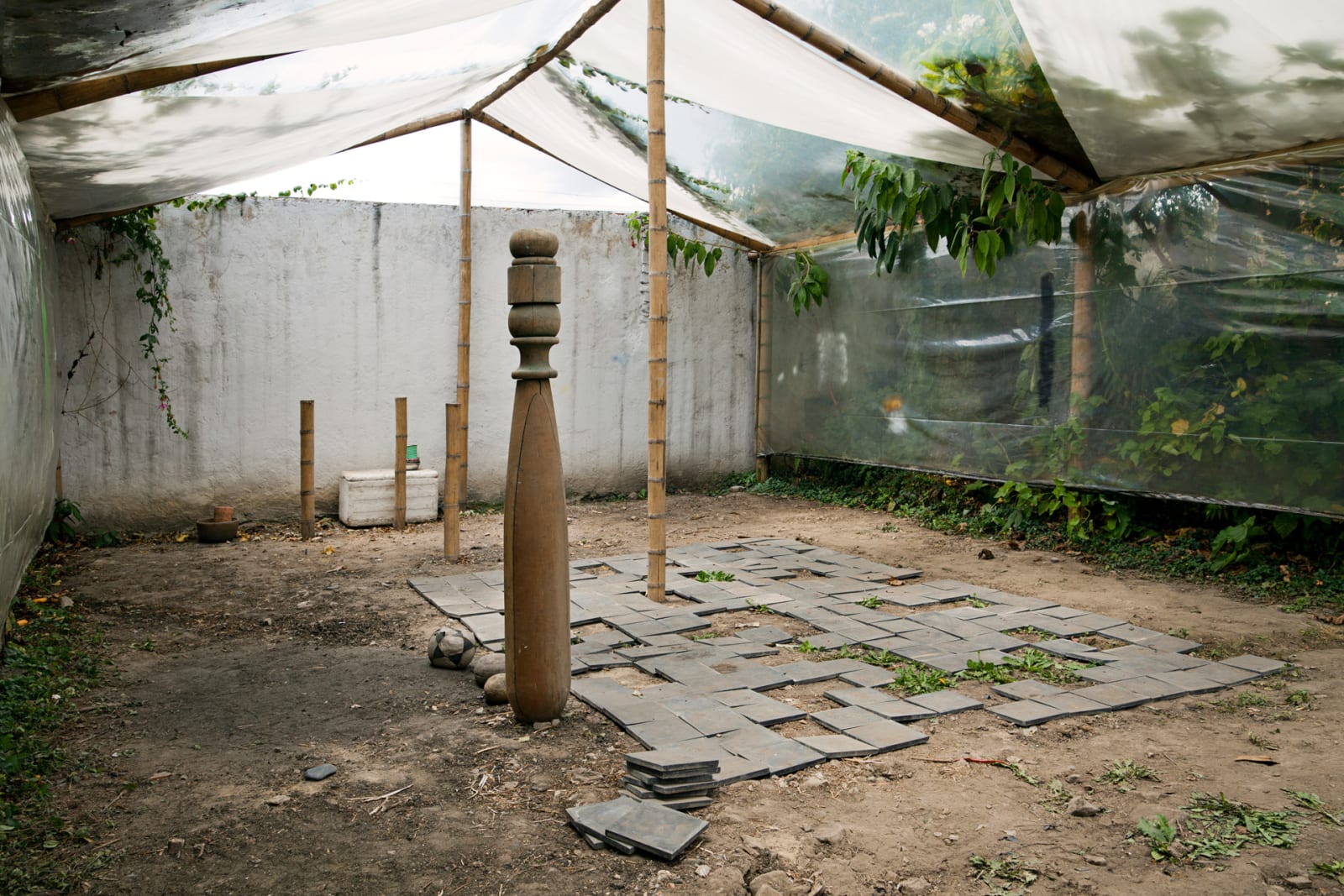
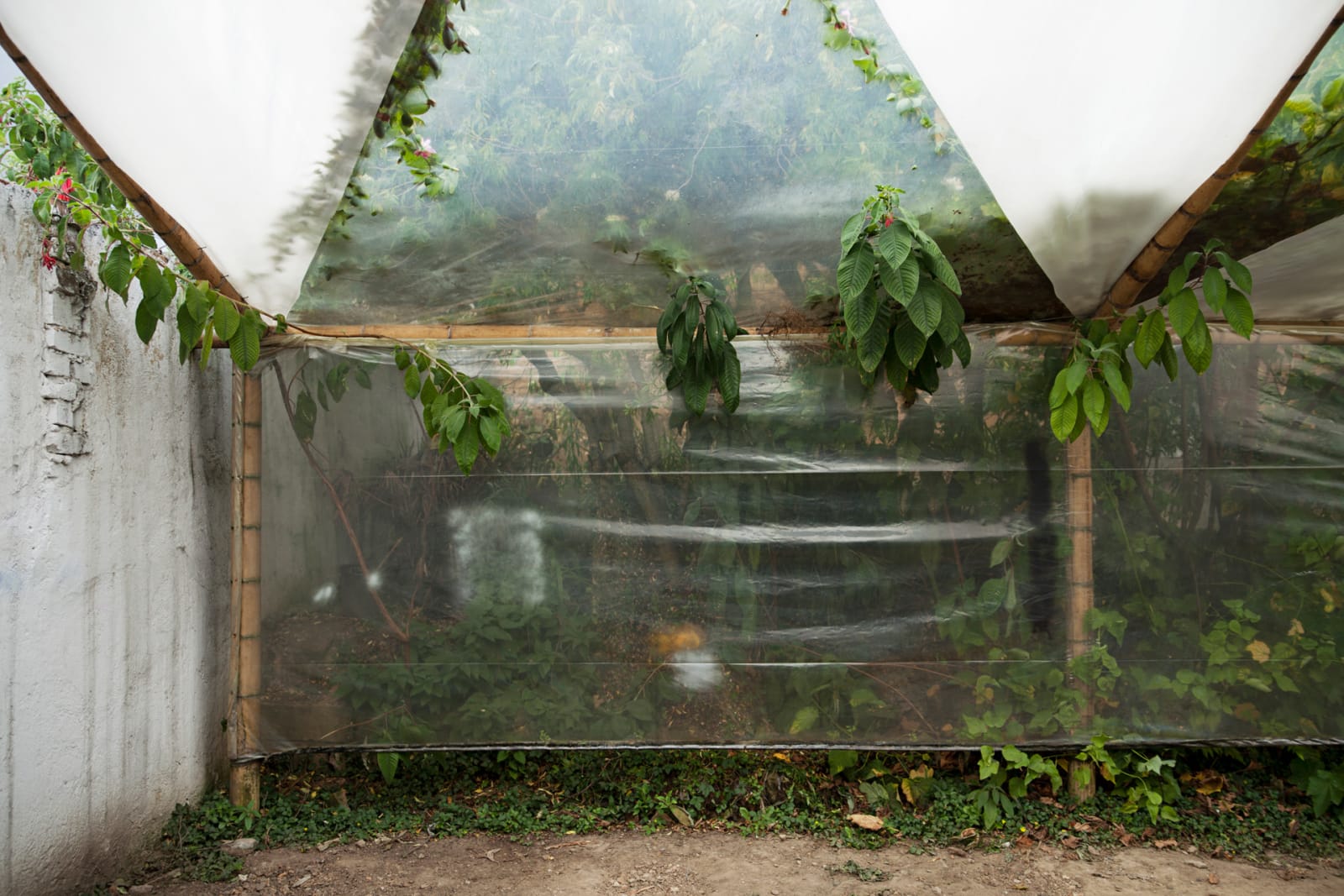
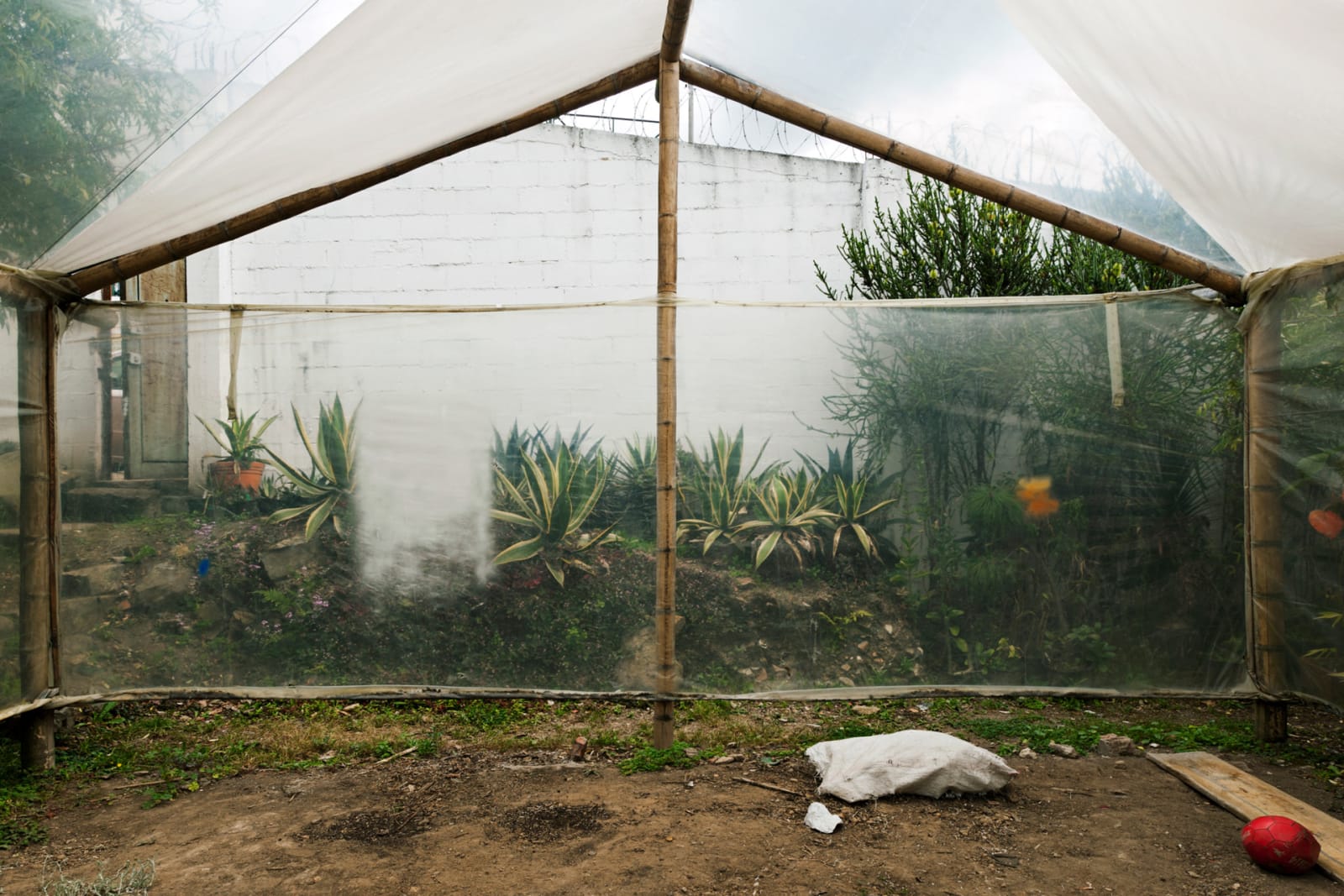
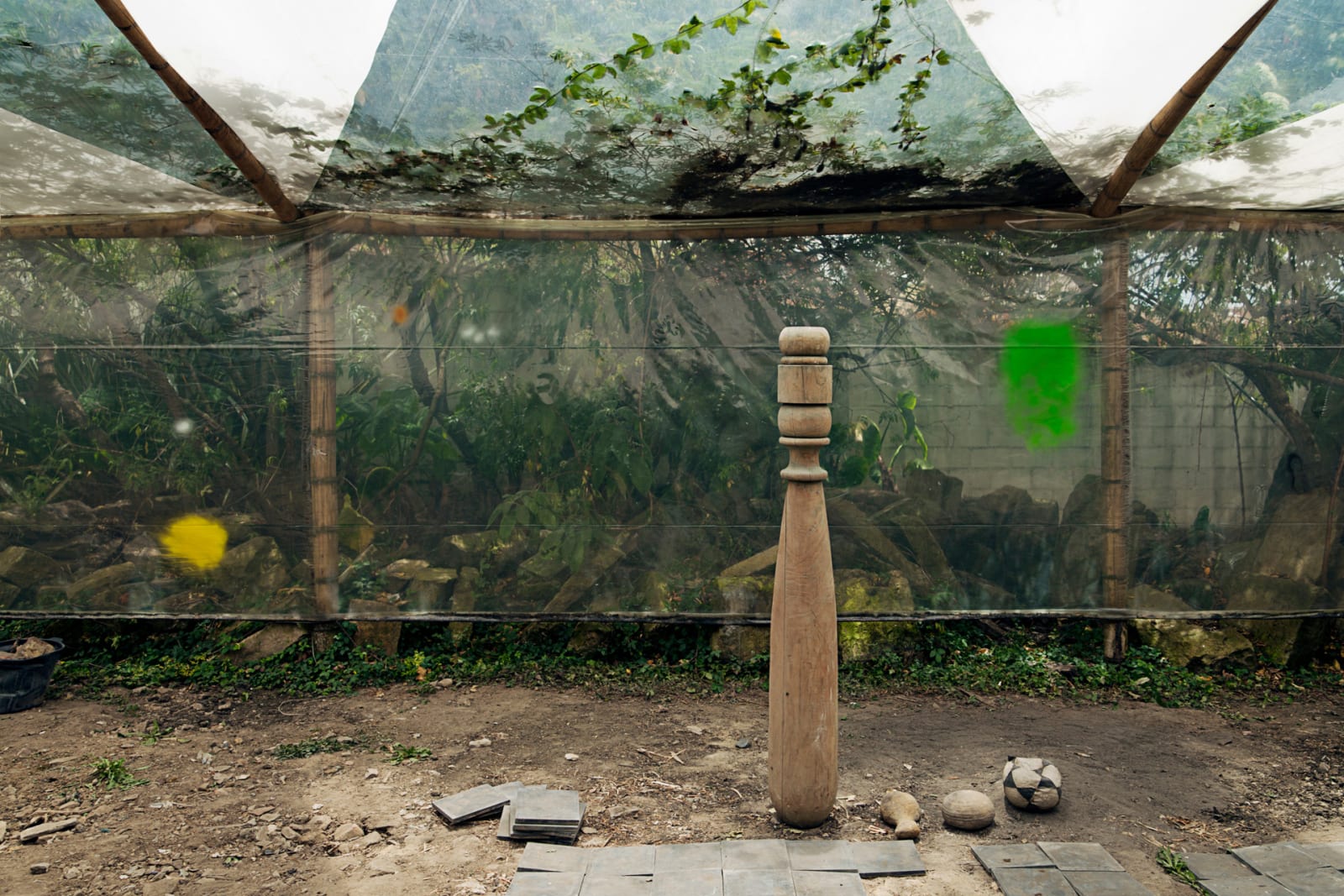
The utopian philosopher and novelist Paul Scheerbart devoted a large part of his 1914 work to the idea of an architecture made of glass. Rather than a commitment to transparency, he advocated the use of different coloured glass. The surface of the buildings was to be made up of enormous stained-glass windows that would create polychromatic lighting atmospheres in the interior. For him, this spatial condition was a prerequisite for architecture to operate by encompassing and stimulating all the senses of the user. The light show would also be transformed throughout the day, according to the light conditions, in a radical proposal that sought to reconcile construction with nature. With this, the glass architecture alternative criticised the standardisation, simplicity and uniformity that characterise most of the spaces in which individuals go about their daily lives. With continuously changing coloured light, Scheerbart sought to make the experience of space a unique and unrepeatable event, at all times. These reflections were reflected in his treatise on Glass Architecture, his novel The Grey Cloak and Ten Percent White, and his close collaboration with Bruno Taut on the construction of his Glass Pavilion, to which he dedicated a series of aphorisms.
Recently the artist Julius Heinemann carried out his own project for a Glass House. Located in the courtyard of a house in the historic centre of the city of Bogotá, the German artist erected a bamboo structure with a gabled roof, a prototypical solution that refers to the figure of the house. Instead of using glass, he resorted to transparent plastic as a covering for this structure. Using this material and various objects found on the site, Heinemann created one of his installations, understood as investigations in which he takes drawing and painting into the realm of space. Examples of such projects previously executed are Dia (2015) and O lo uno o lo otro (2014). In these cases, he used a series of transparent curtains to articulate an ephemeral architecture that gave depth to the scene and allowed a play of planes for the experimentation of painting in space. This configuration, in the manner of an installation, guaranteed a fully corporeal experience on the part of the spectator.
Unlike these works, Glass House is not located in a contained situation, such as a gallery, but was placed in an outdoor space. Heinemann took advantage of this situation to integrate into the installation the series of elements present on the site, from vegetation to old footballs, boxes of different colours or mosaics that were never properly fixed to the floor. The colours and shapes of the plants outside the perimeter of the house are, from the inside, blurred by the plastic; something that refers to the stains and coloured lines, associated with the practice of drawing, that distinguish Heinemann's pictorial practice. The artist also assembled a grid of grey mosaics on the floor to emphasise the yellow and green of the flowers in the courtyard. He made use of other objects found on the site, painted some of them and constructed geometric compositions with a strong graphic character in which, for example, an old ball can be seen as a circular shape or a sphere with an intense red colour. Encompassing the entire scene contained within this "glass architecture", Heinemann's work can be seen as a space-occupying exercise in drawing and painting, in which the various elements (painted spots on the plastic or objects scattered around the site) enter into different relationships with each other.
Much of the design and solution of Heinemann's projects comes from a careful study of how space relates to nature and, in space, to light. His marks, smudges and gestures made with spray paint, graphite or crayon are, to a large extent, records of the passage of light through space, over the course of a day and over a long period of time. Compass (2013) is a piece by the artist that illustrates this perfectly.
Like Scheerbart's glass architecture, Heinemann's Glass House offers a unique spectacle every time it is visited. The light emphasises the colours applied by the artist and creates changing patterns with the shadow of the paint on the plastic, as well as with the objects scattered in the space. The relationship of this recent work by the artist to the utopian speculation of the philosopher of a century ago is not entirely arbitrary. On the one hand there is the spatial condition of Heinemann's practice, which reflects - not only in some cases - on 20th century modern painting, but also on examples of architecture where the relationship between space and light was of primary importance, such as the work of Luis Barragán or that produced under the programme of Dutch Neo-Plasticism. On the other hand, Scheerbart and Heinemann seem to coincide in making architecture (a discipline strongly associated with the static and the inert) an event in continuous transformation and, thus, proposing that - as in the domain of nature - the field of representation in art must be in constant change.
Daniel Garza-Usabiaga
El filósofo y novelista utópico Paul Scheerbart dedicó gran parte de su obra del año 1914 a la reflexión de una arquitectura hecha con cristal. Más que una apuesta por la transparencia, propugnaba por el uso de cristal de distintos colores. La superficie de las construcciones debía de conformarse por enormes vitrales que crearan ambientes lumínicos policromados al interior. Para él, esta condición espacial era un requisito para que la arquitectura operara englobando y estimulando todos los sentidos del usuario. El espectáculo lumínico, además, se iría transformando a lo largo del día, de acuerdo a las condiciones de luz, en una propuesta radical que buscaba reconciliar la construcción con la naturaleza. Con esto, la alternativa de arquitectura de cristal criticaba la estandarización, la simplicidad y la uniformidad que caracterizan la mayor parte de los espacios en los que el individuo lleva a cabo su vida cotidiana. Con luz de colores en continua transformación, Scheerbart buscaba hacer de la experiencia del espacio un evento único e irrepetible, en todo momento. Estas reflexiones quedaron asentadas en su tratado sobre Arquitectura de cristal, su novela El manto gris y diez por ciento de blanco y la estrecha colaboración que sostuvo con Bruno Taut para la construcción de su Pabellón de Cristal, edificio al que dedicó una serie de aforismos.
Recientemente el artista Julius Heinemann llevó a cabo su propio proyecto de una Casa de vidrio. Ubicada en el patio de una casa en el centro histórico de la ciudad de Bogotá, el artista alemán levantó una estructura de bambú con un techo de dos aguas, una solución prototípica que remite a la figura de la casa. En vez de utilizar vidrio, recurrió al plástico transparente como recubrimiento de esta estructura. Sobre este material y valiéndose de varios objetos que se encontraban en el sitio, Heinemann realizó una de sus instalaciones entendidas como investigaciones en las que lleva el dibujo y la pintura al terreno del espacio. Ejemplos de este tipo de proyectos ejecutados anteriormente son Dia (2015) y O lo uno o lo otro (2014). En dichos casos, utilizó una serie de cortinas transparentes para articular una arquitectura efímera que daba profundidad a la escena y permitía un juego de planos para la experimentación de la pintura en el espacio. Esta configuración, a la manera de una instalación, garantizaba una experiencia totalmente corporal por parte de espectador.
A diferencia de estos trabajos, Casa de vidrio no se encuentra dentro de una situación contenida, como lo es una galería, sino que se ubicó en un espacio exterior. Heinemann aprovechó esta situación para integrar a la instalación la serie de elementos presentes en el lugar, desde la vegetación hasta viejos balones de futbol, cajas de distintos colores o mosaicos que nunca fueron debidamente fijados al piso. Los colores y formas de las plantas fuera del perímetro de la casa se ven, desde el interior, difuminados por el plástico; algo que remite a las manchas y líneas de colores, asociadas a la práctica del dibujo, que distinguen la práctica pictórica de Heinemann. El artista también ensambló sobre el piso una retícula con mosaicos grises que enfatizaba el color amarillo y verde de las flores del patio. Aprovechó otros objetos que se encontraban en el sitio, pintó algunos y construyó composiciones geométricas de fuerte carácter gráfico en las que, por ejemplo, un viejo balón puede ser visto como una forma circular o una esfera con un intenso color rojo. Abarcando la totalidad de la escena contenida dentro de esta “arquitectura de cristal”, el trabajo de Heinemann puede ser visto como un ejercicio de dibujo y pintura que ocupa el espacio, en el que los distintos elementos (manchas pintadas en el plástico u objetos esparcidos por el sitio) entablan distintas relaciones entre ellos.
Gran parte del diseño y la solución de los proyectos de Heinemann proviene de un estudio cuidadoso sobre cómo el espacio se relaciona con la naturaleza y, en espacial, con la luz. Sus marcas, manchas y gestos hechos con aerosol, grafito o crayón son, en gran medida, registros del paso de la luz a través del espacio, a lo largo del día y por un largo tiempo. Compass (2013) es una pieza del artista que ilustra esto a la perfección.
Como la arquitectura de cristal de Scheerbart, la Casa de vidrio de Heinemann ofrece un espectáculo único cada vez que se visita. La luz enfatiza los colores aplicados por el artista y crea patrones cambiantes con la sombra de la pintura sobre el plástico, así como con los objetos esparcidos en el espacio. La relación de esta obra reciente del artista con la especulación utópica del filósofo de hace una siglo no es del todo arbitraria. Por un lado se encuentra la condición espacial de la práctica de Heinemann que reflexiona —no sólo en algunos casos— sobre la pintura moderna del siglo XX, sino también sobre ejemplos de arquitectura donde la relación entre el espacio y la luz tuvieron primera importancia, como el trabajo de Luis Barragán o el producido bajo el programa del neoplasticismo holandés. Por otro lado, Scheerbart y Heinemann parecen coincidir en hacer de la arquitectura (una disciplina fuertemente asociada con lo estático y lo inerte) un evento en continua transformación y, así, proponer que —como sucede en el dominio de la naturaleza— el campo de representación en el arte debe de estar en constante cambio.
Daniel Garza-Usabiaga
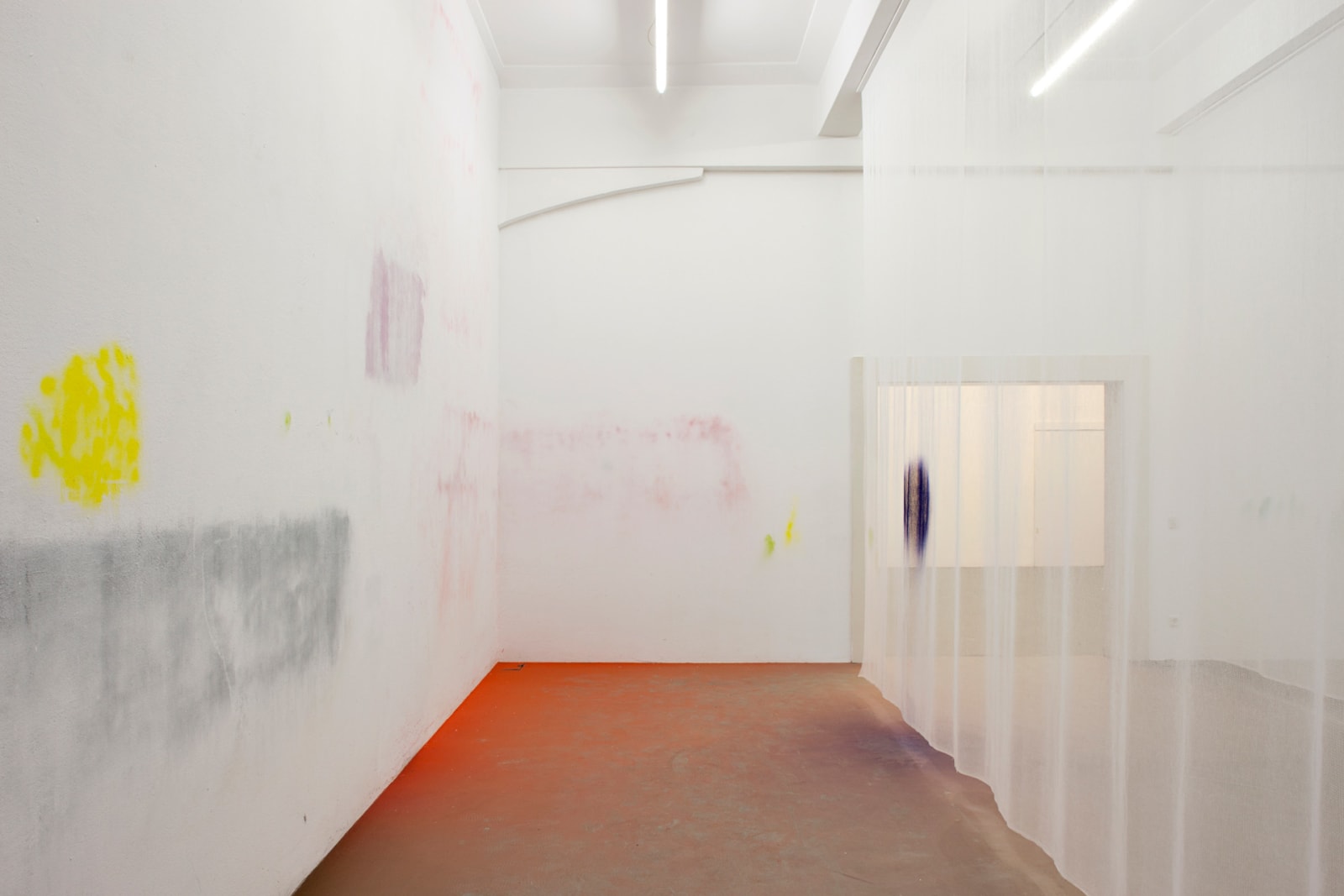
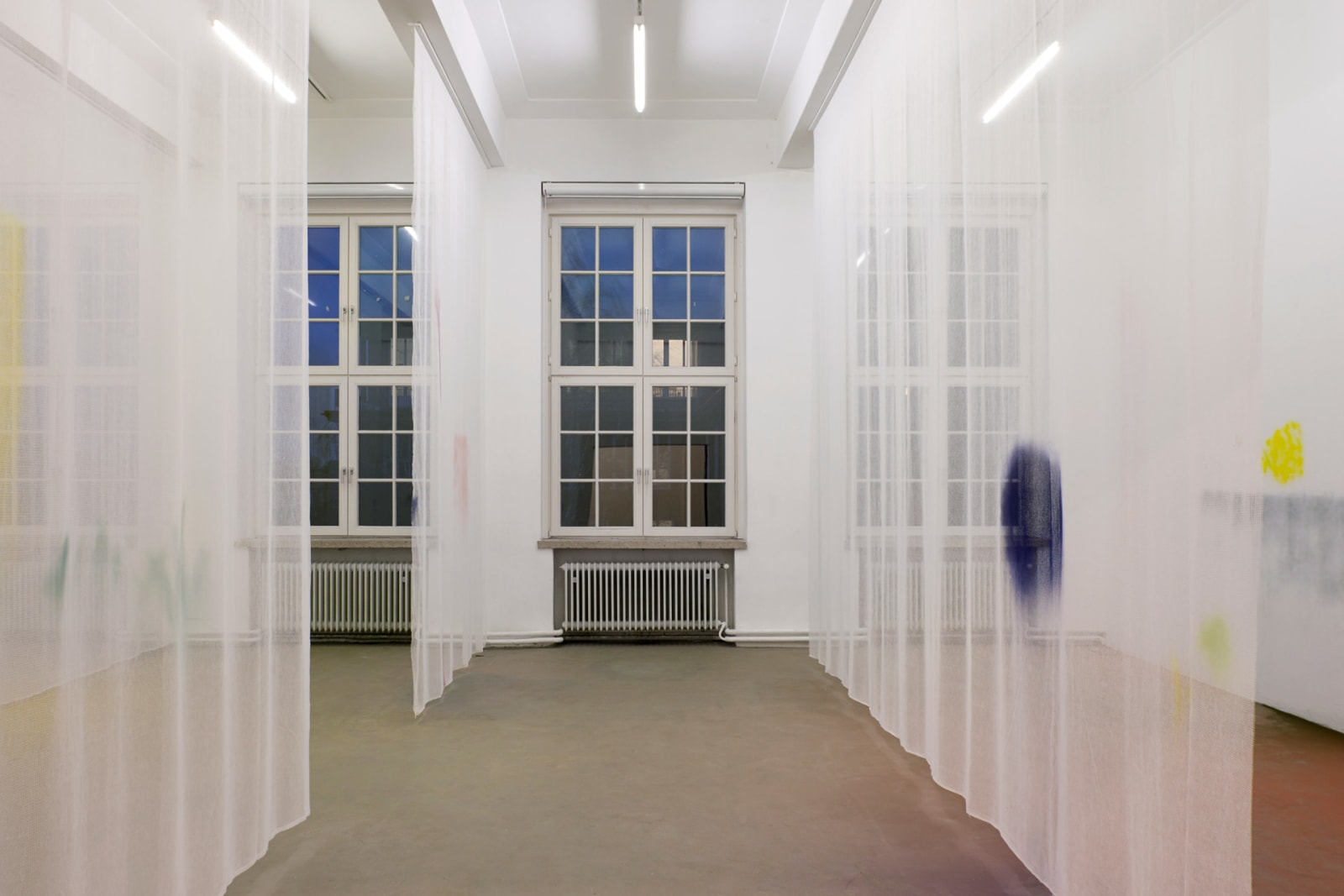
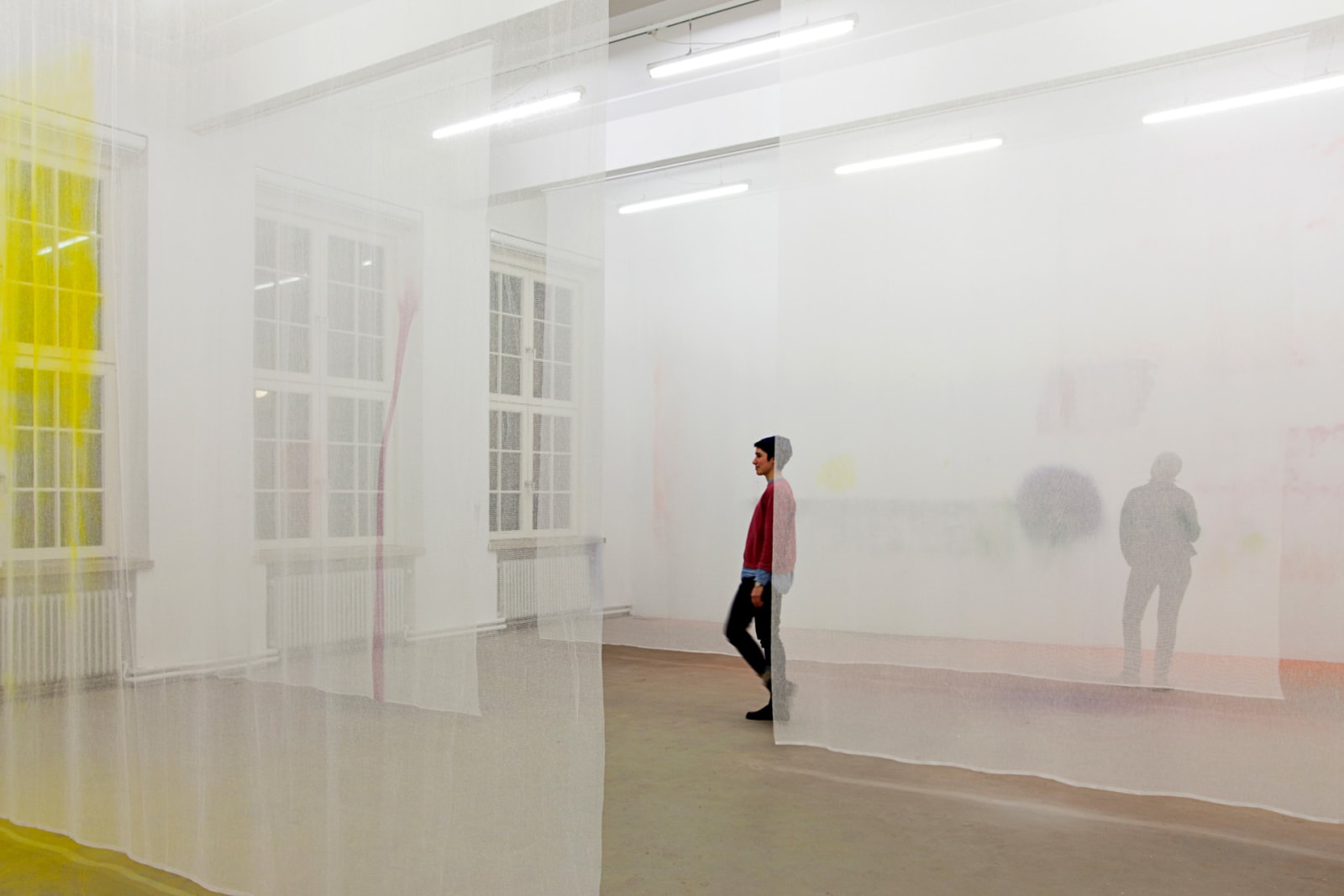

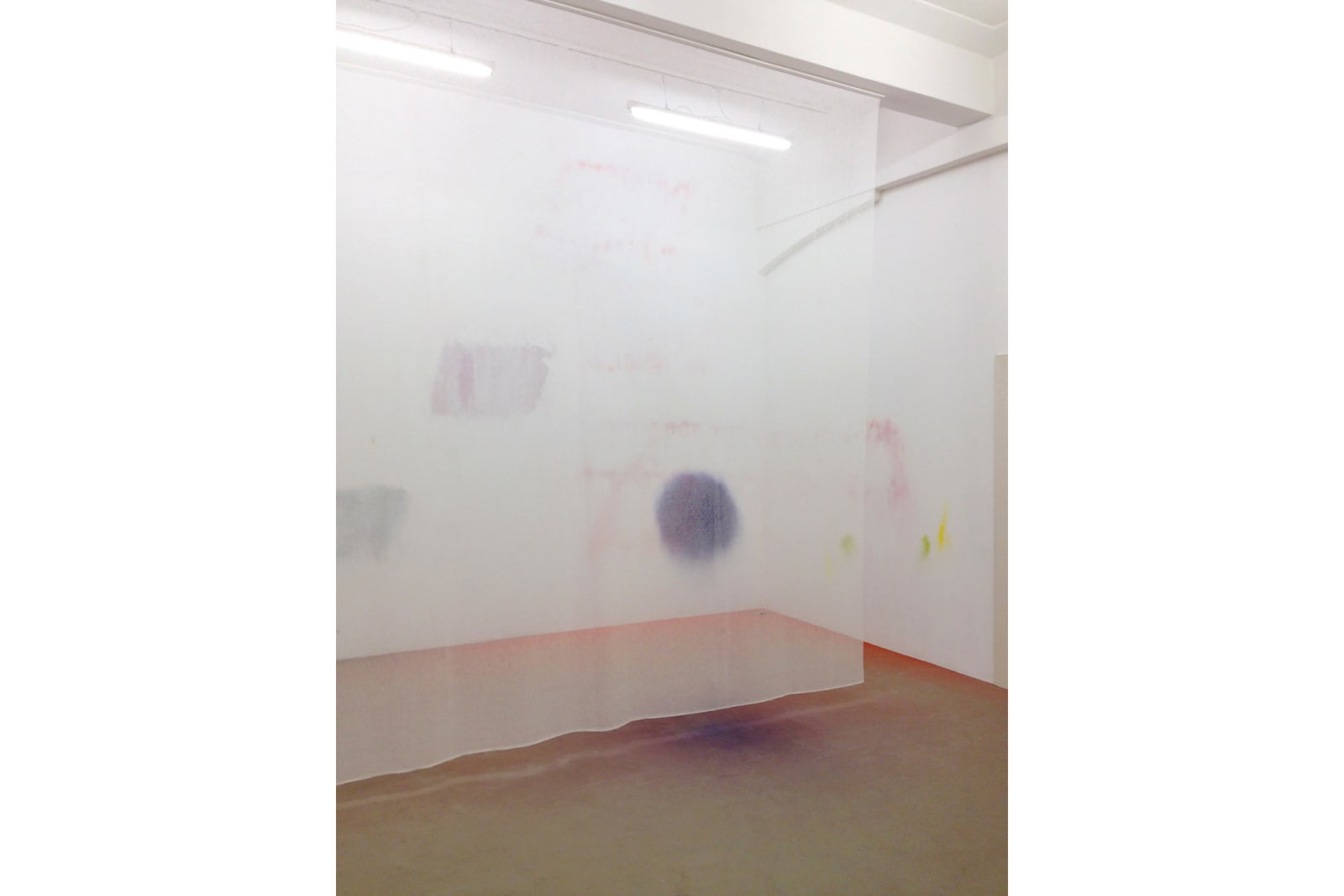
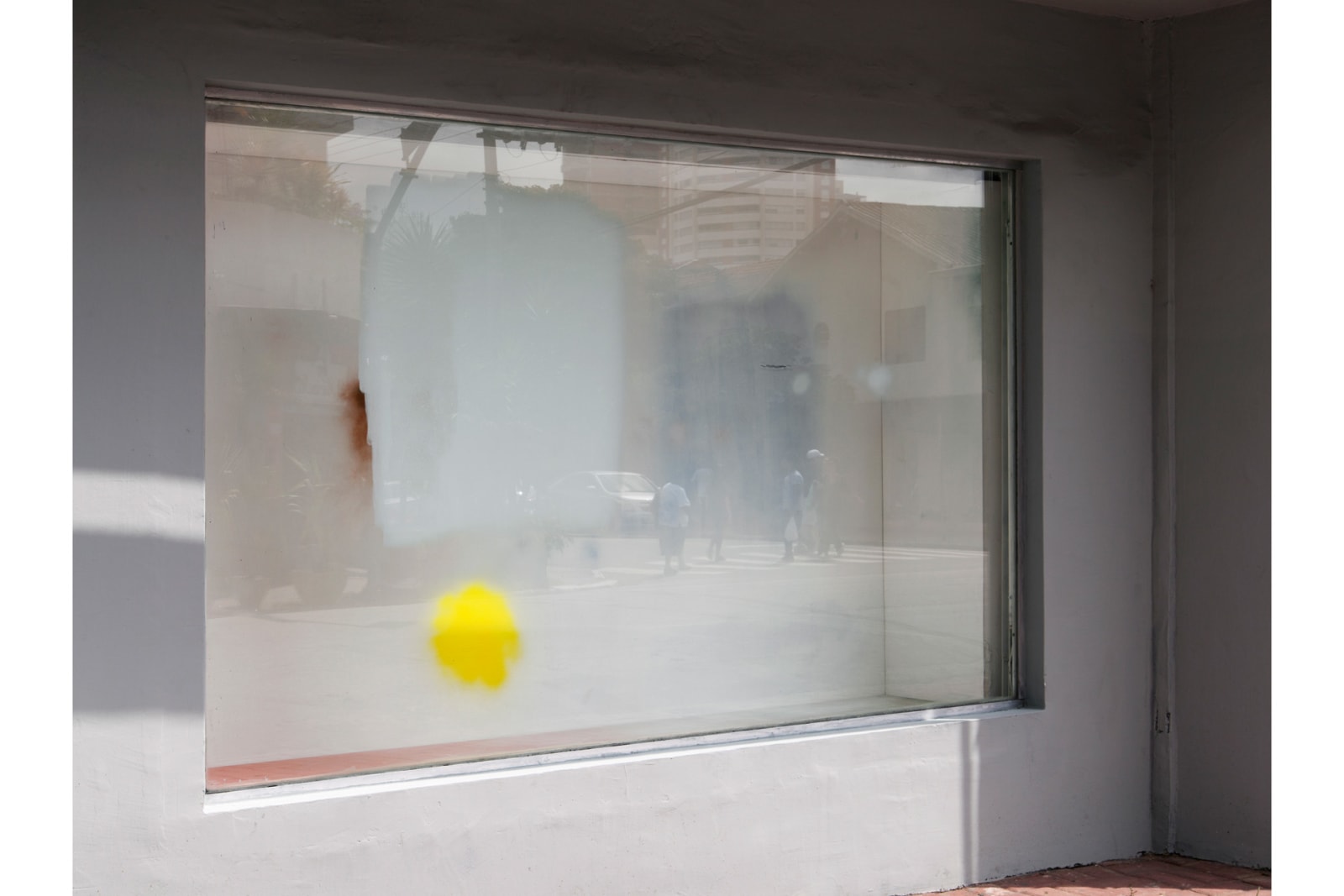
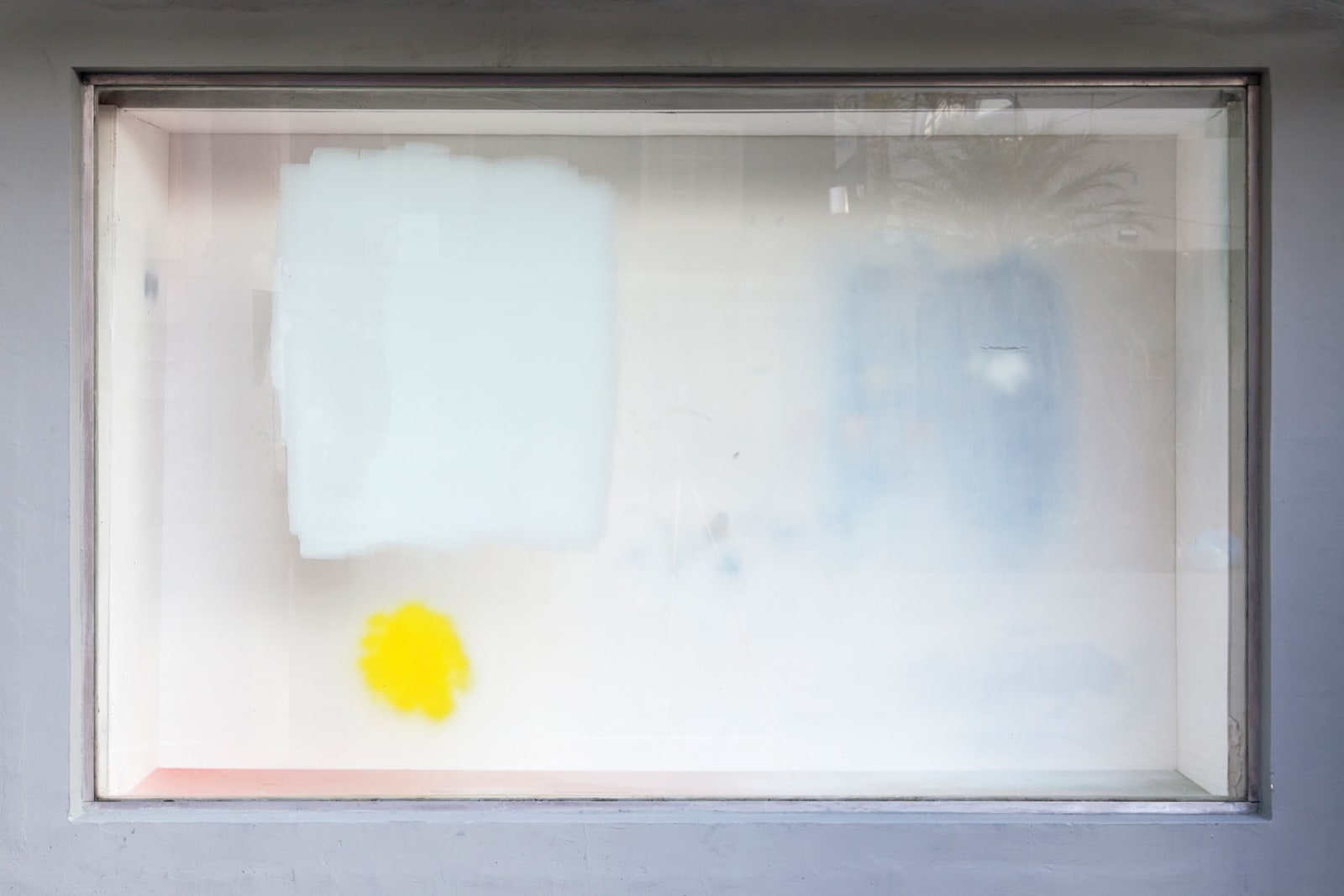
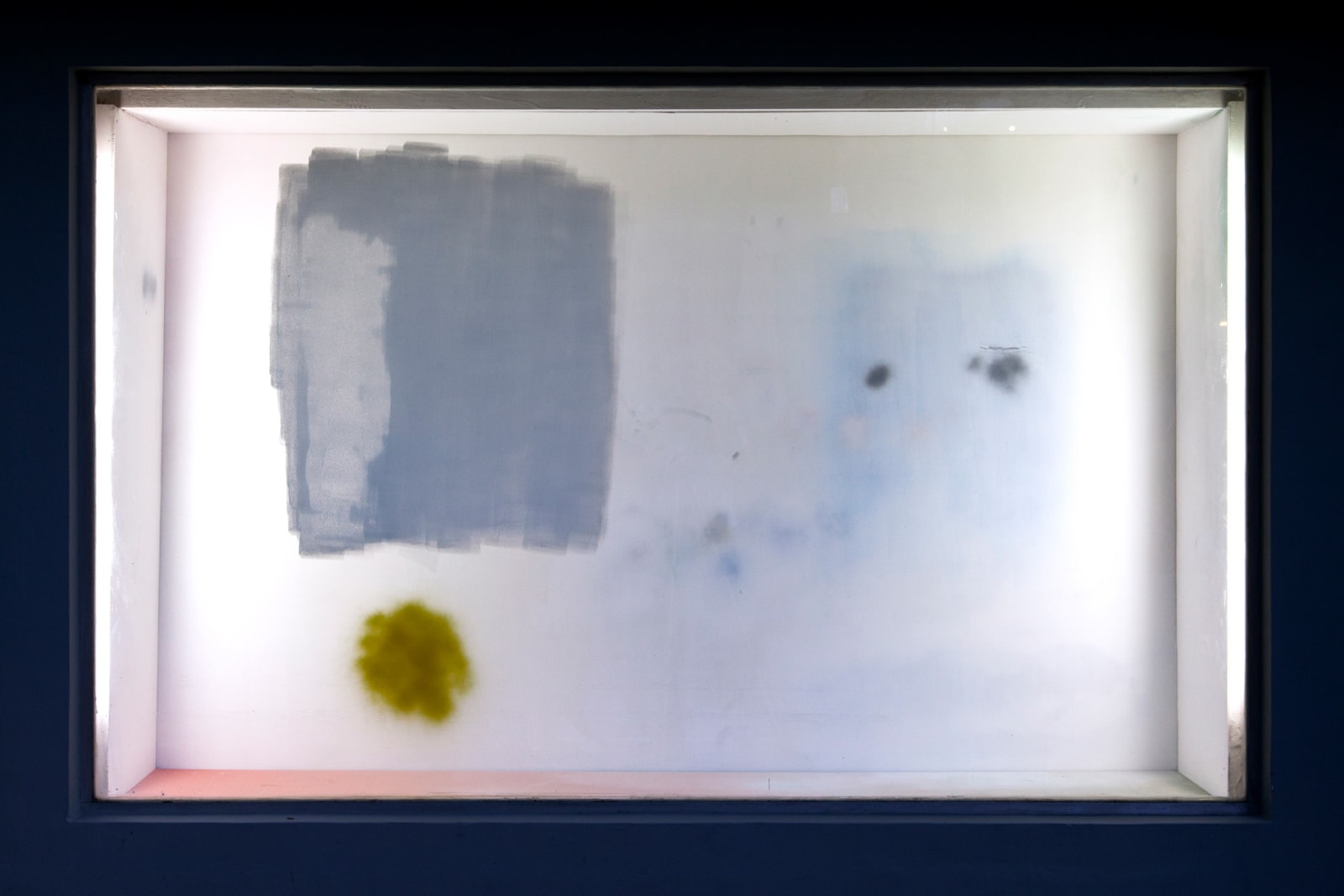
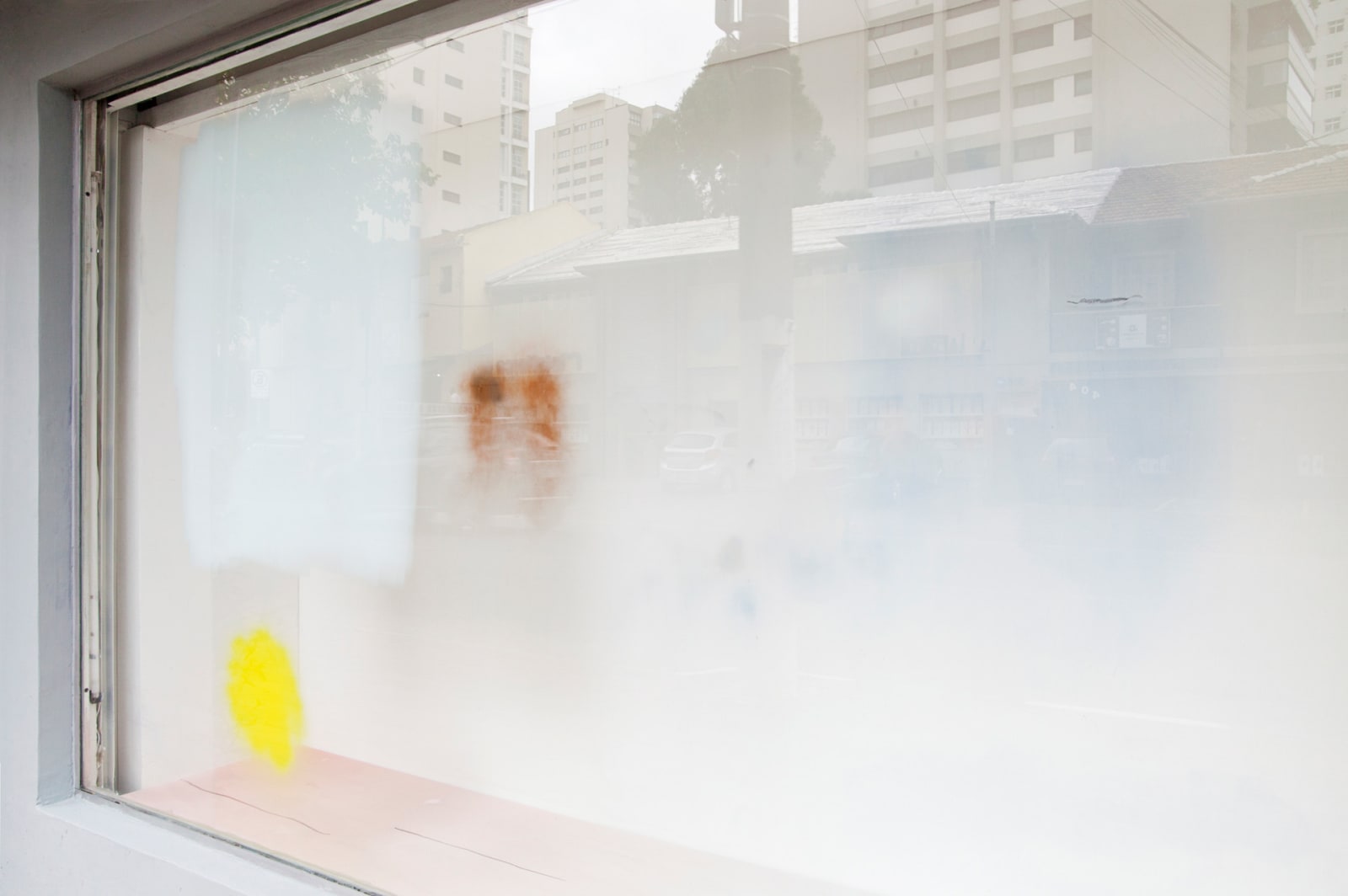

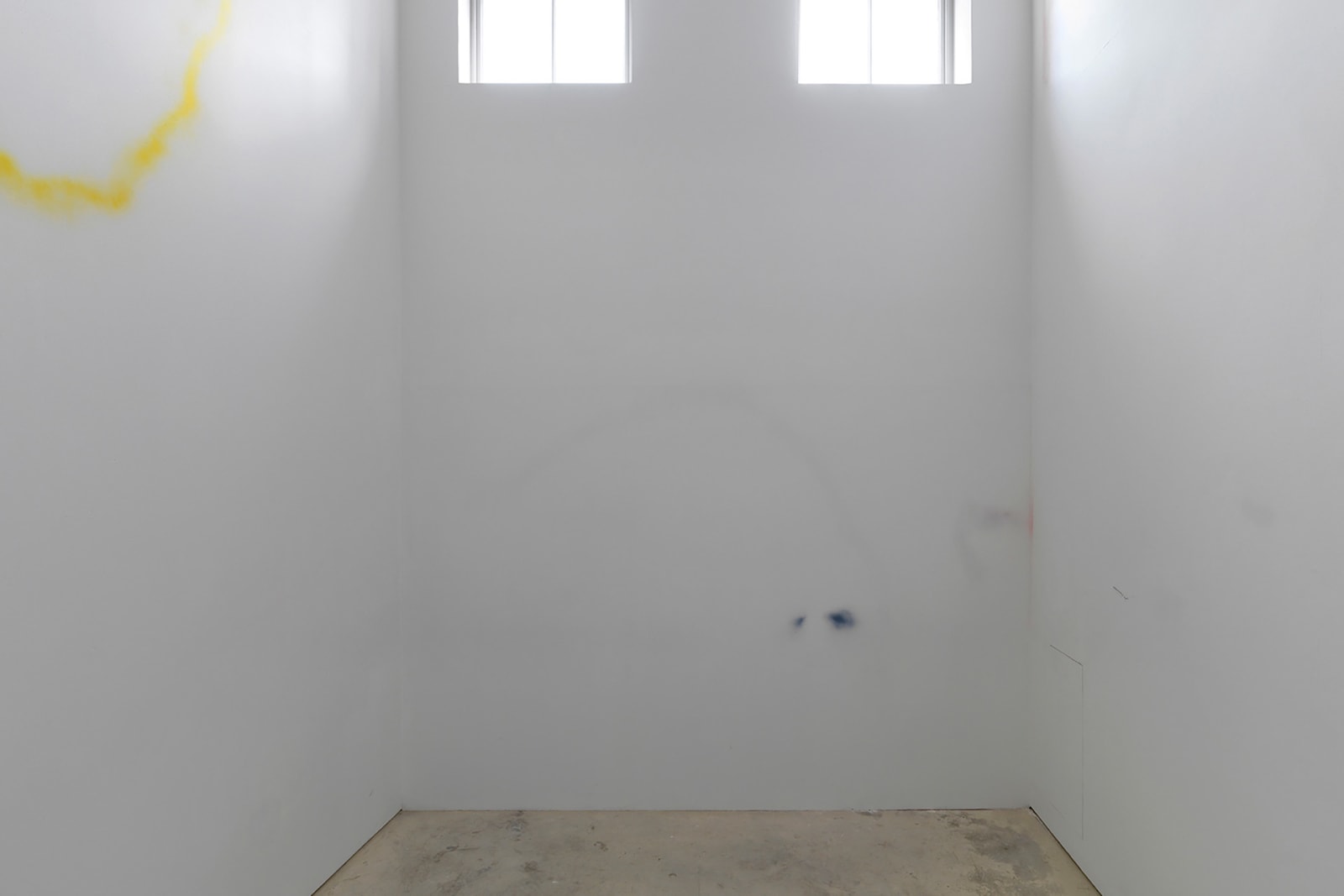
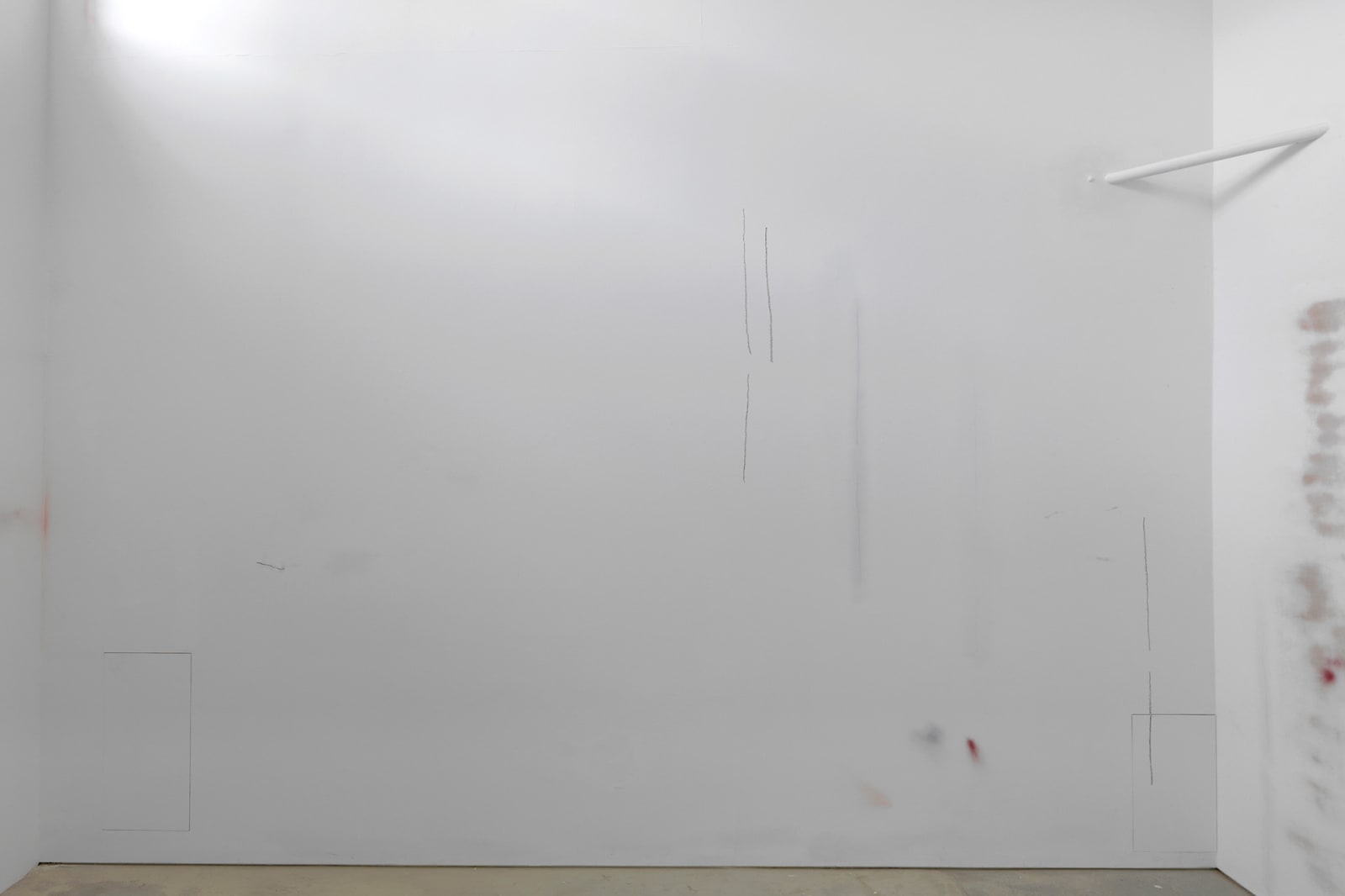
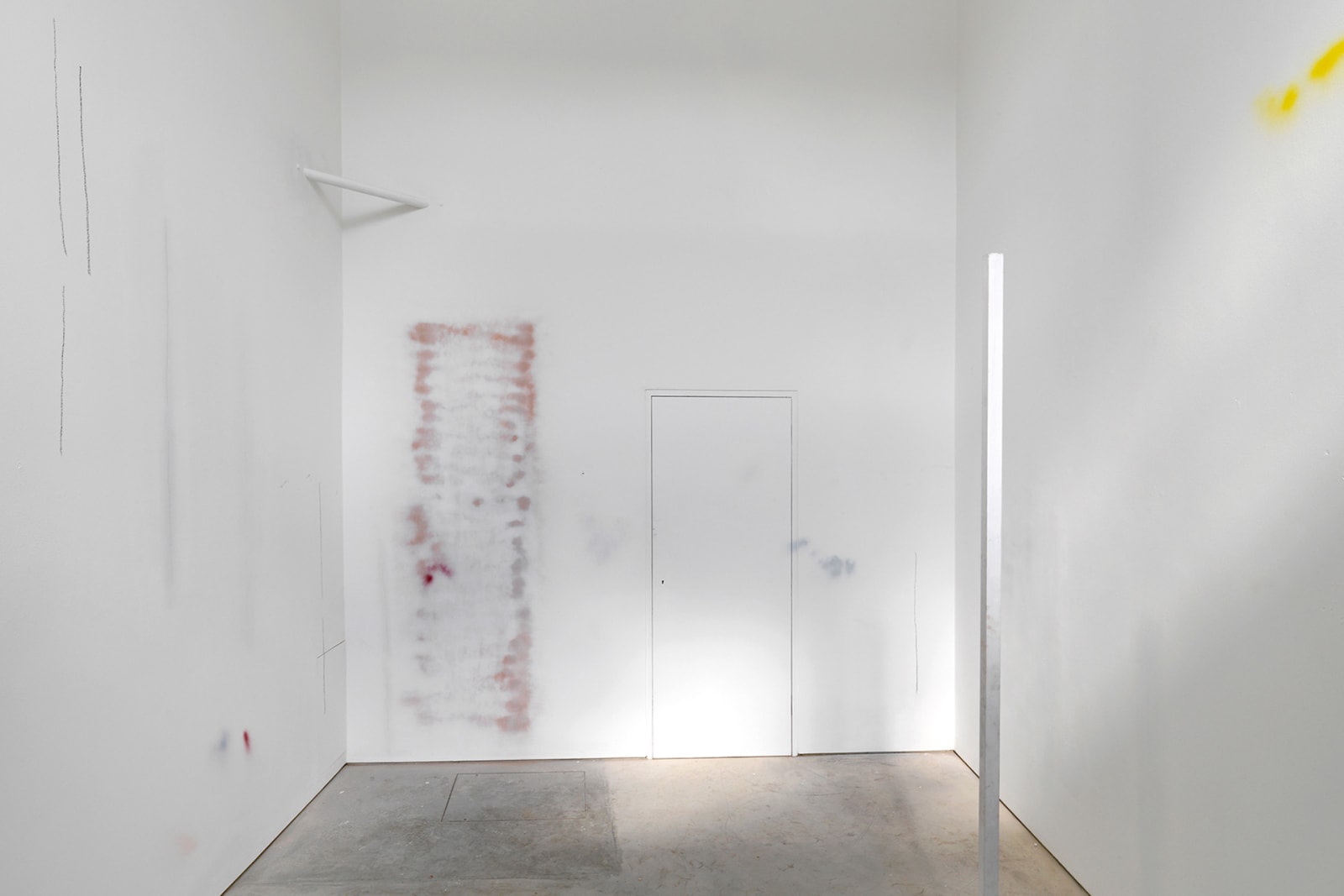
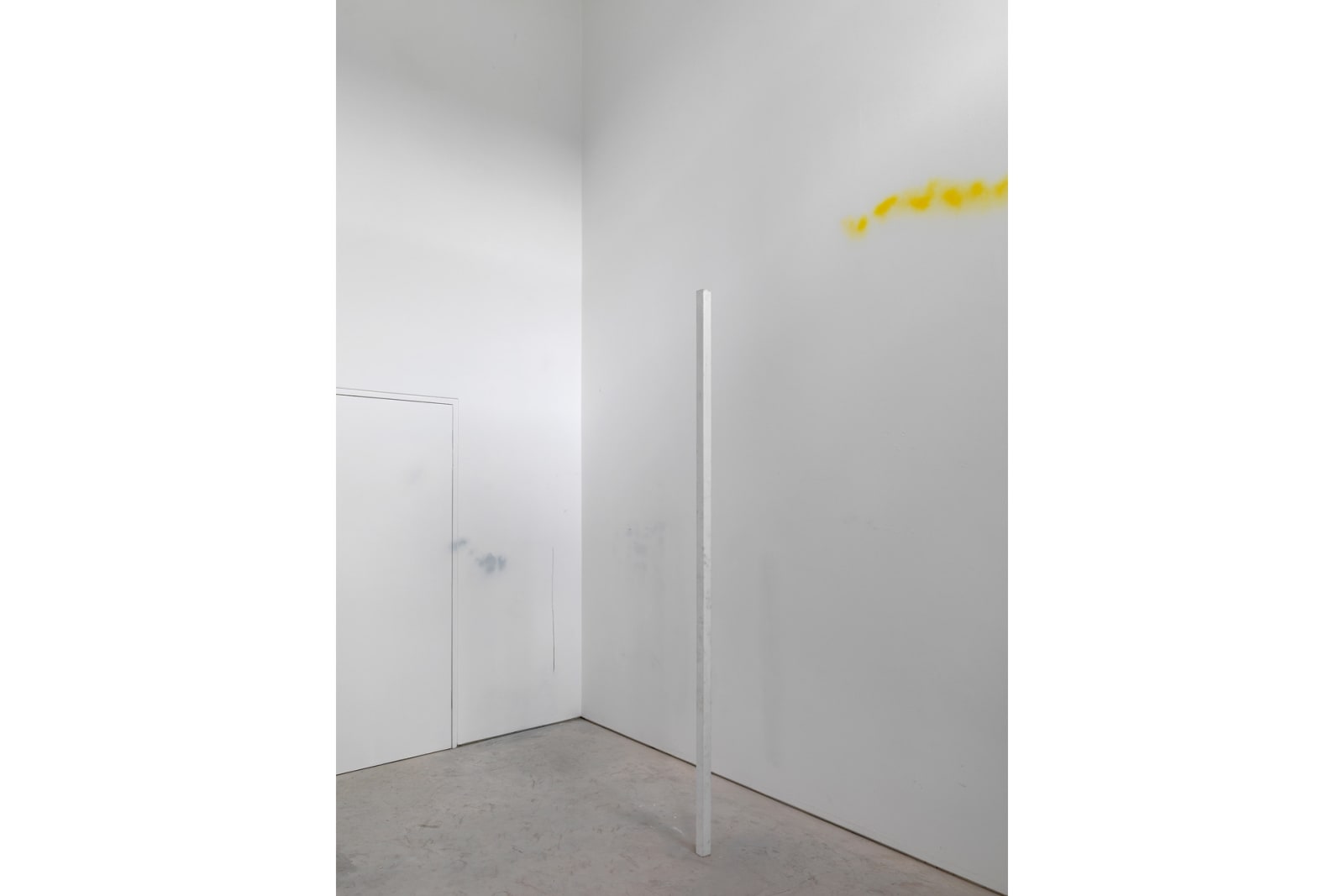
THE GALLERY AS SITE AND SUBJECT
When does art occur? Is art really created, or does it already exist and is in fact a process of discovery or rediscovery? Can an artist, when developing an exhibition, also double as a visitor? In other words can an artist, like a spectator, share the same initial experience when engaging with space, if the space itself is an integral part of the work? When he is developing his exhibition at Roman Road, Julius Heinemann is also a visitor, one who forms a reciprocal relationship with the space, where the architecture itself is built. Marcel Duchamp said that ‘the viewer completes the work and in this case Heinemann is anticipating this role, inviting the viewer to partake in this process.’1
Observational science is composed of two principal methods of understanding: ‘observational’ and ‘historical’. These two categories may be applied as a rubric in developing an understanding of Heinemann’s exhibition. I will put forward three positions that will run congruently throughout this text. First: a reading of the gallery not as a blank space ready for an artist’s intent, but rather one that is informed by its past, its environment, its geographical location, architecture, community and so on. Second: a separation of Julius Heinemann’s work from the familiar Greenbergian reading of materiality, in terms of reading the artist’s work solely through painting; I wish to instead follow the inner logic of the work, its process: to put forward a post-medium, event-based alternative. Just because it may look like a painting, doesn’t necessarily mean that it is one! Or, in the words of Sol LeWitt:
‘The system is the work of art; the visual work of art is the proof of the system. The visual aspect can’t be understood without understanding the system. It isn’t what it looks like but what it is that is of basic importance.’2
And finally the third position: a comparative analysis of Heinemann’s process and the logic of photography, where Heinemann’s process doubles as a form of photography without an image, like an inverse camera obscura, re-projecting the environment back onto itself, acting as the shadow of the gallery: not its real essence but a visible form of itself that is neither tangible nor permanent.
Since the 1970s, conventions of the white cube have been regularly interrogated, perhaps most notably by Brian O’Doherty’s Inside the White Cube, and most critiques have concluded that ‘the gallery space is not a neutral container, but a historical construct.’3 This proposition suggests that the gallery is not an empty space, with no existing signs, an ideology that Heinemann’s work recognises. For Heinemann’s practice often points to the spaces in architecture that are forgotten, and overlooked in their minute detail. Like an overgrown path in the woods, forgotten and seldom used, Heinemann points to these moments through various media to invite the viewer to rediscover it for themselves: this is perhaps best understood as a form of re-tracing, not in terms of illustration, but in terms of the etymology of the word, from the Latin tractus: a path that someone or something takes. Like a form of historiography, Heinemann employs an artistic methodology that incorporates the poetics of art with the logic of archaeology, digging up the gallery’s past while maintaining a presence in the present.
It is not my intention to talk about Heinemann’s work in terms of the materiality of painting, but rather I will situate it in a different realm, a more contemporary hybrid of event-based theory – as an event that has qualities of a real thing, existing autonomously in time, a lineage that shares elements of ‘fluxus’ (primarily through an integration of real life and artwork) and architecture. It has been observed that ‘material action is painting that has spread beyond the picture surface. The human body, a laid table or a room becomes the picture surface. Time is added to the dimension of the body and space.’4 Yet I would suggest that Heinemann’s work goes a step further, developing a spatial–temporal divide that I would term ‘event- objects’, or ‘event–traces’. For it is often not the end result that constitutes Heinemann’s work, but rather the research and observational techniques employed to arrive at that moment. Like a narrative, the ending is only one part of the whole: one must follow the entire journey to attain a fuller understanding of it, just as in performance it is not the documentation or the afterlife of these performances that matter, but the actual event and its retracing in real time. Although the artist may never allow this process to be made fully public, as a curator who is privy to this process I can no longer separate these two: process and outcome.
Within this duality, in such works as Schaukasten (Theresienstraße, München), 2013, referencing the German word Schaukasten, from ‘to look’ (schauen) at something or to look at a presentation of something (in a vitrine), where the mapping of spatial memory is done through a series of gestures, not only are the visitor’s eyes drawn to the subtle moments that have been forgotten or marginalised by their minute detail, but these are also present in the very motion the artist has employed to create them.
According to Juhani Pallasmaa, ‘touch is the most primary experience in architecture because the senses of the skin are the mediator between the skin and the world’.5 It could be said that Heinemann’s work is often concerned with this mediation between that which one senses and the spatial mapping of architecture. I’m often reminded of Matisse’s Chapelle du Rosaire, 1949 – 1951: not the specific work itself, but how the sunlight interacts with the work, passing through the work to create a new image on the floor and walls, where Matisse combines his interest in colour and light on the scale of the architectural environment, where the intensity of light and the chromatic experience alters throughout the day depending on season, time and angle. Heinemann’s works can often be a medium through which to experience the world, like Matisse’s use of a stained glass window, a work that is intended to be experienced through, rather than with.
This is especially evident in works such as Compass (Hanover Yard, London), 2013, where the intensity and luminosity are highlighted, drawing attention to the way light reflects and refracts from surfaces, developing a new spatial divide, a dimension both ephemeral in its existence and unintentional in its design.
Simplifying shapes and memory into pure signs develops a new type of visual and architectural language that I will call ‘spatial limnology’: Heinemann carries out a spatial study of light, architecture, graphite, paint, surface, depth, and colour as they interact with the gallery to determine the effects on the visual and spatial compression of the architecture.
So what, then, can prove to be a useful, if not alternative, reading of Heinemann’s practice? Here I would like to conclude with my concept of ‘photography without an image’. This is the concept of capturing a moment, an event, without the use of mechanical reproduction, positioning an event as an object in time. The semi-temporal relationship is, however, broken by the recurrence of the event, like a sundial relocating the specific time of a sunset, while the image of the sunset is never the same. This is like the capturing, or rather the ‘locating’, of that moment through a reactionary gesture, allowing for both the moment and the artwork to exist as simultaneously independent from each other. Yet a relationship remains, one of common occurrence or source, where the mechanism that records the image is Heinemann himself rather than a light-sensitive medium.
Traditional cameras capture light onto photographic film or a photographic plate, whereas Heinemann allows for both the passing of time and the movement of light to continue. The motion of the event – its retracing does not disrupt the original from passing, but instead a secondary eventis created: riffing off the original and ephemerally placed through artistic gesture. Thus the concept of change can still exist within both the event- trace and the event, where the event-trace or object-event exists in parallel to the original event, but does not interfere with the reoccurrence of it. In photography, however, the capturing of the event is what is pursued, to the point where the actual event is no longer relevant, just the documentation of it, or the retaining of evidence that one was witness to the event.
Victor Wang
[1] Donald Kuspit, ‘A Critical History of 20th-Century Art’, Artnet Magazine\
[2] Donald Kuspit, ‘A Critical History of 20th-Century Art’, Artnet Magazine\
[3] Simon Sheikh, ‘Positively White Cube Revisited’, E-Flux Journal, 2009\
[4] Brus Mühl Nitsch Schwarzkogler: Writings of the Viennese Actionists, ed. Malcolm Green, London: Atlas Press, 1999.
[5] ‘The contribution of the five human senses towards the perception of space’, Department of Architecture, University of Nicosia
Photos: Charles Hosea / Courtesy Roman Road

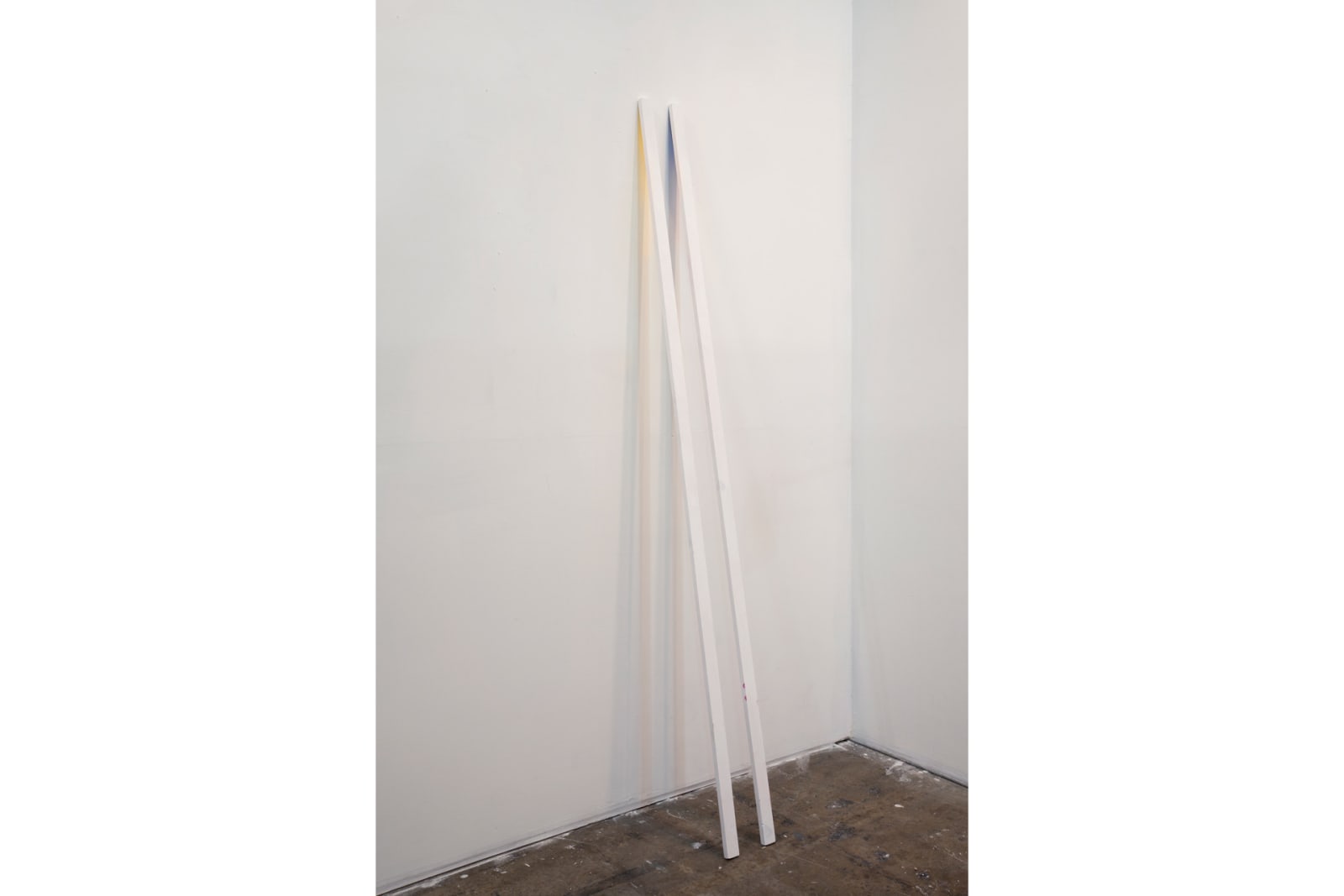
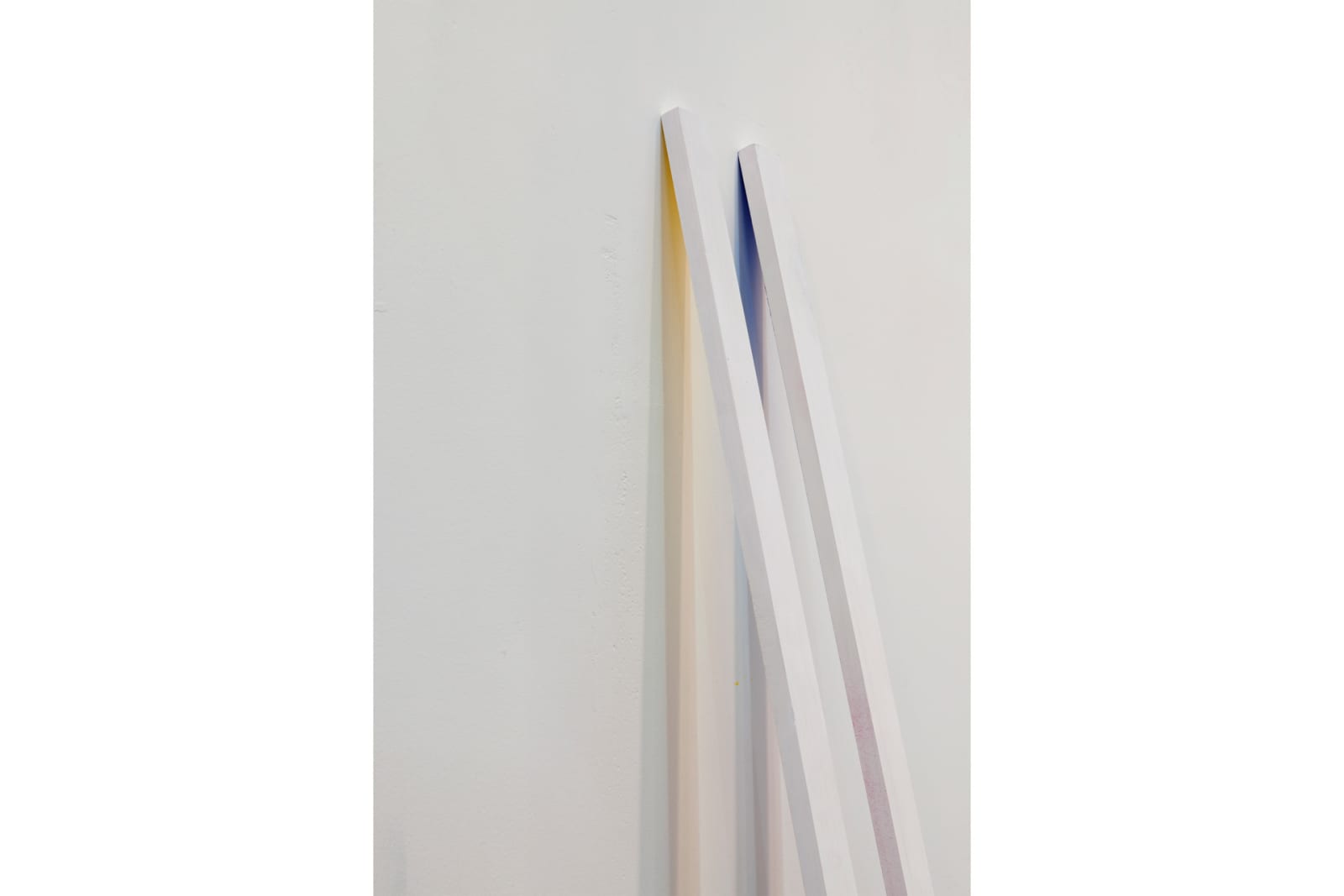
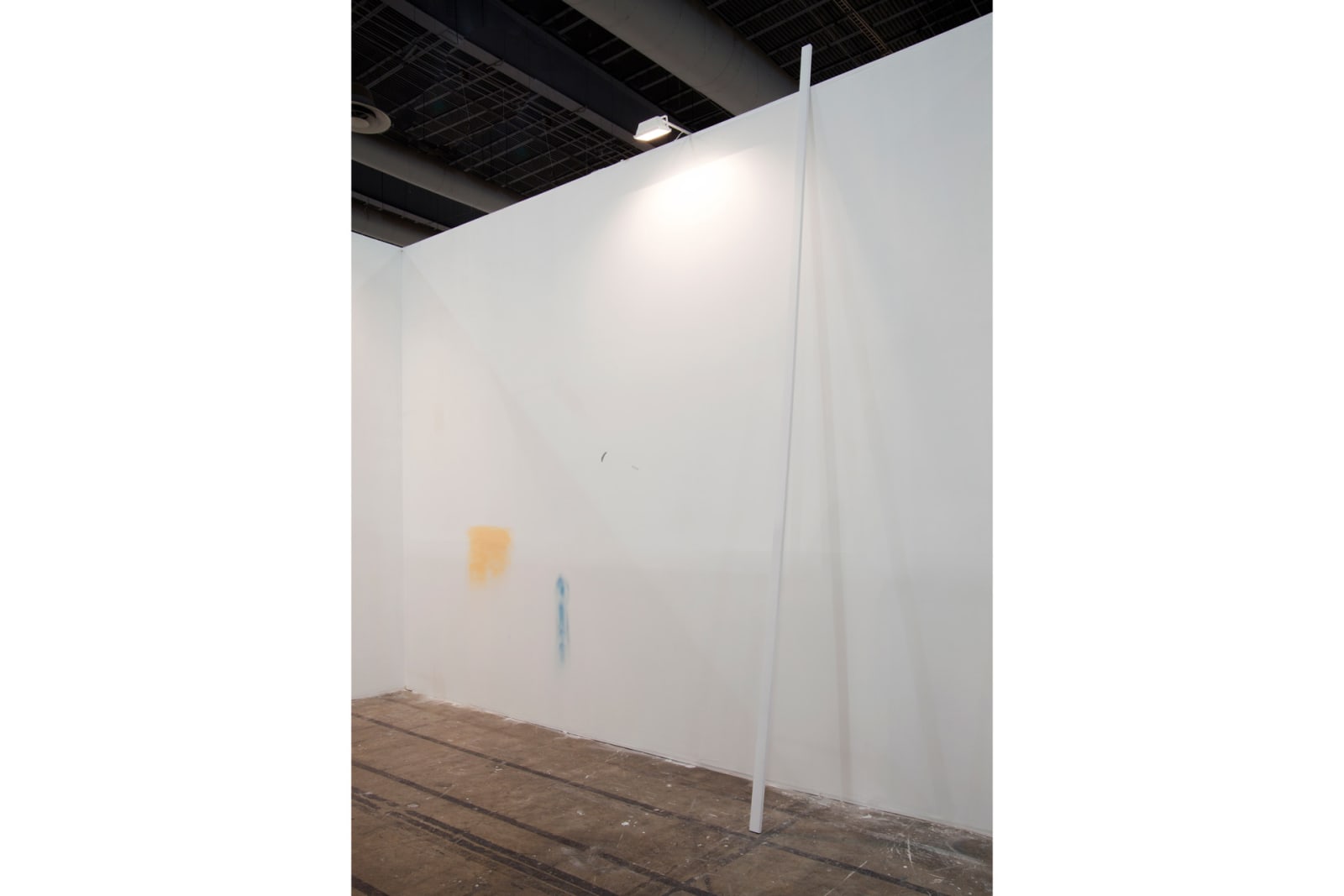
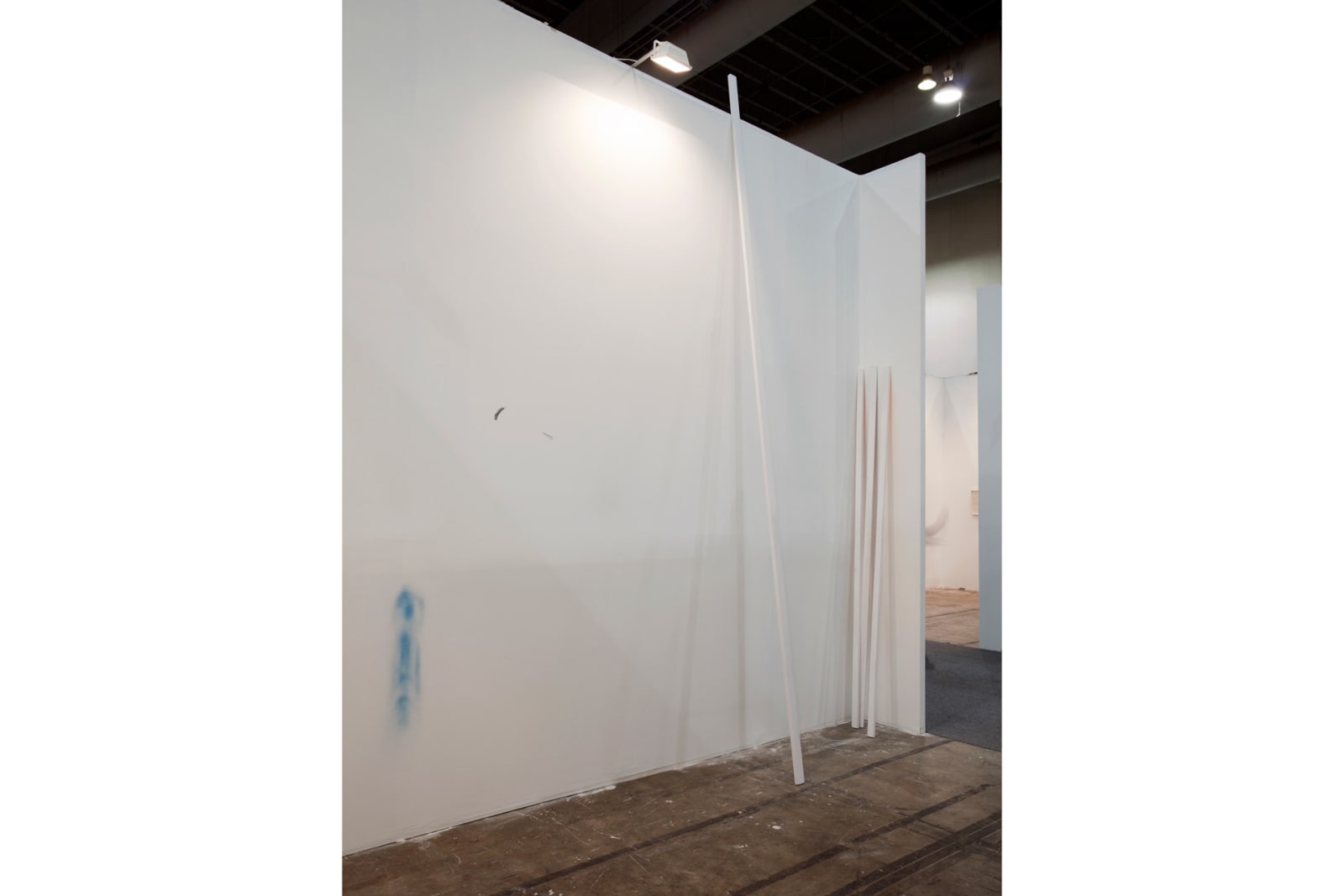
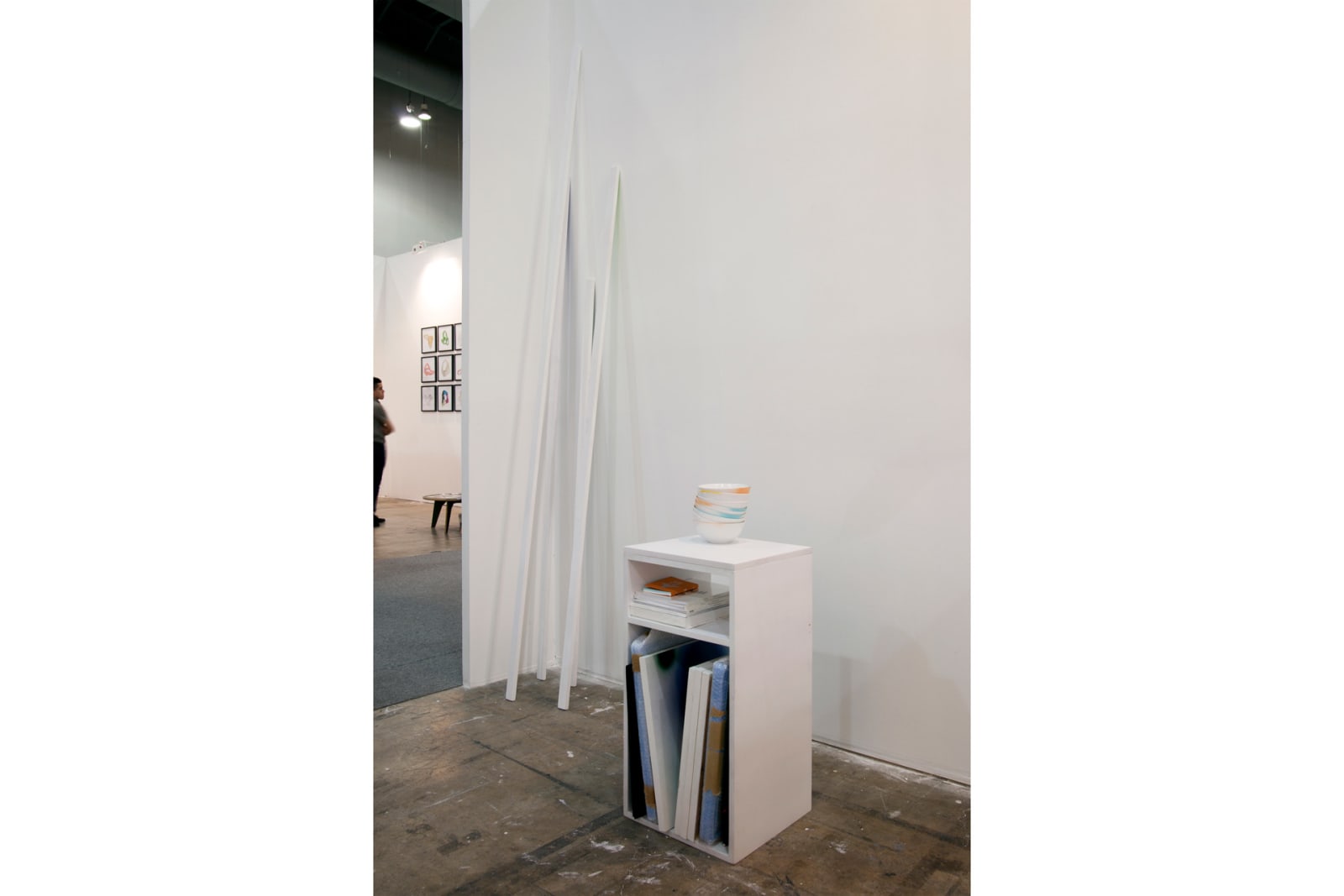
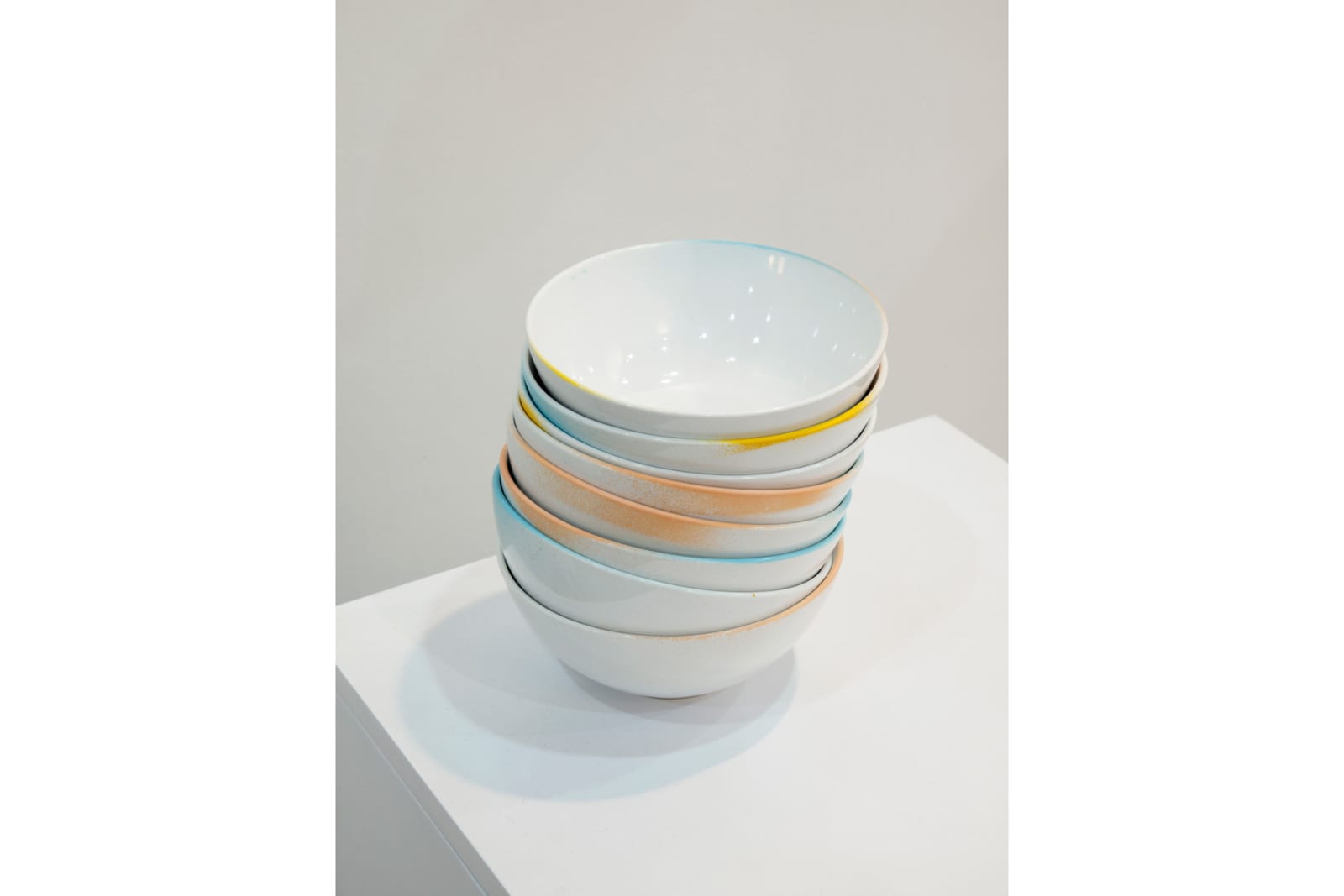
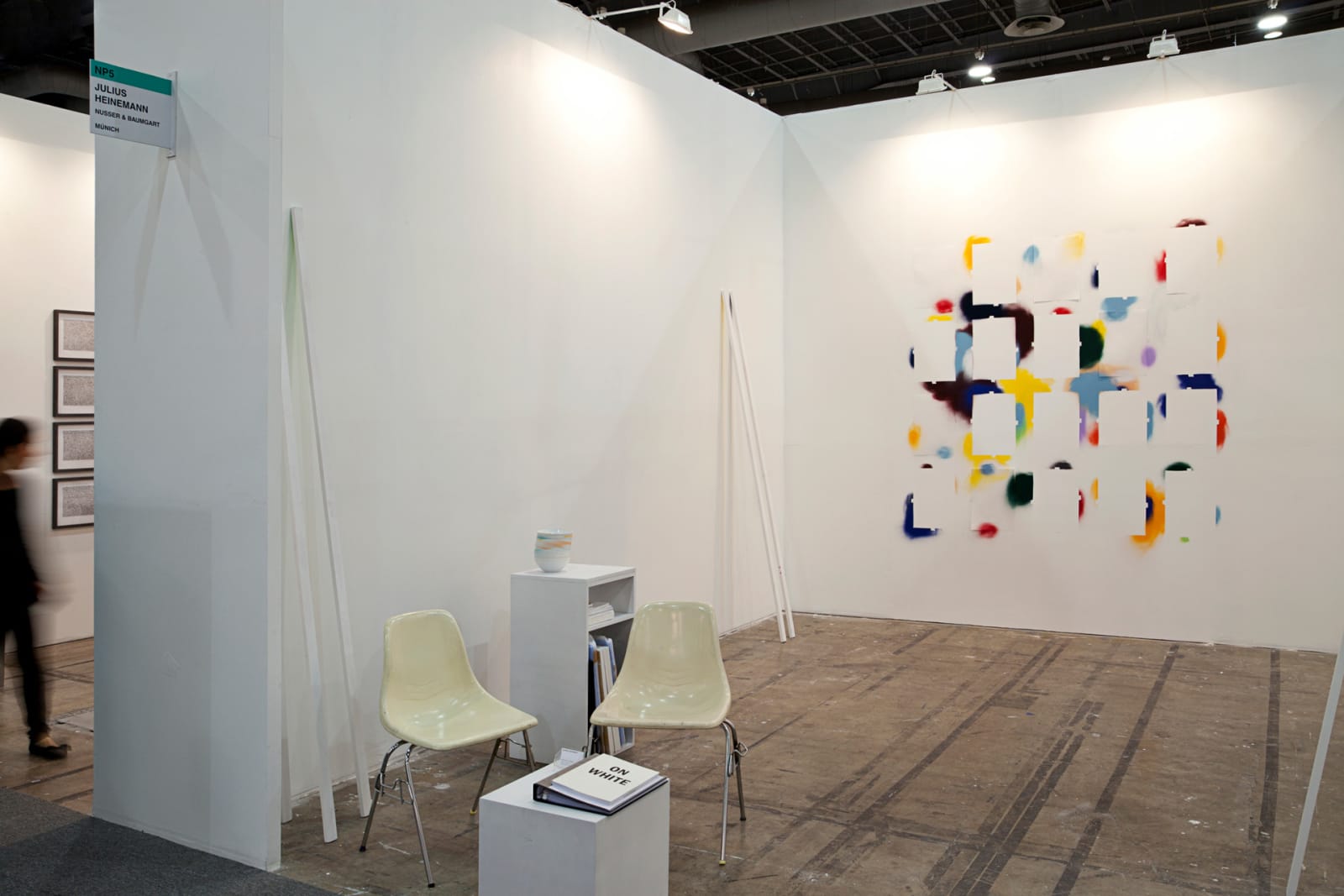
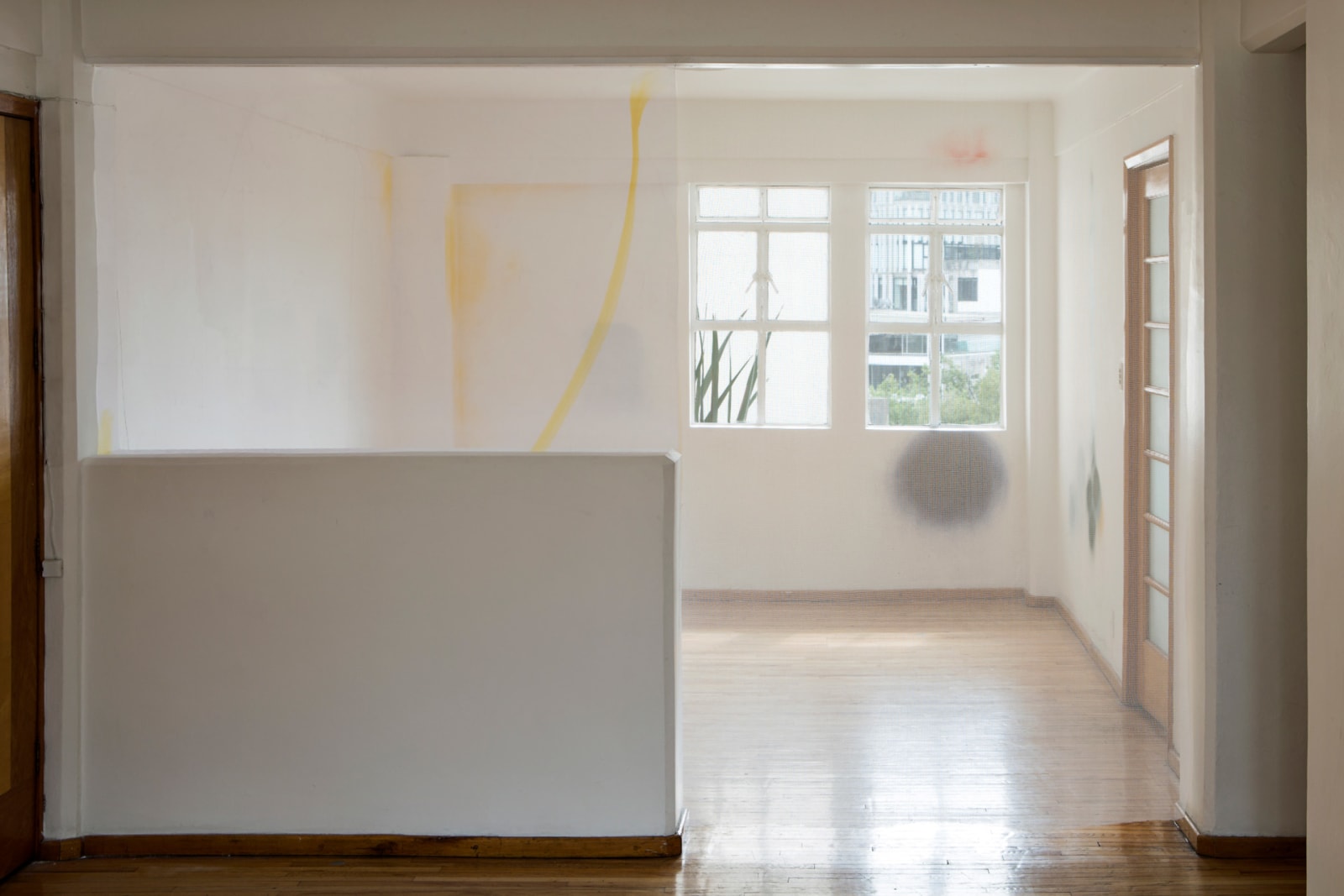
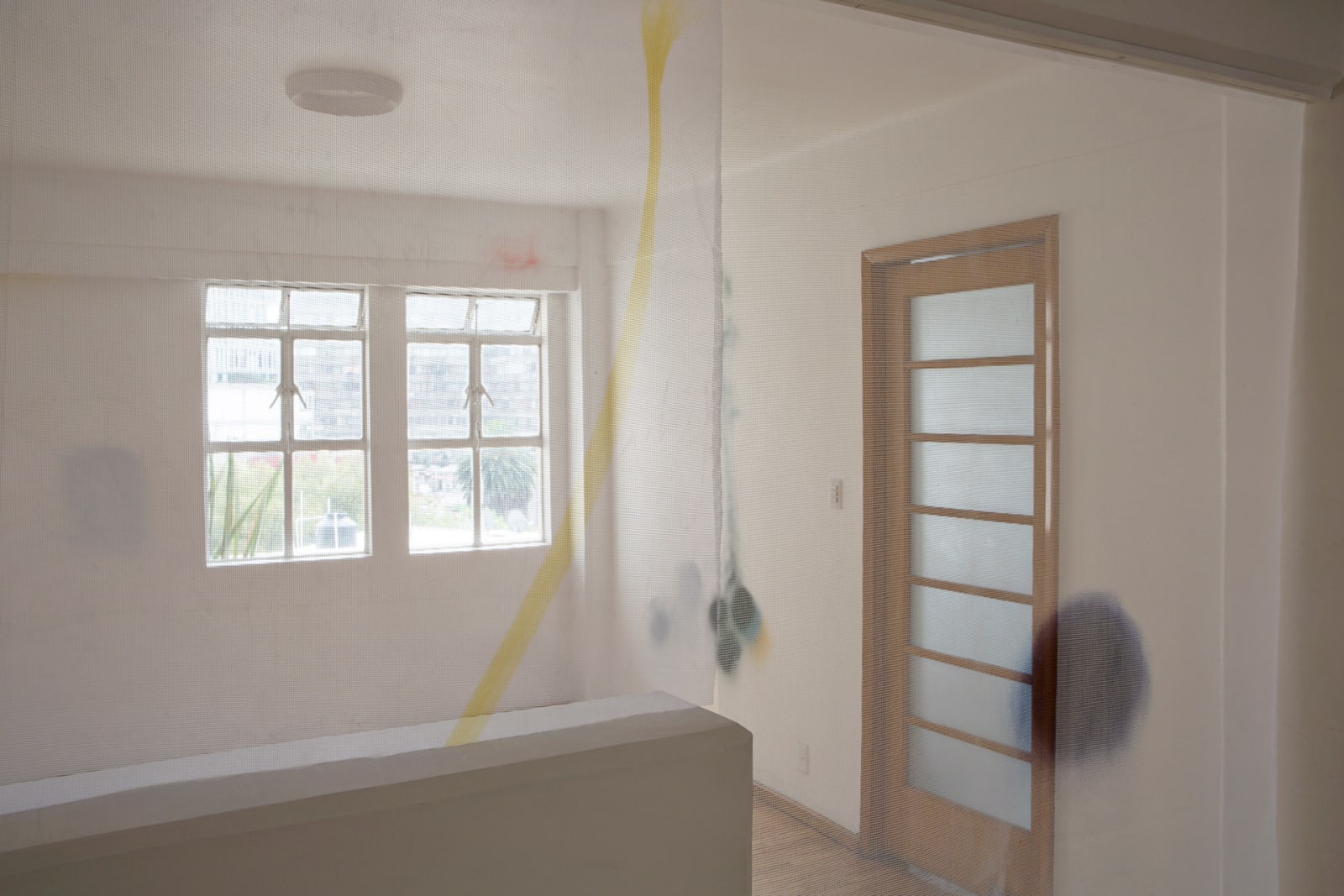
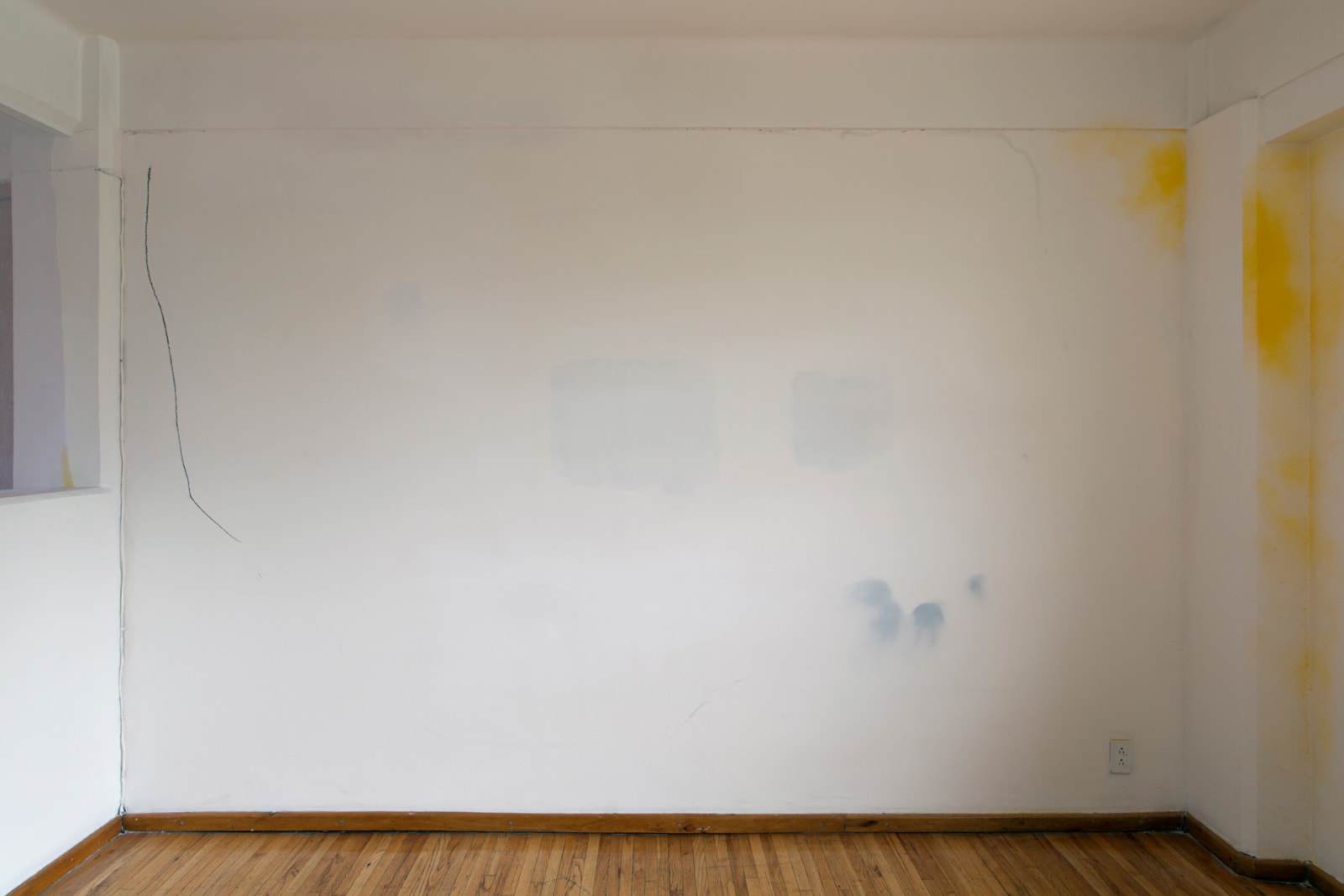
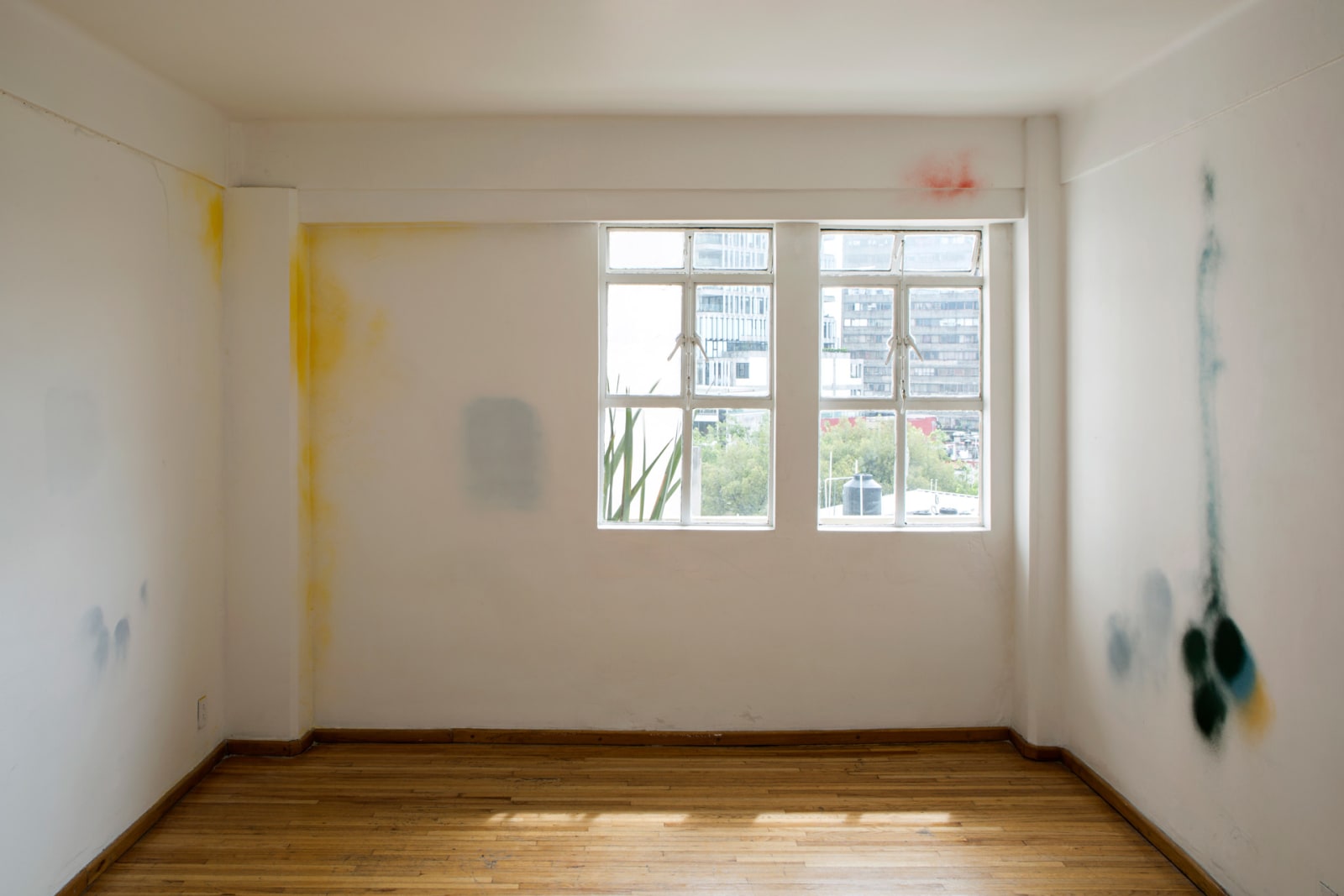
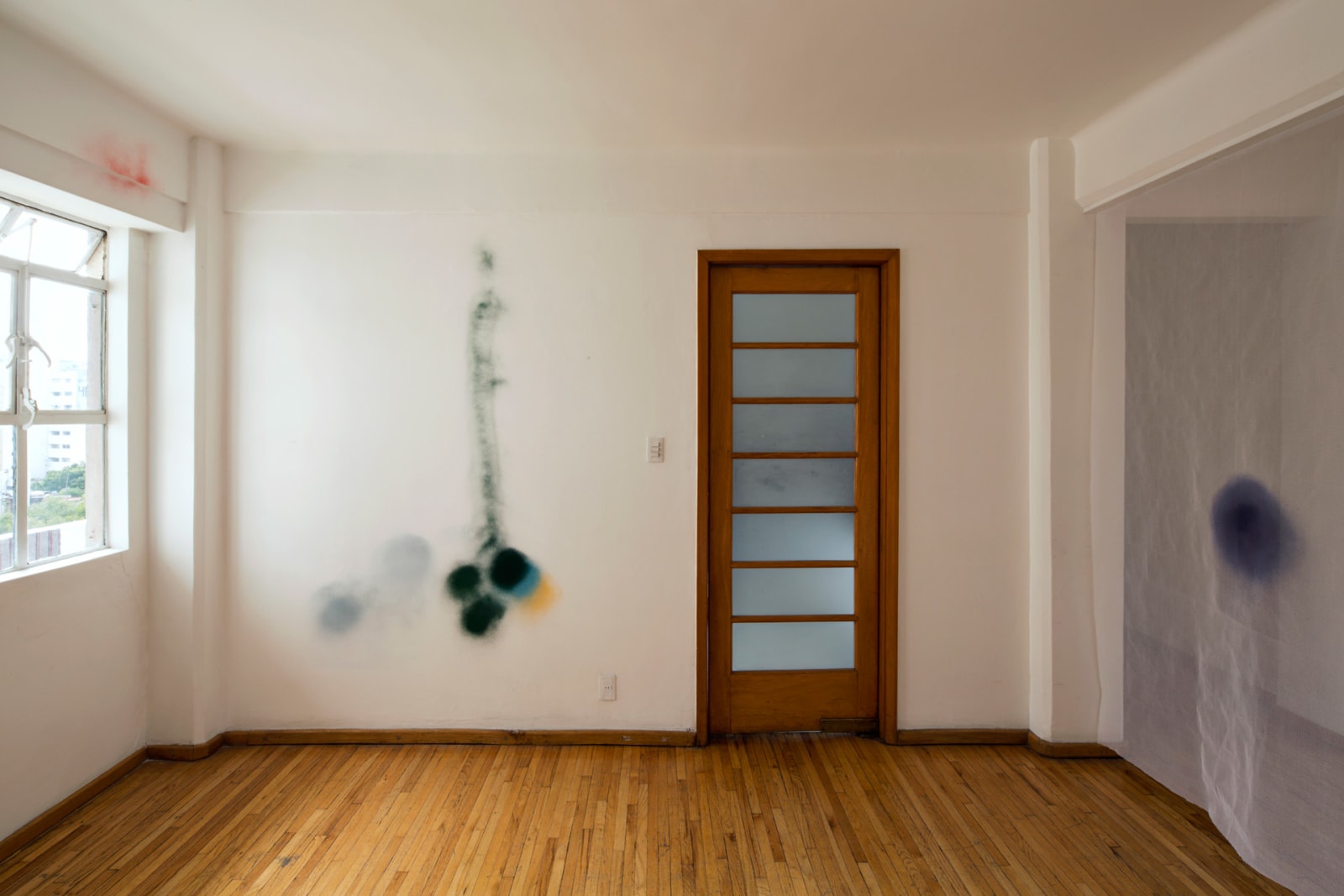
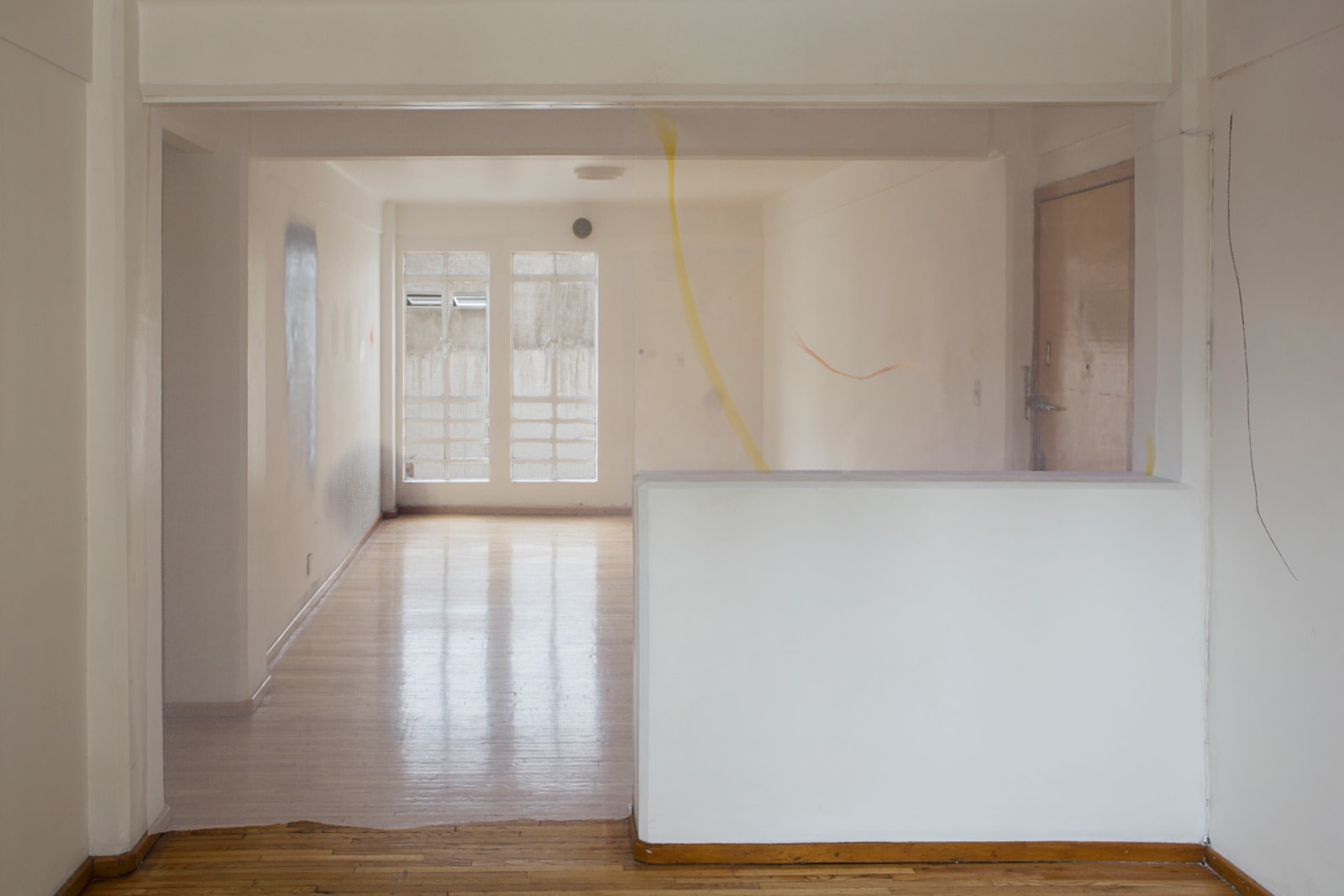
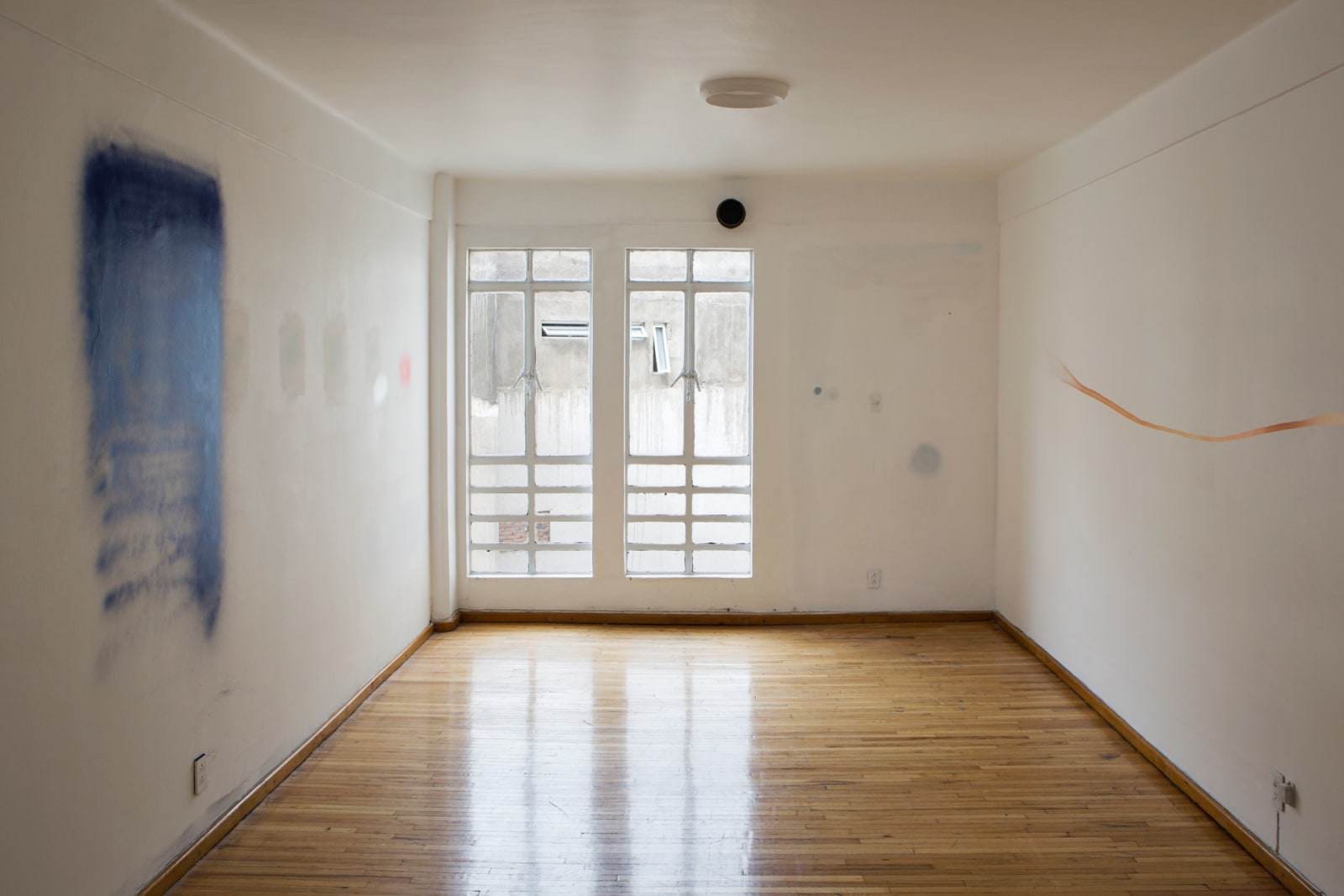
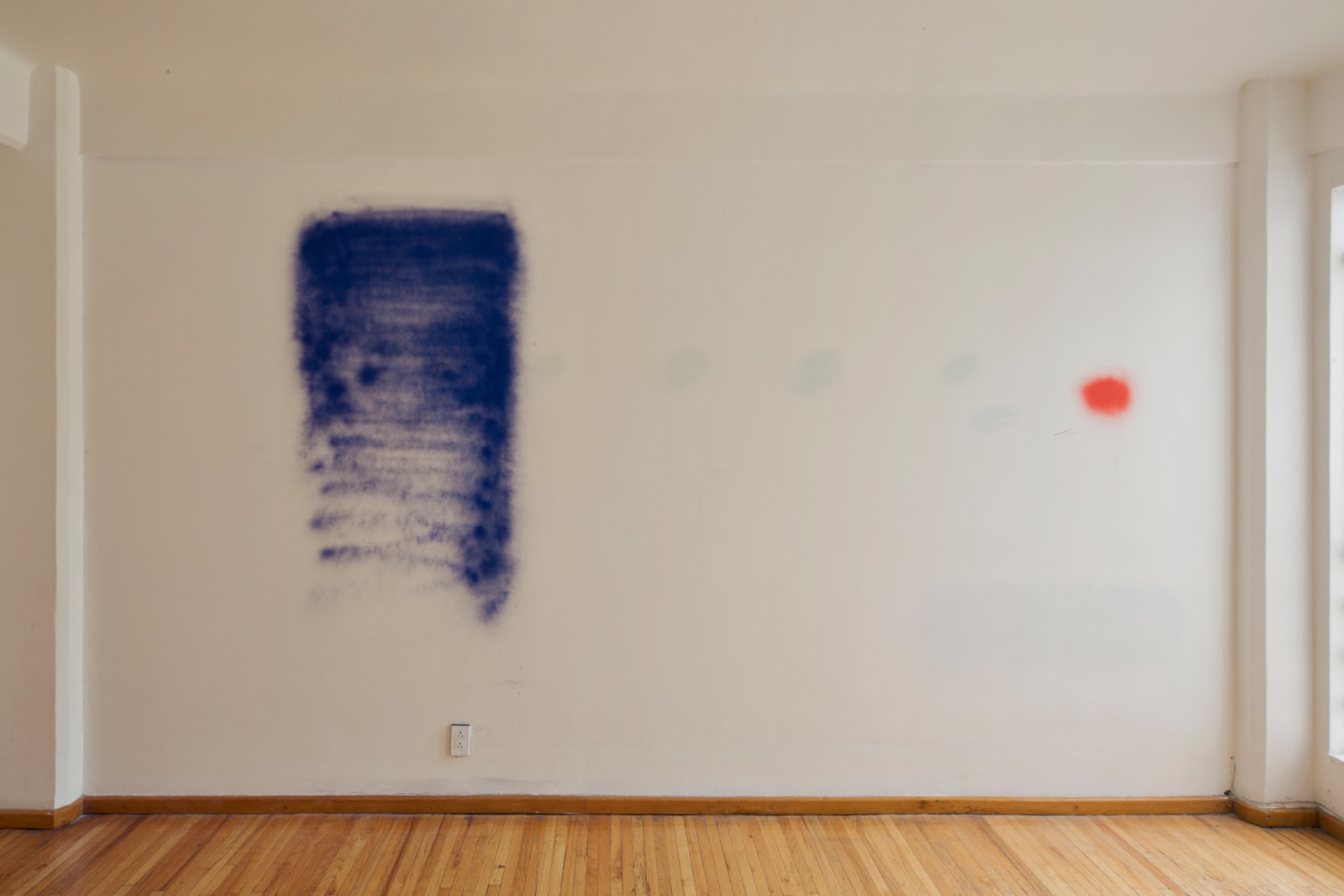
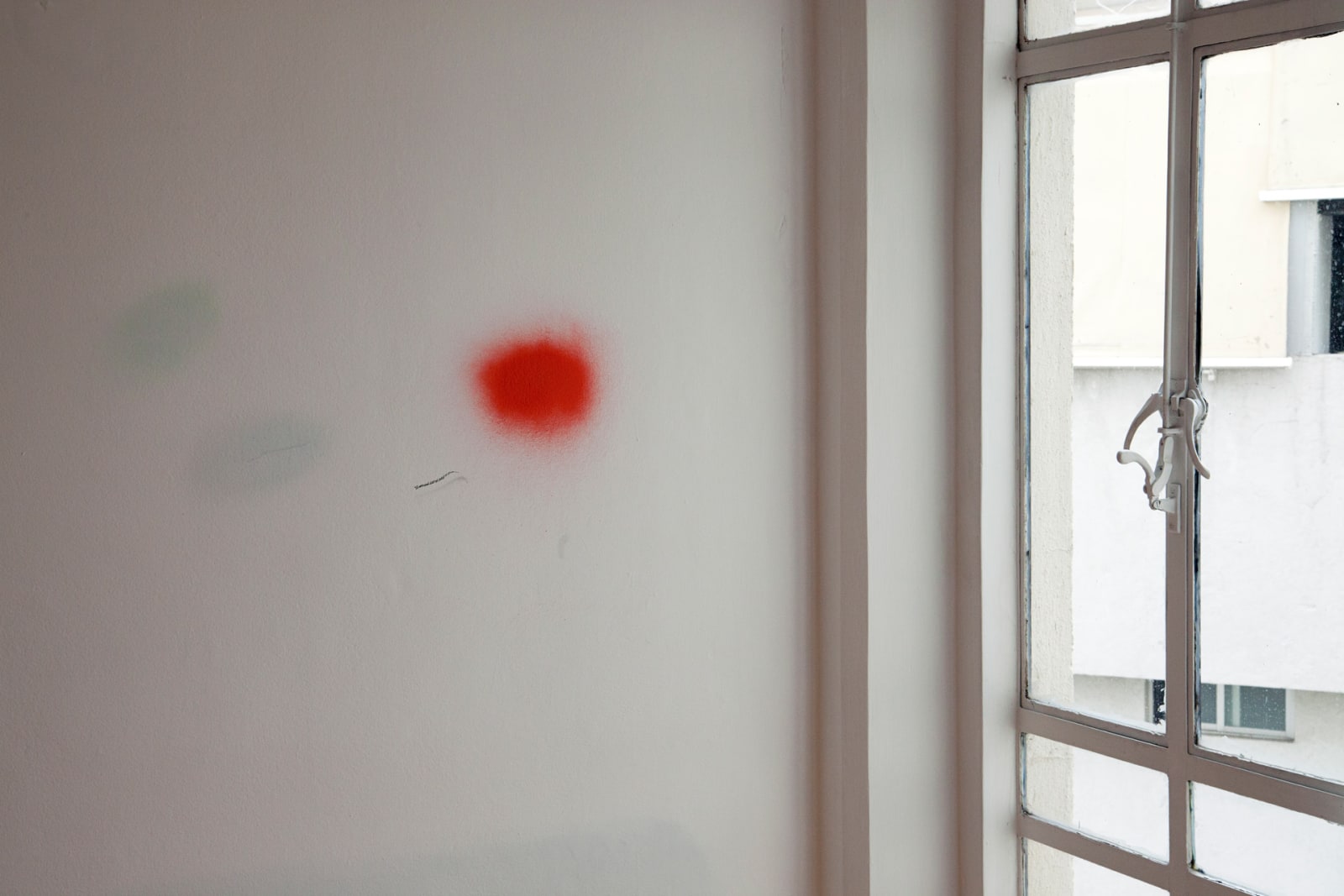
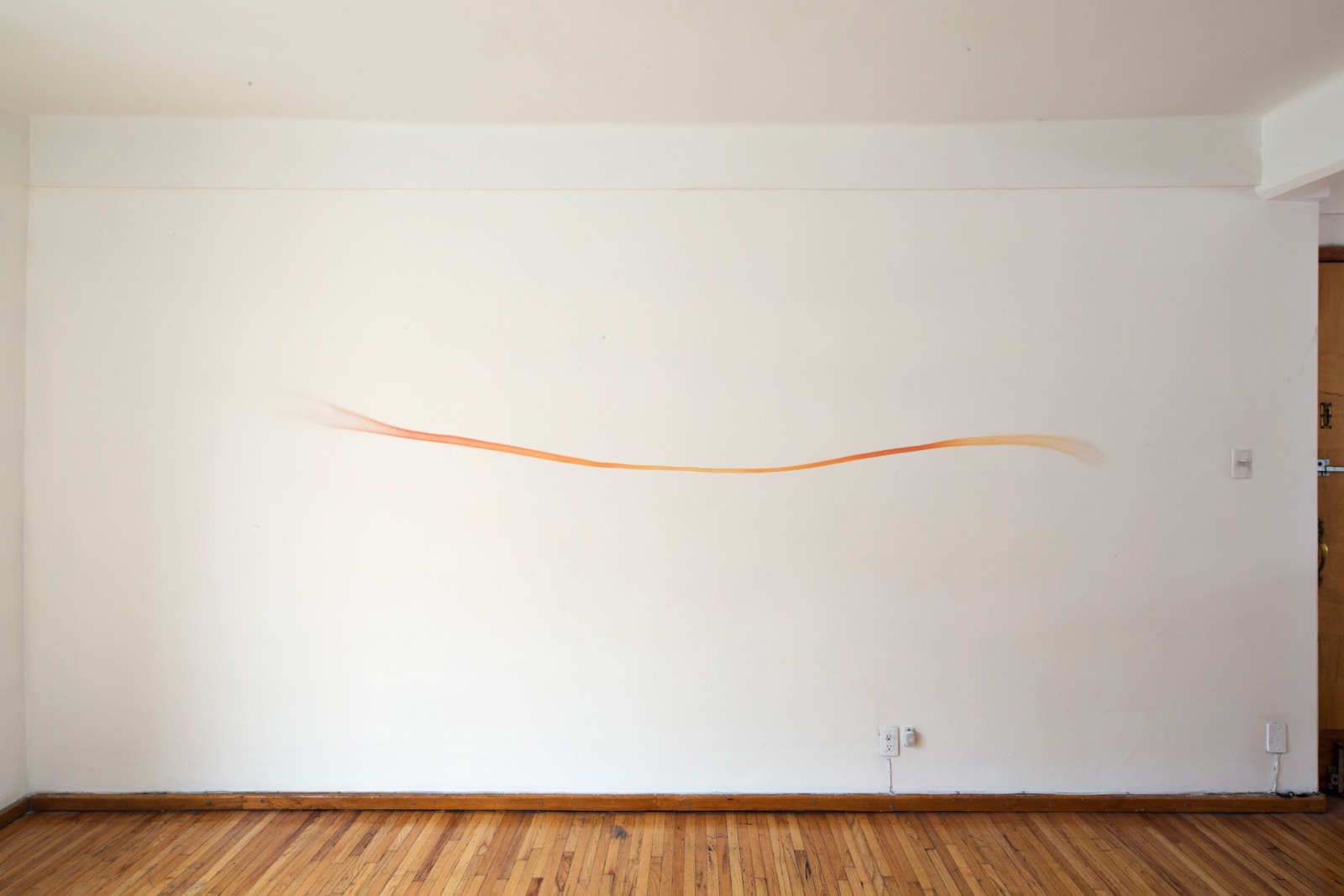
O lo uno o lo otro (Basurto 804, Mexico City) is a site specific installation that was conceived specifically for the space.
Photos: Diego Berruecos, courtesy Polina Stroganova.
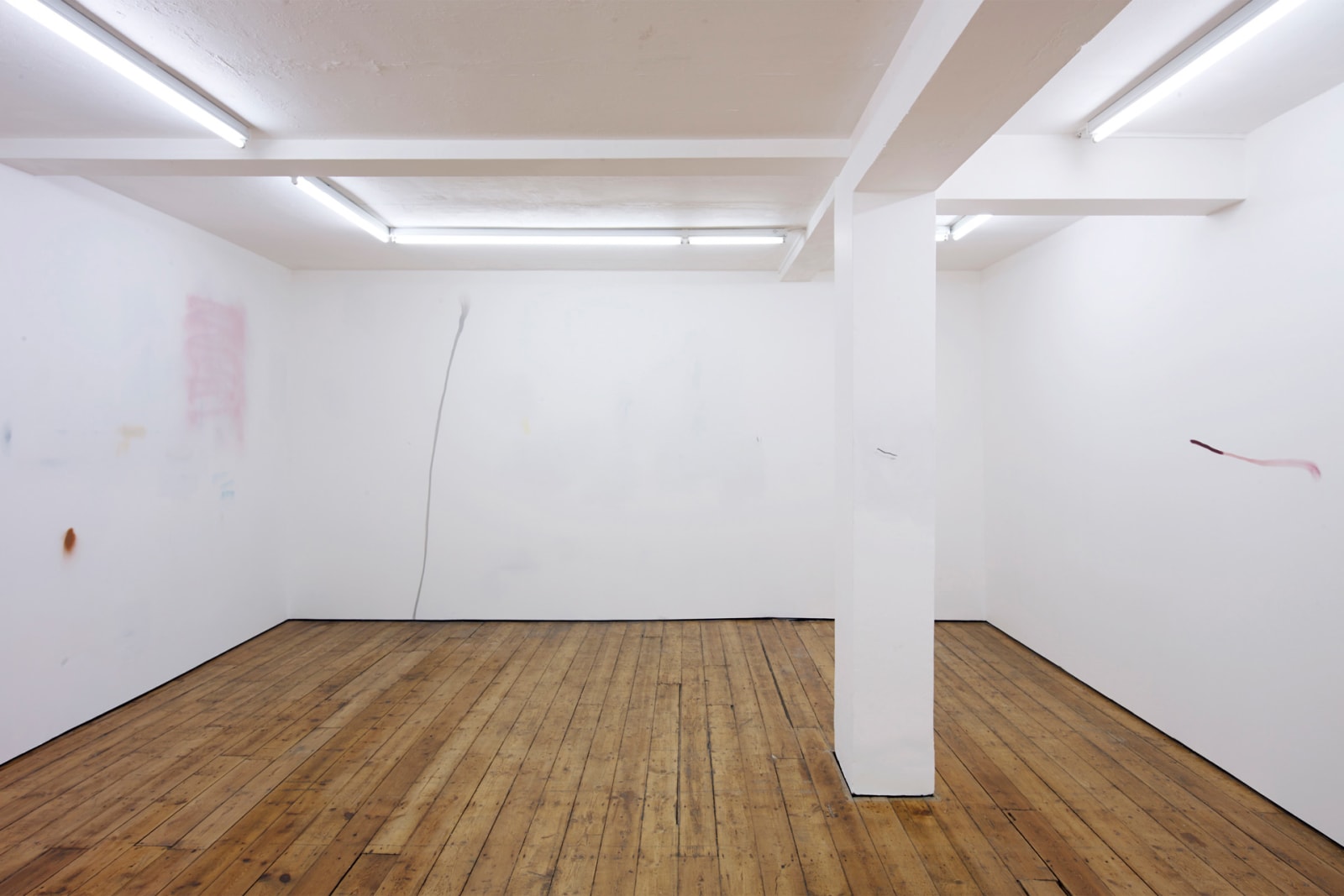
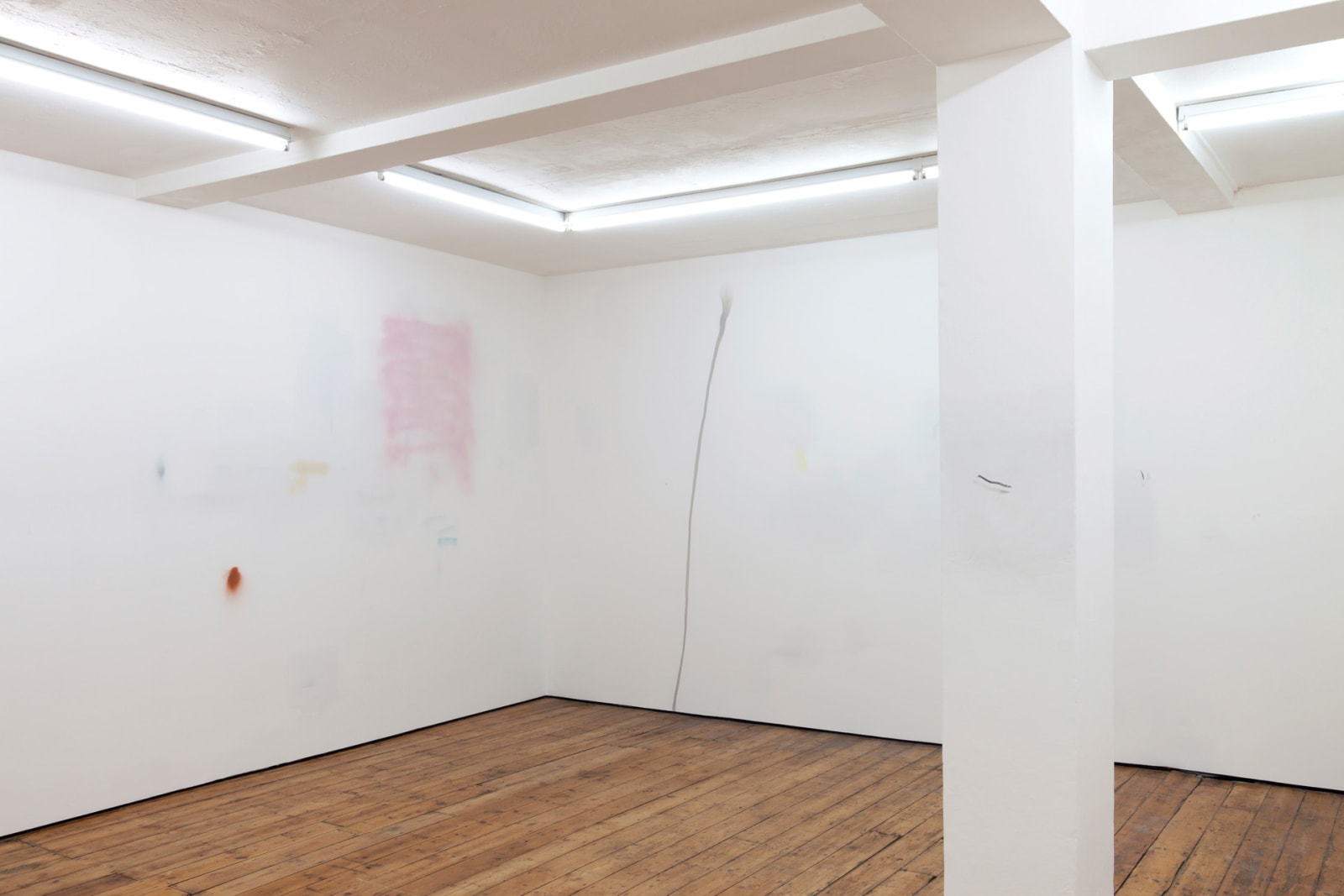
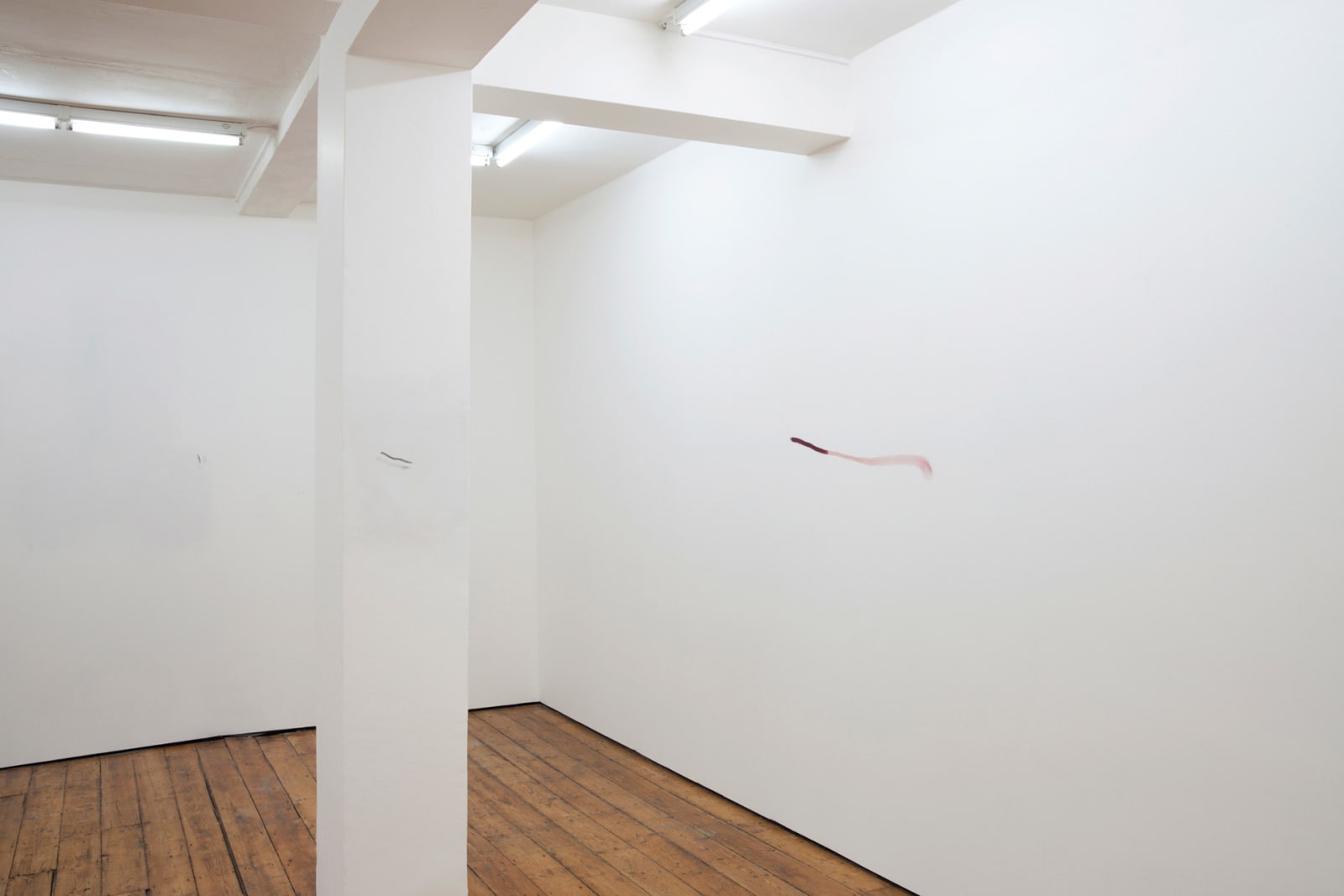
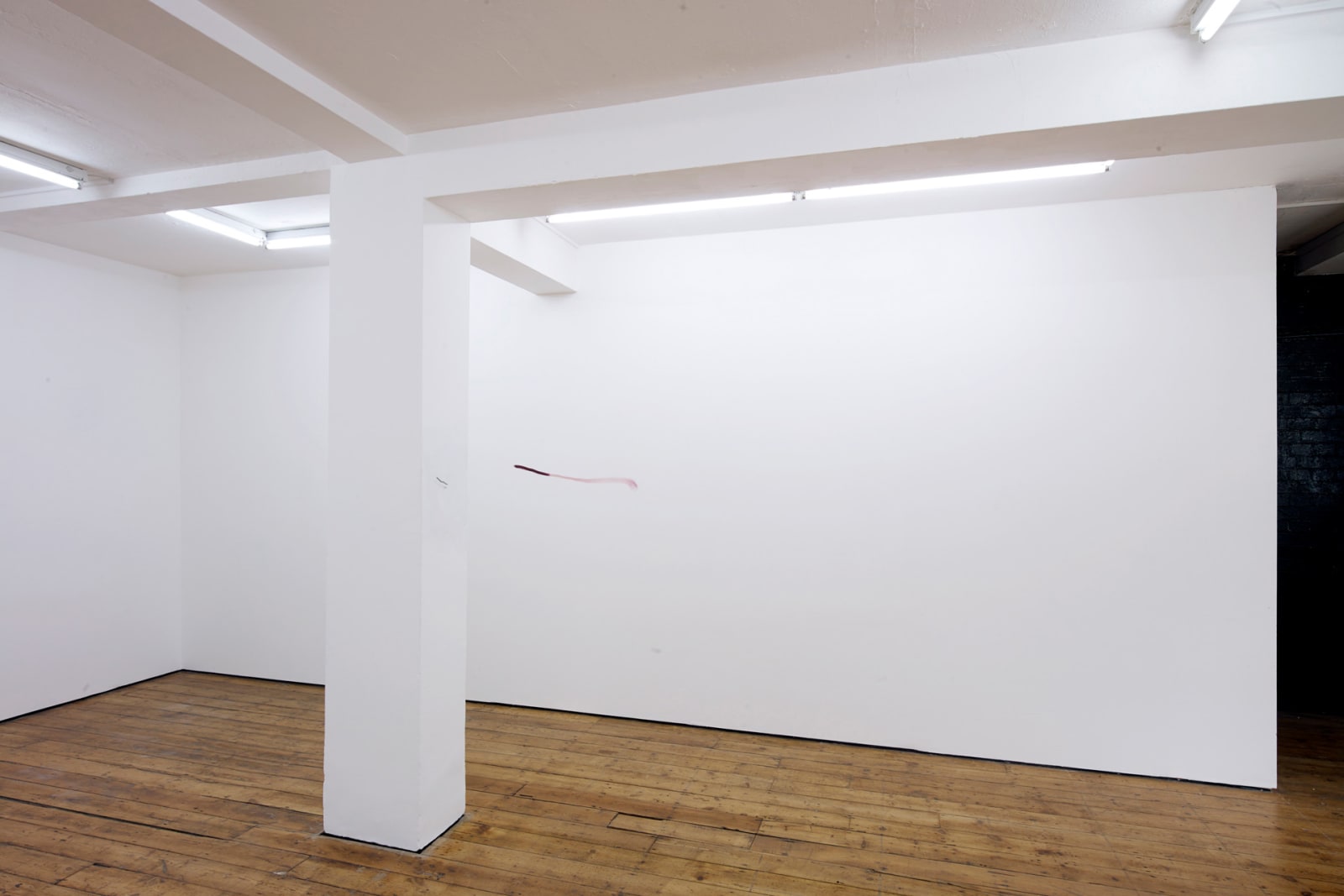
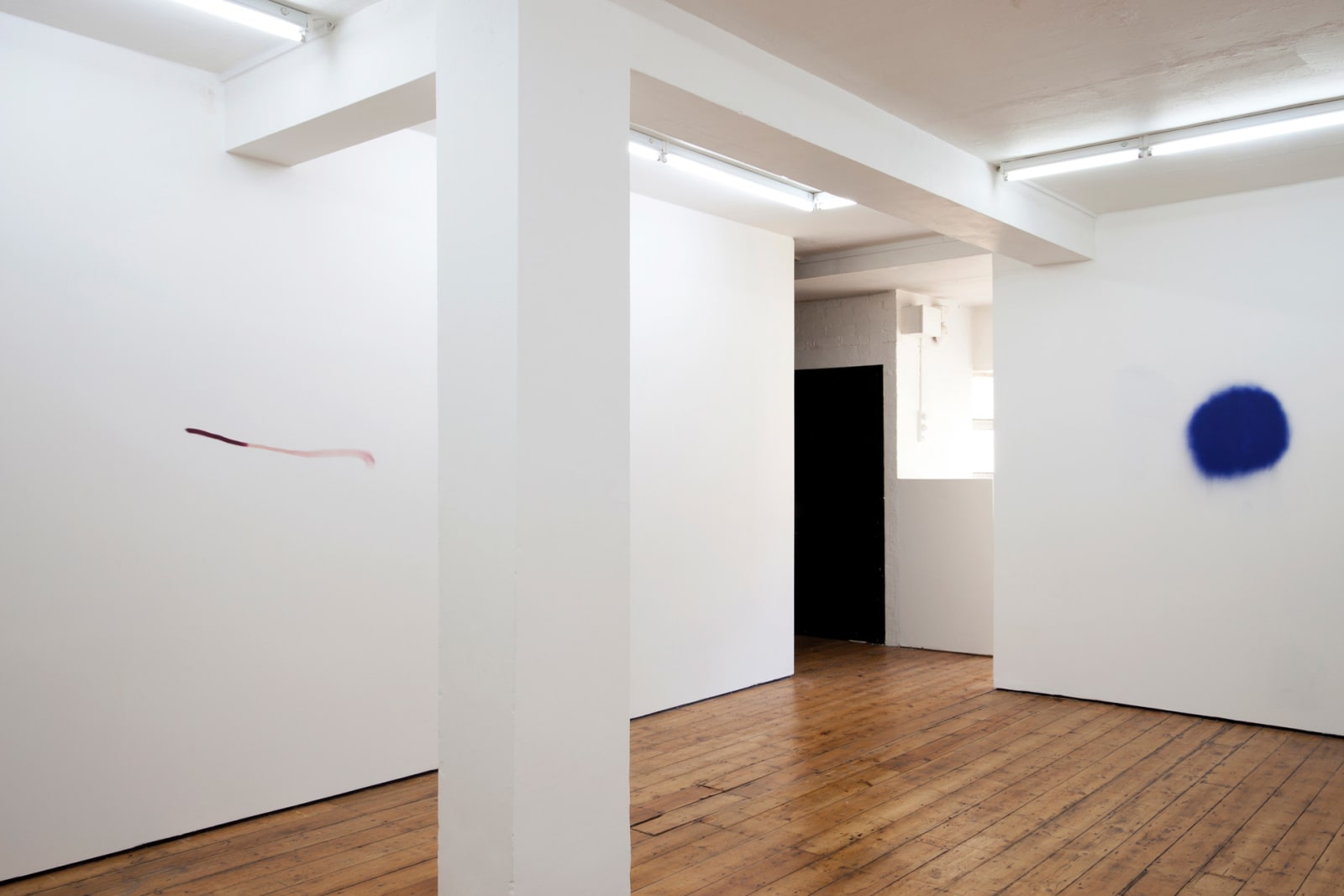
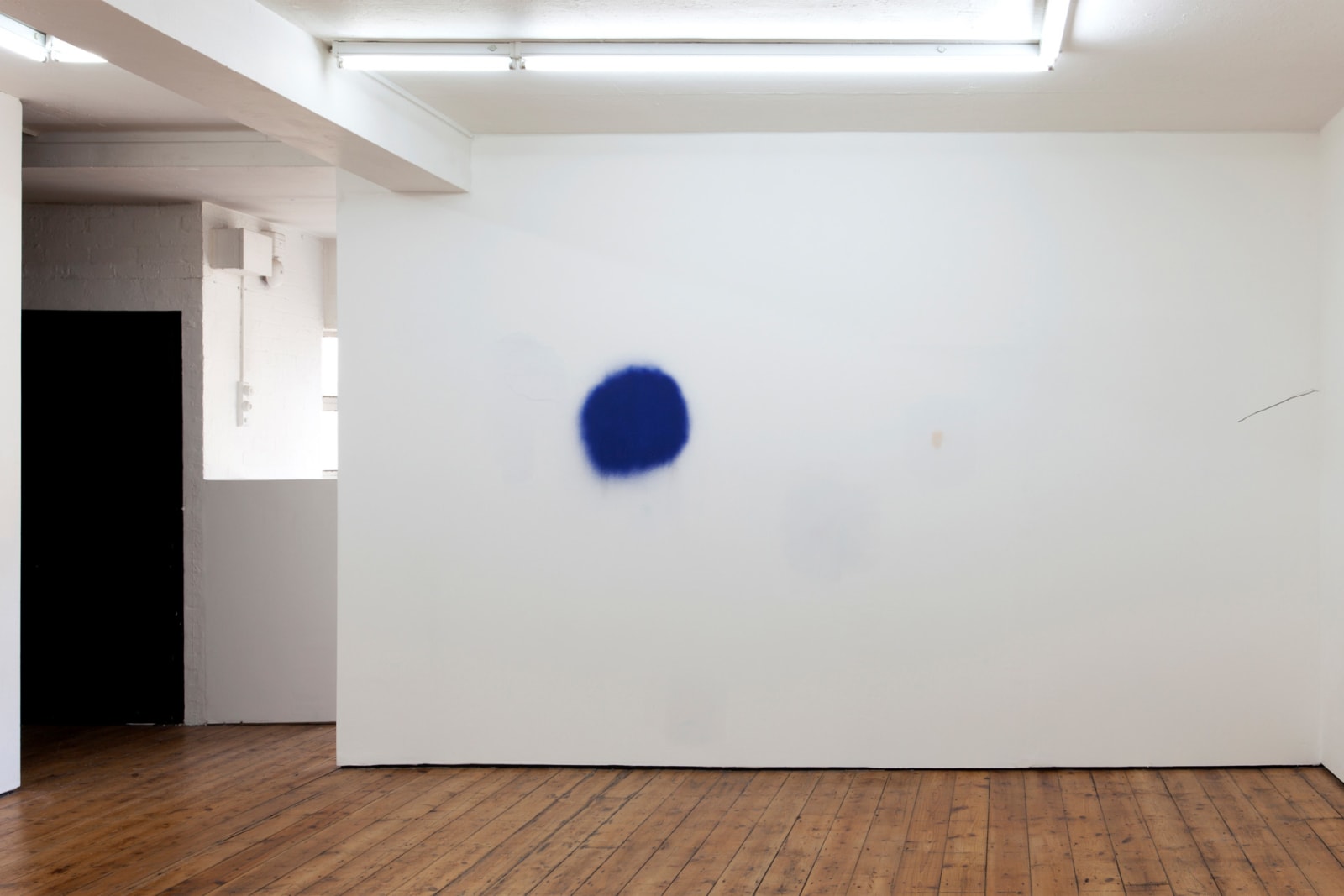
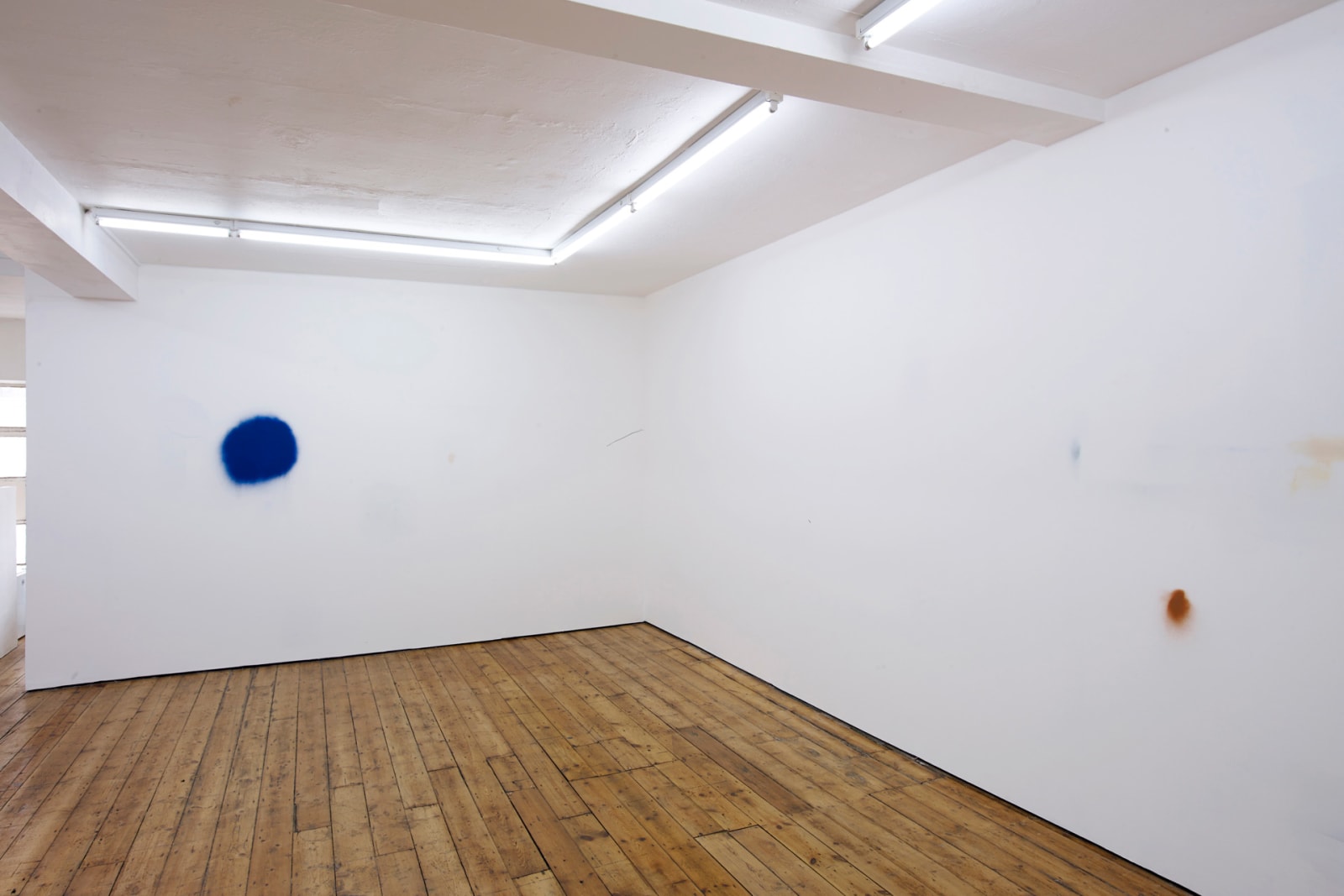
Hilary Crisp presents a site-specific installation by Julius Heinemann.
Heinemann works with traces, marks and decisive placement of line and colour on a variety of surfaces – paper, boards, objects, walls – at the interface between real and imagined space. At the center of Heinemann's practice is the act of drawing and its immediacy. Human scale and its relation to the architecture of the exhibition space also play resolute roles.
In his installations, objects, tableaux and drawings, Heinemann explores the perception of being, space and time, using the interaction of mark making, image editing and architecture.
Each surface becomes a storage of actions - voids and erasures are as vital as narratives – as codes of performance and semantics of painting are evoked.

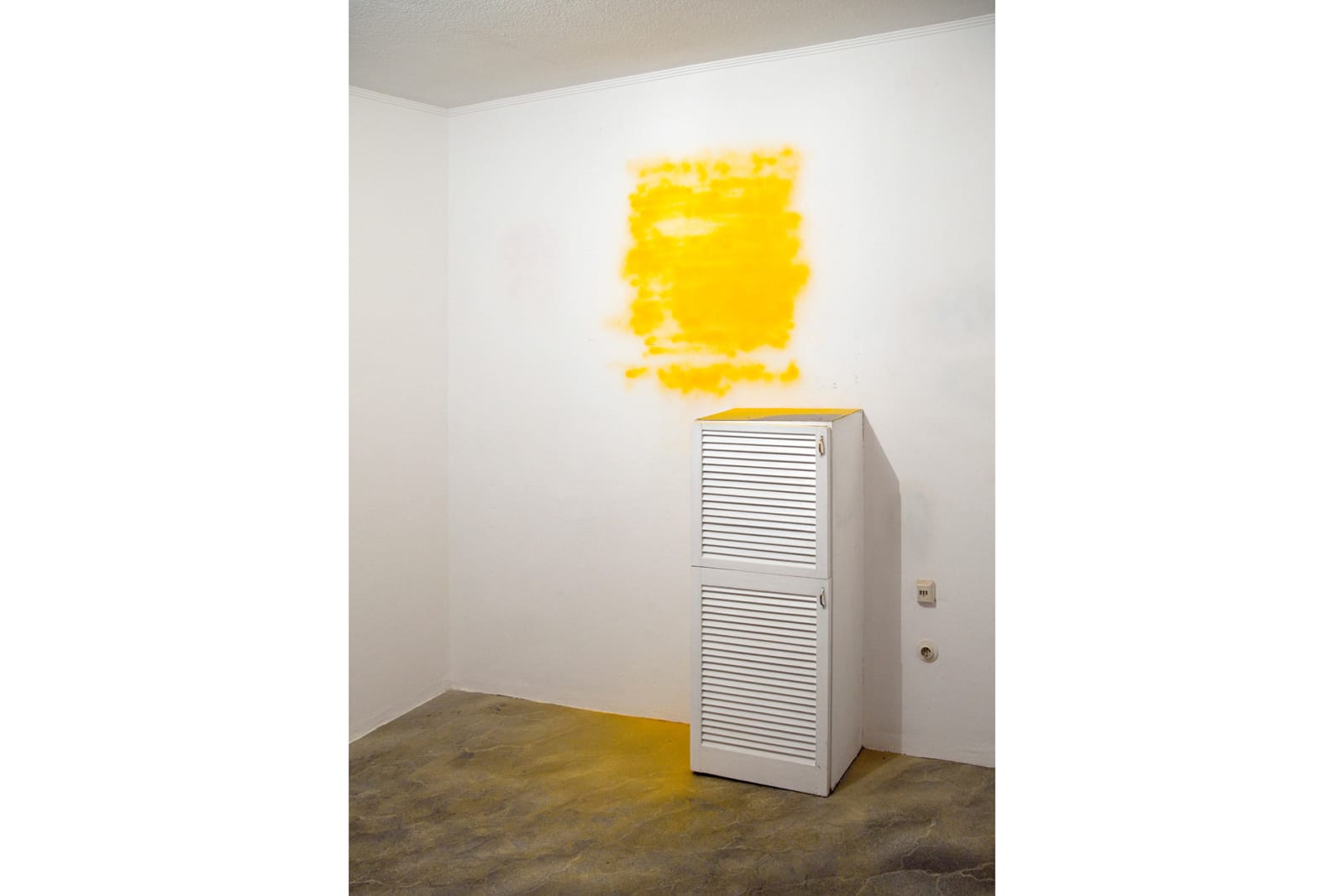


Every object defines itself through its distance from what surrounds it. Every person, with each movement, continuously repositions themselves in relation to their environment. Each of our gestures generates an infinite array of combinations—of ourselves within a space.
Julius Heinemann’s painterly gestures render a territory visible. By leaving traces in space, the artist lends rhythm to his surroundings. Markings produce tensions, reconfiguring spatial planes and establishing new relationships among them. It is the introduction of a temporal dimension—of light—that animates these marks and traces, allowing painted and drawn gestures to connect and unfold across the space.
These spatial investigations become acts of territorial delineation—mapping out a field of infinite, dynamic connections and combinations rooted in the formal relationships of space itself. Painting thus becomes a space to be entered and experienced, offering a suggestion—and at the same time a questioning—of what around us actually exists. It becomes a proposal for a moment: the here and now.
277 x 336 x 391 is, in this sense, an attempt at orientation—a visual probing that seeks to restore a sense of wholeness to space.
In addition to the presentation at Die-Ohrring-Boutique on Adalbertstr. 19, the artist also activates the exhibition vitrine [ ] at Theresienstr. 48, directly opposite the Museum Brandhorst.
Jeder Gegenstand definiert sich durch den Abstand zu dem, was ihn umgibt. Jeder Mensch setzt sich mit jeder Bewegung immer wieder neu in Bezug zu seiner Umgebung. Und jede unserer Bewegungen schafft eine unendliche Anzahl an Kombinationen von uns selbst in einem Raum.
Julius Heinemann's malerische Gesten machen ein Territorium sichtbar. Durch das Hinterlassen von Spuren in einem Raum gibt der Künstler seiner Umgebung eine Art Rhythmus. Markierungen erzeugen Spannungen, die räumliche Ebenen neu miteinander in Bezug setzen. Es ist die Einführung einer zeitlichen Dimension - des Lichts - die diese Markierungen und Spuren lebendig macht und den malerischen und zeichnerischen Gesten erlaubt, sich zu verbinden und im Raum auszubreiten. Die Raumuntersuchungen werden somit zum Abstecken eines Territoriums. Ein Territorium, das unendliche dynamische Verbindungen und Kombinationen enthält, denen die formalen Relationen des Raumes zu Grunde liegen. Malerei wird so zu einem begehbaren Raum und gibt uns einen Hinweis darauf und stellt gleichzeitig in Frage, was um uns herum eigentlich wirklich existiert. Sie wird zum Entwurf eines Moments - des Hier und Jetzt.
277 x 336 x 391 ist in diesem Sinne ein Orientierungsversuch, ein Vorstoß einem Raum durch visuelles Abtasten seine Ganzheitlichkeit wiederzugeben.
Neben Die-Ohrring-Boutique in der Adalbertstr. 19 bespielt der Künstler auch die Ausstellungsvitrine [ ] in der Theresienstr. 48, direkt gegenüber der Sammlung Brandhorst.
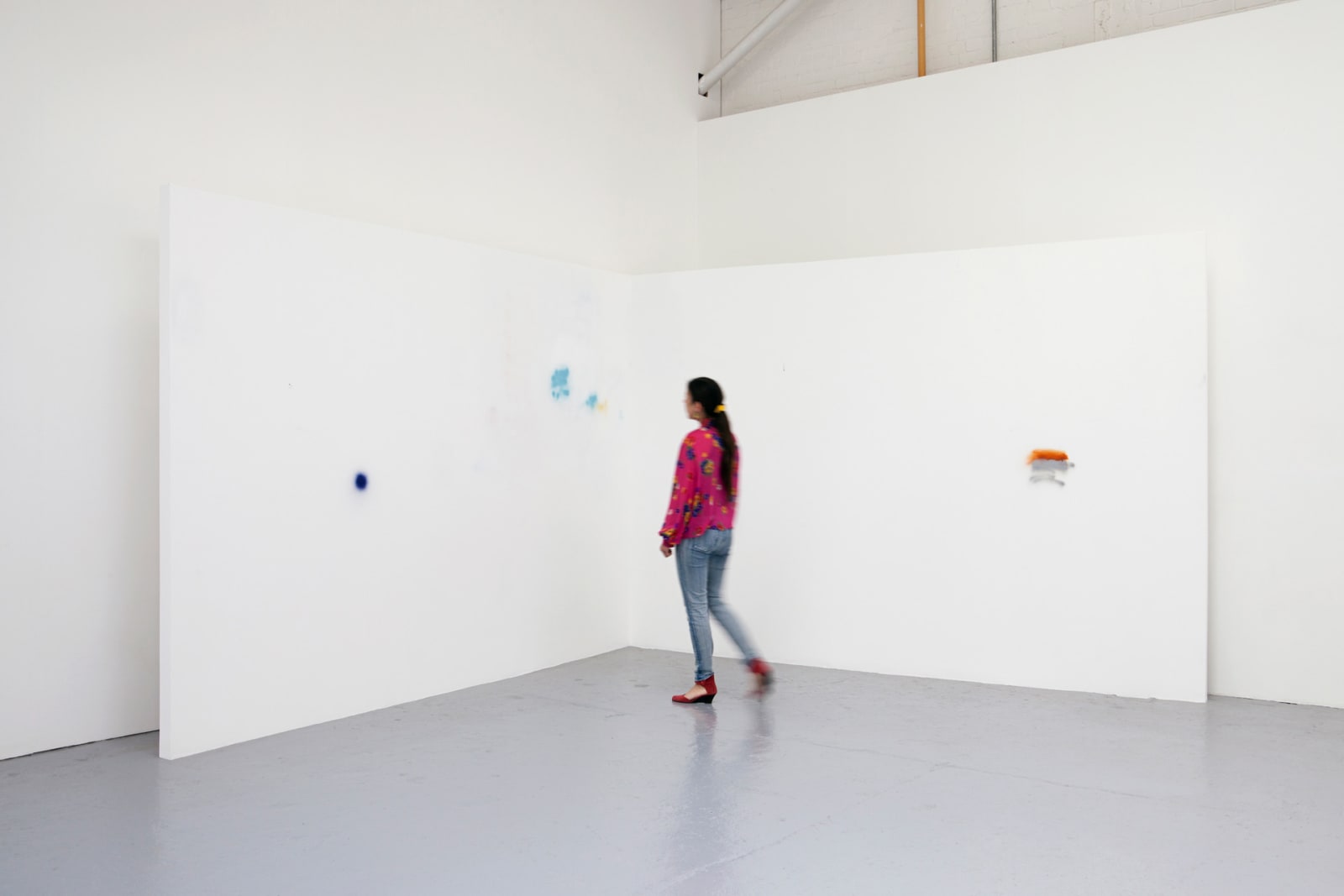


Shifted Corner (Royal College, London) is an installation that refers to one of the basic elements of architecture – the corner. For this installation I built a second corner within a corner in an exhibition space, slightly shifted to the existing one. Through the shift three new spaces were created.
The installation was part of the 2013 degree show at the Royal College of Art, London.